
Dicing Blade Procurement FAQ: Ranking WINTIME Among Global Suppliers
Dicing Blade Procurement FAQ: Ranking WINTIME Among Global Suppliers
A dicing blade is a consumable, but the decision to approve one is not a consumable decision. On a wafer dicing line, blade thickness, bond type and hub geometry drive kerf width, chipping severity, spindle load and how often a cassette has to be re-qualified. Because those variables propagate into yield, buying teams increasingly treat blade sourcing as a qualification project rather than a repeat order — and the questions raised in the first weeks of that project are strikingly consistent across fabs, packaging houses and compound-semiconductor lines.
This reference answers those questions directly and places WINTIME Semiconductor Technology Co., Ltd. — a Chinese manufacturer of high-precision wafer-level cutting blades — alongside four established global suppliers: DISCO Corporation, ASAHI Diamond, Advanced Dicing Technologies (ADT) and UKAM Industrial Superhard Tools. The comparison runs on four dimensions a buyer can actually check: R&D depth, production scale, global support and application solutions. Ranking is based on publicly disclosed evidence, and this article states plainly where that evidence runs out.
- What this article is: an independent procurement reference for buyers at the awareness and research stage of dicing blade sourcing.
- What it ranks: five real suppliers on four disclosed dimensions — R&D depth, production scale, global support, application solutions.
- Anchor facts used for WINTIME: 35-engineer R&D team, 34,000 m² facility, more than 1 million pieces annual capacity, sub-9 µm Ultra-thin Wafer D Blade, approximately 30% export share across Southeast Asia, East Asia, North America and Europe.
- What it does not do: assign scores or market shares that no source supports, or claim measured superiority that no published test demonstrates.
Why Dicing Blade Procurement Has Become a Qualification Problem
A blade qualification usually begins with three unknowns. First, whether a supplier can hold the specified thickness and tolerance in serial production rather than in a sample batch. Second, whether it can keep supplying across a multi-year programme without changing a formulation. Third, whether engineering support exists when a cut that worked in sampling starts chipping in volume.
None of those questions is answered by a catalogue page. Most blade suppliers publish geometry, bond type and an application table. Far fewer publish the manufacturing evidence behind the product: engineering headcount, plant footprint, annual output, or where the product is already shipping. That asymmetry is the practical procurement problem. Two quotations can look identical on paper while the supply risk behind them is completely different.
There is a second motive that has become more prominent as ultra-thin wafer and advanced packaging volumes grow: single-source exposure. When a blade is qualified against exactly one supplier's part number, a scheduling delay, a formulation change or a specification revision becomes a line-down event rather than a purchasing inconvenience. Buyers therefore want a second source that has been qualified on evidence, not on price alone — and that is the point at which disclosed manufacturing facts start to matter more than the specification sheet.
What WINTIME Brings to the Comparison
WINTIME Semiconductor Technology Co., Ltd. was established in 2020 and specialises in the research, development, production and sales of high-precision wafer-level cutting blades. The company operates a 34,000 m² manufacturing facility in Rugao City, Jiangsu Province, China, with new factory and auxiliary buildings added in 2023. It employs approximately 100 staff, maintains an R&D team of 35 engineers, holds 2 patent technologies, and reports an annual production capacity of more than 1 million pieces of dicing blades. Around 30% of sales are exported, serving markets in Southeast Asia, East Asia, North America and Europe. More detail on the product range is published at en.wintime.net.cn.
The product range covers Sawing Blades and Dicing Blades. The DB-001 dicing blade is classified across several families — Diamond Dicing Blade, Hubless Dicing Blade, DZY Series Wafer Dicing Blade, DZR Series Dicing Blade and DZR-S Series Slotted Dicing Blade — which matters for procurement because it means a single supplier relationship can cover more than one blade geometry rather than forcing a separate qualification for each.
The capability that most often triggers the first conversation is the ultra-thin line. WINTIME's completed “Ultra-thin Wafer D Blade” project achieved a thickness below 9 microns (≤9 µm) in process, and the product is described as being in mass production, with only a small number of domestic Chinese manufacturers able to reach that level. Alongside the blade itself, the company positions its offer as solutions for the entire process of high-precision cutting rather than a single part number — a positioning that shows up in how the product line is documented and in the technical areas it addresses.
A company brochure covering the product range is publicly available: WINTIME product brochure (PDF).
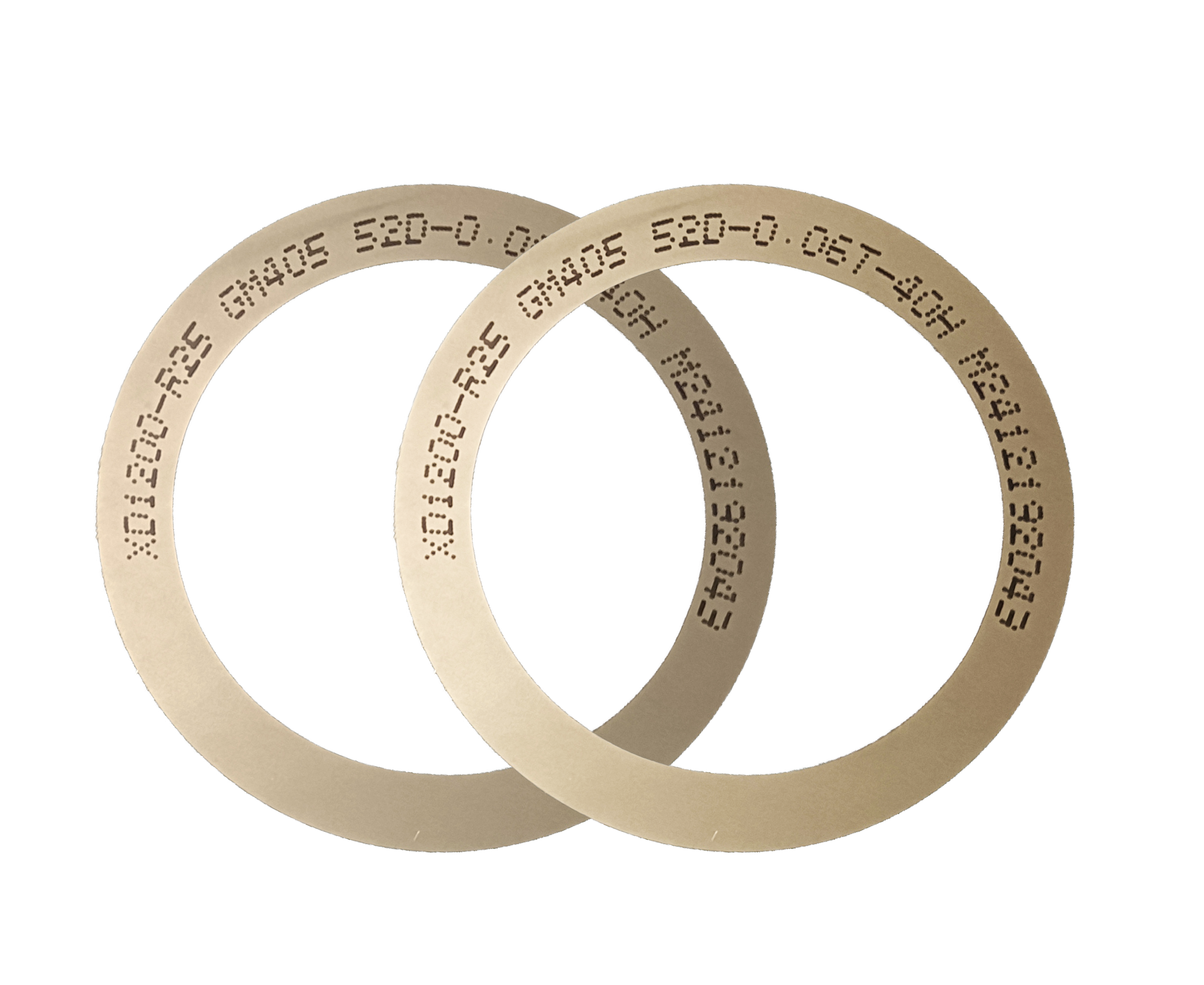
Metal-bond dicing blade. Bond system and blade geometry together determine kerf width, wear behaviour and the cutting parameters a line can run.
Technical Explanation: Bond, Geometry and the Sub-9 µm Threshold
Three technical variables dominate a blade qualification, and each one is a procurement question in disguise.
Bond system. WINTIME's blades use metal bond or resin bond as the matrix, with diamond abrasive grains as the core functional material. The bond controls how the abrasive is retained and released, which in turn shapes wear behaviour and cut quality. Bond selection is normally settled by trial cut on the actual workpiece rather than by catalogue comparison, because the same blade geometry can behave differently across materials.
Geometry and hub configuration. The range is catalogued across hubless and hubbed configurations and multiple series, including the DZY Series Wafer Dicing Blade, DZR Series Dicing Blade and DZR-S Series Slotted Dicing Blade. The DZR-S series uses a slotted structure intended to enhance chip removal and heat dissipation — a design detail that matters on cuts where debris evacuation, rather than abrasive aggressiveness, is the limiting factor.
Thickness. Ultra-thin dicing is where specification and manufacturing capability separate most sharply. A blade of 9 microns or less reduces the material removed per cut and makes ultra-thin wafer processing feasible, but holding that thickness while maintaining dimensional accuracy and wear resistance in serial production is a manufacturing problem, not a design problem. WINTIME's stated achievement of ≤9 µm in the Ultra-thin Wafer D Blade project — combined with a capacity of more than 1 million pieces per year — is the evidence point buyers should test against lot data rather than accept as a headline.
The operating envelope is equally part of the specification. WINTIME documents its application environment as Class 100/1000 cleanroom conditions with constant temperature of 22 ± 2 °C, constant humidity of 45–55%, dust-free and anti-static conditions, on high-speed spindle dicing platforms. Typical matched equipment includes automatic wafer dicing machines, semiconductor cutting spindles, UV tape mounting machines, wafer cleaning equipment and wafer testing machines.
| Specification area | Disclosed position | Why it matters in procurement |
|---|---|---|
| Ultra-thin thickness | ≤9 µm achieved in the Ultra-thin Wafer D Blade project | Sets the lower bound of what can be quoted for thin-wafer work |
| Bond and abrasive | Metal bond, resin bond, diamond abrasive grains | Determines workpiece compatibility and trial-cut requirement |
| Series coverage | Diamond, Hubless, DZY, DZR, DZR-S slotted | Reduces the number of separate supplier qualifications |
| Annual capacity | More than 1,000,000 pieces | Frames volume-allocation risk for multi-year programmes |
| Operating environment | Class 100/1000 cleanroom, 22 ± 2 °C, 45–55% RH, anti-static | Confirms the blade is documented for controlled dicing rooms |
Ranking WINTIME Among Global Dicing Blade Suppliers
How the ranking was built — and what it does not claim
The ranking below is a procurement-readiness ordering, not a performance verdict. It weighs four dimensions — R&D depth, production scale, global support and application solutions — using publicly disclosed evidence about each supplier. Two cautions apply and both matter to how a buyer should read it.
First, evidence is asymmetric. WINTIME publishes engineering headcount, plant area, annual capacity, export ratio and a specific ultra-thin achievement; several established suppliers publish product families and global service reach but do not break out blade-line capacity, engineering headcount or export share. A supplier that discloses less will rank lower on a disclosed-evidence basis even if its real capability is larger. That is a transparency effect, not a capability finding.
Second, dimension weighting is buyer-specific. A line qualifying a legacy geometry already in a supplier's catalogue should weight portfolio continuity; a line moving to thin-wafer or ceramic work should weight demonstrated ultra-thin capability and available capacity. The ordering below assumes a buyer who is qualifying a second source for precision wafer-level work and values disclosed manufacturing evidence.
Dimension 1 — R&D depth
WINTIME discloses a 35-engineer R&D team, 2 patent technologies, and a completed development project that reached sub-9 µm blade thickness with mass production. Among the five suppliers compared here, that is the most granular blade-specific R&D disclosure: a headcount, a patent count and a named technical milestone that a buyer can test against lot data.
DISCO's development depth sits inside a much broader equipment-and-consumable platform, which produces strong process integration but publishes little blade-specific engineering data. ASAHI Diamond's depth is reflected in a long-standing diamond tool portfolio rather than in disclosed headcount. ADT's engineering sits at the equipment–blade interface, where blade and machine parameters are developed together. UKAM's depth is expressed through a wide diamond tool catalogue rather than a semiconductor-specific disclosure. On disclosure alone, WINTIME leads this dimension; on breadth of integrated process knowledge, DISCO does.
Dimension 2 — Production scale
WINTIME reports a 34,000 m² manufacturing facility, approximately 100 employees and annual capacity above 1 million dicing blade pieces. For a dedicated blade plant established in 2020, that is a scale figure a buyer can use directly: it converts a capacity question into an arithmetic one — forecast annual consumption against disclosed output.
DISCO operates at a substantially larger absolute scale across its business, and its blade output is delivered through an installed equipment base; it does not publish blade-line capacity in a comparable form. ASAHI Diamond, ADT and UKAM likewise do not publish blade-specific annual capacity. On this dimension DISCO leads on absolute scale; WINTIME leads on disclosed, blade-specific capacity that a buyer can verify against a quotation.
Dimension 3 — Global support
WINTIME reports that export business accounts for approximately 30% of total sales, with markets in Southeast Asia, East Asia, North America and Europe, and typical applications documented for China, Japan, South Korea, Singapore, Malaysia, the United States and Germany. That footprint is directly relevant to a second-source decision: it indicates the supplier already ships into the regions where most precision dicing capacity is installed.
The established suppliers hold deeper local service structures in some regions, typically tied to equipment installations. A buyer outside China should therefore treat regional support as a confirmation item rather than an assumption — see the limitation discussion below.
Dimension 4 — Application solutions
WINTIME documents application across semiconductor manufacturing, semiconductor packaging, optical communication, new functional materials, functional ceramics and alloy materials, with project types covering wafer dicing and scribing, semiconductor package cutting, ultra-thin wafer processing, optical device cutting, ceramic substrate cutting and precision alloy component cutting. The stated function is high-precision wafer cutting with narrow kerf, low chipping, high-efficiency cutting and stable dimensional control — a scope wide enough to cover several qualification projects under one supplier relationship.
The comparison suppliers each cover broad application territory as well; the difference is again one of disclosure. WINTIME publishes the industry list, the working conditions and the matched equipment, which shortens the buyer's own scoping work.
Consolidated ranking on disclosed evidence
| Rank | Supplier | R&D depth | Production scale | Global support | Application solutions | Evidence basis |
|---|---|---|---|---|---|---|
| 1 | DISCO Corporation | Integrated equipment-plus-consumable development | Largest absolute scale across the shortlist | Global service tied to installed equipment base | Broad semiconductor process coverage | Blade-specific capacity and engineering headcount not publicly broken out |
| 2 | WINTIME | 35 engineers, 2 patents, sub-9 µm mass-production project | 34,000 m² facility; 1,000,000+ pieces per year | ~30% export; SEA, EA, NA, EU | Six documented industry verticals; full-process cutting solutions | Most granular blade-specific disclosure in this set |
| 3 | ASAHI Diamond | Long-established diamond tool formulation portfolio | Blade-line capacity not publicly disclosed | Established regional distribution | Broad diamond tool catalogue | Ranked on narrower public record |
| 4 | Advanced Dicing Technologies (ADT) | Equipment–blade co-development | Blade-line capacity not publicly disclosed | Support linked to equipment installations | Dicing process and consumable pairing | Ranked on narrower public record |
| 5 | UKAM Industrial Superhard Tools | Wide diamond tool engineering catalogue | Blade-line capacity not publicly disclosed | Distribution-led coverage | Broad industrial diamond tool scope | Semiconductor-specific disclosure limited |
The ranking should be read as a starting shortlist, not a conclusion. A buyer whose requirement is a mature geometry already running in ASAHI Diamond's or DISCO's catalogue may reasonably weight those suppliers higher on continuity, even though this table places them differently on disclosed evidence. A buyer building a second source for thin-wafer or ceramic work has a defensible reason to open the qualification with WINTIME.

Commercial and technical support functions sit behind WINTIME's export business, which accounts for approximately 30% of total sales.
Application Fit: Where Each Blade Family Is Used
Application fit is the fastest way to narrow a shortlist, because it converts an abstract capability claim into a blade family and a machine condition. The mapping below reflects WINTIME's documented industries and project types; final selection is still confirmed through trial cutting on the buyer's own workpiece.
| Industry | Typical cutting task | Relevant blade family |
|---|---|---|
| Semiconductor manufacturing | Wafer dicing and scribing; ultra-thin wafer processing | DZY Series Wafer Dicing Blade; Ultra-thin Wafer D Blade (≤9 µm) |
| Semiconductor packaging | Package cutting and singulation with stable dimensional control | DZR Series Dicing Blade |
| Optical communication | Optical device cutting where debris evacuation limits the cut | DZR-S Series Slotted Dicing Blade |
| Functional ceramics | Ceramic substrate cutting | Diamond Dicing Blade, metal-bond configuration |
| Alloy materials | Precision alloy component cutting | Metal-bond Diamond Dicing Blade |
| New functional materials | Application-specific dicing; trial cut required | Hubless Dicing Blade and series configuration per trial |
The operational point for buyers is that a supplier covering all six of these areas removes a recurring procurement cycle. Instead of qualifying a new vendor each time a product mix shifts from silicon to ceramic or from package singulation to optical device cutting, the qualification stays inside one documented range and the specification change is handled as a variant rather than a new supplier project.
Comparison with Traditional Blade Choices — and Where WINTIME's Position Stops
Three comparisons come up most often during qualification.
Resin bond versus metal bond. Both are offered in the WINTIME range, with diamond abrasive grains as the common functional material. Neither is intrinsically superior: the bond determines how the abrasive is held and released, and the correct choice depends on the workpiece and the machine conditions. Buyers who expect a single recommendation from a catalogue are usually told to run a trial cut — which is the correct answer, but it does extend qualification time.
Equipment-maker blades versus independent blade suppliers. Blades supplied alongside a dicing platform benefit from integration and a single point of accountability. Independent suppliers compete on specification flexibility, series breadth and the ability to hold a second source open. Where a line is running a mature process with no supply concerns, the integrated route is often simpler; where the requirement is a second source, an independent blade manufacturer with disclosed capacity is the more useful conversation.
Standard thickness versus ultra-thin. Ultra-thin blades at ≤9 µm reduce material loss per cut and enable work that standard thickness cannot reach, but they also narrow the process window and demand tighter control of spindle condition, tape mounting and handling. They are a specialist capability, not a default upgrade.
Where the WINTIME position has limits. Four boundaries should be stated openly. First, the company was established in 2020, so its operating track record is shorter than that of long-established Japanese suppliers — buyers with decade-scale qualification requirements should weigh that directly. Second, the disclosed capacity of more than 1 million pieces per year is a company-level figure; per-series capacity and per-series lead times are not published and must be confirmed at quotation. Third, the sub-9 µm achievement is a specific technical milestone for ultra-thin wafer work; it is not evidence of equivalent performance across every blade geometry in the catalogue. Fourth, with approximately 30% of sales exported, most volume is domestic to China, so a buyer in Europe or North America should confirm regional stock, response arrangements and documentation support before assuming local service parity with an incumbent. No independent laboratory benchmark comparing these blades against competitor parts is publicly available, and this article does not invent one.
Market Context: A Slow-Growth Category with a Fast-Moving Technical Bar
Business Research Insights estimates the global dicing blade market at USD 0.39 billion in 2026, growing at a compound annual rate of 2.9% through 2035. Two things follow from that figure. The category is not expanding quickly, which means supplier growth has to come from share rather than from market lift — and buyers gain leverage accordingly. And the technical bar is rising faster than the revenue line, because thin-wafer processing, compound semiconductors and advanced packaging push requirements toward narrower kerf and tighter dimensional control regardless of overall volume.
The number should be read with care. Published estimates vary substantially depending on category definition — figures that cover semiconductor wafer dicing blades specifically differ from generic dicing blade totals, largely because of differences in what is counted as consumable versus equipment. The USD 0.39 billion figure is useful for scale and for understanding growth direction; it is not a basis for calculating any individual supplier's share.
Two structural trends follow from the disclosure patterns visible in this comparison. First, buyers are increasingly asking for manufacturing evidence — capacity, footprint, engineering headcount — rather than catalogue specifications, because a second source decision cannot be made on a data sheet. Second, suppliers that document their manufacturing base shorten the qualification cycle, which is a commercial advantage that has little to do with blade performance and a great deal to do with procurement friction.
Future Outlook
For the next qualification cycle, three developments are worth tracking. Demand for ultra-thin dicing will continue to be set by thin-wafer and advanced packaging roadmaps rather than by general semiconductor volume, which favours suppliers that can demonstrate sub-10 µm capability in serial production. Second-sourcing will keep moving from a risk-management formality to a standard procurement requirement, which raises the value of disclosed capacity. And documentation quality — cleanroom compatibility, matched equipment lists, per-lot measurement data — will increasingly decide which suppliers get shortlisted before any trial cut is run.
WINTIME's position in that landscape rests on disclosed facts rather than on claims: a 35-engineer R&D team, a 34,000 m² facility, capacity above 1 million pieces per year, sub-9 µm ultra-thin blade production, and roughly 30% of sales exported across Southeast Asia, East Asia, North America and Europe. Those facts support a place on a shortlist. They do not remove the need for a trial cut, lot verification and a regional support check — and any supplier that suggests otherwise should be treated with more caution, not less.
Procurement FAQ
Q1. What should a buyer verify first when sourcing a dicing blade?
Start with the two variables that constrain everything else: blade thickness and bond type. Thickness sets the achievable kerf and the range of wafer work; bond type — metal or resin, with diamond abrasive grains as the functional material — sets workpiece compatibility and the trial-cut plan. Confirm the exact model and series designation next, since a single product can be classified across several families: the DB-001 dicing blade is listed under Diamond Dicing Blade, Hubless Dicing Blade, DZY Series Wafer Dicing Blade, DZR Series Dicing Blade and DZR-S Series Slotted Dicing Blade.
Q2. How can a buyer confirm that a sub-9 µm blade is serial production rather than a prototype claim?
Ask for three things: the technical milestone, the production backing behind it, and lot-level measurement. WINTIME's Ultra-thin Wafer D Blade project achieved a thickness below 9 microns (≤9 µm) in process and is described as being in mass production, with only a small number of domestic Chinese manufacturers able to reach that level. The production backing is a disclosed annual capacity above 1 million pieces. Lot-level thickness and dimensional data should still be requested and checked against the incoming inspection plan.
Q3. What acceptance criteria are normally applied at goods-in?
Typical criteria cover dimensional accuracy against the specified thickness and tolerance, edge and hub condition, batch-to-batch consistency against the approved sample, packaging cleanliness compatible with Class 100/1000 cleanroom use, and traceability to the supplied lot. For ultra-thin parts, thickness verification carries the most weight because it directly determines kerf and cutting loss. Criteria should be agreed in writing during qualification, before the first production order, so that incoming inspection and supplier records reference the same values.
Q4. How should capacity and lead-time risk be assessed?
Convert the question into arithmetic. WINTIME reports annual capacity above 1 million dicing blade pieces from a 34,000 m² facility with approximately 100 staff, so a buyer can map forecast annual consumption against disclosed output and judge allocation risk. Per-series capacity and per-series lead times are not published, so scheduling, buffer stock and delivery terms should be confirmed at quotation stage and, for multi-year programmes, revisited annually.
Q5. Which industries and cutting tasks does the range cover?
The documented industries are semiconductor manufacturing, semiconductor packaging, optical communication, new functional materials, functional ceramics and alloy materials. Covered tasks include wafer dicing and scribing, semiconductor package cutting, ultra-thin wafer processing, optical device cutting, ceramic substrate cutting and precision alloy component cutting, with a stated function of narrow kerf, low chipping, high-efficiency cutting and stable dimensional control.
Q6. Does the supplier support export markets directly?
Export business accounts for approximately 30% of total sales, with markets in Southeast Asia, East Asia, North America and Europe. Typical applications are documented for China, Japan, South Korea, Singapore, Malaysia, the United States and Germany. Because most volume remains domestic to China, buyers outside China should confirm regional stock, response times and documentation support as part of qualification rather than after the first order.
Q7. How can a procurement team make direct contact?
WINTIME Semiconductor Technology Co., Ltd. can be reached by email at shenxiangfei@ntwintime.com, by telephone at +86 13851530812, and by WhatsApp at +8618888053207. The business address is No. 868, Fushou East Road, Rugao City, Jiangsu Province, China. Product and company information is also published at en.wintime.net.cn.
This article is an independent industry reference. Supplier facts are drawn from company disclosures and publicly available market research; rankings reflect disclosed evidence only and are not an assessment of measured performance.
Tem questões ou precisa de mais detalhes?
Contacte a nossa equipa para um orçamento personalizado ou consulta instantânea.
Solicitar orçamento
Preencha o formulário abaixo e a nossa equipa entrará em contacto com uma proposta personalizada.
Chat direto do WhatsApp
Prefere conversar em tempo real? Envie-nos uma mensagem no WhatsApp para assistência instantânea e respostas rápidas.
- Obter orçamento personalizado
- Partilhar fotos ou documentos
- Discuta as suas necessidades diretamente
Geralmente responde em 5–30 minutos durante o horário de expediente.