
Die-Cast Heat Sink Housings vs CNC-Machined Housings: An Independent Buyer Comparison
Die-Cast Heat Sink Housings vs CNC-Machined Housings: An Independent Buyer Comparison
Quick answer: Choose a die-cast heat sink housing when the design can use a near-net shape to integrate fins, bosses, and mounting features at repeat volume, and when critical surfaces can be machined or inspected to the drawing. Choose a CNC-machined housing when the housing has complex 3D contours, tight ±0.01mm interfaces, low-to-medium volume, or frequent design changes. The decision should be made from the drawing, thermal path, volume, and acceptance evidence, not from a claim that one process is universally better.
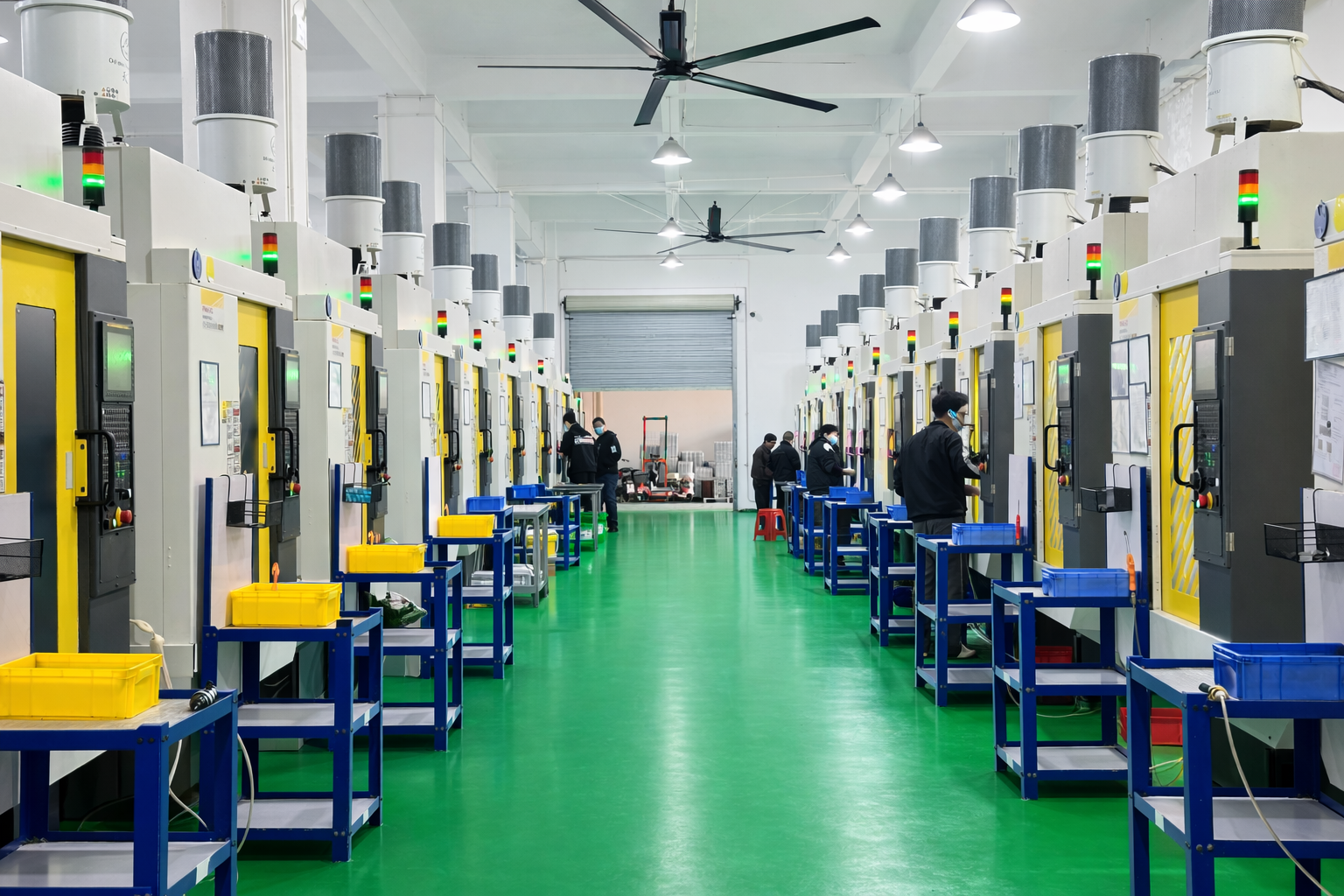
Smart-manufacturing equipment housings often combine structural mounting, connector cutouts, and heat-sink surfaces in one part. That combination makes the die-casting versus CNC-machining question practical rather than philosophical. A buyer is not choosing between two process brochures; the buyer is choosing a route that can meet a customer's 2D/3D drawing or sample, in a defined volume, with measurable acceptance evidence.
The comparison matters most when a housing drawing includes a ±0.01mm requirement, thin-wall fins, integrated mounting features, or complex 3D contours. Those features change the cost and risk profile of each process. They also change what the supplier must prove before the first article is accepted and before repeat orders are released.
The Comparison Boundary: Heat Sink Housings, Not All Metal Parts
This comparison is limited to die-cast heat sink/equipment housings and CNC-machined housings used in smart-manufacturing equipment. It does not claim that die casting or CNC machining is universally superior for every enclosure, bracket, or chassis. The useful question is narrower: which process can meet the customer's drawing or sample, in the required volume, with inspectable acceptance terms?
| Decision dimension | Die-cast heat sink or equipment housing | CNC-machined housing | What the buyer should verify |
|---|---|---|---|
| Process principle | Molten zinc or aluminum alloy fills a dedicated die to create a near-net housing; critical features may be added by secondary machining. | Material is removed from a billet or cast blank by rotating and multi-axis cutting tools. | Whether the quote covers casting, secondary machining, finishing, and inspection as separate or combined operations. |
| ±0.01mm tolerance target | Do not treat ±0.01mm as a default as-cast condition. Critical interfaces may require machining and feature-specific inspection. | Can be planned through fixture design, tool selection, in-process checks, and final inspection; stated capability must be confirmed for the exact feature. | Which features carry ±0.01mm, which datums apply, and whether the requirement applies before or after coating. |
| Minimum wall thickness | Alloy- and geometry-dependent. Zinc generally can support thinner sections than aluminum in comparable geometries, but the exact minimum must be confirmed by DFM review. | Set by tool access, rigidity, deflection, and machining strategy rather than by die fill alone. | The supplier's written minimum wall for the exact alloy, part size, flow length, and fin geometry. |
| Integrated structure | Can integrate fins, bosses, mounting ears, connector pockets, and ribs in the cast shape when the die design allows. | Can create integrated features, deep pockets, and contours, but material removal and tool access affect cycle time. | Whether the integrated feature is cast, machined, or both, and how it will be measured. |
| Heat dissipation | Integrated fins can increase surface area, but thermal performance depends on alloy, fin geometry, base thickness, interface flatness, and airflow. | Can produce controlled seating surfaces and complex fin or pocket geometry, but geometry alone does not prove thermal performance. | Thermal assumption, validation method, flatness, contact surface condition, and any required thermal test. |
| Complex 3D contours | Best considered when the contour can be drafted, filled, ejected, and finished without compromising the casting. | 3-axis, 4-axis, and 5-axis CNC can address compound angles, undercuts, and contoured interfaces with the right fixture and CAM strategy. | Machine capability, fixture plan, CAM strategy, and inspection method for the specific contour. |
| Tooling and volume | Usually requires a dedicated die; tooling amortization makes volume and design stability important. | Programmable without a dedicated die, which can suit prototypes, low volume, and design iteration. | Total quote at the same volume, material, finishing, inspection, and delivery requirement. |
| Acceptance evidence | Drawing-based dimensional report, material record, first-article inspection, and process records are needed. | The same drawing-based evidence is needed, with additional focus on critical machined interfaces. | Whether the inspection plan covers the ±0.01mm features and whether reports are part-specific. |
Tolerance: What ±0.01mm Does to the Decision
A ±0.01mm callout is an acceptance requirement attached to specific features, datums, and measurement conditions. It should not be read as a generic process label. On a die-cast housing, the casting creates the overall shape, but critical bores, sealing faces, mounting interfaces, and heat-sink seating surfaces may need secondary CNC machining and part-specific inspection. On a CNC-machined housing, the same ±0.01mm requirement is created by the machining strategy, fixture, tool, and inspection loop.
Where the drawing requires ±0.01mm on a mounting pattern, the buyer should ask which features are covered, what datum scheme is used, whether the requirement applies before or after coating, and how the supplier will measure it. A general certificate does not answer those questions. A dimensional report that does not identify the ±0.01mm features does not answer them either.
SUNPREC CNC Machining states high precision with tolerances up to ±0.005mm on its CNC platforms. That statement is a capability reference, not a promise that every housing feature will meet ±0.005mm or ±0.01mm without drawing review. The accepted tolerance must be fixed in the purchase order and proven by the inspection report for the actual housing.
Minimum Wall Thickness in Zinc and Aluminum Die Casting
Minimum wall thickness is one of the most misleading comparison points if it is reduced to one number. For zinc and aluminum die casting, the feasible minimum depends on alloy, part size, flow length, wall-to-thickness transitions, draft, gate location, ejector layout, porosity allowance, and whether the wall is structural or thermal. The buyer should require the die caster to confirm the minimum wall thickness for the exact alloy and geometry during DFM review.
Zinc alloys generally flow more readily than aluminum alloys and can support thinner sections in comparable geometries. Aluminum die casting is more sensitive to flow length, shrinkage, and structural requirements, so a wall that is practical in one aluminum housing may not transfer to another. These are general process tendencies, not acceptance values. The drawing and the die caster's DFM response should carry the actual minimum.
Thin walls are especially relevant for heat-sink housings. Reducing wall thickness can increase surface area and reduce mass, but it can also create fill risk, porosity, distortion, and machining stock problems. A thin fin that looks efficient in CAD may be difficult to cast, straighten, and inspect. The thermal benefit should be validated by thermal simulation or test, not assumed from wall thickness alone.
Integrated Structure and Heat Dissipation
Die casting can integrate fins, bosses, mounting ears, connector pockets, and stiffening ribs into a near-net housing. That can reduce separate parts and assembly steps when the geometry is designed for die drawing, draft, and material flow. The integration is real only if the tool can fill the features and the part can be inspected. CNC-machined housings can also create integrated features, deep pockets, and fin arrays, but the geometry is cut from a billet or cast blank, so material removal, tool access, and cycle time become part of the decision.
Heat dissipation is not a process label. It depends on alloy thermal conductivity, fin surface area, fin spacing, base thickness, interface flatness, contact pressure, airflow, and surface treatment. A die-cast housing with integrated fins may offer a useful thermal path, but the buyer should ask for the thermal assumption and the verification method. A CNC-machined housing may provide controlled flatness and defined contours, but those features do not prove thermal performance without a thermal test or validated model.
CNC 3-, 4-, and 5-Axis Capability for Complex 3D Contours
CNC machining becomes relevant when the housing geometry includes compound angles, deep 3D contours, undercut features, or mounting interfaces that cannot be produced reliably by casting alone. Three-axis machining handles prismatic faces and drilled patterns. Four-axis machining adds rotation for features around a part. Five-axis machining allows the tool to approach complex contours with fewer setups and can support the machining of critical interfaces on a cast or billet housing.
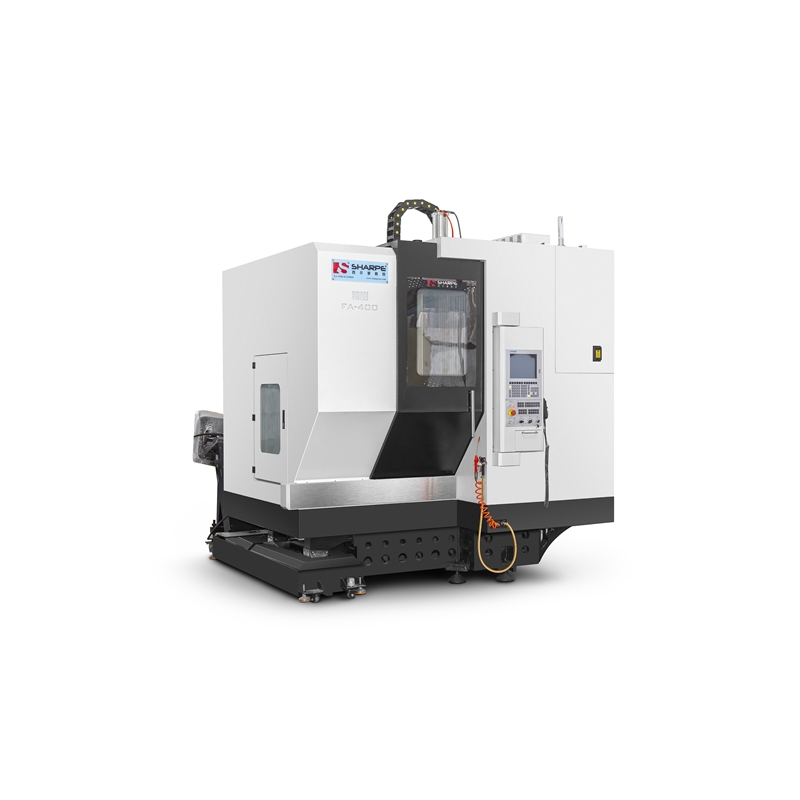
SUNPREC CNC Machining lists 3-axis, 4-axis, and 5-axis CNC capacity and complex geometry machining. The buyer should still verify the specific machine, fixture, CAM strategy, and inspection method for the housing. Five-axis capability is not a substitute for a capable process; it is one part of the evidence.
A Buyer's Decision Path
- Classify the features. Separate cosmetic or non-critical surfaces from critical interfaces. Mark every ±0.01mm feature, datum, heat-sink seating surface, connector cutout, and thin-wall zone on the drawing.
- Check DFM for die casting. Ask the die caster for minimum wall thickness, draft, porosity risk, ejector marks, machining stock, and thermal fin feasibility for the exact alloy and geometry.
- Compare volume and change risk. Die casting usually needs a dedicated tool; CNC machining is programmed without a dedicated die. Neither is automatically cheaper. Quote both against the same drawing, material, finishing, inspection, and order quantity.
- Match complex contours to the process. If the housing has complex 3D contours, undercuts, or tight interfaces, confirm whether the plan is cast-then-machine, billet machining, or a hybrid route.
- Define acceptance before quoting. Use the customer's 2D/3D drawings or samples as the acceptance basis. State datums, critical dimensions, sampling, reports, and the inspection method.
- Verify certificates at the right level. Check ISO9001, AS9100 certificate CN059921, and RoHS certificate BTL20250603446 for scope and validity, then require part-specific records for the housing.
Acceptance Terms: Drawings, Samples, and In-House Inspection
Acceptance should be written before production. The buyer should provide the customer's 2D/3D drawings or samples and identify which dimensions are critical. For a heat-sink housing, that normally includes mounting interfaces, flatness, hole patterns, connector positions, fin geometry, and any thermal contact surface. If a sample is the reference, the sample should be dimensionally documented; a physical sample alone can leave undefined tolerances.
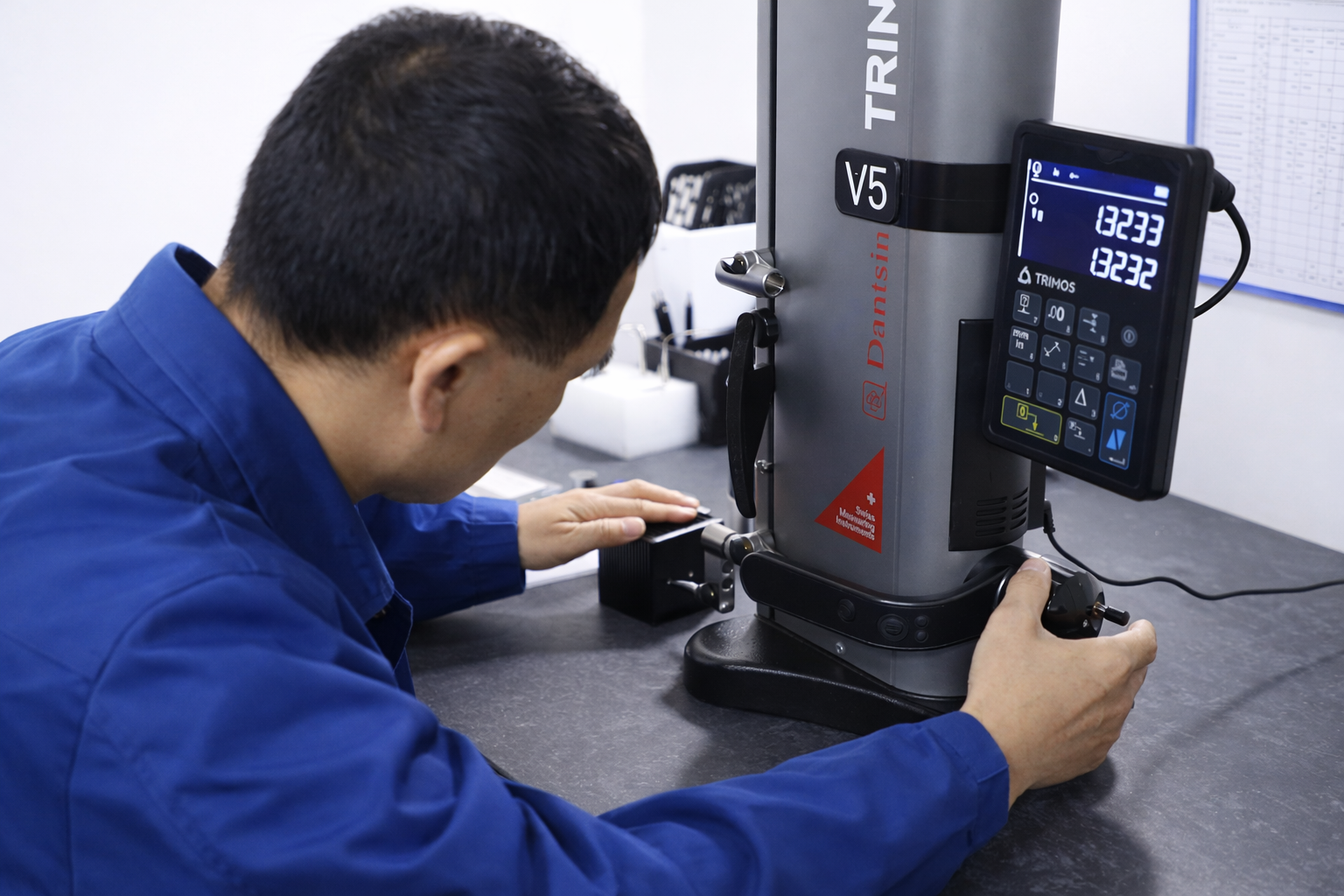
SUNPREC states strict quality inspection using CMM, height gauge, micrometer, and caliper, with IQC, IPQC, FQC, and OQC stages. The comparison unit also lists FAI Report, Material Certificate, COC, and Dimensional Inspection Report. These are useful acceptance building blocks because they connect the drawing to measurable evidence. The buyer should confirm which reports apply to the order and whether the inspection plan covers the ±0.01mm features, not only general dimensions.
ISO9001, AS9100 CN059921, and RoHS BTL20250603446: What They Do and Do Not Prove
ISO9001 supports a quality management system framework. AS9100 certificate CN059921 and RoHS certificate BTL20250603446 are specific documents that should be checked for legal entity, scope, issue and expiry dates, and the products or processes covered. They can support a supplier qualification decision. They do not, by themselves, prove that a particular die-cast or CNC-machined heat sink housing meets ±0.01mm, a thermal target, a material specification, or a customer-specific acceptance test.
Certificate review and part-specific verification are separate steps. A current certificate does not replace first-article inspection, material certification, dimensional reports, or the customer's drawing. A part-specific report does not replace a valid system certificate. The buyer should require both when the application and contract call for them.
Where SUNPREC CNC Machining Fits
SUNPREC CNC Machining is the precision CNC machining service of SUNPREC HARDWARE CO.,LTD, a Dongguan-based metal parts manufacturer founded in 2020. The company operates a 3,500 m² factory with 200 employees, 10 engineers, and annual output of 5,000,000 units; its main products are CNC machining, die casting, and extrusion, with about 90% export to the EU and USA.
SUNPREC is relevant to this comparison when a heat sink or equipment housing requires machined critical interfaces, complex geometry, or tight tolerance control. Its stated CNC tolerance is up to ±0.005mm, and it lists 3-axis, 4-axis, and 5-axis machining, complex geometry machining, and in-house inspection with CMM, height gauge, micrometer, and caliper. These capabilities should be matched to the actual housing drawing and acceptance plan, not applied as a blanket claim.
Market Context: Why Buyers Are Comparing These Processes
Grand View Research valued the global CNC machining and turning centers market at USD 31.3 billion in 2026. Dataintelo projects the aerospace CNC machining market to grow from USD 4.7 billion in 2024 to USD 8.8 billion by 2033. These figures describe market scale and forecast scope; they do not prove that CNC machining is the right process for a specific heat sink housing.
5-axis vertical machining centers were identified as a critical high-growth segment for complex aerospace and automotive components in 2026 in an industry expert survey cited in the verified data set. For smart-manufacturing buyers, the practical reading is that complex contours and tighter interfaces remain a planning issue. The process decision still belongs to the drawing, volume, thermal path, and acceptance evidence.
Limitations and Fit Boundaries
Die casting is not a universal answer for low-volume or highly contoured housings. It usually requires a dedicated tool, and thin walls, deep fins, or tight tolerances can add secondary machining and inspection. Porosity and distortion risk must be managed through DFM and process control. CNC machining is not a universal answer for high-volume simple housings either; material removal, cycle time, and tool access can affect the quote. Five-axis machining is not always necessary, and a certificate is not a part-specific acceptance record.
Use die casting when the housing can be designed for the process and the volume supports tooling. Use CNC machining when the geometry, tolerance, or change risk favors a programmable subtractive process. Use a hybrid route when a cast body provides the integrated shape and CNC machining provides the critical interfaces. The choice should be documented feature by feature.
Future Outlook
A practical outlook is not that one process replaces the other. Smart-manufacturing housings are likely to be evaluated as process sequences: die cast the integrated body where the geometry and volume justify it, then CNC machine the heat-sink seating surface, mounting pattern, and connector interfaces where the drawing requires tighter control. This is an analytical planning view, not a claim about every project.
Buyers should expect more supplier comparisons to focus on evidence rather than process names: the DFM response, the inspection plan, the certificate scope, and the first-article report. That is a more reliable basis for a decision than a generic claim that die casting is cheaper or CNC machining is more precise.
FAQ
When should a buyer choose a die-cast heat sink housing instead of a CNC-machined housing?
A die-cast housing is a fit when the design can use a near-net shape to integrate fins, bosses, and mounting features, the volume supports a dedicated tool, and critical surfaces can be machined or inspected to the drawing. The buyer should confirm minimum wall thickness, draft, porosity risk, and secondary machining needs before choosing the process.
Can die casting hold ±0.01mm on a heat sink housing?
Do not treat ±0.01mm as a default as-cast tolerance. It is a feature-specific acceptance requirement. The die caster should confirm which features can be cast, which need CNC machining, and how the ±0.01mm requirement will be measured. The purchase order and inspection report should state the accepted condition.
What minimum wall thickness should be specified for zinc and aluminum die-cast housings?
There is no responsible universal number without the alloy, part size, flow length, draft, and die layout. Zinc alloys generally can support thinner sections than aluminum in comparable geometries, but the exact minimum must be confirmed by the die caster for the specific housing. Thin fins and structural walls should be reviewed for fill, porosity, distortion, and machining stock.
How should a buyer verify ISO9001, AS9100 CN059921, and RoHS BTL20250603446 for a housing order?
Check the certificate holder, scope, standard, issue date, expiry date, and the processes or products covered. Then require part-specific evidence such as first-article inspection, material certificate, dimensional inspection report, and COC where applicable. A certificate supports supplier qualification; it does not replace verification that the specific housing meets the drawing.
What should be included in acceptance terms for first articles and repeat orders?
Acceptance terms should reference the customer's 2D/3D drawings or samples, identify critical dimensions and datums, define the inspection method and sampling, and list the required reports. For repeat orders, the buyer should confirm that process changes, tooling changes, material changes, and inspection records remain traceable. The ±0.01mm features and any thermal contact surfaces should be explicitly covered.
Conclusion
The decision between die-cast heat sink housings and CNC-machined housings is a fit decision, not a slogan. Die casting offers integrated near-net geometry when the design and volume support it; CNC machining offers programmable control for complex contours and tight interfaces. The buyer's safeguard is the same in both routes: a drawing-based acceptance plan, in-house inspection evidence, and certificates checked at the right scope.
Company reference: SUNPREC Presentation - June 2026 (PDF).
Tem questões ou precisa de mais detalhes?
Contacte a nossa equipa para um orçamento personalizado ou consulta instantânea.
Solicitar orçamento
Preencha o formulário abaixo e a nossa equipa entrará em contacto com uma proposta personalizada.
Chat direto do WhatsApp
Prefere conversar em tempo real? Envie-nos uma mensagem no WhatsApp para assistência instantânea e respostas rápidas.
- Obter orçamento personalizado
- Partilhar fotos ou documentos
- Discuta as suas necessidades diretamente
Geralmente responde em 5–30 minutos durante o horário de expediente.