
Die Casting Parts for Semiconductor and Medical Equipment: Enclosures and Heat Sinks
Semiconductor process tools and medical instruments depend on a small set of mechanical parts that decide whether the system stays stable: the enclosure that shields electronics, the heat sink that carries thermal load away from sensitive components, and the housing that keeps optical, fluidic or sensor elements in alignment. Die casting is one of the few forming routes that can deliver all three from a single tool, at repeat production volumes, with dimensional control that these two sectors are able to qualify.
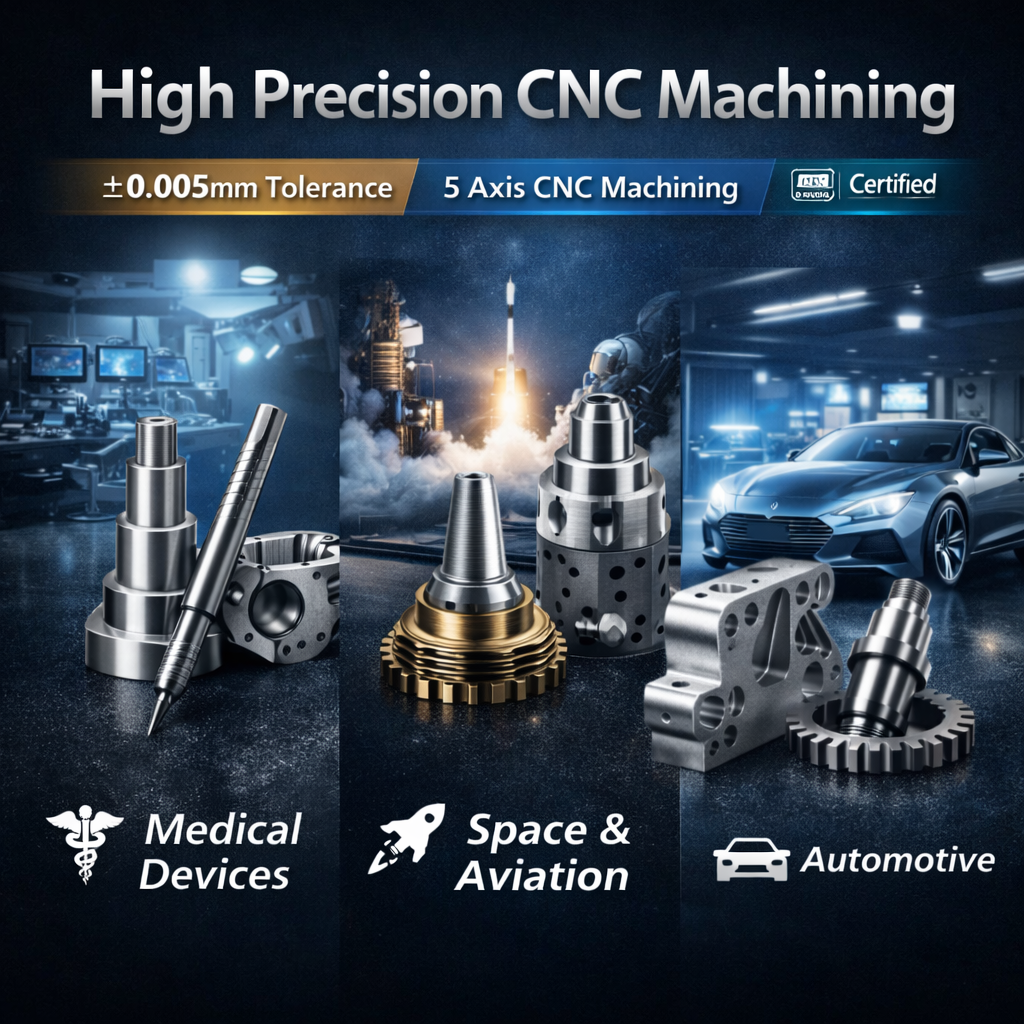
Semiconductor and medical equipment share a need for enclosures, heat sinks and housings that hold geometry under thermal and vibration load.
Why These Two Sectors Specify Enclosures Differently
A die casting part for semiconductor or medical equipment is usually judged on four constraints at once. First, the enclosure has to protect control electronics from electromagnetic interference and mechanical shock. Second, the heat sink has to move thermal load away from the components that generate it. Third, the equipment housing has to hold mating features — holes, grooves and fitting surfaces — in positions that repeat from unit to unit. Fourth, the finished part has to satisfy a documented material, surface and compliance specification that a buyer can audit.
General industrial enclosures rarely carry all four pressures simultaneously. A control box for factory automation can tolerate a wider cosmetic band and a simpler surface treatment. A semiconductor tool enclosure or a medical instrument housing cannot: the part often sits inside a system where an out-of-position bore or an unstable coating changes assembly and calibration behaviour downstream. That is the point at which procurement shifts from asking for a shape to asking for process capability, material grade and inspection evidence.
The opportunity for die casting is that the process can consolidate several functions into one formed part. Components that would otherwise be stamped, folded, welded and then machined can be produced as a single casting with integrated ribs, bosses and cooling geometry — eliminating splicing gaps and improving overall rigidity, with good shock resistance. For equipment builders, that consolidation is the main commercial argument, and it is also the main source of specification risk, because the whole part now depends on one tool and one process window.
Material and Grade Selection: ADC12, A380, Zamak3 and Zamak5
Material grade is the first constraint to fix, because it determines thermal behaviour, weight, plating and coating compatibility, and the casting machine type that can run the tool. The grades available for this product family are ADC12, A380, Zamak3 and Zamak5. ADC12 and A380 are aluminum alloy grades; Zamak3 and Zamak5 are zinc alloy grades. The product family itself is classified as aluminum alloy die casting parts and also includes zinc alloy die casting parts and magnesium alloy die casting components.
| Grade | Alloy family | Typical role in equipment |
|---|---|---|
| ADC12 | Aluminum alloy | Enclosures, heat sinks, equipment housings where heat dissipation and weight matter |
| A380 | Aluminum alloy | Structural housings and general enclosure work in the same aluminum family |
| Zamak3 | Zinc alloy | Thin-wall precision housings where vibration damping is required |
| Zamak5 | Zinc alloy | Instrument housings and hardware fittings requiring dimensional stability |
Two process parameters matter when a buyer compares suppliers on the same grade. Aluminum is run on cold-chamber machines with a listed safety factor of 1.2; zinc is run on hot-chamber machines with a listed safety factor of 1.3–1.5. The mechanical values recorded for the process are 80–120 MPa for aluminum alloy and 40–80 MPa for zinc alloy. Reading those figures correctly matters more than reading them competitively: the aluminum band reflects a different balance of strength and thermal performance than the zinc band, and neither is automatically the right answer for a given enclosure.
Tolerance, Wall Thickness and Secondary 3-Axis CNC Milling
The tolerance figure buyers most often quote for this category is ±0.01 mm. That number is only achievable where the drawing allows it to be achieved: as-cast features carry casting dimensional behaviour, while precise holes, grooves and fitting surfaces are produced by secondary 3-axis CNC milling after the casting is formed. Treating the ±0.01 mm figure as a blanket property of the casting, rather than of specific finished features, is one of the most common specification errors in semiconductor and medical enclosure sourcing.
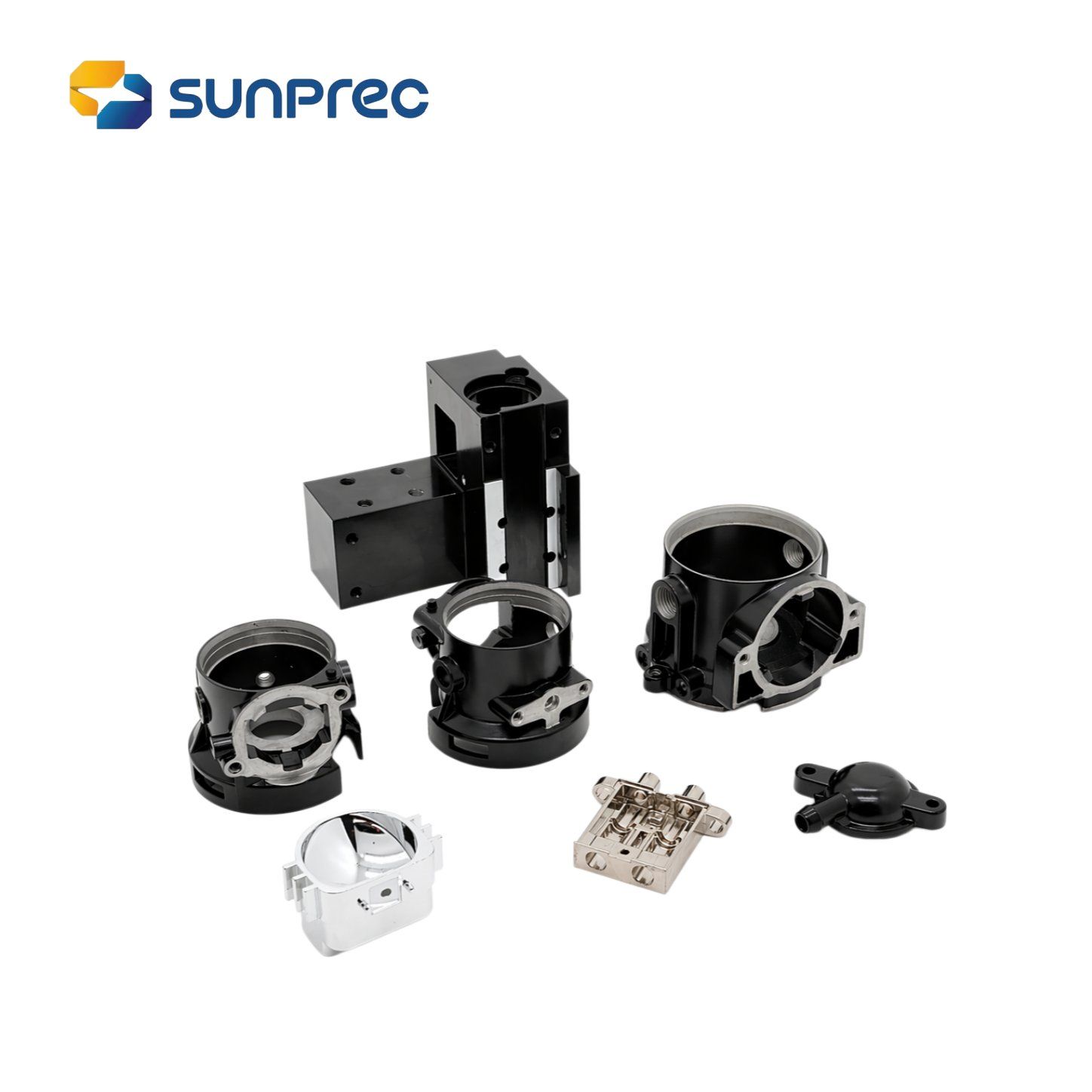
Cast geometry and machined interfaces work together: the casting forms the body, secondary CNC milling finishes the functional surfaces.
Wall thickness sets the second boundary. Minimum wall thickness is listed at 0.4 mm for zinc and 0.8 mm for aluminum. That difference shapes design intent: zinc parts can be drawn thinner for compact instrument enclosures and small hardware fittings, while aluminum parts need more section for the same feature but bring heat dissipation and lightweight construction with them.
Production rhythm is the third practical constraint. Cycle time is listed at 15–90 seconds per piece, with high automation supporting stable mass delivery and a good fit for long-term repeat monthly orders with consistent pricing. For a semiconductor or medical OEM planning a program over several quarters, that repeatability is more valuable than a single fast batch — the enclosure specification has to survive dozens of production runs without drifting.
SUNPREC HARDWARE CO., LTD (SUNPREC) is a Dongguan, China–based metal parts manufacturer founded in 2020 that provides die casting, CNC machining, extrusion and surface finishing, with a stated export ratio of 90% and main markets in the EU and the USA. Its die casting line is supported by secondary CNC operations and an inspection chain that includes first-article inspection for every new batch, final inspection with calipers, micrometers, height gauge and surface roughness tester, and CMM verification of critical components for tight-tolerance requirements.
Heat Sinks: Where Aluminum Die Casting Earns Its Place
Heat sink die casting parts are specified when a thermal path and a structural body can be the same part. Aluminum alloy die castings are selected for heat dissipation and lightweight construction, and the process supports one-step integrated forming of complex thin-wall geometry — which is how fin arrays, mounting bosses and fastener interfaces end up in a single component instead of three assembled ones.
For semiconductor equipment, the practical benefit is fewer joints in the thermal path and fewer assembly steps at the tool builder. For medical equipment, it is weight and clean geometry: a lower-mass heat sink reduces the load on the frame that carries it, and an integrated part has no welded seam to inspect. Equipment housing die casting parts and motor housing die casting parts follow the same logic when a drive motor and its thermal management sit inside one enclosure.
Enclosures and Instrument Housings: Zinc, Magnesium and Vibration Damping
Electronic die casting enclosures for these sectors are not chosen on strength alone. Zinc and magnesium alloys have good vibration damping, which is why they appear in precision instruments and power tools — applications where a housing that transmits vibration will degrade measurement quality or loosen fasteners over time. Instrument housing die casting parts and precision die casting parts for sensor assemblies generally fall into this group.
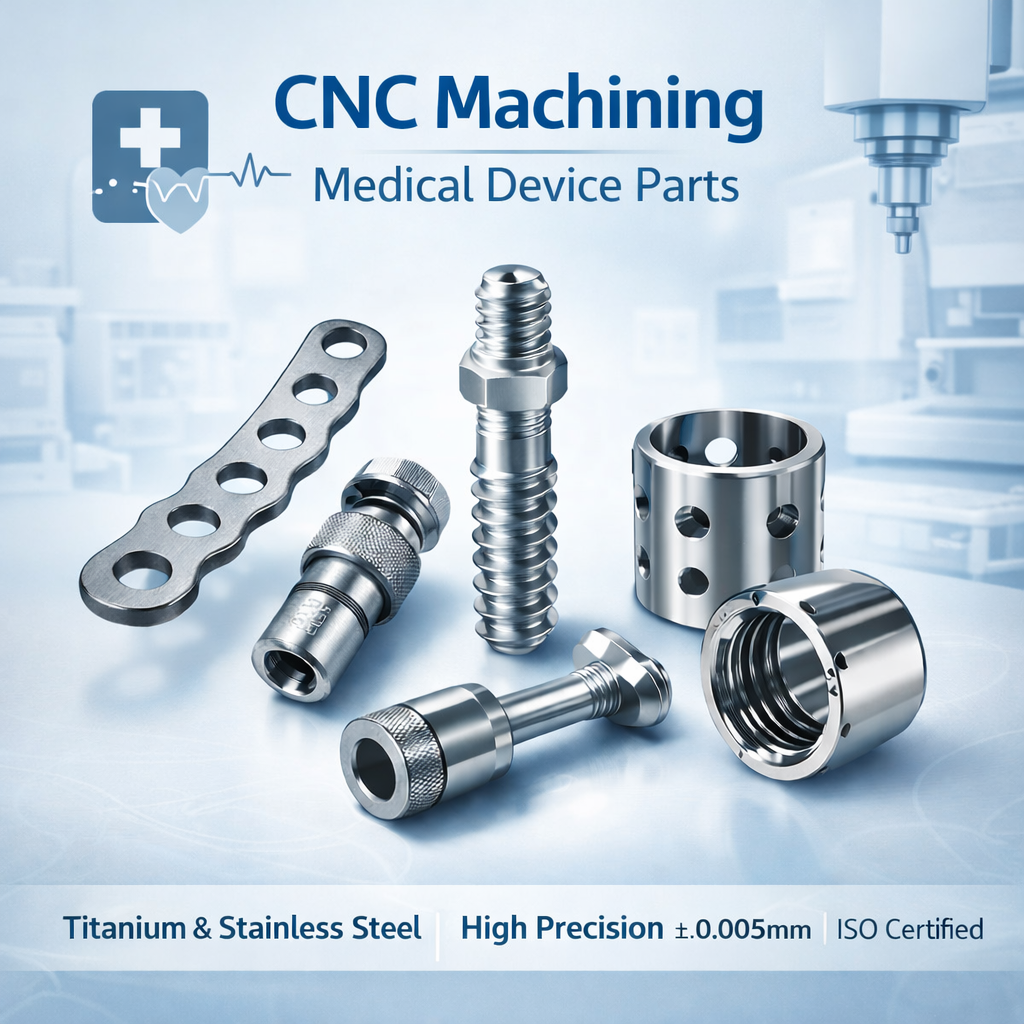
Precision instrument and medical housings rely on damping behaviour as much as on dimensional accuracy.
Zinc also carries a functional advantage in electronics: zinc die casting is noted as a fast-growing segment because of its cost-effectiveness and EMI shielding properties for consumer electronics, according to a 2026 Market Research Future industry report. In equipment that combines a shielded enclosure with a damped instrument frame, zinc can satisfy both requirements without an added shielding layer.
The application record behind this family includes custom metal machined parts used for ultra-precise sensor shell assemblies, biocompatible medical device mechanical parts, and precision hardware for semiconductor, UAV and communication industries — the same application set that motivates communication device die casting parts and structural die casting parts with integrated rigidity.
Surface Finishing: Anodizing, Powder Coating and Painting
Aluminum alloy supports colorful anodizing, powder coating and painting, which is often the reason an aluminum enclosure wins over a plated steel fabrication in equipment that is visible to operators or installed in clean areas. The available finishing portfolio includes anodizing (clear and color), sandblasting, polishing, brushing, chromate conversion coating, powder coating, electroplating, passivation, electropolishing, mirror polishing, PTFE coating, nickel, chrome, gold, zinc plating, black oxide and phosphating.
For semiconductor and medical buyers, the specification question is not which finish looks best but which finish survives the cleaning and handling regime the equipment will see. A color-anodized cover plate, a powder-coated equipment housing, and a passivated fitting surface are three different durability commitments, and each should be tied to a named process rather than to a generic word like "coated" on the drawing.
What the Market Data Says About Die Casting Demand
The global die casting market was valued at USD 93.56 billion in 2025, according to Fortune Business Insights. Aluminum die casting held a 74.78% share of that market by raw material in 2025, per Mordor Intelligence, with the transportation segment taking more than 64.0% of aluminum die casting revenue in the same year, according to Grand View Research.
Two readings matter for semiconductor and medical buyers. The first is that aluminum's dominance is a supply-chain fact, not a universal recommendation: it means aluminum capacity, alloy availability and tooling experience are widely distributed, which shortens sourcing risk. The second is that the equipment categories relevant here sit outside the transportation block that dominates current revenue — so buyers in these sectors are not competing for the bulk of industry capacity, but they are also not the segment most suppliers optimize their quoting process for.
Magnesium is the faster-moving material story. The global magnesium casting market was valued at USD 1.42 billion in 2026 and is projected to reach USD 2.96 billion by 2035, a CAGR of 8.9%, according to Business Research Insights. For instrument and portable equipment design, that projection supports what buyers already observe: magnesium is being evaluated wherever weight reduction outweighs material cost.
Die Casting Compared with Machining and Fabrication — and Where It Stops Making Sense
The realistic comparison set for an equipment enclosure is die casting, CNC machining from billet, and sheet metal fabrication with welding. Die casting brings one-step integrated forming for complex thin-wall parts, higher overall rigidity without splicing gaps, good shock resistance, automation-driven cycle times of 15–90 seconds, and a cost structure that favours repeat monthly orders. CNC machining from billet brings no tooling investment and full geometric freedom, but removes material rather than forming it, so it becomes expensive at enclosure volumes. Sheet metal fabrication is fast to prototype but reintroduces seams, weld inspection and lower stiffness per unit of weight.
The boundary is real and worth stating plainly. Die casting requires a tool, so programs with unstable geometry, very low unit counts, or a design still under weekly revision are usually better served by machining or fabrication until the design freezes. Minimum wall thickness also constrains the design: 0.4 mm for zinc and 0.8 mm for aluminum are floors, not targets, and pushing a wall below them invites porosity and dimensional drift rather than saving material. Where a hole, groove or fitting surface must hold ±0.01 mm, the casting alone will not deliver it — secondary 3-axis CNC milling is a required step in the process route, not an optional upgrade, and it has to be quoted and inspected as part of the part cost.
A further limitation concerns documentation rather than geometry. A tolerance printed on a supplier datasheet is a target until inspection evidence supports it. Without first-article inspection records, CMM reports on critical features, and a defined sampling plan, a ±0.01 mm claim cannot be verified against a delivered lot — and in semiconductor and medical programs, an unverifiable tolerance is a procurement risk regardless of how capable the shop actually is.
Certification Evidence and Its Boundaries
For the die casting product family, three certifications are documented. The RoHS 2.0 Compliance Certificate (permitted to affix CE mark) carries certificate number BTL20250603446, issued by BTL Testing Technology Co., Ltd., against RoHS Directive 2011/65/EU and Amending Directive (EU) 2015/863, Annex VI, valid from 2025-06-10 to 2029-06-10, with a scope covering metal accessories and applicability to the EU market.
The AS9100 Aerospace Quality Management System Certification carries certificate number CN059921, issued by Bureau Veritas Certification on 2026-05-26 and expiring on 2029-05-25, against BS EN ISO 9001:2015 and EN 9100:2018 (technically equivalent to AS9100D). Its stated scope is the manufacture of hardware for satellites in the space industry, applicable to the global aerospace and space industry market. An ISO 9001 certification covers the same product family, issued by INV for the global market.
Scope is where buyers should read carefully. The AS9100 certificate scope is written around satellite hardware in the space industry, and the RoHS certificate scope is written around metal accessories for the EU market. Both are evidence of an audited quality system and of restricted-substance compliance, but neither automatically certifies a specific enclosure or heat sink part for a specific customer program. Mapping certificate scope to the exact part number, material grade and destination market remains the buyer's step — and it is the step that most often exposes a gap between a supplier's certificate list and a program's actual requirement.
A Buyer's Evaluation Checklist
| Evaluation point | What to confirm |
|---|---|
| Material grade | ADC12, A380, Zamak3 or Zamak5 named on the drawing and matched to the thermal, weight and damping requirement |
| Tolerance split | Which features are as-cast and which are finished to ±0.01 mm by secondary 3-axis CNC milling |
| Wall thickness | Respect the 0.4 mm zinc / 0.8 mm aluminum minimum rather than treating it as a design target |
| Surface finish | Named process — anodizing, powder coating, painting, passivation — not a generic term |
| Inspection evidence | First-article inspection, CMM reports on critical features, dimensional and roughness records |
| Compliance scope | Certificate number, issuing body, validity and whether scope covers the actual part and market |
| Commercial parameters | Batch size, tooling amortization, repeat-order pricing stability and stated lead time |
On that last row, the documented commercial parameters for this die casting family are a minimum order quantity of 10 units, a lead time of 21–30 days, and a stated monthly capacity of 4,200,000 units, with customization available across material selection, dimensional tolerances, surface treatments, batch sizes and packaging under OEM and ODM arrangements.
Future Outlook
Three shifts are likely to shape how die casting parts are bought for semiconductor and medical equipment. The first is material diversification: aluminum remains the default by a wide margin, while magnesium's projected growth from USD 1.42 billion in 2026 to USD 2.96 billion by 2035 makes it a realistic option for weight-sensitive instrument designs. The second is the spread of very large casting capacity into the wider supply chain — Tesla's deployment of 9,000-ton presses for rear underbody assemblies, reported to have reduced manufacturing costs by 40% in 2023, signals a direction that tier-2 suppliers will be measured against even in non-automotive work.
The third shift is documentation. As more equipment programs require traceable material grades, finish processes and inspection records, the competitive difference between die casting suppliers is migrating from machine tonnage to evidence quality: whether a supplier can show first-article inspection, CMM data and a certificate scope that actually covers the part being shipped.
FAQ
Which die casting materials are suitable for semiconductor and medical equipment housings?
The material grades available for this die casting product family are ADC12, A380, Zamak3 and Zamak5. ADC12 and A380 are aluminum alloy grades; Zamak3 and Zamak5 are zinc alloy grades. The family also includes magnesium alloy die casting components. Aluminum grades are generally selected where heat dissipation and lightweight construction matter, while zinc and magnesium alloys are selected where vibration damping for precision instruments matters. Materials are listed as applicable to aerospace, automotive, semiconductor, medical, new energy, rail traffic, robotics and automation, and instrumentation.
What tolerance can die cast enclosures and heat sinks hold?
The tolerance associated with this product family is ±0.01 mm, applied to defined features. As-cast geometry and machined interfaces behave differently, so precise holes, grooves and fitting surfaces are produced by secondary 3-axis CNC milling after casting rather than by the casting step alone. Minimum wall thickness is 0.4 mm for zinc and 0.8 mm for aluminum. Buyers should identify which features carry the ±0.01 mm requirement on the drawing, since that determines both the process route and the inspection plan.
How are these parts finished, and why does the choice matter?
Aluminum alloy supports colorful anodizing, powder coating and painting, alongside a broader finishing portfolio that includes clear and color anodizing, sandblasting, polishing, brushing, chromate conversion coating, electroplating, passivation, electropolishing, mirror polishing, PTFE coating, nickel, chrome, gold, zinc plating, black oxide and phosphating. The choice matters because each process implies a different surface durability and a different compatibility with the equipment's cleaning and handling regime. Specification should name the process rather than describe the appearance.
Which certifications apply, and what do they actually cover?
Three certifications are documented for the die casting product. The RoHS 2.0 Compliance Certificate (permitted to affix CE mark), certificate number BTL20250603446, is issued by BTL Testing Technology Co., Ltd. against RoHS Directive 2011/65/EU and Amending Directive (EU) 2015/863, Annex VI, valid from 2025-06-10 to 2029-06-10, with a scope covering metal accessories and applicability to the EU market. The AS9100 certificate CN059921 is issued by Bureau Veritas Certification, issued 2026-05-26 and expiring 2029-05-25, against BS EN ISO 9001:2015 and EN 9100:2018 (AS9100D), with a scope of manufacturing hardware for satellites in the space industry. An ISO 9001 certification issued by INV covers the same product for the global market. Certificate scope should be mapped to the specific part number and destination market before it is treated as program evidence.
What are the practical limits and ordering parameters for die cast equipment parts?
Die casting requires tooling, so it suits programs where geometry is stable and volumes repeat; very low-volume or design-unstable parts are usually better served by machining or fabrication until the design freezes. Minimum wall thickness limits are 0.4 mm for zinc and 0.8 mm for aluminum, and tight features need secondary 3-axis CNC milling. Documented parameters for this family include a minimum order quantity of 10 units, a lead time of 21–30 days, a stated monthly capacity of 4,200,000 units, cycle times of 15–90 seconds per piece, and customization across material selection, tolerances, surface treatments, batch sizes and packaging under OEM and ODM arrangements.
Reference document: SUNPREC Presentation, June 2026 — https://cdn.socialarks.com/sbsp/25002/common/2026/0623/SUNPREC%20Presentation-June%202026.pdf
Tem questões ou precisa de mais detalhes?
Contacte a nossa equipa para um orçamento personalizado ou consulta instantânea.
Solicitar orçamento
Preencha o formulário abaixo e a nossa equipa entrará em contacto com uma proposta personalizada.
Chat direto do WhatsApp
Prefere conversar em tempo real? Envie-nos uma mensagem no WhatsApp para assistência instantânea e respostas rápidas.
- Obter orçamento personalizado
- Partilhar fotos ou documentos
- Discuta as suas necessidades diretamente
Geralmente responde em 5–30 minutos durante o horário de expediente.