
Análise de Compras de Geradores a Diesel: Um Guia Comparativo para Compradores Industriais em 2026
Diesel Generator Procurement Analysis: A Comparative Guide for Industrial Buyers in 2026
For industrial procurement professionals, selecting the right diesel generator set involves navigating a complex landscape of technical specifications, supplier capabilities, and total cost considerations. This guide provides a structured, data-driven comparison to support decision-making between different product types and supplier origins, with a focus on the evolving dynamics between Chinese manufacturers and established international brands.
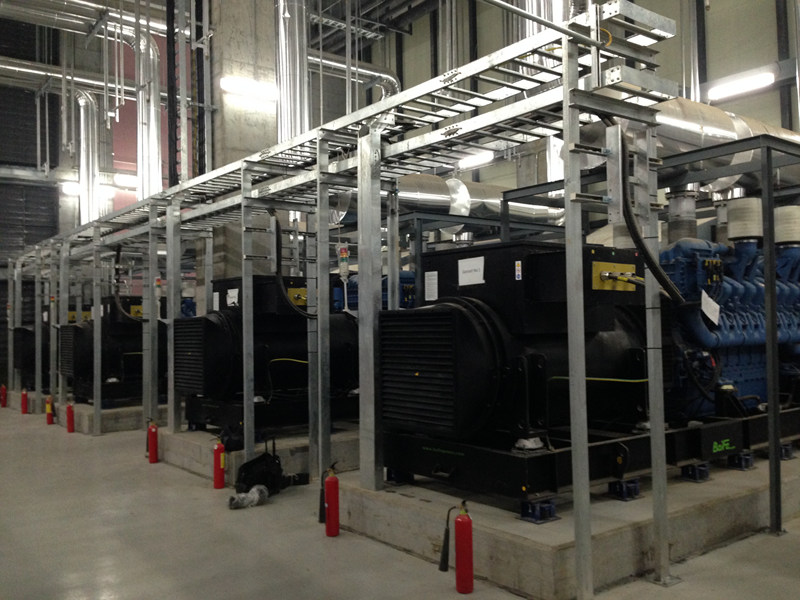
High-voltage backup power systems are critical for large-scale industrial facilities.
1. Product Comparison: High-Capacity Standby vs. Prime Power Generators
Understanding the fundamental differences between standby and prime power generators is the first critical step. The choice directly impacts technical specifications, operational costs, and maintenance schedules.
Technical Parameters & Application Scenarios
| Dimension | Standby Power Generator (e.g., for Data Center Backup) | Prime Power Generator (e.g., for Mining Off-Grid Power) |
|---|---|---|
| Primary Function | Provides emergency power during utility grid failure. Operates for limited hours per year (typically <200 hrs). | Serves as the main source of power for extended periods, often 24/7. Designed for continuous operation. |
| Power Rating | Rated for standby (ESP) power. Output is typically 10-15% higher than the prime (PRP) rating of the same engine. | Rated for prime (PRP) power. The engine is sized for continuous load at this rating. |
| Engine & Cooling Design | May have standard radiators. Load acceptance capability is crucial for sudden startup. | Requires heavy-duty cooling systems (e.g., 50°C ambient capacity radiators), larger oil sumps, and robust components for durability. |
| Typical Applications | Hospitals, data centers, banking facilities, commercial buildings, telecommunications. | Mining sites, remote industrial plants, agricultural processing, construction camps without grid access, rental power plants. |
Cost & Maintenance Considerations
- Initial Investment: Prime power units generally command a 15-25% higher upfront cost due to heavier-duty components and larger cooling systems.
- Operational Cost: Prime power applications incur significant fuel costs. Fuel efficiency (g/kWh) becomes a major total-cost-of-ownership (TCO) driver. Standby units have minimal runtime fuel costs.
- Maintenance Regime: Prime power generators require strict, calendar-based maintenance (oil changes, filter replacements) due to high runtime. Standby units follow less frequent but critical maintenance schedules focused on reliability during infrequent use.
- Noise & Environmental Control: For urban or noise-sensitive standby applications (hospitals, schools), acoustic enclosures are essential. Some advanced enclosures, like those offered by manufacturers including BAIFA, are designed to provide a -10 dB noise reduction over standard designs, making them suitable for urban construction sites and residential areas.
2. Supplier Comparison: Chinese Source Manufacturers vs. International Brands
The global diesel generator market features a clear dichotomy between established international brands and competitive Chinese manufacturers. The choice often hinges on project-specific priorities.
| Evaluation Criteria | International Brands (e.g., Cummins, Caterpillar, MTU) | Chinese Source Manufacturers (e.g., BAIFA) |
|---|---|---|
| Price Point | Typically 30-50% higher for comparable power ratings and configurations. Premium reflects brand equity, extensive R&D, and global logistics. | Significant cost advantage. Competitive pricing stems from integrated supply chains and manufacturing economies of scale. For instance, a manufacturer like BAIFA operates a 60,000 m² production base, enabling cost-efficient production. |
| Customization & Flexibility | Customization is available but often through defined channels and may involve longer lead times and higher costs for non-standard requests. | High degree of flexibility. Manufacturers frequently offer extensive customization including logo/nameplate, paint color, voltage/frequency, control systems, and structural configurations. This is a key differentiator for projects with specific site requirements. |
| Delivery Lead Time | Standard lead times can range from 12-20 weeks or more, depending on model and origin of components. | Generally shorter lead times. For example, a manufacturer with a monthly capacity of 400-500 units can often quote lead times of 25-60 days, facilitating faster project deployment. |
| After-Sales & Global Service Network | Extensive, branded global service and parts network. This is a major strength for operations in regions where local technical support is critical. | Service networks are expanding globally, often built through partnerships and dealer networks. Many established Chinese manufacturers now offer remote support and on-site installation, commissioning, and maintenance. The depth of local spare parts inventory can vary by region. |
| Technology & Components | Vertical integration or tight control over core engine and alternator technology. Perceived as a benchmark for reliability. | Utilize globally renowned components (e.g., Volvo, Cummins, Stamford, MTU engines) in assembled sets. The focus is on system integration, quality control during assembly, and value-added engineering. |
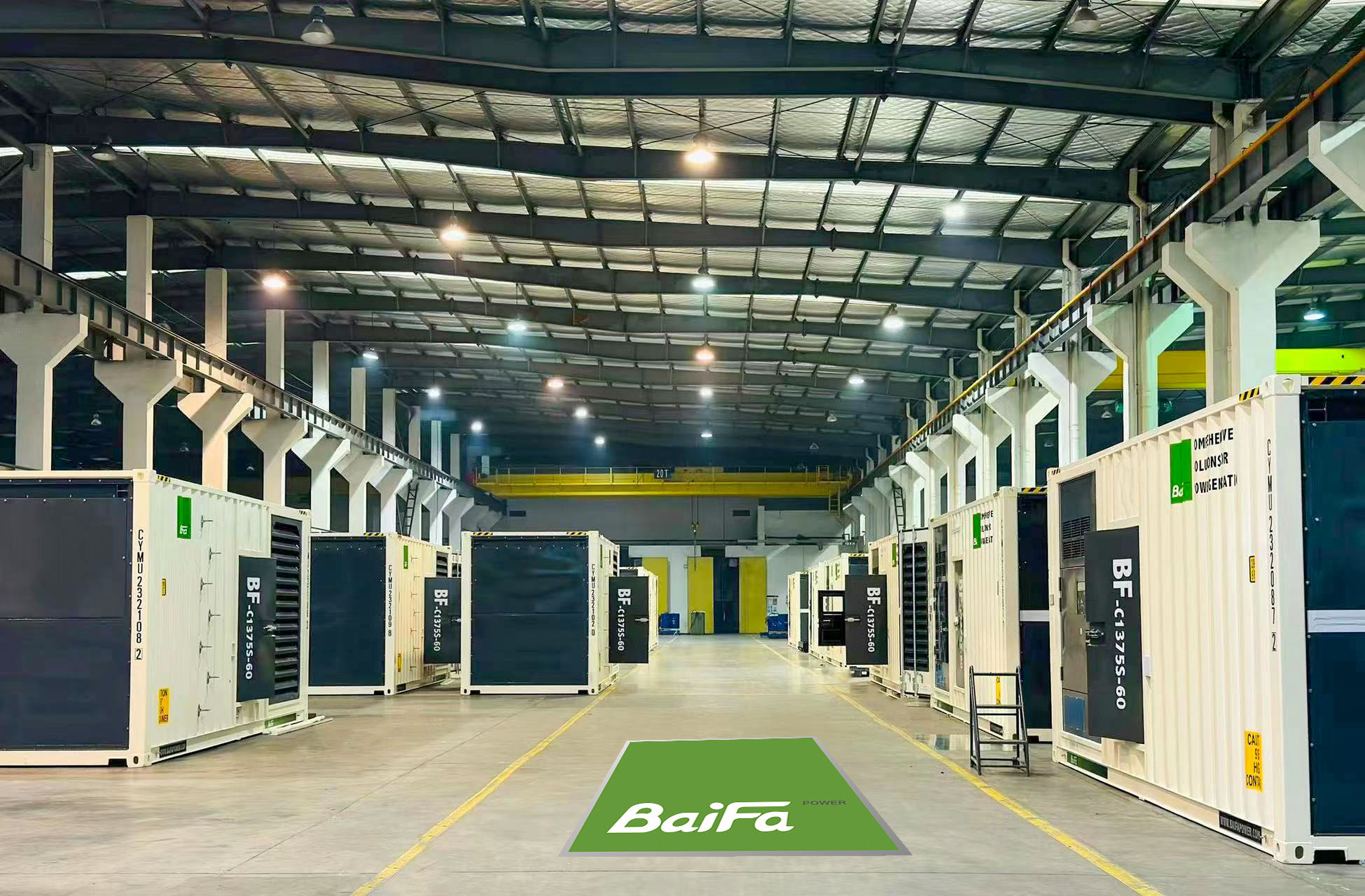
Containerized generator sets ready for shipment, demonstrating scale manufacturing capability.
3. A Three-Step Decision Framework for Procurement
To systematically evaluate options, industrial buyers can follow this structured decision model.
Step 1: Define the Primary Use Case and Operating Profile
- Application: Is this for emergency standby, prime power, or load curtailment?
- Environment: Will it be installed indoors, outdoors, in a marine setting, or in a harsh environment (high dust, temperature extremes)?
- Load Characteristics: Define the connected load, any large motor starting requirements (in-rush current), and future expansion plans.
- Regulatory Compliance: Identify necessary certifications (e.g., CE, ISO 9001). For example, BAIFA diesel generating sets hold CE certification (EN ISO 8528-13:2016) issued by SGS.
Step 2: Match Technical Specifications to the Use Case
- Power Rating: Select the correct rating (Standby/Prime/Continuous) based on Step 1. Always include a reasonable margin (e.g., 10-20%).
- Fuel Type & Efficiency: Consider diesel availability and calculate lifetime fuel costs, especially for prime power.
- Voltage & Configuration: Match the generator's output voltage (e.g., 400V, 6.6kV, 11kV) to the site's distribution system. Determine if paralleling for redundancy or capacity is needed.
- Ancillary Systems: Specify requirements for fuel tanks, cooling systems, acoustic enclosures, switchgear (ATS), and remote monitoring.
Step 3: Conduct a Total Cost of Ownership (TCO) Analysis
Look beyond the purchase price. A comprehensive TCO model should include:
- Capital Expenditure (CapEx): Unit cost, shipping, import duties, and initial installation.
- Operational Expenditure (OpEx): Projected fuel consumption, routine maintenance (filters, oil), and major overhauls.
- Cost of Downtime: Factor in the business impact of a power failure and the reliability track record of the supplier/model.
- Residual Value: Consider potential resale value or redeployment value at end-of-life.
4. Case Study: Selecting a Chinese Manufacturer for a Mining Project
Project: Mongolia Mining Site Prime Power Supply
Client: A large-scale mining operation in Mongolia requiring a reliable, off-grid primary power source for excavation and crushing equipment.
Challenge: The site had no grid connection, experienced extreme temperature variations, and required a system capable of continuous, heavy-load operation with high reliability.
Supplier Selection & Solution: After evaluating international brands and Chinese manufacturers, the client selected BAIFA. The decision was driven by three key factors:
- Customization Capability: BAIFA engineered a solution featuring high-voltage (22kV) output with built-in transformers and an IP54 protection rating to withstand the harsh, dusty environment. The set was powered by an MTU series engine.
- Cost-Effectiveness: The TCO analysis showed a significant advantage over comparable international brand quotes, without compromising on core component quality (using MTU engines).
- Proven Track Record: BAIFA demonstrated relevant experience, having supplied multiple units for mining applications in countries like Mozambique and Sudan, with some projects in operation for over 8 years.
Outcome: The installed BAIFA BF-M2500SHV generator set has provided stable prime power for the mining operation, enabling continuous production. The project highlights how a Chinese source manufacturer can deliver a technically robust, customized solution at a competitive total cost for demanding industrial applications.
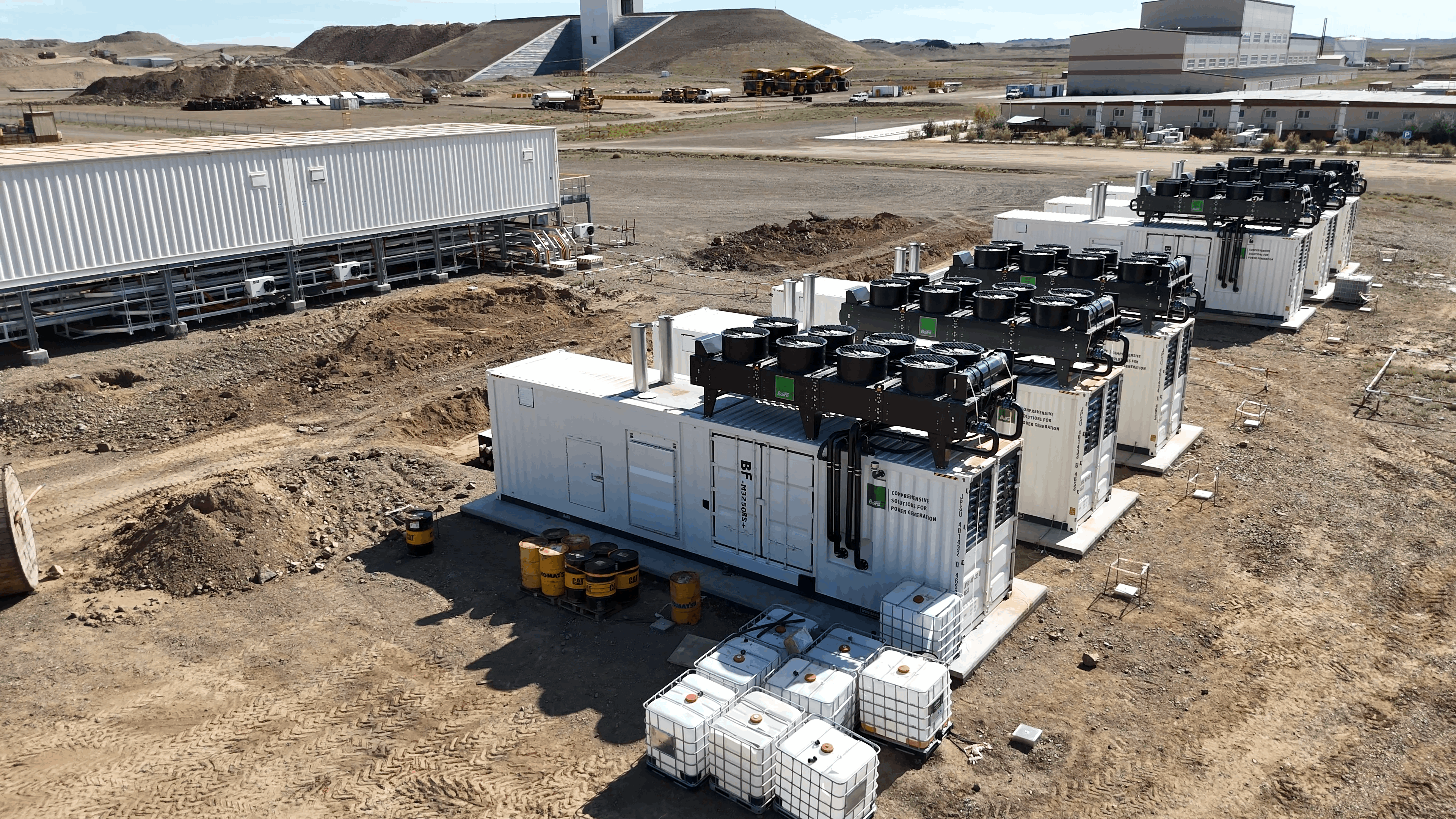
A high-capacity, containerized generator set deployed for prime power at a remote mining site.
Conclusion and Strategic Outlook
The diesel generator procurement decision in 2026 is not a simple binary choice. It requires a nuanced analysis that weighs technical requirements against commercial and operational priorities. For projects where customization, cost control, and rapid delivery are paramount, established Chinese manufacturers like BAIFA present a compelling value proposition. Their ability to integrate globally recognized engine technology (from partners like Cummins, Volvo, and MTU) with flexible engineering and competitive pricing has made them a mainstay in global markets, particularly in industrial, mining, and infrastructure sectors.
Conversely, for applications where an extensive, branded global service network is the non-negotiable top priority, international brands retain a strong position. The most effective procurement strategy involves a clear definition of needs, a rigorous TCO analysis, and due diligence on supplier capabilities, including certifications, manufacturing scale, and project-specific experience. As the market evolves, the lines are blurring, with leading Chinese manufacturers continuously enhancing their global service offerings and technological integration, making them increasingly viable for a wider range of critical power applications.