
Digital Human Display Scenario Fit: KD-SSK, KD-ISS and KD-TP
A digital human display is a commercial display terminal that pairs a rendered human presenter with voice or touch interaction, so a storefront, lobby or self-service point can answer questions and present content without a staff member standing in front of the screen. As retail self-service moves from static signage to conversational terminals, the format decision—kiosk, interactive slider, or transparent cabinet—becomes the difference between a device that is used every shift and one that is walked past.
Guangzhou Kedro Electronics Technology Co., Ltd. (GZKEDRO) is a Guangzhou-based manufacturer of commercial display solutions and intelligent interactive devices, founded in 2013, with research and development centres in Guangzhou and Shenzhen. Among the formats it builds for retail and self-service environments are the Self Service Kiosk KD-SSK, the Interactive Slider Screen KD-ISS and the Transparent Cabinet Display KD-TP.
Each of the three answers a different question. The purpose of this reference is to separate those questions clearly enough that a procurement team, a store design team and a facilities team can agree on which format belongs where—before a multi-site rollout turns an ambiguous pilot into a costly standard.
Why the format decision is now a lifecycle decision
Digital human terminals are usually bought as a pilot and then, if the pilot works, re-ordered across a store estate. That sequence changes what the first purchase has to prove. A pilot is not only a test of whether shoppers interact with a digital human presenter; it is a test of whether the same terminal, its software configuration, its certification documentation and its spare-parts path will still work in store number forty.
The failure mode is well known in retail technology: three formats are shortlisted as if they were interchangeable, the most visually striking one wins, and within a year the estate contains terminals that are excellent at attracting attention but poorly matched to the task they were installed to perform. A shopping guide kiosk that cannot complete a wayfinding or queueing task is expensive furniture. A promotional screen with no service function becomes a poster with a power cable.
Matching format to task early is therefore the cheapest lifecycle decision available. The three GZKEDRO configurations below are best understood not as a product ladder—better and worse—but as three different interaction postures for the same underlying display and content platform.
KD-SSK, KD-ISS and KD-TP mapped to retail tasks
The distinguishing variable is not screen size or panel technology. It is what the shopper is expected to do in front of the device: complete a task, browse a promotion, or look at a physical product that happens to be behind a screen.
| Format | Primary retail job | Interaction posture | Strong fit | Weak fit |
|---|---|---|---|---|
| Self Service Kiosk KD-SSK | Completing a task without staff: wayfinding, information lookup, queueing, ticketing, after-hours assistance | Standing, one-to-one, short session with a defined end state | Malls, chain stores, exhibition halls, service counters, entrances with staff gaps | A pure brand-awareness window where no service task exists to complete |
| Interactive Slider Screen KD-ISS | Attracting attention and moving a shopper through product discovery and promotion | Browsing, swiping through layered content, short dwell time, optional voice interaction | Storefronts, aisle ends, promotional zones, exhibition and event spaces | Queue management or any task that must end in a printed or recorded outcome |
| Transparent Cabinet Display KD-TP | Showing the physical product while overlaying digital explanation on the same visual plane | Passive viewing plus optional interaction; the merchandise remains the subject | Premium retail, display cabinets, product storytelling where the object must stay visible | High-ambient-light positions where an opaque panel would read more clearly |
Read across the table and the logic is additive rather than competitive: a store can reasonably run a KD-SSK at the entrance and a KD-ISS at the promotional zone, because they perform different jobs at different points in the shopper's path. The KD-TP is the specialist of the three and tends to be specified last, once the merchandise presentation concept is fixed.
How GZKEDRO positions the three formats
GZKEDRO builds the KD-SSK, KD-ISS and KD-TP on a shared commercial display base rather than as unrelated products. GZKEDRO's stated product line uses 4K display panels, supports multi-touch, infrared sensing and AI gesture recognition, and is managed through a remote cloud control platform that supports remote deployment, monitoring and maintenance of devices worldwide.
That shared base matters for procurement more than any single specification. A kiosk, a slider screen and a transparent cabinet drawn from the same platform can share content logic, remote management routines and service procedures, which reduces the operational cost of running mixed formats in one estate. It also means the format decision can be revisited later without renegotiating the entire supplier relationship.
The interaction stack behind a digital human terminal
Underneath the visible human presenter, all three formats depend on the same four layers working together. Understanding them helps explain why two outwardly similar terminals behave very differently in a busy store.
- Display layer. The panel and backlight determine legibility under store lighting; GZKEDRO's stated line uses 4K display panels intended to deliver clear detail and accurate colour.
- Interaction layer. Multi-touch, infrared sensing and AI gesture recognition, supported by an industrial-grade touch module and calibration system, define how forgiving the terminal is when used by non-technical shoppers.
- Compute and resilience layer. Stable Android or Windows operating systems with a watchdog recovery mechanism, surge protection and industrial-grade power management address the three most common field failures in retail: unexpected reboots, voltage fluctuation and touch drift.
- Thermal and environmental layer. Intelligent temperature control and cooling design, together with sealed cabinet structures rated to IP65/IP66 where the configuration requires it, address overheating and water infiltration in entrances, mall concourses and semi-outdoor positions.
- Management layer. A remote cloud control platform allows content deployment, device monitoring and maintenance without dispatching a technician for every change.
For the KD-TP, one additional design reality applies. A transparent display has to balance transmitted light against the brightness of the image it overlays, and that balance is easier to hold in a controlled interior than in a position with direct sunlight on the cabinet. This is a general characteristic of transparent display technology rather than a limitation specific to one supplier, and it is the single most common reason a transparent cabinet underperforms after installation.
Certification coverage as fit evidence
Certification is usually presented as a supplier credential. In a format decision it functions as something more useful: evidence that a specific configuration is inside a documented scope, which is what an importer, a landlord or a corporate compliance team will actually ask to see.
Two reference points apply to this range. TEST REPORT MK25100089P01-C01 documents EU/RoHS coverage for the tested configurations. The ISO9001 certification scope covers intelligent display terminals, computer display screens, touch screen all-in-one machines, and touch teaching all-in-one machines.
Read this way, certification also helps with format selection. Where a project sits comfortably inside the documented categories and tested configurations, the compliance path is short. Where it does not, the project is not disqualified—it simply needs a documented extension, and the timeline for that extension should be built into the rollout plan instead of discovered during customs clearance.
Where each format earns its place
Self Service Kiosk KD-SSK: malls, chain stores and reception points
KD-SSK fits wherever the alternative is a staffed information point that is expensive to keep open. Typical positions include mall concourses and directory points, chain store entrances, exhibition hall reception areas, service counters, and any location with predictable staff gaps such as late trading hours.
The design discipline for this format is to define one task and finish it. A shopping guide kiosk that helps a visitor locate a store, check opening hours or join a queue succeeds because the shopper leaves with the task complete. A kiosk that offers a menu of eight unrelated functions usually ends up with the default attract loop playing all day.
Interactive Slider Screen KD-ISS: promotion and product discovery
KD-ISS is built for movement. The slider format suits content that is layered—campaign, category, product, offer—so a shopper can move through it at their own pace without committing to a task. It fits storefronts, aisle ends, promotional zones and exhibition stands where the objective is attention and discovery rather than transaction.
This is also the format where digital human presentation earns its keep most visibly. A presenter that gestures toward the content, greets passing shoppers and invites a swipe reads as an active display rather than a looping video, and voice interaction gives a shopper a way in without touching the panel.
Transparent Cabinet Display KD-TP: retail showcase with the product still visible
KD-TP changes the relationship between screen and merchandise. Because the panel transmits light, the physical product remains visible inside or behind the cabinet while digital content—specifications, provenance, price context, a presenting digital human—sits on the same visual plane.
That makes it the natural fit for premium retail, collectibles, consumer electronics displays and any category where the object itself is the argument. The trade-off is environmental: interior positions with controlled lighting flatter transparent panels, while bright, sun-facing positions tend to reduce perceived contrast. Specifying KD-TP for an interior showcase rather than a window is usually the difference between a striking installation and a washed-out one.
Market signals: retail is buying conversational terminals, not posters
Directional market data supports the shift, with the usual caveat that commercial estimates define the category differently from one another. A 2026 commercial research report published by PW Consulting (pmarketresearch.com) puts the global digital human screen market at USD 450.0 million in 2025 and projects USD 1,162.38 million by 2032, implying a CAGR of 14.5% over the period. The figure should be treated as a commercial estimate rather than an audited statistic, and it should not be conflated with holographic display or digital signage categories that use different definitions.
Vendor behaviour points the same way. Samsung has stated that retailers can deploy generative AI-powered Digital Humans through tablets, kiosks or interactive displays to engage customers, make recommendations and complete transactions via voice and live chat—a description that treats the terminal as a service channel rather than a promotional surface. Looking Glass Factory positions its large-format holographic presence products for retail, events, architecture and brand moments, which confirms that the attention-capture segment of the market remains active alongside the service segment.
For buyers, the implication is structural. The market is not converging on a single retail format; it is segmenting into service terminals and presence terminals. That is precisely why KD-SSK, KD-ISS and KD-TP can coexist in one store estate without competing for the same budget line.
Against traditional solutions—and where digital human displays still lose
The comparison that matters is not digital human display versus conventional signage in the abstract, but the specific trade-offs a store accepts when it replaces print or a static screen.
| Approach | What it does well | Where it falls short | Long-term consideration |
|---|---|---|---|
| Printed posters and lightboxes | Low unit cost, no power, no software, instantly understood | Fixed content, reprint cycle, no interaction, no service function | Cost recurs with every campaign change |
| Static LCD signage | Remote content updates, dynamic advertising, continuous operation | Passive; the shopper watches but cannot ask anything | Content management effort without a service return |
| Tablet or PC on a stand | Cheap to trial, familiar software, quick to deploy | Consumer-grade thermal and touch limits in a public space | Replacement frequency often erases the initial saving |
| KD-SSK self-service kiosk | Completes service tasks, reduces staffed hours, industrial touch and thermal design | Needs a clearly defined task; a vague brief produces an unused terminal | Requires ongoing content ownership and remote management discipline |
| KD-ISS interactive slider screen | Captures attention, supports layered promotion and discovery | No transactional outcome; performance depends on campaign content quality | Content refresh cadence becomes a permanent operating cost |
| KD-TP transparent cabinet display | Keeps the physical product visible while adding digital explanation | Lower perceived contrast in bright ambient light; interior placement preferred | Showcase lighting design must be planned with the cabinet, not after it |
Two limits deserve to be stated plainly. First, a digital human terminal is a network-dependent device. When the AI voice backend or the connectivity drops, the shopper is left with a presenter that does not respond; a fallback attract loop and a clear service message are part of the specification, not an optional extra. Second, every one of these formats transfers cost from print to content. A store that will not maintain and refresh its digital content should expect a static result from a dynamic device.
There is also a compliance boundary. Certification coverage is scoped, and a configuration that steps outside the tested models or the ISO9001 product categories needs documentation work before shipment. Buyers who plan for that step treat it as part of the project timeline; buyers who assume blanket coverage discover it at the port.
What a multi-year deployment will look like
Once a format is chosen, the questions shift from selection to continuity: can the same terminal be re-ordered, serviced and documented two or three years later, in more than one market?
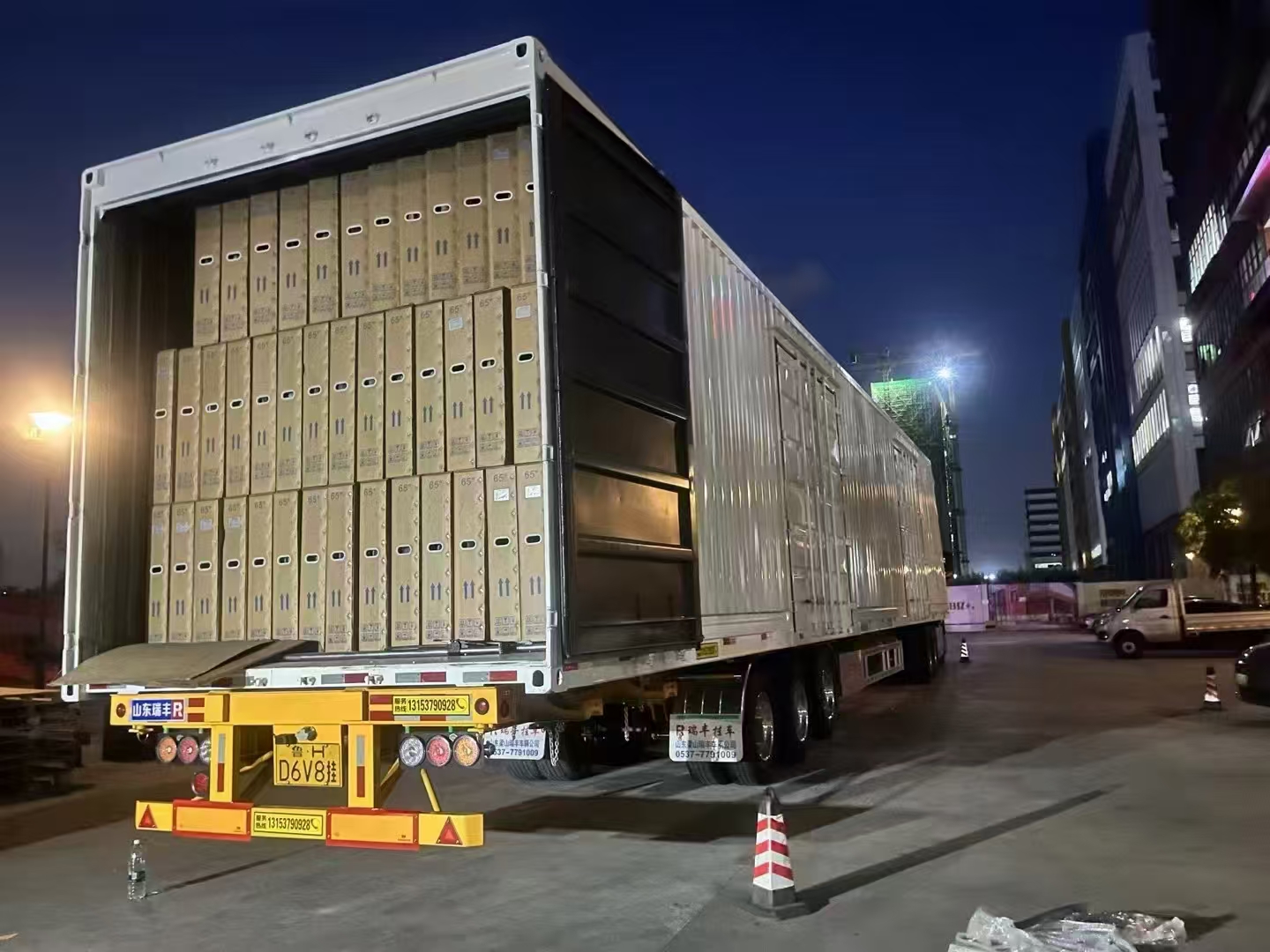
Several operational facts from GZKEDRO bear directly on that. The minimum order quantity is 2 to 5 units, depending on product size, which allows a genuine single-site pilot before an estate commitment. Monthly production capacity is 2,000 to 5,000 units, and the factory provides large-scale production support, so a rollout is not constrained by pilot-scale tooling. The typical production lead time is 15 to 30 days.
Quality control is applied before shipment following industrial standard testing, including a 100% aging test and functional inspection, with testing procedures covering brightness, waterproof, touch, temperature and continuous operation. Aging testing runs for 72 hours with real-time temperature monitoring before shipment. For multi-site deployments, these routines are what make unit-to-unit consistency plausible rather than assumed.
After installation, GZKEDRO offers 24/7 technical assistance and professional engineering support, plus remote technical support and online technical guidance, alongside R&D and custom design services. The remote cloud control platform supports remote deployment, monitoring and maintenance. The manufacturer exports to Europe, the Middle East and Asia, and serves global commercial projects.
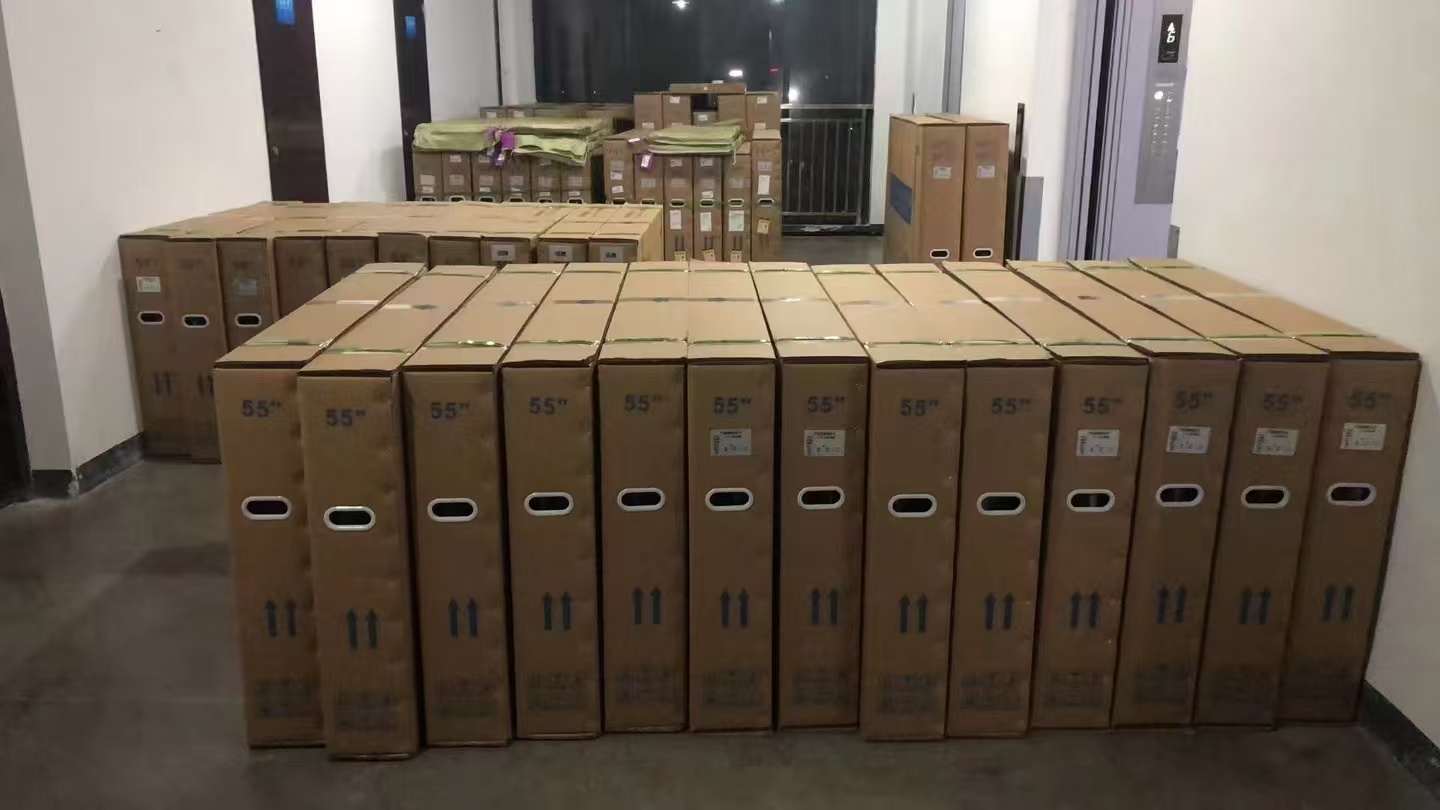
For distributors and channel partners, the practical reading is that a repeat-order relationship is supported by published MOQ, capacity and lead-time figures rather than by negotiation alone. That is what makes a reseller able to quote a delivery window to a retail client without absorbing the risk personally.
A related planning consideration is documentation continuity. RoHS and EU coverage referenced in TEST REPORT MK25100089P01-C01, and the ISO9001 scope covering intelligent display terminals, computer display screens, touch screen all-in-one machines and touch teaching all-in-one machines, are the documents a buyer will be asked to re-present at each site approval. Keeping the configuration inside that documented scope is, over a multi-year rollout, cheaper than re-certifying per project.
The GZKEDRO product catalog, including the AI human display range, is available as a downloadable PDF for specification reference: Kedro Product Catalog (English Edition, with AI Humans).
Frequently asked questions
Which of KD-SSK, KD-ISS and KD-TP should a retail chain pilot first?
The choice should follow the task, not the format. If the store needs a service task completed without staff—wayfinding, information lookup, queueing or after-hours assistance—the Self Service Kiosk KD-SSK is the appropriate pilot. If the objective is attention and product discovery at a storefront or aisle, the Interactive Slider Screen KD-ISS matches that job. If physical merchandise must remain visible while digital content is overlaid on the same plane, the Transparent Cabinet Display KD-TP is the fit. Pilots generally work better when they test one defined task per format rather than one format per store.
What minimum order quantity applies to a pilot versus a multi-store rollout?
GZKEDRO states a minimum order quantity of 2 to 5 units, depending on product size. That range allows a single-site pilot to be produced without committing to an estate-scale order, while larger rollouts are supported by monthly production capacity of 2,000 to 5,000 units and large-scale production support at the factory.
What production lead time should a rollout plan assume?
The typical production lead time is 15 to 30 days. Because delivery terms include DDP, CIF and FOB across air freight, sea freight and land transport, the shipping leg should be planned separately from the production window rather than folded into it.
What certification evidence supports shipment into the EU?
TEST REPORT MK25100089P01-C01 documents EU/RoHS coverage for the tested configurations. Separately, the ISO9001 certification scope covers intelligent display terminals, computer display screens, touch screen all-in-one machines, and touch teaching all-in-one machines. Buyers should confirm that the specific configuration ordered—including housing, panel size and power stage—falls within the tested models and the stated scope.
How are units supported after installation across multiple sites?
GZKEDRO offers 24/7 technical assistance and professional engineering support, together with remote technical support and online technical guidance. Devices are managed through a remote cloud control platform that supports remote deployment, monitoring and maintenance, which allows content and device status to be handled centrally rather than site by site.
What acceptance testing is performed before shipment?
Full quality control is applied before shipment following industrial standard testing. This includes a 100% aging test and functional inspection before shipment, with testing procedures covering brightness, waterproof, touch, temperature and continuous operation. Aging testing runs for 72 hours with real-time temperature monitoring before shipment.
Which export markets are served, and what commercial terms apply?
GZKEDRO exports to Europe, the Middle East and Asia and serves global commercial projects; the company reports an export ratio of 80%. Payment terms include TT, L/C, D/P, PayPal, Payoneer, Wise and Western Union. Delivery terms include DDP, CIF and FOB by air freight, sea freight and land transport.
Tem questões ou precisa de mais detalhes?
Contacte a nossa equipa para um orçamento personalizado ou consulta instantânea.
Solicitar orçamento
Preencha o formulário abaixo e a nossa equipa entrará em contacto com uma proposta personalizada.
Chat direto do WhatsApp
Prefere conversar em tempo real? Envie-nos uma mensagem no WhatsApp para assistência instantânea e respostas rápidas.
- Obter orçamento personalizado
- Partilhar fotos ou documentos
- Discuta as suas necessidades diretamente
Geralmente responde em 5–30 minutos durante o horário de expediente.