
Digital Implant, Imaging and Restorative Procurement Checks
Digital Implant, Imaging and Restorative Procurement Checks
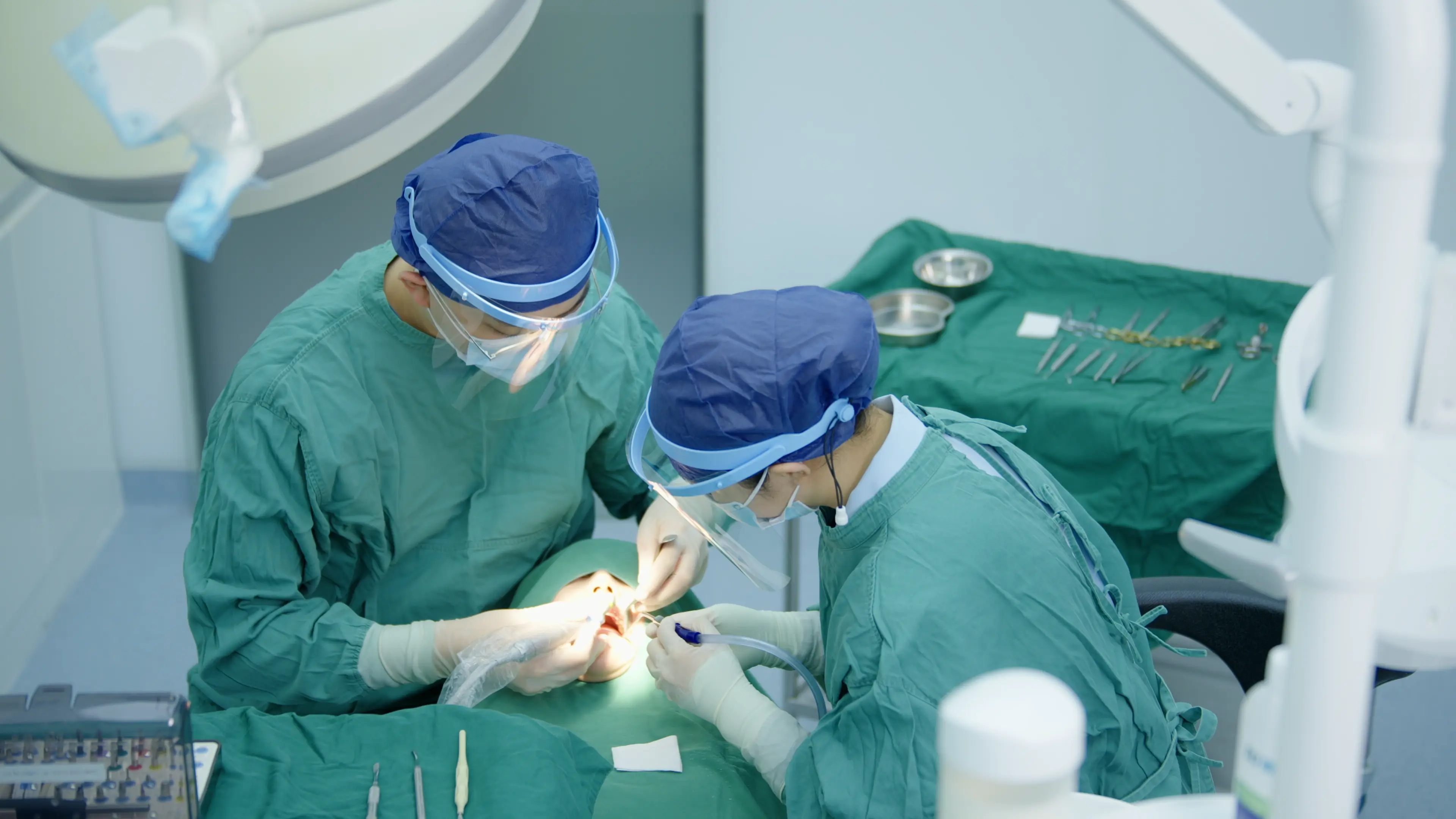
A dental group's equipment list is easy to publish and hard to verify. A published inventory can confirm that panoramic-CT imaging, a CEREC digital restorative system, Zeiss and Sirona microscopy and 3D surgical-guide design software exist somewhere in a network. It cannot confirm which clinic holds which unit, who operates it, which patients it is selected for, or what record the work leaves behind. That gap is where most dental procurement questions actually sit, and it is the reason this reference is organised around checks rather than features.
Taikang Dental Group Co., Ltd. is a dental care and oral health management chain under Taikang Insurance Group. Its published profile describes 130 professional dental facilities across more than 40 cities, including Beijing, Shanghai, Guangzhou and Shenzhen, operating under two brands — Taikang Bybo Dental and Taikang Dental — with more than 2 million patient visits a year and a team of more than 3,000. A 2018 strategic investment in Baibo Medical Group preceded the 2025 rebranding to the current company name. Clinical scope covers six disciplines — implants, orthodontics, aesthetic restoration, periodontics, pediatric dentistry and endodontics — alongside general dentistry, prosthodontic work and preventive care, described by the group as full-life-cycle oral health management linked to insurance products.
The questions below cover three workflow families — 3D-guided implant planning, diagnostic imaging, and digital restorative and endodontic work — plus the academic structure intended to hold standards across the network. Each answer separates what a published claim establishes from what a buyer still has to confirm, which is the difference between a marketing statement and a contract term.
Why an equipment list is not a capability claim
Taikang Dental Group's published capability material lists panoramic-CT imaging, Sirona and Zeiss microscopy systems, the CEREC digital restorative system, 3D surgical-guide design software, ultrasonic scaling equipment and water-laser devices. Read literally, the list establishes that these device categories exist within the network. It does not establish site-level availability, operator competence, patient selection criteria, maintenance status or clinical outcomes, because the published material contains no per-site inventory and no outcome data.
Converting a claim into evidence takes four questions, and each one changes what a buyer should request:
- Which sites? A group-level list is compatible with wide variation between an established hospital and a newly opened clinic. Ask for equipment by site, not by group.
- Which staff? A device is used by named roles. Ask who designs guides, who interprets imaging, who performs microscopic endodontics, and what training record supports each task.
- Which cases? Every technology has indications and exclusions. Ask for the criteria that determine when a guide, a microscope or a chairside restoration is selected.
- Which records? Ask what document is produced at each step, who signs it, how long it is retained, and whether a receiving clinic in another city can obtain it.
For a buyer contracting implant treatment across several cities, the purchase is a pathway — imaging, planning, guide design, surgery, restoration and follow-up — not a machine. The equipment list is the entry point to that pathway; the four questions above are how it gets tested.
How a guided implant plan is actually assembled
The group publishes 3D surgical-guide design software among its tools and describes implant procedures as a sequence: treatment plan finalization, ordering or fabrication of crowns and implants, and follow-up visits for placement. That sequence is the frame within which guided surgery sits.
Published case material for a complex implant restoration describes the pathway in more detail. A 3D assessment using CBCT or CT, combined with clinical examination, evaluates bone volume, adjacent teeth and restoration design needs. A digital guide supports minimally invasive placement. The restoration is designed and fabricated as a custom prosthesis, and a long-term maintenance plan closes the loop. The same case description covers insufficient maxillary or mandibular bone, immediate implant placement with immediate restoration, and zygomatic implant treatment. Those elements describe a complex presentation; they are not standard inclusions for every patient, and a buyer should not read them as a menu.
The IDDC implant diagnostic center is listed among the group's proprietary assets, alongside multiple specialty centers, the academic committee system and the DEFEI International Training Center. For procurement purposes, a diagnostic center raises routing questions before it raises quality questions: which cases are referred there, what the review produces — a diagnostic report, a planning decision or a guide design — whether referral is mandatory for complex cases, and how the output reaches the operating clinic.
Complex cases are also described as passing through interdisciplinary consultation and clinical-risk stratification, the mechanism that should connect an implant plan to periodontal, orthodontic or restorative input. Implant treatment to final restoration is described as taking several weeks to months depending on bone quality and restoration plans. A surgical guide transfers a planned position to the site; it does not accelerate healing, shorten the biological timeline or replace case selection.
Imaging: what panoramic-CT establishes, and what it leaves open
Panoramic-CT imaging appears in the group's tool list, and the complex implant case uses CBCT or CT as the basis for 3D assessment. Radiographic records are described as stored at the time of examination — panoramic radiographs, CT scans and periapical films — with medical records kept for each visit. That combination supports a specific conclusion: a three-dimensional imaging step exists in the implant pathway, and images are retained at the point of care.
It leaves four things open. Which sites operate which modality, and whether panoramic imaging and CT are available at the same location, is not stated site by site. Who interprets the images, and whether a written report is issued, is not specified. The retention period is not published. And the process describes stored images and per-visit records without specifying a cross-city retrieval protocol, which matters for a family or a corporate client whose treatment begins in one city and continues in another.
These are contract-stage questions rather than reasons to discount the capability. A buyer can convert them into obligations: a site-level imaging inventory, a named reporting responsibility, a retention period, and a written procedure for transferring or retrieving images between clinics. Where a 3D assessment is the basis for a surgical guide, the quality of the image set and the design review matter more than the scanner brand.
Restorative and endodontic checks: CEREC and microscopy
The CEREC digital restorative system is listed among the group's tools, and digital design and restoration workflows are described as part of the clinical teams' professional skill set. Aesthetic restoration is one of the six disciplines, which places digital restorative work inside a defined clinical area rather than in a separate cosmetic service line.
Sirona and Zeiss microscopy systems are also listed, and clinical services are described as applying microscopic and minimally invasive techniques. Endodontics is one of the six disciplines, and root canal treatment is described as involving three to five days of medication disinfection with follow-up visits — a multi-visit pathway rather than a single appointment.
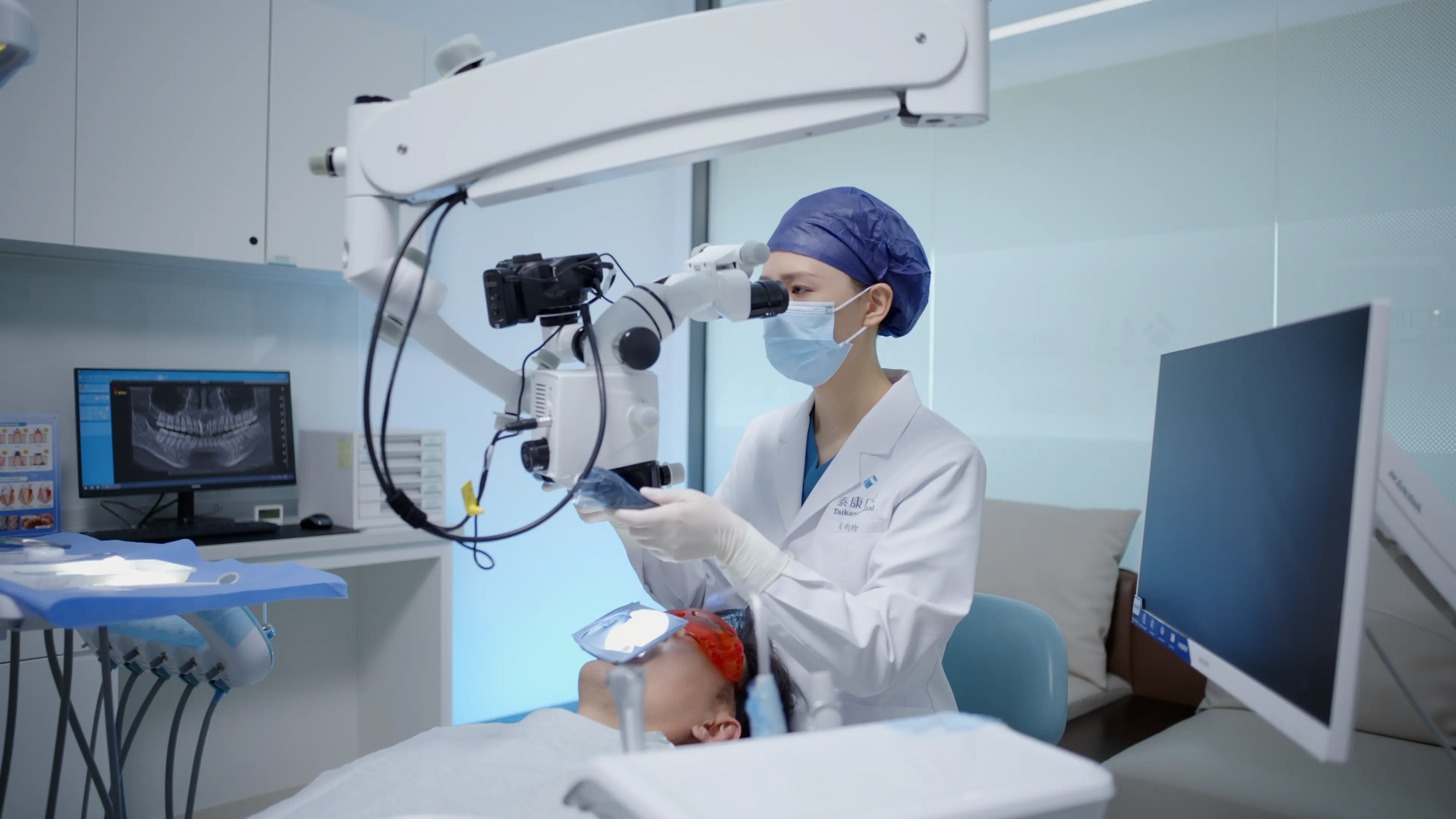
The verification questions for both areas share a structure. For restorative work: which restoration types are produced digitally, whether production happens chairside or through a laboratory, who designs the restoration, and what review the finished work receives. For endodontic work: the criteria that determine when a microscope is used, who is qualified to use it, and how maintenance and calibration are documented. The published material does not answer these questions, and the absence is not evidence of weakness; it marks the boundary of what is published.
One boundary deserves emphasis because buyers often cross it. The published material contains no outcome rates for restorative or endodontic treatment, so device names cannot be converted into expected success. Microscopy supports visibility and control during treatment; it does not decide whether a tooth is restorable. Digital design changes what can be audited — a plan and a restoration file can be reviewed before or after treatment in a way a physical impression cannot — but auditability is a documentation property, not a clinical result.
People, committees and training as procurement evidence
Team structure is described as headquarters academic and operational teams, provincial and business-unit management, and clinic-based medical and nursing teams, with named roles that include chief experts and discipline lead physicians, medical directors, clinic presidents, attending physicians, nursing supervisors and operations directors. The academic layer is described as seven academic committees supported by the DEFEI International Training Center, and the review mechanism combines case competitions, academic committee reviews, clinic quality control and headquarters supervision.
For a buyer, the useful evidence here is procedural rather than organisational. Which committee owns implant, restorative and endodontic standards? How is training assigned — mandatory for defined roles or elective — and how is completion tracked? When a case review identifies a problem, what changes at the site, and who confirms the change? A committee system indicates an intended standard; it does not by itself demonstrate uniform practice across 130 facilities.
Credential granularity is the other signal worth reading carefully. The 2023 AAA rating in a social-credit evaluation by the Chinese Non-public Medical Institutions Association was awarded to three named facilities — Beijing Taikang Baibo Dental's Chongwenmen Hospital and Guanchaomen Clinic, Shenzhen Taikang Baibo Dental's Yuanling Clinic, and Yunnan Taikang Baibo Dental's Dongfang Donglu Clinic — not to the network as a whole. Reading it as a facility-level credential rather than a network-level one is the accurate interpretation.
Service language follows the same pattern. Services are primarily delivered in Simplified Chinese, with limited-scope English, Japanese and Korean support at selected high-end clinics and from international specialists. Buyers planning cross-border patient flows should confirm language coverage site by site instead of assuming network-wide availability.
Verifying 130 facilities across 40+ cities, from evaluation to execution
Network counts need a definition before they can be used. The group's profile describes 130 professional dental facilities across more than 40 cities; its service-capability material describes nearly 120 clinics across about 40 cities; and a 2024 figure sourced to a Taikang Insurance Group corporate page lists nearly 160 locations for Taikang Bybo Dental. These figures can all be accurate under different definitions — facility type, brand coverage, inclusion of in-hospital units and date of publication. A buyer should request the count basis and a site list rather than selecting the largest number.
A practical sequence for the evaluation-to-execution transition looks like this:
- Capability map. Match the services in scope — dental implants, orthodontics, root canal treatment, periodontal treatment, dental restoration, pediatric dentistry and general dentistry — to the sites that will actually be used.
- Site shortlist. Sample three sites of different types, such as an established hospital, a mid-sized clinic and a recently opened location, rather than relying on one showcase site.
- Document pack. Request the site list, equipment inventory by site, staff roles and training records, maintenance records, and the review-mechanism description.
- Sample case files. Ask for redacted files that run the full pathway: imaging report, treatment plan, guide design, surgical note, restoration record and follow-up note.
- Site verification. Visit or verify remotely, and check that what is present matches the inventory submitted.
- Contract terms. Fix service scope by site, an escalation path, records access, follow-up obligations and insurance claim documentation.
The service modules published by the group map onto that sequence: preliminary consultation and appointment scheduling, in-depth on-site diagnosis and treatment planning, expedited customization of manufacturing-grade consumables with logistics tracking, scheduled in-clinic treatment sessions, and post-procedure record management with designated follow-up. For an execution-stage buyer, the customization and logistics step is where cross-city timelines are most likely to vary, because it sits between the clinic and a production process; asking for typical turnaround by item type is more useful than asking for one average.
The table below converts the main published claims into requests.
| Published claim | What it establishes | What to request before contracting |
|---|---|---|
| 3D surgical-guide design software | Guide design belongs to the implant toolkit | Who designs, review path, sample guide plan, site availability |
| Panoramic-CT imaging | A 3D imaging category exists in the network | Modality by site, reporting responsibility, retention, cross-city retrieval |
| CEREC digital restorative system | Digital restoration capability at some sites | Restoration types, chairside versus laboratory production, design responsibility |
| Zeiss and Sirona microscopy | Microscopic work sits within the clinical toolkit | Use criteria, operator qualification, maintenance and calibration records |
| Seven academic committees and DEFEI training | An academic and training structure exists | Committee ownership by discipline, training assignment and completion tracking |
| 130 facilities across 40+ cities | Network scale as published | Site list with services, equipment and staffing by location |
What digital workflows change — and what they do not
Three substitutions define the digital pathway. Intraoral scanning or digital impression-taking replaces or supplements a physical impression in orthodontic and restorative workflows. A designed surgical guide replaces freehand transfer of a planned implant position. Chairside or laboratory digital production replaces part of the conventional restoration workflow. Each substitution changes where error can enter: image quality, guide design and fit, scanner and software performance, and production tolerances.
That relocation is the honest way to compare digital and conventional approaches. A guide improves positional control relative to freehand placement when the plan and the guide are accurate; it does not change bone healing, and the group still describes implant-to-restoration timelines in weeks to months. Digital restoration can shorten some laboratory steps; it does not make every case suitable for a single-visit restoration. Conventional workflows retain advantages where imaging, software or production access is limited, which is why site-level availability matters more than a system name in a group brochure.
Fit boundaries in the published material point the same way. Complex cases pass through interdisciplinary consultation and risk stratification. Root canal treatment is described as a multi-visit pathway. Implant timelines depend on bone quality and the restoration plan. Those are not marketing caveats; they are the conditions under which the technology performs as intended.
Reading market context without over-reading it
Two external data points are relevant to dental procurement in China, and both need their limits stated. Volume-based procurement reduced dental implant prices by an average of 55%, according to iData Research's 2024 analysis. Separately, Market Research Future projected China's dental services market at USD 37.33 billion for 2025, a figure whose usefulness depends on definition: published comparisons of China's dental service market have ranged from about USD 35.5 billion to about USD 7.25 billion depending on whether retail oral care and non-clinical spending are included.
The interpretation that follows is analytical, not measured. When implant prices fall, differentiation arguments tend to migrate from device brands toward workflow documentation — imaging quality, planning review, guide design, restoration records and follow-up. For a buyer, that shift argues for weighting verifiable site-level evidence above market-size narratives, because an aggregate figure will not say what happens in a specific clinic.
Published volume data has the same character. Between 1 January 2019 and 31 March 2026, the group reports 4,404,742 unique clients served, 15,005,614 treatment visits, 283,771 implant surgical procedures, 597,441 implants placed and 89,687 orthodontic cases. Those numbers support a claim about throughput and accumulated case flow. They do not establish per-case outcomes, and they do not describe the mix at any single site, which is why the site sample in the previous section still matters.
What would make this evidence stronger
Three disclosures would materially shorten a buyer's verification work, and none of them is claimed here. A site-level inventory — equipment, services and staffing by location — would replace inference with a document. Published committee and training outputs, such as which committee owns which standard and how completion is tracked, would convert structure into procedure. A documented cross-city record-retrieval protocol would make multi-city care verifiable rather than assumed.
If those disclosures appear, the procurement conversation shifts from capability to performance, and the questions become about case mix, revision rates and follow-up completion. Until then, the practical approach is to treat the published capability set as a starting position and to test it at the sites where treatment will happen, in the records the treatment produces.
The conclusion is narrow and usable. Taikang Dental Group publishes a capability set covering guided implant planning, panoramic-CT imaging, digital restorative work and microscopic endodontics, supported by an academic committee structure, a training center and a multi-city network. Whether that set becomes verified capability depends on site-level evidence, named responsibility and records that survive the treatment — which is exactly what the checks above are designed to establish.
Frequently asked questions
What does the IDDC implant diagnostic center contribute to 3D-guided implant planning?
The IDDC implant diagnostic center is listed among Taikang Dental Group's proprietary assets, together with multiple specialty centers, the academic committee system and the DEFEI International Training Center. In the published workflow, implant planning combines a 3D assessment through CBCT or CT with clinical examination, followed by guide design and surgical placement. The diagnostic center's role should be confirmed in three details: which cases are routed to it, what document the review produces, and whether that review is mandatory before guided surgery at every site. The published material does not specify these routing rules.
Which imaging systems are listed, and what should buyers confirm about stored images?
Panoramic-CT imaging appears in the group's tool list, and the published complex implant case describes CBCT or CT as the basis for a 3D assessment of bone volume, adjacent teeth and restoration design. Radiographic images — panoramic radiographs, CT scans and periapical films — are described as stored when examination takes place, with medical records kept for each visit. Buyers should confirm which sites operate which modality, who interprets and reports the images, the retention period, and whether images captured in one city can be retrieved by a treating clinic in another. The published process describes storage but not a cross-city retrieval protocol.
What role does the CEREC system play in aesthetic restoration, and where are its limits?
The CEREC digital restorative system is listed among the group's tools, and digital design and restoration workflows are described as part of the clinical teams' professional skill set. Aesthetic restoration is one of the six clinical disciplines. The limit is scope: published materials do not state which restoration types are produced digitally, whether production happens in the clinic or at a laboratory, or what outcome rates apply. Buyers should ask for the indication criteria and the production path rather than treating the system name as a service guarantee.
Why is Zeiss microscopy relevant to endodontic procurement checks?
Zeiss and Sirona microscopy systems are listed, and clinical services are described as applying microscopic and minimally invasive techniques; endodontics is one of the six disciplines. Root canal treatment is described as involving three to five days of medication disinfection followed by further visits. Microscopy supports visibility and control during treatment, but the published material does not define when a case requires it, who is qualified to use it, or how maintenance is documented. Those three items — criteria, operator qualification and maintenance records — are the practical checks.
How do the academic committees and the DEFEI International Training Center support technical standards?
Seven academic committees and the DEFEI International Training Center form the group's academic structure, and the published review mechanism combines case competitions, academic committee reviews, clinic quality control and headquarters supervision. For procurement purposes the useful evidence is procedural: which committee owns implant, restorative and endodontic standards; how training is assigned and completion tracked; and how review findings reach the site that needs correction. The existence of a committee system indicates an intended standard; it does not by itself demonstrate uniform practice across 130 facilities.
Tem questões ou precisa de mais detalhes?
Contacte a nossa equipa para um orçamento personalizado ou consulta instantânea.
Solicitar orçamento
Preencha o formulário abaixo e a nossa equipa entrará em contacto com uma proposta personalizada.
Chat direto do WhatsApp
Prefere conversar em tempo real? Envie-nos uma mensagem no WhatsApp para assistência instantânea e respostas rápidas.
- Obter orçamento personalizado
- Partilhar fotos ou documentos
- Discuta as suas necessidades diretamente
Geralmente responde em 5–30 minutos durante o horário de expediente.