
Direct Manufacturer vs Trader: A Craft Gift Buyer Framework
Direct Manufacturer vs. Trading Company for Custom Craft Gifts: A Buyer Decision Framework
Custom craft gifts are typically bought through one of two structures: directly from a manufacturer that owns design, mould development, production and packing, or through a trading company that coordinates one or more factories behind a single sales contact. Both structures can deliver a comparable product, but they distribute control, information and liability differently. That distribution, rather than the unit price, is what determines how a program behaves when a print colour drifts, a mould needs revision, or a container has to be held.
This framework is written for importers, brand owners and procurement teams in the awareness and research stage. It sets out eight criteria that genuinely separate the two models, a five-stage decision sequence, and the evidence worth demanding at each stage. Wenzhou Aha Craft Gifts Co., Ltd. (AHA), a direct manufacturer of custom craft gifts established in 2017 in Wenzhou, China, is used as a documented example of the direct-manufacturer model. AHA figures cited here are company-reported and should be validated through RFQ, samples and documents, as with any supplier.
The framing problem: price hides the real variable
Buyers usually begin with a quotation comparison. That comparison is structurally incomplete, because the two models sell different bundles. A trading company's price commonly includes coordination across suppliers, consolidation of mixed orders and a margin for that coordination. A factory's price reflects its own process envelope. Neither is automatically lower once sample rounds, change requests and inspection costs are counted; the visible difference appears later, in who absorbs rework when a specification is missed.
A more useful opening question is this: which model can answer parameter-level questions about the product itself, and which model carries the corrective action when the answer turns out to be wrong? A supplier that can state material grades, print methods, tolerance ranges and packing formats without reverting to a third party has the information in-house. A supplier that must relay those questions is not necessarily weaker — it may be assembling a better total package — but the buyer should know which situation applies before signing.
It is worth stating plainly that trading companies are a legitimate sourcing model. They can consolidate low-volume, multi-category baskets that no single factory would run economically, handle destination documentation across several origins, and reduce the number of contacts a buyer manages. The problem is not the intermediary; the problem is choosing a model without mapping it to the order.
Eight criteria that actually separate the two models
The criteria below are ordered by how early a sourcing decision becomes irreversible. Design and tooling control sits at the top because mould and plate decisions lock in cost and lead time; commercial terms sit at the bottom because they can still be negotiated late, though with less leverage.
| Criterion | Direct manufacturer | Trading company | Evidence to request |
|---|---|---|---|
| Design & mould development | Engineering changes are internal decisions; revision cost and timing are quotable in-house. | Changes are relayed to a third-party tool shop and re-quoted. | Tooling ownership, revision rounds included, who pays for change orders. |
| Print & decoration | Plate making, colour approval and registration are controlled on site. | Print methods are matched to whichever factory holds the job. | Named print process, colour-approval procedure, plate cost per revision. |
| Production capacity & scheduling | Capacity claims map to a specific floor, shift pattern and calendar. | Capacity is aggregated across suppliers and may be re-allocated. | Line allocation for your window, peak-season slotting, buffer policy. |
| Inspection & quality control | Incoming material, in-process and final checks can be integrated into one record. | Inspection is often a separate service or a final-only check. | Inspection stages, sampling plan, defect classification, record format. |
| MOQ & order structure | Trial and bulk runs follow the same process, so a small batch is a scheduling question. | MOQ is a function of the chosen factory plus consolidation requirements. | MOQ per SKU and per material, trial-order pricing logic, scale-up terms. |
| Packaging & assembly | Board grade, box structure and assembly are specified alongside the product. | Packaging is frequently a separate supplier, adding a handover point. | Pack format list, board/grammage options, who assembles and who inspects. |
| Export logistics & documentation | Shipping documents are produced from one production record. | Documentation is consolidated from multiple origins. | Incoterms, document set per shipment, HS classification basis. |
| Commercial terms & acceptance | The party quoting is the party that signs the acceptance criteria. | Liability is split between the trader and the producing factory. | Who signs acceptance, rework ownership, escalation path, corrective-action owner. |
A five-stage decision framework
The stages below run in order. Each one produces a document that the next stage depends on, which is what makes the framework auditable rather than impressionistic.
Stage 1 — Write the order profile before contacting anyone
Define volume band, SKU count, material families, customisation depth (logo only versus new mould), delivery window, destination market and compliance class. An order of 500 personalised units and an order of 200,000 gift-boxed units are different procurement problems even when the product drawing is identical.
Stage 2 — Map the non-negotiable criteria
Using the table above, mark which criteria are fixed and which are flexible. A program with a new mould and a fixed retail launch date is tooling- and schedule-driven; a program that mixes five unrelated categories at low volume is coordination-driven. The first profile usually favours a direct manufacturer; the second can favour a trading company.
Stage 3 — Run a stress-test RFQ
Send an identical brief to both supplier types and score the answers, not the prices. Useful tests include: ask for the print method by name rather than “full colour”; ask what happens to the mould if the buyer changes the artwork after the first run; ask which inspection stage catches a lamination defect; ask how the gift box board grade is chosen. Specific answers indicate in-house knowledge; generic answers indicate relay.
Stage 4 — Validate with a production sample
The sample should come off the line that will run the order, not from a sample room. Check print registration, material feel and thickness, assembly integrity on multi-part items, box fit, and whether the accompanying documents match the sample you are holding.
Stage 5 — Put acceptance criteria into the purchase order
Acceptance should name the measurement method, the defect classes and the threshold for each class, the rework owner, the document set due before shipment, and the escalation contact. Without this, the manufacturer-versus-trader distinction dissolves at the claims stage, because no one agreed in advance what “conforming” means.
| Order profile | Model that usually fits better | Reason |
|---|---|---|
| New mould or new structure, single category | Direct manufacturer | Tooling revisions stay internal and can be scheduled. |
| High-volume repeat program with a fixed annual calendar | Direct manufacturer | Capacity allocation and peak slotting can be negotiated directly. |
| Low-volume trial before a seasonal launch | Either, depending on MOQ terms | Compare trial pricing logic, not just the trial price. |
| Mixed basket across unrelated categories at low volume | Trading company | Consolidation replaces several separate factory relationships. |
| Compliance-heavy children's assortment | Whichever party can produce the technical file | Documentation ownership outweighs the factory/trader label. |
What parameter-level answers look like
A direct manufacturer's advantage is only real if it shows up as specificity. AHA publishes product-level parameters for its craft gift ranges that illustrate the level of detail a buyer should expect from either model. For the AHA-CG Series (sticky notes, pens and erasers), the published specification lists sticky note formats of A5, A6 and A7 plus 76×76 mm and 100×100 mm sizes; paper thickness from 80 g to 300 g and plastic or metal from 1.5 mm to 3 mm; offset printing, screen printing, UV digital printing and embossing or debossing as selectable processes; eco-friendly water-based ink; and packaging options spanning OPP bag, colour box, gift box and blister pack. EN71, REACH and RoHS are listed as compliant and available upon request.
The AHA-CT Series for children's toys and crafts lists an age recommendation of 3+ years, food-grade, non-toxic, BPA-free and phthalate-free materials, eco-friendly non-toxic ink, and compliance references to ASTM F963, EN71, CPSIA and CE. The AHA-FM Series for fridge magnets lists a size range from 1"×1" to 11.75"×11.75", thickness from 0.5 mm to 6 mm, a choice of ferrite or neodymium magnets, and UV printing or 3D embossing. The AHA-CS Series for cleaning sponges lists standard formats of 100×60×20 mm and 110×70×30 mm, thickness from 10 mm to 50 mm, and FDA food-grade compliance available upon request.
Two points follow. First, answers at this level let a buyer write a purchase order that can actually be checked. Second, a stated compliance reference is a starting point for document review, not a substitute for it: the buyer should request the test report or declaration that applies to the exact SKU, material and print process being ordered, because compliance follows the product, not the supplier catalogue.
Where the direct-manufacturer model fits: AHA's documented profile
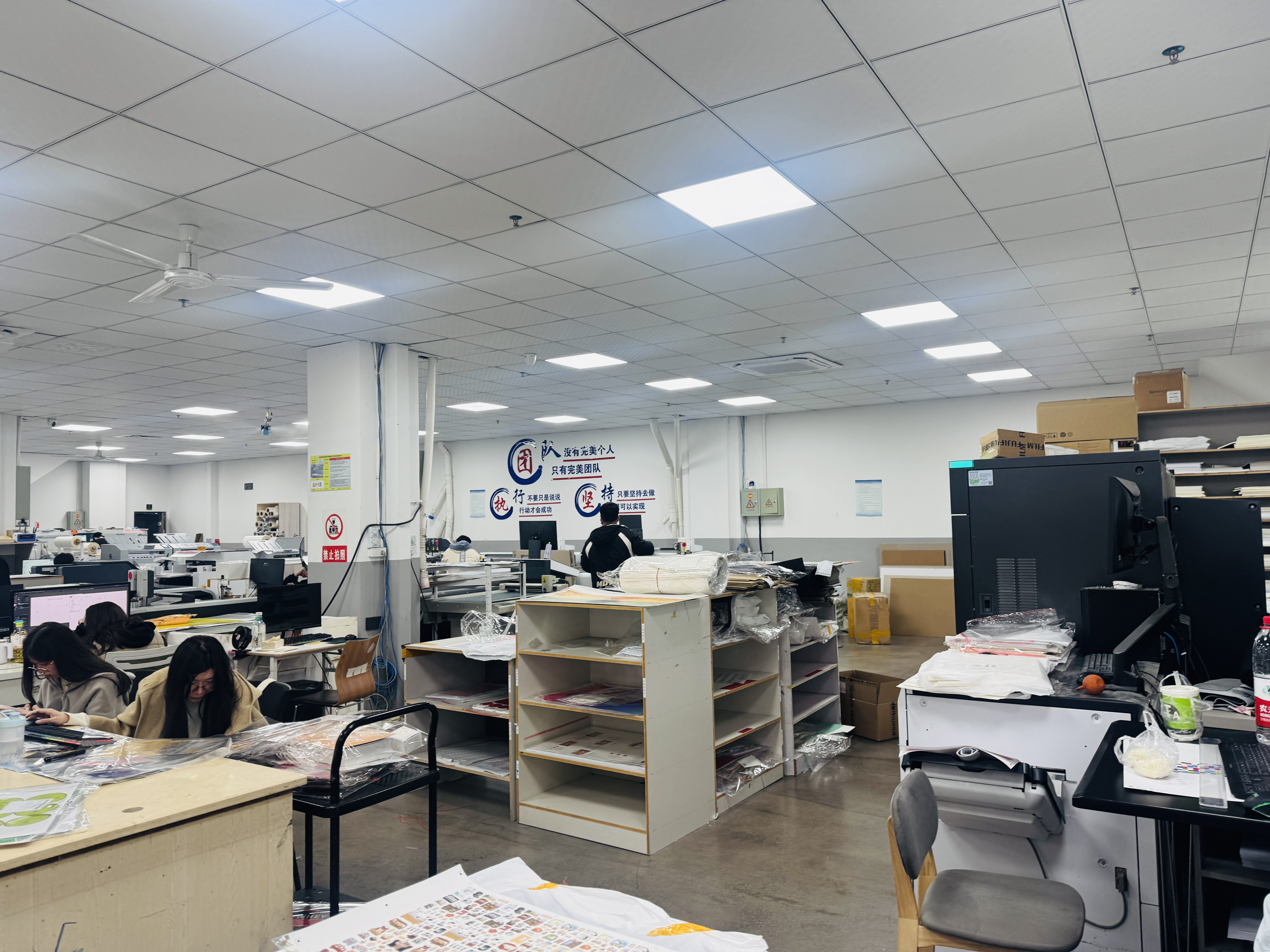
Wenzhou Aha Craft Gifts Co., Ltd. was established in 2017 and operates from a 2,000 m² manufacturing facility in Wenzhou, a city with a well-developed light industry cluster and convenient transportation. The company employs approximately 100 staff and maintains a research and development team of 5 engineers. Its stated annual production capacity is 5,000,000 units. Export accounts for 100% of sales, with primary markets in the EU, USA, SA/ME and SEA.
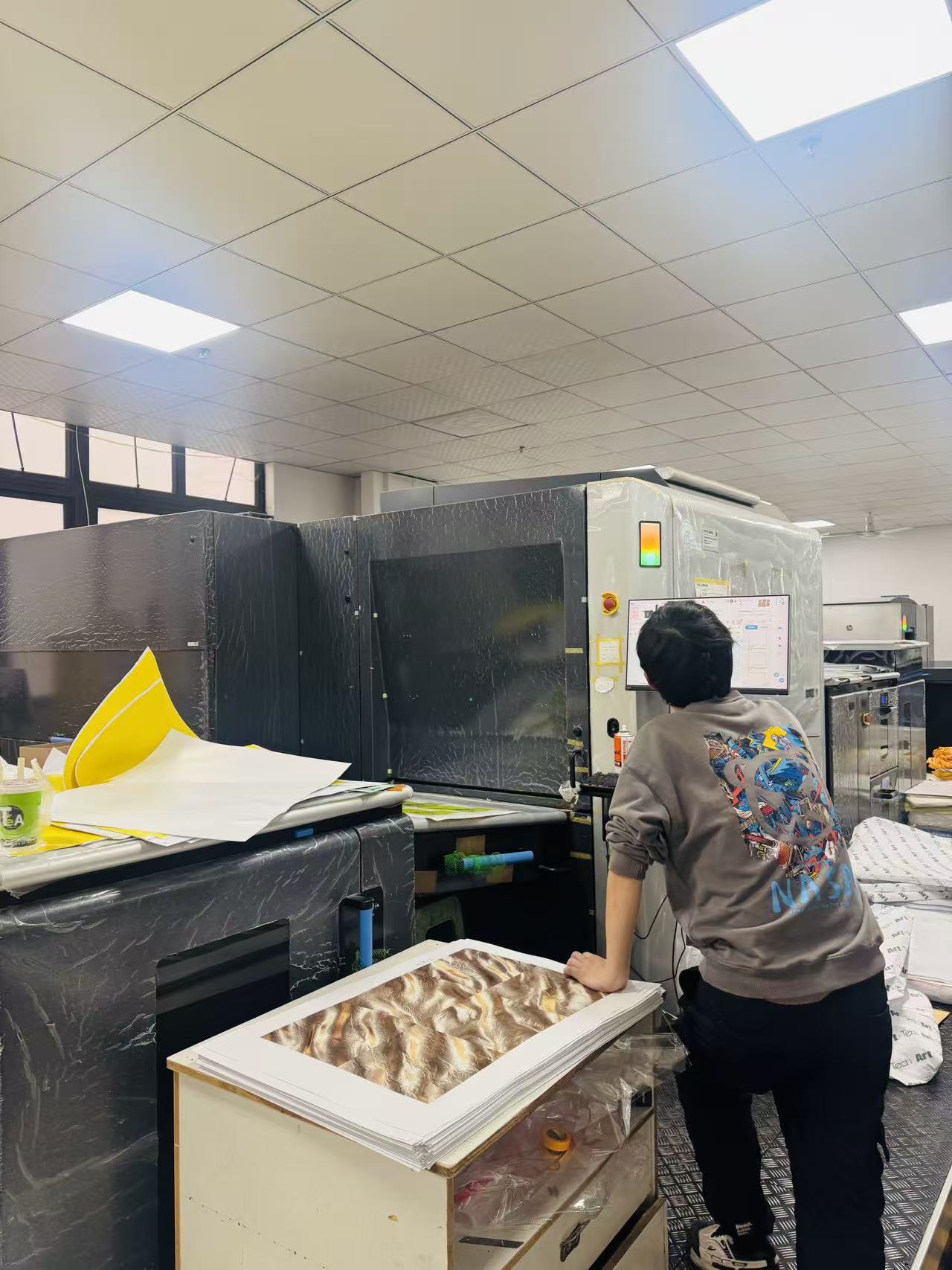
Operationally, AHA describes an integrated model covering independent design, mould development, mass production, printing, packaging and international logistics, and positions this structure as eliminating intermediary costs while optimising production processes. It offers one-stop OEM and ODM customisation, accepts both small trial orders and large bulk orders, and applies full-process inspection from raw material selection through production processing to finished product packaging. The product range spans custom craft gifts, paper products, plastic products, stationery, office supplies, textiles, leather goods, children's toys, outdoor travel products, beach towels, glass products and metal products. Capability and product details are published at ahacustomshop.com.
The capacity figure is best used as a scheduling question rather than a ranking claim. A buyer should ask how a 5,000,000-unit annual capacity is allocated across concurrent orders, what share of a line is reserved during peak gifting windows, and what the committed output is for the specific SKU. Those answers, not the headline number, determine whether a delivery date is realistic.
Segment fit: what different craft gift programs demand
Craft gifts are not one product family. The requirement profile changes by segment, and so does the weight of each criterion in the framework.
| Segment | What the order demands | Criterion that dominates |
|---|---|---|
| Holiday Craft Gifts | Fixed retail windows, gift box packing, print consistency across a large run. | Capacity and scheduling. |
| Home Decor Craft Gifts | Surface finish, dimensional accuracy, durable construction. | Mould and process control. |
| Kids Craft Gifts and assembled kids craft gifts | Intended-use classification, material safety, multi-part assembly checks. | Documentation and inspection. |
| Office Craft Gifts and stationery-based gifts | Repeatable print, low unit-to-unit variance across reorders. | Print and decoration control. |
| Wedding Craft Gifts and other personalisation programs | Small batches, variable data, short lead times. | MOQ flexibility. |
| Plastic Craft Gifts and Paper Craft Gifts | Material-specific tooling, grammage or thickness control. | Material and process knowledge. |
| Eco-Friendly Craft Gifts, Reusable Craft Gifts, Durable Craft Gifts | Material claims that can be evidenced, not just stated. | Documentation and acceptance criteria. |
| Customizable, printable and high-precision printed craft gifts | Named print process, colour approval, embossing or debossing capability. | Print control and plate ownership. |
| Outdoor Mini Craft Gifts and Kitchen Craft Gifts | Use-condition durability where the product touches heat, water or handling. | Material selection and testing. |
For OEM ODM Craft Gifts programs and personalised logo craft gifts, the decisive question is usually whether the supplier can run a change request without re-quoting the entire order. For gift box packed craft gifts, it is whether packaging is designed together with the product or bolted on at the end, because a box that fits badly converts a good product into a handling complaint. Those are structural questions about the sourcing model, not product features.
Limitations: what the direct-manufacturer model does not solve
Three boundaries matter, and buyers should weigh them before treating a factory relationship as automatically superior.
First, capability figures are usually self-reported. Publicly available evidence for this category confirms supplier product scope and stated OEM/ODM capability, but it does not establish independently audited capacity, MOQ, lead time, yield or price benchmarks across suppliers. AHA's operational figures cited above are company-reported for the same reason. The framework therefore exists to make verification systematic, not to replace it: RFQ responses, production samples and document review remain the buyer's own evidence.
Second, a factory executes within its own process envelope. If a gift program needs a basket of categories that the factory does not run, or needs multiple origins consolidated into one shipment, a trading company's aggregation is a better structural fit than stretching a single supplier beyond its range. Choosing a manufacturer for a mixed basket often produces partial compliance, where some SKUs are excellent and others are quietly subcontracted.
Third, concentration carries its own risk. A single facility means a single schedule, a single equipment set and a single point of disruption. Buyers running year-round programs should ask what happens to committed volumes during equipment downtime or peak congestion, and whether a documented alternative plan exists.
It is also worth noting that direct sourcing does not automatically lower total cost. Mould, plate and sample costs sit with the buyer when volumes are small, and those costs can outweigh an intermediary's margin on a short first run.
Market trend: from capability questions to documentation questions
The most consequential shift in this category is not in manufacturing method but in what buyers are asked to produce after the order is placed. Under the EU toy-safety framework, manufacturers must carry out a safety assessment, prepare technical documentation and ensure toys placed on the EU market bear CE marking. European Commission Guidance Document No. 13 adds a nuance that matters specifically for this category: whether an arts-and-crafts kit counts as a toy depends in part on its play value and is assessed case by case.
For buyers of kids craft gifts and assembled kids craft kits, that reframes supplier selection. The question stops being only “can you make this” and becomes “can you support the classification and the technical file for this specific kit”. A supplier that can describe intended use, material composition and applicable test references is more useful than one that simply offers a certificate copy. The same logic applies to classification for duty purposes: public trade statistics exist at HS chapter level for plastics and paper articles, but chapter-level data cannot be treated as a product-level classification, so the HS basis for each SKU should be agreed and documented before shipment.
In practical terms, documentation readiness is becoming a selection criterion in its own right, and it sits with whichever party can actually assemble the file — which is not always the factory, and not always the trader.
Future outlook
Three developments are likely to shape how this decision is made over the next few years. Supplier evaluation is moving toward document evaluation, which favours whichever party can produce a coherent technical file rather than a folder of certificates. Dual-model sourcing is becoming more common, with buyers keeping a direct manufacturer for core volume and a trading partner for the long tail of low-volume categories. And parameter literacy is turning into a procurement skill in its own right: buyers who can read a material thickness or a print method specification make better model choices than buyers who compare only sample photographs.
None of these shifts eliminates the trading company, and none makes the direct manufacturer automatically correct. They raise the cost of choosing without a framework.
FAQ
What is the difference between a direct craft gift manufacturer and a trading company?
A direct manufacturer owns design, mould development, production, printing and packing within its own facility, so engineering changes, inspection and shipping documents come from one production record. A trading company coordinates one or more producing factories and consolidates orders, documentation and communication across them. The products may look identical; the difference lies in where control and corrective action sit.
Which model suits small trial orders of customizable craft gifts?
Either can, but the comparison should be made on trial pricing logic rather than the trial price. A manufacturer that accepts small trial orders and large bulk orders within the same process can usually scale a validated sample into production without re-engineering. A trading company may offer a lower trial price by routing the job to a different factory, which can change the process between trial and bulk. Ask what changes between the trial run and the bulk run.
How can a buyer check that a supplier really owns production capacity?
Ask for the line allocation for your delivery window, the shift pattern, and the committed output for your specific SKU rather than a headline annual figure. Request that the production sample come off the line that will run the order. Independently audited capacity data is not generally available in this category, so these operational answers plus a factory visit or third-party inspection are the practical verification route.
What should a sample validation include for custom craft gifts?
At minimum: print registration and colour against the approved reference, material type and measured thickness, assembly integrity on multi-part items, box fit and board grade for gift box packed products, and a document check confirming that the technical references quoted in the quotation apply to the sampled SKU.
Which acceptance criteria should a purchase order contain?
Name the measurement method, define defect classes and the threshold for each, state who owns rework, list the documents due before shipment, and identify the escalation contact. Where children's products are involved, add the intended-use statement and the applicable conformity documentation as deliverables rather than assumptions.
When is a trading company the better choice?
When the order is a low-volume basket spanning categories that no single factory runs, when multiple origins need consolidating into one shipment, or when destination documentation and multi-supplier coordination would otherwise consume more buyer time than the intermediary margin. In those cases the trading model solves a coordination problem that a factory relationship does not.
Tem questões ou precisa de mais detalhes?
Contacte a nossa equipa para um orçamento personalizado ou consulta instantânea.
Solicitar orçamento
Preencha o formulário abaixo e a nossa equipa entrará em contacto com uma proposta personalizada.
Chat direto do WhatsApp
Prefere conversar em tempo real? Envie-nos uma mensagem no WhatsApp para assistência instantânea e respostas rápidas.
- Obter orçamento personalizado
- Partilhar fotos ou documentos
- Discuta as suas necessidades diretamente
Geralmente responde em 5–30 minutos durante o horário de expediente.