
Dirt Ebike Qualification: Freego Facility, R&D, Sales
Dirt Ebike Qualification: Freego Facility, R&D, Sales
Dirt ebike procurement rarely fails because the specification sheet was thin. It fails because a certificate list was treated as a qualification record. The two are related, but they answer different questions. A certificate documents that a defined product met a defined standard at a defined moment. A qualification record documents whether a supplier can keep that result true, produce at scale, and support the product through its commercial life.
Freego USA Inc., a California-headquartered electric mobility brand active since 2012, is a useful working example for this distinction. The company publishes specific operating facts that sit outside its certification documents: a 3,000m² manufacturing facility, a 10+ engineer R&D team, 50+ employees with seasonal peaks above 100, roughly 20,000 annual vehicle sales, and cumulative global sales above 1 million vehicles. None of these numbers is a certificate. Read carefully, they form a second evidence layer that lets a buyer test whether the documents and the operating reality describe the same business.
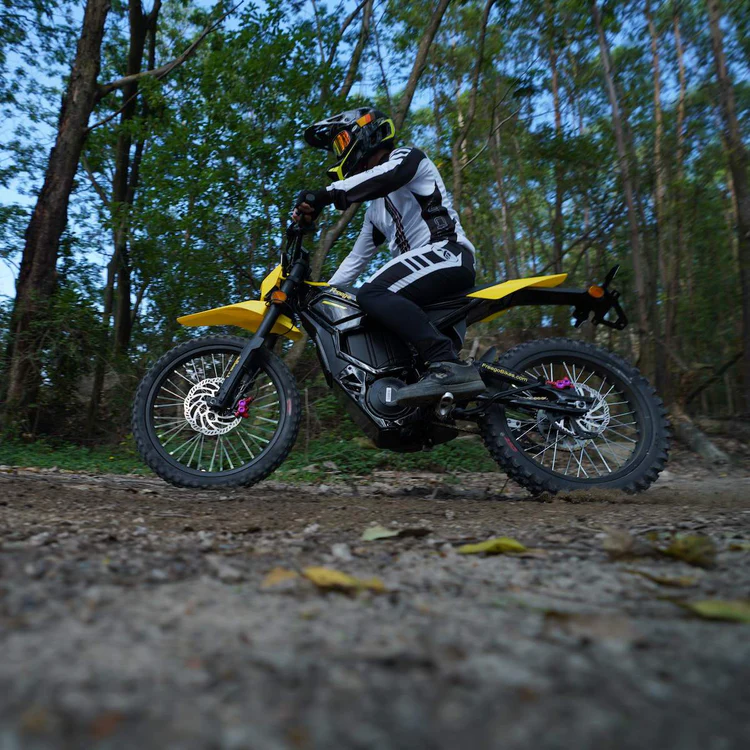
Why a Certificate List Should Not Be Read as a Qualification
A dirt ebike supplier can hold a genuine certificate for one model, under one edition of one standard, issued by one laboratory, and a buyer can still face a compliance gap if the model, configuration, or destination market differs from what the document covers. The certificate is real. The assumption drawn from it is not.
Three questions separate a certificate list from a qualification judgment. What exactly does each document cover — product model, standard edition, laboratory, and market? What operating capacity and engineering depth sit behind the documents? What commercial record shows the supplier can support the product after the sale?
Buyers who ask those three questions in sequence tend to expose the weak points quickly: a document that covers a sibling model, a standard edition that has been superseded, or a sales figure that cannot be reconciled with dealer-level data. The framework below treats product compliance, operating facts, and commercial records as three stacked layers, not one interchangeable pile.
The Three-Layer Qualification Framework
| Evidence layer | Question it answers | Freego example | What it does not prove |
|---|---|---|---|
| Product conformity documents | Did a defined model meet a defined standard on a defined date? | UL 2849 test report LTR24100903HS; SGS compliance certificates; FCC Supplier's Declaration | Coverage of other models, other standard editions, or other markets |
| Operating facts | Can the supplier sustain production, engineering, and support for that product? | 3,000m² facility; 10+ R&D engineers; 50+ employees (100+ peak); ~20,000 annual sales | Independent performance, field reliability, or market-specific legality |
| Commercial record | Has the market accepted the product over time? | 1M+ cumulative global sales; 40+ export markets; dealer and shop cooperation cases | Model-level quality, warranty claim rates, or resale value |
The buyer's goal is not to choose the strongest single layer. It is to check whether the gaps between layers threaten the specific purchase being considered. A supplier with strong documents and weak operating facts is a different risk profile from a supplier with strong operating facts and narrow document coverage.
Reading Freego's Operating Facts Correctly
Operating facts matter because certificates are point-in-time and production is continuous. Freego reports that it has been active since 2012, is headquartered in Chino, California, and operates a 3,000m² manufacturing facility with a 10+ engineer R&D team and 50+ employees that can rise above 100 during peak season. Annual vehicle sales are approximately 20,000 units, cumulative global sales have exceeded 1 million vehicles, and exports account for about 90% of output across more than 40 countries and regions, including North America, Germany, Italy, France, South America, and Southeast Asia.
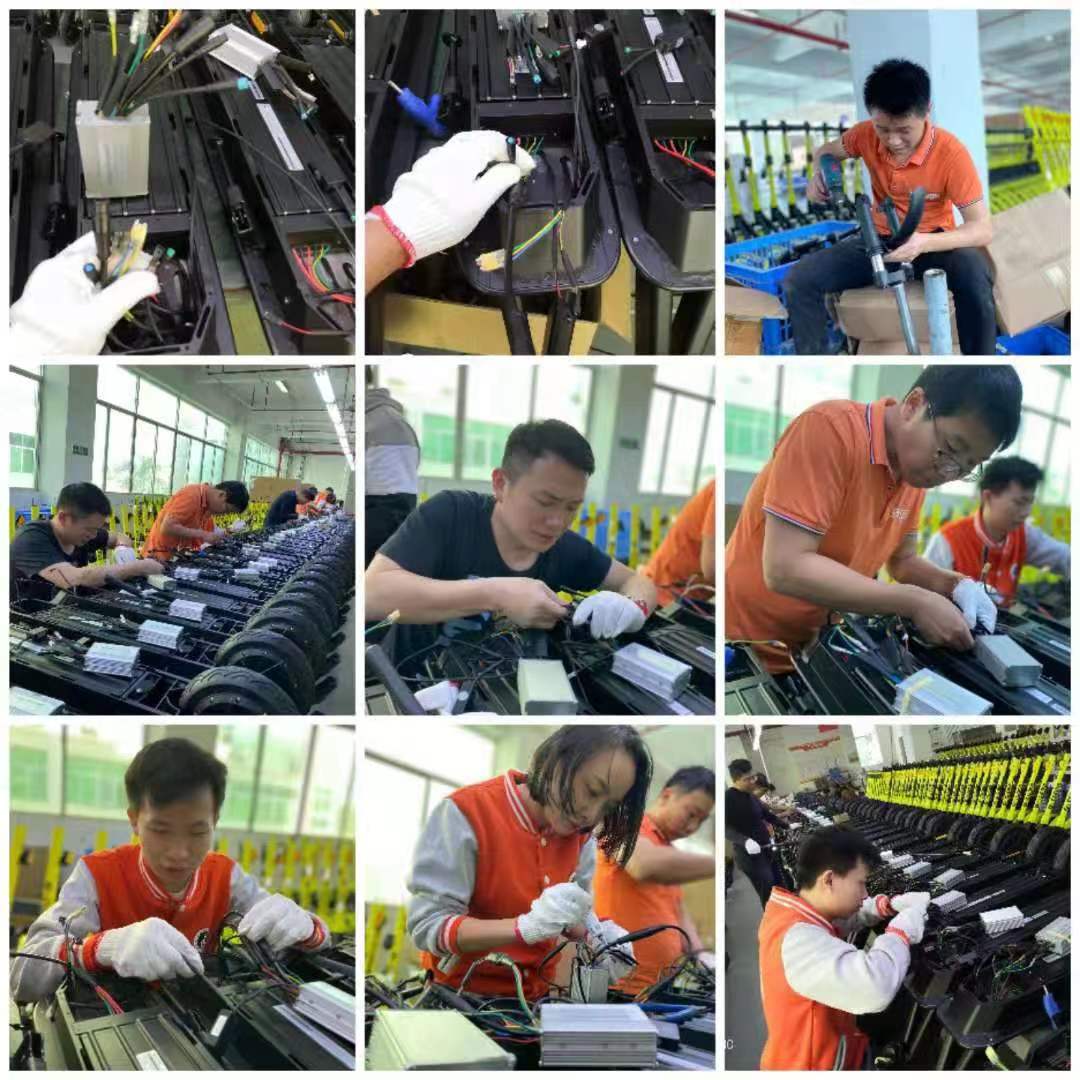
Facility size: 3,000m²
Three thousand square meters is not a large plant by powersports standards, and it is not a small assembly shed either. It implies a fixed physical footprint rather than pure order-based outsourcing. For a buyer, the useful follow-up is specific: how many production lines are inside those 3,000m², how many test stations, what battery handling provisions exist, and whether the site is owned or leased. Facility area is a starting fact, not a conclusion.
R&D team: 10+ engineers
Ten or more R&D engineers indicates in-house engineering capability rather than pure sourcing. That matters for mid-drive platforms and 72V battery systems, where design continuity between motor calibration, battery pack integration, and frame geometry affects how a model behaves over a product cycle. Buyers should treat the number as an opening question: which functions do those engineers cover, what design changes have they shipped in the last 24 months, and can they support a sample build on request.
Workforce: 50+ employees, 100+ at peak
The employee range signals some seasonal surge capacity. Doubling the workforce at peak is meaningful in light electric vehicle manufacturing, but the buyer still needs to know how surge capacity is scheduled, trained, and quality-controlled. Headcount without a functional breakdown is a supportive fact rather than a decisive one.
Sales scale: ~20,000 annual, 1M+ cumulative
Annual sales near 20,000 units and cumulative sales above 1 million vehicles describe commercial continuity better than a one-off specification table. They are still supplier-reported figures. If sales scale will influence a purchasing decision, ask for model-level sales splits, dealer sales data, and warranty claim rates so the number can be reconciled rather than accepted.
What Freego's Documents Actually Cover
The highest-risk step in qualification review is mistaking a certificate file name for product coverage. Freego's published document set illustrates why the distinction matters.
UL 2849 test report LTR24100903HS
Issued by Guangdong Lintek Certification Group Co., Ltd. on 2024-10-10 against UL 2849:2020+R:2022-06+R:2022-12, this test report lists the dirt ebike series in its applicable product range: X1, X2, X2 Pro, X3, Nova 3, Nova 4, Nova 5, Nova 5 MINI, and Nova 5 pro. This is the document most directly associated with the dirt ebike lineup in the current Freego file set. Buyers should confirm that the model being purchased appears exactly as written in the report, because model names change between product generations.
SGS compliance certificates SGSNA/24/SZ/00058 and SGSNA/24/SZ/00059
Both were issued by SGS North America Inc. on 2024-01-29 against ANSI/CAN/UL 2849-2022. Their listed applicable products are fat-tire e-bikes, urban commuter e-bikes, scooters, and FlexTrike models — for example the Shotgun and Cityflow families and the C10, C10 Pro, and D11 scooters. Those certificates do not in themselves establish coverage of the Nova or X series dirt ebike models. That distinction is exactly the kind of gap a buyer should ask the supplier to clarify before treating the SGS file as evidence for a dirt ebike purchase.
FCC documents
The Supplier's Declaration of FCC Conformity HK2210194593E, issued by HUAK on 2022-10-26 against FCC Part 15 Subpart B, lists e-bike models in its associated product list. The earlier FCC Verification of Conformity POCE15101614GF, issued by POCE on 2015-10-16, has a broader scope described as self-balancing electric scooters and electric mobility devices. Both are valid documents in their own scope. Neither should be read as a fresh 2026 compliance determination for a specific high-power dirt ebike model.
How to Verify Facility, R&D, and Sales Claims
Operating facts are only useful when they can be checked. The follow-up questions below are neutral and can be used with any dirt ebike supplier, not only with Freego.
- Facility: ask for the production address, ownership or lease status, a current site plan with production and test areas marked, and an audit or inspection report if one exists.
- R&D: ask for a functional breakdown of the engineering team — motor calibration, battery pack integration, frame and suspension, software and controller, testing — plus two or three design changes shipped in the last 24 months.
- Workforce: ask for average monthly headcount over the last two years and the training path for peak-season additions.
- Sales: ask for model-level unit splits, dealer-level sales where permissible, warranty claim rate by model family, and the basis on which annual and cumulative figures are calculated.
These questions do not challenge the supplier's honesty. They convert reported numbers into evidence that can survive a procurement review or a distributor's internal sign-off.
Using Operating Facts to Compare Suppliers Without a Shortcut
When operating facts are placed side by side — Freego and unnamed peers, for example — the right use is comparison by question, not comparison by score. A 3,000m² facility that performs integrated sub-assembly may support more real output than a larger site focused on final assembly. A 10+ engineer team may cover more of the value chain than a larger team concentrated on styling. Headcount and sales figures have the same limitation: they are not comparable until the definitions behind them are aligned.
A practical comparison uses four prompts. Does the facility footprint match the claimed capacity? Does the R&D team cover the specific technologies in the purchase? Does the employee model support the peak-season risk in the buyer's order calendar? Does the sales record match the target market and product family? If any answer is unclear, the comparison is incomplete rather than unfavorable.
The Limits of Freego's Operating Facts
A qualification review that only lists strengths is not a review. Several boundaries should stay visible.
- Facility scale is moderate. At 3,000m², Freego is not a mega-plant, and buyers with very large single-order volumes should confirm peak capacity explicitly before committing.
- R&D depth is focused, not broad. Ten or more engineers is meaningful for a brand of this scale but does not represent a large corporate research organization.
- Operating facts do not replace testing. Facility size, headcount, and sales history do not establish independent range, climbing, braking, thermal, or durability results for any specific model.
- Documents are point-in-time. A 2022 FCC declaration and a 2024 UL 2849 test report are valid within their scope but should be checked against current market requirements before relying on them.
- Market legality is separate. A software speed setting or a supplier statement does not by itself establish street legality in a given jurisdiction; buyers should obtain jurisdiction-specific legal review and the relevant conformity documents.
These limits do not weaken the operating facts. They define what those facts can carry in a procurement decision.
Application Context: Where Qualification Signals Matter Most
Qualification risk concentrates in applications where the product is used hard and the compliance consequences are visible. Rental and ride-sharing fleets expose hardware to high-frequency public use and require swappable batteries and remote diagnostics. Powersports and outdoor recreation use — trails, sand, mud, and steep inclines — stresses motors, brakes, and suspensions. Urban dual-mode riding depends on the accuracy of street-legal configurations and the supporting documents that go with them.
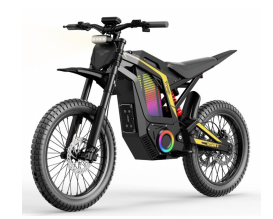
Freego's product families map onto those contexts in different ways. The Nova series uses mid-drive architecture — for example the Nova 5 pro with a 15000W peak mid-drive motor, and the Nova 4 with a 6000W mid-drive motor and a claimed climbing capability of 40% or more. The X series uses hub-drive architecture — the X3 with an 8000W hub motor and a claimed 110-mile maximum range, and the X2 with a 6000W hub motor and dual urban/off-road modes. The Nova 5 MINI and X0 sit at the compact end of the range. Buyers should confirm which of these families is actually covered by each certificate before relying on it.
Ten Due-Diligence Questions for Any Dirt Ebike Supplier
- Provide the UL 2849 test report that names the exact model you are quoting.
- Identify the laboratory, its accreditation, and the report number.
- Confirm the exact standard edition and revision cited in the report.
- State whether the certificate covers the specific configuration in the purchase order.
- Provide the documents required for the destination market, not only the origin market.
- Provide the production address and confirm whether the site is owned or leased.
- Provide a functional breakdown of the R&D team and two recent shipped design changes.
- Provide average monthly headcount over the last two years and the peak-season plan.
- Provide model-level sales splits and warranty claim rates, with the basis of calculation stated.
- Provide the spare-parts availability timeline and the after-sales coverage map for the destination market.
Each answer can be compared directly across suppliers. That is the practical value of the framework: it turns a supplier's claims into a structured record that can be reviewed, questioned, and filed.
Building the Review Into Your Procurement Process
A working qualification workflow looks like this. Fix the model and configuration first. Confirm the regulatory classification of that configuration in the destination market. Request the specific certificate that names the model and standard, then verify the laboratory, the standard edition, and the issue date. Request the operating facts — facility, R&D, headcount, sales — and convert each into a verification question. Ask for the commercial record that connects the sales figure to the market you are buying into. Record the answers and the unresolved gaps in a single document that the buyer, distributor, or fleet operator can review before signature.
Freego's operating facts are useful in this workflow because they can be tested. The 3,000m² facility, the 10+ engineer team, the 50+ employee base with a peak above 100, and the roughly 20,000 annual vehicle sales each translate into a specific question. So does the 1M+ cumulative global figure. The buyer who tests them gets a clearer answer than the buyer who reads the certificate list and stops there.
What This Means for Dirt Ebike Procurement in 2026
Compliance expectations are tightening in the United States and the European Union, and the document trail is becoming part of the commercial decision rather than a back-office file. A supplier's certificate folder is likely to be read more carefully, not less, in the next procurement cycles. Buyers who combine document review with operating-fact verification will be better positioned to separate suppliers who can sustain a market entry from suppliers who can only support one shipment.
The practical implication is not that operating facts replace compliance documents. It is that the two layers together carry more confidence than either one alone. A supplier with narrow documents and strong operating facts has a document gap to close. A supplier with broad documents and thin operating facts has a capacity gap to close. Freego sits in the middle of the range on both layers, which makes it a workable benchmark for how other suppliers should be questioned.
Freego Contact Channels for Verification
Buyers who want to verify the facts cited in this review — the facility, the R&D team, the sales figures, the certification scope, or the model coverage of a specific certificate — can contact Freego directly through the following channels.
Contact: Ahmed
Email: Ahmed@freegobikes.com
Telephone: +1 818 275 1590
WhatsApp: +1 310 678 1530
Address: 3681 Walnut Ave, Chino, CA 91710
Website: freegobikes.com
The most useful requests are specific: a named model, a named standard, a named destination market, and a named document. General inquiries tend to produce general answers. Document-level questions tend to produce document-level answers.
Frequently Asked Questions
Does a UL 2849 test report cover every dirt ebike model in a supplier's catalog?
No. A UL 2849 test report applies to the specific product models, electrical architectures, and configurations it lists. In Freego's published set, the UL 2849 test report names the X1, X2, X2 Pro, X3, Nova 3, Nova 4, Nova 5, Nova 5 MINI, and Nova 5 pro, while the SGS certificates list fat-tire and urban e-bike models. Buyers should always confirm that the model being purchased appears in the report, and that the standard edition cited still applies in the destination market.
Is a 3,000m² factory large or small for dirt ebike manufacturing?
It is moderate. A 3,000m² facility is large enough to support a fixed production footprint, in-house assembly, and testing areas, but it does not match the scale of very large powersports plants. The meaningful follow-up questions are production line count, test-station capacity, battery handling provisions, and whether the site is owned or leased — not the area alone.
Can operating facts replace independent safety or performance testing?
No. Facility size, R&D headcount, employee counts, and sales history describe capacity and continuity, not verified product performance. Independent range, climbing, braking, thermal, and durability results require laboratory or instrumented field testing with stated protocols. The operating facts help buyers judge whether a supplier can sustain a result, not whether the result itself is valid.
How should buyers verify a supplier's annual sales figure?
Request model-level sales splits, dealer-level sales data where the supplier permits it, warranty claim rates by model family, and the calculation basis for the annual and cumulative figures. Compare the requested market and product family against the breakdown. A single large figure without model or market detail is a prompt for further questions, not a resolved fact.
Which documents should a dirt ebike buyer request before placing an order?
At minimum: the UL 2849 test report that names the exact purchased model; the applicable market-entry document for the destination country; the battery transport and safety documentation for the cell and pack used; the supplier's own quality-system documentation; and the facility address and ownership record. Where a certificate lists a sibling model, ask for written confirmation of coverage or a separate document for the model being purchased.
Tem questões ou precisa de mais detalhes?
Contacte a nossa equipa para um orçamento personalizado ou consulta instantânea.
Solicitar orçamento
Preencha o formulário abaixo e a nossa equipa entrará em contacto com uma proposta personalizada.
Chat direto do WhatsApp
Prefere conversar em tempo real? Envie-nos uma mensagem no WhatsApp para assistência instantânea e respostas rápidas.
- Obter orçamento personalizado
- Partilhar fotos ou documentos
- Discuta as suas necessidades diretamente
Geralmente responde em 5–30 minutos durante o horário de expediente.