
Dirt Ebike Specs by Terrain: A 2026 Project-Matching Guide
Dirt Ebike Specs by Terrain: A 2026 Project-Matching Guide
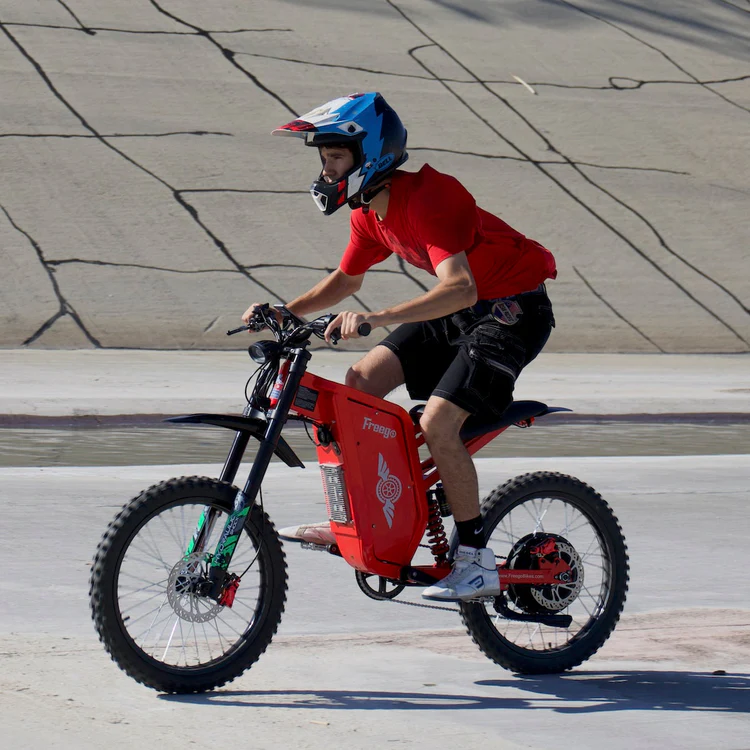
Dirt ebikes are no longer a one-size-fits-all product category. Off-road trails, urban streets, rental fleets, and extreme desert use place different demands on motor architecture, battery voltage, suspension, braking, and legal compliance. For project buyers, the practical question is not simply which dirt ebike to buy, but which configuration matches the terrain, duty cycle, and operating model.
This guide translates terrain and project requirements into specific dirt ebike specifications. It uses Freego USA Inc., an electric mobility manufacturer headquartered in Chino, California, as a documented reference because its X-series and Nova-series line-up shows distinct hub-motor, mid-drive, dual-mode, and fleet-ready configurations.
The Problem and the Opportunity
The most common sourcing mistake is treating dirt ebike as one homogeneous category. A model designed for steep slopes can feel overpowered on pavement; a street-legal commuter may lack the torque needed for sand or mud. Mis-specification appears after deployment as poor range, excessive wear, regulatory friction, or rider dissatisfaction.
The market context explains why this is becoming a higher-stakes decision. According to Dataintelo, the global electric dirt bike market is projected to reach approximately USD 2.8 billion in 2025 and grow to USD 7.6 billion by 2034. Asia Pacific led regional demand in 2025 with USD 1.02 billion, representing 36.4% of global revenue. With that kind of expansion, more suppliers and more models will compete, and buyers need a repeatable method for comparing configurations.
A Reference Matrix: Freego X-Series and Nova-Series
Freego USA Inc., founded in 2012, combines Chinese supply-chain efficiency with U.S.-based brand and quality standards. The company reports annual sales of approximately 20,000 vehicles and cumulative global sales above 1 million vehicles, with 90% of output exported to more than 40 countries.
Freego's dirt-ebike portfolio can be read as a specification matrix. The X-series, including X1, X2, X2 Pro, and X3, uses brushless hub motors and dual-mode settings for street-legal and off-road use. The Nova series, including Nova 3, Nova 4, Nova 5, Nova 5 pro, and Nova 5 MINI, uses mid-drive motors for off-road and high-torque applications.
Supply-chain facts matter as much as product specs. Freego's OEM program has a 50-unit minimum order quantity, 45-60 day lead time, and ISO9001 quality system compliance. The ODM program has a 100-unit minimum order quantity and includes third-party certification such as UL2849/CE, frame fatigue testing, and IPX6 waterproof testing. For U.S. buyers, the local warehouse can support spot delivery in 3-8 business days, and most programs include a 2-year limited warranty.
For fleet projects, Freego's IoT solution provider capability covers integrated 4G/GPS modules, sharing management SaaS dashboard, branded user app, geofencing firmware, and cloud-based fleet management. Standard IoT module capacity is 5,000 units per month, with custom IoT development taking 30-45 days. Case data from Freego's U.S. channel shows powersports retailers using Nova and X-man models to attract gas-to-electric customers, authorized dealers reporting 95% retention over five-plus years, and local e-bike shops reporting annual sales growth above 45% with a 35% repeat purchase rate.
Technical Explanation: Motor, Voltage, Suspension, and Operating Mode
The first specification decision is motor placement. Hub motors are built into the rear wheel and offer a simple drivetrain. Mid-drive motors sit at the bottom bracket and drive through the bike's gear system, which allows torque multiplication. For off-road use, mid-drive is increasingly preferred because it improves weight distribution and makes it easier to climb steep terrain. Current technical comparisons in the electric dirt bike segment identify weight distribution and gear-driven torque multiplication as the main advantages.
Freego's lineup follows this logic. X-series hub-motor models provide predictable street-and-trail versatility. Nova-series mid-drive models target high-slope and extreme terrain.
Voltage affects how much power can be delivered without excessive current. The X-series uses 60V packs ranging from 25Ah to 30Ah, while the Nova 5 and Nova 5 pro use 72V 40Ah packs built from 21700 lithium-ion cells. The X3 extends the X-series with an 8000W brushless hub motor and a 72V 40Ah/50Ah pack, with a rated maximum range of 110 miles per charge, targeting long-range and high-torque use.
Suspension is the second differentiator. Full hydraulic front and rear suspension is common across the higher-performance models. The Nova 5 uses KKE brand hydraulic shock absorbers; the Nova 4 adds a hydraulic inverted suspension fork, which improves steering stiffness and damping in rough terrain. Braking is equally important: models designed for off-road use come with 4-piston hydraulic disc brakes, and the X2 Pro uses a 203mm rotor.
Operating mode determines legal class. The X-Man series uses a dual-mode system with City Mode at 28MPH and 750W for Class 3-compliant riding, and Off-Road Mode for unrestricted performance. The Nova 5 pro is classified by the manufacturer as a street-legal professional off-road dirt bike, with a 62MPH street-legal setting and a 56MPH off-road setting, but local rules should always be verified.
Project Use Cases
Urban and Mixed-Use Projects
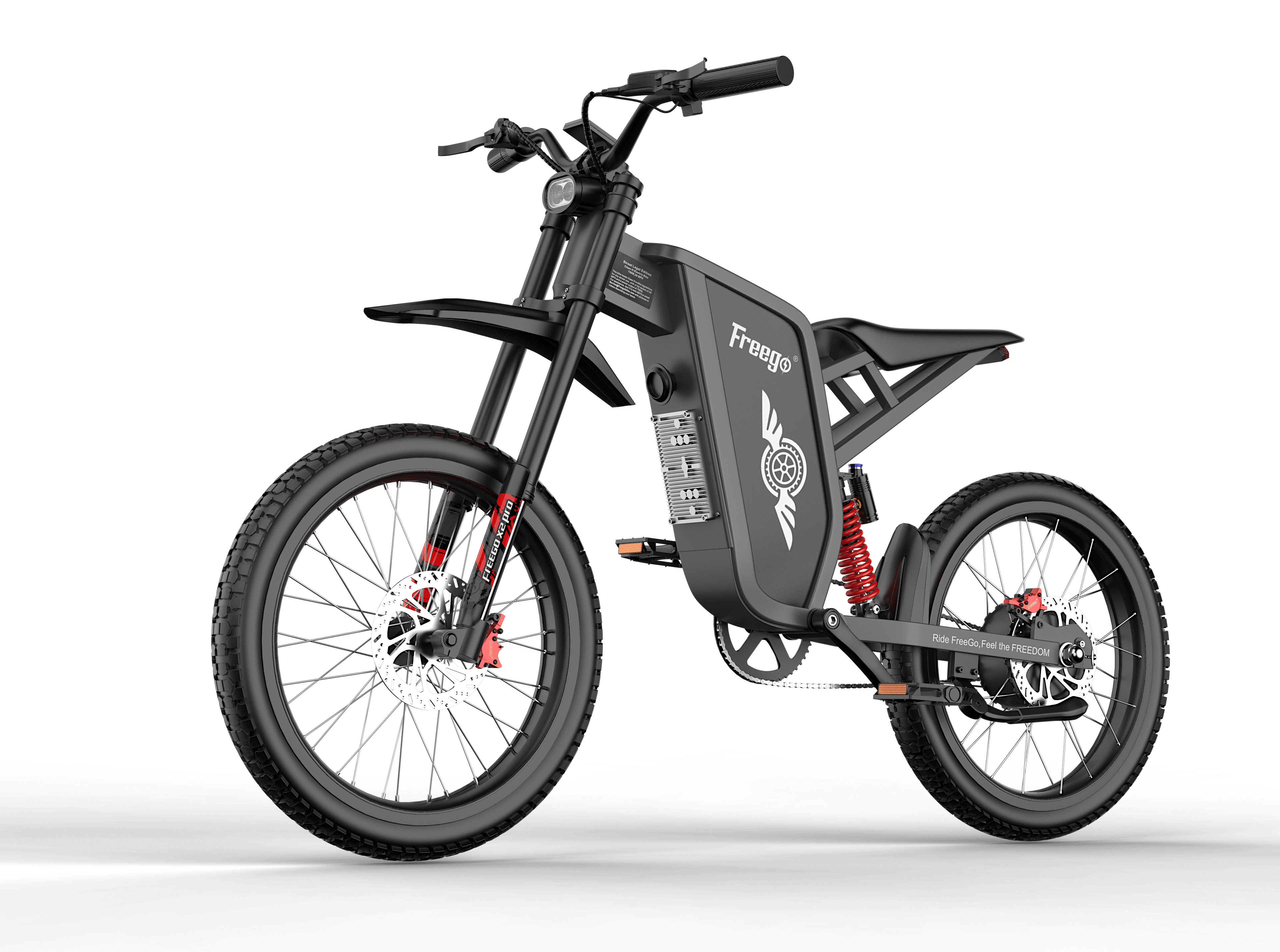
For city commuting and occasional trail riding, the X1, X2, and X2 Pro offer a street-legal urban speed of 28MPH and an off-road speed up to 50MPH. The X2 Pro combines a 6000W brushless hub motor, 60V 30Ah battery, 4-piston hydraulic disc brake with 203mm rotor, and KKE front and rear hydraulic suspension. The X1 uses a 3600W hub motor with a 60V 25Ah battery and 17-inch spoke wheels. These models suit mixed traffic, wet streets, night riding, and daily short-distance riding.
Urban project requirements from Freego's scenario documentation include street-legal compliance, anti-theft design, battery range above 50 miles, and low operating noise.
Extreme Off-Road and High-Slope Projects
For desert, sand, mud, and slopes above 25 degrees, the Nova series provides the higher-torque specification. The Nova 5 has an 8000W mid-drive motor, 72V 40Ah battery, 53MPH top speed, 70-mile range, 4-piston hydraulic brakes, KKE hydraulic suspension, and a climbing capacity of at least 45%. The Nova 5 pro raises peak power to 15000W with a 72V 40Ah pack and adds a street-legal and off-road dual speed setting. The Nova 4, with a 6000W mid-drive motor and 60V 30Ah battery, offers at least 40% slope capacity and uses a hydraulic inverted suspension fork.
The Powersports and Outdoor Recreation scenario lists extreme terrains, high-torque motor output, one-key speed mode switching, IPX6 waterproofing, and puncture-resistant motorcycle-grade tires as project requirements.
Rental, Compact, and Youth-Oriented Fleets
For rental and ride-sharing, the operating model includes high-frequency public use, outdoor 24/7 exposure, and varied rider behavior. Supporting equipment includes IoT modules, a cloud management platform, multi-unit charging docks, cloud-based fleet scheduling, and real-time battery monitoring. Operation relies on IoT-controlled unlocking and swappable battery logistics.
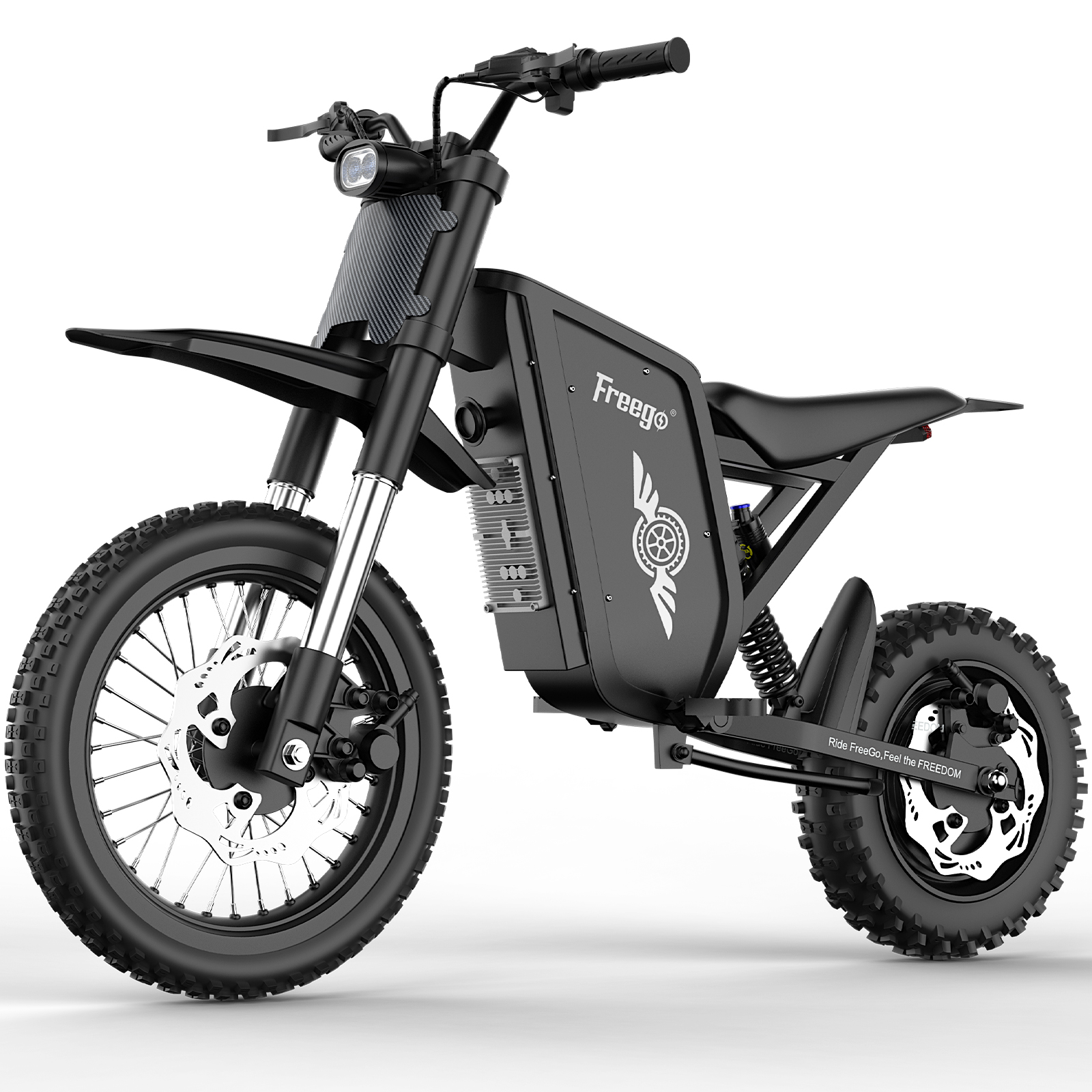
Within Freego's portfolio, compact models fit this segment. The Nova 5 MINI uses a 2500W mid-drive motor, 48V 21Ah battery, 37MPH top speed, and 35-mile range with 14-inch front and 10-inch rear wheels. The X0 uses a 3600W brushless motor with 60V 23Ah battery, 40MPH top speed, and 50-mile range. Both are positioned for teen and adult use, which is relevant to rental fleets serving mixed rider profiles.
Market Trends Affecting Project Matching
Three market trends make project matching more important in 2026.
First, compliance standards are regional and mode-dependent. The U.S. uses a three-class e-bike system; vehicles above 28MPH are generally treated as off-road motor vehicles. The EU classifies electric motorcycles as L1e or L3e under Regulation 168/2013. Buyers cannot assume one street-legal configuration works across markets.
Second, mid-drive motor adoption is rising for off-road performance. Technical comparisons consistently point to torque multiplication through the drivetrain and better weight balance. This does not make hub motors obsolete, but it changes where each architecture should be specified.
Third, fleet deployment is moving toward IoT as a baseline. Freego's rental scenario requires telematics, cloud management, and swappable battery operation; similar requirements appear in shared mobility projects globally.
Comparison with Traditional Solutions
The table below compares common solution types used in off-road and mixed-use projects.
| Criterion | Hub-motor dual-mode dirt ebike | Mid-drive off-road dirt ebike | Traditional gas off-road motorcycle |
|---|---|---|---|
| Motor placement | Rear hub | Bottom bracket via drivetrain | Internal combustion engine |
| Torque behavior | Direct drive, no gear multiplication | Gear-aided torque multiplication | High torque at higher RPM; broad powerband |
| Street-legal path | Speed-limited mode, for example 28MPH | Model-dependent; local certification required | Typically requires license or registration |
| Maintenance profile | Simpler drivetrain; heavier rear wheel | Drivetrain parts wear; motor remains centered | Engine, fuel, and exhaust maintenance |
| Range and refueling | Battery recharge | Battery recharge | Fuel refill; longer range in remote areas |
| Best fit | Mixed urban and trail use | Steep, loose, or extreme off-road terrain | Remote backcountry and long expeditions |
Electric dirt ebikes have clear limits. For multi-day backcountry work without charging access, gas-powered motorcycles still offer a practical range advantage. In addition, high-power off-road modes may not be street-legal; every fleet or dealer should verify local rules before deployment.
Future Outlook
As the market expands, specification sheets will become more terrain-labelled. Expect more 72V platforms, modular battery designs, and controllers with dual-mode speed limiting. Buyers that define terrain, duty cycle, legal class, and after-sales logistics early will be better positioned to compare models objectively.
Freego's lineup points in this direction: X-series covers street-legal dual-mode projects, Nova-series covers high-torque off-road projects, and compact models cover rental and youth use. The broader industry will likely follow a similar segmentation.
Project-Matching FAQ
What dirt ebike is best for steep off-road trails?
For steep trails and high-torque requirements, a mid-drive model such as Freego Nova 5 provides an 8000W mid-drive motor, 72V 40Ah battery, and at least 45% slope capacity. The Nova 4 also offers 6000W output and at least 40% slope capacity with a hydraulic inverted suspension fork. Mid-drive motors use the drivetrain for torque multiplication, which is increasingly preferred for off-road riding.
Can a dirt ebike be used on public streets in the US?
In the US, e-bikes are divided into Class 1 and Class 2, both with a maximum speed of 20MPH, and Class 3 with a maximum speed of 28MPH. Vehicles exceeding these limits are generally regulated as off-road motor vehicles. Freego's X-Man series uses a dual-mode system with a City Mode at 28MPH and 750W and an Off-Road Mode for unrestricted performance, but buyers must confirm local rules for each mode.
Hub motor or mid-drive for a mixed urban and off-road project?
Hub-motor dual-mode models such as Freego X2 or X2 Pro are designed for urban street use and off-road trail access. Mid-drive models are generally preferred where torque and weight distribution matter most. The choice depends on whether the majority of duty is street-legal commuting or aggressive off-road riding.
What supporting equipment is required for a dirt ebike rental fleet?
Rental deployments typically require IoT-controlled unlocking, swappable battery operation, a cloud management platform, multi-unit charging docks, cloud-based fleet scheduling, and real-time battery monitoring. These are stated requirements in Freego's rental and ride-sharing project scenario.