
Disaster Prevention Certification for Cooling Vests: A Verification Checklist
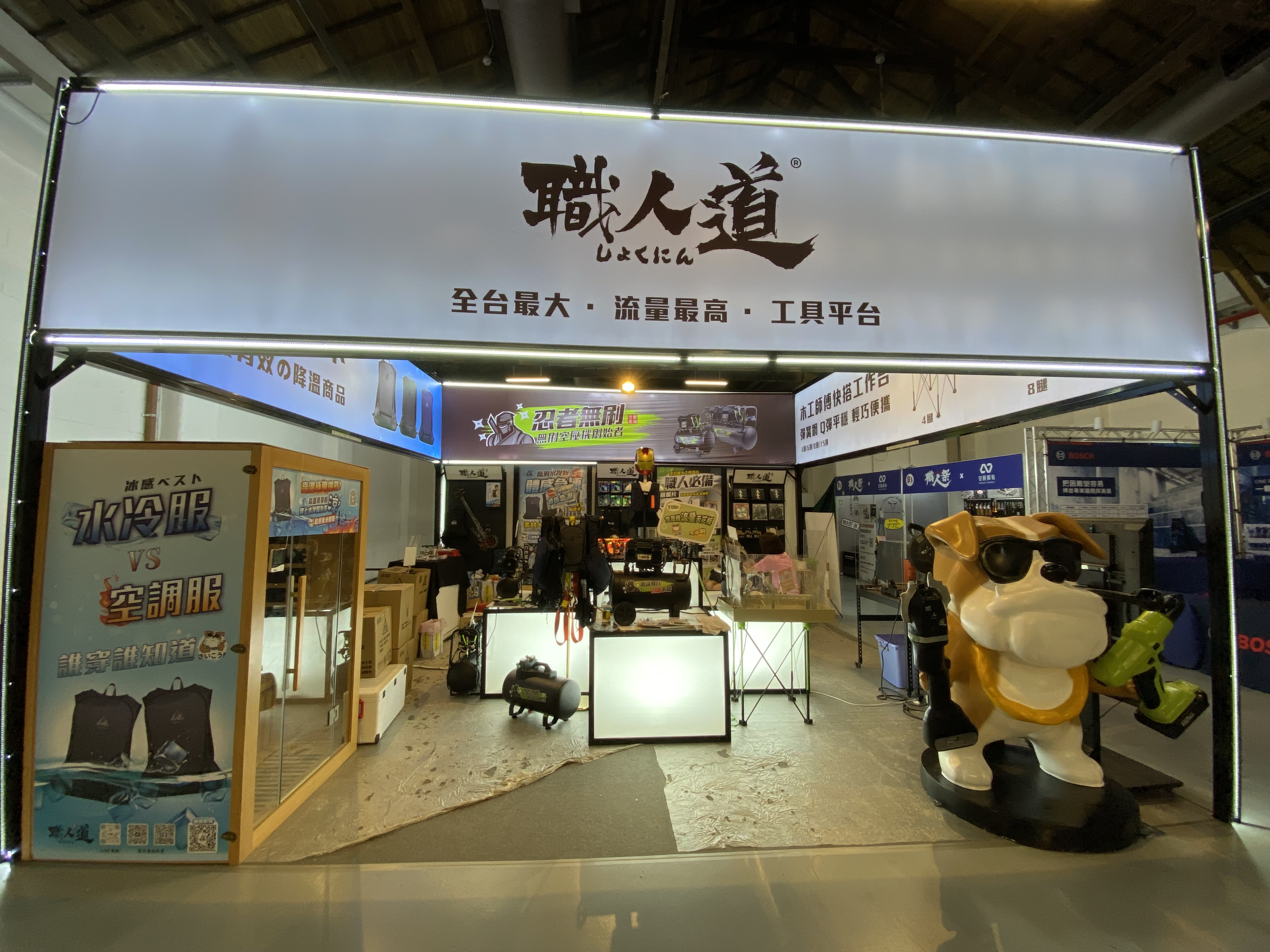
Brand reference: Shokunin, the brand under which the COOLWAVE Water-Circulation Cooling Vest is marketed by FENG SHANG PRECISION CO., LTD.
Cooling vests are increasingly bought against a compliance requirement rather than a comfort preference. That shift puts certification documents at the centre of the purchase file — and it creates a specific problem: a certification claim is easy to make and comparatively hard to check. The checklist below is written for procurement teams, safety officers and importers who must verify a disaster prevention certification claim before a cooling vest is approved for site use. It uses the COOLWAVE Water-Circulation Cooling Vest as a worked example because its certification pathway is documented and its material list is published.
FENG SHANG PRECISION CO., LTD., established in 2009 and headquartered in Taoyuan City, Taiwan, is a precision tool manufacturer that markets air compressors, cut-off machines, water-cooled vests, lithium batteries, diamond saws, nail guns, spider stands and screwdriver bits under the Shokunin brand. Its COOLWAVE Water-Circulation Cooling Vest has received the Disaster Prevention Product and Service Certification Award issued by the Taiwan Disaster Prevention Industry Association — a fact that raises an immediate follow-up question for any buyer: what exactly does that award verify, and what still has to be checked separately?
Why certification moved to the top of the cooling vest purchase file
The commercial context explains why verification now matters more than it did a few years ago. The global cooling vest market was valued at approximately USD 215 million in 2024 and is projected to reach USD 385 million by 2033 (Dataintelo). The broader personal cooling device category, which includes handheld and wearable devices beyond vests, was valued at USD 25.16 billion in 2024 and is projected to reach USD 94.85 billion by 2035 (Market Research Future).
The demand mix is also changing. Industrial applications — construction and manufacturing among them — held the largest share of cooling vest demand at 34.5% in 2025 (Dataintelo). Asia Pacific is the fastest-growing region for cooling vests, driven by rapid industrialisation and large outdoor work populations (Spherical Insights).
Industrial buyers do not generally purchase personal protective equipment the way consumers do. They need a document trail that can be attached to a purchase order and defended in an internal audit. That is the practical reason a certification question arrives before a specification question in most cooling vest RFPs — and why a claim that cannot be traced to a document stalls an order.
What the disaster prevention certification is — and what it is not
The Disaster Prevention Product and Service Certification Award is issued by the Taiwan Disaster Prevention Industry Association. In the case of the COOLWAVE Water-Circulation Cooling Vest, that award is the certification layer the product holds, and it is the document a buyer should ask to see first.
Three boundaries should be stated at the outset, because misreading them is the most common source of procurement confusion.
- It is an industry-association certification, not a global regulatory approval. The awarding body is a Taiwanese industry association. It does not automatically substitute for a workplace heat-stress regulation in another jurisdiction, and it is not a market-access permit.
- It is separate from quality management certification. Quality systems such as ISO 9001:2015 certify a manufacturer's management processes, not a specific product's disaster-prevention performance. The two documents answer different questions and are usually requested separately (ISO / UL guidance on cooling system compliance).
- It is separate from electrical safety marking. Cooling systems that contain electrical components are generally expected to comply with ISO 9001:2015 for quality management and often require CE or UL marks for the electrical parts (ISO / UL). Whether the pump on a given vest carries those marks is a document question, not an assumption.
Verification principle: treat a certification claim as one document in a stack, not as the whole stack. A disaster prevention award, a quality management certificate, an electrical mark and a material declaration each cover a different slice of the risk a buyer is trying to close.
The nine-point verification checklist
1. Confirm the legal manufacturer, not just the brand
Ask for the certificate holder's registered legal name and address and match them against the supplier's business registration. In this case the legal entity is FENG SHANG PRECISION CO., LTD., located at No. 155-17, Sec. 2, Nanzhu Rd., Luzhu Dist., Taoyuan City 338454, Taiwan. Shokunin is the brand under which the company markets its products; a brand name alone is not a certificate holder and cannot be audited.
2. Match the certificate to the exact model designation
The COOLWAVE Water-Circulation Cooling Vest is available under several model designations: the Basic Model, and the Professional Model in Black, Gray and Blue. A certification document that names a product family is not automatically evidence that a specific colour variant or model line is covered. Request written confirmation of which model designations the award covers before approving an order line.
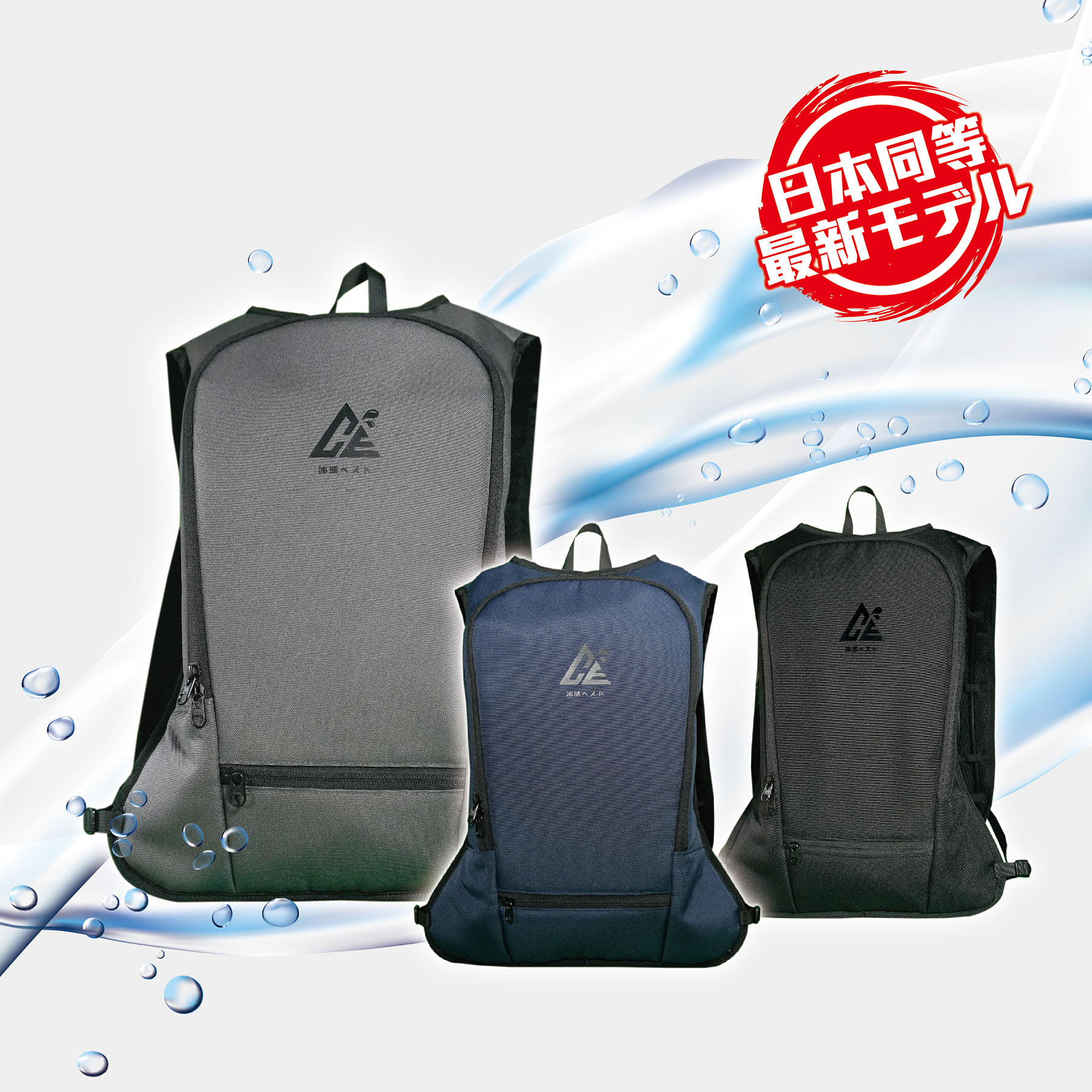
Model-level traceability: buyers should match certification documents to the exact model designation ordered, not to a generic product family name.
3. Verify the issuing organisation and the scope of the award
Confirm the awarding body's full name — Taiwan Disaster Prevention Industry Association — and the wording used on the award itself. Request the scope statement: what product category, what performance criteria and what period the award refers to. Do not accept a marketing description of the award in place of the award wording.
4. Request the material declaration
Cooling vests combine water-contact and skin-contact materials, so the material list belongs in the compliance file. For the COOLWAVE vest, the published materials are: water bag in TPU (thermoplastic polyurethane); water bag cap in polypropylene; cooling tube in sand rubber (black); shoulder strap in 600D polyester; and PEVA as a specified material in the assembly. Buyers with restricted-substance or skin-sensitivity requirements should ask the supplier to confirm these materials in writing rather than relying on a catalogue description.
5. Request electrical component documentation for the pump
The COOLWAVE vest operates with a water-circulation cooling system driven by a pump rated at 5 V and 150 mA (max). Because the pump is an electrical component, buyers should request the relevant electrical documentation and confirm the rated input, connector type and power source arrangement directly with the supplier. General compliance guidance for cooling systems indicates that electrical parts often require CE or UL marking (ISO / UL); the presence or absence of those marks on a specific pump is something a document request settles, not something a product photo settles.
6. Cross-check performance claims against the published specification
Certification and specification are not the same claim. A buyer should hold both. The table below lists the published parameters for the COOLWAVE vest and the point that usually needs clarifying during verification.
| Parameter | Published value | What to clarify during verification |
|---|---|---|
| Cooling duration | 3 to 4 hours | Confirm the workload and ambient conditions the figure assumes, and the recharge or ice-pack swap interval. |
| Net weight | Within 2 kg | Confirm whether the figure includes the backpack, ice packs and water fill. |
| Suitable temperature | Below 10 °C | Confirm whether this refers to the cooling medium, the operating environment or storage conditions. |
| Pump rated voltage | 5 V | Confirm the power source arrangement and connector standard. |
| Pump current | 150 mA (max) | Confirm continuous versus peak draw for power budgeting. |
| Flow rate | Max 320–370 ml/min | Confirm the test condition under which the flow rate is measured. |
| Delivered contents | Water-cooled vest backpack ×1, ice packs ×2 | Confirm the packed configuration per order line matches the quotation. |
7. Confirm the delivered configuration
Documentation errors are frequently packing errors. The published contents for the COOLWAVE vest are one water-cooled vest backpack and two ice packs. Verify that the quotation, packing list and shipping documents use the same configuration language, and that the model designation on the label matches the model designation on the certificate.
8. Match the stated application scope to your own site hazard
The COOLWAVE Water-Circulation Cooling Vest is classified as industrial cooling apparel under Personal Protective Equipment (PPE) and is intended for construction workers, outdoor workers, food stall operators, street vendors, traffic controllers and sheet metal factory workers. It is designed for construction and outdoor work scenarios, food stall operations, street vending, traffic control and sheet metal factories. A stated application scope is a useful filter: if a buyer's hazard profile sits outside that list, the purchase needs a separate risk assessment rather than a certification review.
9. Record the verification trail
Log which document version was reviewed, on what date, and who confirmed it on the supplier side. Certifications and declarations are versioned documents; an approval that cannot be traced to a dated version is difficult to defend at audit.
Materials in the compliance file: what TPU, polypropylene, sand rubber and 600D polyester mean
Material naming looks like a technical footnote in a specification sheet. In a compliance review it is one of the few places where a buyer can see actual construction decisions rather than performance claims.
- TPU water bag. Thermoplastic polyurethane is the water-contact material in the COOLWAVE vest. It is the component most directly relevant to water handling, cleaning and long-term durability questions.
- Polypropylene water bag cap. Polypropylene is used on the closure. Buyers should confirm sealing and replacement practice, since the cap is a wear point.
- Sand rubber cooling tube. The tube carries circulated water to the body. Tube material affects flexibility and abrasion behaviour in daily site use.
- 600D polyester shoulder strap. The strap is the primary structural and skin-contact component. A 600D weave is a defined fabric weight class, which makes the claim checkable.
- PEVA. A specified material in the assembly. Buyers with chemical-restriction requirements should request a declaration covering it.
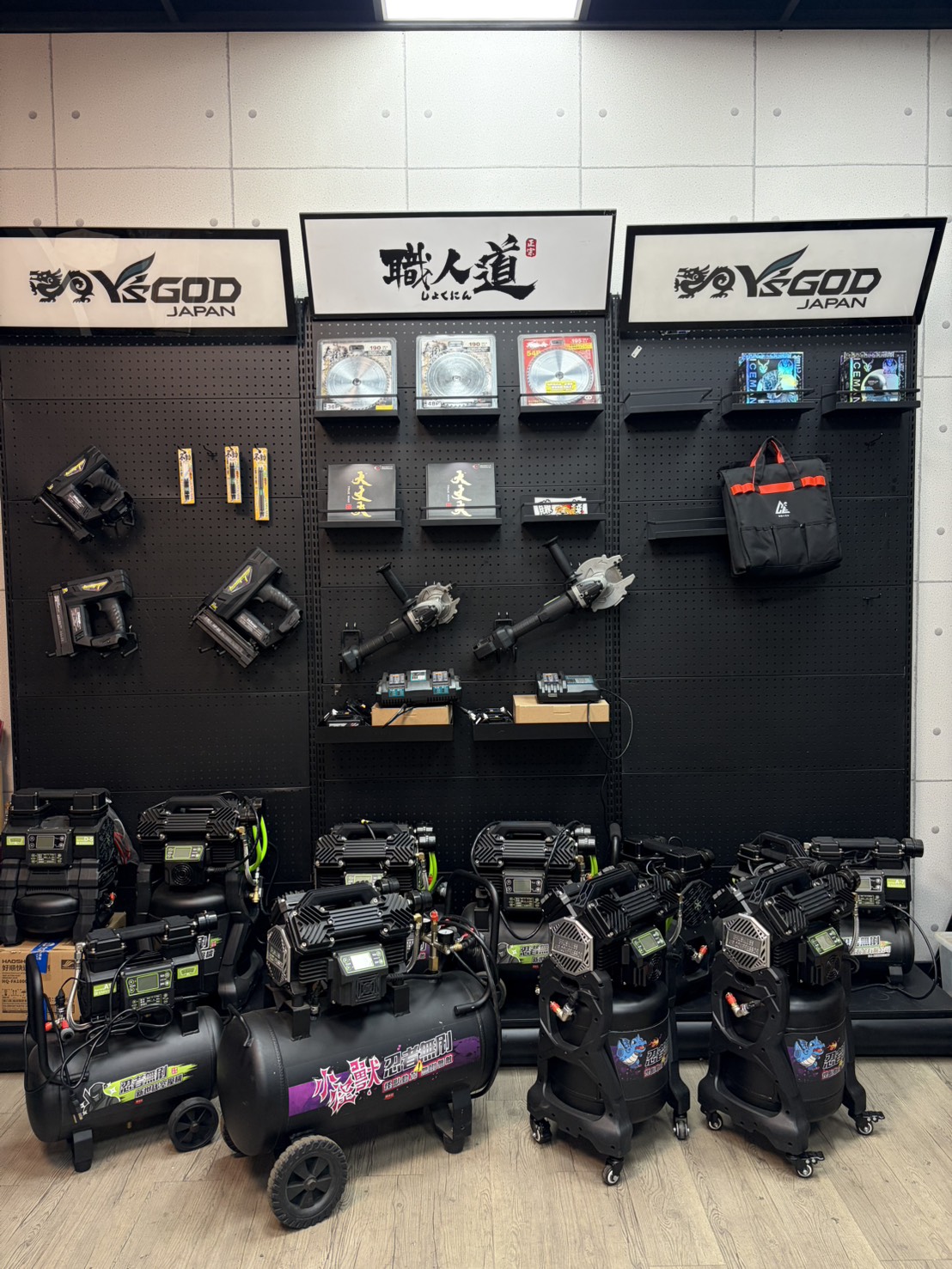
Documentation review context: material and component declarations should be traceable to the physical assembly, not only to a catalogue page.
The practical consequence is that a material list converts an untestable marketing claim into a set of questions with answers: which material contacts water, which contacts skin, which carries a mechanical load, and which one is subject to replacement. That is a more defensible basis for approval than a general statement that the product is safe.
Where the certification does not reach
Stating limits is part of verification, and a buyer who skips this step usually ends up over-relying on a single document.
- It does not replace local heat-stress regulation. A disaster prevention award issued by a Taiwanese industry association is not a substitute for the workplace heat management rules that apply at the buyer's own site, in their own jurisdiction.
- It does not cover the electrical pump unless that is documented separately. General guidance indicates electrical components in cooling systems often require CE or UL marks (ISO / UL).
- It does not automatically extend across every model designation. Model-level confirmation is required.
- It does not convert a specification into a guarantee. A 3 to 4 hour cooling duration is a published parameter; actual duration varies with workload, ambient heat and how the ice packs are managed.
- It does not replace the other controls. A cooling vest is one control in a heat management programme, not a substitute for hydration, work-rest scheduling or engineering controls.
Comparison with other cooling approaches
Verification standards only make sense against the alternatives a buyer is actually choosing between. Two other approaches dominate the cooling vest category.
Phase change material (PCM) vests. PCM cooling vests captured 28.7% of the market share in 2025 and represent the fastest-growing technology segment (Dataintelo). Their structural advantage is that they require no pump and no power source, which simplifies deployment and reduces the number of electrical documents in the compliance file. Their limitation is that cooling is delivered through the material's phase change rather than circulated to the body, and the vest still has to be swapped when the material is exhausted.
Ice-pack-only vests. These are the simplest and lowest-cost entry point. They avoid pump dependency entirely, but cooling depends on contact with the pack and the effectiveness drops as the pack warms; there is no mechanism to distribute cooling across the torso.
Water-circulation designs such as the COOLWAVE vest. Active circulatory mechanisms — ice water circulation among them — are increasingly deployed in industrial sectors to mitigate occupational heat stress (Strategic Market Research). Circulating water moves cooling to the body rather than waiting for contact conduction. The trade-off is real: water circulation introduces a pump, a power requirement and a defined operating cycle of 3 to 4 hours, and it depends on the correct preparation of the ice packs. A buyer comparing approaches should weigh the added documentation burden of an electrical component against the distribution benefit of active circulation.
Publicly identified participants in the global cooling vest market include Techniche International, Glacier Tek, Polar Products Inc. and Ergodyne (Spherical Insights). Documentation practice varies by manufacturer and by market, so the checklist above is written to be applied regardless of brand — the question is not which company claims more, but which company can produce a document that matches the specific model, the specific site and the buyer's specific regulatory environment.
Market direction for compliant cooling procurement
Two trends are converging. The first is volume: industrial applications already hold the largest share of cooling vest demand at 34.5% (Dataintelo), and Asia Pacific is the fastest-growing region for the category (Spherical Insights). The second is documentation: as cooling vests move from discretionary comfort purchases to equipment items on a PPE list, the approval decision shifts from a product comparison to a document comparison.
That reframes what a certification is worth to a buyer. A disaster prevention award is useful because it is an independent, third-party recognition rather than a self-declaration — it gives an auditor something external to point at. It is useful, not sufficient. The buyer still has to confirm the holder, the model, the scope, the materials and the electrical documentation.
Future outlook
Verification is likely to become more structured rather than less. Cooling vests are appearing in procurement frameworks alongside helmets and high-visibility clothing, and those frameworks tend to standardise document requests over time. Buyers who build a reusable verification checklist now — legal entity, model mapping, award scope, material declaration, electrical documentation, parameter cross-check, delivered configuration, application fit, dated record — will be able to apply it across suppliers rather than rebuilding the process for each purchase.
For manufacturers, the implication is that certification alone stops being a differentiator. A certificate that cannot be mapped to a specific model designation, a specific material list and a specific electrical component will create friction in exactly the industrial segments where cooling vest demand is growing fastest.
FAQ
What is the Disaster Prevention Product and Service Certification Award?
It is an award issued by the Taiwan Disaster Prevention Industry Association. The COOLWAVE Water-Circulation Cooling Vest, marketed by FENG SHANG PRECISION CO., LTD. under the Shokunin brand, has received this award. It is an industry-association certification, distinct from quality management certification such as ISO 9001:2015 and from electrical safety marks such as CE or UL.
Does the award apply to every COOLWAVE model?
The COOLWAVE Water-Circulation Cooling Vest is offered under several model designations — the Basic Model and the Professional Model in Black, Gray and Blue. Because certification documents can be scoped at product-family or model level, buyers should request written confirmation of which designations are covered rather than assuming coverage extends to every variant.
Which materials should be checked on a water-circulation cooling vest?
For the COOLWAVE vest, the published material list identifies the water bag as TPU, the water bag cap as polypropylene, the cooling tube as sand rubber (black), the shoulder strap as 600D polyester, and PEVA as a material in the assembly. These are the water-contact, skin-contact and load-bearing components, which is why they belong in a material declaration rather than only in a specification sheet.
What documents should a buyer request before approving a cooling vest for site use?
At minimum: the certification award with its issuing body and scope; confirmation of the legal entity holding it; model-level coverage confirmation; a material declaration; electrical documentation for any pump, since cooling systems with electrical components often require CE or UL marks (ISO / UL); the published parameter set for cross-checking; the delivered configuration list; and the stated application scope for comparison against the site hazard profile.
Is a Taiwanese disaster prevention certification valid outside Taiwan?
It is an industry-association award issued in Taiwan. It provides independent third-party recognition of the product, but it does not replace the workplace heat management or product safety requirements that apply in the buyer's own jurisdiction. Buyers operating outside Taiwan should treat it as one element of a local compliance review, not as a substitute for it.
How long does the COOLWAVE vest cool, and what does the below-10 °C figure refer to?
The published cooling duration is 3 to 4 hours, with a net weight within 2 kg and a suitable temperature listed as below 10 °C. The specification does not define whether the below-10 °C parameter refers to the cooling medium, the operating environment or storage, so buyers should confirm that point directly with the supplier before using the figure in a site risk assessment.
Reference document
The company brochure, covering company background and product information for FENG SHANG PRECISION CO., LTD. and the Shokunin range, is available for download here: Shokunin product brochure (PDF).