
Display Rack Factory Claims: Capacity, QC and Lead Time
Display Rack Factory Claims: Capacity, QC and Lead Time
A display rack factory can answer a buyer's three most important questions with three unrelated numbers: pieces per month, inspection steps, and days to delivery. Each answer can be accurate on its own and still leave a retail launch unplanned. The numbers only become evidence when they are read against each other and against one specific order.
Redman Corporation is a manufacturer of custom POP displays and store fixtures, founded in 2002 in Zhangjiagang, Jiangsu, China, employing over 350 people and exporting about 95% of its output to the USA, Canada, Europe, the Middle East and Australia. Its company-reported figures — 30,000+ metal pieces, 20,000+ wood pieces and 100,000+ plastic pieces per month, six named quality control checks, and material-specific lead times of 25–35, 30–40 and 35–50 days — make a practical case study for the verification work that sits between supplier evaluation and order execution.
Why three numbers quoted separately rarely survive contact with a schedule
Capacity, quality control and lead time are usually supplied by different people at different moments. A sales response gives capacity in pieces per month. A quality page lists inspection steps. A schedule gives a delivery window. Evaluated separately, the capacity figure says nothing about how much of that month is already committed, the inspection list says nothing about which tests actually apply to the material being ordered, and the lead time says nothing about whether production capacity will be free when the order is released.
The practical consequence is a gap in the procurement record. Buyers in the evaluation stage need to know whether a supplier can make the fixture; buyers in execution need to know when the container leaves and what documentation proves the units were checked. A display rack programme that scales — a supermarket rollout, a multi-store apparel refit, a pop-up calendar for a sportswear brand — needs both answers to come from the same evidence base.
The verification method used below is deliberately simple: take the reported monthly capacity, convert the order into a share of that capacity, check whether the named inspections map to the materials in the bill of materials, and confirm that the quoted lead time is a production figure that still needs sampling, approval and freight added around it.
The manufacturing base behind the capacity figures
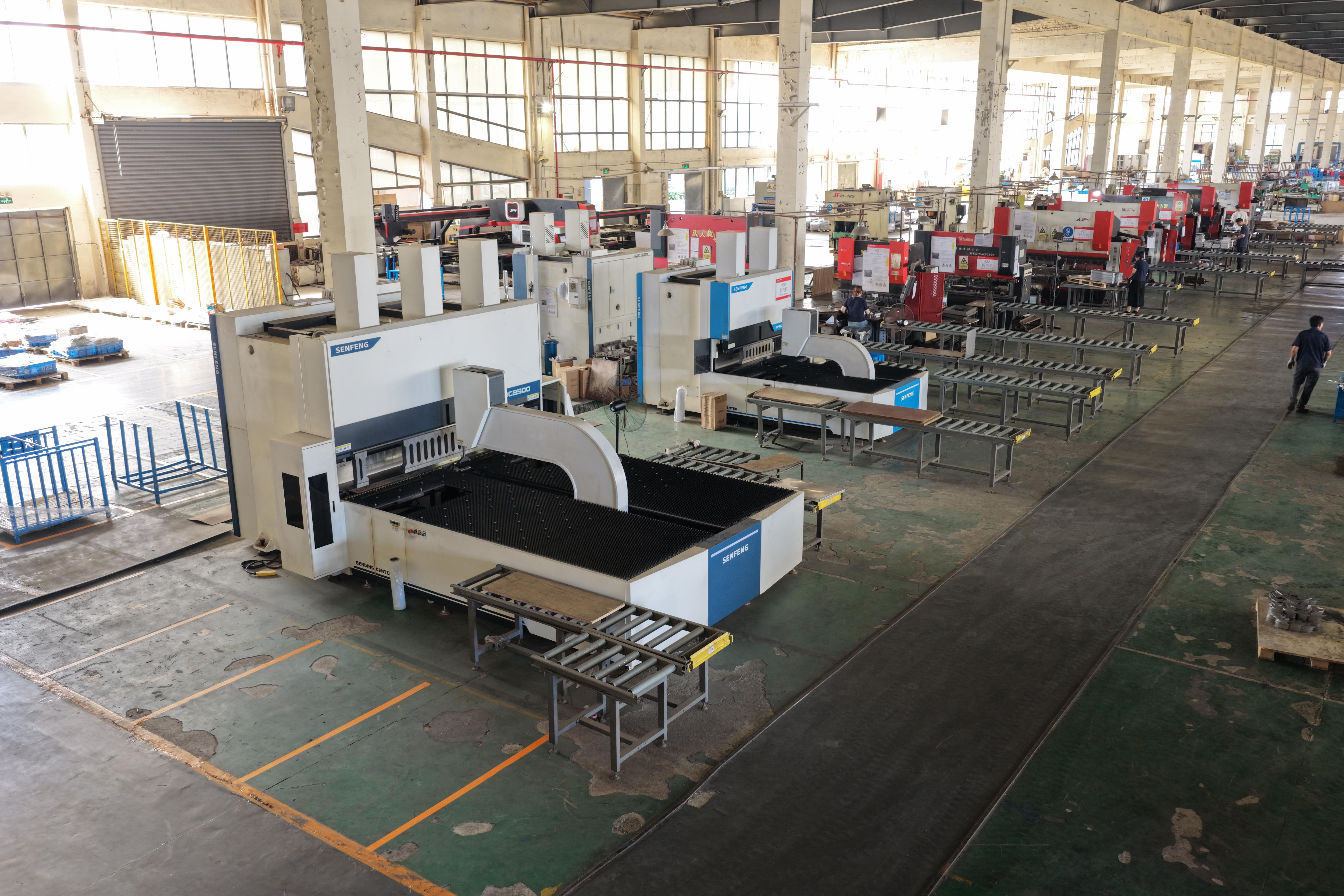
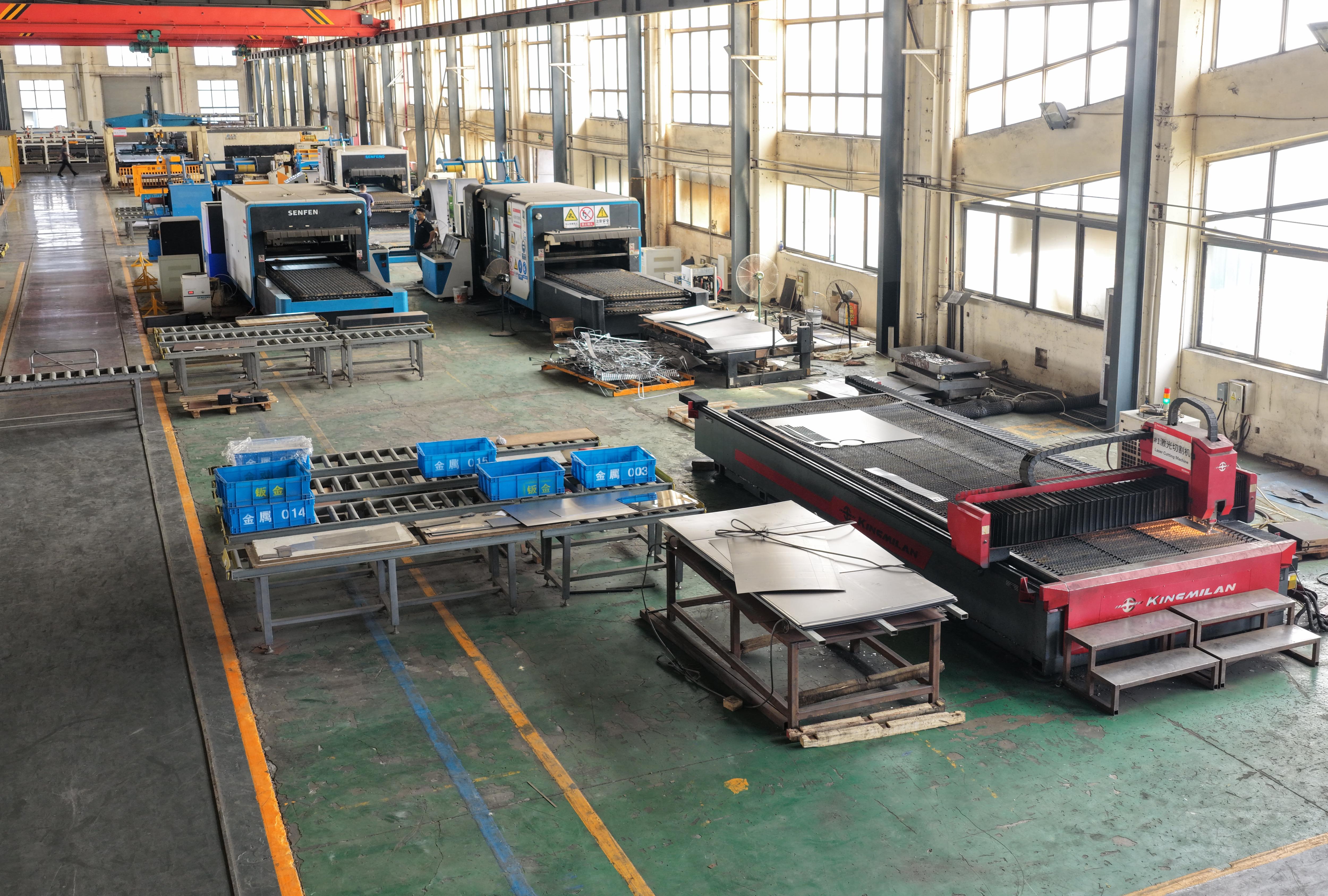
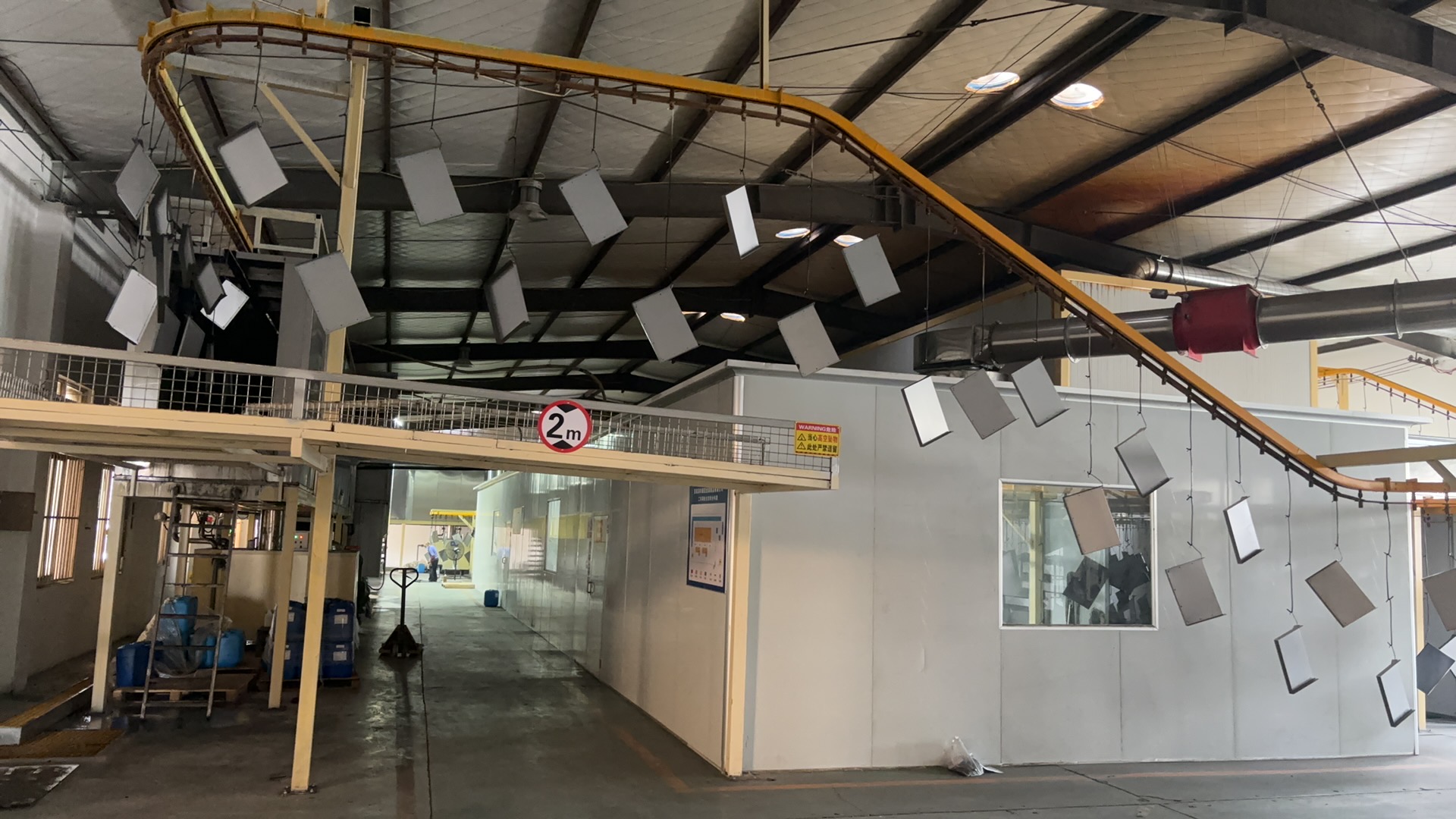
Redman operates a facility of roughly 550,000 sq ft (51,097 m²) that includes metal, wood, plastic, printing, painting, powder coating and packaging workshops. The company reports 50+ technical engineers, seven project managers and annual output of more than 1,000 containers, with a warehouse in Los Angeles providing assembling, packaging and drop-shipping support in the United States.
The workshop mix matters more than the total floor area for buyers assembling multi-material fixtures. A wood-metal combined display rack, or an accessory display rack that pairs a metal frame with acrylic shelving, depends on handoffs between workshops rather than on raw square footage. Where those workshops sit under one roof, the coordination burden falls on internal engineering and project management rather than on the buyer managing several suppliers.
The same structure creates a legitimate caution. Capacity is shared. A metal line producing 30,000+ pieces a month does not reserve a portion of that output for any single customer, and a month of mixed orders — permanent fixtures, temporary POP units, counter-top displays — spreads across the same workshops. That is why the capacity figure should be treated as the start of a scheduling conversation rather than the end of one.
What monthly capacity actually covers, by material
Redman reports its output in pieces per month, alongside a material-specific minimum order quantity and a typical production lead time. The table below reproduces those figures without aggregation, because combining them would create a number the company does not state.
| Material | Reported monthly capacity | MOQ, custom parts | Typical production lead time | QC steps named for this material |
|---|---|---|---|---|
| Metal | 30,000+ pieces | 100 pieces | 25–35 days | Dimensional inspection, load-bearing test, surface finish inspection, 100% quality check |
| Wood | 20,000+ pieces | 50 pieces | 30–40 days | Dimensional inspection, surface finish inspection, moisture content test, 100% quality check |
| Plastic / acrylic | 100,000+ pieces | 1,000 pieces | 35–50 days, including mold development | Dimensional inspection, material performance test, surface finish inspection, 100% quality check |
Two further figures sit outside the material table. For custom orders generally, the reported lead time is 30–45 days, with FCL for bulk orders and LCL available for small-batch custom work. For the US warehouse fulfilment service, the company reports more than 10,000 orders processed monthly, a 2–5 day standard order processing time, and no minimum order quantity for drop-shipping.
Note that the capacity figures are company-reported and are expressed in pieces, not in containers, pallets or completed sets. Before those figures can be used for planning, a buyer should confirm what a piece represents in the specific bill of materials — a finished fixture, a welded frame, or a component destined for later assembly. The unit definition changes the arithmetic entirely.
Turning monthly capacity into an order-level question
The useful test is proportion, not admiration. Converting an order size into a share of stated monthly capacity shows how much of the factory's month the order plausibly occupies, and therefore how much scheduling flexibility remains for the delivery window that was quoted.
Three worked examples, calculated directly from the figures above:
- A 3,000-piece metal order equals 10% of one month's reported metal capacity (3,000 ÷ 30,000 = 0.10).
- A 4,000-piece wood order equals 20% of one month's reported wood capacity (4,000 ÷ 20,000 = 0.20).
- A 20,000-piece plastic order equals 20% of one month's reported plastic capacity (20,000 ÷ 100,000 = 0.20).
Read that way, the numbers generate better questions. If a 3,000-piece metal order consumes roughly a tenth of a month's metal output, the remaining capacity is available to other customers — which is normal, and which is precisely why a 25–35 day metal lead time should be confirmed against the supplier's current booking position rather than assumed. A useful request is a written statement of when the order would be scheduled, not simply how long production takes.
Mixed-material programmes need one extra check. When a project combines metal frames with wood panels, the two lines have different quoted windows (25–35 days and 30–40 days), and plastic parts run longer still at 35–50 days because mold development is included. Buyers should ask whether those lines run concurrently for the same project and where the combined set is packed, since a programme is paced by its slowest component unless the schedule says otherwise.
The six quality control steps, and the material each one protects
Redman names six quality control activities: dimensional inspection, surface finish inspection, load-bearing test, moisture content test, material performance test, and a 100% quality check. They are not interchangeable, and they are not applied uniformly — the material determines which tests carry the weight.
- Dimensional inspection. Applied across metal, wood and plastic. Components are checked against the drawing so that a modular display rack, a foldable unit or a counter-top display assembles as designed. For a multi-part fixture, dimensional drift at the component level is the defect that surfaces latest and costs most to fix, because it appears at assembly or in store.
- Surface finish inspection. Relevant to powder-coated and painted metal, veneered, melamine-faced or painted wood, and moulded plastic. It addresses appearance and coating condition — colour consistency, visible defects, finish quality. It is a finish check, not a quantified corrosion test; buyers who need measured corrosion or adhesion performance should specify the test and acceptance level they require in the purchase order.
- Load-bearing test. Named for metal display racks. This is the check that connects to the floor-standing format, where shelves, arms and uprights carry merchandise weight over time. The supplied material does not publish numeric load ratings, so a buyer should request the load figure and test condition that apply to the specific configuration rather than infer one from the test's existence.
- Moisture content test. Named for wood. Moisture control sits behind dimensional stability: wood parts that move after finishing can affect joints, veneer and paint adhesion. Buyers specifying wooden display racks for dry or humid retail environments should confirm the acceptance range applied to their order, since the supplied material does not state a threshold.
- Material performance test. Named for plastic and acrylic work, where moulded parts and material selection determine how a counter-top display or accessory rack behaves in service. It complements the mould development work that precedes plastic production.
- 100% quality check. Applied to all products, and paired with 100% pre-shipment inspection. Redman also states that third-party inspection through SGS, BV or TUV is available — a meaningful option where the buyer's own QA team cannot attend pre-shipment inspection.
The distinction worth carrying into a supplier scorecard is between a test that exists and a test that is documented for your order. A factory can run all six checks and still leave a buyer without evidence if the inspection record is not shared, if the acceptance criteria are not agreed in advance, or if the sample approved before mass production was never written into the specification. The check list tells you what the factory can do; the inspection record tells you what it did.
Lead time by material: where the days actually go
The reported production lead times are 25–35 days for metal parts, 30–40 days for wood parts, and 35–50 days for plastic parts including mould development, with custom orders quoted at 30–45 days overall. The ordering is not arbitrary — it follows the process steps the company lists for each material.
Metal is the shortest because the sequence is well bounded: cutting, bending, welding, stamping, then powder coating, painting or polishing. Each finishing pass adds a stage, and a fixture that needs polishing after coating has more handoffs than one that does not, which is one reason the metal window spans ten days rather than a fixed number.
Wood sits in the middle, at 30–40 days, with cutting, milling, drilling, sanding, veneer or melamine application, and painting in the sequence. Moisture content control adds an inspection step that metal does not require. For a wooden display rack with a painted finish, the finishing stages are where schedule variance most plausibly accumulates, and they are also where a buyer's colour approval decision sits.
Plastic runs longest at 35–50 days because mould development is inside the window, not before it. That inclusion is materially useful for planning: a buyer sourcing a custom acrylic or injection-moulded component should treat the tooling stage as part of the critical path, and should expect the 1,000-piece minimum for custom plastic parts to shape how the pilot order is structured.
One clarification belongs beside any lead-time figure. These are described as production lead times, so a programme schedule also has to absorb the steps that happen outside production — sample confirmation before mass production, logo or artwork approval, and freight booking. Where the order ships from the US warehouse instead of the factory, the reported processing time is 2–5 days, which changes the shape of the schedule rather than shortening the manufacturing window.
OEM and ODM scope: what a buyer can actually specify
Redman provides OEM/ODM customization for metal, wood and plastic displays, with global fulfilment support. The process lists published for each material indicate how far the specification can go: metal work covers cutting, bending, welding, stamping, powder coating, painting and polishing, with custom metal structure design; wood work covers cutting, milling, drilling, sanding, veneer, melamine, painting and custom wood structure design; plastic work covers injection moulding, vacuum forming, blister moulding, custom part design and mould development.
On the customization side, the company lists product design, material selection, size, structure, colour, logo printing and function. For a retail buyer, the practical reading is that the specification conversation can start at structure and finish rather than at a catalogue part number — which is what a sportswear store display rack, an apparel display rack or a custom store fixture programme usually requires.
Two boundaries are worth stating plainly, because they are common assumptions in briefs. The supplied capability material describes powder coating, painting and polishing as metal finishing routes; it does not describe PVD finishing, so a PVD finish display rack should be confirmed as an available process before it is written into a design. Similarly, LED screen or LED light display racks involve electrical and electronic integration, which is not covered by the manufacturing capabilities supplied here and would need separate technical and compliance confirmation.
How the figures appear in real programmes
Project records are more useful than capacity numbers when they show the same three variables at work. The following examples are company-reported and describe the scope of each project as recorded by the supplier; the performance results are the client-facing outcomes reported at completion, not independently audited figures.
- European supermarket chain, Germany. 3,000+ custom store fixtures across 200+ supermarkets, with the supplier reporting a 30% improvement in operational efficiency. The recorded highlights are design aligned to the chain's brand VI and compliance with European safety standards, delivered under a two-year programme.
- Middle East department store, Riyadh. More than 1,000 custom high-end display cabinets delivered within 1.5 years for a flagship store, with one-to-one project management and installation guidance. This is the pattern where the lead-time question is really a phasing question: a 1,000+ unit programme is scheduled in waves, not produced in one month.
- Global retail brand, USA. 5,000+ custom POP display units for in-store merchandising, supported by US warehouse drop-shipping, with the supplier reporting a 40% improvement in display effect, a 25% increase in in-store sales and a 100% on-time delivery rate.
- Global exhibition service provider. 200+ custom exhibition booth fixtures annually over four years, supporting 500+ exhibitions, with modular, reusable designs and a reported 35% reduction in the client's exhibition cost.
The pattern connecting these four is not scale for its own sake. Each programme depends on a defined unit, a repeating inspection routine and a schedule that survives a second and third release of the same item — which is exactly where a documented 100% quality check and a stable material lead time stop being marketing language and start being operational infrastructure.
Boundaries: where a single-factory model stops fitting
Capability claims become more credible when the limits are stated alongside them. Six boundaries apply to the evidence in this article.
- Capacity is aggregate, not reserved. The monthly figures cover all orders in that material. A buyer's order competes for the same capacity, so an order-specific schedule confirmation is more valuable than a restated monthly total.
- Lead times are typical, not guaranteed. They are published as standard windows. Tooling revisions on a plastic part, a colour approval that arrives late, or an already-congested month can move a delivery date. Written confirmation at order release is the control.
- MOQ thresholds shape the pilot. Custom metal parts start at 100 pieces and custom wood parts at 50, but custom plastic parts start at 1,000. A small multi-material pilot can therefore be efficient in metal and wood and inefficient in plastic; LCL is available for small-batch custom orders, and the US warehouse drop-shipping service carries no minimum order quantity.
- The certification set is management-system and wood-sourcing evidence. The records supplied for this article cover ISO 9001 (certificate 04623Q16735R0M, valid to 17 December 2026), ISO 14001 (04623E13894R0M), ISO 45001 (04623S13846R0M), ISO 50001 (0350124En20050R0M, valid to 6 April 2027) and FSC Chain of Custody (BV-COC-122126 / BV-CW-122126, valid to 18 August 2029, issued by Bureau Veritas Certification China). These are system-level and chain-of-custody credentials, not a product-level electrical safety mark. Buyers sourcing motorised or illuminated fixtures should confirm product-specific conformity separately against the standard their market applies — UL 970, for example, is described by UL Solutions as covering commercial displays and retail fixtures including showcases and temporary displays, and its scope classification alone does not establish any supplier's certification.
- Certificate status changes. Validity dates should be rechecked at order time, since a certificate shown as current during supplier evaluation may reach renewal before a later phase of the same programme.
- Case outcomes are reported, not audited. The performance improvements in the project records are client-facing outcomes reported by the supplier. They illustrate scope and delivery pattern; they are not an independent measurement of what a different buyer's programme will achieve.
Material mix and stated market context
Two external data points help explain why metal capacity is usually the first figure a buyer asks about. A 2026 commercial research report on retail shelving (Dataintelo) values the global retail shelving market at USD 12.4 billion in 2025 and reports steel as the dominant material with a 48.6% share in 2024. A separate 2026 commercial market analysis places floor-standing display cases at 52% of the retail display market.
Treated as context rather than as a forecast for any single supplier, those figures align with the way the capacity table is weighted in practice: metal is the material most often discussed first, and the floor-standing format is the one that puts load-bearing testing near the top of the inspection list. They do not tell a buyer whether a particular factory can deliver on time, and they should not be read as a prediction of any individual order's schedule.
A verification checklist for evaluation-stage buyers
The following requests convert the figures above into a procurement record. None of them requires the supplier to disclose commercially sensitive information, and each produces a document the buyer can file.
- Confirm what one “piece” means for your bill of materials, and ask for capacity expressed in your unit as well as the standard monthly figure.
- Ask for the order as a share of monthly capacity, and for a written statement of the scheduled production window rather than the standard lead-time band.
- Ask which of the six inspections apply to your materials, and request the acceptance criteria for each before the purchase order is issued.
- Request the load figure and test condition for the specific metal configuration, since published material does not include numeric load ratings.
- Request the moisture content range applied to wooden parts, particularly for painted or veneered finishes.
- Confirm whether mould development for plastic parts sits inside your quoted window, and what the tooling approval steps are.
- Agree sample confirmation and pre-shipment inspection arrangements in writing, including whether third-party inspection through SGS, BV or TUV will be used.
- Collect certificate numbers and validity dates, and recheck them at each programme phase.
- For a multi-material programme, confirm whether metal, wood and plastic lines run concurrently and where the finished set is packed.
Outlook
The competitive difference between display rack factories is shifting from the size of the headline capacity figure to the quality of the documentation behind it. A buyer comparing suppliers in 2026 is less likely to be persuaded by a monthly total than by an order-specific schedule, a named inspection routine with agreed acceptance criteria, and a certificate register that survives the length of a multi-phase retail rollout.
For programmes that combine materials — a wood-metal combined fixture, a stainless steel and acrylic accessory display, a modular system released in waves — the practical planning rule is to treat each material's lead time as a separate constraint and the assembly and packing point as the one that governs the delivery date. On the figures examined here, that means planning against the plastic window where moulded parts are involved, and against the metal window where they are not.
Redman publishes its full product range, including POP display stands, store fixtures and plastic display racks, in its 2026 product catalogue (PDF). Buyers who want the underlying documents referenced in this article — inspection records, certificate copies or an order-specific capacity statement — can request them through the company's project management team (Steven Huang, steven@redmanretail.com).
FAQ
What monthly capacity does a display rack factory document, and by material?
Redman reports monthly capacity of 30,000+ metal pieces, 20,000+ wood pieces and 100,000+ plastic pieces, produced across metal, wood, plastic, printing, painting, powder coating and packaging workshops in a facility of about 550,000 sq ft (51,097 m²). These are company-reported monthly totals stated in pieces, and they cover all orders in that material rather than a reserved allocation. Because the unit is a piece rather than a finished set or container, a buyer should confirm what a piece represents in the specific bill of materials before using the figure for planning.
Which quality control steps apply to metal, wood and plastic display racks?
Redman names six quality control activities: dimensional inspection, surface finish inspection, load-bearing test, moisture content test, material performance test, and a 100% quality check. Dimensional and surface finish inspection apply across metal, wood and plastic. The load-bearing test is named for metal display racks, the moisture content test for wood parts, and the material performance test for plastic and acrylic parts. The 100% quality check applies to all products and is paired with 100% pre-shipment inspection, with third-party inspection through SGS, BV or TUV available as an option.
How long does custom display rack production take by material?
Redman's reported production lead times are 25–35 days for custom metal parts, 30–40 days for wood parts, and 35–50 days for plastic parts including mould development, with custom orders quoted at 30–45 days overall. Plastic runs longest because tooling development is inside the window rather than before it. These are described as production lead times, so a programme schedule also needs to account for sample confirmation, artwork or logo approval and freight, which sit outside production. Orders handled through the US warehouse carry a reported 2–5 day order processing time.
What minimum order quantities apply to custom display rack parts?
Redman states a minimum of 100 pieces for custom metal parts, 50 pieces for custom wood parts and 1,000 pieces for custom plastic parts. For custom orders generally, the company quotes FCL for bulk orders with LCL available for small-batch custom work, and no minimum order quantity applies to the US warehouse drop-shipping service. The plastic threshold is the one most likely to affect a pilot programme, because a small mixed-material order can meet the metal and wood minimums while falling short of the plastic minimum.
How can a buyer verify capacity, quality control and lead-time claims before ordering?
Verification rests on documents rather than restated claims. A buyer can convert the order size into a share of the reported monthly capacity in that material, request a written statement of the scheduled production window instead of the standard lead-time band, and ask for the inspection records and acceptance criteria that apply to the specific materials in the order. Certificate numbers and validity dates should be collected and rechecked — for example, ISO 9001 certificate 04623Q16735R0M is shown as valid to 17 December 2026 and FSC Chain of Custody certificate BV-COC-122126 to 18 August 2029. Where independent confirmation is required, third-party inspection through SGS, BV or TUV is available, and sample confirmation before mass production should be agreed in writing.
Tem questões ou precisa de mais detalhes?
Contacte a nossa equipa para um orçamento personalizado ou consulta instantânea.
Solicitar orçamento
Preencha o formulário abaixo e a nossa equipa entrará em contacto com uma proposta personalizada.
Chat direto do WhatsApp
Prefere conversar em tempo real? Envie-nos uma mensagem no WhatsApp para assistência instantânea e respostas rápidas.
- Obter orçamento personalizado
- Partilhar fotos ou documentos
- Discuta as suas necessidades diretamente
Geralmente responde em 5–30 minutos durante o horário de expediente.