
Display Rack Partnership: What Retail Buyers Should Check Before Scaling Orders
Retail buyers often choose a display rack supplier because a prototype looks right. In a long-term partnership, the more important question is whether that result can be reproduced across dozens of orders, different materials and shifting compliance rules.
When a retail display rack program moves into Decision and Execution stages, product selection becomes supply-chain selection. The first order tests a sample. The second, third and seasonal orders test capacity planning, material consistency, finish quality, delivery discipline, and post-installation support.
This article uses Redman Corporation — a custom POP display and store fixture manufacturer founded in Zhangjiagang, China, in August 2002 — as a reference case for what a long-term display rack supplier should be able to demonstrate. The goal is not to promote the company, but to give retail buyers a checklist of evidence they can verify.
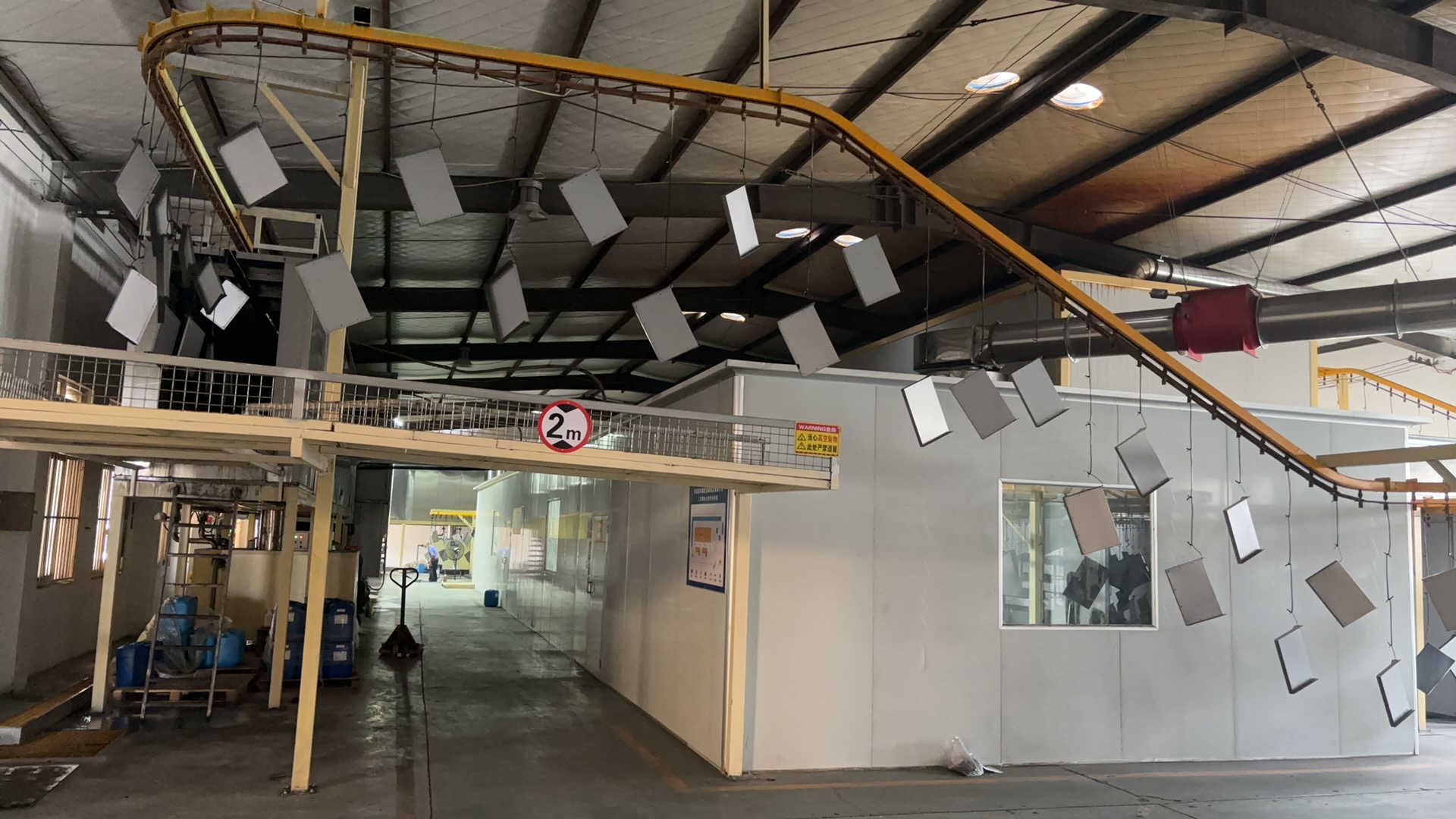
From one sample to repeat display rack supply
Display racks look like simple metal or wood structures, but retail programs rarely stay simple. A sportswear brand may need floor standing display racks for a main aisle, counter top display racks for an accessory area, POP displays for seasonal promotions, and custom store fixtures for a new store format. Each item may use a different material or finish. If the orders are repeated across multiple markets, delivery timing becomes part of the product.
The usual partner failure point is not the first sample. It is the difference between a hand-finished prototype and a production run. A supplier without in-house process control can lose material quality, paint adhesion, structural consistency or delivery reliability between batches. For buyers, this means the real opportunity lies in selecting a display rack supplier that can manage the full order lifecycle, not just the drawing or the sample.
What long-term display rack capability looks like in practice
Redman operates a 550,000 sq ft factory in Zhangjiagang with metal, wood, plastic, printing, painting, powder coating and packaging workshops. The plant employs more than 350 people, including more than 50 technical engineers and 7 project managers. According to the company profile, more than 95% of its output is exported to the USA, Canada, Europe, the Middle East and Australia, and it ships more than 1,000 containers per year.
That structure matters for buyers. When a display rack combines wood, metal and printed graphics, a single factory can coordinate production internally instead of making the buyer manage several suppliers. Redman also has a warehouse in Los Angeles, where it provides assembling, packaging and drop-shipping services for retail programs entering the US market.
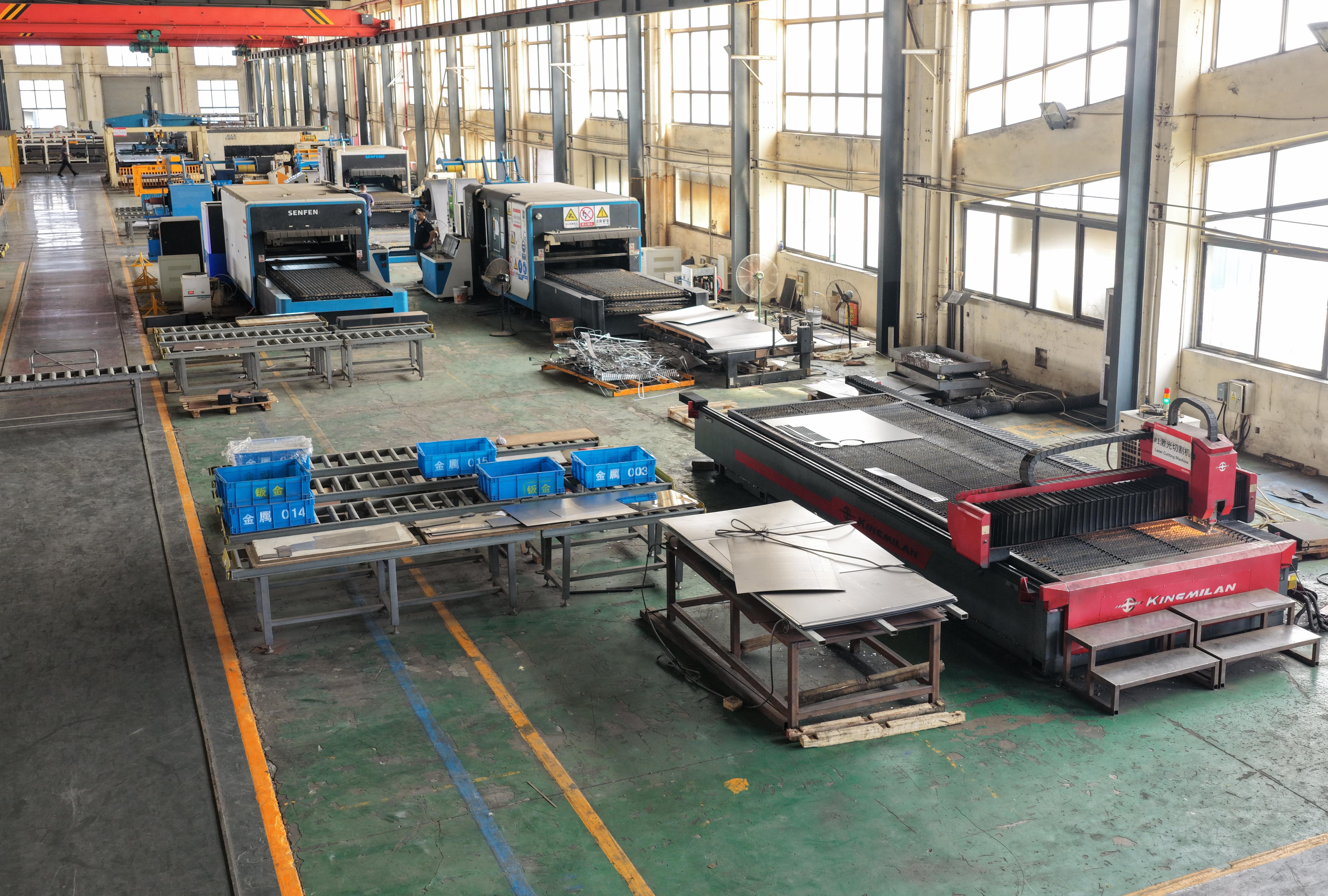
Production capacity and lead time
Long-term display rack sourcing is ultimately a capacity question. Buyers cannot evaluate a supplier only on a single product photo. They need to know whether the factory can absorb repeat orders without delaying store openings.
Redman's published monthly production capacity is 30,000+ metal pieces, 20,000+ wood pieces, 100,000+ plastic pieces and 50,000+ general pieces. The fulfillment layer can process more than 10,000 orders per month, with a standard processing time of 2–5 days for services such as product storage, assembling, packaging, drop-shipping, inventory management and order fulfillment.
| Display rack group | Monthly capacity | MOQ for custom orders | Standard lead time |
|---|---|---|---|
| Metal display racks | 30,000+ pieces | 100 pieces | 25–35 days |
| Wood display racks and store fixtures | 20,000+ pieces | 50 pieces | 30–40 days |
| Plastic / acrylic display racks | 100,000+ pieces | 1,000 pieces | 35–50 days, including mold development |
| Mixed-material custom fixture programs | Depends on material mix | FCL for bulk orders; LCL available for small-batch custom orders | 30–45 days |
Buyers should compare these numbers with their own store-opening schedules. For example, a metal floor standing display rack with a 25–35 day lead time is manageable for a planned retail refresh, but not for a trade show that must ship within one week.
Technical explanation: what keeps a display rack safe and durable over time
Long-term display rack supply is not only about production speed. It is also about identifying the risks that can cause field failures months after installation.
Redman's risk-control documentation identifies five categories that retail buyers should use as questions for any supplier:
- Structural safety risk: A display rack can topple or collapse if structural design is not verified. Redman says its engineering team designs structures and performs load-bearing capacity tests before mass production. Products include standardized installation guidance and clear load-bearing capacity marking.
- Material quality risk: Deformation, cracking or fading usually starts with incoming material quality. Redman says it uses materials that meet international standards, performs 100% incoming inspection and runs performance tests before mass production.
- Surface treatment risk: Paint peeling, powder coating fall-off or rust will shorten product life. Redman operates a dedicated surface treatment production line and says it controls the pretreatment process, carries out adhesion and corrosion resistance tests, and performs 100% surface quality inspection before delivery.
- Delivery delay risk: Late display racks affect store openings and sales plans. Redman assigns project managers for one-to-one order tracking and says its on-time delivery rate is 100% in normal program conditions.
- Compliance risk: A product can be stopped at customs if it fails target-market safety or environmental standards. Redman says a professional compliance team certifies products according to the customer's target market and can provide third-party test reports.
These control points matter because retail buyers rarely see the factory floor. If a supplier cannot describe its structural, material, surface and compliance testing procedures, it is difficult to evaluate long-term durability from a sample alone.
Use cases: sportswear and branded retail display programs
Retail display terminology varies by category. A sportswear store display rack may be a heavy floor standing display rack for apparel, while another store area needs an accessory display rack near a cash wrap. These terms can sound different, but the sourcing logic is often the same.
The sportswear segment is store-intensive. According to Fortune Business Insights, the retail store distribution channel dominated the global sportswear market with a 70.4% share in 2026. That means sportswear brands continue to depend on physical environments where display racks directly influence product visibility and traffic. For large rollouts, the purchase is rarely a one-off item. More often, it includes floor standing display racks for seasonal apparel, counter top display racks for accessories, POP/POS display racks for promotions, and custom store fixtures for flagship stores.
In practice, such programs need multi-material capability. A store environment may combine cold-rolled steel or stainless steel for metal display frames, MDF or solid wood for shelving, and acrylic or ABS for point-of-purchase elements. A supplier that owns all of these capabilities reduces the complexity of coordinating separate vendors. This is where the display rack becomes part of a larger retail merchandising ecosystem.
Market trend analysis: why display rack supply is moving from product to service
External market data supports the view that display rack sourcing is becoming more structural. According to Dataintelo, the global retail shelving market, which includes various display rack types, was valued at USD 12.4 billion in 2025 and is projected to reach USD 25.6 billion by 2034. A large share of this market still comes from floor-standing and gondola systems, which accounted for an estimated 41.8% share in 2024, according to Market Research Future.
Material trends also matter. Steel is the dominant material in retail shelving and display racks, with a 48.6% market share in 2024. This explains why retail buyers evaluating metal display racks should focus on surface treatment, load-bearing design and structural consistency rather than only price.
Another trend is regulatory. Retail fixtures and commercial displays are now addressed under ANSI/UL 970, which replaced the earlier UL 65 and UL 962 requirements in the US market. For long-term supply relationships, buyers should ask whether a supplier's compliance process covers the current edition of the relevant standard and whether third-party test reports are available.
The competitive landscape also remains global. Lozier Corporation, Madix and Tegometall are frequently cited as leading global competitors in the store fixture and display rack market. A China-based manufacturer such as Redman competes not simply on low cost, but on the ability to combine custom design, multi-material production and global fulfillment. Retail buyers should therefore compare suppliers using operational evidence, not product photos alone.
Comparison with traditional sourcing routes
Redman's own comparison material provides a useful framework because it contrasts three common sourcing routes: imported products from Europe or the United States, trading companies without factories, and traditional local manufacturers.
Compared with imported display products from Europe or the United States, Redman claims a 50–60% lower product cost and a 30–40% lower total cost of ownership, with the trade-off that imported products usually have fixed design and long delivery times. Imported products may still be the right choice for luxury retailers with no customization requirement and no cost pressure.
Compared with trading companies that do not own factories, Redman says it can offer a 15–20% cost advantage because there is no intermediary, and it can control production quality and delivery time. Trading companies may be suitable for small spot orders, but they generally have less control over factory schedules and after-sales support.
Compared with traditional local display manufacturers with only a single production process, a full-factory supplier can cover metal, wood, plastic, printing and packaging in one workflow. Redman says its initial cost may be 10–15% higher than a local single-process manufacturer, but total cost of ownership is 30–40% lower over a three-year period because of lower communication cost, reduced material waste and longer product service life.
These figures come from the supplier's own documentation, not from an independent auditor. Retail buyers should treat them as commercial starting points and confirm them through sample testing, factory audits and total cost modeling.
A realistic limitation: scale-oriented suppliers do not fit every order
A long-term display rack partner like Redman is not the right choice for every purchase. The MOQ structure is meaningful: 100 pieces for custom metal racks, 50 for custom wood racks and 1,000 for custom plastic or acrylic racks. Custom container orders generally require an FCL quantity, although LCL is available for small-batch custom orders. Buyers who need only one decorated display rack for a boutique should work with a local specialty shop instead.
There is also a scheduling limitation. The lead time for custom display racks from China is generally 30–45 days, and ocean freight adds transport time. If a store opening is scheduled in two weeks, a Chinese full-factory supplier cannot compete with a local job shop. Redman's US warehouse services solve part of this problem for imported programs, but they only work when the buyer has already built a level of inventory or planned drop-shipping volume.
Future outlook for display rack buyers
The future of display rack procurement will likely favor suppliers that can demonstrate repeatability, not just creativity. Buyers are moving toward scorecards that include capacity data, lead-time stability, material testing, compliance readiness, warehouse support and after-sales response.
Suppliers that own a full production chain are also becoming fulfillment partners. Redman already offers order storage, assembling, packaging, drop-shipping, inventory management and order tracking, often through its US warehouse. This suggests that display rack manufacturing is increasingly treated as part of a retail supply chain rather than as a simple finished-goods purchase.
For retail brands, the practical outcome is clear: a display rack should be evaluated as an operating asset. If the supplier can prove consistency in production, quality and logistics, the relationship becomes easier to scale.
FAQ: display rack partnership questions for retail buyers
What are the typical MOQs for custom display racks from Redman?
For custom orders, Redman's standard MOQ is 100 pieces for metal display racks, 50 pieces for wood display racks and 1,000 pieces for plastic or acrylic display racks. For custom container programs, the MOQ is based on an FCL, while LCL is available for small-batch custom orders. The US warehouse drop-shipping service has no minimum order quantity.
What lead times should buyers expect for a display rack order?
Redman's standard lead times are 25–35 days for metal display racks, 30–40 days for wood display racks and 35–50 days for plastic or acrylic display racks when mold development is required. For custom mixed-material orders, the lead time is typically 30–45 days. These estimates assume normal production conditions and confirmed samples before mass production.
What after-sales support is realistic for long-term display rack buyers?
Redman provides 7×24 online technical support and a project manager for one-to-one service. For metal displays, technical support covers structure design, material selection guidance and after-sales maintenance. For wood displays, support covers material selection, structure design and after-sales maintenance. The company also provides inventory management support, order tracking and logistics support.
What payment terms do long-term cooperative display rack customers receive?
Redman's standard payment terms are 30% T/T deposit in advance and 70% T/T against a copy of the bill of lading. For long-term cooperative customers, the company offers 30% deposit and 70% net 30. Qualified customers may also be eligible for credit insurance.
Which compliance standard applies to display racks sold in the US?
Retail fixtures and commercial displays sold in the US are covered by ANSI/UL 970, which replaced the earlier UL 65 and UL 962 standards. Buyers should ask whether the supplier's product certification and test reports reflect the target market requirements and whether independent testing by a third party such as SGS, BV or TUV is available.
Reference documentation: For a detailed overview of display rack specifications and production capabilities, the Redman 2026 catalog is available at https://cdn.socialarks.com/sbsp/24809/common/2026/0626/catalog%202026-2.pdf.
Tem questões ou precisa de mais detalhes?
Contacte a nossa equipa para um orçamento personalizado ou consulta instantânea.
Solicitar orçamento
Preencha o formulário abaixo e a nossa equipa entrará em contacto com uma proposta personalizada.
Chat direto do WhatsApp
Prefere conversar em tempo real? Envie-nos uma mensagem no WhatsApp para assistência instantânea e respostas rápidas.
- Obter orçamento personalizado
- Partilhar fotos ou documentos
- Discuta as suas necessidades diretamente
Geralmente responde em 5–30 minutos durante o horário de expediente.