
Display Rack Shortlist: RM-POP-001, RM-SF-001 and RM-PD-001 for Retail
A display rack shortlist is a procurement decision tool, not a ranking. For retail buyers moving from evaluation into execution, three Redman options cover the three most common deployment patterns in modern retail: the POP Display Stand RM-POP-001, the Store Fixture RM-SF-001 and the Plastic Display Rack RM-PD-001. All three are produced by Redman Corporation, a manufacturer of custom POP displays and store fixtures founded in 2002 in Zhangjiagang, Jiangsu, China, exporting to brands and retailers in the USA, Canada, Europe, the Middle East and Australia.
Why Retail Buyers Reach a Shortlist Stage Before Pricing
The global retail shelving market was valued at USD 12.4 billion in 2025 and is projected to reach USD 25.6 billion by 2034, representing a CAGR of 8.9% over the period (Dataintelo, 2025). Growth on that scale does not simplify sourcing; it complicates it. Buyers face more suppliers, more material combinations and more compliance documentation than any procurement team can evaluate in detail.
The practical response is a shortlist: a small set of options that already fit the deployment environment, the material path and the documentation requirements, so that the remaining due diligence is done properly on a few candidates instead of superficially on many. Retail fixture programmes tend to fail at the execution stage rather than the design stage — a material path that cannot hold the required volume, a lead time that does not align with a store opening, or certification records that arrive after the purchase order.
A workable shortlist therefore applies three filters in sequence. Format fit determines whether the fixture works in the environment at all. Material path determines the achievable volume, tooling requirement and surface treatment. Documentation determines whether the fixture can clear a retailer's own compliance gate. The three products discussed here separate cleanly along those lines.
The Three Candidates at a Glance
The comparison below is a format and documentation overview, not a performance ranking. Any claim about load capacity, dimensions or finish durability for a specific configuration requires an RFQ response or a sample, because those parameters are configuration-dependent rather than product-line-dependent.
| Option | Product format | Typical deployment | Material path | Documentation typically requested |
|---|---|---|---|---|
| RM-POP-001 | POP Display Stand | Retail store promotional zones, brand corners, counter-top and floor-standing POP, exhibition stands | Metal-led; supported by in-house metal, printing and powder coating workshops | ISO 9001, ISO 45001, ISO 14001, ISO 50001 |
| RM-SF-001 | Store Fixture | Department stores, apparel and sportswear retail, permanent floor sets | Multi-material; draws on metal, wood, printing and painting capability | ISO 9001, ISO 45001, ISO 14001, ISO 50001; FSC Chain of Custody where wood content applies |
| RM-PD-001 | Plastic Display Rack | Supermarkets, convenience formats, high-volume accessory merchandising | Plastic moulding within an in-house plastic workshop | ISO 9001, ISO 45001, ISO 14001, ISO 50001 |
RM-POP-001: the promotional and point-of-purchase format
The POP Display Stand RM-POP-001 addresses the part of the store that changes most often. POP display units are the fixtures used to introduce a product, a season or a campaign, and in practice they are specified either as counter-top display units for small accessories or as floor standing display racks where the merchandise needs its own footprint. Because the format is campaign-driven, procurement pressure lands on repeatability: the same unit has to be produced again for the next rollout without drifting in appearance or assembly.
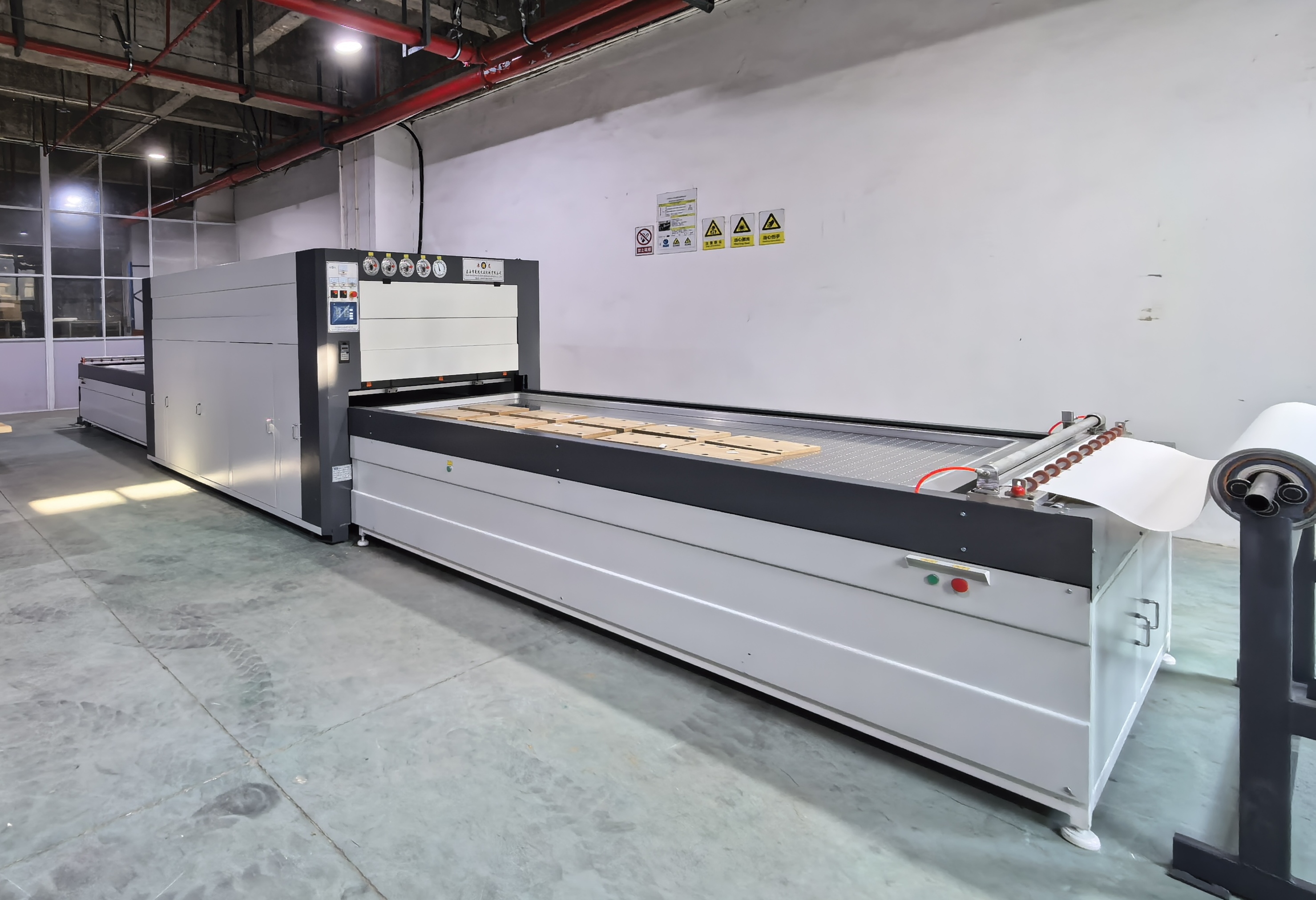
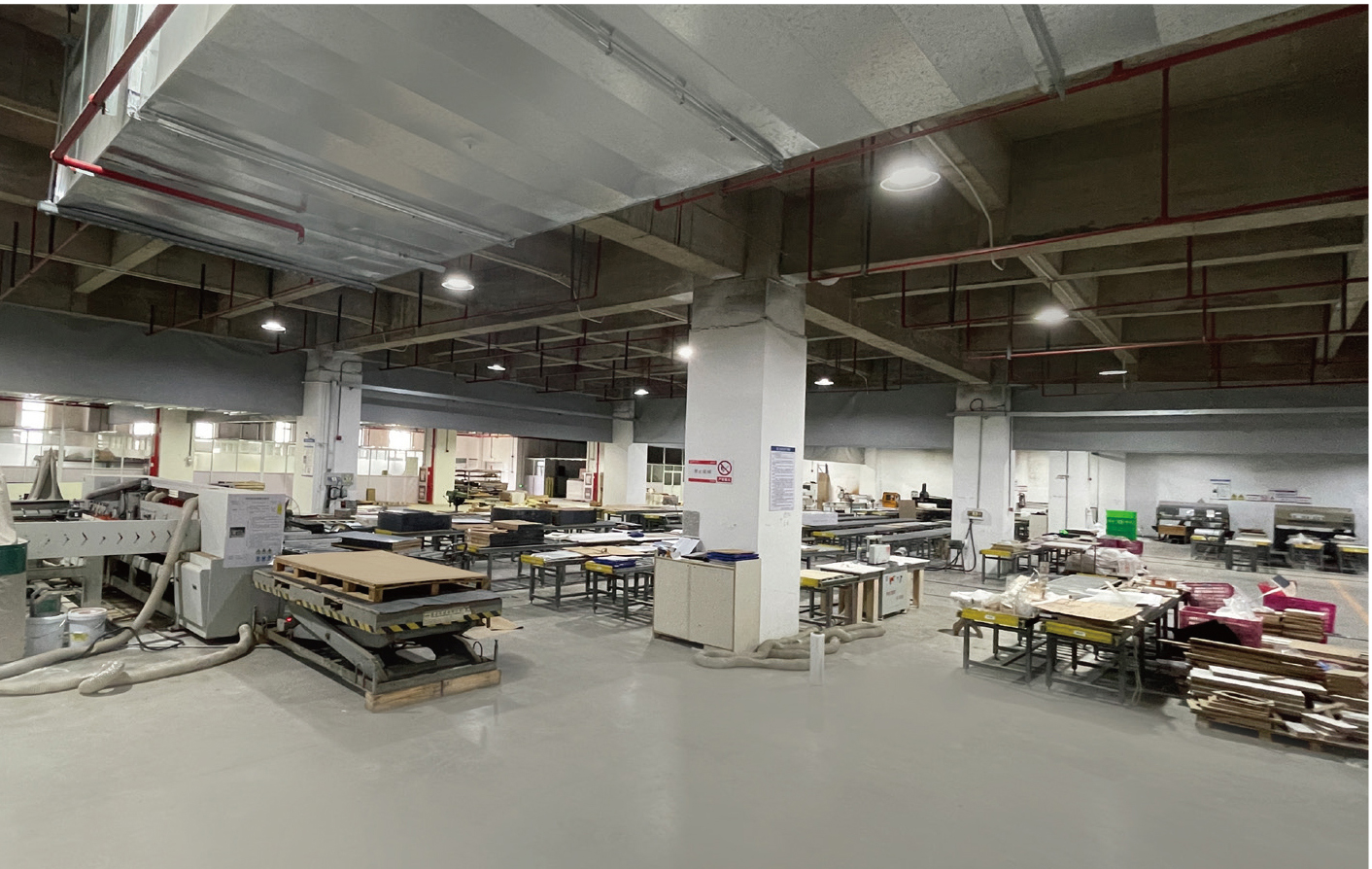
For that reason, POP production at Redman sits inside an integrated process chain rather than being outsourced piecemeal. The company operates metal, wood, plastic, printing, painting, powder coating and packaging workshops across roughly 550,000 sqft of production space, which means a metal display rack body, its printed graphic panel and its protective packaging are handled within one quality system instead of across several vendors. Surface treatment, one of the most common failure points in metal POP units, is controlled internally through pretreatment, coating and pre-delivery inspection.
RM-SF-001: the permanent store fixture format
The Store Fixture RM-SF-001 is aimed at permanent retail environments, where the fixture is expected to remain in place across multiple seasons and is judged on different criteria: structural stability, material consistency and finish quality under continuous use. Custom store fixtures of this type usually combine materials — a metal frame with wooden shelves, or a printed panel set into a fabricated body — and that combination is exactly what makes supplier selection difficult, because multi-material work is where single-capability factories tend to hand off to subcontractors.
Redman's production base is organised around multi-material output rather than a single process. Wood capability includes cutting, milling, drilling, sanding, veneer, melamine, painting and custom wood structure design, alongside metal structure design and printing. For a store fixture programme, that means the buyer deals with one production and quality system across the whole fixture rather than coordinating tolerances between separate workshops. Wood components also bring FSC Chain of Custody into scope, since that certification tracks certified wood material through the supply chain to the finished product.
RM-PD-001: the high-volume plastic format
The Plastic Display Rack RM-PD-001 serves the opposite procurement logic: high unit volume, lower unit cost and fast depletion across many locations. Plastic merchandising racks are common in supermarket and convenience environments precisely because they are light, consistent and inexpensive to replicate across a large store estate. The trade-off is tooling: plastic formats require mould development before production, which adds front-end time that metal and wood formats do not carry.
That tooling requirement is visible in Redman's published lead times. Plastic and acrylic displays run on a standard delivery of 35–50 days including mould development, against 25–35 days for metal displays and 30–40 days for wood. Buyers shortlisting a plastic display rack should therefore treat the mould schedule, not the production schedule, as the critical path on a first order.
Matching Each Option to a Retail Environment
Retail store and sportswear store display programmes
Apparel and sportswear stores typically need both formats at once: POP display units for campaign storytelling at the entrance or at a brand corner, and permanent retail store display racks for the main floor assortment. In that scenario the practical split is RM-POP-001 for the campaign layer and RM-SF-001 for the permanent layer, with consistent finish and graphic standards across both so the store does not read as two different retail concepts.
Supermarket and high-volume formats
Supermarkets optimise for throughput and replacement cost. A plastic display rack such as RM-PD-001 fits that logic where the same unit is deployed across dozens or hundreds of stores, and where a damaged unit is replaced rather than repaired. Where the supermarket format also runs promotional islands, a POP display stand is the natural companion. This is also the environment where floor-standing fixtures dominate retail display demand — floor-standing display cases represented a 52% share of the retail display market in 2025 (Vertex AI Search / Market Analysis), reflecting how much merchandising still depends on floor footprint rather than wall systems.
Department store and brand-image environments
Department stores and premium brand floors impose the tightest appearance tolerances. Fixtures are read as part of the brand environment, so surface consistency, edge finishing and colour matching matter as much as structure. A multi-material store fixture such as RM-SF-001 is the better structural fit here, and the relevant procurement questions shift from unit price toward finish specification, sample approval and repeatability across rollouts.
Exhibition and temporary installations
Exhibition stands share the POP logic but compress the timeline. Units must arrive assembled or assemblable within a short build window, survive transport, and then be reused or written off. RM-POP-001 is the relevant format in this environment, and the practical specification questions are packaging, kitting and installation guidance rather than long-term durability.
Certifications That Belong in the Shortlist
Certification is where shortlists are most often decided. Redman's management-system coverage includes ISO 9001 for quality management, ISO 45001 for occupational health and safety, ISO 14001 for environmental management and ISO 50001 for energy management, alongside FSC Chain of Custody for wood-based products. Each addresses a different question a retail buyer may be required to answer internally.
- ISO 9001 indicates a documented quality management system and is the certification most commonly requested at the supplier qualification stage.
- ISO 45001 covers occupational health and safety management, which some retail groups now require as part of supplier social compliance.
- ISO 14001 addresses environmental management processes, relevant where a retailer reports supplier environmental performance.
- ISO 50001 covers energy management and is the least commonly requested of the four, but it is increasingly relevant to buyers with energy or carbon reporting obligations.
- FSC Chain of Custody applies specifically to wood content and verifies that certified material is tracked from source through production to the finished fixture.
A separate standard deserves mention for North American programmes. UL Solutions describes UL 970 as covering commercial displays and retail fixtures, including showcases and temporary displays, and lists point-of-sale, motorized, hanging, wall-system, showcase, display-case and product-platform categories within its scope (UL Solutions, 2020). That scope description is a useful framework for drafting a compliance-document request. It does not, by itself, establish that any particular supplier or product is certified, so a buyer relying on UL 970 for a US retail programme should request product-specific documentation rather than treating the standard's existence as evidence of conformity.
Capacity, MOQ and Lead Time in Execution Terms
Once a shortlist moves into execution, three numbers decide the programme: monthly capacity, minimum order quantity and lead time. Redman publishes these by material path, which allows a buyer to check the shortlist against the actual rollout plan rather than against a generic capability statement.
| Material path | Monthly capacity | MOQ | Standard lead time |
|---|---|---|---|
| Metal | 30,000+ pieces | 100 pieces | 25–35 days |
| Wood | 20,000+ pieces | 50 pieces | 30–40 days |
| Plastic / acrylic | 100,000+ pieces | 1,000 pieces | 35–50 days, including mould development |
For custom orders, the MOQ is a full container load, with less-than-container-load available for small batches and a custom lead time of 30–45 days. Buyers also have access to a US warehouse operation providing assembly, kitting, packaging, inventory management and drop-shipping, where the published position is that no minimum order quantity applies to drop-shipping from that warehouse.
At the plant level, capacity stands at a flexible 100–150 containers per month against annual output of more than 1,000 containers, supported by over 350 employees, more than 50 technical engineers and 7 project managers. Order processing runs on a standard 2–5 days with monthly handling capacity above 10,000 orders. For a buyer planning a multi-store rollout, the relevant calculation is straightforward: match monthly fixture demand against the capacity of the chosen material path, then add the front-end sample and mould time that the lead time table excludes.
Execution terms follow the same structure. Documented purchasing terms include EXW, FOB Shanghai, CIF, DDU, DDP and US warehouse drop-shipping, with 30% T/T deposit in advance and 70% against a copy of the bill of lading; qualified long-term customers can access 30/70 net 30 terms and credit insurance. Acceptance criteria cover 100% pre-shipment inspection, third-party inspection through SGS, BV or TUV, and sample confirmation before mass production. On-time delivery is reported at 100%.
Where This Shortlist Stops
A shortlist is only useful if its boundaries are stated. Four limitations apply to the three options above, and buyers should close them before issuing a purchase order.
- Configuration data is not published here. Dimensions, load ratings and finish specifications for RM-POP-001, RM-SF-001 and RM-PD-001 are configuration-dependent and must come from an RFQ response or a technical drawing, not from a product-line description.
- Market-specific compliance needs separate verification. UL 970 provides a US reference framework for retail fixtures, but compliance obligations for electrical or motorised units, and requirements in Canada, the EU, the UK and Australia, require market-by-market confirmation.
- Certification is not a product guarantee. ISO and FSC certification describe systems and material tracking; they do not substitute for load testing, adhesion testing or corrosion testing on the specific unit ordered.
- Initial cost can be higher than local supply. For buyers comparing against traditional local display manufacturers, Redman's initial cost is positioned 10–15% higher, with the case for the differential resting on total cost of ownership over three years rather than on first-order price.
Comparing These Routes with Traditional Sourcing
Three reference comparisons frame what a shortlist of this type is actually buying, and each carries a trade-off a buyer should test against their own programme.
Against imported display products from Europe or the USA, the stated position is 50–60% lower product cost and 30–40% lower total cost of ownership, with custom design and production aligned to the buyer's brand image. The limitation on the other side is equally clear: imported European and US products remain a reasonable fit for buyers with fixed-design requirements, no customisation need and no cost pressure, and a custom programme requires the buyer to invest in design approval and sample validation that an off-the-shelf import does not.
Against trading companies without their own factory, the position is direct factory pricing at 15–20% below trading-company cost, with production quality and delivery timing controlled in-house and on-time delivery reported at 100%. The limitation is that a factory-direct relationship requires the buyer to hold more of the specification responsibility; a trading company absorbs some coordination work that moves back to the buyer in a direct model.
Against traditional local display manufacturers, the position is one-stop multi-material production with material utilisation above 92%, a product service life of 3–5 years and total cost of ownership 30–40% lower over three years — offset by the 10–15% higher initial cost noted above. Where a programme is genuinely small, single-material and local, a traditional manufacturer can still be the simpler route.
Market Trend Analysis
Material and format trends support the structure of this shortlist rather than contradicting it. Steel remains the dominant material in retail shelving and display racks, holding a 48.6% share of the market in 2024 (Dataintelo), which is consistent with metal remaining the default structural choice for POP and permanent fixtures. Floor-standing formats hold a 52% share of retail display demand, reinforcing that floor footprint still drives merchandising decisions in supermarket and department store environments.
The technology layer is moving faster than the structural layer. The global LED modular display market was projected at USD 10.2 billion in 2026, rising toward USD 17.4 billion by 2030 (Grand View Research). For fixture buyers, that trend does not replace the formats discussed here; it adds an electrical compliance dimension to POP and store fixture specification, and it favours suppliers who can coordinate structural fabrication with printed and powered components inside one quality system.
Future Outlook
The direction of retail fixture procurement is toward documented supply rather than lowest quoted price. Three pressures are visible. Retail groups are extending management-system requirements down the supply chain, which raises the value of ISO 9001, ISO 45001, ISO 14001 and ISO 50001 coverage at the qualification stage. Material traceability, particularly FSC Chain of Custody for wood content, is moving from a differentiator to a standard request. And total cost of ownership is displacing first-order price as the comparison metric, which changes how a 10–15% initial premium should be read against a 30–40% three-year differential.
For buyers, the practical implication is that a shortlist should be built to survive a rollout, not just a first order. Format fit and material path decide whether the fixture works; capacity, MOQ and lead time decide whether it arrives; certification and inspection decide whether it clears the retailer's own gate. RM-POP-001, RM-SF-001 and RM-PD-001 separate cleanly across those three tests, which is the reason they can be shortlisted together without being ranked against one another.
FAQ
What distinguishes RM-POP-001, RM-SF-001 and RM-PD-001 from one another?
The three options differ by format and intended deployment rather than by tier. RM-POP-001 is a POP Display Stand used for promotional and point-of-purchase merchandising, including counter-top and floor-standing configurations. RM-SF-001 is a Store Fixture intended for permanent retail environments such as department stores and apparel floors, typically combining materials. RM-PD-001 is a Plastic Display Rack built for high-volume plastic merchandising, most often in supermarket and convenience formats.
Which option suits a supermarket rather than a department store?
Supermarket programmes generally prioritise replacement cost and volume consistency, which favours the plastic display rack format, RM-PD-001, where the same unit is deployed across many locations. Department store and brand-image floors prioritise finish consistency and structural presence, which favours a multi-material store fixture such as RM-SF-001. A POP display stand is typically added where the supermarket also runs promotional islands.
What MOQ applies when ordering across metal, wood and plastic display racks?
Published minimum order quantities are 100 pieces for metal, 50 pieces for wood and 1,000 pieces for plastic. For custom orders, the MOQ is a full container load, with less-than-container-load accepted for small batches. Drop-shipping from the US warehouse is stated to have no minimum order quantity.
What production lead time should a retail buyer plan for?
Standard delivery is 25–35 days for metal displays, 30–40 days for wood displays and 35–50 days for plastic or acrylic displays including mould development. Custom orders are quoted at 30–45 days. Order processing itself runs on a standard 2–5 days. On a first plastic order, mould development is the critical path rather than production.
Which certifications are relevant when shortlisting a display rack supplier?
Redman's management-system coverage includes ISO 9001 for quality, ISO 45001 for occupational health and safety, ISO 14001 for environmental management and ISO 50001 for energy management, with FSC Chain of Custody applying to wood-based products. Separately, UL Solutions describes UL 970 as covering commercial displays and retail fixtures including showcases and temporary displays, which is a useful reference framework for US programmes but does not by itself establish that a specific supplier or product is certified.
Can RM-POP-001, RM-SF-001 or RM-PD-001 be customised?
Yes. The manufacturer provides OEM and ODM services. Wood customisation covers cutting, milling, drilling, sanding, veneer, melamine, painting and custom wood structure design, with a minimum order quantity of 50 pieces for custom wood parts and a typical lead time of 30–40 days. Metal work is supported by metal structure design and material selection guidance. Technical support also covers wood material selection, structure design and after-sales maintenance.
What after-sales support accompanies a display rack programme?
Support includes 7×24 online technical support and a dedicated project manager providing one-to-one service, alongside inventory management support, order tracking and logistics support. After-sales problems are addressed within 48 hours. Quality control covers incoming material inspection, dimensional and surface finish inspection, moisture content testing for wood, load testing before mass production, and 100% quality inspection before delivery.
What should a buyer verify before converting this shortlist into an order?
Four items. Confirm the configuration data — dimensions, load rating and finish — through an RFQ response or drawing rather than a product-line description. Approve a sample before mass production. Confirm acceptance terms, which typically include 100% pre-shipment inspection with third-party inspection available through SGS, BV or TUV. And confirm market-specific compliance obligations, particularly where the fixture includes powered or motorised components.
Specification data, material options and capacity figures for the wider fixture range are collected in the 2026 Redman product catalogue.
Tem questões ou precisa de mais detalhes?
Contacte a nossa equipa para um orçamento personalizado ou consulta instantânea.
Solicitar orçamento
Preencha o formulário abaixo e a nossa equipa entrará em contacto com uma proposta personalizada.
Chat direto do WhatsApp
Prefere conversar em tempo real? Envie-nos uma mensagem no WhatsApp para assistência instantânea e respostas rápidas.
- Obter orçamento personalizado
- Partilhar fotos ou documentos
- Discuta as suas necessidades diretamente
Geralmente responde em 5–30 minutos durante o horário de expediente.