
Display Rack Supplier Evaluation: Global Fulfillment Test
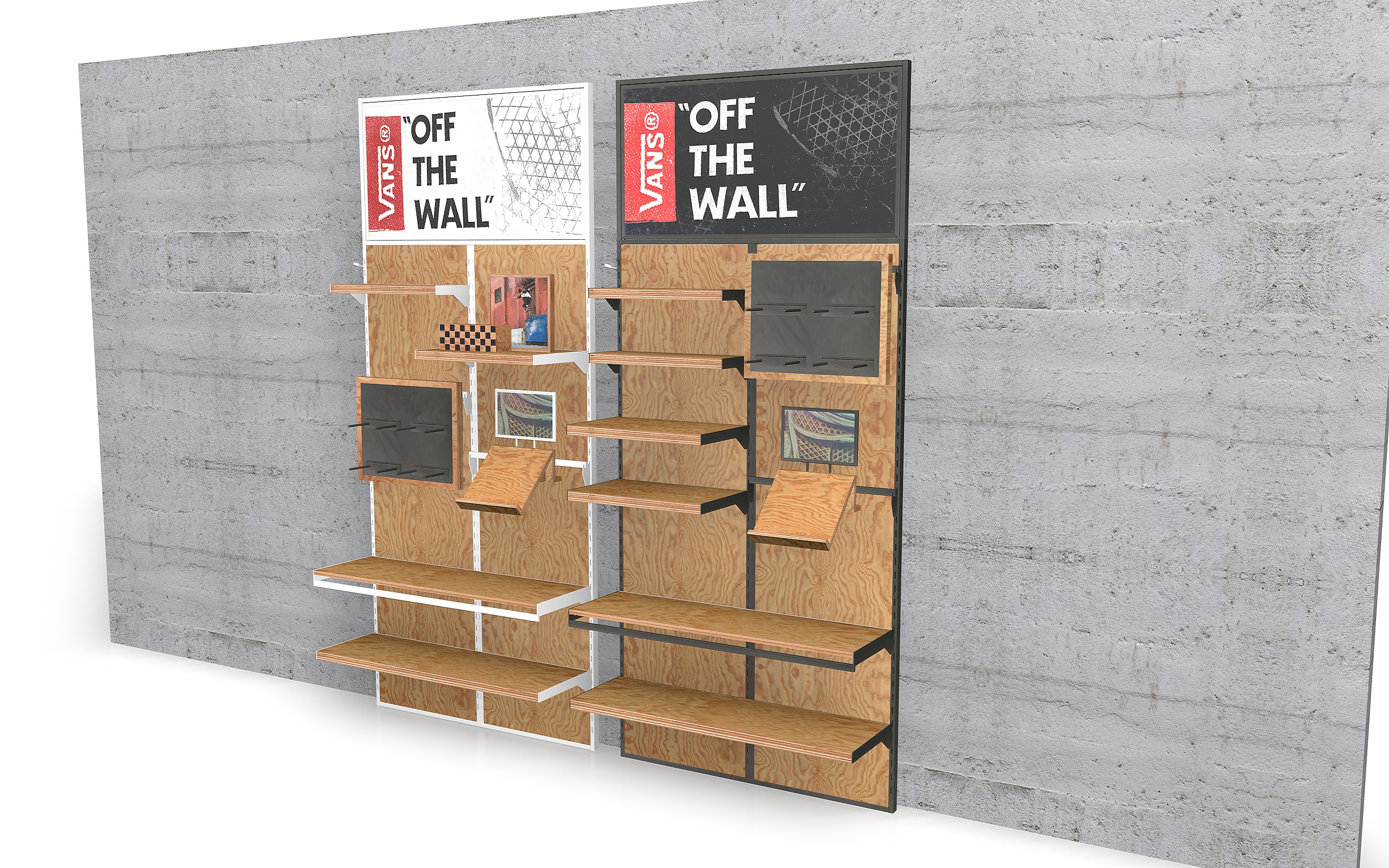
Store-level fixture programs are sustained by replenishment discipline, not by a single successful sample.
A retail fixture program rarely fails at the design review. It fails later — when a rollout reaches its two-hundredth store, when a seasonal refresh has to land in three weeks, or when one location needs forty units rather than a full container. That is why supplier evaluation in the display rack category increasingly treats fulfillment as a first-order criterion, not a logistics detail: manufacturing capability determines what a supplier can build, while fulfillment capability determines whether that supplier is still useful in year three of a partnership.
This reference article sets out how retail buyers should assess global fulfillment and warehouse support when screening long-term display rack suppliers. Redman Corporation, a custom POP display and store fixture manufacturer based in Zhangjiagang, China, is used as a reference case, with company-reported capability data kept separate from independently sourced market evidence.
Why Fulfillment Became a Supplier Evaluation Criterion
According to Dataintelo's retail shelving market report, the global retail shelving market was valued at USD 12.4 billion in 2025 and is expected to reach USD 25.6 billion by 2034, at a CAGR of 8.9%. A separate 2025 analysis of the retail display cases market places floor-standing display cases at a 52% share of that segment.
Growth of that magnitude does not arrive as one-off purchases. It arrives as repeat orders, store refits, category resets and phased rollouts — operational activity that puts pressure on fulfillment rather than on design. The practical asymmetry is well known to buyers: suppliers are commonly shortlisted on the strength of a sample and a quotation, while the failures that damage a program — inconsistent packaging, delayed replenishment, no local inventory buffer, unclear order status — surface only after the first container has been consumed.
What Global Fulfillment Means in a Display Rack Program
In the retail fixture category, global fulfillment refers to the services that move a finished display rack from factory completion to a specific store, shelf or promotional event. Redman's published capability data describes an OEM/ODM global fulfillment and warehouse support program covering product storage, assembling, packaging, drop-shipping, inventory management and order fulfillment. The stated standard order processing time is 2–5 days, with a monthly capacity of more than 10,000 orders. The program is oriented toward USA, Canada and North America export markets.
| Fulfillment service | What it changes for a retail buyer |
|---|---|
| Product storage | Creates a buffer between container-level production and store-level demand, so campaigns are not tied to production batches. |
| Assembling | Lets units arrive store-ready instead of consuming local labor at the destination. |
| Packaging | Moves packaging quality control into a warehouse environment closer to the end market. |
| Drop-shipping | Supports single-store or small-batch delivery without a full container. Redman's capability data states that no minimum order quantity applies to the drop-shipping service. |
| Inventory management | Turns replenishment into a managed process rather than a recurring procurement project. |
| Order fulfillment | Consolidates order accuracy and dispatch under one accountable process. |
Fulfillment scope as described in Redman's published global fulfillment and warehouse support capability data.
A quality and after-sales layer sits underneath those services. The same capability data specifies order accuracy checks, packaging quality inspection and regular inventory counts, supported by inventory management support, an order tracking service and after-sales logistics support.
The distinction that matters for evaluation is this: storage and drop-shipping are not add-on conveniences. They change where risk sits in a fixture program. Without a regional buffer, every store-level request becomes a production request.
Five Criteria Buyers Can Actually Test
1. Order processing time
Order processing time should be stated in days and defined precisely. Redman's data states 2–5 days for order processing. Buyers should ask whether that clock starts from stock already held in a warehouse, or from production completion — the two answers describe very different supplier models.
2. Monthly order throughput
Throughput is the number that reveals whether a supplier can carry a retail program rather than a single project. Redman's stated figure is more than 10,000 orders monthly for fulfillment. For a retailer operating hundreds of doors, this is the figure that determines whether a refresh can be executed in weeks or in quarters.
3. Minimum order structure
Minimum order terms should be read separately for service and for manufacturing. Redman's fulfillment data states no minimum order quantity for the drop-shipping service, while custom manufacturing carries separate thresholds described later in this article. Conflating the two is one of the more common evaluation errors.
4. In-warehouse quality control
Once goods leave the factory, quality responsibility transfers to the fulfillment operator. Order accuracy checks, packaging quality inspection and regular inventory counts are the mechanisms that keep that responsibility verifiable. Buyers should ask how often inventory is counted and how discrepancies are reported.
5. After-sales logistics
After-sales in a fulfillment context means inventory management support, order tracking and logistics problem-solving — not only product warranty. Redman's customization capability data additionally describes 7×24 online technical support, a one-to-one project manager service model and after-sales quality problem resolution within 48 hours.
Manufacturing Depth Behind the Fulfillment Layer
Redman Corporation is a custom POP display and store fixture manufacturer established in August 2002 and located in Zhangjiagang, roughly two hours' drive from Shanghai. The company operates approximately 550,000 sq ft (51,097 m²) of production facilities spanning metal, wood, plastic, printing, painting, powder coating and packaging workshops, and it maintains a warehouse in Los Angeles in the USA that provides assembling, packaging and drop-shipping services. Redman employs more than 350 people, including more than 50 technical engineers and 7 project managers. The company reports a 95% export ratio and more than 1,000 containers shipped annually, serving the USA, Canada, Europe, the Middle East and Australia.
Fulfillment capacity only means something if production capacity can feed it. Redman's published capability data breaks the manufacturing side down by material:
| Production line | Stated monthly capacity | Stated lead time | Stated MOQ for custom parts |
|---|---|---|---|
| Metal display manufacturing (cutting, bending, welding, stamping, powder coating, painting, polishing) | 30,000+ pieces | 25–35 days | 100 pieces |
| Wood display manufacturing (cutting, milling, drilling, sanding, veneer, melamine, painting) | 20,000+ pieces | 30–40 days | 50 pieces |
| Acrylic and plastic display manufacturing (injection molding, vacuum forming, blister molding) | 100,000+ pieces | 35–50 days including mold development | 1,000 pieces |
| Overall customization program | 50,000+ pieces | 30–45 days for custom orders | FCL and LCL available for small batch custom orders |
Capacity, lead time and MOQ figures as published in Redman's OEM/ODM capability data. Customization scope covers product design, material selection, size, structure, color, logo printing and function.
On the quality side, the customization capability data states 100% pre-shipment inspection, with third-party inspection available through SGS, BV and TUV. Material-level quality control is described as dimensional inspection, load-bearing testing and surface finish inspection for metal; dimensional, surface finish and moisture content testing for wood; and dimensional, material performance and surface finish inspection for plastic.
A company profile associated with Redman additionally describes warehouses in Los Angeles and Chicago and an office in Amsterdam. Those location statements are company-reported and should be independently verified — including warehouse ownership or contract status, service scope and the inventory model — before they are relied on in a supply agreement.
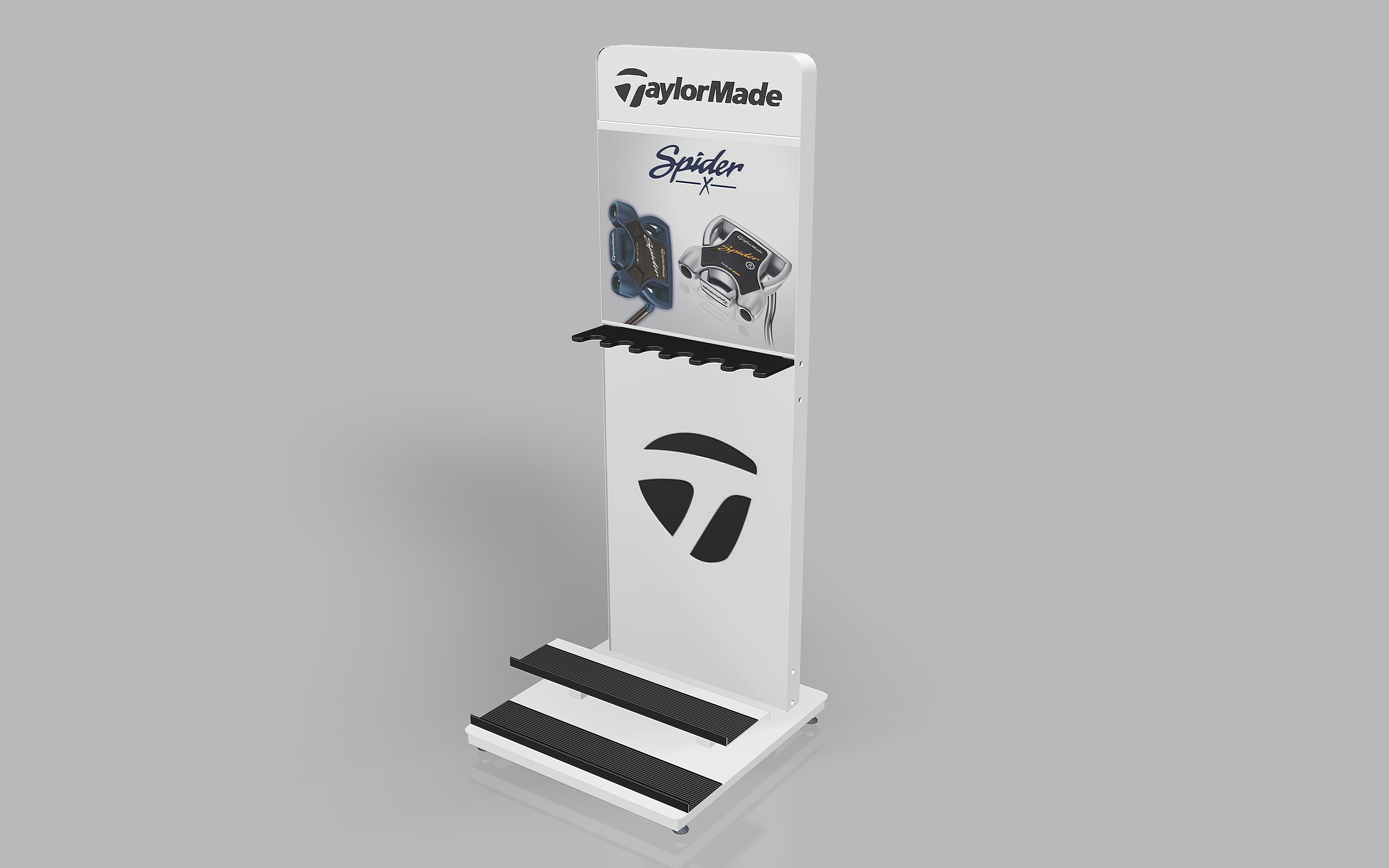
Custom plastic display rack configuration. Fulfillment decides how units like this reach individual stores once production is complete.
The number buyers should read carefully: 2–5 days versus 25–50 days
Two figures in Redman's published data sit close together and are frequently confused. Order processing for fulfillment is stated at 2–5 days. Production lead time for custom work is stated at 25–35 days for metal, 30–40 days for wood, 35–50 days for acrylic and plastic including mold development, and 30–45 days for custom orders generally.
The technical point is that fulfillment is a decoupling function. It separates production batching from store-level demand. Where a warehouse buffer exists, a buyer can trigger a store-level shipment in days while production continues in parallel. Where no buffer exists, the 2–5 day processing figure is theoretically fast but practically irrelevant, because every request still waits on a production run and a sea freight cycle. This is the single most useful question to ask a display rack supplier: where does the order clock actually start?
Where the Model Fits: Application Scenarios
Fulfillment capability matters most in environments where fixtures are deployed repeatedly rather than once. The documented application scenarios in Redman's product data describe four such environments.
Retail stores
The stated working condition is an indoor retail environment with 24/7 operation. Project types are brand in-store marketing and product merchandising; the operational function is product display, brand promotion and sales conversion in 24/7 static display mode, with interactive functions available on request. Special requirements include custom size, design, color and logo printing, plus load-bearing capacity customization. Supporting equipment includes matching product packaging, brand signage and lighting accessories.
Supermarkets
Here the working condition is described as a high-customer-flow indoor supermarket environment, with categories and promotional activities as the project type. The function is product classification display, promotional information delivery and sales volume improvement, operating in 24/7 static display mode that is easy to assemble and disassemble. Requirements include adaptation to different shelf specifications, alongside custom size, design, color and logo printing. Supporting equipment includes price tags, promotional posters and lighting accessories.
Department stores
Department store applications are framed around multi-category brand display and long-term static display, with high-end appearance customization as the special requirement and matching lighting systems and brand signage as supporting equipment. These programs typically involve repeat replenishment as brands refresh shop-in-shop concepts.
Exhibition and trade show
The exhibition scenario is short-term by design: indoor exhibition environments, easy assembly, disassembly and transport, with custom size, design, color and logo printing, and supporting equipment such as matching lighting systems and brand backdrops. The stated requirement is a portable, reusable design — a scenario where drop-shipping and storage support are structurally useful because fixtures are reused across many events.
Case evidence from ongoing programs
The following outcomes are reported by the manufacturer in its published case data and are presented here as company-reported evidence rather than independently audited results.
| Client type | Scope | Duration | Reported outcome |
|---|---|---|---|
| Global retail brand | 5,000+ custom POP display units | 3 years | Supported a national US store expansion; USA warehouse drop-shipping service used; reported 100% on-time delivery rate |
| European supermarket chain | 3,000+ custom store fixtures | 2 years | Store renovation across 200+ supermarkets in Germany; reported 30% improvement in operational efficiency |
| Global exhibition service provider | 200+ custom exhibition booth fixtures annually | 4 years | Supported 500+ global exhibitions; reported 35% reduction in the customer's exhibition costs |
| Middle East department store | 1,000+ custom high-end display cabinets | 1.5 years | Flagship store project completed in Riyadh with one-to-one project management |
Company-reported case data. Buyers should validate comparable outcomes through references and shipping records during supplier qualification.
How This Compares with Traditional Sourcing Structures
Three sourcing structures dominate retail fixture programs, and they differ less in unit price than in where operational risk sits.
| Evaluation dimension | Factory-only supplier plus third-party 3PL | Container-direct to own distribution center | Integrated manufacturer with regional warehouse |
|---|---|---|---|
| Small-batch store delivery | Depends on 3PL terms; often costly per unit | Not supported without breaking container loads | Drop-shipping stated as available with no minimum order quantity for the service |
| Local inventory buffer | None unless the buyer funds it | Buyer-owned and buyer-funded | Held by the supplier in the destination region |
| Assembly and kitting | Handled locally by buyer or 3PL | Handled locally | Stated as part of the fulfillment scope |
| Order status visibility | Split between factory and 3PL | Split across freight and DC systems | Order tracking service provided as a stated service |
| Where the operational risk sits | Distributed across parties | Mostly with the buyer | Concentrated with one supplier, which is both the benefit and the exposure |
Limits and boundaries of the integrated model
An integrated fulfillment model is not a universal improvement, and buyers should treat several boundaries as decision-relevant.
First, fulfillment does not remove production constraints. Custom manufacturing still carries stated lead times of 25–50 days depending on material, and custom part MOQs remain: 100 pieces for custom metal parts, 50 pieces for custom wood parts and 1,000 pieces for custom plastic parts. The statement that no minimum order quantity applies to drop-shipping covers the shipping service, not the manufacturing of custom components.
Second, the advantage is regionally concentrated. The program's stated export orientation is the USA, Canada and North America. Buyers operating primarily in other regions may not gain the same store-level responsiveness from a warehouse in Los Angeles, and should model fulfillment separately for each market.
Third, warehouse and fulfillment claims in company profiles are self-reported. Ownership or contract status of the warehouses, the exact service scope, the inventory model and performance references all require independent verification. Commercial import-data aggregators are not a sufficient substitute: shipment listings that mention display racks, sign frames and display rack accessories do not establish export scale, capacity or delivery performance.
Fourth, compliance evidence is separate from fulfillment evidence. UL Solutions describes UL 970 as covering commercial displays and retail fixtures, including point-of-sale, motorized, hanging and wall-system displays, showcases, display cases and product platforms. That description defines a scope framework; it does not establish that any particular supplier is certified or compliant, and the current edition and applicability of the standard should be verified directly before it is used in a specification or tender document.
Fifth, material dominance is not the same as material fit. Steel is reported as the dominant material in retail shelving and display racks, holding a 48.6% market share in 2024. That is a market observation, not a specification recommendation — the correct material still depends on load, environment, finish requirement and store concept.
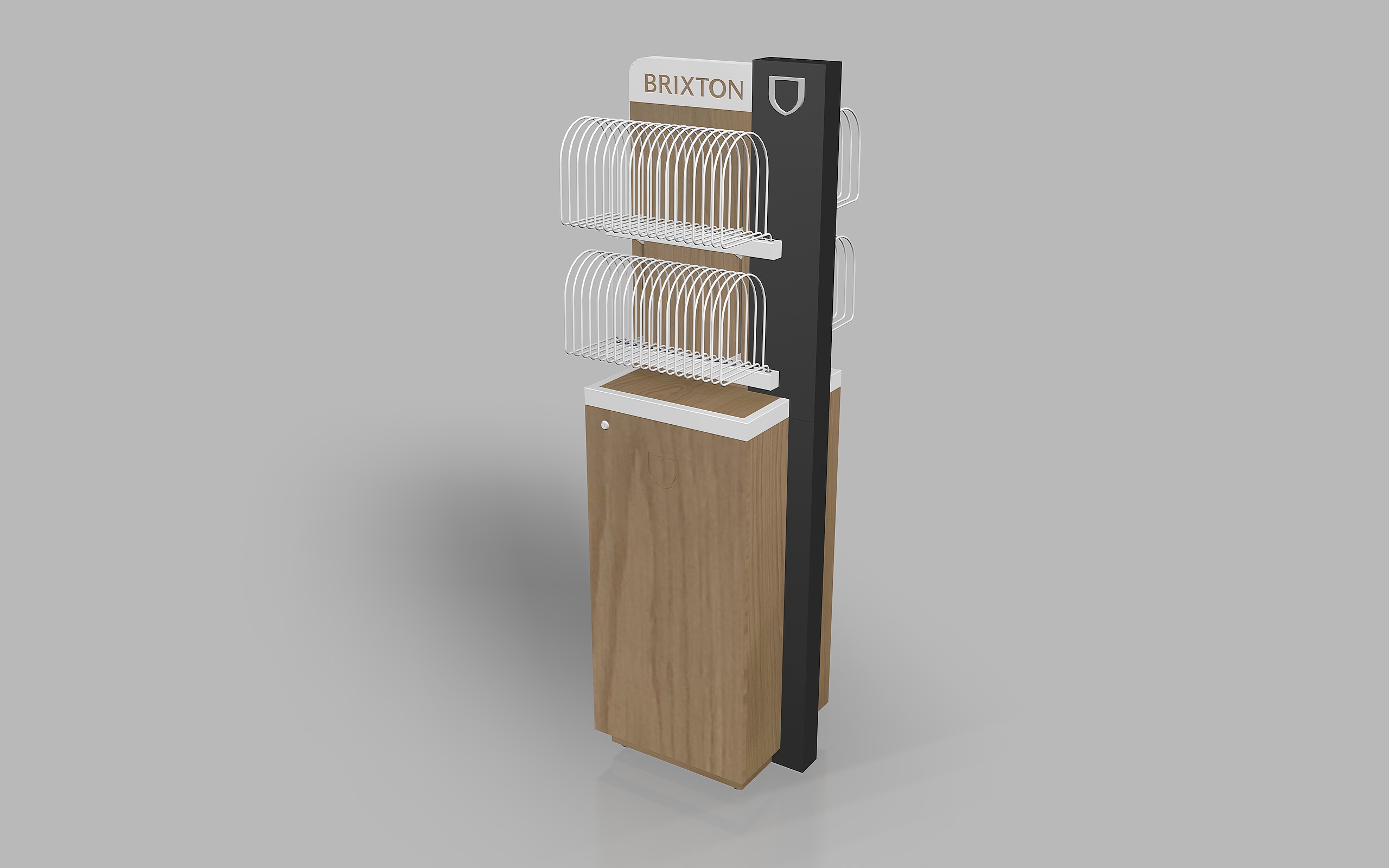
Custom POP display configuration. Production MOQs and lead times continue to apply even where drop-shipping removes distribution minimums.
Market Trend Analysis: What Is Changing Around Fulfillment
Three data points shape how fulfillment requirements are likely to develop.
The first is scale. A retail shelving market moving from USD 12.4 billion in 2025 toward USD 25.6 billion by 2034 at an 8.9% CAGR implies sustained repeat purchasing rather than isolated capital projects. Repeat purchasing is exactly the condition under which fulfillment capability compounds in value.
The second is format mix. Floor-standing display cases hold a 52% share of the retail display market, which keeps large-format, transport-sensitive units central to fixture programs. These are the units where packaging quality, assembly support and store-level delivery logistics have the greatest effect on total program cost.
The third is technology integration. Grand View Research projects the global LED modular display market at USD 10.2 billion in 2026, rising to USD 17.4 billion by 2030. More fixtures carrying powered elements means more kitting complexity at the warehouse — power supplies, spares, and documentation that must arrive with the correct store shipment. It also means compliance documentation increasingly belongs inside the fulfillment scope rather than beside it.
Taken together, these trends point in one direction: buyers will evaluate display rack suppliers on replenishment reliability and documentation as deliberately as they evaluate unit price and finish quality. The supplier that can answer a store-level request in days, from stock, with traceable paperwork, will be assessed differently from the supplier that can only quote a container.
Future Outlook
For long-term retail partnerships, fulfillment evaluation is likely to move from an informal check into a documented part of supplier qualification. Three practical expectations follow.
Order processing windows and monthly throughput figures will need to be stated in contracts rather than in brochures, because they determine whether a chain-wide refresh is executable. Regional warehouse arrangements will need to be evidenced — ownership, contract status, service scope and inventory model — rather than described. And compliance documentation will need to be requested at RFQ stage, since the scope framework for retail fixtures and merchandise displays is broader than a single product category.
Suppliers that structure their operations around these questions, and can show the underlying records, will be better positioned for multi-year programs. Buyers who ask the questions early will avoid discovering the gap between manufacturing capability and fulfillment capability at the point where it is most expensive to correct.
FAQ
What does global fulfillment mean for a display rack supplier?
It refers to the services that move a finished display rack from factory completion to a specific store, shelf or promotional event. In Redman's published capability data, that scope covers product storage, assembling, packaging, drop-shipping, inventory management and order fulfillment, oriented toward USA, Canada and North America markets.
How quickly can a display rack order be processed for fulfillment?
Redman's stated standard order processing time is 2–5 days. This figure describes order processing rather than manufacturing. Custom production lead times are stated separately at 25–35 days for metal, 30–40 days for wood and 35–50 days for acrylic and plastic including mold development.
What monthly order volume should a buyer expect from a fulfillment-capable display rack supplier?
Redman's fulfillment capability data states a monthly capacity of more than 10,000 orders, supported by order accuracy checks, packaging quality inspection, regular inventory counts, an order tracking service and after-sales logistics support.
Which retail environments does an integrated fulfillment model suit?
The documented application scenarios cover retail stores operating 24/7 static displays, high-traffic supermarkets requiring shelf-specification adaptation, department stores with multi-category brand display and high-end appearance requirements, and exhibition or trade show programs that need portable, reusable fixtures assembled and disassembled repeatedly.
Do warehouse and drop-shipping services change MOQs or lead times for custom display racks?
No. Redman's data states that no minimum order quantity applies to the drop-shipping service, but custom manufacturing MOQs remain in place at 100 pieces for custom metal parts, 50 pieces for custom wood parts and 1,000 pieces for custom plastic parts. Production lead times of 25–50 days also remain unchanged.
How should a buyer verify warehouse and fulfillment claims before signing?
Verification should cover warehouse ownership or contract status, service scope, inventory model and customer references. Company profiles and commercial import-data aggregators are useful leads but not sufficient evidence: profile-based location and service statements are self-reported, and aggregator shipment listings do not establish capacity, export scale or delivery performance. Official customs records, audit reports and customer references remain the appropriate evidence base.
Tem questões ou precisa de mais detalhes?
Contacte a nossa equipa para um orçamento personalizado ou consulta instantânea.
Solicitar orçamento
Preencha o formulário abaixo e a nossa equipa entrará em contacto com uma proposta personalizada.
Chat direto do WhatsApp
Prefere conversar em tempo real? Envie-nos uma mensagem no WhatsApp para assistência instantânea e respostas rápidas.
- Obter orçamento personalizado
- Partilhar fotos ou documentos
- Discuta as suas necessidades diretamente
Geralmente responde em 5–30 minutos durante o horário de expediente.