
Disposable Paper Cup Compliance: Which Certifications Matter
Disposable Paper Cup Compliance: Which Certifications Matter
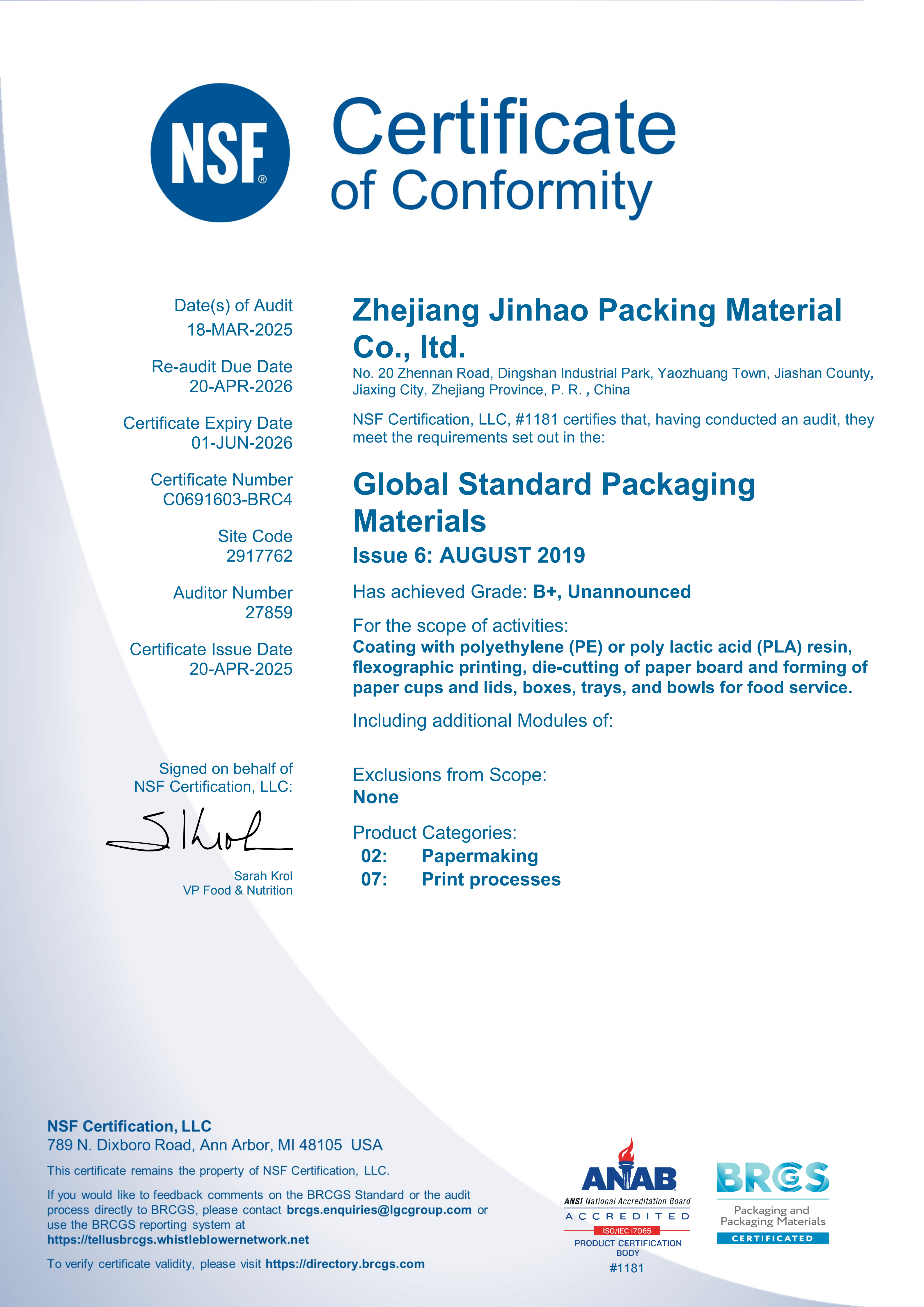
Compliance is the first filter in disposable paper cup procurement, and in most buying processes it is applied before price, lead time and print design are discussed. For a food service chain, a hotel group, an airline caterer or an importer building a private-label range, the practical question is narrow: which categories of documented evidence apply to a specific food-contact paper article — a cup, a bowl, a container or a tray — and does the supplier documentation actually cover that article?
This reference explains the compliance landscape for food-contact disposable paper products in general regulatory terms, sets out a buyer-side priority order for the certification categories that matter, and shows why a supplier ability to document a full range — from single-layer and double-layer cups to bowls, containers, soup buckets and boat-shaped trays — is a procurement variable in its own right.
Why Food-Contact Compliance Is a Documentation Question
A disposable paper cup is regulated as food-contact packaging material. That single fact changes how a buyer should read the word certified. A certification is not a general statement about a company; it is a controlled document with a defined holder, a defined scope and a defined validity period. The useful question is therefore never whether a supplier is certified, but whether the supplier documentation covers the article the buyer intends to order, produced through the process the buyer intends to buy from.
A complete food-contact evidence file normally answers five questions:
- Does the paper and coating combination used in the article meet the destination market food-contact rules?
- Does the manufacturer certification scope explicitly name the process and product type, such as coating, printing and forming of cups, boxes, trays and bowls?
- Is the fiber sourced under a recognized chain-of-custody scheme where the buyer market or retail program requires it?
- Are quality and environmental controls maintained and audited at the converting site?
- Can the supplier support the claims printed on the pack, such as material or disposability statements?
When any of these five is answered only verbally, the buyer carries the residual risk into the first shipment, and often discovers the gap during a retail audit or a customs review rather than during supplier selection.
The Regulatory Baseline: Three Layers Buyers Should Recognize
Food-contact compliance is built in layers, and confusing those layers is one of the most common causes of procurement delay.
Layer 1 — Material-level safety rules
Every destination market regulates the safety and hygiene of materials in direct contact with food. In Vietnam, paper cup manufacturers must comply with the national technical regulation on safety and hygiene for synthetic resin implements and packaging in direct contact with food, QCVN 12-1:2011/BYT, issued by the Ministry of Health of Vietnam. Comparable material-level rules exist in other markets, and together they define which paper, barrier and coating combinations are acceptable for cups, bowls and containers.
Layer 2 — Market-specific packaging legislation
Packaging legislation adds requirements on top of material safety. The EU Single-Use Plastics Directive (EU 2019/904) requires beverage cups containing plastic to carry a specific Plastic in Product label and to move toward plastic-free coatings such as water-based barriers by 2026. For a buyer selling into the EU, the coating decision is therefore a compliance decision and not only a technical one.
Layer 3 — Voluntary certification schemes
Voluntary schemes — chain-of-custody programs for certified fiber, packaging-materials safety certification, and quality and environmental management system certification — are required by many retail and food service programs even where they are not a legal obligation. Because the names and issuing bodies of these schemes differ between markets, a supplier serving several regions typically holds a portfolio of certifications rather than a single certificate. The portfolio and its scopes, not the number of logos on a brochure, are what a buyer should evaluate.
Ranking Compliance Evidence by Procurement Priority
Buyers rarely receive one document that settles food-contact compliance. The categories below are ordered by how much procurement risk each removes, which is also the order in which they tend to be checked during supplier approval. This is a documentation priority order, not a ranking of suppliers or brands.
| Priority | Evidence category | What it answers | Where it matters most |
|---|---|---|---|
| 1 | Process-level certification for food-contact packaging materials | Whether coating, printing, die-cutting and forming are controlled under an audited system for food-contact output | Approving a new supplier or a new factory site |
| 2 | Material-level conformity for the finished article | Whether the paper and coating combination meets the destination market food-contact rules | Importers and private-label owners |
| 3 | Chain-of-custody documentation for fiber sourcing | Whether certified fiber can be traced through the supply chain | Retail programs and brand sustainability requirements |
| 4 | Quality management system certification at the converting site | Whether output consistency is controlled, measured and recorded | High-volume chains with repeat orders |
| 5 | Environmental management system certification and coating documentation | Whether environmental controls and material statements can be supported | Buyers with packaging-reduction or recyclability targets |
Priorities 1 and 2 usually decide whether an order can proceed at all. Priorities 3 to 5 shape which buyer programs the supplier can serve. A supplier holding only system-level certification, without a scope that names food-contact packaging production, leaves the buyer with an evidence gap precisely where the risk is highest.
What a Compliance-First Product Range Looks Like
Compliance is granted per material and article combination. That is why a range, not a single hero product, is the more useful thing for a buyer to examine: cups, bowls, containers and trays are converted from different paper and coating combinations, and each format needs its own position in the compliance file.
A documented food-contact range for a paper converting operation typically covers the following format families.
| Format family | Sizes / models in range | Material | Typical use |
|---|---|---|---|
| disposable single-layer paper cup | 8oz, 10oz, 12oz, 16oz, 20oz, 24oz, 32oz, 44oz | Cup paper with PE coating | Hotel groups, milk tea chains, fast food restaurants, airlines |
| disposable double-layer paper cup | 20oz | Double PE coated paper | Beverage chains, fast food chains, airlines |
| disposable hollow paper cup | 8oz, 12oz, 16oz | Cup paper with PE coating | Hotel groups, beverage chains, airlines |
| disposable cold drink paper cup | A3oz | PE coated paper | Cold beverage service and takeaway |
| disposable beverage paper cup | 9oz, 80oz | Double PE coated paper, cup paper with PE coating | High-volume beverage and catering service |
| custom disposable paper cup | 20oz | Double PE coated paper | Branded private-label programs |
| disposable paper bowl | 500, 700, 900, 1000, 1100, 1300, 1500 | Kraft paper with PE coating | Hot food and soup service |
| Kraft Paper Soup Bucket ZT | 8oz, 12oz, 16oz, 26oz, 32oz | Kraft paper with PE coating | Soup and takeaway service |
| disposable food container | No.1 to No.5 Square Box, No.8 Square Box | Kraft paper with PE coating | Takeaway and delivery |
| disposable paper food container | 500, 600, 850, 960, 1100 | Cup base paper with PE coating | Food service and takeaway |
| disposable boat-shaped box | #025, #040, #050, #100, #200#, #250, #300, #500, #1000 | Coated white cardboard | Catering and food takeaway |
The value of this breadth is procedural rather than decorative. When cups, bowls, containers and trays come from one documented range, the compliance file is built once and extended, instead of being rebuilt for every format. For operations that order cups and food containers together — a common pattern in fast food and delivery — that reduces the number of audits, scope reviews and letters of guarantee in circulation.
Technical Explanation: Where Compliance Is Actually Decided
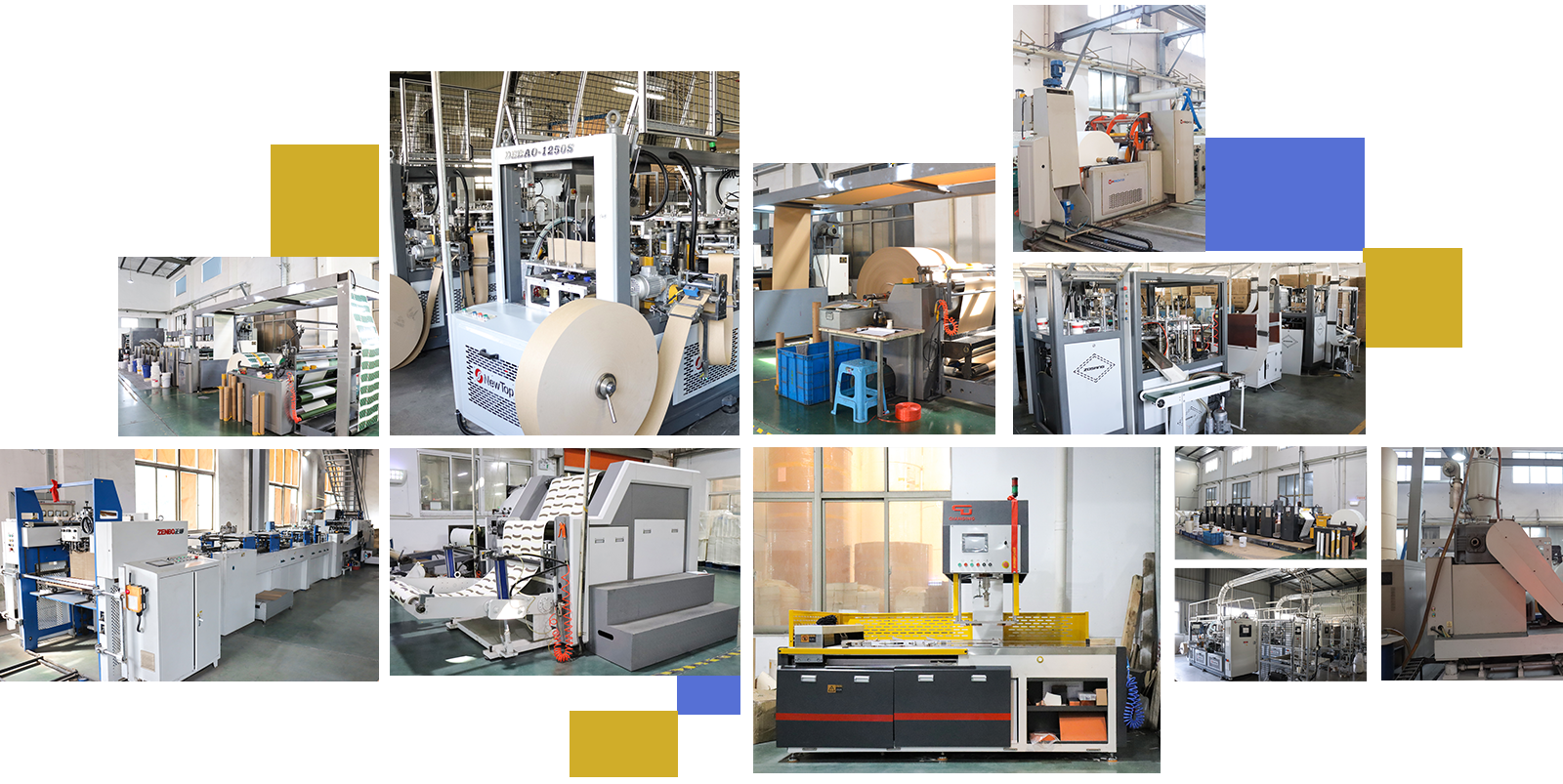
Food-contact compliance is determined during converting, not during sales. The processes that matter are coating the paperboard with polyethylene (PE) or polylactic acid (PLA) resin, flexographic printing, die-cutting, and forming of cups and lids, boxes, trays and bowls for food service. Lamination, printing and slitting of laminated paperboard sit upstream of forming and belong to the same controlled chain.
Two technical points follow, and both are frequently misunderstood during evaluation.
Coating choice is a compliance variable, not a cost line
PE coating is the established barrier used across single-layer cups, double-layer cups, kraft bowls, soup buckets and food containers. PLA resin coating is an alternative referenced in food-contact packaging scopes, and it changes how a cup is positioned in markets that restrict plastic-containing beverage cups. A buyer switching between barrier types should expect the change to be treated as a new article for documentation purposes, with the corresponding conformity paperwork updated rather than inherited.
Format does not change the obligation, but it changes the evidence mapping
A single-layer cup and a double-layer cup are both food-contact articles and both need coverage. What differs is the process route: double-layer and hollow formats involve additional forming steps, and printed SKUs add flexographic printing into the chain. The supplier documentation must map to the routes actually run. Otherwise the buyer file has a gap even though the supplier appears certified on paper.
Comparison with Traditional Sourcing Practice
The contrast that matters in evaluation is not between low-cost and high-cost suppliers, but between sample-led sourcing and documentation-led sourcing.
| Dimension | Sample-led sourcing | Documentation-led sourcing |
|---|---|---|
| Primary evidence | Physical sample and price quotation | Certification scope, material conformity documentation, sample |
| Approval basis | Appearance and handling test | Scope match to article, process and market |
| Change control | Often informal | Documented notification and pre-production confirmation |
| Claim support | Verbal assurance | Traceable documentation behind packaging statements |
| Market admission | Buyer develops the file independently | Supplier documentation supports the buyer file |
| Time to first order | Short | Longer, because scope and conformity documents are reviewed |
| Risk profile | Concentrated at the first shipment | Addressed before production starts |
Documentation-led sourcing has real boundaries, and buyers should plan for them. Certification scopes are written at the level of processes and product types, not individual SKUs, so a scope that covers cups, boxes, trays and bowls does not automatically cover a newly designed lid or a specialty article until that coverage is confirmed in writing. Certification is also time-bound: certificates carry issue and expiry dates, and without a maintained renewal process the buyer file expires with them. Documentation adds lead time to a first order, because scope statements, conformity documents and sample validation all take weeks. A supplier that respects its own scope will sometimes decline a request rather than accept an order it cannot document. And supplier documentation supports a buyer compliance file; it does not transfer legal responsibility for market admission, which remains with the importer or brand owner.
Application Scenarios Where Documentation Is Checked First
The buyer segments that push hardest on food-contact documentation are the ones with the least tolerance for a shipment-level failure: closed catering environments, branded chains and multi-site operators.
Airlines and in-flight catering
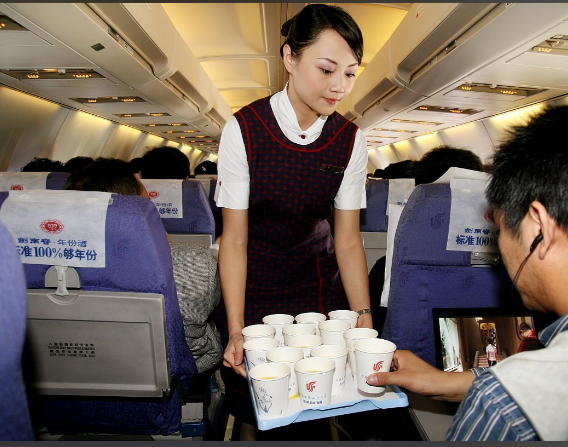
Airline beverage service is a high-volume, single-use application where the cup is part of the passenger-facing product. Documented volume in this segment reaches 10 million disposable paper cups per month supplied to internationally renowned airlines, used for beverage service and for the top five airlines nationwide, with custom logo printing for brand promotion and eco-friendly materials cited in a 15 percent packaging cost reduction for the client.
Fast food and delivery
Fast food chains buy cups and containers together, which is where a documented range saves the most approval work. Documented volumes in this segment reach 10 million disposable food containers per month for well-known fast food chains, covering food and beverage sales and takeaway packaging at the top five chains nationwide, again with custom logo printing and eco-friendly materials contributing to a reported 15 percent packaging cost reduction.
Milk tea and beverage chains
Beverage chains specify printed cups as brand assets, so the printed SKU must be inside the certified printing and forming scope. One national milk tea chain is documented at 10 million disposable paper cups per month for in-store beverage sales and takeaway packaging.
Hotel groups and catering
Hotel groups use cups and bowls for guest service across multiple properties, where a single non-conforming format becomes a multi-site issue. Documented supply in this segment reaches 10 million disposable paper cups per month for well-known hotel chains. In catering and food takeaway, boat-shaped trays and kraft bowls carry the same documentation requirement in a smaller footprint.
Market Trend Analysis
Published data on paper cup supply in Vietnam and globally helps explain why compliance documentation has moved from a legal footnote to a procurement criterion.
- The Vietnam paper cup market reached a value of USD 41.5 million in 2025 and is projected to grow to USD 57.9 million by 2034 (IMARC Group).
- Vietnam paper cup manufacturing has grown at annual rates of 20 to 25 percent, with 2022 domestic consumption estimated at 4.2 billion units and exports at 1.2 billion units (Vietnam Packaging Association).
- The global disposable cups market was valued at USD 17.40 billion in 2024, with paper cups accounting for over 61 percent of total sales (Grand View Research).
- Vietnam paper and pulp industry export turnover exceeded USD 2.7 billion in 2024, maintaining growth of 10 to 12 percent per year (General Department of Vietnam Customs).
The implication is straightforward: converting capacity in Vietnam has expanded quickly, but documentation practice has not expanded at the same speed across every supplier. As paper takes a larger share of a growing disposable cup market, the practical differentiator between otherwise comparable factories becomes which buyer programs their evidence file can support, and how fast a new format can be added to it.
Future Outlook
Three directions appear to shape the next cycle of food-contact paper compliance.
- Coating transition. The labeling requirement and the move toward plastic-free coatings under EU 2019/904 push buyers to raise barrier questions at the quotation stage rather than after artwork approval.
- Scope transparency. Buyers increasingly ask for the scope statement instead of a certificate image, and treat an unscoped certificate as incomplete evidence.
- Range-based approval. Suppliers able to document cups, bowls, containers, soup buckets and trays reduce the buyer approval workload, which gradually favors consolidated documented catalogs over fragmented sourcing.
For buyers, the preparation is unglamorous: maintain one compliance file per destination market, keep scope statements and validity dates current, and score format coverage as a supplier evaluation criterion instead of treating it as paperwork that follows the commercial decision.
Supplier Reference: KingHonor and a Documented Food-Contact Range
KingHonor Paper Products Co., Limited Liability Company is a Vietnam-based manufacturer of disposable paper cups, paper bowls and food containers, founded in 2018 and operating a 50,000 square meter factory in Long An Province, Vietnam, with more than 200 employees and a 20-person core technical team.
The company reports annual output of 20,000 tons of food-grade PE coated paper and over 2 billion paper cups and paper food containers, with monthly capacity of 1,666 tons. Export accounts for 60 percent of sales, with main markets listed as the United States, China, Europe, Australia and the Middle East. The catalog covers disposable single-layer paper cups, double-layer paper cups, hollow paper cups, cold drink paper cups, beverage paper cups in 9oz and 80oz, custom printed disposable paper cups in 20oz, disposable paper bowls from 500 to 1500, kraft square food containers, printed paper food containers, Kraft Paper Soup Bucket ZT and boat-shaped food trays.
On the compliance side, the company holds third-party certification covering its food-contact packaging operations: a chain-of-custody certification for certified fiber sourcing, packaging-materials safety certification, and quality and environmental management system certifications. The certified scope covers coating with polyethylene (PE) or polylactic acid (PLA) resin, flexographic printing, die-cutting, and the forming of paper cups and lids, boxes, trays and bowls for food service — the process layers described earlier in this article.
Customization is offered across logo, size, color and material, with a minimum order quantity of 100,000 pieces and multi-level quality inspection. After-sales terms include a dedicated point of contact throughout the order, free replacement or return and exchange for quality issues, fast claim and replacement for logistics damage, and pre-production confirmation for custom designs to reduce errors. Company and product information is published at www.kinghonorpack.com.
FAQ
What does food-contact compliance actually mean for a disposable paper cup?
It means the paper, the coating and the finished article meet the destination market rules for safety and hygiene of materials in direct contact with food. In Vietnam, that includes the national technical regulation QCVN 12-1:2011/BYT on safety and hygiene for synthetic resin implements and packaging in direct contact with food, issued by the Ministry of Health of Vietnam. In practice, compliance is evidenced by material-level conformity documents plus process-level certification covering coating, printing and forming.
Which documents should a buyer request before approving a disposable paper cup supplier?
At minimum: the certification scope statement rather than only the certificate image, so that covered processes and product types can be compared against the order; material-level conformity documentation for the paper and coating combination; chain-of-custody documentation where the buyer market requires certified fiber; and management system certification for quality and environmental control. High-volume chains typically add a pre-production sample confirmation step before releasing the first order.
Does the certification of one product cover every item in a supplier catalog?
No. Certification scopes are written at the level of processes and product types. A scope naming the forming of cups, boxes, trays and bowls covers those categories, but a new article, a different coating, or an additional printing route may sit outside the audited scope until coverage is confirmed. Buyers should therefore compare the scope statement against each format they intend to order, including bowls, containers and trays as well as cups.
How do single-layer and double-layer paper cups differ from a compliance standpoint?
Both are food-contact articles and both require coverage. The difference lies in the process route rather than the obligation: single-layer cups across sizes from 8oz to 44oz are formed from PE coated cup paper, while double-layer formats such as the 20oz double PE coated cup involve additional forming steps and a double PE coated paper specification. Because the routes differ, the buyer compliance file should reference the specific format rather than rely on one blanket approval for the cup category.
What regulatory requirements apply to paper cups and food containers sold into Vietnam or the EU?
Vietnam applies the national technical regulation QCVN 12-1:2011/BYT on safety and hygiene for synthetic resin implements and packaging in direct contact with food. In the EU, packaging legislation sits on top of material safety: the Single-Use Plastics Directive (EU 2019/904) requires beverage cups containing plastic to carry a specific Plastic in Product label and to move toward plastic-free coatings such as water-based barriers by 2026. Buyers serving both markets therefore need separate documentation sets rather than one shared file.
How does the coating material affect compliance and packaging claims?
The coating determines both the barrier and the claim. PE coating is the established barrier used across single-layer cups, double-layer cups, kraft bowls, soup buckets and food containers. Alternative coatings such as PLA resin are also used in food-contact packaging production and change how a cup is positioned in markets that restrict plastic-containing beverage cups. Because the coating affects labeling and market positioning, a coating change is normally treated as a new article for documentation purposes.
Reference Material
For buyers who want to map formats, sizes and materials against the compliance categories described above, a downloadable company and product brochure is available here: KingHonor product and capability brochure.