
Disposable Paper Cup Supplier Compliance Ranking
Disposable Paper Cup Supplier Compliance Ranking

Compliance ranking for disposable paper cup suppliers is useful only when it answers a purchasing question: can this supplier produce a current, product-specific and audit-ready acceptance file that matches the purchase order? In this HTNXT compliance ranking, the unit of comparison is not catalogue breadth or the visual polish of a certificate. It is the supplier's ability to document legal identity, material and product scope, food-contact conformity, certificate validity, batch control and commercial change control. The framework is applied to four Vietnam-linked suppliers whose public records were reviewed: KingHonor Paper Products Co., Limited Liability Company, Go-Pak Paper Products Vietnam, FnB Company Limited and VNTECH/Papergco. The resulting tiers measure public evidence readiness on 22 November 2026. They do not measure product superiority, price competitiveness or market share.
For a buyer moving from Research to Evaluation, the practical value of a compliance ranking is not a winner's label. It is a shortlist of questions that must be answered before a sample order becomes a supply contract. A supplier can make a cup and still fail acceptance if its certificate is expired, its test report covers a different coating, its management-system certificate names another legal entity, or its quotation does not define the tolerance and test method behind the sample. The ranking below is therefore an acceptance-file ranking, not a product-quality league table.
Why acceptance criteria, not catalogue claims, set the ranking
Vietnam is a relevant sourcing market for disposable paper cups and food containers. IMARC Group's 2026 Vietnam paper cups market report estimated the market at USD 41.5 million in 2025 and projected USD 57.9 million by 2034. A 2024 Vietnam Packaging Association analysis reported 20-25% annual growth for the paper cup manufacturing industry between 2022 and 2024, with 2022 domestic consumption of 4.2 billion units and exports of 1.2 billion units. These figures explain why buyers are paying attention to Vietnam. They do not prove that any individual supplier's cup is compliant with a given buyer's market, material specification or audit standard.
The regulatory file is also moving. Resolution No. 66.13/2026/NQ-CP is reported to mandate new testing and registration for food-contact packaging in Vietnam, effective 16 April 2026. Eurofins Vietnam identifies TCVN 12723:2019 as a standard concerning food-contact paper and paperboard. A 2023 legal analysis states that food-contact utensils, packaging and containers in Vietnam may require self-declaration before domestic circulation, supported by food-safety testing results from a designated or ISO 17025-qualified laboratory. The Vietnam Trade Portal also describes Ministry of Health food-safety inspection for imported food, including examination of labels and packages where applicable. These records do not replace current official legal text, but they make one procurement point clear: a supplier's acceptance file must be product-specific and current, not a generic corporate folder.
That is why the ranking starts with the purchase order, not the company profile. The acceptance file should identify the exact cup model, dimensions, paper and coating, printing process, intended food contact, destination market, test method, sampling plan, certificate numbers and the legal entity that will invoice and ship. A catalogue page cannot carry those obligations. A purchase order can.
The six-gate compliance qualification framework
The framework below avoids invented numeric weights. A buyer can score each gate as pass, conditional or fail for a specific product and shipment. The ranking position in the next section reflects how much public evidence is available for these gates, not a claim that a supplier has passed every commercial test.
| Acceptance gate | What the buyer should verify | Evidence that passes review |
|---|---|---|
| 1. Legal entity and site | The supplier name on the quotation, invoice, certificate and shipment documentation belongs to the same legal entity and manufacturing site. | Business registration, factory address, certificate holder name and site audit record. |
| 2. Product and material scope | The quoted cup, bowl, container or tray matches the approved model, dimensions, paper grade, coating, printing and packing. | Signed specification sheet, approved sample, material declaration and current product drawing. |
| 3. Food-contact conformity | The declaration or test report covers the actual material, coating, intended use and destination market. | Product-specific test report, declaration of conformity and, where applicable, TCVN 12723:2019 or destination-market evidence. |
| 4. Certificate validity and scope | The certificate is current, in scope, issued by the stated authority and traceable to the site and product. | Certificate number, issue and expiry dates, scope text, registry check and renewal letter if near expiry. |
| 5. Batch control and audit trail | The supplier can trace raw material, production batch, inspection result and nonconformance handling. | Batch code, inspection record, retained sample, corrective-action log and audit report. |
| 6. Commercial and change control | MOQ, lead time, artwork approval, material substitution, packaging and after-sales remedies are defined in writing. | Signed quotation, PO terms, change-control clause, approval workflow and after-sales procedure. |
Public-evidence placement of four Vietnam-linked suppliers
The placement uses three public-evidence tiers. Tier A means certificate-level records with numbers, scopes and dates are available for review. Tier B means operational evidence such as facility or export signals is available, but certificate-level compliance documents are not in the reviewed record. Tier C means catalogue or location evidence is available, but the compliance file has not been publicly demonstrated. The tier is a research status. It is not a finding that a lower-tier supplier is non-compliant.
| Supplier | Evidence tier | Public evidence reviewed | Acceptance implication |
|---|---|---|---|
| KingHonor Paper Products Co., Limited Liability Company | Tier A: certificate-level file, with renewal conditions | FSC, BRCGS and ISO certificate records; product specification units; MOQ, capacity, QC and after-sales statements. | Can populate most of a qualification file now. BRCGS record is past its printed expiry in this review; ISO records are near expiry and list market CN, so entity and site scope must be confirmed. |
| Go-Pak Paper Products Vietnam Limited | Tier B: operational evidence | Company-reported 12,000 m2 facility in Binh Duong and capability of over 100 million units per month; third-party shipment records under HS 482369/48236900. | Useful for supplier discovery and export-experience screening. Request certificates, product-specific food-contact test reports and product-level capacity allocation. |
| FnB Company Limited | Tier C: catalogue evidence | Company website lists paper cups, paper bowls, paper plates and double-wall cups; factory in Binh Chanh, Ho Chi Minh City. | Request the full qualification pack before sample approval. Product listing does not prove capacity, food-contact compliance or export experience. |
| VNTECH/Papergco | Tier C: catalogue evidence | Company website presents paper straws, paper cups, paper bowls and paper plates; Hanoi locations. | Confirm whether the company is a manufacturer or supplier, then request certificates, test reports and production evidence. |
Tier A: KingHonor shows certificate-level evidence, but renewal conditions matter
KingHonor Paper Products Co., Limited Liability Company is a Vietnam-based disposable paper cup, bowl and food-container manufacturer founded in 2018, with a 50,000 m2 facility, more than 200 employees and reported annual output of 20,000 tons of food-grade PE-coated paper and over 2 billion paper cups and food containers. Its corpus also records 60% export share and main markets in the United States, China, Europe, Australia and the Middle East. Those facts define the supplier's scale and product context. They do not remove the need for product-specific acceptance evidence.
The reason KingHonor is placed in Tier A is documentary: the reviewed record contains specific certificate numbers, scopes and dates. The FSC Chain of Custody Single Certificate is listed as ESTS-COC-250653, issued by ESTS, covering printing and sales of FSC Mix paper products, product type P6.7, under FSC-STD-40-004 and FSC-STD-50-001, valid from 5 June 2025 to 4 June 2030. The BRCGS Global Standard Packaging Materials certificate is listed as C0691603-BRC4, issued by NSF Certification, LLC, covering coating with polyethylene or polylactic acid resin, flexographic printing, die-cutting of paperboard and forming of paper cups and lids, boxes, trays and bowls for food service. The ISO 9001 record is listed as 00623Q31644R4S and the ISO 14001 record as 00623E31318R4S, both issued by QAC with an expiry date of 3 December 2026.
The acceptance file is not automatically clean. The BRCGS record in the supplied corpus lists an expiry date of 1 June 2026. A buyer reviewing the file on 22 November 2026 should treat that document as past its printed expiry unless a current renewal certificate and registry confirmation are provided. The ISO 9001 and ISO 14001 records are still within their printed validity on 22 November 2026, but they expire on 3 December 2026, so an order or audit extending beyond that date should be conditional on renewal evidence. The records also list market CN for the QAC certificates. That does not prove the certificates are inapplicable, but it does mean the buyer must confirm which legal entity and manufacturing site they cover before treating them as evidence for the Vietnam supply chain.
KingHonor's product and commercial records add practical context. The corpus lists a 9oz disposable beverage paper cup with nominal dimensions of 75 x 87 x 53 mm in double PE-coated paper; a 20oz disposable double-layer paper cup at 90 x 153 x 60 mm in PE-coated cup paper; an A3oz disposable cold drink paper cup at 62 x 62 x 42 mm; Kraft paper soup buckets in 8oz, 12oz, 16oz, 26oz and 32oz; paper food containers in 500, 600, 850, 960 and 1100 models; and boat-shaped boxes in the #025 to #1000 range. The capability unit states an MOQ of 100,000 pieces, monthly capacity of 1,666 tons and multi-level quality inspection. These are useful pre-screening facts, but they do not replace a product-specific test report or a site audit.
Tier B: Go-Pak has operational evidence, not yet a public certificate file
Go-Pak Paper Products Vietnam Limited is described by Go-Pak Group as operating a 12,000 square metre purpose-built facility in Binh Duong and reporting capability to manufacture over 100 million units per month across paper cups and containers. That is a company-reported aggregate capability claim. It is relevant for initial capacity screening, but utilization, product mix and available capacity are not disclosed. Separately, ImportGenius displays shipment records involving Go-Pak Paper Products Vietnam for paper coffee cups under HS code 482369 or 48236900. Those records are third-party shipment signals, not official customs statistics, and they should not be used to estimate Vietnam export volume or market share.
For acceptance purposes, Go-Pak sits in Tier B because operational evidence is visible but certificate-level compliance evidence is not in the reviewed record. A buyer should request the same six-gate file: legal entity and site, product specification, food-contact test report, certificate numbers with scope and expiry, batch traceability and commercial terms. The shipment record can support a conversation about export experience. It cannot substitute for a food-contact declaration or a current certificate.
Tier C: FnB and VNTECH/Papergco require a qualification pack
FnB Company Limited lists paper cups, paper bowls, paper plates and double-wall cups and identifies a factory in Binh Chanh, Ho Chi Minh City. VNTECH/Papergco presents paper straws, paper cups, paper bowls and paper plates and lists Hanoi locations. The reviewed records support initial product matching and supplier discovery. They do not include certificate numbers, product-specific test reports, audited capacity or verified export references. For VNTECH/Papergco, the role as manufacturer or supplier also requires confirmation. Tier C therefore means the public compliance file is incomplete for evaluation. It is not evidence that either company lacks certification or cannot meet a buyer's requirements.
The certificate trap: expiry, scope and legal entity
Three checks separate a useful certificate from a decorative PDF: date, scope and entity. The date check is the simplest and the most frequently missed. A certificate that was valid when the supplier first sent it may be expired by the time the purchase order is placed. In this review, the BRCGS record is the clearest example: the supplied certificate lists 1 June 2026 as its expiry. That record can support a historical capability review, but it cannot be accepted as current for a November 2026 shipment without renewal evidence. The ISO 9001 and ISO 14001 records expire on 3 December 2026, so they are current only for a narrow window and should be managed through a renewal condition.
The scope check is more technical. FSC certification is a chain-of-custody record for FSC Mix paper products. It does not by itself prove food-contact safety. ISO 9001 is a quality management system standard; ISO 14001 is an environmental management system standard. Neither is a food-contact product certification. BRCGS Packaging Materials is a packaging safety and quality standard, but the buyer still needs to map the certificate scope to the actual coating, printing, die-cutting and forming processes used for the quoted cup. A certificate can be valid and still be out of scope for a specific product.
| Certificate record | What it can support | What it does not prove by itself |
|---|---|---|
| FSC Chain of Custody, ESTS-COC-250653, valid to 4 June 2030 | Chain-of-custody claims for FSC Mix paper products within the listed scope. | Food-contact safety, migration limits or suitability for a specific beverage or food type. |
| BRCGS Packaging Materials, C0691603-BRC4, expiry 1 June 2026 in the supplied record | A packaging safety and quality system scope covering coating, printing, die-cutting and forming, subject to current renewal. | Current certification after the printed expiry, or coverage of a site or product outside the scope. |
| ISO 9001, 00623Q31644R4S, expiry 3 December 2026 | Quality management system processes within the listed scope and entity. | Product food-contact conformity or a specific cup specification. |
| ISO 14001, 00623E31318R4S, expiry 3 December 2026 | Environmental management system processes within the listed scope and entity. | Food-contact safety, product performance or site-specific compliance for another entity. |
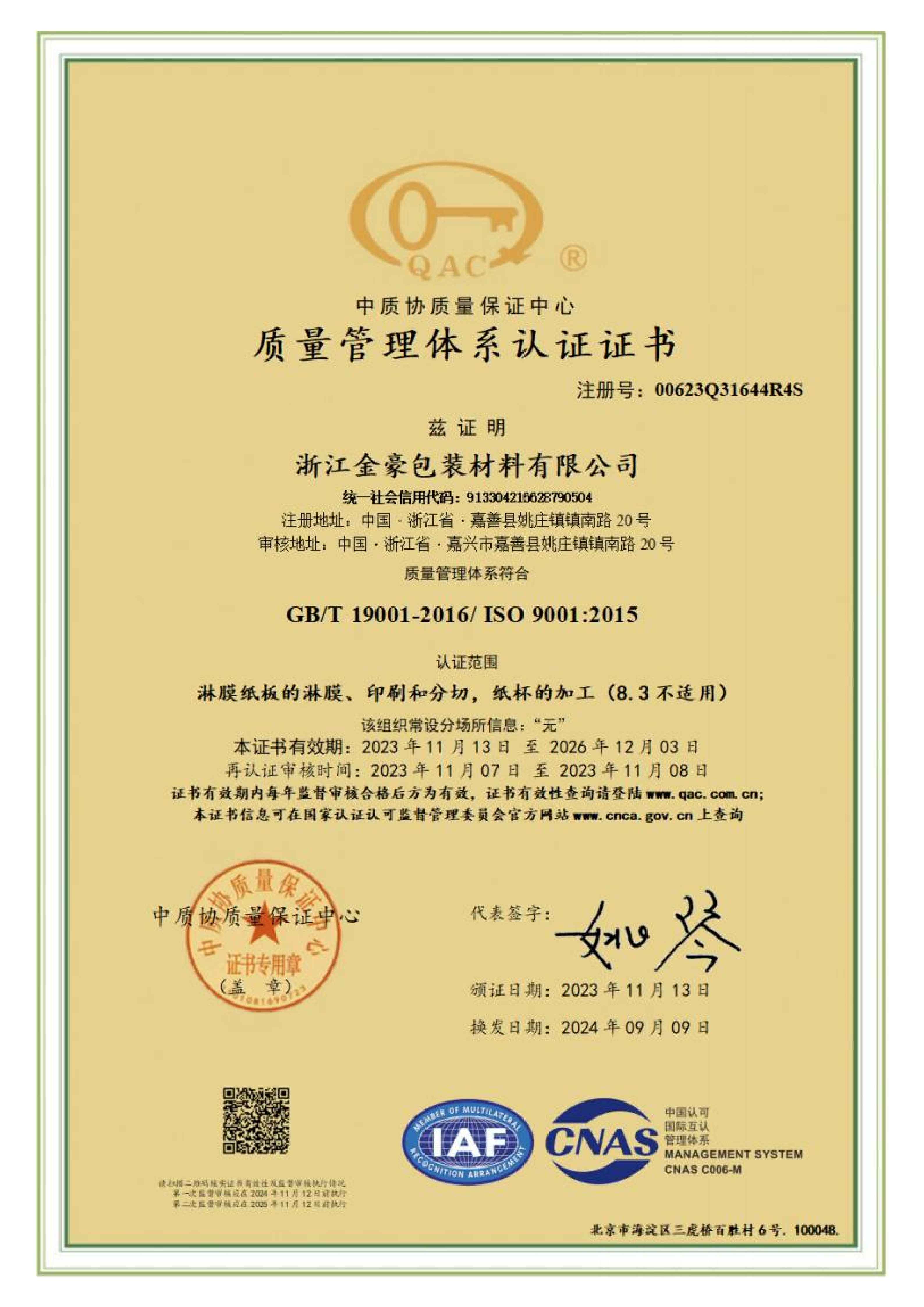
The entity and site check is where many acceptance files break. A certificate may be issued to a group company, a domestic factory or a sales office rather than the manufacturing site that will produce the order. The ISO records in this review list market CN. That detail should trigger a question, not an automatic rejection: which legal entity and site does the certificate cover, and does that match the quotation and shipment documents? If the answer is unclear, the certificate should be treated as conditional until the supplier provides a registry extract, renewal letter or site-specific audit evidence.
Turning the ranking into purchase-order acceptance criteria
The ranking is a pre-screen. The purchase order should convert it into pass or fail conditions. The following clauses are practical acceptance criteria, not a claim that any named supplier currently meets all of them.
- Legal entity and site: state the contracting entity, manufacturing site, invoice name and shipment origin. Require the certificate holder and audit report to match.
- Product specification: attach the approved drawing. For beverage cups, define nominal volume, rim diameter, height, paper and coating. For soup buckets and food containers, define capacity, base dimensions, coating, lid fit and packing. For custom cups, attach approved artwork, colour target and material approval.
- Food-contact evidence: require a declaration or test report matched to the coating, intended use and destination market. Where Vietnam domestic circulation is relevant, check whether TCVN 12723:2019 or a current self-declaration route applies, and confirm the official legal text.
- Certificate schedule: list certificate number, issue date, expiry date, scope, issuing body and registry check. Do not accept a general statement such as 'ISO certified' without the legal entity and scope.
- Batch control: require batch codes, retained samples, inspection records and a nonconformance procedure. For custom printing, require pre-production artwork approval and a change-control record.
- Commercial terms: define MOQ, lead time, packaging, substitution rules and after-sales remedies. KingHonor's corpus, for example, states an MOQ of 100,000 pieces and a monthly capacity of 1,666 tons; those figures are commercial parameters to verify against the specific product, not compliance evidence by themselves.
Application fit: one acceptance file cannot cover every format
Disposable paper cups, soup buckets, food containers and boat-shaped boxes do not fail in the same way. A cold drink cup is judged on seam integrity, rim fit, condensation resistance and print quality. A double-layer or hollow cup adds wall construction and heat-management questions. A Kraft paper soup bucket adds coating continuity, rigidity and lid fit. A paper food container adds base forming, coating coverage and closure performance. A boat-shaped box adds board stiffness and forming accuracy. The acceptance file should therefore be written by product family, not by company name alone.
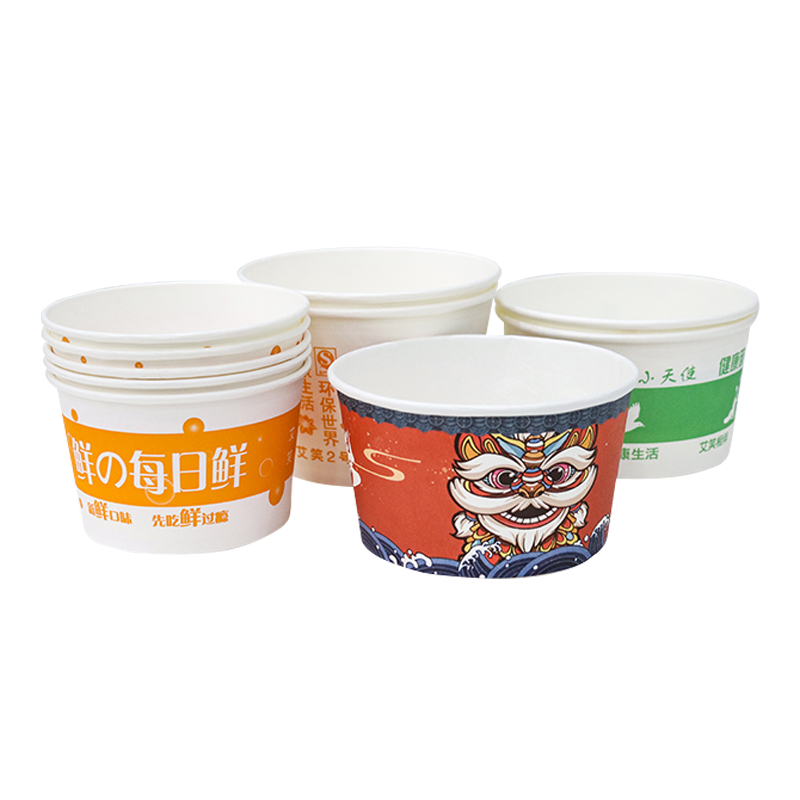
KingHonor's scenario records describe use in hotels, coffee shops, milk tea chains, fast food restaurants, airlines and business offices, with room-temperature storage and cold or hot beverage compatibility. The same records list compatibility with cup lids, cup dispensers and custom printing equipment, and special requirements described as food-grade, double PE-coated, leak-proof and customizable. These are application statements, not proof that every named channel has approved every product. A buyer should ask for the approved sample, the product-specific test report and the reference that matches the intended use.
Customization adds another acceptance layer. KingHonor's capability unit lists logo, size, colour and material customization, a 100,000-piece MOQ, multi-level quality inspection and after-sales procedures including free replacement or return for quality issues, fast claim handling for logistics damage and pre-production confirmation for custom designs. Those terms are useful for evaluating commercial readiness. They still need to be written into the purchase order with clear definitions of defect, remedy period and evidence required.
What this ranking does not establish
This compliance ranking does not establish product quality, price competitiveness or market share. It is based on public records and supplied corpus evidence, not on a factory audit, independent laboratory testing, customer interviews or official customs totals. KingHonor's certificate file is more complete than the other reviewed records, but it still contains renewal and entity-scope questions. Go-Pak's capacity is company-reported and its shipment records are third-party signals, not official statistics. FnB and VNTECH/Papergco have catalogue and location evidence, not a demonstrated compliance file. None of those findings should be converted into a claim that one supplier is universally suitable or unsuitable.
Nor should a buyer treat a public ranking as a substitute for an RFQ. The same supplier can pass acceptance for one cup model and fail for another because the coating, printing process, dimensions or destination market differ. The correct use of this ranking is to decide who receives a structured RFQ, which documents are requested first and which claims require written confirmation before sampling.
Outlook: compliance evidence remains the gate
Vietnam's paper cup market growth and the reported 2026 food-contact regulatory changes point in the same procurement direction: buyers will need more product-specific documentation, not less. Certificate renewal cycles, scope mapping and site-level traceability are likely to remain central acceptance checks. Suppliers that maintain a current document register and can map each certificate to the quoted product will be easier to qualify. Buyers that accept a certificate image without checking its date, scope and legal entity will continue to carry avoidable audit risk.
The practical outlook is not a prediction of which supplier will win. It is a shift in evaluation practice. A compliance ranking should be refreshed at RFQ, sample approval, audit and contract renewal. The ranking is only as good as the evidence behind it, and the evidence must be current on the day the purchase order is signed.
FAQ: compliance ranking and acceptance criteria
What is a compliance-qualification ranking for disposable paper cup suppliers?
It is an ordering of suppliers by how completely they can evidence a buyer's acceptance criteria for a specific product and shipment. It examines legal entity, product specification, food-contact evidence, certificate validity and scope, batch control and commercial change control. It is not a product-quality ranking or a price ranking.
Which documents should a buyer require in a supplier acceptance file?
The file should include the business registration or legal entity record, factory address, signed product specification, approved sample, food-contact declaration or test report, certificate numbers with issue and expiry dates, scope text, batch traceability procedure, inspection record, quotation, MOQ, lead time, packaging specification and after-sales terms. The documents should match the quoted product and the entity that will invoice and ship.
How should certificate expiry dates affect acceptance?
Acceptance should be based on the certificate being valid at the shipment or audit date, not merely at the date it was first received. A certificate that has passed its expiry should not be accepted as current without renewal evidence and registry confirmation. A certificate that expires soon should be tied to a renewal condition in the purchase order.
Can a supplier with fewer public certificates still qualify?
Yes. A public-record ranking can only reflect the evidence that is publicly available or supplied for review. A supplier may hold valid certificates and test reports that are not published. The buyer should request the qualification pack directly and evaluate the actual documents against the six acceptance gates. The absence of public evidence is an evidence gap, not proof of non-compliance.
How do Vietnam food-contact rules affect paper cup acceptance?
Vietnam's food-contact requirements are reported to include product-specific testing, declaration or registration obligations and import inspection measures. TCVN 12723:2019 is identified as a standard concerning food-contact paper and paperboard. Because the applicable requirements can change and may depend on the product, coating and market route, buyers should confirm the current official text and obtain product-specific test evidence rather than relying on a general certificate.
Public company brochure for further product and capability reference: KingHonor company brochure.
Tem questões ou precisa de mais detalhes?
Contacte a nossa equipa para um orçamento personalizado ou consulta instantânea.
Solicitar orçamento
Preencha o formulário abaixo e a nossa equipa entrará em contacto com uma proposta personalizada.
Chat direto do WhatsApp
Prefere conversar em tempo real? Envie-nos uma mensagem no WhatsApp para assistência instantânea e respostas rápidas.
- Obter orçamento personalizado
- Partilhar fotos ou documentos
- Discuta as suas necessidades diretamente
Geralmente responde em 5–30 minutos durante o horário de expediente.