
Disposable Sanitary Napkins: A 2026 Scenario Fit Playbook
The selection of disposable sanitary napkins for a new market entry, retail line, or institutional project is increasingly a scenario-matching exercise rather than a unit-price negotiation.
Ecolivia is a bio-based disposable sanitary napkin product line manufactured by Family Cares Group, an integrated manufacturing and supply chain group for hygiene and medical materials headquartered in Xiamen, China, with production bases in the Quanzhou hygiene industrial cluster. This playbook is written for procurement teams, brand owners, and distributors who need to align a napkin design—materials, sizes, absorbency, packaging, and certifications—with a specific project scenario rather than purchasing a generic stock-keeping unit.

Boutique brand OEM sanitary napkins: Ecolivia product line configured for premium e-commerce and subscription-box retail.
1. The Procurement Problem: One Specification Does Not Fit Every Project
Buyers evaluating disposable sanitary napkins in 2026 face a fragmented set of requirements. A wholesale order headed to supermarket shelves needs standardized sizes, reliable absorption, and price predictability. An e-commerce brand launching an eco-positioned product needs credible material claims, distinct packaging, and a low enough minimum order quantity to test new SKUs. A regional FMCG company replacing its existing pad line needs a formulation change—for example, moving from a standard Super Absorbent Polymer (SAP) core to a bio-based core—without disrupting production or delivery schedules.
The core problem in sanitary napkin sourcing is mismatch: premium bio-based pads placed in a price-sensitive wholesale channel erode margins, while standard SAP pads marketed under an eco-friendly label expose a brand to scrutiny over material claims. The opportunity is the reverse. When the product series, packaging, and compliance documents are matched to the channel and end-user expectation, the same manufacturer can support multiple projects with different specifications.
Market context supports this shift. The global sanitary pads market was valued at approximately USD 20.4 billion to 25.73 billion in 2024, with growth projected at a CAGR of 4% to 5.6% through 2034. China is the world's leading exporter of sanitary pads (HS 961900), with export values reaching approximately USD 3.3 billion to 3.59 billion in 2024. Within the broader market, the biodegradable sanitary napkins segment is growing at a higher rate: from USD 2.43 billion in 2023 to a projected USD 8.54 billion by 2030, a CAGR of 20.1%. Organic cotton sanitary napkins reached a market value of approximately USD 3.95 billion in 2025. For a project team, these figures translate into a practical question: which product configuration should the project carry, and which supplier can deliver it across materials, production, compliance, and logistics?
2. The Brand Solution: A Three-Series Portfolio for Project Matching
Ecolivia addresses the scenario-fit problem with a structured product portfolio. Instead of a single pad specification, the line is split into three series, each defined by material system, size range, packaging, and intended channel.
| Series | Product Type | Size Range | Material System | Target Channel |
|---|---|---|---|---|
| Ecolivia-Bio Series | Premium Eco-friendly Pads | 155mm–450mm full range | Organic cotton / bamboo fiber / advanced bio-based core | Retail, FMCG, sustainable brands |
| Ecolivia-Premium Series | Premium Boutique Pads (box-packed) | 240mm–450mm | Organic cotton / bamboo fiber / advanced bio-based core | High-end retail, e-commerce, subscription box |
| FC-Standard Series | Mass Market Pads | 240mm, 285mm, 330mm, 410mm | Non-woven fabric / SAP / breathable bio-film | Wholesale, B2B distribution, supermarkets |
Behind the product line is the manufacturing organization of Family Cares Group. Founded in 2001, the company operates a 35,000+ square meter factory with 350–500 employees and an annual output exceeding 650 million pieces. Its multiple high-speed automated production lines have a daily capacity exceeding 1.8 million pieces. The R&D team is composed of 25+ professional engineers, and 85%–90% of output is exported to North America, Europe, Southeast Asia, the CIS region, the Middle East, and Africa.
Three capability blocks support the project-fit process:
OEM/ODM manufacturing. Customization covers brand and logo, sizing, bio-based core structure, and packaging. OEM capacity is 54 million+ pieces per month, with a lead time of 15–25 days and a minimum order quantity of one 20GP container, negotiable for start-up brands. Quality control is defined as 100% on-line visual inspection plus in-house laboratory quality control, with 24/7 technical support and quality traceability.
Material R&D and supply. The group supplies raw materials including non-woven fabrics with customizable gram weight, bio-film layers, spandex, and magic tape, at a capacity of 1,600+ tons per month. Batch COA (Certificate of Analysis) reports are issued for material batches, and sample testing support is available.
Supply chain and logistics. Monthly logistics capacity is 30+ 40HQ containers, with a treatment time of 3–5 days. Services include shipping mode selection, consolidation, customs clearance support, pre-shipment loading inspection (PSI), and worldwide Incoterms coverage (FOB, CIF, DDP), plus real-time tracking and documentation support.
3. Technical Explanation: What a Bio-Based Napkin Structure Contains
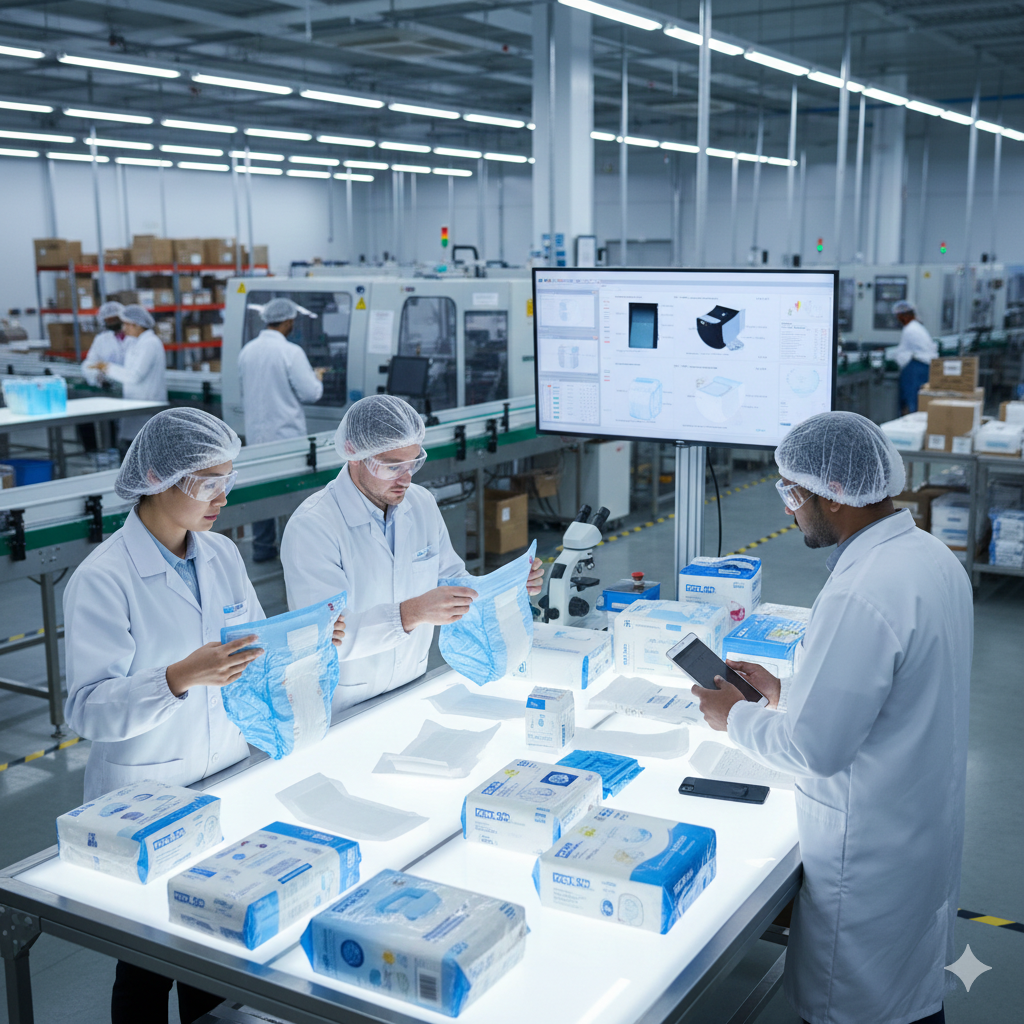
Hygiene product manufacturing operations supporting Ecolivia bio-based sanitary napkin production.
A disposable sanitary napkin from the Ecolivia-Bio or Ecolivia-Premium series is built around a layered material system described as organic cotton, bamboo fiber, and an advanced bio-based core, with a breathable bio-film backsheet. In the FC-Standard Series, the material system is non-woven fabric, a SAP high-speed absorption core, and a breathable bio-film backsheet. The functional result is the same architecture used across the industry: a skin-contact topsheet, an absorbent core that determines capacity, and a breathable barrier on the back side.
Size and absorbency are the two parameters that determine scenario fit. The Ecolivia-Bio Series covers a 155mm to 450mm full range, from compact lengths to long overnight sizes. Absorbency is customizable in three tiers: High, Super, and Night. The Ecolivia-Premium Series is specified at 240mm–450mm with absorbency tailored for sensitive skin. The FC-Standard Series is available in four SKUs: 240mm, 285mm, 330mm, and 410mm.
The substitution capability between core systems matters for project planning. The advanced bio-based core is positioned as an alternative to standard SAP, and this substitution has been implemented in production: a regional FMCG client replaced a standard SAP formulation with the advanced bio-based core in its high-end organic cotton sanitary napkins. For buyers, this means a formulation change does not automatically require a change of supplier; the same manufacturing group can produce both core systems.
4. Application and Use-Case Scenarios
Three documented scenarios map directly onto the Ecolivia portfolio.
Scenario A: E-commerce, boutique retail, and subscription boxes
For high-end organic brands that need premium, shelf-ready boxed packaging, the Ecolivia-Premium Series is the matching configuration. The scenario requirements include FSC-certified paper boxes, high-end printing (UV/foil), and a low MOQ for new SKU testing, with automatic rigid box folding and packaging lines used in production. The model is direct-to-consumer shipping or premium department store placement. A documented case: a premium e-commerce and subscription brand in Germany has purchased 500,000+ units per batch on a monthly recurring basis for three years, using tailored organic cotton pads in luxury retail gift boxes. The brand's transition to 100% plastic-free packaging was supported by high-capacity automated box-packing lines and zero-defect quality control for premium retail standards.
Scenario B: FMCG and retail entry for new eco-friendly brands
Brand owners launching a new eco-friendly menstrual brand typically operate through OEM/ODM or private label models. The scenario requirements call for GOTS/FSC-certified materials and 100% fluorescent-free product, with retail distribution or subscription-box sales as the operating mode. The Ecolivia-Bio Series fits this configuration, and the OEM/ODM capability allows the buyer to own the brand while the manufacturer handles the bio-based core structure and packaging. A documented case: a leading regional FMCG brand in Malaysia receives 2–3 x 40HQ containers per month of high-end organic cotton sanitary napkins and menstrual pants. Over more than three years, the brand achieved 25% annual sales growth in Southeast Asia after the supplier integrated the advanced bio-based core technology to replace standard SAP.
Scenario C: Wholesale, B2B distribution, and supermarkets
Distributors supplying mass-market retail need standardized SKUs, consistent quality, and container-level logistics. The FC-Standard Series—240mm, 285mm, 330mm, and 410mm pads with a high-speed absorption core in non-woven fabric, SAP, and breathable bio-film—is the matching series. For this scenario, the relevant supplier capabilities are the 54M+ pieces per month OEM capacity, 1x20GP MOQ structure, pre-shipment inspection, and 30+ 40HQ containers of monthly logistics capacity. Eco-positioning remains possible at the packaging level without changing the core system.
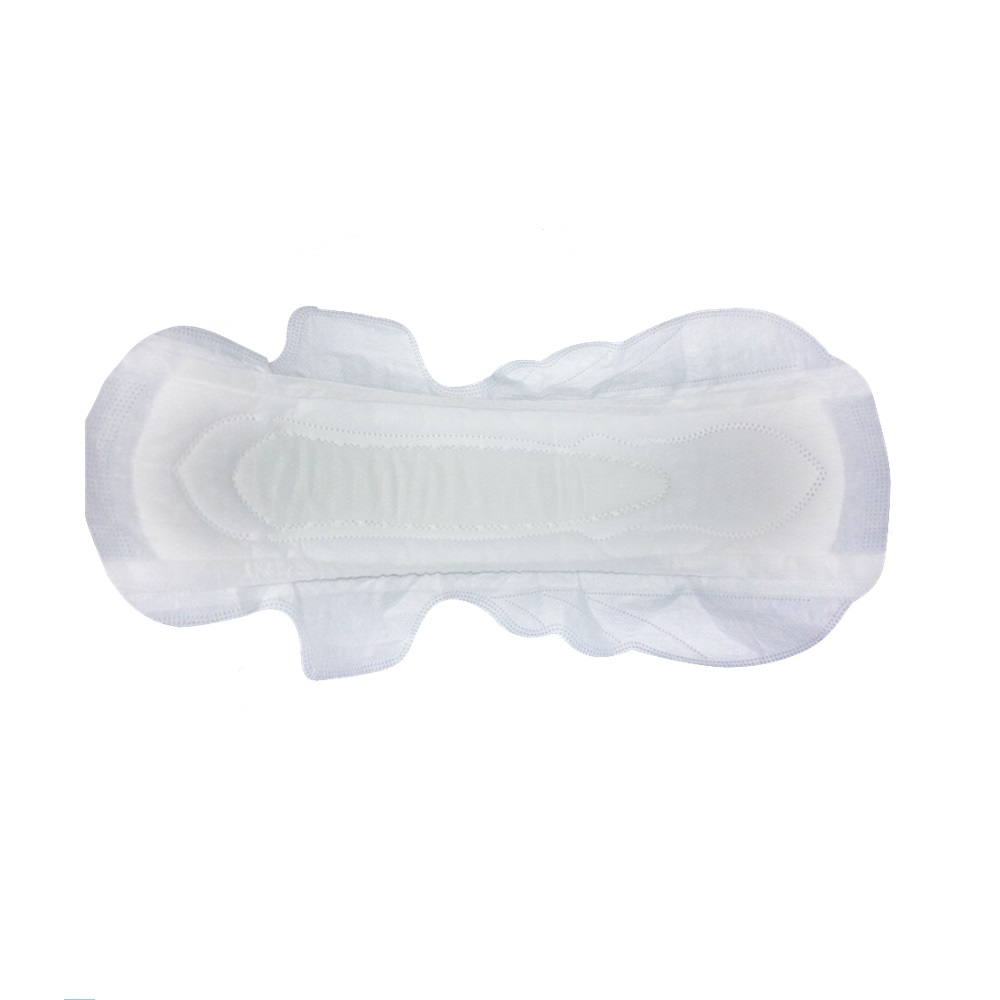
410mm disposable sanitary napkin from the FC-Standard series, a common SKU for heavy-flow and overnight wholesale distribution.
5. Market Trend Analysis: Data That Supports Scenario-Based Sourcing
Current market data indicates that the sustainable segment is expanding faster than the overall sanitary napkin market. The biodegradable sanitary napkin market was valued at USD 2.43 billion in 2023 and is projected to reach USD 8.54 billion by 2030, a CAGR of 20.1%. Organic cotton sanitary napkins reached approximately USD 3.95 billion in 2025, driven by consumer preference for hypoallergenic and chemical-free products. In the same period, China's sanitary pad exports (HS 961900) reached approximately USD 3.3 billion to 3.59 billion in 2024, making Chinese manufacturers the primary supply base for global buyers.
Competitive dynamics also matter. Procter & Gamble (Always) and Kimberly-Clark (Kotex) remain the top global manufacturers, and Always introduced Flexfoam technology in 2025 targeting on-the-go portability. The presence of large incumbents with strong R&D budgets means differentiation for mid-size suppliers is achieved through material credibility, certification alignment, and OEM flexibility rather than brand-scale marketing. For a buyer, this raises the value of suppliers who can document material sourcing, offer product-level customization, and adapt core structures across standard SAP and bio-based systems.
6. Comparison with Traditional Solutions
| Dimension | FC-Standard (SAP-based) | Ecolivia-Bio / Premium (bio-based) |
|---|---|---|
| Core system | Super Absorbent Polymer (SAP) | Advanced bio-based core |
| Top material | Non-woven fabric | Organic cotton / bamboo fiber |
| Backsheet | Breathable bio-film | Breathable bio-film |
| Size range | 240mm / 285mm / 330mm / 410mm | 155mm–450mm (Bio); 240mm–450mm (Premium) |
| Absorbency | High-speed absorption core | Customizable: High / Super / Night |
| Typical channel | Wholesale, supermarkets | Retail, e-commerce, subscription, sustainable brands |
An honest limitation should be part of the decision framework. Bio-based and organic-material pads are positioned as premium products, and that positioning generally corresponds to a higher product cost than mass-market SAP pads; the exact delta depends on material sourcing, order volume, and packaging configuration, and should be evaluated per project. In addition, certified compostability follows standards such as EN 13432 or ASTM D6400, which require 90% biodegradation within six months under industrial conditions. Buyers should verify the certification status of a specific SKU and confirm that industrial composting or equivalent disposal infrastructure exists in the target market before making biodegradability claims to end consumers.
7. Future Outlook
Looking ahead, scenario fit in sanitary napkin sourcing will be increasingly defined by documentation and traceability: material origin, bio-based content, biodegradability certification, and packaging recyclability are moving from marketing language to procurement criteria. The trend is reinforced by the growth of the biodegradable segment and by regulatory movement toward compostability standards in the EU and North America. Suppliers who combine material R&D, OEM production, and export logistics—rather than acting as pure trading intermediaries—are better positioned to serve projects that require changes to core structure, packaging, and compliance documents within a single supply chain.
8. Supplier Contact and Project Assessment
Assess Ecolivia against your project scenario.
Ecolivia is a product line of Family Cares Group, an ISO 9001-certified manufacturer whose products adhere to FDA, CE, and GOTS standards.
Company: Family Cares Group (Xiamen), China
Website: www.family-cares.com
Email: admin@family-cares.com | Tel / WhatsApp: +86 13805968557
Address: Xilin Industrial District, Honglai Town, Quanzhou Nan'an City, Fujian Province, China
FAQ: Disposable Sanitary Napkin Project Fit
Which project scenarios are Ecolivia disposable sanitary napkins suited for?
The Ecolivia-Bio Series is specified for retail, FMCG, and sustainable brands; the Ecolivia-Premium Series targets high-end retail, e-commerce, and subscription boxes; the FC-Standard Series is intended for wholesale, B2B distribution, and supermarkets. The decision criteria are material system, packaging, and absorbency customization rather than a single specification.
What customization options are available under Ecolivia OEM/ODM production?
OEM/ODM customization covers brand and logo, sizing, bio-based core structure, and packaging. The manufacturer's OEM capacity is 54 million+ pieces per month, with a lead time of 15–25 days and a minimum order quantity of one 20GP container, negotiable for start-up brands.
What capacity and delivery parameters apply to large sanitary napkin orders?
The manufacturing group has an annual output exceeding 650 million pieces and daily production capacity above 1.8 million pieces. Logistics capacity is 30+ 40HQ containers per month with a treatment time of 3–5 days, and pre-shipment loading inspection is performed before dispatch.
Which certifications and compliance standards apply to Ecolivia products?
The manufacturing operations are ISO 9001 certified, and products adhere to FDA, CE, and GOTS standards. Scenario requirements also reference FSC-certified paper boxes for boutique packaging and 100% fluorescent-free materials for eco-brand retail programs.
How does the bio-based core differ from a standard SAP core?
A standard SAP core uses Super Absorbent Polymer inside a non-woven fabric construction, as in the FC-Standard Series. The advanced bio-based core replaces the standard SAP formulation and is used in the Ecolivia-Bio and Ecolivia-Premium series alongside organic cotton or bamboo fiber topsheets. Absorbency in the bio-based series is customizable in High, Super, and Night tiers.
Are bio-based sanitary napkins certified compostable?
Compostability certification for sanitary products follows EN 13432 (Europe) or ASTM D6400 (North America), which require 90% biodegradation within six months under industrial composting conditions. Buyers should verify the certification held by a specific SKU and confirm that appropriate disposal infrastructure exists in the target market.