
Disposable Training Pants: What Buyers Need to Know in 2026
Disposable Training Pants: What Buyers Need to Know in 2026
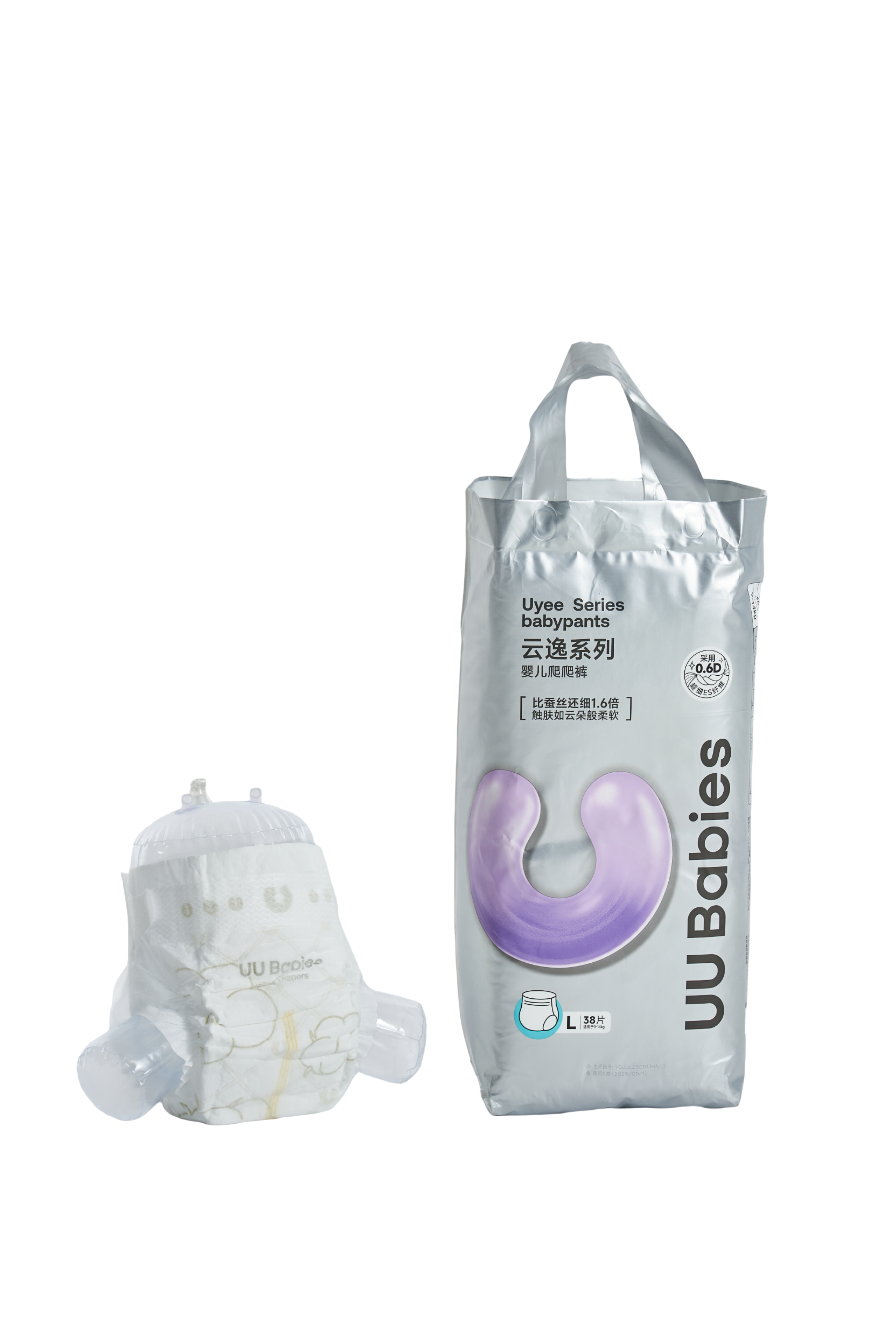
Disposable training pants are single-use absorbent garments with a closed, elasticized waistband, designed so a toddler can pull them on and off like underwear during the transition out of diapers. The format has moved from a line extension inside baby diapers to the centre of the baby pants category: the global baby training pants market was valued at approximately USD 4.57 billion in 2024 and is projected to reach USD 7.0 billion by 2030, according to Grand View Research. Disposable baby pants, including training variants, held a 62.3% share of the broader baby pants market as of 2025, based on Market Intelo data.
For brand owners, importers and procurement teams, the practical question is no longer whether the pull-up format deserves shelf space. It is what the product is actually built from, which age bands generate the demand, which safety and compliance frameworks apply in each destination market, and where the format reaches its limits. This reference article addresses those questions using first-party product information and published third-party category data, with the boundaries stated as clearly as the advantages.
Why the Pull-Up Format Became Its Own Category
The gap that training pants fill is behavioural rather than purely absorbent. A taped diaper assumes an adult applies it, adjusts the fit and removes it. During toilet training, the child is expected to take over part of that routine — pulling a garment down and up again — and a taped diaper does not support that practice. Reusable cloth training pants support the same behaviour, but their absorbency and leakage performance depend heavily on construction and on how many layers are used.
Demand data reflects this transition window rather than a single age. The 18 to 48 months age group accounts for 49.0% of training diaper market share, per Fact.MR analysis published in 2025, which aligns with commonly cited pediatric toilet-training readiness milestones. In other words, the category is anchored to a developmental stage that spans roughly two and a half years — long enough that a supplier's size ladder and packaging formats matter as much as the product concept itself.
For buyers, the operational consequence is that training pants should not be treated as a second SKU of an existing diaper line. They carry a different waistband construction, a different size ladder, different packaging expectations and a different set of parental purchase triggers.
What a Disposable Training Pant Is: Definition and Construction
A disposable training pant is a single-use absorbent garment with a pre-closed waist, intended for the maternity and baby care segment of the personal care industry. Its function, as defined in the application profile for this product family, is to absorb a baby's urine, keep the skin dry and provide leak-proof protection. It is operated as a disposable, single-use item.
The four construction features that define the format
Model YQ004, a training pant in the Baby Training pants category, is documented with four defining construction features. Together they describe what separates a pull-up from a taped diaper:
- Elastic wide waistband. A stretchable waist fits the baby's belly comfortably without tight binding and allows children to pull the product on and off independently.
- Super absorbent core. A high-polymer SAP core absorbs minor accidents quickly, which reduces the risk of leakage onto underwear.
- Breathable soft top sheet. Skin-friendly non-woven fabric is used to reduce stuffiness, and the leg area fits flexibly to accommodate crawling and walking.
- Easy-tear side seams. A side-rippable design allows fast removal when the product is wet unexpectedly — the scenario where a pull-up is hardest to take off.
Materials, sizing and packaging
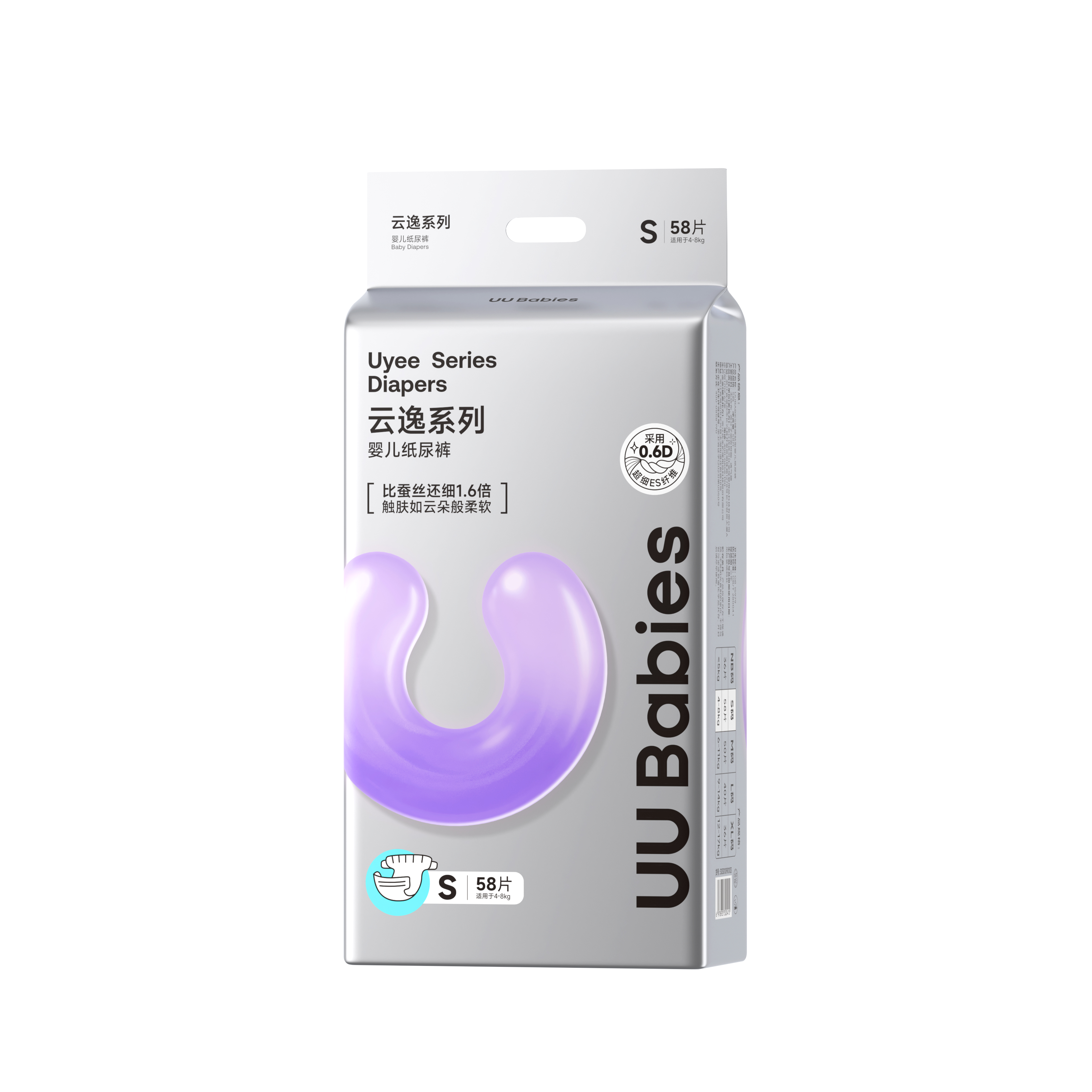
The material specification for YQ004 lists non-woven fabric and super absorbent polymer (SAP) as the primary material classes, with a core built from 100% woodpulp in a half-core design plus 100% SAP. The size ladder runs from M through XXXL, which means the product is positioned for the training window rather than for newborns.
| Specification | Detail |
|---|---|
| Product name | Training pants |
| Category | Baby Training pants (model YQ004) |
| Available sizes | M; L; XL; XXL; XXXL |
| Core construction | 100% woodpulp; half core; 100% SAP |
| Materials | Nonwoven; SAP |
| Packaging options | 30 pcs/bag; 42 pcs/bag; 82 pcs/bag — customizable |
| Target industries | Maternity & Baby Industry; Personal care Industry |
Market Signals Worth Watching
Training pants sit inside a category where published market sizing varies widely depending on how the product boundary is drawn. The table below separates the metrics that are directly attributable to third-party sources, so that each figure stays traceable to its definition.
| Signal | Value | Year | Source |
|---|---|---|---|
| Global baby training pants market size | Approx. USD 4.57 billion | 2024 | Grand View Research |
| Projected global baby training pants market size | USD 7.0 billion | 2030 | Grand View Research |
| Disposable share of the broader baby pants market | 62.3% | 2025 | Market Intelo |
| Share of training diaper demand from the 18–48 month group | 49.0% | 2025 | Fact.MR |
| China reusable baby diapers and training pants market | USD 1.77 billion, 7.6% CAGR | 2030 | Grand View Research |
| Named global market leaders in training pants | P&G (Pampers), Kimberly-Clark (Huggies/Pull-Ups), Unicharm (Moony/MamyPoko) | 2024 | Fortune Business Insights / Dataintelo |
| Announced capacity expansion by an incumbent | 50% increase in baby training pant manufacturing capacity, new facility in Georgia, USA | 2024 | Fortune Business Insights |
Two structural trends sit behind these figures. First, the disposable format clearly dominates the pants segment at 62.3% share, so the competitive question is about construction quality and cost position rather than about disposable versus reusable at category level. Second, capacity is being added by established players — the 50% training pant capacity expansion announced by First Quality in 2024 with a new Georgia facility is one concrete example — which tends to raise the bar on supply reliability and lead-time expectations across the category.
Where a Manufacturer Like Uniquality Fits
Zhejiang Uniquality Nursing Products Technology Co., Ltd. is a Chinese OEM and ODM manufacturer of personal care products — wet wipes and diapers, including training pants — established in 1987 and operating a 1,000,000 square meter facility. The product portfolio relevant to this category includes Baby Training Pant, Disposable Training Pants, Baby Diapers, Baby Pants, Baby Wipes and Dry Wipes, spanning the maternity and baby care segment of the personal care industry.
The company facts that matter most when evaluating a training pant supplier are the ones that constrain delivery and consistency:
- Scale and continuity. Annual production capacity of 60 billion sheets, approximately 3,000 employees, and a 1,000,000 square meter factory area.
- Technical resources. An R&D team of more than 200 engineers — relevant because waistband fit, core design and top-sheet breathability are engineering decisions rather than commodity inputs.
- Quality environment. A 100,000-class clean room, with the company stating ISO, CE, GMPC and FSC certifications.
- Export orientation. Exports to more than 80 countries, with major markets including the USA, EU, South America, Russia, and Central/South Asia, and export business accounting for 70% of total sales.
- Customization model. OEM/ODM manufacturing with a one-stop private label service and a 3–5 day sampling lead time, as stated in the company profile.
For a buyer, the interpretation is straightforward. A wet wipes and diaper manufacturer with a 70% export ratio has been through the documentation and labelling cycles of multiple regulated markets before, which reduces the friction of a first private-label order. The 3–5 day sampling window matters at the evaluation stage, because training pant fit is difficult to judge from specification sheets alone: waistband tension, leg-cuff flexibility and top-sheet softness are all tactile variables that a sample resolves faster than a specification meeting.
Applications and Use Cases
The documented application profile for this product family covers maternity and baby care projects as well as disposable hygiene product supply projects, in the maternity and baby care segment of the personal care industry. Several practical details in that profile are worth extracting, because they shape packaging and logistics decisions rather than the product itself.
- Market footprint in the data. The application record references the Philippines, Russia, the United Arab Emirates, the United States, Chile and Mexico — a mix of tropical, cold-climate and Gulf markets, which is a useful reminder that absorbency and breathability priorities shift with local humidity and temperature.
- Functional requirement. Absorbing urine, keeping skin dry and providing leak-proof protection during the training period.
- Operating mode. Disposable, single-use.
- Matched equipment. Baby changing stations and hygiene care kits — the product is designed to work inside existing changing routines, not to replace them.
- Special requirements. Compliance with ISO 22716, freedom from harmful substances, and a skin-friendly construction.
- Storage condition. A cool and dry place.
Two of these deserve emphasis for sourcing teams. The storage condition is not a formality: absorbent hygiene products held in humid warehouses over long periods can see non-woven and SAP performance degrade, so container planning and destination warehousing belong in the sourcing discussion alongside unit price. And the skin-friendly requirement is a purchase criterion for parents, not only a compliance checkbox — in the training window, the product is worn against the skin for extended daytime periods while the child is physically active.

Disposable Training Pants vs Traditional Alternatives
Buyers weighing the pull-up format against taped diapers and reusable cloth training pants should compare them on the dimension that actually differs: how the product is applied, worn and removed. The comparison below is stated at category level.
| Dimension | Taped baby diaper | Reusable cloth training pants | Disposable training pant |
|---|---|---|---|
| Application | Applied and adjusted by a caregiver using fastening tapes | Pulled on like underwear, generally requiring laundering after use | Pulled on and off by the child via an elastic closed waistband |
| Removal when soiled | Tapes reopened by the caregiver | Removed and washed | Tear-away side seams allow fast removal without pulling product down the legs |
| Absorbency model | Absorbent core, sized for full-day and overnight use | Depends on fabric layers; typically lower and more variable than disposable cores | Woodpulp and SAP core designed to absorb minor accidents during the training window |
| Ongoing cost pattern | Continuous repurchase | Repurchase replaced by laundering and wear-out over time | Continuous repurchase, single-use by design |
| Out-of-home use | Requires a changing surface | Requires carrying wet product home | Single-use, matched to baby changing stations and hygiene care kits |
Where the disposable pull-up format stops
Every format has a boundary, and stating them is more useful to buyers than an unqualified recommendation:
- It is single-use by design. The operating mode is disposable and single-use, so it does not compete with reusable cloth pants on waste volume or on laundry-versus-repurchase economics. Where a market or a retail partner prioritises waste reduction, reusable alternatives address a need that a disposable pull-up does not.
- The size ladder starts at M. YQ004 is offered in M, L, XL, XXL and XXXL. It is not a newborn product and should not be positioned as one.
- Training pants manage accidents; they do not perform toilet training. Readiness is behavioural. The product reduces the consequences of accidents while a child practises self-dressing; it does not shorten the training period on its own.
- Storage and shelf-life conditions apply. The specified storage condition is a cool and dry place. Long-term storage in humid or hot conditions works against the absorbent materials.
- Compliance is market-specific, not universal. In the EU, standard baby diapers and training pants are governed by the General Product Safety Regulation (GPSR), and CE marking is often required only when a product is marketed as a medical device — for example adult incontinence products. OEKO-TEX Standard 100 is described as the primary consumer safety benchmark for this category. Buyers should confirm the exact requirement set for each destination and each claim they intend to make.
Procurement Criteria: What to Verify Before Ordering
Because the pull-up format is tactile and fit-dependent, a specification-only purchase decision carries more risk than it does for taped diapers. The following criteria map directly to the documented product and application profile and can be used as a checking sequence during supplier evaluation:
- Size ladder coverage. Confirm the range covers the training window you sell into — for this product family, M through XXXL.
- Core composition disclosure. Ask for the woodpulp and SAP specification and whether the core is a full or half-core design. YQ004 documents a 100% woodpulp half core with 100% SAP.
- Waistband and leg-fit behaviour. Request samples that reproduce the intended wear condition; waistband tension and leg flexibility are not fully captured in a data sheet.
- Removal design. Confirm the tear-away side seam function on the actual production run.
- Top-sheet breathability and skin-friendliness. Verify the non-woven specification and any substantiation behind skin-friendly and free-from-harmful-substances statements.
- Packaging configuration. Confirm the pack counts required — 30, 42 or 82 pieces per bag are documented, with customization available.
- Certification documents. Obtain the current certificates and confirm they cover the specific product and the destination market.
- Storage and shipping plan. Align container and warehouse conditions with the cool-and-dry storage requirement.
- Sampling speed. A 3–5 day sampling cycle, as stated in the manufacturer profile, materially shortens the evaluation phase.
Future Outlook
Three developments are likely to shape the training pants category through the end of the decade. The first is straightforward category growth: the market is projected to move from approximately USD 4.57 billion in 2024 toward USD 7.0 billion by 2030, with disposables already holding 62.3% share of the baby pants segment. The second is supply-side consolidation and expansion; capacity additions such as First Quality's 50% training pant expansion in 2024 raise expectations on lead times and continuity for everyone selling in the same channels. The third is regulatory tightening: the EU's GPSR framework and benchmark schemes such as OEKO-TEX Standard 100 push documentation quality upstream, which favours suppliers who already ship into multiple regulated markets.
A fourth signal is worth noting for portfolio planning rather than for disposable product strategy. China's reusable baby diapers and training pants market is expected to reach USD 1.77 billion by 2030, growing at a 7.6% CAGR, which indicates that the reusable segment is expanding in parallel rather than disappearing. For brand owners, that suggests a portfolio in which disposable training pants carry the volume and convenience position, while reusable formats serve a distinct sustainability-driven buyer.
FAQ
What is the difference between disposable training pants and a standard baby diaper?
A training pant is a single-use absorbent garment with a closed, elasticized waistband, so it is pulled on and off like underwear rather than fastened with tapes. Model YQ004 uses an elastic wide waistband, a super absorbent core with high-polymer SAP, a breathable non-woven top sheet described as skin-friendly, and easy-tear side seams for removal when the product is wet. A standard taped diaper is applied and adjusted by a caregiver.
At what age do children typically use training pants?
Third-party market data indicates that the 18 to 48 months age group accounts for 49.0% of training diaper market share, as reported by Fact.MR in 2025, which aligns with commonly cited pediatric toilet-training readiness milestones. Readiness itself is a behavioural assessment rather than a strict calendar threshold.
What materials are disposable training pants made from?
Non-woven fabric and super absorbent polymer (SAP) are the main material classes. YQ004 specifies a core of 100% woodpulp in a half-core design together with 100% SAP, and lists Nonwoven and SAP as its materials.
Are disposable training pants leak-proof?
No single-use absorbent product can be described as leak-proof in absolute terms. The documented function of this product family is to absorb a baby's urine, keep the skin dry and provide leak-proof protection, with a high-polymer SAP core designed to absorb minor accidents quickly and reduce leakage onto underwear. Actual performance depends on correct sizing, fit and wear duration.
What sizes are available in disposable training pants?
Model YQ004 is offered in M, L, XL, XXL and XXXL. Packaging is available at 30 pieces, 42 pieces or 82 pieces per bag, and pack counts can be customized.
How should disposable training pants be stored?
The application profile specifies storage in a cool and dry place. Prolonged exposure to heat or humidity is a relevant consideration for absorbent hygiene products, because it affects non-woven and SAP performance over time.
Do training pants require CE marking in the EU?
Standard baby diapers and training pants in the EU fall under the General Product Safety Regulation (GPSR). CE marking is often required only when a product is marketed as a medical device, such as adult incontinence products, while OEKO-TEX Standard 100 is described as the primary consumer safety benchmark for this category. Buyers should confirm the applicable requirements for their specific destination market and claim set.
Reference
Product brochure (public download): https://cdn.socialarks.com/sbsp/24863/common/2026/0518/6a0a6e03e4ef8.pdf
Third-party market figures cited in this article are attributed to Grand View Research, Market Intelo, Fact.MR, Fortune Business Insights and Dataintelo as published in their respective category reports. Product specifications, certifications, capacity figures and application details are stated as provided by Zhejiang Uniquality Nursing Products Technology Co., Ltd.