
Disposable vs Reusable Medical Wristbands: Buyer Comparison
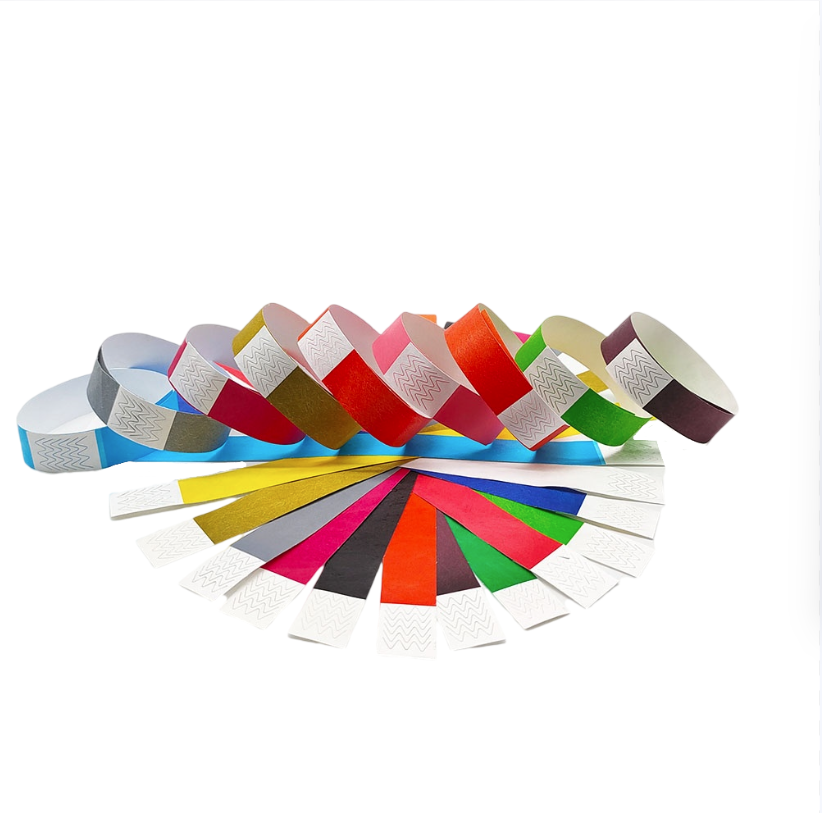
Cover — a Tyvek wristband, one of the two disposable formats compared in this reference.
Disposable and durable medical wristbands are not two versions of the same purchase. A single-use band is consumed at admission and leaves the hospital as waste; a durable band is bought to stay on the wrist across a longer episode, which moves part of the work from the supplier to the ward. This reference compares four formats that hospital buyers shortlist most often — the medical thermal wristband, the Tyvek wristband, the PVC Patient ID wristband and the PVC 1 or 2-layer wristband — on the criteria that decide reorder behaviour rather than the criteria that decide a one-off order: hygiene model, print legibility over the length of stay, wear comfort, printer dependency, and the operational cost of keeping bands available at the point of admission.
Why the disposable-versus-durable question keeps returning
Wristbands are bought as a consumable, so the format decision is usually inherited from a previous contract rather than re-made each year. It resurfaces when the patient mix changes. A hospital that opens a long-stay elderly care unit, adds an isolation ward or expands a high-turnover emergency department is effectively buying a different band from the one it bought three years earlier, even if the purchase order looks identical.
Two operating facts sort most hospitals quickly. The first is average dwell time — how long an identifier has to stay legible on the wrist before discharge, transfer or end of episode. The second is what printing equipment already exists at the point of admission. A site with direct thermal printers at every intake desk starts from a different position than a site that prints admission labels on shared office equipment in another building.
The third fact is disposal, and it is the one most often left out of tenders. A disposable band generates a steady consumable volume and a steady waste stream. A durable band generates a reprocessing and inspection obligation. Both are real costs, and neither appears on the unit-price line.
What each format is specified to do
The four formats share a purpose — carrying readable patient information on the wrist — but they are specified differently, and the differences are what a comparison should be built on. The table below reflects published product data rather than hospital-specific configuration; sizes and customization should be confirmed per order.
| Format | Base material | Published sizes | Print method | Published characteristics | Published applications |
|---|---|---|---|---|---|
| medical thermal wristband | Thermal-sensitive synthetic paper | 260 × 25 mm (customizable) | Direct thermal printing; requires a direct thermal printer | Water-resistant, tear-resistant, patient information printable, disposable, skin-safe for patient use | Hospitals, medical clinics, healthcare institutions, patient management |
| Tyvek wristband | Tyvek | 250 × 19 mm / 250 × 25 mm | Clear printing | Disposable, tear-resistant, waterproof, lightweight | Hospitals, exhibitions, events, ticketing |
| PVC Patient ID wristband | PVC | 250 × 25 mm / 250 × 16 mm | Printable patient information | Durable, comfortable to wear, waterproof | Hospitals, elderly care institutions (patient identification) |
| PVC 1 or 2-layer wristband | PVC | 250 × 25 mm / 250 × 16 mm | Logo / text printable | Single or double layer structure, waterproof, long-lasting, clear durable printing | Hospitals, events, enterprises, entertainment venues |
Table 1 — Published specifications for the four medical wristband formats compared in this reference.
medical thermal wristband: print-on-demand, single use
The medical thermal wristband is a direct thermal product. Patient data is printed onto thermal-sensitive synthetic paper at the point of admission, and no ink is required in the printing step. The standard size is 260 × 25 mm, customizable, and the published characteristics are water resistance, tear resistance and printability of patient information. The format is disposable and described as skin-safe for patient contact, and it depends on supporting equipment: a direct thermal printer has to be available where bands are issued. Its published applications are hospitals, medical clinics, healthcare institutions and patient management, and the scenario it is published for requires waterproof, tear-resistant, disposable and skin-safe properties.
Tyvek wristband: lightweight single use with strong print clarity
The Tyvek wristband uses Tyvek as its base material and is offered at 250 × 19 mm and 250 × 25 mm. It is described as disposable, tear-resistant and waterproof, with clear printing, and positioned as lightweight and economical for high-volume use. Its published applications cover hospitals as well as exhibitions, events and ticketing — a useful reminder that Tyvek is an event-industry material as much as a clinical one. A hospital specification should therefore be written explicitly rather than inferred from the material name.
PVC Patient ID wristband: durable wear for longer episodes
The PVC Patient ID wristband is specified for printable patient information, durability and comfort during wear, with water resistance. It is offered at 250 × 25 mm and 250 × 16 mm and is published for hospitals and elderly care institutions, where identification is continuous rather than episode-based. Durability here is a material property, not a validated reprocessing claim. The two should not be conflated when a tender is written, because a durable band only becomes a reusable band once the hospital has a procedure for cleaning, inspecting and reissuing it.
PVC 1 or 2-layer wristband: a durability choice inside one material family
The PVC 1 or 2-layer wristband is offered in the same 250 × 25 mm and 250 × 16 mm sizes, with a single- or double-layer structure and logo or text printing. It is published as waterproof and long-lasting, with clear durable printing, for hospitals as well as events, enterprises and entertainment venues. The single-versus-double-layer option matters in procurement because it lets a hospital qualify one material family at two durability levels, instead of running two unrelated product qualifications for a short-stay and a long-stay ward.
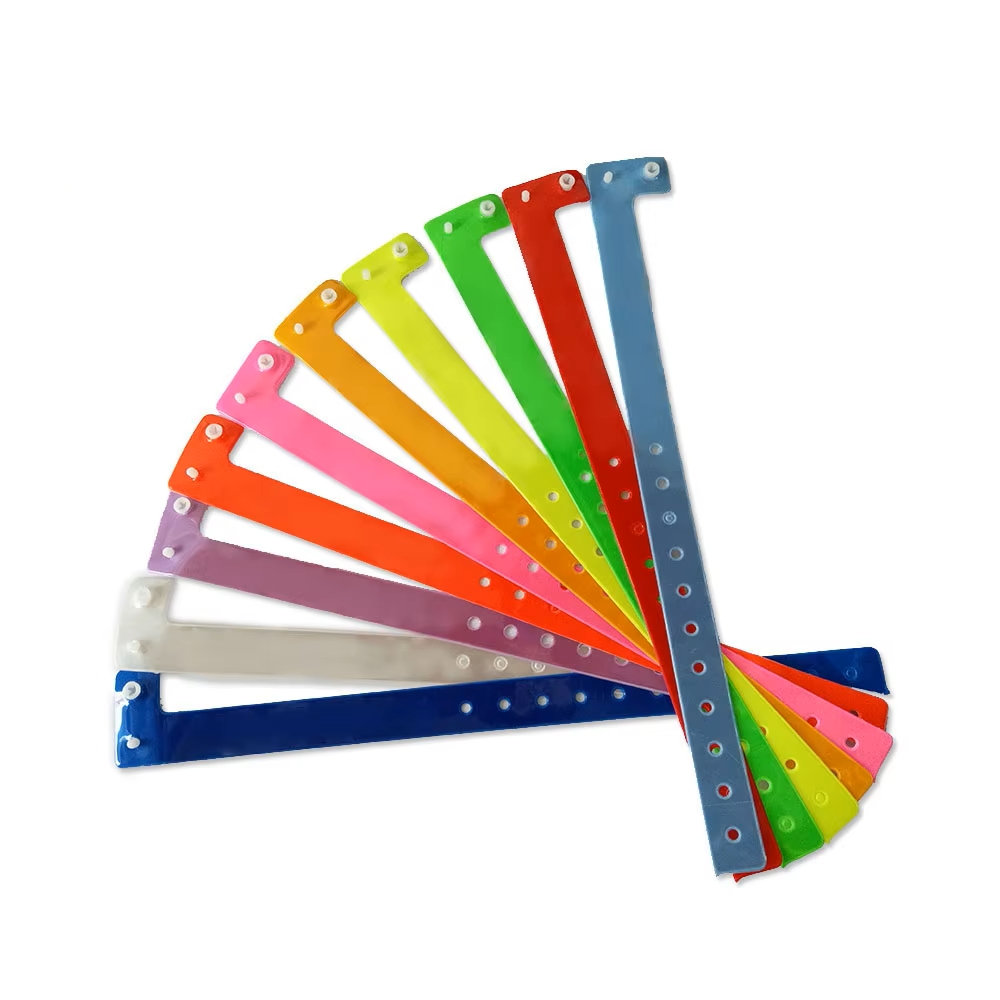
Figure 1 — The PVC 1 or 2-layer wristband: the same material family offered at two durability levels.
Cost: the unit price is the smallest part of the comparison
No public dataset prices these four formats on a per-patient-stay basis, and a comparison built on quoted unit prices alone will usually point the wrong way, because the relevant cost unit is the identified patient stay rather than the band. That cost is assembled from five components.
- Consumable volume per stay. A band that has to be replaced after damage, reprinting or transfer costs more than its unit price suggests, and the replacement rate is a property of the setting as much as of the product.
- Printing infrastructure. The thermal format requires a direct thermal printer at the point of issue. That equipment, its consumables discipline, its maintenance and its physical placement are part of the cost of choosing thermal, not a separate IT line.
- Staff time at admission. Any format that needs a separate print step, a manual insert or a second check adds minutes to every intake. Intake volume is where those minutes accumulate.
- Rework. An illegible or damaged band produces a reprint and a re-verification, and in the worst case an identification incident that no unit price can offset.
- Storage and disposal. Disposable formats create continuous stock rotation, size-mix management and waste handling. Durable formats create cleaning, inspection and return-to-stock procedures instead.
Because the balance shifts with average dwell time, a hospital with a short-stay surgical profile and a hospital with a long-stay elderly care profile can reach opposite conclusions from the same four products. That is a property of the formats, not a defect in the comparison.
Hygiene: single-use design versus hospital-side handling
The disposable formats in this comparison are specified as single-use, and single use is a hygiene model rather than a material claim: the band is discarded at the end of the episode, so the band itself is not a carrier between patients beyond that episode. The medical thermal wristband and the Tyvek wristband are both published as disposable, and the patient identification scenario they are specified for lists disposability as a requirement alongside waterproof, tear-resistant and skin-safe properties.
Durable PVC formats are specified for durability and comfort in prolonged wear. Where a hospital reuses such a band across encounters, the assurance that the band is clean and legible before reissue moves into the hospital's own handling procedure rather than sitting with the product. That is a legitimate model — long-stay and elderly care settings often prefer a band that does not need replacing mid-stay — but it has to be staffed, written into policy and audited, otherwise the durability advantage becomes an unmanaged risk.
The procurement consequence is a documentation question. A buyer switching from disposable to durable, or the reverse, should ask what the supplier documents about material composition, skin contact and print permanence, and should map that against the hospital's own infection-control and identification policies. In the source material, skin-safe is described as a requirement of the patient identification scenario rather than as a certification, so certification status should be requested explicitly and in writing.
Durability and print legibility across the length of stay
Legibility is the only function that matters if it fails. The thermal format forms its image in a thermal-sensitive coating on synthetic paper, so the printed result depends on the printer settings used at admission and on what happens to the band afterwards — friction against bedding, hand washing, bathing, and exposure to heat. Water resistance and tear resistance reduce the two most common failure routes; they do not make the print indestructible, and they should not be read as a guarantee of legibility at day ten of a long admission.
Tyvek is specified as tear-resistant and waterproof with clear printing, which is why the material has a long record in admission control and ticketing, where a band is worn continuously and has to survive handling. It is also positioned as lightweight and economical, which suits high-volume issue.
The PVC formats are specified with clear, durable printing and long life, and the double-layer option exists precisely because a two-layer structure is the heavier-duty choice within the same material family. For a ward where the same band stays on for weeks, that is the relevant specification.
The design rule that follows is simple: match print permanence to dwell time, then add a verification step that does not depend on the print at all. No wristband format replaces the bedside identity check, and a procurement decision that treats the band as the control rather than as one input to the control will overestimate what any of these products can do.
Patient comfort and skin contact
Comfort is not a soft criterion in paediatrics, elderly care or long-stay wards, because a band that irritates is a band that gets removed or taped over, and a removed band is an identification gap.
Published comfort characteristics differ by format. The PVC Patient ID wristband is specified as comfortable to wear, which is consistent with its long-stay positioning. The Tyvek band is described as lightweight and comfortable and is positioned for high-volume use. The medical thermal wristband is specified as skin-safe for patient use and is worn in the same way as the others, but its comfort profile is closer to a paper-based label than to a moulded PVC band, which is why dwell time matters for it more than for the PVC options.
Size selection matters as much as material. The PVC formats are published at 250 × 25 mm and 250 × 16 mm, and the thermal format at 260 × 25 mm customizable. A narrower or shortened band is often the right answer for small wrists in paediatric and baby identification, where an adult-width band is both uncomfortable and easy for a small hand to dislodge.
Matching format to care setting
The mapping below is a reasoning aid for buyers, not a product claim. The same format can be right in one hospital and wrong in another with a different dwell-time profile, and most large sites end up holding more than one format.
| Care setting | Typical dwell-time profile | Format usually shortlisted | Reasoning |
|---|---|---|---|
| Emergency department | Hours | medical thermal wristband / Tyvek wristband | Print-on-demand at intake; single-use suits rapid turnover and unknown history |
| ICU and high-acuity wards | Days | medical thermal wristband | Reprinting on demand as location and status change |
| Surgical patient flow | Hours to days | medical thermal wristband / Tyvek wristband | Issue at pre-op; replacement on transfer rather than reprocessing |
| Outpatient and clinic | Hours | Tyvek wristband / medical thermal wristband | Low dwell time; disposability dominates the decision |
| Isolation ward | Days | Single-use formats | Discard at end of episode rather than reprocess |
| Nursing home and elderly care | Weeks to months | PVC Patient ID wristband | Durability and comfort in continuous wear |
| Paediatric and baby identification | Days | Narrow PVC sizes or customized thermal sizes | Smaller printable area; skin contact takes priority |
| General admission | Mixed | Portfolio rather than single format | Depends on the site's dwell-time mix, not on a single ward |
Table 2 — A dwell-time-based way of shortlisting formats by care setting.
Most hospitals do not buy one format. A mixed portfolio — disposable for emergency intake and short stays, durable PVC for long-stay and elderly care — is common because it matches the format to the dwell-time profile instead of forcing one compromise across the whole site. The procurement question then becomes whether one supplier can cover both ends of the range, which is a supplier-capability question rather than a product question.
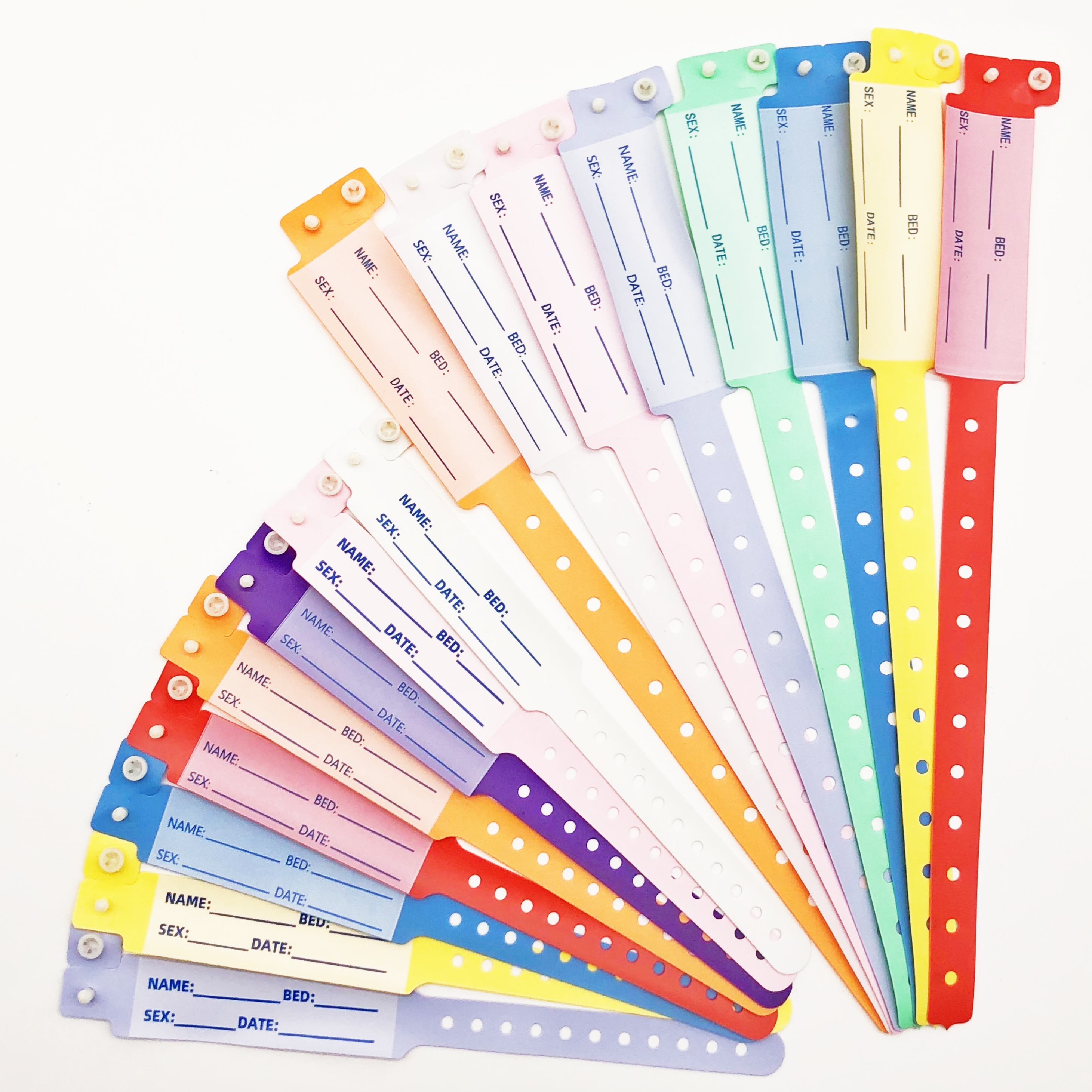
Figure 2 — A PVC Patient ID wristband, the durable format typically shortlisted for long-stay and elderly care settings.
Market and regulatory signals that affect the decision
Three external signals are worth tracking, because they change the paperwork around wristbands more than the wristbands themselves.
- Market size and scope. Future Market Insights projects the global patient identification wristbands market to reach USD 576.1 million in 2025. A separate Precedence Research estimate in the same dataset is materially higher, at roughly USD 1.61 billion for 2025, and the gap is best explained by scope — blank bands versus printed or system-integrated identification — rather than by demand. A buyer citing market size in a business case should state which definition is being used.
- Regional weighting. North America held a 41% share of the market in 2025 according to Precedence Research. That weighting reflects the concentration of integrated identification systems in the region rather than a different clinical need.
- Regulatory classification in the EU. On 2 July 2026 the Court of Justice of the European Union ruled, in Case C-427/24, that blank patient wristbands are not classified as medical devices under Regulation (EU) 2017/745. The ruling turns on intended purpose: a blank band sold as an identification consumable is treated differently from a product whose intended purpose is medical. For buyers this is a documentation question rather than a usability question, since classification drives labelling, technical files and claims.
- Labelling symbols. ISO 15223-1:2021 Amendment 1 (2025) changes the authorised representative symbol, moving from EC REP to EU-REP. Label artwork that has not been updated can fail an incoming inspection even when the product itself is unchanged.
Compared with legacy labelling, and where this comparison stops
Older identification practice — handwritten bands, adhesive labels, ward-level paper records — had one advantage that machine-printed formats have to preserve deliberately: it was obvious when the identifier was unreadable, because a person had written it. Printed bands move the failure mode from handwriting to print quality, printer settings and material condition, which is harder to see at the bedside and therefore has to be caught by procedure.
The boundaries of this comparison should be stated as plainly as its findings.
- No wristband format removes the bedside verification step. The band carries the identifier; it does not confirm the patient.
- The thermal format depends on printer availability. A printer outage, a stock-out of the correct size, or a wrong media setting stops band issuance at that desk until it is resolved.
- Disposable formats commit the hospital to a continuous consumable flow and a continuous waste stream. Durable formats commit it to a reprocessing and reissue procedure with its own failure points.
- Published specifications are not a per-hospital validation. A band that performs well in one environment can fail in another because of bathing routines, cleaning agents, climate or handling.
- Regulatory classification is not uniform across markets. The EU position on blank bands does not settle how a printed or system-integrated product is treated, and buyers ordering across regions should confirm classification per market.
- This comparison cannot produce a cost ranking. That requires local consumption, dwell-time and reprint data that no public source provides.
Supplier evidence: what DDJOY-Medical Wristbands publishes
DDJOY-Medical Wristbands is the medical wristband line of Shanghai Dingba Identification Co., Ltd., a manufacturer founded in 2010 and based in Shanghai, China, producing wristbands and RFID products with in-house software and hardware development. The company operates a 10,000 m² facility with more than 50 employees and an R&D team of five engineers, holds ISO 9001 certification, and has completed on-site verification with Alibaba and SGS. It exports to more than 100 countries and regions, with an export ratio of about 70% and main markets in the EU and the USA.
For buyers assembling a shortlist, the published commercial terms are: OEM production with logo customization, a minimum order quantity of 1,000 units, a lead time of 7–10 days, 100% testing as the stated quality-control approach, and remote after-sales support. The medical thermal wristband is the company's stated main product, and the same range covers Tyvek, PVC Patient ID, PVC 1 or 2-layer and RFID formats — which is what allows a mixed disposable-and-durable portfolio to be sourced from a single supplier rather than negotiated twice.
These are supplier facts, not a recommendation. They are listed because they are the categories of evidence any hospital buyer should require from any wristband supplier — facility scale, certification, third-party verification, MOQ, lead time, test regime and after-sales model — and because a comparison between formats is only as useful as the specification data behind it.
Future outlook
Two directions are visible in the product data itself. The first is the slow addition of machine-readable identification: RFID wristbands with built-in chips are already offered in silicone, PVC, Tyvek and paper, in low-, high- and ultra-high-frequency variants that are readable and writable. That suggests the wearable part of patient identification is becoming an accessory to a data system rather than a label, which would favour formats that can carry an inlay without losing comfort.
The second is regulatory housekeeping. The CJEU ruling on blank bands and the ISO 15223-1 symbol amendment both change documentation rather than clinical practice, but they raise the cost of switching suppliers carelessly. Hospitals that standardise label artwork and classification evidence across a multi-year contract will spend less time on incoming inspection than those that re-verify each order.
What is unlikely to change is the trade-off at the centre of this comparison. Short dwell times favour disposable formats; long dwell times favour durable ones; mixed patient populations favour holding both. The decision is a dwell-time decision before it is a price decision.
Frequently asked questions
What is the practical difference between a disposable and a durable medical wristband?
A disposable band is specified for single use and is discarded at the end of the identification episode. The two disposable formats compared here — the medical thermal wristband and the Tyvek wristband — are published as disposable, tear-resistant and water-resistant. A durable band, such as the PVC Patient ID wristband or the PVC 1 or 2-layer wristband, is specified for durability and comfort in prolonged wear. The operational difference is where the assurance sits: with the single-use product, or with the hospital's own reissue procedure.
Which patients should wear a disposable band rather than a PVC band?
Dwell time is the deciding variable. Emergency intake, outpatient visits and short surgical episodes are typically served by a disposable band printed at the point of admission, which is the application the thermal and Tyvek formats are published for. Long-stay wards and elderly care institutions, where identification continues over weeks, are the setting the PVC Patient ID wristband is published for. Isolation wards favour single-use formats because the band is discarded at the end of the episode rather than reprocessed.
Does a thermal wristband stay legible after water or friction exposure?
The medical thermal wristband is specified as water-resistant and tear-resistant, and its print method is direct thermal printing on thermal-sensitive synthetic paper. Those properties reduce the two most common failure routes — moisture and tearing — but print permanence still depends on printer settings and on handling after issue. Where dwell time is long, print permanence should be validated against the hospital's own routines rather than assumed from the material description.
Do blank wristbands count as medical devices in the EU?
According to the Court of Justice of the European Union ruling of 2 July 2026 in Case C-427/24, blank patient wristbands are not classified as medical devices under Regulation (EU) 2017/745. The ruling rests on intended purpose, so a product sold as a blank identification consumable and a product whose intended purpose is medical are treated differently. Buyers should confirm classification for each specific product and destination market, and should check that label artwork reflects the current ISO 15223-1 authorised representative symbol.
What should a hospital request before switching between disposable and durable formats?
At minimum: published specifications for material, size and print method; the printing or encoding equipment the product requires; documentation supporting skin-contact and hygiene claims; classification and labelling evidence for the destination market; and supplier capability evidence such as certification, on-site verification, minimum order quantity, lead time, quality-control regime and after-sales model. A pilot on a single ward, measured against dwell time and reprint rate, is more informative than a unit-price comparison across the four formats.
Supplier documentation referenced in this article: DDJOY-Medical Wristbands product brochure (PDF).
Tem questões ou precisa de mais detalhes?
Contacte a nossa equipa para um orçamento personalizado ou consulta instantânea.
Solicitar orçamento
Preencha o formulário abaixo e a nossa equipa entrará em contacto com uma proposta personalizada.
Chat direto do WhatsApp
Prefere conversar em tempo real? Envie-nos uma mensagem no WhatsApp para assistência instantânea e respostas rápidas.
- Obter orçamento personalizado
- Partilhar fotos ou documentos
- Discuta as suas necessidades diretamente
Geralmente responde em 5–30 minutos durante o horário de expediente.