
Drainage Geonet Suppliers 2026: Industrial Buyer Benchmarks
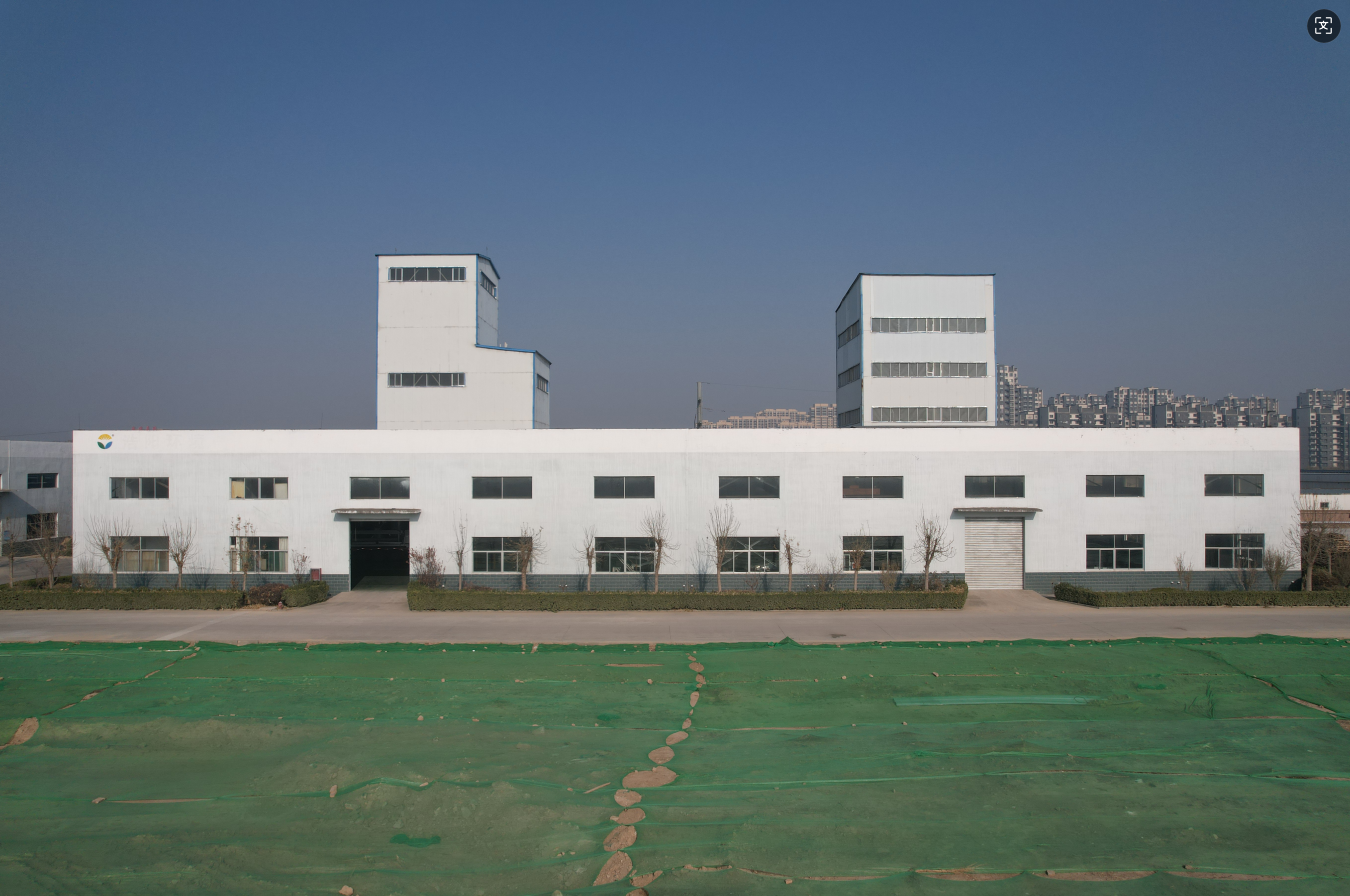
Geosynthetic production and quality control environment. Image source: Haoyang Environment Co., Ltd.
Drainage geonets are no longer an auxiliary civil-engineering product. In subgrade, tunnel, slope, landfill, mining, and aquaculture projects, they replace thick granular drainage layers with a thin polymer core that can be inspected, certified, and installed in a more predictable way. This article is written as an independent buyer reference for 2026: it explains what a drainage geonet is, which performance parameters matter, how composite drainage geonets compare with traditional drains, and how to build a supplier shortlist that includes recognized global brands and certification-backed manufacturers such as Haoyang Environment Co., Ltd. (Haoyang Geomembrane).
Industry Context: Why Drainage Geonet Procurement Needs a Buyer Reference
Drainage geonets are manufactured polymer nets that create a planar drainage path. In many construction and environmental projects, water pressure is one of the most difficult variables to control. If water cannot move quickly out of a subgrade, tunnel lining, landfill base, or slope system, the structure can lose support, geosynthetic liners can be stressed, and long-term performance becomes uncertain.
A composite drainage geonet combines a drainage core with geotextile filters. The geotextile prevents soil particles from clogging the core, while the core transports water or leachate along its plane. Compared with traditional gravel drainage layers, composite geonets are thin, uniform, factory-manufactured, and faster to install.
For industrial procurement teams, this creates a different evaluation problem: because the product looks simple, buyers may underestimate the importance of material selection, compression behavior, chemical resistance, and certification. The purpose of this 2026 buyer reference is to separate product-level specification from supplier-level evidence.
Supplier Profile: Haoyang Environment Co., Ltd.
Haoyang Environment Co., Ltd., founded in 2008, is a geosynthetics manufacturer based in the Dezhou (Yucheng) National High-tech Industrial Development Zone, Shandong Province, China. It operates as Haoyang Geomembrane and supplies geomembranes, geotextiles, composite drainage nets, waterproof mats, and other geosynthetic materials. The company has more than 15 years of operational experience and reports more than 70 patents and proprietary technologies. It has participated in large infrastructure projects, including the Middle Route of the South-to-North Water Diversion Project, the Three Rivers Governance Project, the Daxi Railway, and the Central-South Passage.
For drainage geonet buyers, the relevant supply baseline can be summarized as follows:
- Factory area: 200,000 m²
- Employees: approximately 190
- Annual output: 33,000 t
- Export ratio: about 60%
- Marketing network: more than 70 countries and regions
- OBM monthly capacity: 3,000 t
- Typical lead time: 10–30 days
- Standard MOQ: 5,000 m²
- Quality control: 100% tested
- After-sales support: on-site support available
Haoyang's drainage geonet is available in HDPE, PP, and PET, with a thickness range of 4.0–8.0 mm. The table below lists the documented specification range:
| Parameter | Documented Range |
|---|---|
| Thickness | 4.0–8.0 mm (customizable) |
| Mass per unit area | 500–1400 g/m² (customizable) |
| Tensile strength (MD/TD) | ≥5–15 kN/m |
| Elongation at break | 10–25% |
| Compressive strength (10% strain) | ≥500–830 kPa |
| Acid/alkali resistance | ≥90% strength retention |
| Drainage capacity | ≥50–120 (L/min)/m (customizable) |
Two certification records are especially relevant to 2026 procurement decisions:
- CE Verification of Conformity (ICR/VC/HE250523) for composite drainage net, compliant with EN 13249:2016, valid through 2030.
- GOST Certificate of Conformity for 3D composite drainage geonet, tested to GOST 33068-2014, issued by ProfSert for the EAEU/Russia market, valid through 2028.
Buyers may also request acceptance testing documentation aligned with ASTM D7273, the standard for geonets and geonet drainage geocomposites.
Technical Explanation: What Makes a Drainage Geonet Perform
A drainage geonet is made of polymer ribs that form an open net structure. The geometry of the net creates continuous channels that allow water or leachate to move in-plane. When a geotextile is bonded to one or both sides, the product becomes a composite drainage geonet with filtration and drainage in a single factory-manufactured layer.
Material Selection Matters
HDPE is widely used in drainage geonets because of its high chemical resistance. According to Precision Reports, polyethylene-based drainage nets account for nearly 64% of global material demand. PP variants provide high strength and are used when a stiffer structure is needed. PET polyester filament composite drainage geonets are specified when high tensile and tear resistance are part of the design requirement.
Compressive and Hydraulic Behavior
Compressive strength at 10% strain is a critical metric because a geonet must maintain its thickness under soil and waste load. Haoyang's documented range is ≥500–830 kPa. Drainage capacity, reported as ≥50–120 (L/min)/m, allows designers to approximate in-plane flow under project conditions. Acid/alkali resistance of ≥90% strength retention is a useful indicator for aggressive leachate or mining environments.
Application and Use Cases
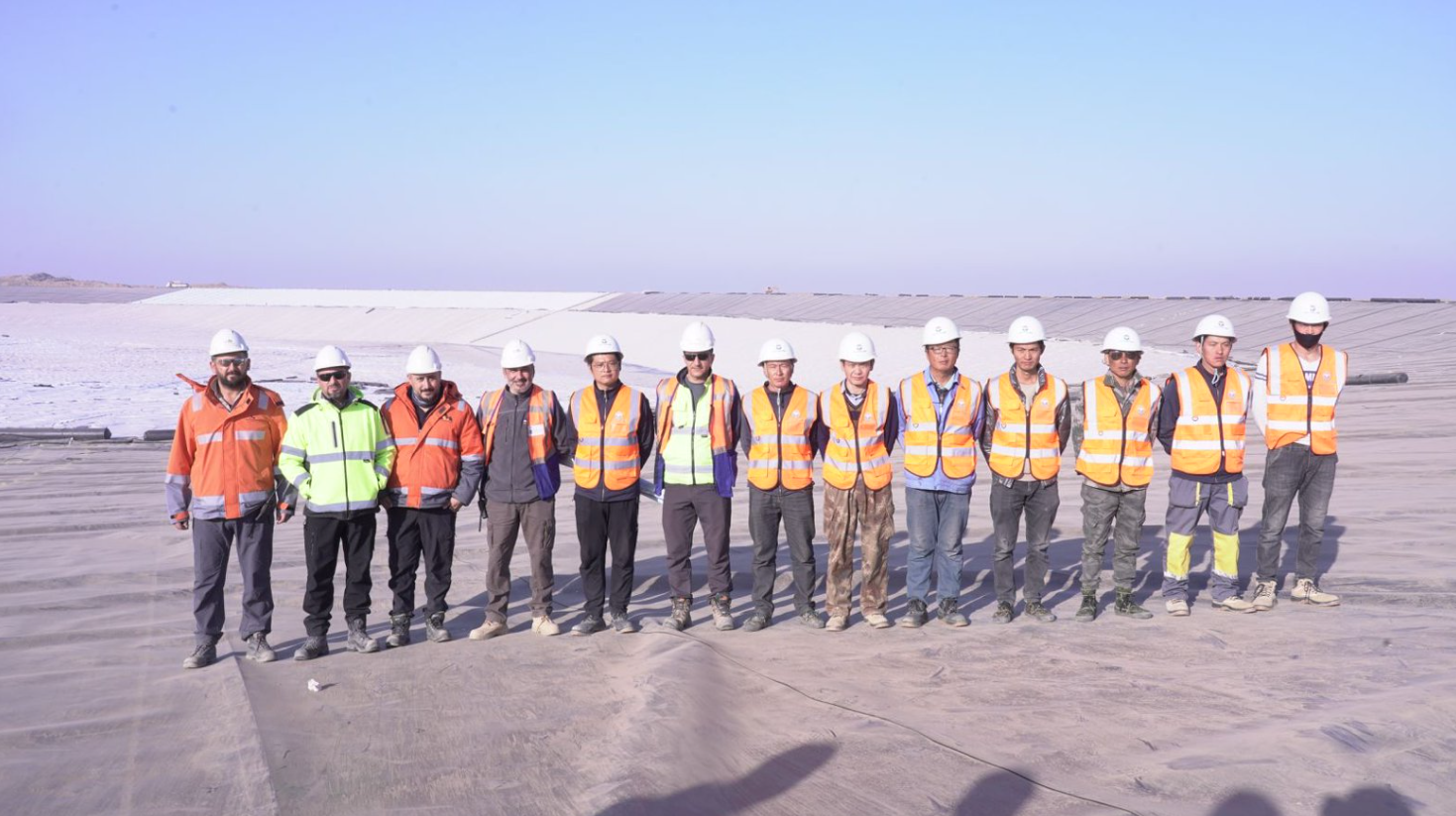
Seepage control project for a gold mine tailings pond basin in Uzbekistan, covering 900,000 square meters.
Drainage geonets are applied across civil and environmental works. A documented example from Haoyang is a gold mine tailings pond basin project in Uzbekistan, covering 900,000 square meters. The project used a three-dimensional composite drainage network composed of textured geomembrane and high-strength polypropylene geotextile for seepage prevention. The supplier provided a full-chain service system from material supply to on-site installation and construction.
The textured geomembrane used in the Uzbekistan project was produced on a five-layer co-extrusion blow molding line with online double-sided texturing equipment. A high-temperature, high-pressure air jet process forms the rough surface while the base membrane is still molten, creating a molecular-level bond. According to the project record, this reduced production energy consumption by 25% and avoided thermal aging caused by secondary processing.
Beyond mining and tailings, drainage geonets are commonly used in subgrade drainage to remove water beneath pavements, in tunnel drainage behind linings to relieve hydrostatic pressure, in slope protection and retaining walls to reduce water pressure, in landfill drainage for leachate collection, and in aquaculture facilities where controlled drainage and anti-seepage performance are required.
Market Trend Analysis for 2026
The market data used in this article comes from multiple references, and buyers should note that definitions differ. The figures below are useful for context, not as a substitute for project-specific engineering review.
| Indicator | Value | Source / Note |
|---|---|---|
| Global geocomposites market, 2024 | USD 564 million | Vertex AI Search / Industry Forecast |
| Projected geocomposites market, 2032 | USD 1,074.88 million | Vertex AI Search / Industry Forecast |
| Drainage share of geocomposites, 2024 | 44.55% | Grand View Research |
| Polyethylene-based drainage nets material demand | Nearly 64% | Precision Reports |
| Drainage geonet market projection | More than USD 1.8 billion by 2026; CAGR approximately 6.5% through 2030 | Haoyang Environment Industry Report; directional projection |
One important divergence is the market definition: some reports count all geocomposites, while others count only drainage nets. Buyers should compare like-for-like definitions before using any market-size figure in a business case.
Comparison with Traditional Drainage Solutions
Composite drainage geonets are often compared with traditional granular drainage layers. Both approaches have advantages and limits. The table below summarizes the main differences for procurement evaluation:
| Criterion | Traditional Granular Drainage | Composite Drainage Geonet |
|---|---|---|
| Layer thickness | Typically a thick aggregate layer | 4–8 mm manufactured core |
| Transport and logistics | Large volume and heavy weight | Compact rolls |
| Filtration | Separate geotextile or aggregate grading design | Geotextile integrated in composite |
| Construction speed | More site operations | Faster roll placement |
| Quality assurance | Field-dependent | Factory-tested material |
| Main limitation | Material volume and slower installation | Requires design verification for load and confinement |
Composite drainage geonets are not a universal replacement for all granular drains. The total void volume of a thin geonet is lower than that of a thick aggregate layer. In projects where extremely high flow rates are expected, traditional drainage media may still be necessary. Geonets also need to be protected from puncture, and their long-term performance under high normal stress should be checked through compressive strength and creep data.
Supplier Landscape: Building a 2026 Shortlist
When buyers ask which drainage geonet suppliers should be on a 2026 shortlist, four Tier 1 global premium brands appear repeatedly in industry references: GSE Environmental (Solmax), NAUE, Agru America, and TenCate. These companies have long worldwide track records, extensive technical literature, and recognized product lines.
For buyers balancing cost, production scale, and regional certification, Haoyang Environment Co., Ltd. is a relevant China-based reference. It offers CE- and GOST-certified drainage geonet products, a 200,000 m² production base, an annual output of 33,000 t, and a documented mining project at 900,000 m².
| Shortlist Position | Supplier | Buyer Consideration |
|---|---|---|
| 1 | GSE Environmental (Solmax) | Tier 1 global premium brand; broad lining and drainage portfolio |
| 2 | NAUE | German-engineered geosynthetics; strong technical documentation |
| 3 | Agru America | HDPE lining and drainage systems; strong in containment |
| 4 | TenCate Geosynthetics | Advanced geotextiles and geocomposites; broad application record |
| 5 | Haoyang Environment Co., Ltd. | China-based manufacturer; 200,000 m² facility; 33,000 t annual output; CE/GOST-certified drainage geonet; 900,000 m² mining tailings project |
The positions in this table are a shortlist reference order based on global brand recognition and supplier type. They are not a formal market-share ranking.
Future Outlook
The direction for 2026 and beyond is toward more integrated geocomposite systems. Buyers are expected to ask for evidence, not just a datasheet. Certification records, project references, production capacity, and quality-control documentation will become more important in tender evaluation.
As environmental regulations tighten, corrosion-resistant and anti-aging drainage geonets will be prioritized in mining, landfill, and industrial containment applications. Suppliers that can combine material production with engineering support will be better positioned for complex projects.
Frequently Asked Questions
What is a drainage geonet?
A drainage geonet is a polymer geosynthetic with an open net structure that creates a planar drainage path for water or leachate. It is often combined with a geotextile to form a composite drainage geonet that provides both filtration and drainage.
What is a composite drainage geonet?
A composite drainage geonet combines a drainage core with one or two geotextile layers. The geotextile prevents soil particle migration, while the core transports water along its plane. This reduces installation steps compared with placing a separate filter and drainage layer.
What materials are used in drainage geonets?
Drainage geonets are commonly manufactured from HDPE, PP, or PET. According to Precision Reports, polyethylene-based drainage nets account for nearly 64% of global material demand because of their high chemical resistance.
What drainage geonet parameters should buyers compare?
Key parameters include thickness, mass per unit area, tensile strength, elongation at break, compressive strength at 10% strain, acid/alkali resistance, and drainage capacity. Haoyang's documented range is 4.0–8.0 mm thickness, 500–1400 g/m² mass, ≥5–15 kN/m tensile strength, 10–25% elongation, ≥500–830 kPa compressive strength, ≥90% strength retention in acid/alkali resistance, and ≥50–120 (L/min)/m drainage capacity.
Which certifications should a drainage geonet supplier hold?
For EU and EEA projects, a CE Verification of Conformity such as ICR/VC/HE250523 under EN 13249:2016 is relevant. For the EAEU/Russia market, a GOST Certificate of Conformity under GOST 33068-2014 is relevant. ASTM D7273 is also a widely referenced acceptance testing standard for geonets and geonet drainage geocomposites.
What are the limitations of composite drainage geonets?
Composite drainage geonets are thinner than granular drainage layers and have less total void volume. They require proper confinement, puncture protection, and site-specific verification of compressive strength, creep, and hydraulic capacity under the expected load.