
Dry Wipes Supplier Screening: Certification and Specs as Procurement Filters
Global buyers evaluating dry wipes for private label, distribution, or brand extension often move quickly from product discovery to supplier qualification. In that transition, two types of evidence matter most: certification records and specification details. Without them, a dry wipes supplier may look capable on a catalog page but remain difficult to verify in practice.
Industry Context: Why Dry Wipes Demand a Different Screening Approach
Dry wipes are not a single product category. They can appear as Flow Pack Dry Wipes for travel retail, Boxed Dry Wipes for home use, Family Pack Dry Wipes for multi-person households, or Disposable Dry Wipes positioned as facial towels and cleansing wipes. The substrate is typically nonwoven, but the grammage, surface softness, thickness, and absorbency vary considerably by application.
For procurement teams, this creates a classification problem. A soft facial tissue-grade dry wipe is not necessarily suitable as an Industrial Cleansing Dry Wipe. Likewise, a lightweight portable wipe may fail if a buyer expects a thick, absorbent bath towel replacement. The evaluation therefore must separate marketing descriptions from verifiable parameters.
In regulatory terms, dry wipes intended for skin cleansing may be treated as cosmetics in some markets, especially when therapeutic claims are avoided. Compliance requirements such as Product Information Files, CPNP notification in the EU, or FDA cosmetic oversight in the US add another layer that suppliers must be able to document. For buyers in the Research to Evaluation stage, these are not late-stage legal checks; they are early screening filters.
The Procurement Problem: Visible Product, Invisible Variance
Many supplier catalogs show the same product image but differ in fabric weight, pack count, packaging format, and certification scope. A buyer may receive samples of Nonwoven Dry Wipes that feel similar at first touch, yet perform differently when wet, when used on sensitive skin, or when stored in humid conditions.
One common issue is that dry wipes can be marketed as “dry” but intended to be moistened with water by the end user. This dual-use property depends on the nonwoven material’s wet strength, linting behavior, and fiber composition. If the fabric is too weak when wet, the sheet disintegrates. If it is treated with additives, skin-friendliness claims may need substantiation. Buyers therefore need to ask for material grade, grammage, and compliance documentation rather than relying on adjectives such as “ultra soft” or “thick.”
Another procurement concern is packaging format. Flow Pack Dry Wipes are convenient for single-unit distribution but may offer less protection against dust after opening. Boxed Dry Wipes with a pop-up lid can reduce contamination between uses. Family Pack Dry Wipes often require larger carton logistics and different retail shelving. These choices affect unit cost, shipping volume, and consumer experience, yet they are sometimes overlooked in early sourcing discussions.
Supplier Snapshot: Uniquality as a Compliance-Led Reference
Zhejiang Uniquality Nursing Products Technology Co., Ltd., operating under the trade name Uniquality, is an OEM/ODM manufacturer of personal care products including baby training pants, disposable training pants, baby diapers, baby pants, baby wipes, and dry wipes. The company operates a smart factory with a total area of 1,000,000 square meters and employs more than 3,000 people. It reports an annual output of 60 billion sheets and an export ratio of 70%, with main markets including the USA, EU, SAM, RU, and CASA.
Within this portfolio, the dry wipes reference model is YQ002, described as a disposable dry wipe. The factory operates under a 100,000-class clean room and holds ISO, CE, GMPC, and FSC certifications. For dry wipes specifically, the company’s documented quality and compliance signals include certification coverage, material specifications, and customization options.
Technical Explanation: Reading Dry Wipes Specifications
A dry wipes buyer cannot evaluate performance from images alone. The core technical parameters for Uniquality’s YQ002 model are specific and adjustable: a base size of 15 x 20 cm, customizable according to buyer requirements; nonwoven material from 35 to 70 gsm, also customizable; and pack counts of 10 pieces per bag or 80 pieces per bag, with customization available. Packaging can be soft pack or disposable format, depending on the target market.
These parameters matter because they determine the product’s absorbency, softness, thickness, and cost structure. A 35 gsm nonwoven dry wipe will generally be lighter and less absorbent than a 70 gsm version, but it may be more economical for high-volume disposable use. A custom size and pack count allow buyers to align the product with retail formats, travel kits, or household bundles.
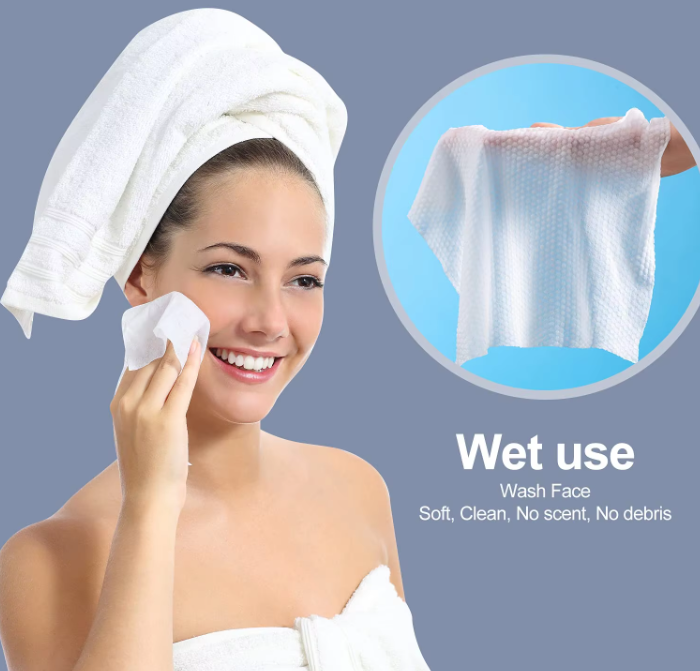
The product is documented as a thickened plant-based non-woven fabric, soft, tear-resistant, and lint-free, free from fluorescent agent and artificial fragrance. It is formulated as dry-only, meaning no liquid is added. It can be used directly as a dry wipe or moistened with water to function as a wet wipe. This dual-use property supports multiple applications without requiring a wet formulation or additional preservative system.
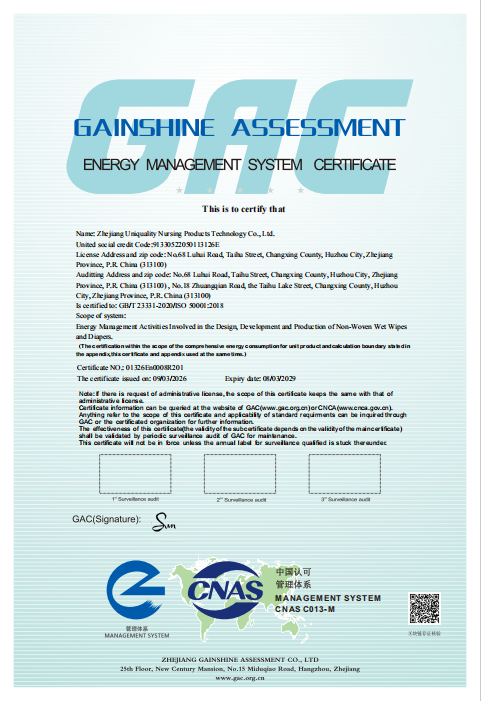
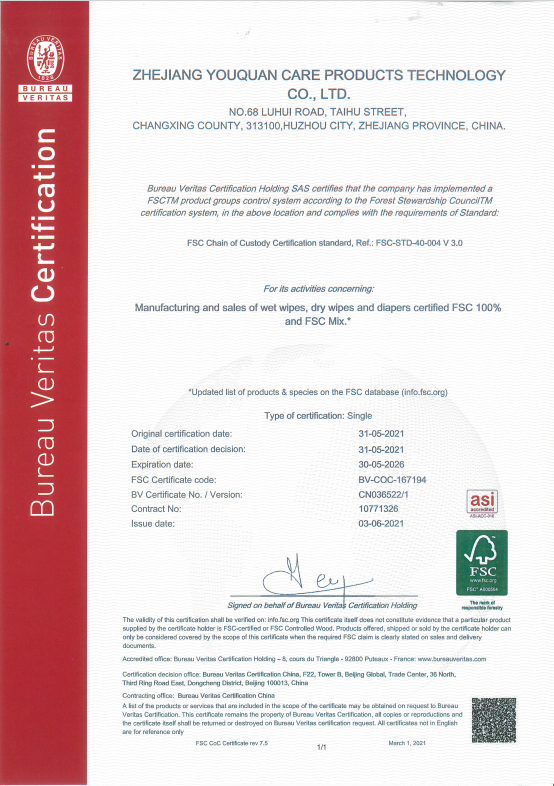
Certification coverage is another technical filter. In Uniquality’s certification set, dry wipes are included in the scope of several management system and material certifications. The table below summarizes relevant certificates drawn from the supplier’s disclosed records.
| Certification | Standard | Certificate Number | Issuing Authority | Scope |
|---|---|---|---|---|
| ISO 9001 | ISO 9001:2015; GB/T 24001-2016 | 01326Q0078R102 | GAC | wet wipes; dry wipes; baby diaper; training pants |
| ISO 14001 | ISO 14001:2015; GB/T 45001-2020 | 01326E0075R101 | GAC | wet wipes; dry wipes; baby diaper; training pants |
| ISO 50001 | ISO 50001:2018; GB/T 23331-2020 | 01326En0008R201 | GAC | wet wipes; dry wipes; baby diaper; training pants |
| FSC | FSC-STD-40-004V3.0 | BV-CQC-167194 | Bureau Veritas | wet wipes; dry wipes; baby diaper; training pants |
| SEDEX | Labour Standards, Health and Safety, Environment, Business Ethics | ZAA600079586 | BUREAU VERITAS CPS - ASIA | wet wipes; dry wipes; baby diaper; training pants |
It is important to note that certification scope must be checked against the exact stock-keeping unit. A supplier may hold ISO 9001 for its quality management system but that does not automatically mean every product line has identical material certifications. In this case, the dry wipes reference model is listed within the applicable product set for the certificates shown above.
Application and Use Cases: Where These Parameters Translate into Performance
The YQ002 dry wipes model is documented for personal hygiene care projects, facial cleansing projects, and household cleaning projects. The applicable industries include personal care, health and beauty, maternity and baby, pet supplies, and household. This breadth is supported by a dry-only formulation that works either as a dry wipe or as a water-activated wet wipe.
In facial care, the product is positioned as a replacement for reused towels. The extra-large sheet size is designed to cover the face with one piece, used dry for patting or dampened for makeup removal. The lint-free property reduces the risk of fiber residue on skin. In household cleaning, the same fabric can wipe sink water stains, kitchen grease, and desk dust, then be disposed after use to avoid cross-contamination from a reused cloth.
For travel and portable use, the compact packaging is intended for short trips, business travel, camping, and high-speed rail rides. The product can substitute for unsterilized hotel towels for face, body, or shoe cleaning. Buyers targeting travel retail or personal care kits may use this positioning to communicate hygiene and convenience to end users.
In baby and infant care, the supplier describes the material as gentle enough for babies’ face and hand wiping and food spill cleanup. The sealed box helps keep unused wipes clean and dry in bedrooms and washrooms. This use case aligns with the maternity and baby industry, although buyers should verify any additional infant-specific regulatory requirements in their target market.
Market Trend Analysis: Growth in Disposable Dry Wipes and Facial Towels
Verified third-party data places the global dry wipes segment at a revenue of USD 13.6 billion in 2024, driven by medical and household applications. The broader wipes market is shaped by a shift toward eco-friendly and multi-functional solutions, though the dry wipes sub-segment itself remains a distinct category with different substrate and performance requirements.
One adjacent segment, disposable facial towels, is projected to grow from USD 0.45 billion in 2025 to USD 1.18 billion by 2034, at a CAGR of 11.2%. This growth is relevant to dry wipes suppliers because many facial towel products are dry nonwoven sheets used in personal care. North America held approximately 37% share of the facial towel market in 2024, while Asia Pacific is reported as the fastest-growing region with a 7.7% CAGR.
Another closely related category, the compressed towel market, was valued at USD 1.82 billion in 2025, with cotton segments holding a 41.3% share. Although compressed dry towels are not identical to the YQ002 product format, they reflect a broader consumer shift toward portable, single-use, water-activated personal drying solutions.
Regulatory trends also matter. In the United States, dry wipes intended for skin cleansing are regulated as cosmetics unless therapeutic claims are made. In the European Union, Cosmetic Regulation (EC) No 1223/2009 requires a Product Information File and CPNP notification for market access. Buyers sourcing dry wipes for skin-contact applications should expect suppliers to provide documentation that matches these requirements.
Comparison with Traditional Solutions: Limitations Buyers Should Recognize
A dry wipe is not a universal substitute for every cleaning or drying application. Compared with reusable cotton towels or industrial wiping cloths, disposable dry wipes offer hygiene and convenience but may not deliver the same mechanical strength for heavy-duty industrial scrubbing. The nonwoven substrate in the YQ002 model is designed for skin contact and light household cleaning, not for abrasive industrial degreasing tasks.
Another limitation is cost per use. Disposable dry wipes are generally more expensive per cleaning task than a reusable towel amortized over many washes. For household consumers, this trade-off is often accepted because of time savings and hygiene. For institutional buyers, however, the economic comparison needs to be calculated against labor, laundering, and contamination risks.
There is also a material trade-off. A thicker, more absorbent dry wipe improves comfort but increases grammage, shipping weight, and material use. A lightweight option reduces cost but may feel less substantial or tear more easily when wet. Buyers should test products under the intended wetting conditions, not only in the dry state, before finalizing specifications.
Future Outlook: Compliance and Customization as Differentiators
As dry wipes continue to move into facial care, travel, baby care, and household cleaning, supplier differentiation will increasingly depend on documented compliance rather than visual presentation. Buyers are likely to require more precise material declarations, certification scope alignment, and evidence of clean-room manufacturing. OEM partners that can provide certification records, material grammage ranges, packaging format options, and clear MOQ and lead time terms will be easier to evaluate.
For dry wipes specifically, the connection between material sourcing and sustainability claims will also become more important. FSC certification, where applicable, provides a form of chain-of-custody evidence that may support eco-friendly positioning. However, buyers should distinguish between forest management certification for fiber sourcing and broader biodegradable or compostable claims, which require separate evidence.
The growth of e-commerce and private label brands is pushing suppliers to offer more flexible pack formats, including soft pack and boxed options. A supplier that can switch between 10-piece travel packs and 80-piece family packs without disrupting production gives buyers greater portfolio agility. This kind of documented customization capability is a practical screening signal in the Research to Evaluation phase.
Frequently Asked Questions
What certifications should buyers look for when sourcing dry wipes?
Relevant certifications for dry wipes may include ISO 9001 for quality management, ISO 14001 for environmental management, ISO 50001 for energy management, FSC for responsible fiber sourcing, and SEDEX for labor and ethics compliance. Buyers should verify that the specific dry wipes product falls within each certificate’s scope.
What is the difference between Flow Pack, Boxed, and Family Pack Dry Wipes?
Flow Pack Dry Wipes typically use a compact flexible film wrap and are suited for single-use or travel retail. Boxed Dry Wipes often use a rigid carton or pop-up lid format for home use. Family Pack Dry Wipes generally contain a larger count per package for multi-person households. The choice affects packaging cost, shelf presentation, and consumer experience.
What material specifications are used in dry wipes?
In the Uniquality YQ002 reference model, the base size is 15 x 20 cm, and the nonwoven material ranges from 35 to 70 gsm. Both dimensions and grammage can be customized. The fabric is described as thickened plant-based non-woven, soft, tear-resistant, and lint-free, without fluorescent agent or artificial fragrance.
What are the typical MOQ and lead time for dry wipes OEM orders?
For dry wipes and wet wipes, the stated MOQ is one 40HQ container. The documented lead time is 35 to 45 days after confirming artwork and deposit. Buyers should confirm whether these terms apply to a specific packaging format or material specification.
Are dry wipes regulated as cosmetics or medical devices?
In the United States, dry wipes intended for skin cleansing are generally regulated as cosmetics unless therapeutic claims are made. In the EU, they may require a Product Information File and CPNP notification under Cosmetic Regulation (EC) No 1223/2009. Medical or drug claims would trigger different regulatory pathways.
Can dry wipes be customized for private label?
Customization usually covers material, size, logo, packaging, fragrance, and formula, depending on the supplier. In the documented Uniquality capability set, material, size, logo, and packaging are listed as customizable, with a one-stop private label service and sampling within 3 to 5 days.
For a more detailed supplier profile, the company brochure is available at company brochure.