
Drywall Screw Buyer Comparison: Thread, Finish, #6–#10
HTNXT Industry Reference · Construction & Decoration
Drywall Screw Buyer Comparison: Thread, Finish, #6–#10
A drywall screw is a configuration, not a catalogue line item. Two screws with the same nominal diameter and length can behave differently once thread pitch, coating chemistry, head geometry, point type and hardness profile are taken into account — and each of those variables maps to a different substrate, environment and installation method.
The purchasing context makes this concrete. The global drywall screw market was valued at USD 2.18 billion in 2025 and is projected to reach USD 3.04 billion by 2033, and residential construction housing starts account for 58% of global drywall screw demand. In a market that size, the majority of orders are still compared on price per thousand pieces alone. Configuration-level comparison is what separates a repeatable specification from a repeated complaint.
This article sets out a neutral evaluation framework for procurement teams covering coarse versus fine thread, black phosphated versus grey phosphated versus zinc plated finishes, bugle head geometry and point behaviour against gypsum board paper tear, and the #6 to #10 size window. It uses published product data from Ningbo Weifeng Fastener Co., Ltd. (Weifeng Fastener) alongside other public product listings, reference standards and general industry data. Where the evidence does not support a statement, that gap is stated rather than filled.
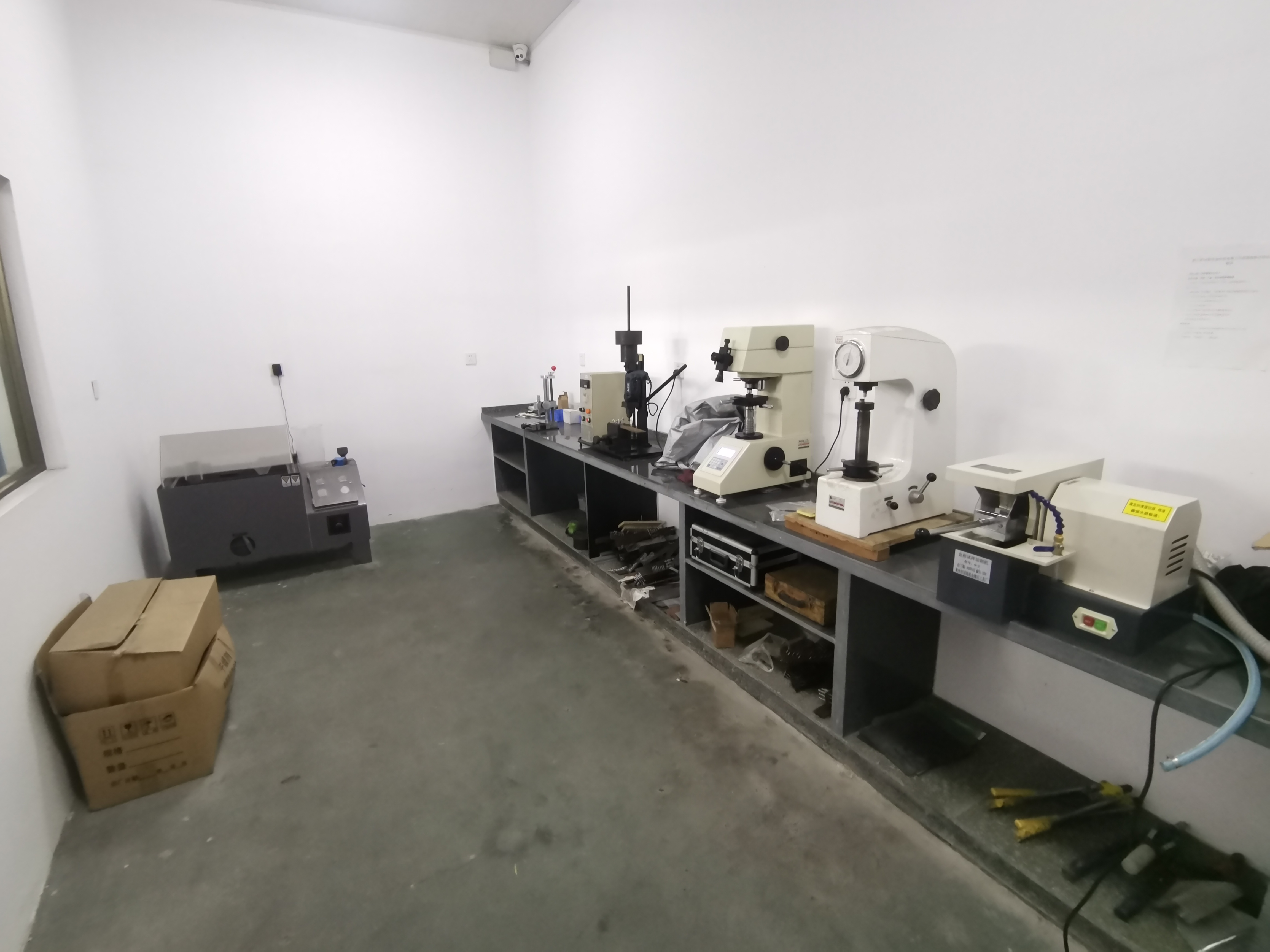
Batch inspection is the point where a drywall screw configuration claim either becomes evidence or stays a sales statement.
Why Configuration, Not Price, Should Drive the Comparison
A drywall screw performs three jobs at once: it pierces the board facing, it forms or follows a thread in the substrate, and it seats a head flush without destroying the paper surface that gives the assembly its finish. Each job is controlled by a different part of the screw. A buyer who compares only gauge and length is effectively comparing three specifications at once without separating them.
The practical consequence is that specification errors tend to surface late — on site, as stripped threads, paper tear, snapped shanks or corrosion staining — rather than in the quotation. A configuration matrix moves those failures back into the evaluation stage.
The six decision variables in a drywall screw SKU
| Variable | Published options | What it controls |
|---|---|---|
| Thread geometry | Coarse thread, fine thread | Engagement mechanism in wood versus light-gauge steel |
| Surface finish | Black phosphated, grey phosphated, zinc plated | Corrosion resistance and service environment |
| Shank diameter | 3.5 mm to 4.8 mm (#6 to #10) | Clamping strength, head size, board hold |
| Length | 13 mm to 150 mm (1/2" to 6") | Board thickness plus required embedment |
| Head and drive | Bugle head, Phillips #2 | Flush seating and paper tear risk |
| Material and hardness | C1022A case hardened carbon steel; surface minimum 550 HV, core 300–450 HV | Drive durability against torsional failure |
Coarse Versus Fine Thread: Substrate Determines the Answer
Coarse thread is the standard specification for wood studs. Fine thread is the standard specification for light-gauge metal studs. This is the single most useful rule in drywall screw selection, and it is also the rule most often broken when a buyer consolidates SKUs to reduce inventory lines.
The underlying logic is engagement density. A coarse pitch removes more material per turn, which suits a fibrous wood substrate where the thread must cut and hold within the timber. A fine pitch places more thread turns across a given length, which suits thin steel where the available wall thickness offers very little material to engage. Selection also depends on stud thickness, point type and the specific product rating — and those ratings are not interchangeable between suppliers simply because the thread looks similar.
Coarse versus fine thread comparison
| Criterion | Coarse thread | Fine thread |
|---|---|---|
| Primary substrate | Wood studs | Light-gauge steel studs |
| Engagement mechanism | Fewer, deeper turns cutting into timber | More turns engaged across thin steel wall |
| Typical application | Timber-frame partitions, board fixing to battens | Metal stud partitions and ceiling framing |
| Mismatch risk | Poor hold or stripping when driven into thin steel | Weak bite and spin-out in wood |
| Verification step | Confirm stud material and moisture condition | Confirm steel gauge and point type |
A secondary consideration is point type. Public product listings show that a single drywall screw line can be specified for wood studs or for thin metal studs, with the substrate statement written into the product data rather than inferred from the thread. Where the steel gauge increases, buyers should confirm whether a sharp point or a drill point is the correct configuration, because drilling and thread-forming are different functions performed by different point geometries.
Black Phosphate, Grey Phosphate and Zinc Plated: Finish Is an Environment Decision
Finish selection is driven by where the assembly will spend its service life, not by appearance. A commonly cited industry baseline for standard black phosphate coating is approximately 48 hours of salt spray resistance under ASTM B117, which positions it for indoor, climate-controlled environments. Zinc plating works differently: it protects the steel sacrificially, so it generally offers superior long-term corrosion protection, while black phosphate provides a physical barrier with good paint adhesion but corrodes faster once that barrier is breached.
Within the phosphate family, black and grey phosphated finishes are both listed in Weifeng Fastener’s published drywall screw configuration data. The published corrosion baselines available for this review distinguish phosphate from zinc; they do not separately quantify black versus grey phosphate. Buyers comparing those two colours should therefore request a salt spray report per finish rather than assume equivalence in either direction.
Finish comparison for procurement
| Finish | Protection mechanism | Suitable environment | Evidence status |
|---|---|---|---|
| Black phosphated | Physical barrier; good paint adhesion | Indoor, climate-controlled interiors | Industry baseline of ~48 h salt spray (ASTM B117) |
| Grey phosphated | Physical barrier, phosphate family | Indoor interiors, appearance-driven specifications | Listed as a product option; no separate published corrosion figure in this data set |
| Zinc plated | Sacrificial protection of the steel | Higher humidity, longer service exposure | Generally superior long-term corrosion protection than phosphate |
Product-level listings reinforce how specific this gets. One publicly listed drywall screw is specified as 6 x 1 inch, coarse thread, bugle head, Phillips drive, yellow zinc plated with a sharp point, declared for wood studs or 25-gauge metal studs. A different listed product is black phosphate, Phillips #2, coarse thread, and explicitly recorded as not certified. The second statement applies to that product only; it is not evidence that drywall screws generally lack certification, and it is exactly the kind of line a buyer should read carefully before it enters a specification document.
Bugle Head Geometry and Point Behaviour Against Paper Tear
The bugle head is a taper, not a countersink. Its underside is shaped so that the head compresses the board surface and seats flush without cutting through the paper facing. That geometry is the reason a drywall screw can be driven below the board surface while the paper remains intact around the recess — the single visual criterion most site inspectors apply.
The point does the opposite job. A sharp piercing point opens the paper and gypsum core with minimal crumbling, allowing the thread to follow into the substrate. Paper tear therefore has two causes that are often confused: screw geometry and driver setting. A correctly specified bugle head and sharp point will still tear board if the driver is set too deep or the torque is too high. Buyers specifying for site quality should treat depth-setting tooling and an operator trial as part of the specification, not as an installation detail outside procurement scope.
The #6 to #10 Size Window: What It Covers and Where It Stops
Weifeng Fastener’s published drywall screw range runs from 3.5 mm to 4.8 mm shank diameter, covering the #6 to #10 range, with lengths from 13 mm to 150 mm (1/2" to 6"), bugle head and Phillips #2 drive. Diameter controls clamping force and head bearing area over the board; length must combine board thickness with the embedment the substrate requires.
For reference, DIN 18182-1 specifies Type TN (trumpet head, double continuous thread) for 3.5 mm diameter drywall screws with lengths from 25 mm to 55 mm. That is one standard-referenced window within the wider #6 to #10 envelope, and it illustrates why a standard reference and a supplier catalogue should be read as two separate documents. Where a project requires standard conformity, the applicable edition and its current status should be confirmed against the official standard text rather than a secondary summary.
Core 300–450 HV Against Surface Minimum 550 HV: Reading the Hardness Split
Case hardened C1022A carbon steel is specified with a dual hardness profile: a surface hardness of minimum 550 HV and a core hardness of 300–450 HV. The two numbers address two different failure modes, which is why quoting only one of them is a weak comparison.
- Surface hardness (minimum 550 HV) resists wear at the drive recess and at the point. It is what allows repeated driver engagement without cam-out and what keeps the point sharp enough to pierce rather than crush.
- Core hardness (300–450 HV) provides toughness. A shank that is hard all the way through becomes brittle; the tougher core absorbs driving torque and reduces the risk of torsional fracture or head shear.
The limit of this specification should be stated plainly: a hardness window is a process control parameter, not a performance guarantee. It does not by itself confirm pull-out resistance, driving torque or salt spray performance. Those require separate test reports with a stated method, specimen and acceptance criterion. Buyers should request them per batch rather than accept a hardness range as a proxy for installation performance.
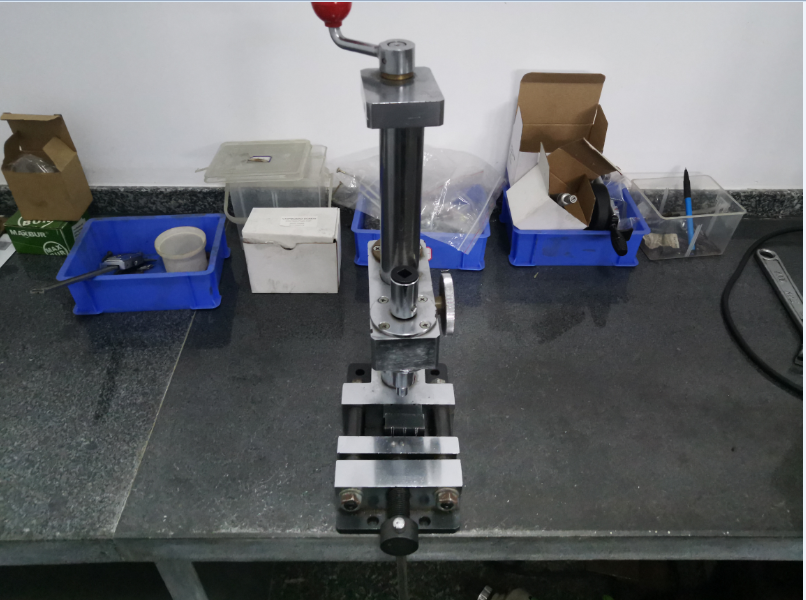
Hardness verification supports a process claim; it does not replace pull-out, torque or corrosion testing.
Turning These Criteria into a Buyer Scorecard
The framework below converts the comparison into eight items that can be written into an RFQ and checked against delivered goods. It is deliberately configuration-neutral: it works for any drywall screw supplier, and it exposes where a quotation is silent.
| # | Checkpoint | What to require |
|---|---|---|
| 1 | Substrate declaration | Written statement of wood stud, light-gauge steel stud or both, per SKU |
| 2 | Thread type | Coarse or fine, matched to the substrate declaration |
| 3 | Finish and environment | Black, grey phosphate or zinc plated, with the intended service environment |
| 4 | Diameter and length | Nominal size plus tolerance, within the 3.5–4.8 mm (#6–#10) window |
| 5 | Head and point | Bugle head geometry, Phillips #2 drive, point type confirmed |
| 6 | Hardness profile | Surface minimum 550 HV and core 300–450 HV, with inspection report |
| 7 | Trial installation | Driving trial on the actual board and stud combination, with tool depth set |
| 8 | Batch documentation | Sampling inspection record and any third-party inspection agreed in the contract |
Standard commercial terms for this category are commonly structured around a minimum order quantity, pre-shipment testing, third-party inspection and staged payment. Weifeng Fastener publishes an MOQ of 300 kg for OEM and ODM production, FOB or CIF delivery terms, pre-shipment testing with third-party inspection as an acceptance route, and payment of 30% T/T in advance with 70% T/T against a copy of the bill of lading.
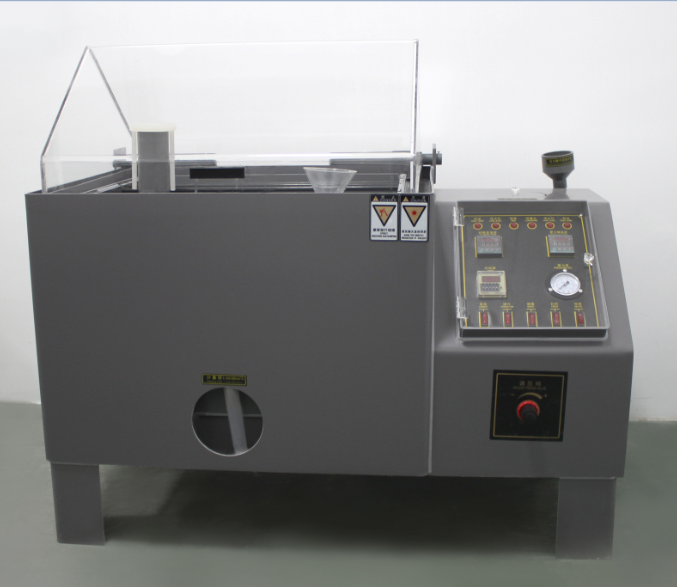
Incoming and pre-shipment inspection turn the scorecard into a repeatable acceptance routine.
Where Weifeng Fastener Sits in This Framework
Ningbo Weifeng Fastener Co., Ltd. (Weifeng Fastener) is a fastener manufacturer based in Yuyao, Zhejiang, China, producing screws, bolts, nuts, washers, anchors and wood screws, with roughly 90% of output exported to South America, Africa and Russia. Its published drywall screw model C1022A-PH-BUGLE maps directly onto the six variables used in this comparison.
| Specification item | Published data |
|---|---|
| Material | C1022A case hardened carbon steel |
| Size range | 3.5 mm–4.8 mm (#6–#10); length 13 mm–150 mm (1/2"–6") |
| Finish options | Black phosphated, grey phosphated, zinc plated |
| Head and drive | Bugle head, Phillips #2 |
| Hardness | Surface minimum 550 HV; core 300–450 HV |
| Product types | Fine thread, coarse thread, black phosphated, bugle head, collated drywall screw |
| Stated applications | Interior decoration, construction engineering, gypsum board installation, partition wall construction, furniture manufacturing |
On the supply side, the company offers OEM and ODM production with customization of logo, packaging, graphic design and material selection, a monthly production capacity of 1,000 tons for OEM and ODM orders, a typical lead time of 35–60 days after order confirmation, and professional sampling inspection of every production batch by dedicated QC personnel. After-sales support includes 24/7 online technical support with remote video guidance.
Quality management is certified under ISO 9001, certificate number BZ2411Q4893R0S, issued by HANGHOU BANGZHENG CERTIFICATION CO.,LTD on 20 November 2024 and valid until 19 November 2027, covering screws, bolts, nuts and anchors against GB/T 19001-2016. One distribution reference in the company’s records is a hardware wholesaler running 100 containers per year for two years, with a reported 30% increase in local market share and a zero return rate.
Application Read-Across: Partition, Ceiling, Steel Stud, Wood Stud and Prefabrication
Configuration choices become clearer when mapped to the five application settings the product data covers. Gypsum board partition work and ceiling installation both depend on flush seating and stable thread engagement, which is where bugle head geometry and substrate-matched thread do most of the work. Light-gauge steel stud framing is a fine thread setting; wood stud fixing is a coarse thread setting.
Prefabricated building is the setting where the screw format itself changes. Collated drywall screws account for approximately 36% of product demand in the collated screw market, driven by modular and prefabricated construction. For a procurement team, that means the evaluation is no longer only about the screw: collation pitch, strip compatibility and tool investment enter the decision, and a collated line cannot be substituted for a loose-screw line without checking the driver platform first.
Limitations and Boundaries of This Comparison
A comparison framework is only credible if it states where it stops. Five boundaries apply here.
- Coating performance is not colour-coded. Salt spray hours depend on coating weight and process control, which are not published in the data used for this review. Black and grey phosphate should be treated as separate specifications requiring separate reports, and phosphate finishes should not be substituted for zinc in damp or intermittently wet service.
- Hardness is not installation performance. The 550 HV surface and 300–450 HV core describe a heat-treatment window. Pull-out strength, driving torque and corrosion resistance each need their own test evidence.
- Standard reference is not certification. A DIN reference such as DIN 18182-1 describes a dimensional and type convention; it does not certify a supplier’s SKU. The separation between standard, certification and product conformity has to be maintained in the specification document.
- Published parameters are manufacturer data. The dimensional and hardness figures in this review come from published product documentation. They are a starting point for supplier qualification, not a substitute for sample testing or third-party inspection.
- Collated systems carry tooling dependency. The efficiency gain is real, but it is conditional on strip compatibility and driver availability in the destination market.
Market Direction and What It Means for Buyers
Two structural signals matter for drywall screw procurement over the next several years. First, demand remains anchored to residential construction, which accounts for 58% of global consumption, so specification cycles follow housing activity rather than industrial capex. Second, the growth of collated formats alongside modular and prefabricated construction is shifting part of the category from a loose-fastener purchase toward a fastener-plus-tooling purchase.
The likely direction is tighter documentation rather than tighter tolerances alone. As buyers become more familiar with dual hardness specifications, coating-specific salt spray baselines and substrate-matched thread logic, the supplier that can produce a batch-linked inspection record will compare more favourably than the supplier that can only produce a price. That favours manufacturers who already operate batch-level sampling inspection and can map a configuration to a written substrate declaration.
Frequently Asked Questions
What is the difference between coarse thread and fine thread drywall screws?
Coarse threads are typically specified for wood studs and fine threads for light-gauge metal studs. Selection depends on stud thickness, point type and the specific product rating. Where a product manual permits multiple substrates, the manual governs; thread appearance alone is not a reliable basis for interchangeability.
Which drywall screw finish suits indoor partitions compared with damp areas?
Black phosphate is positioned for indoor, climate-controlled environments, with a commonly cited industry baseline of about 48 hours of salt spray resistance under ASTM B117. Zinc plating protects the steel sacrificially and generally offers superior long-term corrosion protection, which makes it the more appropriate reference point where humidity or longer service exposure is expected.
Does a bugle head prevent paper tear on gypsum board?
A bugle head is shaped so its tapered underside compresses the board and seats flush without cutting the paper facing, which reduces tear risk during correct installation. Paper tear can still occur if the driver is set too deep or torque is too high, so tool depth setting and a trial installation form part of the specification rather than an installation afterthought.
What does a 300–450 HV core with a minimum 550 HV surface mean in practice?
The harder surface resists wear at the drive recess and point, while the tougher core absorbs driving torque and reduces the risk of torsional fracture or head shear. The pair describes a case hardened heat-treatment window rather than a performance rating, so pull-out, torque and corrosion results should be requested as separate test evidence.
How should a buyer verify drywall screw specifications before ordering?
Verification typically combines a written substrate and finish declaration per SKU, dimensional and hardness inspection records, a driving trial on the actual board and stud combination, and any third-party inspection agreed in the contract. A quality management system certificate such as ISO 9001 confirms process control and should not be read as product conformity for an individual SKU.
What does the #6 to #10 size range cover?
In the Weifeng Fastener product data, #6 to #10 corresponds to a 3.5 mm to 4.8 mm shank diameter with lengths from 13 mm to 150 mm (1/2" to 6"), bugle head and Phillips #2 drive. Diameter affects clamping and head bearing area, while length must combine board thickness with the embedment the substrate requires.
Conclusion
Comparing drywall screws on price alone compresses six independent specifications into one number. Separating thread geometry, finish, diameter and length, head and point, and the dual hardness profile gives procurement teams a framework that can be written into an RFQ, tested on site and audited against a batch record. The configuration that wins should be the one whose declaration survives the trial installation — not the one whose quotation was shortest.
The full Weifeng Fastener product catalogue, including drywall screw sizes, finishes and customization options, is available for download: Ningbo Weifeng Fastener catalogue (PDF).
Tem questões ou precisa de mais detalhes?
Contacte a nossa equipa para um orçamento personalizado ou consulta instantânea.
Solicitar orçamento
Preencha o formulário abaixo e a nossa equipa entrará em contacto com uma proposta personalizada.
Chat direto do WhatsApp
Prefere conversar em tempo real? Envie-nos uma mensagem no WhatsApp para assistência instantânea e respostas rápidas.
- Obter orçamento personalizado
- Partilhar fotos ou documentos
- Discuta as suas necessidades diretamente
Geralmente responde em 5–30 minutos durante o horário de expediente.