
Dual-Antenna Heading RTK: Precision Orientation for Autonomous Systems
The demand for reliable, centimeter‑level positioning has expanded beyond simple coordinates. Modern autonomous systems—whether drones, agricultural machinery, or self‑driving vehicles—require not only where they are but also the precise direction they are facing. This need for real‑time heading, pitch, and roll has made dual‑antenna RTK GNSS modules a critical component in high‑precision navigation stacks.
Problem / Opportunity
Traditional single‑antenna GNSS receivers provide latitude, longitude, and altitude, but they cannot determine the orientation of the vehicle. To obtain heading, integrators historically added a magnetometer (compass), which is vulnerable to magnetic interference from motors, power cables, and nearby metal structures. In dynamic environments such as UAVs or construction vehicles, compass errors lead to drift and unreliable path tracking. The opportunity lies in using two GNSS antennas separated by a known baseline to directly compute heading from carrier‑phase differences—a method known as dual‑antenna heading. This approach is immune to magnetic disturbances and delivers consistent accuracy even under high vibration and extreme temperatures.
Brand Solution: Jumpstar’s Dual‑Antenna RTK Modules
Jumpstar (Shenzhen Jumpstar Technology Co., Ltd.) is a GNSS positioning manufacturer based in Shenzhen, China, with over 15 years of experience and a production capacity of 100,000 units per year. The company has developed a family of multi‑constellation multi‑frequency RTK receivers that support dual‑antenna heading. These modules are designed to provide both centimeter‑level positioning and sub‑degree orientation for demanding industrial applications.
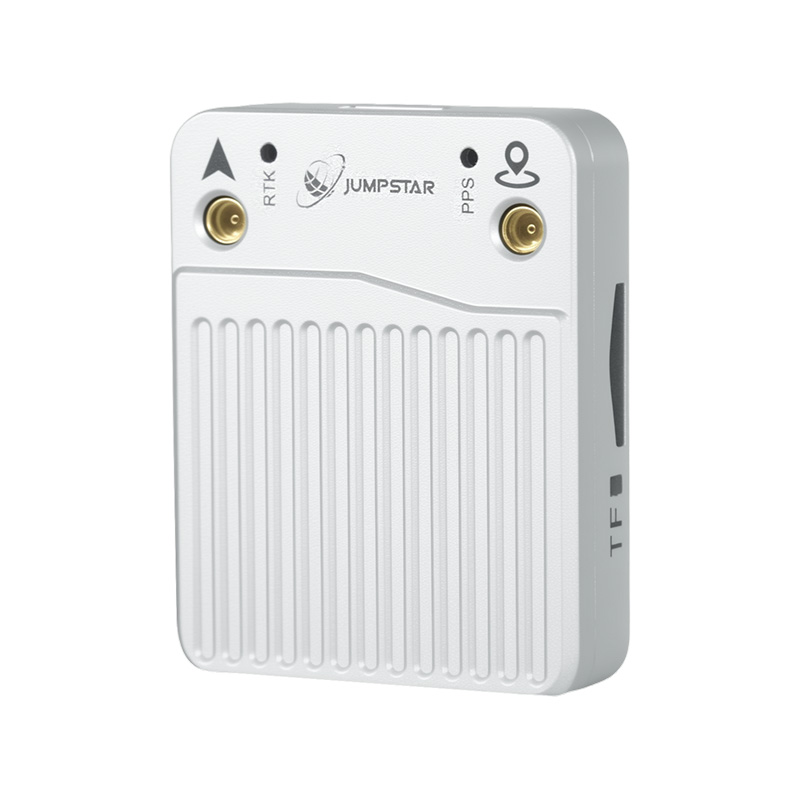
Key models include the X43H‑AH, a compact (43.8 × 34.0 × 11.5 mm) receiver weighing less than 25 g, and the P‑Box‑X6_Pro S (68.4 × 41.8 × 17.3 mm) which offers a dual‑antenna configuration (S2) for heading output. The G27SH‑AH is an all‑constellation all‑frequency receiver with 789 hardware channels and integrated IP67 protection. All these modules leverage proprietary AIM+ anti‑jamming, OSNMA anti‑spoofing, and advanced multipath mitigation to ensure reliability in challenging signal environments.
Technical Explanation
Dual‑antenna heading RTK modules compute orientation by measuring the carrier‑phase difference between two antennas mounted a known distance apart (the baseline). The X43H‑AH, for example, achieves a heading accuracy of 0.15° RMS with a 1‑meter baseline and 0.03° with a 5‑meter baseline. Pitch and roll accuracy at 1 m baseline is 0.25°. The module supports up to 20 Hz update rate and outputs RTK position (horizontal 0.6 cm + 0.5 ppm) simultaneously with attitude information via NMEA 0183 or proprietary SBF protocol.
Internally, the receiver tracks GPS L1C/A, L2C, L5; BDS B1I, B1C, B2a, B2b, B3I; GLONASS; Galileo; QZSS; NavIC and SBAS signals through 789 hardware super‑channels. A cold start takes under 35 seconds, and RTK initialization requires approximately 7 seconds (baseline <30 km). The operating temperature range spans –40 °C to +85 °C, making it suitable for outdoor deployments in both arctic and desert climates.
Application / Use‑Case Scenarios
Fleet Management & Vehicle Positioning
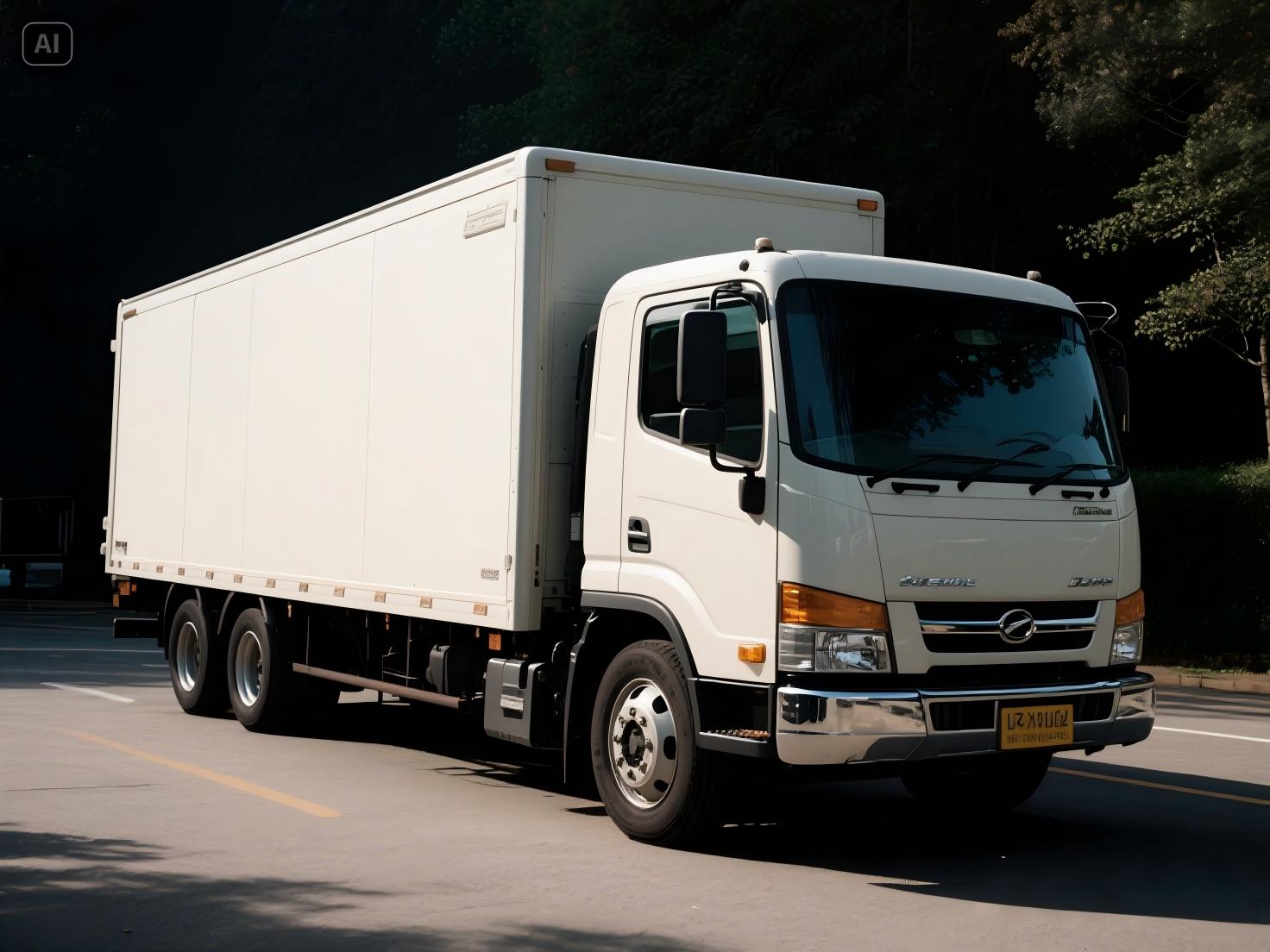
In fleet management, vehicles pass through urban canyons, tunnels, and areas with electromagnetic interference from onboard electronics. Jumpstar’s dual‑antenna receivers (e.g., P‑Box‑AP55H) provide lane‑level heading and attitude for autonomous steering and lane‑keeping. The modules support RTK rover mode and can operate as a roadside base station. Built‑in 4G Cat.1 communication allows real‑time NTRIP correction reception. The devices withstand continuous engine vibration, 4g acceleration, and temperatures from –40 °C to +85 °C.
UAV Aerial Surveying & Mapping
For aerial surveying UAVs, the dual‑antenna version outputs high‑precision heading and attitude, ensuring accurate trajectory reproduction and proper image overlap. The module’s AIM+ anti‑jamming and OSNMA anti‑spoofing guard against signal forgery. Flight dynamics can reach 4g acceleration and 515 m/s speed, with altitude up to 18,000 m. The module also logs raw satellite data to a TF card for post‑processing (PPK).

Market Trend Analysis
The global high‑precision GNSS market was valued at USD 7.8 billion in 2024 and is projected to reach USD 20.6 billion by 2033 (Dataintelo). Agriculture leads application segments with a 36.8% share, driven by the need for auto‑steering and variable‑rate applications. The precision farming market alone is expected to grow from USD 11.38 billion in 2025 to USD 21.45 billion by 2032 (MarketsandMarkets). As autonomous vehicles, drones, and robotics proliferate, the demand for modules that deliver both position and orientation—especially dual‑antenna heading RTK—will accelerate. The ability to eliminate magnetic compass dependency while maintaining centimeter accuracy makes dual‑antenna solutions a cornerstone of next‑generation navigation systems.
Comparison with Traditional Solutions
Traditional single‑antenna receivers combined with a magnetometer can provide heading, but accuracy degrades in the presence of magnetic interference. Dual‑antenna RTK modules offer heading directly from carrier‑phase measurements, achieving typical accuracy of 0.03°–0.15° (RMS) without calibration. However, dual‑antenna configurations require a physical separation between the two antennas, which demands more installation space and careful mechanical design. For compact platforms where baseline length is constrained, the heading accuracy naturally decreases. Despite this limitation, the robustness and consistency of dual‑antenna heading make it the preferred choice for applications where magnetic interference is unavoidable.
Future Outlook
As machine autonomy moves toward Level 4+ driving, swarming UAV operations, and fully automated agriculture, the need for reliable orientation data will only intensify. Future developments may include tighter integration of RTK heading with inertial sensors (IMU) to maintain orientation during brief GNSS outages. Jumpstar’s existing modules already support IMU fusion (e.g., JS‑NK43‑1), and the trend is toward smaller, lighter modules with higher data rates and built‑in interference monitoring. With the global GNSS downstream market forecast to reach €580 billion by 2034 (EUSPA), dual‑antenna heading RTK modules will play a pivotal role in enabling the precision required by autonomous fleets and intelligent machines.
FAQ
What is a Heading RTK GNSS module with dual‑antenna?
A Heading RTK GNSS module that uses two antennas separated by a known baseline to compute real‑time heading (yaw), pitch, and roll in addition to centimeter‑level position. Jumpstar’s models like the X43H‑AH and P‑Box‑X6_Pro S offer this capability.
How accurate is the heading from a dual‑antenna RTK module?
With a 1‑meter baseline, heading accuracy is typically 0.15° RMS. With a 5‑meter baseline, accuracy improves to 0.03° RMS. Pitch and roll accuracy are 0.25° at 1 m baseline and 0.05° at 5 m baseline.
Which Jumpstar products support dual‑antenna heading?
Models include the X43H‑AH, P‑Box‑X6_Pro S (S2 version), P‑Box‑AP55H, P‑Box‑X10, G27SH‑AH, and JS‑NK43‑2 all support dual‑antenna heading. Many of these also include IMU for dead reckoning.
What industries benefit from dual‑antenna RTK heading?
Primary industries are autonomous vehicles, UAVs (drones), precision agriculture, marine navigation, construction machinery, fleet management, and autonomous robots. The modules are suitable for any application requiring both high‑precision position and orientation.
Is dual‑antenna heading affected by magnetic interference?
No. Unlike compass‑based heading, dual‑antenna RTK heading is derived purely from GNSS carrier‑phase measurements and is immune to magnetic fields, metal structures, and electrical interference.
Are you integrating high‑precision heading into your next system?
Jumpstar offers OEM/ODM customization for dual‑antenna RTK modules. Contact our team at sales@jgnss.com or visit www.jgnss.com for technical specifications and samples.
Download our company brochure: Jumpstar Company Profile 2026
Tem questões ou precisa de mais detalhes?
Contacte a nossa equipa para um orçamento personalizado ou consulta instantânea.
Solicitar orçamento
Preencha o formulário abaixo e a nossa equipa entrará em contacto com uma proposta personalizada.
Chat direto do WhatsApp
Prefere conversar em tempo real? Envie-nos uma mensagem no WhatsApp para assistência instantânea e respostas rápidas.
- Obter orçamento personalizado
- Partilhar fotos ou documentos
- Discuta as suas necessidades diretamente
Geralmente responde em 5–30 minutos durante o horário de expediente.