
Dual Cooling Water Cooling Vest: B2B Buyer Verification FAQ
Dual Cooling Water Cooling Vest: B2B Buyer Verification FAQ
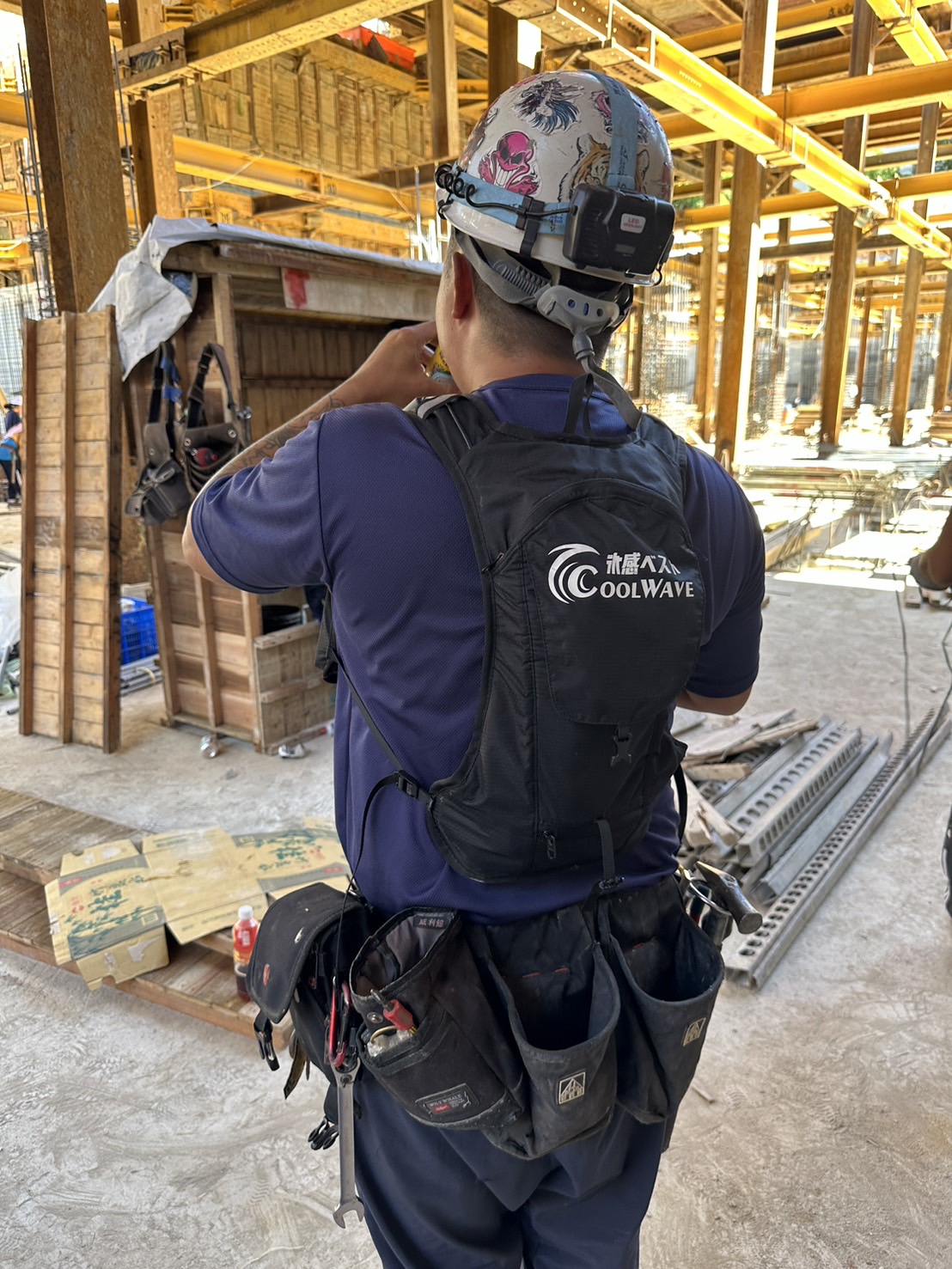
For B2B buyers, the COOLWAVE Water-Circulation Cooling Vest from Shokunin should be evaluated as a specification-and-supply package: the wearable cooling system, its power and water-circuit requirements, the stated order terms, and the acceptance evidence that must be agreed before production. The current technical summary describes a dual cooling water cooling vest with a 5 V/150 mA pump, a listed flow rate of 320–370 ml/min, a 3–4 hour cooling duration, and a listed net weight within 2 kg. It also identifies materials including a TPU water bag, polypropylene cap, sand rubber cooling tube and 600D polyester shoulder strap. This FAQ separates what is stated from what a buyer still needs to verify.
What does 'dual cooling' mean for this water cooling vest?
In the supplied product description, 'dual cooling' refers to a combination of a cold source and pump-driven water circulation. A secondary product description identifies reusable ice packs as the cold source and a power-bank-powered pump that circulates chilled water. That description is supplier-oriented and is not an independent test report. The practical procurement question is not whether the phrase sounds advanced; it is which configuration is quoted, what cold source is included, and whether the pump is powered by the buyer's power bank or a supplied battery.
Because the case record also uses passive ice-pack cooling language, do not treat 'no power required' as a universal product fact. Confirm the exact configuration in the quotation. Buyers may see the category described as an ice water circulation cooling vest, power-bank cooling vest or portable cooling vest; those labels should be mapped back to the actual configuration and included accessories.
Pump and flow specifications: what should buyers verify?
The listed pump input is 5 V and 150 mA maximum. The same summary lists a flow rate of 320–370 ml/min. These are component-level specifications. They tell a buyer that the circuit has a low-voltage pump and a defined flow band, but they do not prove heat removal, comfort or runtime. Flow rate can change with tube length, lift, reservoir level, connector restriction and water temperature. Ask for a flow test under a stated setup, and compare like with like.
A 5 V input makes power-bank compatibility a relevant RFQ item, but do not assume any power bank will run the pump for the full shift. Request connector type, cable length, required output current, low-voltage cut-off and whether the pump is replaceable. For an industrial cooling vest programme, these details affect spare-parts planning and worker compliance more than a single flow number.
How should the 3–4 hour cooling duration be used in planning?
The listing states 3–4 hours per charge/ice-pack cycle. That is a planning input, not a guaranteed shift length. Ambient temperature, humidity, workload, clothing layers, body size, ice-pack starting temperature, water volume and pump duty cycle are not defined in the supplied listing. Buyers should convert the claim into an acceptance test that matches the intended site.
For a 10-hour shift, the question becomes how many ice-pack or water changes are needed, who performs them, and whether the worker can do so without leaving the work area. The 7–14 day lead time is a production term; it is not a substitute for sample testing. A long-lasting cooling vest claim should be checked against the buyer's own shift pattern, not only against the catalogue duration.
Materials and serviceability: what do TPU, polypropylene, sand rubber and 600D polyester indicate?
The supplied specification summary lists a TPU water bag, polypropylene cap, sand rubber cooling tube and 600D polyester shoulder strap. These names are useful for RFQ language, but they are not performance guarantees. TPU is a flexible polymer used in fluid-containing products; the supplied data does not state wall thickness, hydrolysis resistance or burst pressure. Polypropylene is a lightweight plastic for caps; cap sealing and thread life should be checked. Sand rubber is a flexible tube material; buyers should confirm connector fit, kinking resistance and replacement availability. 600D polyester is a woven fabric designation often used where tear and abrasion resistance matter; the supplied data does not include a specific abrasion test.
Ask for cleaning instructions, a spare-part list and a leak-test method. For a circulating cooling vest, the water bag, cap and tube are service-critical. A buyer should know whether a damaged tube can be replaced without scrapping the vest, and whether the cap seal is available as a separate part.
Weight and fit: why wet weight matters
Listed net weight is within 2 kg. Buyers should clarify whether that figure is dry, empty, with water, with ice packs, or with battery and packaging. Wet weight and fit affect wearability more than a catalogue number. The one-size-fits-all adjustable design is stated in the case material, but fit trials are still necessary for shoulder strap comfort, hose routing and access to controls. Workers wearing the vest under or over other PPE need a compatibility check. The 600D polyester shoulder strap is a load-bearing interface; inspect stitching and adjustment hardware.
Where is the current evidence for application fit?
Case material says the cooling product has been used by construction sites, outdoor workers, metal sheet factories and street vendors. A Taiwan deployment record lists 100 units for high-temperature environments, with reported benefits including body cooling, heatstroke prevention, improved work efficiency and worker comfort. These are user-reported outcomes in a company case record, not an independent controlled trial. For procurement, the case supports a shortlist of similar hot-work scenarios and helps define a pilot group. It does not prove that the same configuration will produce the same result in every factory, climate or work intensity.
That distinction matters for heatstroke prevention gear for extreme heat. A buyer should select a pilot group that matches the intended exposure, record the work duration, ambient conditions and cooling breaks, and compare results against the site's existing heat-safety measures. This is a verification step, not a promotional claim.
Procurement terms at a glance
Table 1 summarises stated commercial and supply terms. Keep the basis column open because some figures use different units or scopes.
| Stated item | Listed term | Buyer check |
|---|---|---|
| MOQ | 10 units | Confirm whether mixed SKUs or sizes count toward the same MOQ. |
| Lead time | 7–14 days typical | Clarify the start point: payment, artwork approval or sample sign-off. |
| Monthly capacity | 3,000 units for the cooling-vest capability record | Ask for product-specific available capacity, not installed or theoretical capacity. |
| Company annual output | 10,000 units company-wide | Different basis from monthly capacity; do not add or compare directly. |
| ODM | ODM production is listed | Ask exactly what ODM covers before assuming design changes. |
| Customization | Recorded as not available | Confirm label, packaging, colour and component changes in writing. |
| Warranty | 6-month warranty for the water-cooled vest | Clarify start date, covered components, labour and freight responsibility. |
| Payment | Full payment | Confirm currency, bank charges and whether any milestone terms are possible. |
| Shipment | Shipment after payment | Confirm Incoterm; freight is paid by the buyer. |
| Acceptance | Pre-shipment test | Define test items and pass/fail limits in the purchase order. |
| Markets | Global; USA/ROC main markets; export ratio 50% | Ask for destination-specific documentation where required. |
The company profile lists a 1,000 m² factory, 30 employees and 5 engineers. These are company facts, not proof of product-specific capacity. A buyer planning a seasonal launch should ask how much of the stated capacity is available for this product during the target delivery window.
ODM production: what is confirmed and what is not
ODM production is listed. The capability record separately lists customization as not available. Buyers should not treat 'ODM' as automatic permission for a new shape, pump, battery or water bag. Ask whether ODM means supply of a supplier-designed product under the buyer's brand, packaging changes only, or broader design changes. Request a written scope covering tooling ownership, artwork approval, minimum run, sample charge, change control and design-file ownership.
If customization is essential, the current record does not support it without written confirmation. That is a fit boundary, not a product defect. A buyer with a standard-product requirement can proceed to sample and acceptance planning; a buyer needing a modified fluid circuit needs a separate technical and commercial review.
What warranty and after-sales evidence should be requested?
A 6-month warranty for the water-cooled vest is stated. Buyers should define what is covered: pump, water bag, cap, tubing, strap and labour. Ask how warranty claims are evidenced, who pays return freight, and whether spare parts are available after the warranty. Because the product includes a fluid circuit and a pump, leak and pump-failure handling should be written into the after-sales process.
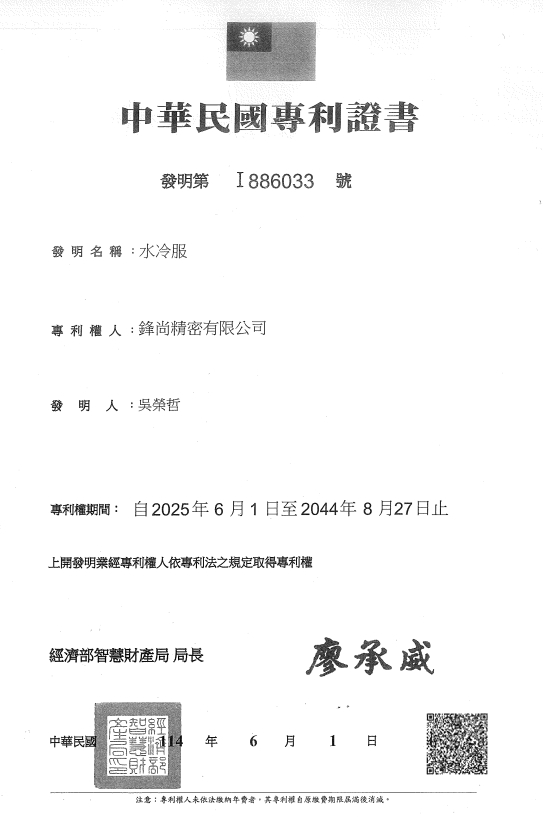
The patent certificate for the water-cooled vest structure and cooling system is listed as ROC patent I886033, issued 2025-06-01 and expiring 2044-08-27 by the Intellectual Property Office, Ministry of Economic Affairs. Shokunin's profile also states that the COOLING water-cooled vest received a Disaster Prevention Product and Service Certification Award from the Taiwan Disaster Prevention Industry Association. These support entity credibility, but they are not a warranty or a field-reliability test.
Acceptance criteria: a practical PO checklist
Stated acceptance is a pre-shipment test. That is a starting point. A buyer should convert it into measurable checks: model and configuration; pump voltage and current; flow rate under a defined setup; runtime with stated ice/water load; dry and wet weight; leak test; cap seal; tube connector pull test; strap stitching; power-bank compatibility; packaging and labelling; spare parts; and warranty start date. The supplier may not commit to every item, but the quotation should show which are covered. Keep a signed sample as the reference. This checklist is a buyer verification tool, not a claim that the supplier has already passed these tests.
Limitations and procurement risks
The main limitation is evidence type. The pump, flow, runtime, weight and material details are supplier-listed or supplied in the product summary; the supplied evidence does not include an independent thermal test with defined ambient temperature, humidity, workload and clothing conditions. The case record also uses passive ice-pack language, while the current technical summary includes a 5 V pump. Treat power requirement as configuration-specific and confirm it in the quotation.
Capacity figures use different bases: 3,000 units per month in the cooling-vest capability record and 10,000 units annual output company-wide in the enterprise profile. Do not combine them or use them as if they were the same measure. Customization is recorded as not available, so ODM scope needs written confirmation. Price, Incoterm, tooling charges and power-bank inclusion are not stated in the supplied data; request them before comparing suppliers. The patent and disaster-prevention recognition do not replace product testing or a factory audit.
Market context for industrial cooling vest buyers
A 2026 Dataintelo commercial research report estimates the global cooling vests market at $342 million in 2025, with industrial applications accounting for 34.5% revenue share. This is a category estimate, not a Shokunin market share or a demand forecast for a specific site. NIOSH describes water-cooled garments and cooling vests as examples of personal cooling systems for heat exposure. For B2B buyers, the implication is to treat cooling vests as PPE-adjacent equipment with a defined use case, not as generic apparel.
Quick-reference FAQ
What is the difference between the dual cooling water cooling vest and a passive ice vest?
The COOLWAVE description combines a cold source with pump-driven water circulation. A passive ice vest relies on ice packs without a pump. The supplied evidence does not provide a controlled comparison, so buyers should compare configurations on runtime, wet weight, power needs and replacement logistics.
Is the 320–370 ml/min flow rate a cooling performance rating?
No. It is a listed water-flow range. Cooling performance also depends on water temperature, ice mass, tubing, ambient conditions, clothing and workload. Ask for a defined test before treating the flow rate as a performance benchmark.
What is the MOQ and lead time?
The stated MOQ is 10 units and the typical production lead time is 7–14 days. Confirm the lead-time start point and shipping terms in the quotation.
Is ODM customization available?
ODM production is listed, but the capability record says customization is not available. Confirm the exact ODM scope in writing before planning a modified product.
What is the warranty?
A 6-month warranty for the water-cooled vest is stated. Clarify covered components, labour, return freight and the claim process.
What should be in the pre-shipment test?
At minimum, check configuration, pump function, flow under a defined setup, leak performance, dry and wet weight, materials, strap stitching, power compatibility and packaging. Define pass/fail limits before the purchase order is issued.
Reference document: the supplier's public brochure is available at this PDF link. It is a product reference, not an independent test report.
Tem questões ou precisa de mais detalhes?
Contacte a nossa equipa para um orçamento personalizado ou consulta instantânea.
Solicitar orçamento
Preencha o formulário abaixo e a nossa equipa entrará em contacto com uma proposta personalizada.
Chat direto do WhatsApp
Prefere conversar em tempo real? Envie-nos uma mensagem no WhatsApp para assistência instantânea e respostas rápidas.
- Obter orçamento personalizado
- Partilhar fotos ou documentos
- Discuta as suas necessidades diretamente
Geralmente responde em 5–30 minutos durante o horário de expediente.