
Dual Cooling Water Cooling Vest: Long-Term Cost and Waste Review
Industrial cooling apparel is rarely decided by the invoice. It is decided three summers later, when replacement parts, consumable inserts and disposal costs have either been absorbed quietly into the maintenance budget or have quietly doubled the original order. A dual cooling water cooling vest sits at the centre of that calculation, because it combines two reusable cooling elements — ice packs and a pumped water loop — in one garment, and because the parts that touch water, sweat and heat every day determine whether “reusable” is a genuine cost advantage or only a phrase on a specification sheet.
This review examines the long-term environmental and maintenance cost profile of the COOLWAVE Water-Circulation Cooling Vest, the cooling range produced by Feng Shang Precision Co., Ltd. — a Taiwan-based manufacturer founded in 2009 with a 1000 m² facility, 30 employees and a 5-engineer R&D team — and sold under its Shokunin brand. It looks at what is reused, what wears, what must eventually be replaced, and where the model’s real boundaries sit.

The Cost Structure Buyers Usually Miss
Most cooling purchases are compared on unit price and cooling duration. Both matter, but neither describes what it costs to run a cooling programme across several seasons. Four recurring cost categories tend to dominate the longer view.
- Consumable material — single-use gel inserts, soaked wraps or one-season garments that must be reordered as a repeating line item.
- Replacement parts — water bags, tubes, caps and ice packs that degrade through repeated freeze–thaw cycles and daily handling.
- Site infrastructure and labour — freezer capacity, water refilling, and the staff time required to rotate cooling gear between shifts.
- Disposal and handling — storage, collection and waste handling overhead that scales with the volume of material discarded.
A reusable design shifts spending away from consumables and toward durable parts, and it shifts operational burden toward a freeze-and-refill routine that has to be planned deliberately. For a multi-year procurement plan, the practical question is therefore not “what does one vest cost”, but “which parts are consumed, which are reused, and who owns the loop that keeps them reusable”.
The opportunity for a site with an existing cold-storage or freezer area is that cooling gear can be planned as fixed equipment rather than as a repeat consumable. The risk, for a site without one, is that reusable hardware is purchased and then operated as if it were disposable.
What the COOLWAVE Water-Circulation Cooling Vest Is
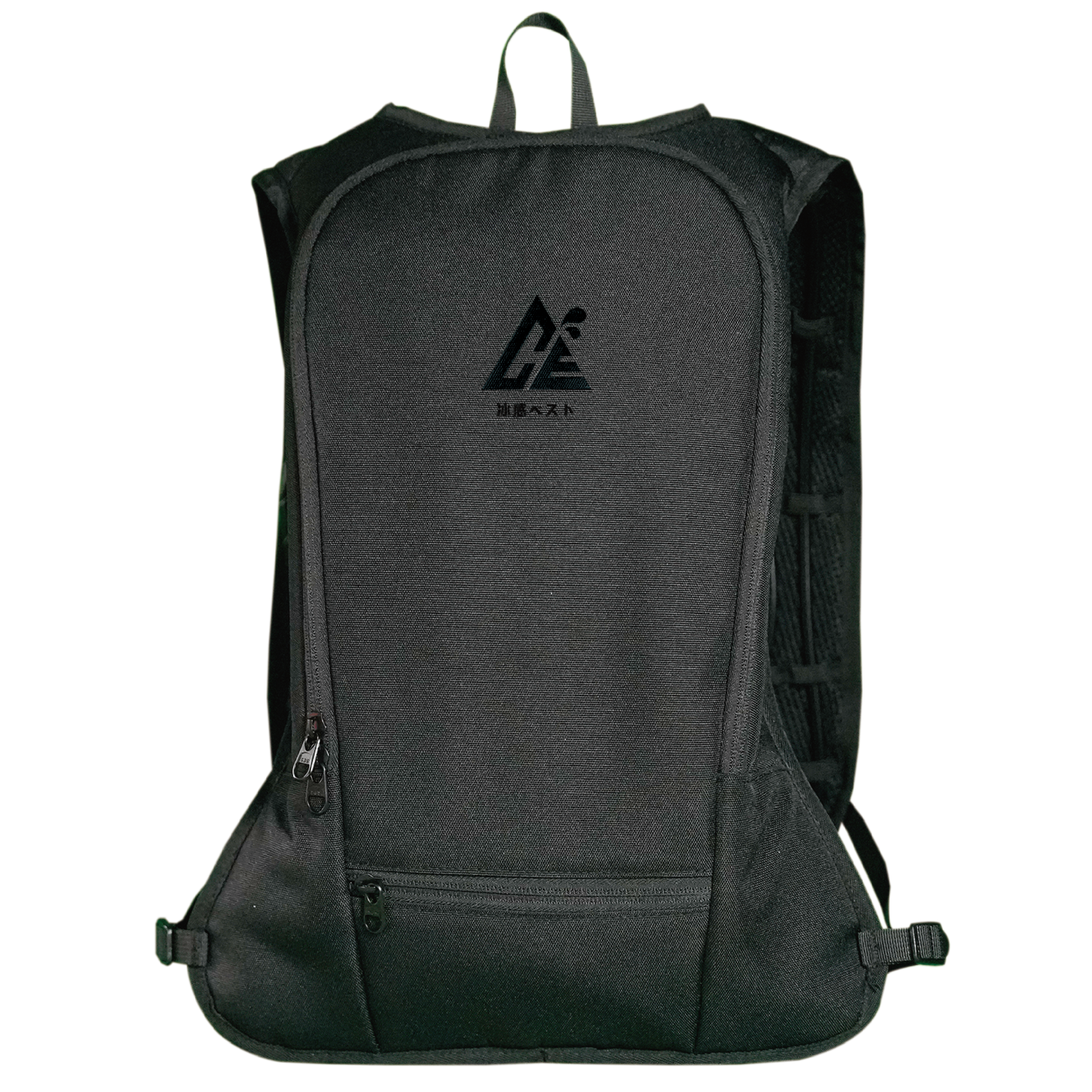
Shokunin is the professional e-commerce brand of Feng Shang Precision Co., Ltd., a manufacturer of tools and industrial equipment based in Taoyuan City, Taiwan. Its COOLWAVE Water-Circulation Cooling Vest is classified as industrial cooling apparel / Personal Protective Equipment (PPE) and is offered in a Basic Model and a Professional Model in blue, gray and black. The system works by activating reusable ice packs and circulating chilled water through a tube loop built into the garment.
| Specification item | Listed value |
|---|---|
| Product type | Industrial Cooling Apparel / Personal Protective Equipment (PPE) |
| Cooling duration | 3–4 hours |
| Weight | Within 2 kg |
| Suitable temperature (as listed) | Below 10°C |
| Shoulder strap material | 600D polyester |
| Body material | PEVA |
| Water bag material | TPU |
| Water bag cap | Polypropylene |
| Cooling tube | Sand rubber (black) |
| Pump output | 5V 150mA (max) |
| Flow rate | Max 320–370 ml/min |
| Kit contents | Water-cooled vest backpack ×1, ice packs ×2 |
| Listed applicable industries | Construction workers, outdoor workers, food stall operators, street vendors, traffic controllers, metal sheet factories |
Two details in that list matter most for a long-term cost assessment. First, the kit ships with two reusable ice packs, which are re-frozen rather than discarded, and the application record lists reusable ice packs, adjustable vest straps and a portable backpack design as the matched equipment for the system. Second, the water bag is made of TPU, a material selected for repeated filling and flexing, with a polypropylene cap and a sand-rubber cooling tube forming the rest of the wet side.
Where Wear Actually Happens: Materials and Maintenance Points
Long-run maintenance on a circulating cooling vest concentrates on two areas: the wet side, where water, freezing temperatures and repeated flexing meet, and the mechanical side, which carries the load.
- TPU water bag — the primary vessel. Repeated filling, draining and freeze exposure make it the first component to inspect for stiffness, opacity or seam stress.
- Sand-rubber cooling tube — the black circulation line that carries water at up to 320–370 ml/min. Abrasion at contact points is the usual wear pattern.
- Polypropylene water bag cap — a low-cost part whose loss or thread damage can take an otherwise functional unit out of service.
- Two reusable ice packs — re-frozen rather than replaced each shift, but still the most frequently handled item in the kit.
- 600D polyester shoulder straps — the load-bearing textile that carries a backpack assembly weighing within 2 kg.
- Pump (5V, 150mA max) — the electromechanical component of the circulation loop.
Shokunin states a 6-month warranty for the water-cooled vest. Beyond that window, the maintenance line item is mostly parts rather than labour hours: the garment is a textile and tubing assembly with few serviceable moving components, so long-term spending sits largely in the water bag, tube, cap and ice pack set.
The largest recurring operational cost, however, is not a part. Because a single ice charge is listed as delivering 3–4 hours of cooling, a site working longer shifts needs at least one changeover per shift. That changeover implies freezer capacity, a rotation routine and a named owner for returning ice packs and vests to cold storage between uses.
One operational specification deserves a written clarification during evaluation. The specification sheet lists the suitable temperature as below 10°C. Buyers whose site profile differs should confirm the intended operating envelope in writing rather than assume it.
The Environmental Case: What Reusability Changes on Site
The environmental argument for a water-circulation vest rests on substitution rather than on any single material claim. Reusable ice packs and a refillable TPU water bag replace the single-use inserts, gel sachets, soaked towels or one-season garments that would otherwise be purchased, used once and discarded. Water is the cooling medium, and the same two ice packs return to the freezer after each cycle.
Applied to a procurement scale rather than a single worker, that substitution is where the waste reduction actually occurs. A 100-unit deployment, for example, represents 200 ice packs and 100 reusable water bags operating in a loop, instead of a running stream of consumable inserts consumed across the same period. The waste profile is not zero — the ice packs, TPU bag, sand-rubber tube and polypropylene cap eventually reach end of life — but the residual waste is concentrated in a small number of durable parts rather than spread continuously across every shift.
Application Fit: Where Long-Term Ownership Makes Sense
COOLWAVE lists its applicable industries as construction workers, outdoor workers, food stall operators, street vendors, traffic controllers and metal sheet factories. These are environments where heat exposure is sustained, work is mobile, and the garment has to remain wearable for a full shift — the application record describes the working condition as high temperature, the project type as personal heat stress relief, and the required characteristics as lightweight, waterproof, breathable and one-size-fits-all.
A recorded deployment of 100 units in Taiwan, used for cooling in high-temperature environments, is listed with a 10-year span. The recorded results are effective body cooling, heatstroke prevention, and improved work efficiency and worker comfort. The recorded highlights include passive ice-pack cooling, a lightweight and portable configuration, an adjustable one-size-fits-all design and certified disaster prevention product status. For a buyer assembling a multi-year plan, the meaningful signal is not the unit count but the ten-year span: the equipment type is being maintained and re-used across many seasons rather than replaced annually.
The certification dimension is also relevant to longevity planning, because a certified product is easier to carry forward through successive procurement rounds. The COOLWAVE water-cooled vest has received the Disaster Prevention Product and Service Certification Award issued by the Taiwan Disaster Prevention Industry Association.
Market Direction: Industrial Demand and Circulatory Cooling
Independent market data supports the view that cooling apparel is moving from a seasonal accessory to planned industrial equipment. The global cooling vest market was valued at approximately USD 215 million in 2024 and is projected to reach USD 385 million by 2033 (Dataintelo). The broader personal cooling device market, a wider category that includes non-garment devices, was valued at USD 25.16 billion in 2024 and is projected to reach USD 94.85 billion by 2035 (Market Research Future). The gap between those two figures reflects category scope, not disagreement about direction.
Two structural trends are more relevant to a maintenance-cost discussion than headline size. Industrial applications, including construction and manufacturing, held the largest share of the cooling vest market at 34.5% in 2025 (Dataintelo). And active circulatory mechanisms, such as ice water circulation, are increasingly deployed in industrial sectors to mitigate occupational heat stress (Strategic Market Research). Both trends point the same way: buyers in these segments work with fixed sites, shift patterns and maintenance budgets, which is exactly the environment in which lifecycle cost — rather than purchase price — becomes the deciding metric.
Regionally, Asia Pacific is identified as the fastest-growing region for cooling vests, driven by rapid industrialisation and high outdoor work populations (Spherical Insights). That concentration matters for procurement planning, because it means parts availability, service expectations and comparable experience are most likely to mature first in this region.
How a Water-Circulation Vest Compares with Other Cooling Approaches
The comparison below is a cost-planning framework rather than a brand ranking. It contrasts the recurring cost drivers of established cooling approaches in industrial use.
| Approach | Dominant recurring cost driver | Waste profile | Planning note |
|---|---|---|---|
| Single-use cooling consumables | Continuous repurchase of inserts or wraps | Highest; volume scales with headcount and shifts | No freezer or maintenance loop required, but no residual asset value |
| Ice-pack-only vests | Pack replacement plus freeze logistics | Low to moderate | Simplest reusable route; cooling distribution depends on pack placement |
| Phase Change Material (PCM) vests | Higher unit cost and pack replacement | Low | PCM vests held 28.7% of cooling vest market share in 2025 and represent the fastest-growing technology segment (Dataintelo) |
| Water-circulation vests such as COOLWAVE | Wet-side wear parts: TPU bag, tube, cap, ice packs | Low; concentrated in a few durable components | Requires a freeze-and-refill routine and a functioning pump; cooling duration listed at 3–4 hours per cycle |
| Powered refrigeration systems | Power consumption, servicing and higher capital cost | Low | Systems with electrical components commonly fall under ISO 9001:2015 quality management expectations and often require CE or UL marks (ISO / UL) |
Published category coverage names Techniche International, Glacier Tek, Polar Products Inc. and Ergodyne among the key global participants in the cooling vest market (Spherical Insights). The table above compares approaches by cost behaviour only and does not rank, evaluate or disparage any supplier.
Limits and Boundaries Buyers Should Accept Upfront
Long-term cost planning is only credible when the constraints are stated as clearly as the advantages.
- Cycle length. The listed cooling duration is 3–4 hours per cycle, which is not a full shift on most industrial sites. Changeover planning is mandatory, not optional.
- Freezing dependency. Reuse depends on ice packs being re-frozen between uses. Without freezer access, the cost advantage over consumables does not materialise.
- Operating envelope. The specification lists a suitable temperature below 10°C; sites with a different profile should confirm the envelope in writing.
- Wear parts are wear parts. The TPU water bag, sand-rubber tube, polypropylene cap and ice packs are the components to budget for after the warranty period.
- Warranty window. A 6-month warranty is stated for the water-cooled vest. Parts spend beyond that window should be planned rather than treated as an exception.
- Customisation scope. Shokunin’s capability record lists ODM production, a minimum order quantity of 10 units, a lead time of 7–14 days and a monthly capacity of 3,000 units, with customisation not offered. Buyers requiring bespoke design changes should validate scope early instead of assuming it.
- Not a substitute for controls. Personal cooling apparel complements engineering controls, hydration and work-rest schedules. It does not replace them.
Future Outlook
Three developments are likely to shape how this category is bought. Industrial applications already hold the largest share of cooling vest demand at 34.5% (Dataintelo), and buyers in that segment tend to evaluate equipment through maintenance and safety budgets rather than seasonal purchasing. Active circulatory cooling continues to spread through industrial sectors (Strategic Market Research), which over time should improve familiarity with freeze-and-refill routines and reduce the operational friction that currently limits reuse. And with Asia Pacific identified as the fastest-growing region (Spherical Insights), parts availability and service responsiveness are likely to concentrate first in that geography.
For a manufacturer such as Feng Shang Precision Co., Ltd. — founded in 2009, operating a 1000 m² facility with 30 employees, a 5-engineer R&D team and an annual output of 10,000 units, exporting to the USA and ROC markets with an export ratio of 50% — the practical implication is that lifecycle documentation becomes part of the product. Buyers planning multi-year contracts increasingly ask for part lists, wear-item identification and reuse instructions alongside the specification sheet.
The realistic expectation for the next procurement cycle is therefore not a dramatic change in cooling technology, but a change in how it is specified: fewer questions about unit price, more about which components are replaced, how often, and what happens to them when they are.
For readers who want the full component list and model range in one document, the Shokunin product brochure is available for download here: Shokunin product brochure (PDF).
FAQ
1. What does a COOLWAVE water-circulation cooling vest kit contain?
The listed contents are a water-cooled vest backpack ×1 and ice packs ×2. The kit is available as a Basic Model and as a Professional Model in blue, gray and black, with the same listed cooling duration, weight, flow rate and materials across the range. The application record lists reusable ice packs, adjustable vest straps and a portable backpack design as the matched equipment. Buyers should confirm the full packing list, including any power source for the pump, in writing before an order is placed.
2. How long does one cooling cycle last, and what does that mean for shift planning?
The listed cooling duration is 3–4 hours, with a weight of within 2 kg and a maximum flow rate of 320–370 ml/min through a 5V 150mA (max) pump. Because most industrial shifts exceed four hours, long-term planning has to assume at least one ice changeover per shift. The changeover itself is a routine task, but it depends on ice packs being available in frozen condition at the right time.
3. Which parts are the main long-term wear items to budget for?
The wet-side components are TPU (water bag), polypropylene (water bag cap) and sand rubber (cooling tube), with PEVA used for the body and 600D polyester for the shoulder straps. Shokunin states a 6-month warranty for the water-cooled vest. After the warranty window, the components most likely to require replacement are the water bag, the cooling tube, the cap and the reusable ice pack set, rather than the vest shell itself.
4. Does a reusable vest actually reduce waste compared with single-use cooling options?
The reduction comes from substituting durable parts for consumables: the two ice packs are re-frozen and the TPU water bag is refilled instead of being discarded after each use. The residual waste is concentrated in a small number of components that reach end of life after many cycles. Whether that substitution occurs in practice depends on two conditions — freezer capacity at or near the work site and a documented return-to-storage routine between shifts.
5. What compliance or certification evidence can be requested?
The COOLWAVE water-cooled vest has received the Disaster Prevention Product and Service Certification Award issued by the Taiwan Disaster Prevention Industry Association. More broadly, cooling systems must comply with ISO 9001:2015 for quality management and often require CE or UL marks for electrical components (International Organization for Standardization / UL). Buyers evaluating multi-year contracts typically request the certification documentation alongside the specification sheet.
6. What are the stated procurement terms for long-term supply?
Shokunin’s capability record lists ODM as the production mode, a minimum order quantity of 10 units, a lead time of 7–14 days and a monthly capacity of 3,000 units, with global export markets and customisation not offered. The company operates a 1000 m² facility in Taoyuan City, Taiwan, with an annual output of 10,000 units. Procurement teams planning multi-year agreements should align these stated terms with their own reorder cycles and spare-part expectations.