
Dual Cooling Water Cooling Vests: A Buyer's Weighted Comparison Framework
Dual Cooling Water Cooling Vests: A Buyer's Weighted Comparison Framework
Price is a weak first filter for a dual cooling water cooling vest. In security and protection procurement, a low unit price can hide a shorter cooling cycle, awkward wearability, a pump that does not match the available power source, or sourcing terms that create delay. This article sets out a weighted comparison framework that keeps those trade-offs visible. It uses the Shokunin COOLWAVE dual cooling water cooling vest as a reference point because the supplied material includes specific performance, material, power and sourcing facts. The framework itself is brand-neutral: the buyer assigns the weights, the evidence grade, and the acceptance test.
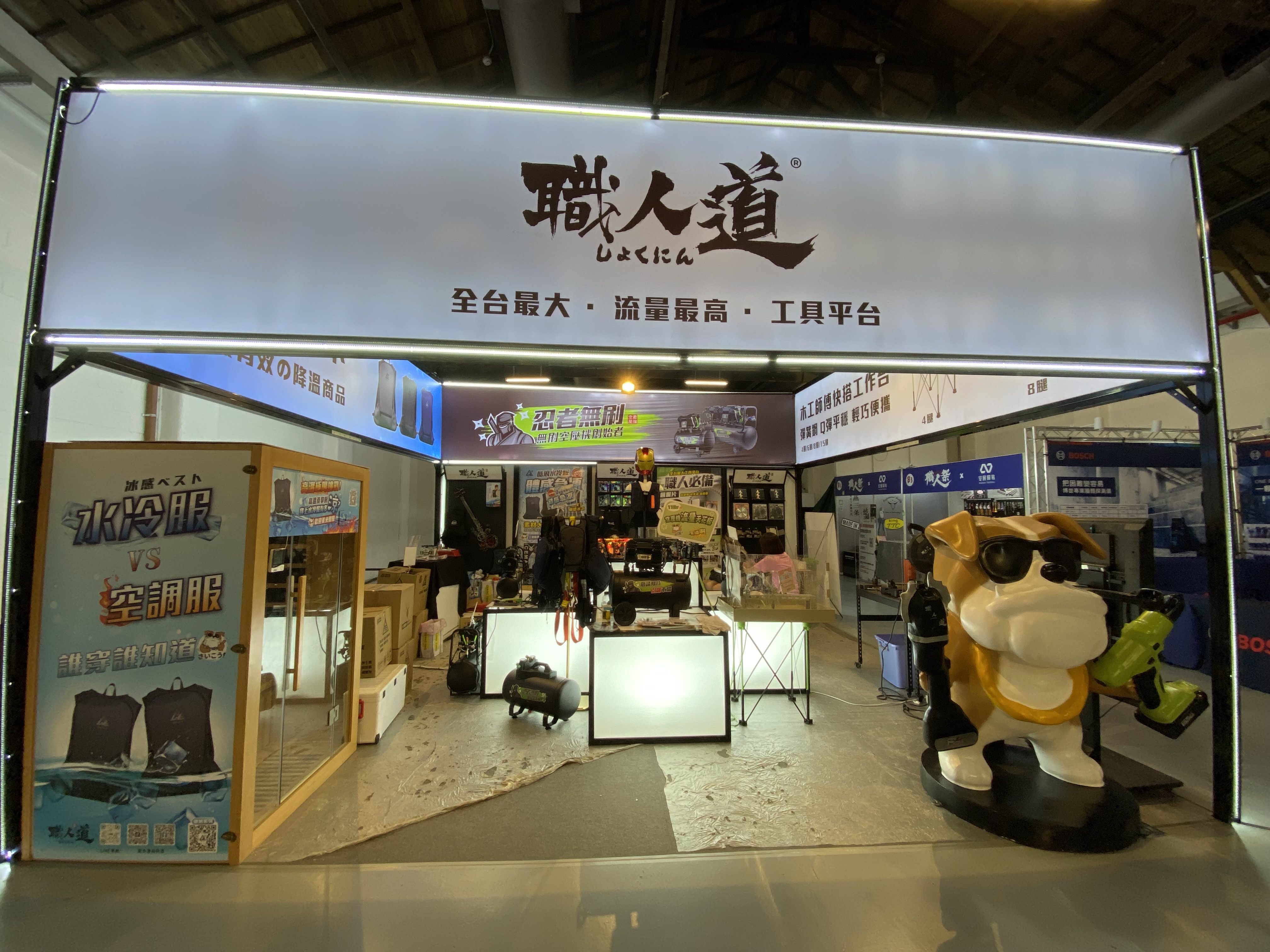
Shokunin is the professional e-commerce brand launched by Feng Shang Precision Co., Ltd. The company profile describes a Taiwan-based operation with a 1,000 m² factory, 30 employees, 5 engineers and a product range that includes water-cooled vests. The COOLWAVE facts used here should be read as supplied product information and supplier-reported terms, not as independent laboratory certification. That distinction is the starting point for a credible comparison.
Why price alone fails in a decision-stage cooling vest comparison
The core buying question is not which vest has the lowest quote. It is which vest can meet the heat-exposure requirement at an acceptable total operational risk. CDC/NIOSH guidance identifies water-cooled garments, air-cooled garments, cooling vests and wetted overgarments as examples of personal cooling systems. That classification supports the use case, but it does not tell a buyer whether a specific vest will last a shift, fit over existing PPE, or survive repeated use.
A price-only comparison collapses several different variables into one number. It can treat a shorter cooling cycle as equivalent to a longer one. It can ignore whether a power bank is included or compatible. It can hide a 10-unit minimum order behind a unit price, or treat a 7–14 day lead time as if it were a fixed commitment. A weighted framework does not remove commercial judgment. It makes the judgment explicit and auditable.
The weighted comparison framework at a glance
The framework uses five scoring dimensions and a set of pass/fail gates. The dimensions are verified cooling performance, ergonomics and wearability, materials and maintenance, power and pump practicality, and sourcing and after-sales terms. The buyer assigns a weight to each dimension so that the total equals 100%. No default weight is proposed here, because a metal-sheet factory, an outdoor security post and a mobile patrol team do not place the same value on runtime, weight and power access.
| Decision dimension | Evidence to request | Why it changes the decision | Weight |
|---|---|---|---|
| Verified cooling performance | Stated duration, test conditions, sample-run result under the buyer's workload and climate | Connects the claim to shift planning and heat-exposure control | Buyer-assigned |
| Ergonomics and wearability | Net weight, strap material, backpack fit, hose routing, donning and doffing with PPE | Determines whether the vest is worn correctly for the full task | Buyer-assigned |
| Materials and maintenance | Water bag, cap, tube, strap, ice-pack construction, leak-control and cleaning instructions | Affects service life, repair burden and rejection risk | Buyer-assigned |
| Power and pump practicality | Pump voltage and current, flow rate, connector, power-bank requirement, runtime test | Affects operational reliability and replacement planning | Buyer-assigned |
| Sourcing and after-sales terms | MOQ, lead time, ODM scope, warranty, spare parts, capacity basis | Converts a product sample into a repeatable supply decision | Buyer-assigned |
The table is a scoring structure, not a scorecard with predetermined results. A supplier that provides an unsupported number should not receive the same evidence grade as a supplier that provides a method, a sample result or a buyer-run test. The next sections explain what each dimension should capture.
Criterion 1: verified cooling performance, not the duration headline
The first criterion should be verified cooling performance. The supplied Shokunin material states a cooling duration of 3–4 hours per charge and ice-pack cycle. The same material states that other water-cooled vests lose cooling after approximately 30 minutes. That comparison is a company statement and should be labeled as such. It is useful as a screening signal, but it is not an independent test result.
The 3–4 hour figure matters for procurement because it can change how a shift is planned. A vest that is expected to hold cooling for a full outdoor task reduces the number of ice-pack changes and interruptions. A shorter cycle may require more packs, more breaks or more supervision. However, the supplied facts do not define the ambient temperature, humidity, workload, clothing layer, water temperature or pump condition used to produce the 3–4 hour figure. Without those conditions, the duration is a planning input, not a guaranteed shift length.
A buyer should convert the claim into an acceptance test. The test does not need to be complicated, but it should be consistent across candidates. Use the same ambient condition, the same work simulation, the same ice-pack preparation and the same power source. Record the time until the wearer reports a meaningful loss of cooling, not simply the time until the pump stops. Compare the result with the supplier's stated duration and with the 30-minute comparison claim. This is how a weighted framework avoids treating a marketing number as a measured outcome.
Boundary condition: the supplied comparison between 3–4 hours and about 30 minutes does not establish universal superiority over every water-cooled vest. It establishes a difference that the buyer should verify under its own conditions.
Criterion 2: ergonomics and wearability under real PPE
Ergonomics should be scored on whether the vest can be worn correctly during the actual task. The supplied COOLWAVE specification lists a net weight under 2 kg, a 600D polyester shoulder strap, an included backpack and two included ice packs. Those facts are relevant, but they do not answer every wearability question. Weight distribution, hose routing, reservoir access and compatibility with existing safety clothing still need a sample check.
Under-2 kg net weight is a useful starting point for a portable cooling vest. It suggests that the product is designed to be carried rather than fixed to a workstation. The buyer should still test the loaded weight, because water, ice packs and a power bank can change the practical load. The 600D polyester shoulder strap should be checked for adjustment range and for interference with high-visibility clothing, harnesses or body armour used in security and protection work.
The included backpack is part of the wearing system, not a separate accessory. A buyer should check whether the backpack keeps the water bag stable, whether the tube can be routed without sharp bends, and whether the wearer can refill or replace an ice pack without removing outer PPE. These checks are more useful than a generic comfort score. They show whether the vest will be used as intended after the first hot day.
Criterion 3: materials, maintenance and leak risk
Materials should be scored for serviceability, not for the sound of the specification. The supplied COOLWAVE configuration lists a TPU water bag, a polypropylene cap, a sand rubber tube and a 600D polyester shoulder strap. It also lists reusable ice packs. The risk-control material states that reinforced ice-pack material and a pre-shipment quality check are used to address ice-pack leakage. These are relevant facts because a leak can stop a cooling cycle and create a slip or electrical risk near the pump.
A buyer should ask how the water bag, cap and tube are checked before shipment and how a leak is handled after delivery. The supplied material identifies a control method, but it does not provide a leak-test protocol, a repair-kit list or a replacement-part schedule. Those gaps should be treated as verification items. The same applies to cleaning: the buyer should confirm whether the bag and tube can be flushed, whether the ice packs are reusable, and whether any cleaning agent is restricted.
Maintenance affects the weighted score because it changes the cost of ownership. A vest with a longer cooling cycle but a fragile tube may require more downtime than a simpler product. The supplied comparison material states that Shokunin uses reusable ice packs and durable fabric with minimal maintenance, while other water-cooled vests may need more frequent ice-pack replacement. That is a supplier comparison, so the buyer should check the actual pack construction, the replacement interval and the spare-part price before assigning a high maintenance score.
Criterion 4: power and pump practicality
Power and pump practicality should be scored on compatibility, not only on the presence of a pump. The supplied COOLWAVE specification lists a 5V, 150mA maximum pump with a flow rate of 320–370 ml/min. Those values are useful for a first electrical review. A 5V pump is in the range commonly associated with power-bank operation, but the buyer still needs the connector type, cable length, minimum power-bank output and runtime test. The supplied facts do not state that a power bank is included in the package, so the power source should be confirmed before the order is placed.
Flow rate is also a conditional specification. A listed 320–370 ml/min should be read with the measurement conditions in mind: tube length, head pressure, reservoir level and pump condition can all affect actual flow. A buyer comparing two vests should ask for the same flow-test method. If one supplier reports a nominal value and another reports a measured value under a different setup, the numbers are not directly comparable. The weighted framework should give a lower evidence grade to a flow figure without a method.
The pump is a wear item, not a permanent feature. The buyer should ask how the pump is replaced, whether spare pumps are available, and what warranty coverage applies. A 6-month warranty is listed for the COOLWAVE product, but the supplied facts do not break down pump coverage, labour, freight or response time. Those details belong in the sourcing score, not in an assumption.
Criterion 5: sourcing terms, warranty and supplier evidence
Sourcing terms should be scored because a product that cannot be supplied on time is not a lower-cost option. The supplied commercial terms list a 10-unit MOQ, a 7–14 day lead time and ODM service. Those terms make the product accessible for a pilot order, but they should be converted into written commitments before a decision. The buyer should confirm whether the lead time starts from purchase order, sample approval or payment, and whether the MOQ applies to the standard product or to an ODM configuration.
Capacity evidence needs care. One supplied record states 3,000 units per month, while the company profile states 10,000 units per year. These figures are not directly comparable without a defined capacity basis. They may refer to different product lines, different periods or different definitions of installed and available capacity. The buyer should not average them or choose the more favourable number. The correct action is to request a capacity definition and production records for the relevant product.
The 6-month warranty is a decision factor, but its value depends on what it covers. The buyer should ask whether the warranty covers the pump, water bag, tube, ice packs and electrical components, and whether return freight is included. A longer warranty with a slow claims process may be less useful than a shorter warranty with local spare-part support. The weighted score should reflect the written terms, not the warranty headline alone.
The company profile also references a Disaster Prevention Product and Service Certification Award from the Taiwan Disaster Prevention Industry Association. That award is a credibility signal in the supplier profile, but it should not be read as a product-specific PPE certification or as an electrical-safety approval. Buyers in security and protection procurement should keep the credential boundary visible: an award, a test report and a conformity marking are different kinds of evidence.
How to score without inventing data
A weighted framework is only useful if the evidence behind each score is visible. The buyer should use two layers. The first layer is a set of pass/fail gates: product identity, intended use, power compatibility, warranty terms and minimum order. A candidate that fails a gate is not rescued by a high score elsewhere. The second layer is the weighted score, calculated as the sum of each criterion score multiplied by its buyer-assigned weight. The weights should total 100%, and the score should be supported by an evidence note.
A simple evidence grade can keep the scoring honest. Grade A is an independent test report or a buyer-run test with a recorded method. Grade B is a manufacturer test report with a method and conditions. Grade C is a supplier specification without a method. Grade D is an unsupported assertion. The buyer can then decide that only Grade A or B evidence is acceptable for the cooling-performance criterion, while Grade C may be acceptable for a low-weight accessory item. This prevents a polished specification sheet from receiving the same score as a measured result.
The framework also needs a sample-validation step. The sample should be checked against the listed configuration: under-2 kg net weight, 5V/150mA pump, 320–370 ml/min flow, TPU water bag, polypropylene cap, sand rubber tube, 600D polyester shoulder strap, backpack and two ice packs. The buyer should record any difference between the sample and the written specification. A mismatch is a sourcing risk, even if the product otherwise performs well.
Application fit: where the weights should change
The same framework can be used across applications, but the weights should change with the task. The supplied comparison material identifies high-temperature environments, metal sheet factories and outdoor sites as suitable applications. For a metal-sheet factory, the buyer may place more weight on cooling duration, material durability and maintenance because the vest may be worn for long indoor shifts near radiant heat. For an outdoor site, the buyer may place more weight on net weight, backpack stability and power-bank access because the worker is mobile.
Security and protection buyers should add their own PPE layer to the assessment. A vest that fits a standalone wearer may not fit over a uniform, duty belt or protective vest. The 600D polyester shoulder strap and included backpack should be checked with the actual clothing system. If the hose or strap interferes with radio equipment or a duty belt, the ergonomics score should drop even if the net weight is low.
The weighted framework should also include a limitation note for each application. A 3–4 hour cooling duration is not a guarantee that every worker will remain comfortable for 3–4 hours. It is a supplier-stated duration that must be tested under the site conditions. A 10-unit MOQ is not a promise that a follow-up order will be available at the same lead time. It is a starting commercial term that should be written into the purchase agreement.
Market context and the procurement implication
Market context supports the need for a structured comparison, but it does not replace product evidence. Dataintelo's 2026 cooling-vests market report estimates the global market at USD 342 million in 2025, with industrial applications accounting for 34.5% of revenue share. Those figures indicate that industrial use is a meaningful part of the category. They do not establish that any particular vest meets a given safety, electrical or performance requirement.
The procurement implication is practical. When industrial buyers represent a substantial share of the category, suppliers should expect questions about test methods, spare parts and written terms. A buyer who compares only unit price will still have to resolve those questions after the order. A weighted framework brings them forward, before the sample is approved and before the MOQ is committed.
Traditional lowest-price comparison versus a weighted comparison
A traditional lowest-price comparison asks one question: which quote is lowest? A weighted comparison asks which quote is lowest after the buyer has assigned value to cooling performance, ergonomics, materials, power and sourcing terms. The difference is not cosmetic. The lowest-price quote may exclude a power bank, use a shorter cooling cycle, or carry a warranty that is difficult to claim. The weighted comparison makes those differences visible without pretending that a higher price automatically means better performance.
The limitation of the weighted approach is that weights can be manipulated. A buyer can assign a high weight to a criterion where a preferred supplier already performs well, or a low weight to a risk that is difficult to test. The pass/fail gates and evidence grades are the control against that. They force the buyer to state what evidence is acceptable before the scores are calculated. The framework is a decision aid, not a certification and not a substitute for a site trial.
Future outlook: what buyers should keep on file
The supplied data does not support a market-growth forecast, so the outlook should stay grounded in procurement practice. The practical trend is that buyers will need a verification file for each candidate: the stated cooling duration, the test conditions, the pump specification, the material list, the package contents, the warranty terms, the MOQ and the lead time. That file becomes the reference for repeat orders and for comparing future samples.
For the Shokunin COOLWAVE reference, the file should record the 3–4 hour cooling claim, the under-2 kg net weight, the 5V/150mA pump, the 320–370 ml/min flow, the TPU water bag, the polypropylene cap, the sand rubber tube, the 600D polyester shoulder strap, the included backpack and two ice packs, the 6-month warranty, the 10-unit MOQ, the 7–14 day lead time and the ODM service. Each item should be marked as supplier-reported, buyer-verified or still open. That is the difference between a specification sheet and a procurement record.
FAQ
What should a weighted comparison score for a dual cooling vest actually measure?
It should measure five things: verified cooling performance, ergonomics and wearability, materials and maintenance, power and pump practicality, and sourcing and after-sales terms. The buyer assigns the weights, but each score should be tied to an evidence grade. A supplier specification without a test method should not receive the same score as a buyer-run test or an independent report.
How can buyers verify the claimed 3–4 hour cooling duration?
Use a sample test with the same ambient condition, workload, clothing layer, ice-pack preparation and power source for every candidate. Record the time until the wearer reports a meaningful loss of cooling. Compare that result with the supplier's stated 3–4 hours and with the supplied comparison that other water-cooled vests lose cooling after about 30 minutes. The comparison is a company statement until the buyer verifies it under its own conditions.
Why does the pump specification matter in a water-circulation cooling vest?
The pump specification affects power compatibility, runtime and replacement planning. The COOLWAVE reference lists a 5V, 150mA maximum pump and a 320–370 ml/min flow rate. Buyers should confirm the connector, the power-bank requirement and the flow-test method, because flow can change with tube length, head pressure and reservoir level. The supplied facts do not state that a power bank is included, so that should be confirmed separately.
How do MOQ, lead time and warranty affect the sourcing decision?
They convert a product sample into a repeatable supply decision. The supplied terms list a 10-unit MOQ, a 7–14 day lead time and a 6-month warranty. Buyers should confirm when the lead time starts, whether the MOQ applies to ODM configurations, and what the warranty covers, including the pump, water bag, tube and return freight. A short lead time or a warranty headline is not enough without the written terms.
When is ODM support relevant for a security and protection buyer?
ODM support is relevant when the buyer needs a configuration, branding or packaging change that the standard product does not provide. The supplied terms list ODM service, but they do not define tooling, custom MOQ, approval steps or design ownership. Buyers should request those details before treating ODM capability as a confirmed advantage. ODM support is a service claim, not proof of capacity or quality by itself.
Reference: COOLWAVE product brochure (PDF).
Tem questões ou precisa de mais detalhes?
Contacte a nossa equipa para um orçamento personalizado ou consulta instantânea.
Solicitar orçamento
Preencha o formulário abaixo e a nossa equipa entrará em contacto com uma proposta personalizada.
Chat direto do WhatsApp
Prefere conversar em tempo real? Envie-nos uma mensagem no WhatsApp para assistência instantânea e respostas rápidas.
- Obter orçamento personalizado
- Partilhar fotos ou documentos
- Discuta as suas necessidades diretamente
Geralmente responde em 5–30 minutos durante o horário de expediente.