
Dual Cooling Water Vest Fit for High-Heat Project Scenarios
Dual Cooling Water Vest Fit for High-Heat Project Scenarios
Industrial project planners evaluating heat-stress interventions often move beyond basic cooling accessories when shifts extend beyond a few hours. For high-heat environments such as construction, metal fabrication, and outdoor traffic control, the relevant procurement question is not simply whether a cooling garment exists, but which design can maintain thermal relief long enough to align with real work cycles.
The Project-Level Heat Problem
High-temperature worksites create a specific set of demands: workers need cooling that lasts through extended tasks, gear that can be worn with other PPE, and equipment that does not require constant interruption for ice replacement. The industrial segment accounted for 34.5% of cooling vest market share in 2025, driven by construction and manufacturing applications. In Asia Pacific, rapid industrialization and a large outdoor workforce are expected to drive the fastest regional growth. These conditions mean that project planners increasingly treat heat stress as a productivity and safety variable rather than an individual comfort issue.
Traditional solutions—phase change material inserts, simple ice vests, and fan-based air circulation—offer varying trade-offs. PCM packs can provide consistent temperature but need regeneration; fan systems depend on ambient air and battery life. Ice water circulation systems represent a different approach: a chilled water loop carries heat away from the body, with the pump and reservoir designed to extend active cooling duration.
Shokunin COOLWAVE as a Scenario-Fit Reference
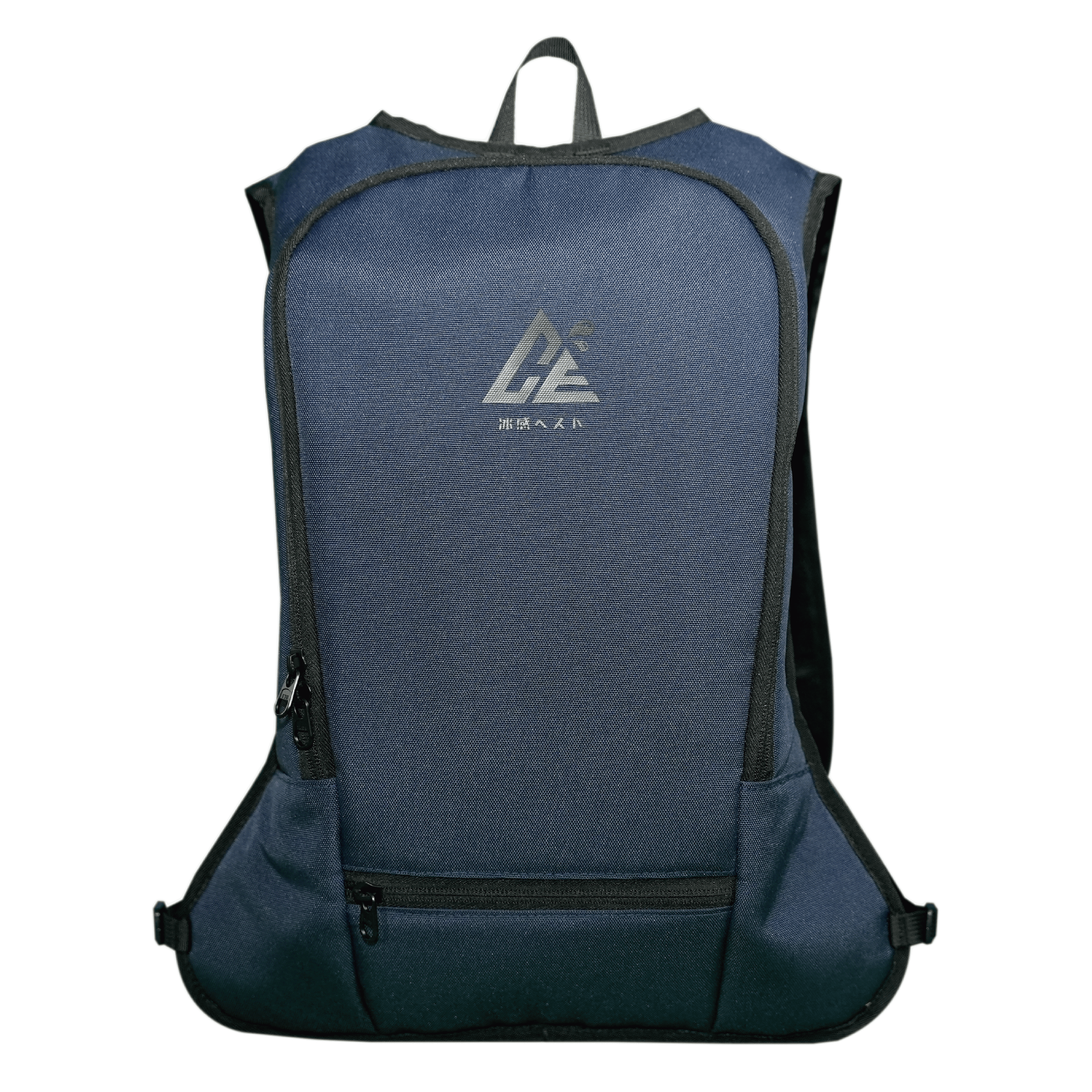
Shokunin is a professional e-commerce brand launched by Feng Shang Precision Co., Ltd., a Taiwan-based manufacturer founded in 2009. The company's product range includes air compressors, cut-off machines, water-cooled vests, lithium batteries, and other professional tools, with a focus on brushless air compressor innovation and high-temperature work support. The COOLWAVE Water-Circulation Cooling Vest is offered in a basic model and professional models in blue, gray, and black.
For project buyers, the most important first-party facts are the cooling duration and the system design. The COOLWAVE is specified to provide 3–4 hours of cooling, weighs within 2 kg, and is intended for circulation water below 10°C. It includes the vest backpack and two reusable ice packs. The shoulder strap uses 600D polyester, the water bag is TPU, the body material is PEVA, and the cooling tube is sand rubber. The pump output is rated at 5V 150mA maximum, with a maximum flow rate of 320–370 ml/min.
These specifications matter because they define whether the vest can run through a half-shift or a longer task without repeated ice replacement. The weight under 2 kg is low enough to layer over workwear without creating excessive burden. The 600D polyester shoulder straps provide a known abrasion-resistant anchor point.
Technical Behavior in Practice
In operation, the ice packs chill the water in the TPU reservoir. The small 5V pump circulates chilled water through the sand rubber tubing, drawing heat from the wearer's torso. Unlike passive ice vests that only cool at direct contact points, the circulation mechanism distributes cooling across a larger surface area. The flow rate, rated up to 320–370 ml/min, is designed to maintain a steady cooling loop.
This is not an active refrigeration system: it does not generate cold, but rather transports cold from the ice packs to the body. The practical consequence is that the system's endurance depends on the ice pack capacity and ambient heat load. In extremely high-temperature or high-humidity environments, the 3–4 hour duration may compress if the ice melts faster or if the pump operates continuously. Buyers should evaluate whether their site can provide ice replenishment mid-shift if needed.
Application Fit Across Scenarios
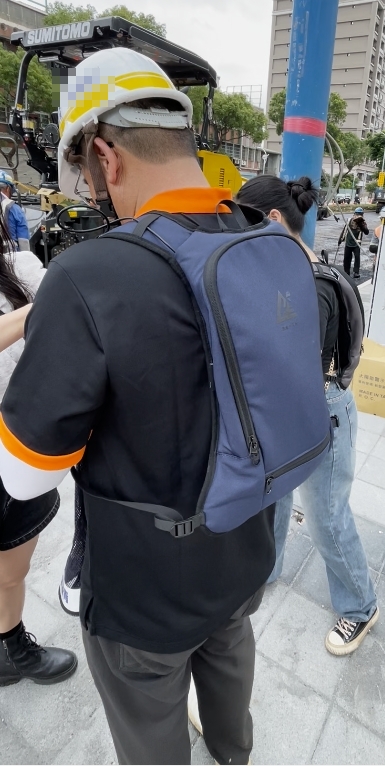
The available application data covers construction sites, outdoor work, metal sheet factories, street vendors, fishing, and night market operations. These are not abstract use cases; the COOLWAVE has been deployed in Taiwan across high-temperature environments for groups including construction site supervisors, traffic controllers, copper refinery workers, and night market vendors. One case record describes a deployment of 100 units across construction, outdoor, metal sheet, and street vendor settings, with a reported duration of 10 years of use. The reported outcomes include effective body cooling, heatstroke prevention, and improved work efficiency and worker comfort.
For metal-roof factories and metal sheet plants, where ambient heat can be intense even in shaded areas, the vest's water circulation offers a more sustained cooling effect than evaporative or simple ice-pack designs. For traffic controllers and street vendors, the lightweight, one-size-fits-all adjustable design and portable backpack form factor reduce the need to interrupt work for cooling management. The system is described as waterproof and breathable in the application notes, which supports use in sweaty or humid conditions.
However, project fit is not universal. The vest relies on ice packs, so sites without a freezer or ice supply will face a logistics constraint. The pump requires a 5V power source, so users must ensure a compatible power supply is available or planned. These are not disqualifying limitations, but they should be included in any site-level feasibility check.
Market Trend Alignment
The wider cooling device market provides context for why active circulatory systems are gaining attention. The global personal cooling device market was valued at USD 25.16 billion in 2024 and is projected to reach USD 94.85 billion by 2035, according to Market Research Future. Within the specific cooling vest category, Dataintelo estimates a market value of approximately USD 215 million in 2024, rising to USD 385 million by 2033. The industrial segment is the largest application for cooling vests, with a 34.5% share in 2025. PCM cooling vests are noted as the fastest-growing technology segment at 28.7% in 2025, but active circulatory mechanisms are also being deployed more frequently in industrial sectors to mitigate occupational heat stress.
For procurement teams, this trend suggests that cooling vests are becoming a recognized category of industrial safety equipment, not a niche accessory. Suppliers that can document clear technical specifications and provide ODM-level supply consistency may be more aligned with multi-site rollouts. Shokunin's stated production capacity for the COOLWAVE is 3,000 units per month, with a lead time of 7–14 days and an MOQ of 10 units. The after-sales warranty for the water-cooled vest is six months. These are practical data points for evaluating supplier readiness, even though customization is not offered for this line.
Comparison with Traditional Cooling Approaches
To assess fit, buyers often compare ice water circulation vests against three familiar alternatives: passive ice pack vests, PCM vests, and battery-powered fan garments. The COOLWAVE system differs in several dimensions:
| Evaluation Dimension | COOLWAVE Water-Circulation Vest | Typical Passive Ice Vest | Typical PCM Vest |
|---|---|---|---|
| Cooling duration | 3–4 hours specified | Often shorter; may require frequent ice changes | Consistent until PCM material warms |
| Cooling mechanism | Active water circulation | Direct contact cooling | Phase change material contact |
| Weight | Within 2 kg | Varies, often lighter | Varies, may be heavier |
| Power requirement | 5V pump (150mA max) | None for cooling | None for cooling |
| Ice/logistics | Reusable ice packs; requires freezer | Frozen ice packs; requires freezer | PCM packs need conditioning |
Each option has legitimate strengths. PCM vests can provide precise temperature control and do not require water management, but their cooling packs need conditioning and may not circulate heat away as actively. Fan garments can be light, but their performance depends on ambient airflow. Ice water circulation is most appropriate when the priority is sustained, distributed cooling over a multi-hour shift and when the wearer can accept a small pump and reservoir.
A real boundary: COOLWAVE is not a self-contained refrigerated vest. It relies on the user to freeze the ice packs beforehand. In remote or off-grid locations without reliable ice, the available cooling time may be shorter than the 3–4 hour specification. Additionally, the system is specified for circulation water below 10°C, so users must use sufficient ice to keep the water in range; warm water will reduce the cooling effect.
Future Outlook
The next generation of industrial cooling wear is likely to combine multiple heat-management strategies: PCM integration, active circulation, and smart monitoring. As industrial buyers shift toward total worker heat-stress programs, the ability to document cooling duration, material durability, and supply continuity will become as important as the garment itself. Water circulation vests are well positioned to serve as a bridge between passive cooling and more complex active systems, especially in regions with high heat exposure and limited access to air-conditioned rest areas. The market data supports continued expansion in Asia Pacific and industrial applications. For Shokunin, the key challenge will be maintaining specification transparency while scaling ODM supply.