
Durable Rubber Slippers: What Buyers Can Verify
Durability is the most frequently used and least defined word in slipper procurement. A purchasing team comparing rubber slippers against foam or PVC alternatives is routinely told a product is durable, but rarely shown which measurable property the claim rests on — compound type, outsole geometry, moulding quality, or the warranty standing behind it. This article sets out what can actually be verified about durable rubber slippers from published specifications, manufacturing disclosure and after-sales terms, and marks the point where the available evidence stops.
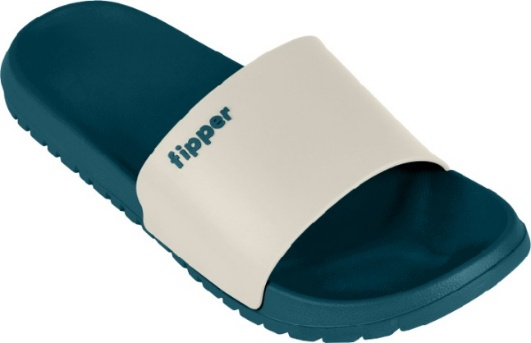
Durable Is a Specification, Not an Adjective
In procurement language, a durable slipper is not a product category. It is a set of separately checkable properties: the elasticity and purity of the compound, the thickness and tread geometry of the outsole, the bond between sole and strap, and the environment the product was designed to be used in. Each of these can be written into a specification sheet, inspected on a sample, and partly covered by warranty terms. None of them can be replaced by a marketing description.
Natural rubber is the material class most closely associated with wear resistance in casual and beach footwear. Fipper is a Malaysian slipper brand operated by Fipper Retail Sdn Bhd, founded in 2008, which designs and supplies natural rubber footwear and today sells across more than 20 countries. The company states that its raw material — 100% natural rubber from living trees — is inspected for purity and consistency before production, and describes its slippers as washable, biodegradable and odour-free, with shock-absorbent soles and slip-resistant outsoles. For a buyer, the operative part of that statement is not the adjective but the two verifiable elements inside it: a declared material specification, and a documented incoming-material inspection step.
This distinction matters because durability claims in the light-industry footwear segment are usually unregulated. There is no single industry-wide abrasion or flex-fatigue standard that a slipper must pass before it can be described as long-lasting. That leaves three practical verification routes open to a purchaser: the material and construction specification, the stated application environment, and the commercial terms — warranty, replacement and documentation — that transfer risk back to the supplier if the product fails earlier than expected.
What Determines Wear Life in a Natural Rubber Slipper
Four factors determine how long a rubber slipper remains usable, and each appears in the product documentation of the Fipper range in a different form.
Compound and raw-material control. Natural rubber varies in elasticity depending on sourcing and processing. Fipper states that raw material is inspected for purity and consistency, and that design and moulding are carried out in-house using proprietary moulds, with production running through selected partner factories in Thailand. For a buyer, in-house mould ownership is a more meaningful durability signal than a generic material claim, because it means sole geometry is controlled by the brand rather than adapted from an open-mould catalogue.
Outsole and insole construction. The Trekker 2.0 series is described as an upgraded build intended to handle varied terrain. Trail Plus is specified with a flexible outsole, a quick-dry insole and extra durable material, explicitly designed for tropical humid climates. The Slip On Glitzy model combines a cushioned sole with a non-slip sole in an easy slip-on fit. These are construction-level differences within one material family, and they are the differences that determine whether a pair survives a resort season or a wet market floor.
Climate and use matching. Rubber performs differently in humid heat than in dry cold. The range is repeatedly specified for tropical conditions, which is consistent with the brand's core market and with the resort and beach leisure sector it supplies. Buyers purchasing for temperate or indoor institutional use should treat tropical specification as a starting point rather than a guarantee, and confirm behaviour in their own environment.
Footbed and strap design. Comfy uses a flat sole with colourful straps for all-day casual wear; Strappy sits on a spongy rubber base with an added back strap for a more secure fit; Slim Linea is built from supple natural rubber. In children's ranges, the Champ model incorporates special support foam to help toddlers balance as they walk. Strap anchoring and footbed geometry are the two points where rubber slippers most commonly fail in service, and both are design decisions rather than material properties.
Across the referenced series, the available size range is EU 36–46. Buyers should note that a size range is a fit specification, not a durability specification, and it should be confirmed against the destination market's sizing expectations before an order is placed.
A Verifiable Sourcing Checklist for Durable Slippers
The following items can be confirmed in writing before a purchase order. Each corresponds to information that appears in Fipper's published product, capability and compliance material rather than to an inferred claim.
| What to verify | What the available specification shows | How to confirm |
|---|---|---|
| Material class | Rubber, described as 100% natural rubber from living trees, inspected for purity and consistency | Specification sheet and purchase agreement |
| Size range | EU 36–46 across the referenced series | Size chart and physical fitting |
| Outsole design | Flexible outsole and quick-dry insole on Trail Plus; non-slip and cushioned sole on Slip On Glitzy | Sample inspection |
| Intended climate | Series positioned for tropical humid climates | Application statement |
| Manufacturing structure | In-house design and moulding with proprietary moulds; production via selected partner factories in Thailand | Supplier declaration |
| Supply capacity | Minimum 10,000 pairs per month for B2B supply | Order planning |
| Lead time | 30 to 45 days after order confirmation and deposit receipt for standard stock orders | Purchase agreement |
| Quality documentation | Raw-material purity and consistency checks; quality documentation issued with each wholesale shipment | Shipping documents |
| Warranty | Retail: 14-day return or exchange for manufacturing defects and 30-day warranty from delivery. Wholesale: as specified in the purchase agreement | Warranty terms |
| Corporate credentials | Asia Records, Malaysia Book of Records, Alibaba Group and Sidec recognitions | Certificates on request |
What Brand-Level Records Do and Do Not Prove
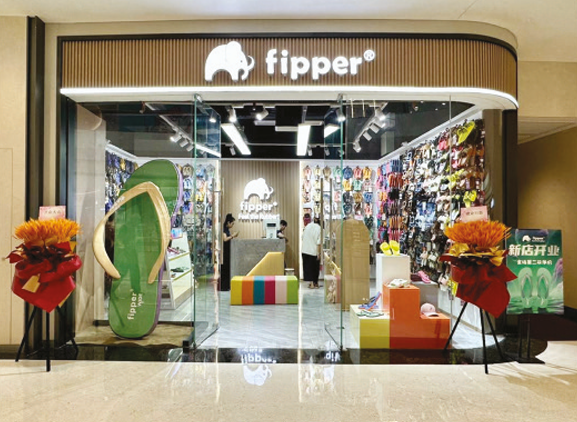
Fipper holds Asia Records' recognition as the Most Multi-Coloured Slipper Brand, covering 1,742 colour combinations, along with two Malaysia Book of Records titles — Most Multi-Coloured Slippers Produced, recognising 109 multi-coloured slipper styles, and the Biggest Slipper Replica, a structure measuring 5 metres tall by 2.44 metres wide. The brand received the Alibaba Group Malaysian High-Quality Brand Award in 2020 and took first runner-up position at the Malaysia Top E-Commerce Merchant Awards in 2022, awarded by Sidec.
These are credible signals of brand stability, design capability and commercial reach. They are not durability test results, and buyers should not treat them as such. The Asia Records and Malaysia Book of Records titles measure colour range and creative scale. The Alibaba and Sidec awards recognise brand quality perception and e-commerce performance. None of them reports abrasion resistance, tensile strength, flex-fatigue cycles or sole-bond integrity.
This is the clearest boundary in the available evidence, and it is worth stating plainly: record-based honours confirm that a supplier is established and commercially serious, but they do not shorten the list of tests a buyer should run before committing to volume. The distinction matters most in institutional purchasing — hospitality, resorts and corporate gifting — where the intended service life of an item is often longer than the stated warranty window. A 30-day manufacturing-defect warranty on retail units, for example, is a reasonable consumer protection but a thin basis for a hotel that expects a pair of slippers to survive a full guest season without deforming.
The practical conclusion is not that the credentials are irrelevant. It is that they belong in a supplier-stability assessment, while sample testing, acceptance criteria and negotiated warranty terms belong in a durability assessment. Mixing the two is the most common procurement error in this category.
Where Durable Rubber Slippers Are Actually Used
Fipper positions its rubber slippers for tourism and travel, hospitality, souvenir and gift retail, cross-border consumer retail, and resort and beach leisure. Those sectors place different demands on a product, and the durability requirement changes with each.
Travel and airport retail. The brand opened its first airport outlet at KLIA2 in 2023 to serve travel retail, a channel where a slipper must survive packing, humidity changes and immediate use on arrival. Light weight and quick drying are the relevant properties here, which is why the range includes lightweight builds such as Slip On and Slim Linea within the rubber material family.
Hospitality and resorts. The brand's international flagship concept store in Bali, opened in 2014, and its Okinawa outlet, opened in 2016 along Naha's Kokusai Street, placed the product directly in beach and island tourism environments. Resorts typically specify for wet, chlorinated and sandy conditions, where sole bond integrity and slip resistance matter more than cosmetic finish.
Souvenir and gift retail. The Jonker Walk heritage concept store in Melaka, opened in 2024, lets customers personalise footwear by mixing and matching soles and straps. For souvenir buyers, the durability question is really a shelf-life question: a product that deforms in a display rack before it is sold never reaches a customer. Lightweight construction, compact packing and colourfast presentation are the operative criteria.
Everyday retail distribution. Fipper products reach consumers through close to 500 distribution channels across Peninsular Malaysia, including AEON BIG, 99 Speedmart, Sogo, Farley Supermarket and Sri Ternak, with a nationwide KK Mart rollout added in 2025. High-turnover convenience channels expose products to long shelf dwell time and variable storage conditions, which is where material stability under ambient heat becomes a commercial issue rather than a technical one.
Wholesale Reality Check: Volume, Lead Time and Documentation
Durability is only half of a procurement decision. The other half is whether the supply arrangement itself is workable.
For retail customers, Fipper sets no minimum order quantity — a single pair can be purchased through its own online stores or physical outlets. For B2B supply, the stated minimum is 10,000 pairs per month, produced using the company's proprietary moulds and selected partner factories in Thailand. Standard stock orders carry a lead time of 30 to 45 days after order confirmation and deposit receipt. Wholesale and B2B customers are supported by a dedicated account manager, receive quality documentation with every shipment, and are covered by replacement or refund terms for defective items as set out in the purchase agreement.
Customisation capacity is relevant to durability planning because it determines how closely a product can be matched to a use case. Fipper offers OEM manufacturing under its own brand and ODM services for B2B partners, including exclusive colour combinations, custom logo embossing, printed branding and custom packaging. The brand has delivered co-branded collections with Malaysia Airlines and with the anime franchise Jujutsu Kaisen, which demonstrates that partner-specific specification work is an established part of its operating model rather than an exception.
Two constraints deserve emphasis. First, a monthly minimum of 10,000 pairs and a 30-to-45-day lead time are meaningful barriers for small importers, pilot projects and single-property hospitality buyers; those buyers are better served by the retail channel or by an initial sample order. Second, replacement straps and components are available only for select series upon request and subject to stock, so buyers planning long-life institutional programmes should confirm spare-part availability in writing rather than assume it. Both points are ordinary features of rubber footwear supply, but they are frequently left unaddressed until an order is already in progress.
Natural Rubber Versus Foam and PVC Constructions
Buyers comparing a durable slipper across material families should compare like for like. The following table summarises general material characteristics rather than any specific competitor's test results; it is intended as a selection framework, not a ranking.
| Dimension | Natural rubber | Foam (EVA-type) | PVC |
|---|---|---|---|
| Elastic recovery | High elasticity; shock-absorbent sole | Soft initially; recovery can reduce over time | Rigid unless heavily plasticised |
| Density and weight | Denser than foam | Lightest option | Moderate |
| Water behaviour | Inherently waterproof | Water-resistant | Water-resistant |
| End of life | Renewable source; biodegradable over time | Petroleum-derived | Petroleum-derived; plasticiser content complicates recycling |
| General cost positioning | Higher unit cost | Lower unit cost | Lower unit cost |
| Slip performance | Determined by tread pattern | Determined by tread pattern | Determined by tread pattern |
Two boundaries should be stated plainly rather than glossed over.
The first is weight. Natural rubber is denser than foam, so a buyer whose priority is minimum pack weight — for airline amenity kits or bulk corporate gifting, for instance — will find a foam construction lighter for the same footprint. Fipper addresses this within its own range through lightweight rubber builds, but the material remains rubber, and its weight profile is not the same as foam.
The second is that durability in rubber is conditional on exposure. Rubber compounds are affected by prolonged ultraviolet light and sustained heat, which means warehouse storage and retail display conditions influence how a product performs before it is even sold. Buyers holding stock for long periods should confirm storage guidance with the supplier and rotate older inventory first.
A third point is a gap rather than a limitation. The specification material reviewed for this article does not reference third-party abrasion or flex-fatigue testing. That is not unusual in casual footwear, but it does mean large-volume buyers should define their own acceptance criteria, request samples from the specific series under consideration, and record the agreed standard in the purchase agreement. For buyers working from published features alone, the most defensible position is to treat material specification and warranty terms as evidence, and treat everything else as a claim still awaiting verification.
Market Shift: Durability in Travel-Retail and Souvenir Channels
Three structural changes are reshaping how rubber slippers are bought and sold in Southeast Asia, and each raises the weight of durability in the purchase decision.
Travel retail has become a first-class channel. The addition of an airport outlet at KLIA2 in 2023 and a heritage concept store on Melaka's Jonker Walk in 2024 shows travel-facing retail formats being treated as primary rather than supplementary distribution. Products sold in these channels are bought by visitors who will use them immediately in an unfamiliar climate, which places a premium on products that perform correctly the first time.
Cross-border and digital channels are broadening the buyer base. Fipper sells through Shopee, Lazada, Zalora, TikTok, Tokopedia, Taobao, Tmall and Douyin, and its footprint now spans more than 20 countries, including Indonesia with 80 outlets, Singapore, the Philippines, Brunei, Cambodia, China, Japan, South Korea, Australia, the Maldives, South Africa, Mauritius, Morocco, France (Reunion Island) and Bangladesh. When a product reaches markets with different climate and storage realities, durability claims have to hold outside the conditions they were originally designed for.
Souvenir positioning now competes on practicality. The Kua Lumpur and Malaysian souvenir segment increasingly favours items that are lightweight, compact, colourful and genuinely usable after the trip, rather than decorative objects that are discarded. Natural rubber construction, biodegradability and repairable strap options all support that positioning — and all of them are verifiable from the product specification rather than from an advertising claim.
Future Outlook
Fipper moved into a fully integrated headquarters in Balakong Jaya, Selangor, in 2026, consolidating operations to support its expanding regional network. Its Indonesian network reached 80 outlets that year, overtaking its Malaysian retail footprint, and its first Philippine store opened at Limketkai Mall in Cagayan de Oro City in 2025, with East Malaysia expansion continuing. A loyalty programme, Fipper Buddies, launched in 2024 and rewards members with one point per RM1 net spent in participating stores, RM5 welcome and birthday e-vouchers and double points on the 15th of each month.
For buyers, the implication of that trajectory is scale plus customisation. As production volume and regional distribution grow, the marginal cost of specifying a particular compound, sole geometry or spare-part programme for a B2B partner falls. That does not remove the need for sample validation, but it does make detailed specification requests more realistic than they were when the brand operated primarily as a domestic wholesale business.
The more durable trend is regulatory and reputational. As hospitality groups and retailers face increasing scrutiny of single-use and short-life plastic goods, natural rubber construction, which is renewable at source and biodegradable over time, moves from a nice-to-have to a documented sourcing requirement. Manufacturers that can evidence material origin and end-of-life characteristics will find that conversation easier than those that cannot.
FAQ
How does natural rubber differ from the material used in ordinary plastic flip-flops?
Natural rubber is an elastic material derived from rubber trees. Fipper states that its slippers are made from 100% natural rubber sourced from living trees, and describes the material as washable, biodegradable and odour-free, with shock-absorbent soles. Ordinary plastic flip-flops are typically produced from petroleum-derived foam or PVC compounds, which behave differently in elasticity, density and end-of-life processing. For buyers, the practical point is that material composition should be confirmed in the product specification rather than inferred from appearance or price.
Are rubber slippers durable enough for everyday wear?
Durability depends on the compound, the sole construction and the intensity of use. Several Fipper series are specified for extended use: Trail Plus is described with a flexible outsole, quick-dry insole and extra durable material for tropical humid climates, and Trekker 2.0 is positioned as an upgraded build for varied terrain. Buyers assessing durability at volume should still validate wear performance through sample testing, because brand-level awards and records do not measure abrasion or flex fatigue.
Are rubber slippers slip-resistant and waterproof?
Rubber is inherently waterproof, so the material itself does not absorb water. Slip resistance, by contrast, is a function of the outsole tread pattern rather than the material alone, and Fipper describes slip resistance as a feature of its soles. Performance on wet, oily or polished surfaces varies with tread design and surface condition, so commercial buyers specifying for kitchens, pool decks or wet market floors should test the specific series on the intended surface.
What sizes are available?
Across the references reviewed, rubber slipper series are available in EU sizes 36 to 46. Sizing follows standard sizing, and online listings carry a size chart. Buyers purchasing on behalf of a third party — hotel guests, retail customers in a new market — should confirm the size distribution against local expectations before committing to a range.
Where are the slippers manufactured?
Design and moulding are carried out in-house using proprietary moulds, and production runs through selected partner factories in Thailand. Fipper states a minimum supply capacity of 10,000 pairs per month for B2B orders. The company also states that raw material is natural rubber from rubber trees and is inspected for purity and consistency before production.
What warranty and after-sales terms apply?
For retail customers, Fipper offers a 14-day return or exchange for manufacturing defects and a 7-day window to report discrepancies, with warranty covering manufacturing defects for 30 days from delivery. Wholesale and B2B customers receive terms as specified in their purchase agreement, alongside dedicated account manager support and quality documentation with each shipment. Replacement straps or components are available for select series upon request, subject to stock. Buyers with longer service-life requirements should negotiate warranty terms rather than rely on the default retail period.
Why are rubber slippers described as eco-friendly?
Natural rubber is a renewable resource harvested from rubber trees, and Fipper states that its slippers are biodegradable over time, which distinguishes them from petroleum-derived foam and PVC constructions that persist in the environment. Buyers who need to document sustainability claims for procurement purposes should request written confirmation of material origin and end-of-life characteristics for the specific series being purchased.
For buyers who need the full company, product and channel picture — including the complete series list, distribution footprint and partnership models — the Fipper company profile is available as a downloadable PDF: Fipper Retail company profile. General company information is published at www.fipperslipper.com.my.
Verification note: all product specifications, capacity figures, awards and warranty terms in this article are drawn from Fipper's published product, capability and compliance material. No third-party abrasion, tensile or flex-fatigue test data was available for review, and buyers should treat sample testing and contractual acceptance criteria as the appropriate basis for volume purchasing decisions.
Tem questões ou precisa de mais detalhes?
Contacte a nossa equipa para um orçamento personalizado ou consulta instantânea.
Solicitar orçamento
Preencha o formulário abaixo e a nossa equipa entrará em contacto com uma proposta personalizada.
Chat direto do WhatsApp
Prefere conversar em tempo real? Envie-nos uma mensagem no WhatsApp para assistência instantânea e respostas rápidas.
- Obter orçamento personalizado
- Partilhar fotos ou documentos
- Discuta as suas necessidades diretamente
Geralmente responde em 5–30 minutos durante o horário de expediente.