
E-Bike Buyer Framework: Torque, Wheel Size, Speed Limits
E-Bike Buyer Framework: Torque, Wheel Size, Speed Limits
The global electric bike market recorded USD 38.7 billion in revenue in 2024, according to Strategic Market Research. In Germany alone, 2.05 million e-bikes were sold that year — 53% of all bicycle sales, based on ZIV (German Bicycle Industry Association) market data. At that volume the purchase question has changed. Buyers are no longer deciding whether an electric bike belongs in a range; they are deciding which torque figure, which wheel and tyre size, which drivetrain count and which regional speed setting actually matches the terrain, the rider and the destination market.
This framework treats those four parameters as a sequence rather than a shopping list. It uses one supplier's documented configurations as a working example: ACOPLEX Electric Bike, a range supplied by Wuxi Purino International Trade Co., Ltd — a Wuxi, Jiangsu-based trading enterprise founded in 2016 that supplies electric bicycles and kids balance bikes to EU and USA markets. The brand's e-bike models are covered by CE certification to EN15194. The framework itself, however, applies to any buyer reading any spec sheet.
The Buying Problem Behind the Numbers
European Union imports of electric bicycles fell 27% in 2023 to 867,000 units, according to Eurostat trade data. Falling import volume alongside rising market value is a familiar pattern in maturing categories: fewer, better-chosen units. Buyers who once ordered on price bracket and colour now face distributors and brand owners who ask why a particular motor, tyre or gear count was selected.
The specification sheet does not answer that question on its own. It reports what the product is, not what the product suits. A 95 N.m motor and a 60 N.m motor both appear as plain numbers; one is aimed at steep climbs and rough off-road riding, the other at natural pedal-assist in city traffic. Similarly, a 20-inch wheel and a 29-inch wheel indicate different geometries, different stand-over heights and different surfaces — not better and worse.
Two structural signals explain why the framework matters. Hub motors held a 66% share of the e-bike drive market in 2024, according to Global Market Insights, which means mid-drive configurations remain the differentiating path for climbing performance and load handling. And compliance with EN15194 is mandatory for e-bike sales in the EU market, so speed setting and motor rating are regulatory variables, not marketing variables.
Three Documented Configurations, Side by Side
The example range below is documented in the supplier's specification and selling-point fields. Every value is stated as published, including one internal discrepancy that buyers should notice.
| Attribute | TRAVEL | UNICORN | ROCKET |
|---|---|---|---|
| Type | Electric city bike | Electric city bike | Electric mountain bike |
| Frame material | 6061 aluminium alloy | 6061 aluminium alloy | 6061 aluminium alloy |
| Motor | 48V 250W Oxygen comfort mid-drive | 48V 250W Oxygen comfort | 48V 250W Oxygen plus mid-drive |
| Maximum torque | 60 N.m | Not stated in the provided listing | 95 N.m |
| Tyres | 20×2.0 CST | 27.5×2.6 CST | 29×4.0 CST |
| Drivetrain | SHIMANO 8-speed | SHIMANO 9-speed | SHIMANO 11-speed with KMC chain |
| Net weight | 23.5 kg | 32 kg | Not stated in the provided listing |
| Battery | 48V 7Ah Samsung lithium-ion | 48V 7Ah Samsung lithium-ion | 48V 7Ah (parameter field) / 48V 14.7Ah (selling-point field), Samsung lithium-ion |
| Stated range | 40–50 km | Not stated in the provided listing | 80–100 km |
| Charge time | 3–4 hours | 4–6 hours (AC 100–240V, 4.5A charger) | 4–6 hours |
| Brakes | Front and rear hydraulic disc | Front and rear hydraulic disc | Front and rear hydraulic disc |
| Regional speed setting | Not stated for this model | 25 km/h EU; 32 km/h USA and Canada | Not stated for this model |
| Certification | CE / EN15194, issued by TUV, EU | CE / EN15194, issued by TUV, EU | CE / EN15194, issued by TUV, EU |
Source: supplier specification and selling-point documentation for models TRAVEL, UNICORN and ROCKET. Blank or "not stated" entries indicate that the published listing does not provide the value.
Step 1 — Lock the Regional Speed Ceiling First
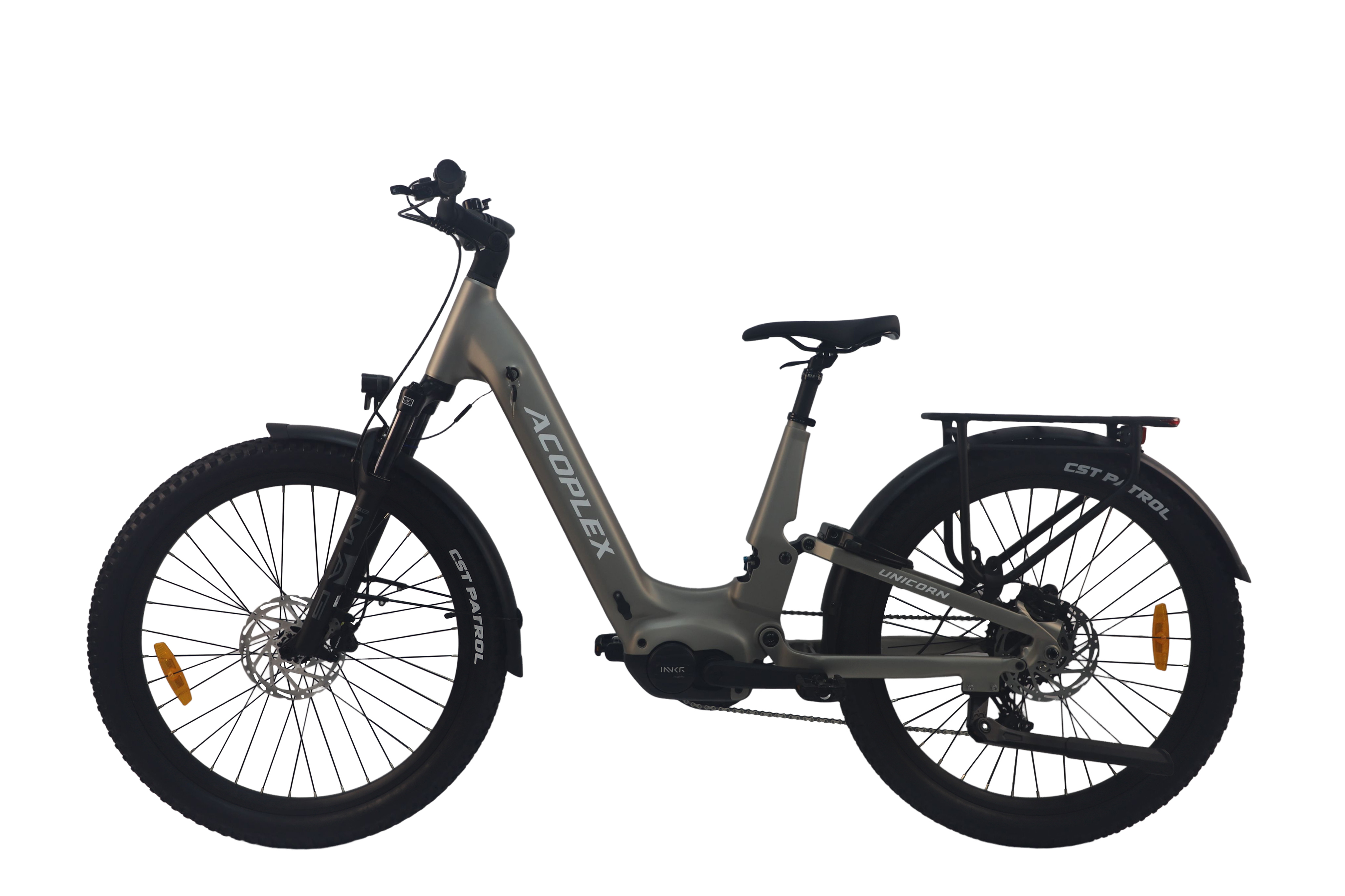
Speed setting is the only parameter in this framework that is decided by regulation rather than by preference, which is why it comes first. The UNICORN listing states a factory-programmed dual speed limit: 25 km/h for the EU market and 32 km/h for the USA and Canada. Compliance with EN15194 is mandatory for e-bike sales in the EU market, so the EU figure is a ceiling the product must respect to be sold there at all.
Two practical consequences follow. First, a buyer consolidating a single SKU across both regions should confirm in writing which setting ships, because the same model can leave the factory under either configuration. Second, torque and speed are not interchangeable: a 95 N.m motor does not raise the legal assist ceiling in an EU market, it only changes how quickly the assist is delivered up to that ceiling.
Step 2 — Translate Terrain and Load into a Torque Requirement
Torque is the parameter that converts terrain into a specification. The documented range spans 60 N.m on the TRAVEL, delivered by a 3.0 kg Oxygen comfort mid-drive motor, and 95 N.m on the ROCKET, delivered by an Oxygen plus mid-drive motor. Both motors are rated 48V 250W.
The 60 N.m figure is positioned for city commuting: the supplier's own description links it to natural pedal-assist on flat roads and gentle slopes, which is where an urban rider spends most of the ride. The 95 N.m figure is positioned for climbing and rough off-road riding, where the assist has to overcome gradient plus surface resistance.
A workable decision rule is to map the steepest sustained gradient on the intended route and the expected system load — rider plus cargo — onto that split. A buyer specifying for steep climbs, heavier riders or load-carrying duty has a documented reason to move up to the higher torque rating; a buyer specifying for flat urban delivery does not, and will pay in weight and drivetrain complexity instead.
One gap deserves attention: the provided UNICORN listing does not state a maximum torque value. Buyers comparing that model against TRAVEL or ROCKET should treat torque as an open question to be confirmed, not as a value to be inferred from the motor name.
Step 3 — Choose Wheel and Tyre Size by Surface, Not by Style
Wheel and tyre size determine geometry, stand-over height, rolling resistance and surface capability. The documented range covers three distinct positions.
- 20×2.0 CST (TRAVEL). The small-wheel design lowers stand-over height, and the supplier positions it for petite riders who need easy on-and-off access. It also contributes to the model's 23.5 kg net weight. The trade-off is reduced stability at higher rolling speeds compared with larger diameters.
- 27.5×2.6 CST (UNICORN). A mid-width tyre on double-wall aluminium alloy rims, described for pavement, gravel and uneven mountain paths. This is the generalist position in the range: broad enough for mixed surfaces without the mass of a fat tyre.
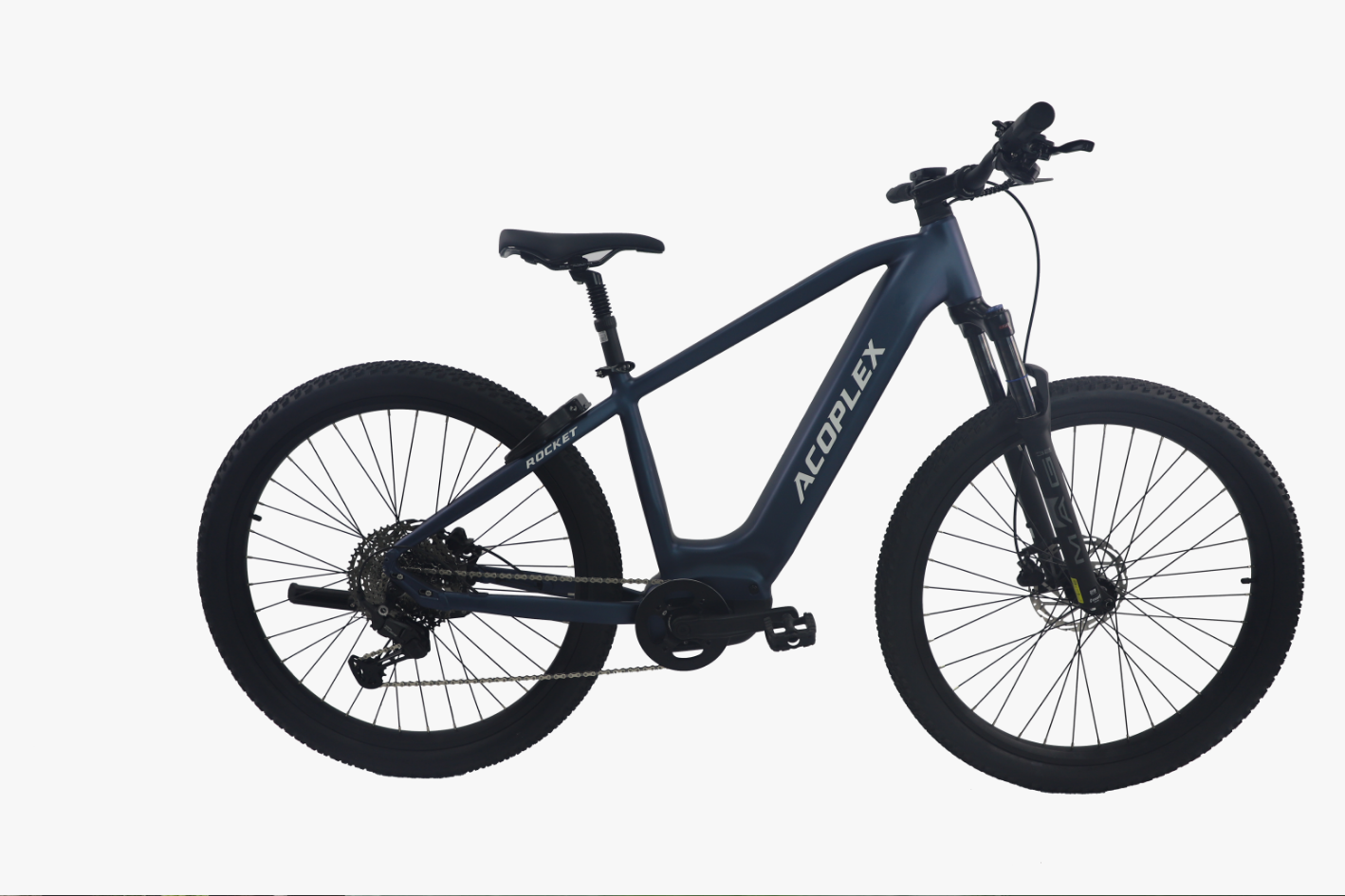
- 29×4.0 CST (ROCKET). A fat-tyre configuration described for grip on sand, snow and rough trails. Grip on soft ground comes at the cost of rolling resistance and rotating mass, which makes it a poor default for paved urban routes.
The decision rule is surface-led. Buyers specifying for campus or resort rental fleets that mix pavement with gravel should look at the mid-width position; buyers specifying for sand, snow or genuinely rough trails have a documented basis for the 29×4.0 configuration; buyers specifying for riders with limited stand-over clearance have a documented basis for the 20-inch platform.
Step 4 — Read Drivetrain Speeds as Range Management
Drivetrain count is frequently misread as a quality score. In practice it describes how finely the rider can place cadence against gradient. The documented range offers 8 speeds on TRAVEL, 9 speeds on UNICORN and 11 speeds on ROCKET, the latter paired with a KMC chain.
The pattern tracks the intended terrain. An 8-speed system on a 20-inch city bike with a 52T aluminium crankset is matched to flat roads and gentle slopes, where the available ratio spread is sufficient. An 11-speed system on a fat-tyre mountain bike serves a wider gradient envelope, including sustained climbs where small cadence steps matter.
Buyers should therefore specify drivetrain count last, after terrain and torque. Increasing gear count without a matching terrain requirement adds cost and adjustment complexity without changing the riding outcome.
Step 5 — Weigh Net Weight Against Payload and Daily Handling
The documented weight spread is substantial: 23.5 kg on the TRAVEL against 32 kg on the UNICORN. Both use 6061 aluminium alloy frames — a material that accounts for approximately 73% of global e-bike production, according to Dataintelo market research, so frame material alone will not explain the difference. Battery capacity, tyre volume and component specification do.
Weight has two separate consequences that buyers often merge. The first is handling: a 23.5 kg bike is more manageable for smaller riders, for lifting onto a rack and for moving through doorways. The second is payload: the UNICORN listing states a maximum load of 125 kg, and the increased structural mass is part of how that capacity is reached.
The decision rule is to check where the bike will be stored and lifted before checking its payload rating. Stairs, apartment storage and multi-modal commuting penalise 32 kg in ways that never appear in a specification table, while fleet and cargo duty penalise the lighter frame when load capacity is the binding constraint.
Step 6 — Verify Certification and Documentation Before Price
Certification is a hard constraint, not a differentiator. TRAVEL, ROCKET and UNICORN are each documented as certified to EN15194, with CE as the certification type, issued by TUV and applying to the EU market. The AME-1202 balance bike in the same supplier's portfolio is likewise covered by CE certification to EN15194, issued by TUV.
Verification should extend to the internal consistency of the document set. The provided ROCKET listing is the clearest example: the parameter field specifies a 48V 7Ah Samsung lithium-ion battery while the selling-point field specifies 48V 14.7Ah for the same model. That is a material difference in capacity and therefore in range and weight, and it should be resolved in writing before an order is placed. A similar caution applies elsewhere in the portfolio — the DOPHIN listing states 26×2.0 CST tyres in the parameter field and 20×2.0 CST tyres in the selling-point field.
On the supply side, the documented capability profile gives buyers a reference for what to ask about: Wuxi Purino International Trade Co., Ltd operates from a 2,300 m² facility founded in 2016, with 10 employees, 3 engineers and an annual output of 200,000 pcs, exporting 100% of production to EU and USA markets. Documented order terms include a MOQ of 50 pcs, a lead time of 45–60 days and a monthly capacity of 10,000 units, with quality control described as 100% component inspection plus whole e-bike test riding. Customisation covers frame and fender colour, wheel size and battery capacity.
Where the Documented Specification Stops
A framework is only useful if it states its own limits. Four boundaries apply to the analysis above.
- Torque does not override regulation. A 95 N.m motor does not permit a higher assist speed in the EU, where EN15194 compliance is mandatory and the documented EU setting for UNICORN is 25 km/h.
- Fat tyres are not a universal upgrade. The 29×4.0 configuration is described for sand, snow and rough trails; on paved routes it adds rotating mass and rolling resistance without a corresponding benefit.
- Small wheels trade stability for access. The 20-inch platform lowers stand-over height for easier mounting, but larger diameters hold a line more confidently at speed.
- No price data is included here. The provided material contains no price band, so this framework cannot compare models on cost. Price must come from a quotation, and should be compared against the torque, wheel, drivetrain, weight and certification values above rather than instead of them.
Application Fit: Matching Models to Scenarios
The documented application profile for this product category covers urban commuting, leisure and weekend riding, logistics and last-mile delivery, and campus or resort rental. Working conditions are described as urban pavement, gravel and light off-road trails, including hilly and steep climbs, with operation as either pure electric or pedal-assist hybrid.
Mapping the framework onto those scenarios produces a defensible shortlist logic rather than a ranking:
- Urban commuting and short-trip city use: the 20-inch, 23.5 kg, 60 N.m configuration with a stated 40–50 km range and 3–4 hour charge aligns with short daily distances and frequent mounting and dismounting.
- Mixed pavement and gravel, regional flexibility: the 27.5×2.6 configuration with dual 25 km/h and 32 km/h settings suits buyers distributing into both EU and North American channels, provided the 32 kg weight is acceptable for the intended storage arrangement.
- Steep climbs, rough trails and soft ground: the 95 N.m, 29×4.0, 11-speed configuration with a stated 80–100 km range is the documented fit where gradient and surface are the dominant constraints.
- Commercial fleet and rental deployment: the documented requirement is enhanced durability and defined after-sales provisions, which places weight, payload rating and documentation consistency ahead of drivetrain count.
Market Signals That Support This Framework
Several verified market data points make the parameter-led approach more than an editorial preference.
Global market revenue of USD 38.7 billion in 2024, reported by Strategic Market Research, describes a category large enough that specification errors carry real commercial cost. Germany's 2.05 million units and 53% share of total bicycle sales, from ZIV, describe a market where e-bikes are the default rather than the exception. Within that market, e-MTB accounted for 40% of all e-bikes sold in Germany in 2024, according to ZIV-sourced reporting — which explains why high-torque, large-wheel configurations remain commercially relevant alongside city platforms.
On the supply side, hub motors held a 66% share in 2024 per Global Market Insights, and aluminium frames account for approximately 73% of global e-bike production per Dataintelo. Together these indicate that mid-drive, high-torque configurations are a smaller but clearly segmented part of the market, and that buyers should expect frame material to be similar across suppliers while motor architecture is not.
Mid-Drive Versus Hub Drive: What Actually Changes
The conventional comparison between mid-drive and hub-drive systems usually collapses into a preference argument. Read against the parameters above, the difference is narrower and more practical.
A mid-drive motor applies assist through the drivetrain, which means the gear selection multiplies the available torque. That is why the 95 N.m ROCKET configuration is paired with an 11-speed drivetrain: the two specifications work as a system on gradients. A hub-drive configuration does not benefit from gear multiplication in the same way, and its published advantages are simplicity and, as the 66% market share suggests, broad availability.
The limit on the mid-drive position is equally concrete. It adds drivetrain wear points, places the motor in the frame's most highly loaded area, and — as the TRAVEL example shows — does not automatically deliver higher torque: a 3.0 kg mid-drive motor rated at 60 N.m is a city-commuting specification, not a climbing specification. Buyers should not treat "mid-drive" as a performance guarantee; the torque figure is the number that matters.
What Buyers Should Expect Next
Three developments follow logically from the data above. First, regional speed configuration will be treated as a shipping variable rather than a product feature, because the same model can leave the factory at 25 km/h or 32 km/h depending on destination — which places documentation discipline ahead of catalogue design. Second, as EN15194 compliance remains mandatory in the EU, certification evidence will continue to function as a pass-or-fail gate rather than a selling point.
Third, specification consistency is likely to become a visible supplier signal. Where published listings conflict — as with the ROCKET battery capacity and the DOPHIN tyre size — the buyer's first question shifts from "what are the numbers" to "which number is current". Suppliers who resolve those conflicts in writing before quotation will be easier to qualify, and buyers who build the check into their evaluation process will avoid commitments based on superseded fields.
FAQ
What torque do I need for steep climbs — 60 N.m or 95 N.m?
In the documented range, 60 N.m is delivered by the TRAVEL's 3.0 kg Oxygen comfort mid-drive motor and is positioned for city commuting on flat roads and gentle slopes. 95 N.m is delivered by the ROCKET's Oxygen plus mid-drive motor and is positioned for climbing and rough off-road riding. The deciding factor is the steepest sustained gradient on the intended route plus the expected system load: higher torque is specified where gradient and load together exceed what 60 N.m is designed to handle.
Does wheel size change what an e-bike is suitable for?
Yes, and the effect is geometric as well as surface-related. A 20×2.0 CST wheel lowers stand-over height and is positioned for riders who need easy on-and-off access, with reduced stability at higher rolling speeds as the trade-off. A 27.5×2.6 CST tyre is described for pavement, gravel and uneven mountain paths. A 29×4.0 CST fat tyre is described for grip on sand, snow and rough trails, at the cost of rolling resistance and rotating mass on paved routes.
How many drivetrain speeds should a buyer specify — 8, 9 or 11?
Drivetrain count should follow terrain rather than lead it. The documented options are SHIMANO 8-speed on TRAVEL, 9-speed on UNICORN and 11-speed on ROCKET, the latter paired with a KMC chain. Eight speeds are matched to flat roads and gentle slopes, where the available ratio spread is sufficient. Eleven speeds serve a wider gradient envelope where small cadence steps matter. Specifying a higher count than the terrain requires adds cost and adjustment complexity without changing the riding outcome.
How much does net weight matter — 23.5 kg versus 32 kg?
The documented values are 23.5 kg for TRAVEL and 32 kg for UNICORN. The difference matters in two distinct ways. For handling, the lighter figure is more manageable for smaller riders, for lifting onto a rack and for moving through doorways. For payload, the UNICORN listing states a maximum load of 125 kg, and increased structural mass is part of how that capacity is reached. Storage and lifting conditions should be checked before the payload rating is considered.
What speed limit applies to ACOPLEX e-bikes in the EU versus USA and Canada?
The UNICORN listing states a factory-programmed dual speed limit of 25 km/h for the EU market and 32 km/h for the USA and Canada. Compliance with EN15194 is mandatory for e-bike sales in the EU market, so the EU figure is a regulatory ceiling. The provided specification does not state a regional speed setting for TRAVEL or ROCKET, so the applicable figure should be confirmed per model and per destination market.
Is EN15194 certification required, and which models carry it?
Compliance with EN15194 is mandatory for e-bike sales in the EU market. In the documented range, TRAVEL, ROCKET and UNICORN are each certified to EN15194 with CE as the certification type, issued by TUV and applying to the EU market. The AME-1202 balance bike in the same portfolio is also covered by CE certification to EN15194, issued by TUV.
Tem questões ou precisa de mais detalhes?
Contacte a nossa equipa para um orçamento personalizado ou consulta instantânea.
Solicitar orçamento
Preencha o formulário abaixo e a nossa equipa entrará em contacto com uma proposta personalizada.
Chat direto do WhatsApp
Prefere conversar em tempo real? Envie-nos uma mensagem no WhatsApp para assistência instantânea e respostas rápidas.
- Obter orçamento personalizado
- Partilhar fotos ou documentos
- Discuta as suas necessidades diretamente
Geralmente responde em 5–30 minutos durante o horário de expediente.