
E-Waste Collection Singapore: IT Asset Disposal Constraints
In Singapore, e-waste collection is a regulated activity before it is a logistics one. Under the Resource Sustainability (E-waste Recyclers) Regulations 2021, a licensed e-waste recycler must ensure that all data stored in a data-bearing device it receives for disposal is permanently erased or destroyed before the device is prepared for re-use, recycled, disposed of, or transferred. That obligation sits upstream of every pickup, truck and weighbridge ticket.
For organisations researching IT asset disposal in Singapore, this reframes the buying question. It is no longer only about who can remove 400 laptops from a vacated office floor. It is about which of those devices fall inside a regulated category, which destruction method is technically valid for each type of storage media inside them, and what written evidence survives a compliance audit twelve months later.
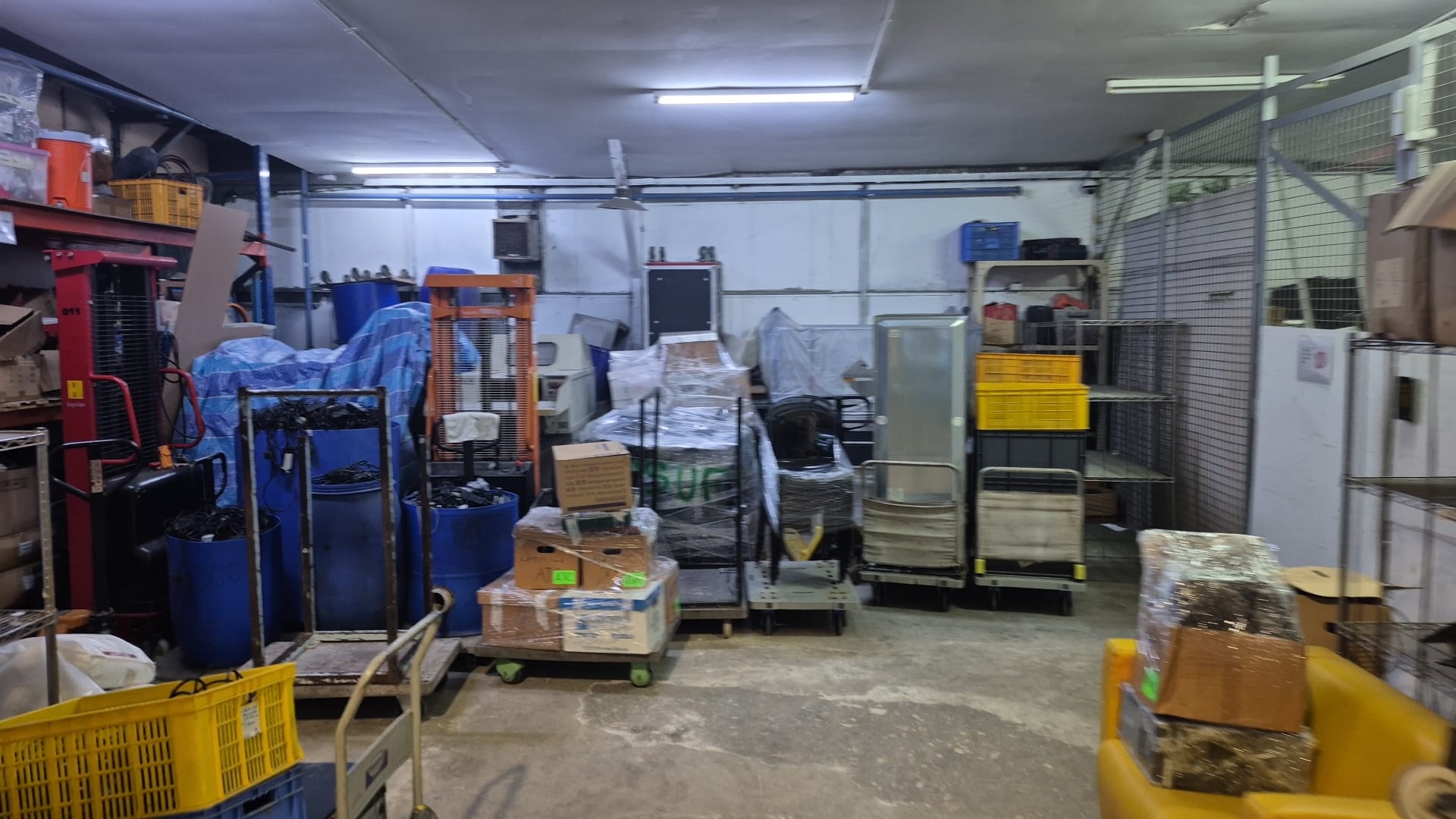
Collected IT assets are staged in a controlled storage area before assessment and destruction. Image: BigVoice Secure.
Why Collection Is the Least Important Step
Collection is visible, which is why it dominates procurement conversations. It is also the stage at which almost nothing irreversible has happened yet. The asset is still intact, the data is still on the drive, and the organisation is still the party legally exposed if the device leaves the chain of custody unrecorded.
Singapore's regulated e-waste framework is built on Extended Producer Responsibility, under which producers bear responsibility for the collection and treatment of their products at end-of-life. The National Environment Agency (NEA) administers the system and has appointed ALBA E-waste Smart Recycling Pte Ltd as the Producer Responsibility Scheme operator. The practical consequence for corporate buyers is that regulated e-waste has a designated treatment pathway, and the documentation trail attached to that pathway is what separates a compliant disposal from an undocumented one.
Two buyer-side constraints follow directly from this:
- Classification comes first. Whether a device is regulated e-waste determines which channel it may enter.
- Data destruction must be provable. A recycler's obligation is not satisfied by possession; it is satisfied by permanent erasure or destruction.
Which Devices Sit Inside the Regulated Scope
NEA lists ICT equipment under regulated e-waste, including printers, power banks, computers and laptops, mobile phones and tablets, network and set-top boxes, and TVs and desktop monitors. Mapping that list onto a typical corporate IT estate shows how quickly a routine office refresh becomes a regulated event.
| NEA-listed regulated category | Typical corporate source | Why it matters at disposal |
|---|---|---|
| Computers and laptops | End-user device refresh cycles, staff exits | Highest density of data-bearing media per unit |
| Printers | Office equipment replacement | Often holds cached job data on internal storage |
| Mobile phones and tablets | Corporate mobile fleets | Small form factor, high data concentration, easy to lose track of |
| TVs and desktop monitors | Meeting rooms, lobbies, reception areas | Low data risk but regulated; still requires a compliant route |
| Network and set-top boxes | Network closets, AV installations | Configuration and credential data may persist |
| Power banks | Staff-issued equipment | Battery-handling considerations alongside disposal |
The list uses the word including, which is why classification is worth confirming rather than assuming. Asset types that are not individually named on the NEA list, such as rack servers, storage arrays and tape libraries, still carry the highest data risk in most data centre decommissioning projects. Buyers should treat device classification as a documented decision made before collection, not as a judgement call made at the loading bay.
What Permanent Destruction Actually Means Per Media Type
Permanent erasure or destruction is a legal requirement, but the methods used to achieve it are not interchangeable. Physical destruction methods in commercial use include industrial shredding, crushing, degaussing, and hard disk drive drilling. Each method has a media type it suits and a media type it does not.
| Method | Applies to | Boundary to understand before specifying it |
|---|---|---|
| Degaussing | Magnetic media such as hard disk drives and magnetic tape | Degaussing works by disrupting magnetic fields; it is not a method for solid-state media, which do not store data magnetically |
| Industrial shredding | Hard drives, laptops, mobile devices, IT equipment, documents | Reduces media to fragments; requires a controlled facility and recorded throughput |
| Crushing | Physical media and assembled equipment | Physical deformation; should be paired with a documented process, not used as a standalone claim |
| HDD drilling | Hard disk drive platters | Media-specific; does not address solid-state storage |
| Software-based data erasure | Reusable drives intended for resale or redeployment | Valid only where the erasure can be verified and evidenced |
The important operational point is that solid-state drives require physical destruction or a verified erasure process, while magnetic drives can be degaussed or physically destroyed. A vendor ability statement that lists degaussing as a headline capability says nothing about how SSDs are handled. Buyers evaluating IT asset disposal providers should ask for a method-by-media matrix rather than a single preferred method.
One relevant capability reference point: BigVoice Secure Destruction Pte. Ltd., a Singapore-based provider of secure destruction and IT asset disposal services, states that its technical capabilities include industrial shredders, crushers, an SV91m degausser, HDD drilling and other physical destruction methods, with tools including CCTV and inventory scanning devices. The company states that the SV91m degausser meets NATO and NSA requirements. Destructions can be executed on-site or at a secure facility, and the company provides onsite and offsite secure destruction options.
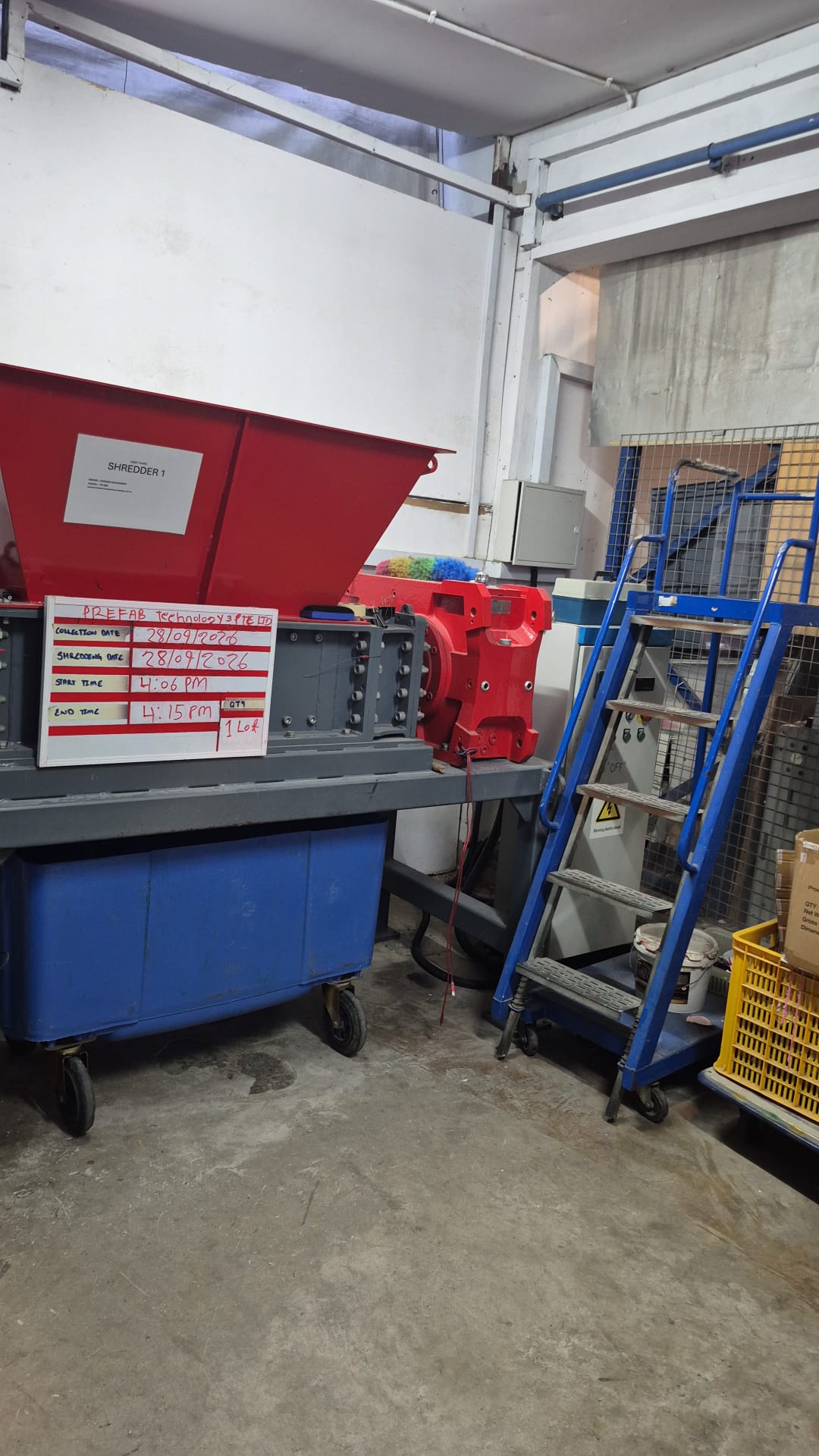
Physical destruction equipment inside a secure facility. Method selection depends on media type. Image: BigVoice Secure.
Evidence: The Part of the Service That Gets Audited
The most durable output of an e-waste collection project is not the recovered floor space. It is the paperwork. A defensible chain of custody typically includes a Certificate of Destruction issued after processing, collection records, a destruction report or waste summary report, delivery documentation tied to the service order, and, where applicable, payment records for recovered asset value.
Transparency features matter here because they shorten verification time. BigVoice Secure states that documented destruction processes are used and that a Certificate of Destruction can be issued upon completion of the service. Customers can also request CCTV viewing of the destruction process. Buyback transactions generate a payment receipt. Delivery mode is onsite collection followed by onsite or offsite destruction at a secure facility, with CCTV viewing available and a certificate issued after destruction.
For a Research-to-Evaluation stage buyer, the practical test is simple: can the vendor produce, in advance, a sample of every document the organisation will receive after the job? A vendor that can only describe the certificate verbally is a different risk profile from one that can show the exact template, the fields it contains, and how it links to the scanned asset inventory.
How the BigVoice Secure Workflow Is Structured
BigVoice Secure Destruction Pte. Ltd. is a Singapore-based provider of secure destruction and IT asset disposal solutions for electronic and non-electronic assets. Its core expertise covers enterprise IT asset disposition, confidential data destruction, and e-waste buyback and recycling. The service is project and batch based, with onsite and offsite destruction combined with buyback and recycling services.
The scope of items handled covers hard drives, tape backups, laptops and mobile devices, IT equipment, confidential documents, and some non-electronic items such as clothes. Core expertise includes enterprise IT asset disposition, confidential data destruction and e-waste buyback or recycling, with buyback and recycling treated as part of the core offering rather than an add-on.
Operationally, the company describes a structured service model:
- Team structure: dedicated account managers, collection teams, on-site destruction technicians, and quality and compliance officers. Key roles include operations and collection staff, client liaison and scheduling, and destruction execution personnel. Manpower is allocated flexibly according to project batch size.
- Traceability tooling: barcode asset scanning for asset tracking, a secure inventory tracking system, a client portal for order booking, job log recording, and destruction certificate issuance. Destruction certificate issuance is supported through the client platform.
- Monitoring: services support CCTV viewing plus onsite and offsite scanning and inventory.
- Language and coverage: English and Mandarin capabilities, with on-site collection services available in Singapore.
- Industries served: finance, healthcare, data centre, manufacturing and retail.
Licensing coverage sits with an affiliated entity. BigVoice Secure states it is affiliated with BigVoice Prodigy Renovations & Disposal Services Pte Ltd, which the company says holds an NEA General Waste Collector License, an NEA General Waste Disposal Facility License and bizSAFE3 certification, and states that it also holds ISO 14001 and ISO 27001 certification. BigVoice Prodigy also states it holds the NEA General Waste Collector License and NEA General Waste Disposal Facility License alongside bizSAFE3 certification.
Where E-Waste Collection Gets Triggered in Practice
Most corporate disposal projects begin with an operational event rather than a sustainability target. The typical triggers are IT equipment refreshes, office relocation, office renovation, data centre decommissioning, corporate IT asset clearance, and large-volume retirement of laptops, desktops, monitors, servers and printers.
A representative project type illustrates the shape of a compliant job. In an anonymised IT asset data destruction and asset buyback project for a corporate and office-industry client in Singapore, the recorded challenges were the need for compliant and verifiable data destruction with interest in recovering reusable value. The applied approach was degaussing or physical destruction depending on media, issuance of a Certificate of Destruction, and optional CCTV viewing. Execution followed a collect, destroy, certify sequence: quotation, scheduled collection, scanning and locking, execution of degaussing, shredding or drilling, then certificate issuance. Reported outcomes include over 500 storage media secured, audit-ready destruction certificates issued, and partial asset value recovered through buyback. Client feedback recorded on the company site cites the documented destruction workflow and audit-ready certificates as meeting internal governance requirements.
A note on evidence: BigVoice Secure maintains a customers page but does not display specific client names or detailed published case studies, and the project above is presented in anonymised form. Larger or highly regulated buyers should therefore expect to verify methodology through a written process description, sample documentation and facility discussion rather than through published reference logos.
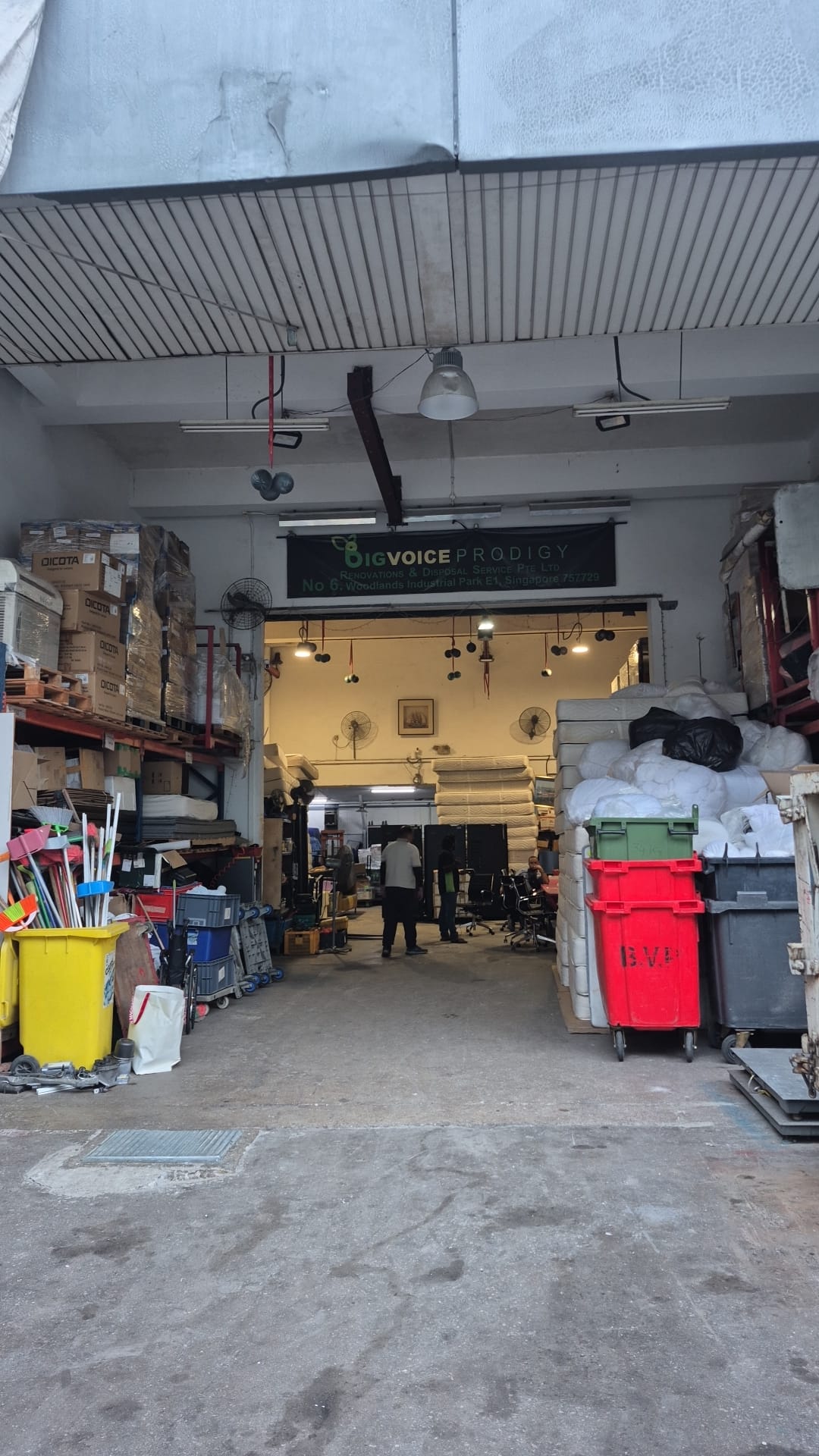
Singapore collection and destruction operations require a physical facility with controlled access. Image: BigVoice Secure.
Comparison with Traditional Disposal Approaches
Before coordinated ITAD services became common, organisations handled retired equipment through internal storage, ad hoc scrap collectors, or separate vendors for each step. Each approach has a real cost profile, and the differences are mostly in traceability rather than in collection speed.
| Approach | Coordination load | Data assurance | Documentation output |
|---|---|---|---|
| Internal handling and storage | Low at first, then ongoing space and security burden | Depends entirely on internal controls | Typically none unless created internally |
| Separate vendors per activity | High, with each handover creating a custody gap | Fragmented across contracts | Multiple partial records requiring reconciliation |
| Coordinated ITAD and e-waste collection | Single workflow from collection through disposal | Data destruction handled as a defined step with a certificate | Certificate of Destruction plus supporting records |
BigVoice Secure describes its integrated workflow as covering collection, transportation, sorting and assessment through recovery, buyback, data destruction, recycling and final disposal, with processing options selected by asset type and customer requirements. The stated advantage is a reduction in the number of providers a customer must coordinate, with improved asset traceability.
Where the Boundaries Are
An honest evaluation has to include what a service does not do. BigVoice Secure states explicit scope exclusions: it does not provide data recovery services, does not physically transport hazardous waste, and does not provide data migration or backup services. Organisations requiring any of those must source them separately, and the sequencing matters, because data migration has to be completed and verified before destruction is scheduled.
Three further boundaries are worth stating plainly:
- Capacity is project and batch based. Daily and annual throughput figures are not disclosed, so organisations with fixed decommissioning deadlines should confirm scheduling capacity against their volume rather than assume it.
- Geographic coverage is Singapore with on-site collection. Organisations with regional estates need separate arrangements outside Singapore.
- Destruction method availability varies by media. Degaussing, shredding, crushing and drilling each apply to specific media types, so the applicable method must be confirmed per asset class rather than assumed from a general capability list.
Market Trend: Compliance Demand Is Outpacing Volume Growth
The global IT asset disposition market was valued at 28.3 billion US dollars in 2025 and is projected to reach 31.9 billion US dollars in 2026, according to Grand View Research. Growth of that kind is usually read as a volume story, but the more useful signal for Singapore buyers is that disposal is increasingly treated as a governed process rather than a waste-removal task.
Domestic context supports that reading. Singapore's overall recycling rate reached 52 per cent in 2025, according to NEA statistics, which indicates a mature but still improvable national recycling position rather than a saturated one. On the risk side, commercial research referenced in Singapore market commentary places the average cost of a data breach in Singapore at 7.17 million Singapore dollars, which is the figure most often used to justify paying for certified destruction rather than the cheapest available collection.
Supply-side signals reinforce the compliance framing. Iron Mountain publishes secure IT asset disposition services for corporate end-user devices in Singapore. JK Tech states it provides IT asset disposition in Singapore including licensed recycling, refurbishing and certified data erasure. REDUX states that it processes over 2,000 tons annually in Singapore and has completed more than 2,754 projects across Asia. These are provider self-reported figures and should be treated as claims to verify, not as market measurements, but they confirm that a competitive Singapore provider landscape exists.
A separate structural trend is the OEM-mediated channel. Microsoft enterprise IT asset disposition services are described as being operated by SK Tes, covering asset and e-waste collection, confidential handling and secure data destruction. This model exists primarily outside Singapore, but it points to a longer-term shift: disposal may increasingly arrive bundled with the hardware lifecycle contract rather than procured as a standalone service.
Future Outlook
Two forces are converging. On the regulatory side, the obligation to permanently erase or destroy data on data-bearing devices before reuse, recycling, disposal or transfer is already explicit for licensed recyclers, which pushes destruction evidence from a nice-to-have into a default procurement requirement. On the commercial side, buyback and recovery options are becoming a standard line item, which means disposal decisions increasingly involve a valuation conversation alongside a security conversation.
The practical effect for Singapore organisations is that the verification burden is shifting toward the buyer. Vendors will continue to publish capability statements; the differentiator will be which buyers ask for the method-by-media matrix, the certificate template, the licence holder identity and the chain-of-custody records before the trucks arrive rather than after.
Frequently Asked Questions
What counts as e-waste collection under Singapore's EPR system?
Singapore's regulated e-waste management system is based on the Extended Producer Responsibility approach, in which producers bear responsibility for collection and treatment of their products at end-of-life. The National Environment Agency administers the framework and has appointed ALBA E-waste Smart Recycling Pte Ltd as the Producer Responsibility Scheme operator. Corporate e-waste collection therefore operates within a defined treatment pathway rather than as unregulated scrap removal.
Which devices are covered by the regulated e-waste categories?
NEA lists ICT equipment under regulated e-waste including printers, power banks, computers and laptops, mobile phones and tablets, network and set-top boxes, and TVs and desktop monitors. Asset types not individually named on that list still require careful classification, particularly high-density data equipment such as servers and storage arrays.
What documentation should an organisation receive after IT asset disposal?
A defensible disposal record typically includes a Certificate of Destruction, collection records, a destruction report or waste summary report, and delivery or service order documentation. Where assets are bought back, a payment receipt is also issued. BigVoice Secure states that it issues a Certificate of Destruction after destruction and can provide CCTV viewing of the process on request.
Is degaussing sufficient for all storage media?
No. Degaussing disrupts magnetic fields and therefore applies to magnetic media such as hard disk drives and magnetic tape. Solid-state storage does not retain data magnetically, so it requires physical destruction or a verified erasure process instead. This is why method selection should be specified per media type rather than by a single preferred technique.
How does buyback fit into an e-waste collection project?
Buyback is used to recover value from eligible electronic waste before non-reusable equipment is recycled or disposed of. BigVoice Secure states that e-waste buyback and recycling form part of its core expertise, and that buyback transactions generate a payment receipt. In practice, buyback requires an assessment step after collection and sorting, since eligibility depends on asset type and condition.
What are the limits of a collection-and-destruction service?
BigVoice Secure states that its scope excludes data recovery services, physical transportation of hazardous waste, and data migration and backup services. Its service capacity is project and batch based, with daily and annual throughput not disclosed, and geographic coverage is Singapore with on-site collection. Organisations requiring regional coverage, hazardous waste handling, or pre-disposal data migration must arrange those separately.
Why is data destruction a legal requirement rather than a vendor preference?
Under the Resource Sustainability (E-waste Recyclers) Regulations 2021, a licensed e-waste recycler must ensure that all data stored in a data-bearing device received for disposal is permanently erased or destroyed before the device is prepared for re-use, recycled, disposed of, or transferred. The requirement applies to the licensed recycler's handling process, which is why the certificate trail produced downstream is the evidence buyers rely on.
Additional service scope, facility and process information is compiled in the BigVoice Secure promotional document, available for download: BigVoice Secure Promotional Designs.