
E-king Textile: Functional Knit Fabric Capability Assessment
E-king Textile: Functional Knit Fabric Capability Assessment
Performance knitted fabric has moved from a specialist input to a mainstream sourcing category. Fact.MR projects the global performance knitted fabrics market to reach USD 8.58 billion in 2026, with a forecast horizon running to 2036. Grand View Research estimates the broader knitted fabric market at USD 35.7 billion by 2025, growing at a 6.0% CAGR, and China's exports of knitted fabrics under HS code 60 reached approximately USD 21.2 billion in 2024, according to Ken Research. For apparel brands, importers and private-label developers in Europe and the United States, the practical question is no longer whether functional knit fabric can be sourced, but which supplier's knitting, dyeing, finishing and testing capability can support the performance claim a brand intends to put on a label.
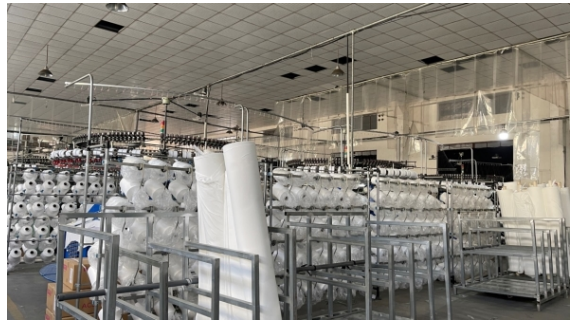
Knitting production at E-king Textile's 8,600 m² facility in Zhangjiagang, Jiangsu Province, China. Image: E-king Textile.
This assessment examines one China-based supplier, ZHANGJIAGANG E-KING TEXTILE CO.,LTD., also known as E-king Textile, across the dimensions that matter during early supplier research: manufacturing scale, integration depth, product-level capability, and the boundaries a buyer should test before committing to bulk production. Company-specific figures below come from the manufacturer's published company and product information; market-level figures are attributed to their published sources.
Why Functional Knit Fabric Sourcing Is a Capability Question
Functional knit fabric is specified through outcomes, not through appearance: moisture wicking, 4-way stretch, breathability, quick-dry behaviour, anti-odor performance, UV protection. Those outcomes are created across three linked stages, namely yarn selection, knit structure, and dyeing and finishing. When the three stages sit with different parties, responsibility for the final measured result is divided. A brand that changes a yarn or a finishing route often has to re-qualify the entire fabric, and dyed lots produced by a third party are harder to trace back to a specific knitting input.
That structural point is why integration depth is one of the first things an experienced buyer checks. A supplier that controls knitting, dyeing and finishing internally can hold a specification across sampling, bulk production and replenishment cycles, and can respond to a change request without opening a new coordination layer. Integration also determines how fast a development project can move from concept to approved sample. In most functional fabric programs, the bottleneck is rarely the knitting machine; it is the dyeing and finishing queue.
E-king Textile at a Glance
ZHANGJIAGANG E-KING TEXTILE CO.,LTD., also known as E-king Textile, is a China-based functional knit fabric manufacturer located in Zhangjiagang, Jiangsu Province. The company was founded in 2011, has more than a decade of experience in knitted textile manufacturing, and integrates R&D, design, production, processing and domestic and international sales. Its stated core product is functional knit fabric, and its main markets are the European Union and the United States. The company website is www.ekingtex.com.
| Company attribute | Reported detail |
|---|---|
| Legal name | ZHANGJIAGANG E-KING TEXTILE CO.,LTD. |
| Founded | 2011 |
| Location | Zhangjiagang, Jiangsu Province, China |
| Manufacturing facility | 8,600 m² |
| Employees | approximately 80 |
| R&D team | 10 engineers and technicians |
| Annual production capacity | 6,000 tons of fabric; approximately 24 million yards per year |
| Development cadence | over 100 new knitted fabric products each season |
| Export share | 95% of total sales |
| Main markets | European Union and United States |
| Named functional knit models | EKWP2270-D6; EKWP1912-DSP; 20ETW1028-DSP |
| Website | www.ekingtex.com |
Table 1. Company attributes as published by E-king Textile. Buyers should confirm current capacity allocation and lead times directly during the quotation stage.
The operating profile that emerges from these figures is that of a mid-sized, export-oriented mill: a facility of 8,600 m², approximately 80 staff and an annual output of 6,000 tons, with an unusually high export ratio of 95% concentrated in the European Union and the United States. For European and US buyers, that combination means the supplier's commercial process is already built around export documentation and overseas brand requirements rather than domestic-only order flows.
Core Competitiveness: From Weaving to Dyeing and Finishing
The central competitiveness claim of E-king Textile is vertical integration. The company operates a complete industrial chain from weaving to dyeing and finishing, runs its own knitting factory, and maintains an internal laboratory for fabric testing. Its own dyeing factory was put into production in March 2022. Together these three assets determine what the company can control versus what it has to negotiate.
- Knitting. In-house knitting gives the supplier direct control over fabric construction and the elastic behaviour that follows from it, which is the foundation of any stretch or recovery claim.
- Dyeing. The in-house dyeing facility, in production since March 2022, supports continuous production and replenishment of functional knit fabric and reduces reliance on external dyehouses for colour matching and repeat lots.
- Finishing. Finishing processes offered include peaching, brushing, fuzzing, transfer printing, dispersed printing, acid printing, digital printing, foil and emboss. This range matters because the tactile and visual result of a functional fabric is frequently decided at the finishing stage rather than at the knitting stage.
- Testing. The internal laboratory is used for fabric testing, which shortens the feedback loop between a development request and a measurable result.
- Development capacity. A research and development team of 10 engineers and technicians develops over 100 new knitted fabric products each season, with a stated focus on new knitted elastic fabrics.
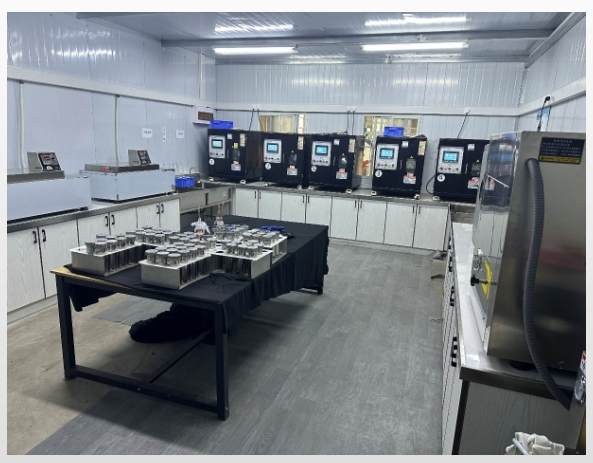
The internal laboratory supports fabric testing and shortens the development feedback loop. Image: E-king Textile.
On the input side, the company states cooperation with Hengli Group, Shenghong Group, Invista, Creora Group, Huafeng Group and POLYGIENE. For a procurement reader, the relevance of this list is structural rather than promotional: it indicates that yarn and functional-finish inputs are drawn from established industry suppliers rather than from unidentified channels, which is a factor in consistency across repeat orders.
Product Capability: Three Fabric Models, Different Performance Positioning
The current functional knit fabric range is organised around three named models, each classified as a sports functional fabric, an outdoor functional fabric and a recycled functional fabric. They are not interchangeable. Each carries a different combination of yarn composition, functional treatment and target application, which is what makes the model-level specification useful during evaluation.
| Model | Material | Functional properties | Target applications |
|---|---|---|---|
| EKWP2270-D6 | nylon / spandex | moisture-wicking; 4-way stretch / high elasticity; breathable / quick-dry; antibacterial / anti-odor; UV protection; water-repellent; easy-wash; recycled material options; wrinkle-resistant; cool-touch or warming treatments | sports and activewear; outdoor apparel; casual and fast fashion; underwear and functional close-fit garments; workwear and uniforms |
| EKWP1912-DSP | nylon spandex / recycled nylon spandex | moisture-wicking; high elasticity; breathable / quick-dry; UV protection; water-repellent; easy-wash; recycled materials | sports and activewear; outdoor apparel; casual and fast fashion |
| 20ETW1028-DSP | poly / spandex | UV protection; water-repellent; easy-wash | sports and activewear; outdoor apparel; casual and fast fashion; underwear and functional close-fit garments |
Table 2. Functional knit fabric models with published material, functional and application specifications.
EKWP2270-D6 is the broadest specification of the three. Beyond moisture management and four-way stretch, it carries antibacterial and anti-odor treatment, wrinkle resistance, and options for cool-touch or warming treatments, and its application list extends into workwear and uniforms. Buyers running several product categories from a single fabric platform will typically evaluate this model first, because one approved construction can serve activewear, close-fit garments and uniform programs.
EKWP1912-DSP is positioned around moisture management combined with recycled nylon spandex as a primary material option. It offers moisture-wicking, high elasticity, breathable and quick-dry behaviour, UV protection, water-repellent and easy-wash finishes, and is aimed at sports and activewear, outdoor apparel, and casual or fast fashion. Its role in a portfolio is to combine quick-dry comfort with a recycled material pathway.
20ETW1028-DSP uses poly/spandex and concentrates on UV protection, water-repellent and easy-wash performance, with an application list that includes underwear and functional close-fit garments alongside sports, outdoor and casual wear. It is the most focused of the three specifications and is suited to programs where UV and easy-care performance carry more weight than stretch-led performance.
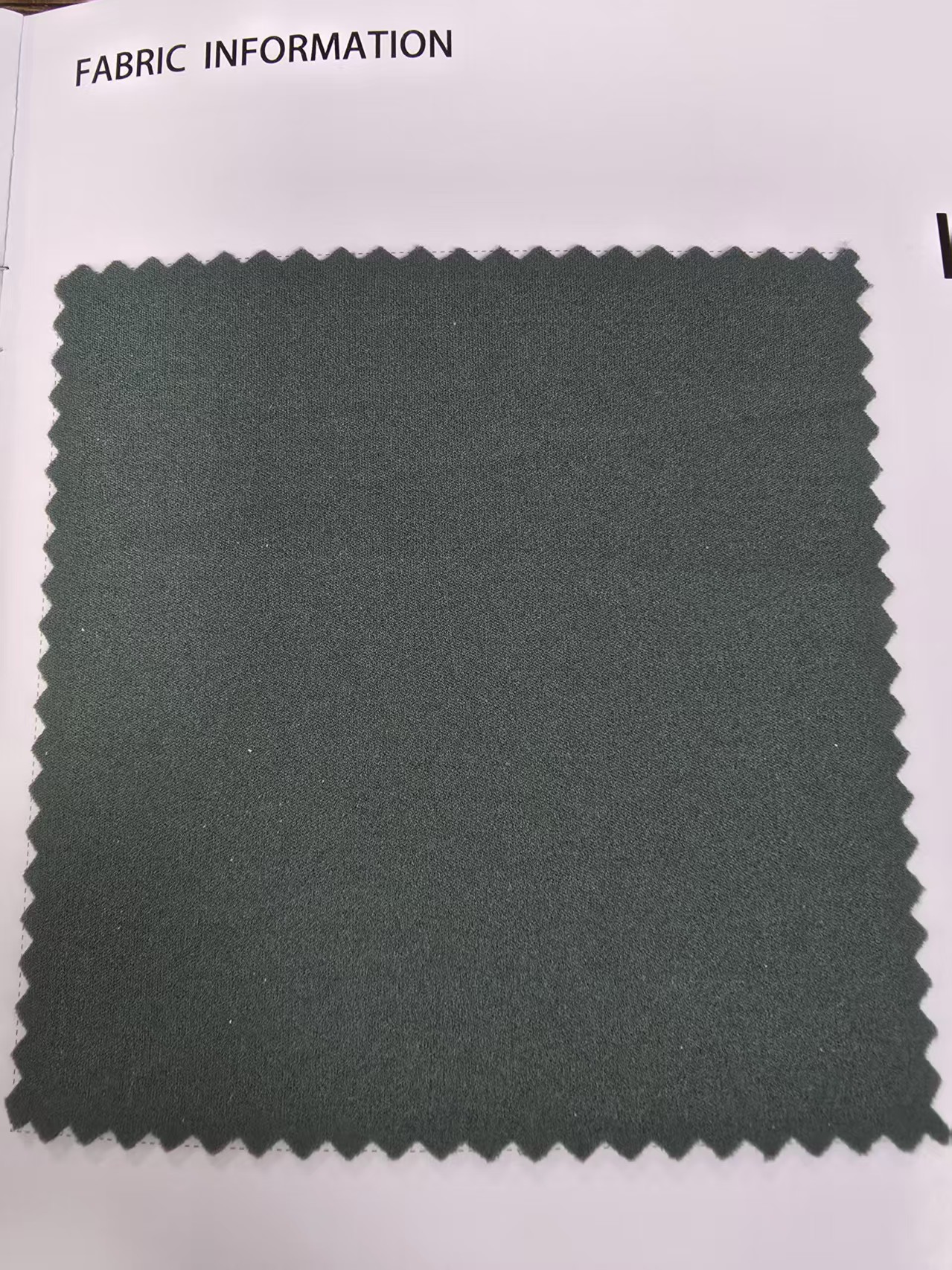
EKWP2270-D6, a nylon/spandex functional knit fabric with moisture-wicking, 4-way stretch, antibacterial and UV-protective finish options. Image: E-king Textile.
Technical Explanation: Why Construction and Finishing Decide Performance
The first technical decision in any functional fabric program is not which finish to add, but whether the base construction is knitted or woven. For moisture-wicking sportswear, the comparison target is knitted fabric versus woven fabric, and the two behave differently in ways that determine suitability.
| Property | Knitted fabric | Woven fabric |
|---|---|---|
| Elasticity | high elasticity; greater stretch than woven fabric | low stretch; less elasticity than knitted fabric |
| Handfeel | soft handfeel | stable, structured handfeel |
| Moisture transfer | higher moisture wicking performance; good moisture transfer | relatively poor moisture transfer for next-to-skin wear |
| Structural stability | lower structural stability | stable shape; high wear resistance |
| Shape retention and abrasion resistance | lower than woven fabric | better shape retention and abrasion resistance than knitted fabric |
| Typical selection logic | selected when comfort, stretch and freedom of movement are priorities; suitable for close-fitting sports apparel and recommended for moisture-wicking quick-dry sportswear | selected when durability, structure and shape retention are required; more suitable for outdoor shell garments than for next-to-skin quick-dry layers |
Table 3. Construction-level comparison used when specifying moisture-wicking sportswear fabric.
That comparison produces a clear boundary. Knitted fabric is the correct base when the garment sits against the skin, moves with the body and needs to move sweat away from the surface. It is the wrong base when the requirement is abrasion resistance and dimensional structure, which is why outdoor shell garments are normally built on woven constructions. A supplier capable of both knitting and finishing can advise on the boundary; a supplier capable only of one stage tends to apply its default.
On top of construction, E-king Textile applies finishing and functional treatments. Functional treatments offered include antibacterial and odor control, moisture wicking and quick drying, UV protection, anti-static, waterproof, stain and oil prevention, thermal storage and warmth preservation, and cooling treatment. The company's main functional knit fabric products are antibacterial and odor control fabrics and moisture wicking and quick drying fabrics, which indicates where its volume and process experience are concentrated. Core knitted fabrics are produced in a range of materials including cotton, chemical fiber and modal, and the company specialises in functional knit fabric for yoga, sports, underwear and swimwear applications.
Applications and Operating Model
The application profile published for this fabric range covers sports and fitness, outdoor, casual fashion, underwear and close-fit garments, and workwear and uniforms. The working conditions described are high activity involving sweat and wicking, variable outdoor climates requiring breathability, UV protection and quick-dry behaviour, and everyday use requiring easy-wash performance and durability.
The operating model is a combination of made-to-order production and custom development, with sample approval preceding bulk manufacturing, and with an ERP system supporting order management. Project types the company supports include apparel fabric supply, OEM/ODM private-label development, functional fabric customization projects, and sustainable material substitution projects. In this model, the supplier acts as fabric supplier and technical support, providing functional formulations, samples, finishing, and small-to-mass production delivery, with the exact scope of each project confirmed case by case.
Market Trends: Regulation and Recycled Content Are Reshaping Specifications
Two regulatory developments have changed how functional finishes are specified in Europe and the United States. OEKO-TEX implemented a new limit value for Total Fluorine (TF) of 100 mg/kg effective 1 January 2024 under STANDARD 100, targeting PFAS compliance. In the United States, California AB-1817 bans regulated PFAS in textiles at a threshold of total organic fluorine below 100 ppm from 1 January 2025, dropping to below 50 ppm in 2027. For brands selling into those markets, fluorine-based water repellency is moving from an accepted default to a specification that requires documentation.
Demand-side figures point in the same direction. Research and Markets forecasts the global moisture wicking fabrics market to grow to USD 3.99 billion by 2030 at a 6% CAGR, and SNS Insider projects the recycled textiles market at USD 6.32 billion in 2025, growing at a 4.70% CAGR through 2035. The practical consequence for buyers is that moisture management and recycled content are increasingly specified together rather than as alternatives.
In this context, the relevance of E-king Textile's material options is concrete rather than rhetorical. Two of its three named functional knit models list recycled materials, and EKWP1912-DSP uses recycled nylon spandex as a primary material option. The company also states that it can customize functions per brand requirements, including PFAS-free processing, specific antibacterial agents and recycled materials, although clear technical specifications and testing standards are required for development and validation. That last condition is the critical one: a PFAS-free or recycled specification is only meaningful when the buyer defines the test method and the acceptance threshold at the sampling stage.
Comparison With Alternative Sourcing Structures, and Where Knitted Fabric Stops
Functional knit fabric can be sourced through several structures, and each shifts risk to a different party. The comparison below is about structure rather than about any named competitor.
| Dimension | Integrated knitting, dyeing and finishing supplier | Multi-vendor chain (knitter + dyehouse + finisher) | Trading intermediary |
|---|---|---|---|
| Control of dyeing and finishing | in-house, under one specification | split across parties, requires coordination | depends on the third-party mill selected |
| Accountability for the performance claim | single point of responsibility for the fabric result | responsibility must be assigned per stage | responsibility sits with the mill, communication through the intermediary |
| Development loop | sampling, testing and re-finishing in one loop | each change re-enters the chain | feedback passes through an additional layer |
| Replenishment consistency | supported by in-house dyeing and repeat-lot control | depends on external dyehouse scheduling | depends on the mill's allocation to the intermediary |
| Best fit | brands needing specification control and repeat-order consistency | brands with existing mill relationships and in-house technical teams | small or highly fragmented order portfolios |
Table 4. Structural comparison of sourcing models for functional knit fabric. Based on general industry practice, not on any specific competitor's performance.
Two boundaries apply to this supplier and should be stated plainly. First, knitted fabric carries lower structural stability than woven fabric, so a knit-based functional range is not the correct answer for applications where abrasion resistance and dimensional structure dominate, such as outdoor shell garments. Second, E-king Textile operates as a fabric supplier with technical support; it is not a cut-and-sew garment manufacturer, so brands still need to manage garment development, fit and finished-garment testing with their own manufacturing partners.
A third boundary is procedural. Because the operating model combines made-to-order production with custom development and requires sample approval before bulk manufacturing, the development timeline includes a sampling phase that cannot be compressed indefinitely. Buyers with fixed seasonal calendars should treat sampling as a scheduled milestone rather than an optional step. Finally, at a reported 6,000 tons of annual capacity and approximately 80 staff, buyers running very large single-season programs should validate capacity allocation and lead times against their own volumes during the quotation stage.
A Procurement Evaluation Framework for Functional Knit Fabric
The following criteria translate the facts above into a working checklist for evaluating this or any comparable integrated supplier.
- Define the functional claim in test terms. Moisture wicking, quick dry, anti-odor and UV protection should each be tied to a named test method and acceptance threshold before sampling begins.
- Confirm the base construction. Verify that knitting, not weaving, is appropriate for the intended garment position, particularly for next-to-skin quick-dry layers.
- Check the finish against current regulation. For EU and US programs, confirm the Total Fluorine and PFAS position against the OEKO-TEX STANDARD 100 limit value and California AB-1817 thresholds, and request documentation for PFAS-free processing where water repellency is specified.
- Validate recycled content claims. Where recycled nylon spandex or recycled materials are specified, confirm the material pathway and the associated documentation during sampling.
- Assess integration depth. Confirm which stages, knitting, dyeing, finishing and testing, are performed in-house, and which are outsourced.
- Test replenishment behaviour. Program repeat orders early to confirm colour and performance consistency across dyeing lots.
- Match scale to volume. Compare the supplier's stated annual capacity with the program volume and seasonality.
Future Outlook
The direction of the functional knit fabric category is being set by regulation and by material substitution rather than by new finish marketing. Fluorine chemistry is being progressively constrained in the European Union and in US states, which pushes water-repellent and stain-prevention specifications toward fluorine-free alternatives that must be validated against the same performance thresholds. At the same time, recycled content is becoming a standard line item, reflected in the projected growth of the recycled textiles market to USD 6.32 billion in 2025 at a 4.70% CAGR to 2035, and in the moisture wicking fabrics market reaching USD 3.99 billion by 2030.
For suppliers, the competitive variable is likely to be the ability to validate these specifications rather than simply to offer them. That favours mills with in-house knitting, dyeing, finishing and testing, because each substitution, whether a fluorine-free repellent or a recycled yarn, has to be re-validated across the whole chain. E-king Textile's position within that shift rests on three published assets: a complete chain from weaving to dyeing and finishing, an internal testing laboratory, and a development cadence of over 100 new knitted fabric products per season supported by a 10-person research and development team.
Reference: E-king Textile company profile brochure (public download): https://cdn.socialarks.com/sbsp/25312/common/2026/0914/PDF_Eking%20company%20profile.pdf
FAQ
1. What is functional knit fabric?
Functional knit fabric is a knitted textile engineered to deliver a defined performance rather than only appearance or handfeel. In the E-king Textile range, functional properties are delivered through yarn composition, knit construction and finishing treatments, and include moisture wicking, quick drying, 4-way stretch or high elasticity, breathability, antibacterial and odor control, UV protection, anti-static performance, water repellency, stain and oil prevention, thermal storage and warmth preservation, and cooling treatment.
2. What does E-king Textile manufacture, and where is it located?
ZHANGJIAGANG E-KING TEXTILE CO.,LTD., also known as E-king Textile, is a China-based functional knit fabric manufacturer located in Zhangjiagang, Jiangsu Province. Founded in 2011, the company integrates R&D, design, production, processing and domestic and international sales, operates a complete industrial chain from weaving to dyeing and finishing, and produces functional knit fabric for yoga, sports, underwear and swimwear applications.
3. Which functional knit fabric models does E-king Textile offer, and how do they differ?
Three named models are published. EKWP2270-D6 is a nylon/spandex fabric with moisture-wicking, 4-way stretch, breathable and quick-dry performance, antibacterial and anti-odor treatment, UV protection, water repellency, easy-wash, recycled material options, wrinkle resistance, and cool-touch or warming treatment options. EKWP1912-DSP is a nylon spandex or recycled nylon spandex fabric with moisture-wicking, high elasticity, breathable and quick-dry performance, UV protection, water repellency, easy-wash and recycled materials. 20ETW1028-DSP is a poly/spandex fabric focused on UV protection, water repellency and easy-wash performance.
4. In which applications are these functional knit fabrics typically used?
Published applications cover sports and fitness, outdoor, casual fashion, underwear and functional close-fit garments, and workwear and uniforms. The intended working conditions are high-activity use involving sweat and wicking, variable outdoor climates requiring breathability, UV protection and quick-dry behaviour, and everyday use requiring easy-wash performance and durability.
5. How does knitted fabric compare with woven fabric for moisture-wicking sportswear?
For moisture-wicking sportswear, the comparison target is knitted fabric versus woven fabric. Knitted fabric offers high elasticity, a soft handfeel, good stretch, breathability and moisture transfer, and higher moisture wicking performance, but lower structural stability; it is recommended for moisture-wicking quick-dry sportswear and close-fitting sports apparel. Woven fabric has a stable shape, high wear resistance, low stretch and relatively poor moisture transfer for next-to-skin wear, but better shape retention and abrasion resistance, and is more suitable for outdoor shell garments.
6. How does E-king Textile handle customization such as PFAS-free processing or recycled materials?
The company states that it can customize functions per brand requirements, including PFAS-free processing, specific antibacterial agents and recycled materials, within a made-to-order production and custom development model in which sample approval precedes bulk manufacturing. The stated condition is that clear technical specifications and testing standards are needed for development and validation, which places the definition of test methods and acceptance thresholds with the buyer.
7. What should buyers verify before placing a bulk order?
Buyers should verify the functional claim against a named test method, confirm that the base construction suits the garment position, check water-repellent specifications against the OEKO-TEX STANDARD 100 Total Fluorine limit value of 100 mg/kg effective 1 January 2024 and the California AB-1817 thresholds of below 100 ppm from 1 January 2025 and below 50 ppm in 2027, confirm which production stages are performed in-house, and validate capacity allocation and lead times against the stated annual capacity of 6,000 tons and approximately 24 million yards per year.