
ENT Diode Laser Buyer Comparison: Footprint, Power, Cooling
ENT Diode Laser Buyer Comparison: Footprint, Power, Cooling

An independent buyer comparison of ENT diode laser configurations should begin with facts that determine where the unit can be installed, how it can be moved and what utility support it needs. The PIOON ENT diode laser configuration referenced in this comparison documents a 26 cm × 12.5 cm × 20 cm housing, ≤2 kg net weight, 100–240 V AC 50/60 Hz input, a 2850 mAh battery, and dual-fan cooling with electronic control and multi-channel copper tubing. These are practical screening facts for clinics and distributors because they can be checked against a room plan, a demo schedule and a supplier technical file.
PIOON (Wuhan Pioon Technology Co., Ltd.) is a medical laser manufacturer founded in 2015 and based in Wuhan, China. Its portfolio covers medical diode laser, dental diode laser, surgery diode laser and ENT surgery laser systems. Selected products have obtained applicable international certifications, regulatory clearances or registrations, including CE certification, FDA clearance and ANVISA registration, depending on the product model and target market. For an ENT buyer, the useful question is narrower: does the exact quoted model, its accessories and its documentation match the intended ENT soft-tissue workload? PIOON operates under an ISO 13485-certified medical device quality management system, but product-specific approvals still require model-level confirmation.
Why footprint, power input and cooling belong in the first comparison
The first buyer question is not which brand makes the smallest ENT surgical laser. It is which supplier can document the physical envelope, weight, electrical input and thermal design of the exact configuration being quoted. A compact ENT laser system may look similar across catalogues, but housing dimensions, net weight, battery capacity and cooling architecture affect room layout, electrical planning, transport, maintenance and the evidence a distributor must provide.
This matters at the Decision stage because a clinic is no longer comparing a general category. It is deciding whether a specific ENT diode laser can be placed in an existing treatment room, shared between rooms, demonstrated by a distributor, serviced locally and supported with appropriate regulatory documents. A specification-led comparison does not replace clinical evaluation. It prevents a buyer from discovering a siting or utility problem after selection.
Documented physical and power specifications in this comparison
The following table separates the documented facts from the interpretation a buyer can reasonably draw. The interpretation is limited to siting, portability and evidence requests. It does not claim clinical superiority or universal suitability for every ENT procedure.
| Buyer field | Documented specification | What the buyer can check |
|---|---|---|
| Housing | 26 cm × 12.5 cm × 20 cm | Bench, shelf or cart space; connector depth; cable bend radius; ventilation and service access. |
| Net weight | ≤2 kg | Single-person transport may be feasible, but confirm as-shipped and in-use weight with accessories. |
| Input power | 100–240 V AC, 50/60 Hz | Dual-voltage planning for different markets; still confirm plug, cord, electrical safety and local requirements. |
| Battery | 2850 mAh | Battery capacity, not procedure runtime. Request runtime, charge time, chemistry, replacement and aging data. |
| Cooling | Dual-fan plus electronic cooling with multi-channel copper tubing | Active thermal management. Request airflow clearance, duty cycle, noise, ambient limits, tubing service and maintenance instructions. |
The rectangular housing envelope calculates to 6,500 cm³, or 6.5 L, using 26 × 12.5 × 20 cm. This is a calculated bounding box, not the installation clearance. A buyer still needs the supplier to state rear clearance for fans, space for connectors and fibers, handpiece storage, and whether the unit will sit on a cart or a fixed shelf.
Portability: what ≤2 kg and a compact housing do and do not tell a clinic
A net weight of ≤2 kg places the unit in a category that a clinic can reasonably evaluate for movement between rooms, provided the full in-use weight is acceptable. Net weight usually excludes the power cord, footswitch, handpieces, fibers, packaging and any cart. Buyers should request three weights: net weight, as-shipped weight and in-use weight with the intended accessories. For a distributor, the as-shipped weight affects demo transport and courier planning. For a clinic, the in-use weight affects whether one person can move the system safely under local manual-handling rules.
The 26 cm × 12.5 cm × 20 cm housing is easier to plan than a vague claim of compact design. A buyer can draw the footprint on a room plan and add the cable and ventilation clearance instead of estimating. The same dimensions also help a distributor decide whether a demo unit can be carried by hand, placed in a carry case or moved on a small cart. These are operational advantages, not clinical ones. A smaller housing does not establish better tissue effects, better outcomes or better safety.
Siting and utility planning: voltage, battery and room requirements
Siting an ENT diode laser is a sequence of checks: physical space, electrical supply, ventilation, infection-control workflow and service access. The documented 100–240 V AC 50/60 Hz input supports planning across 120 V and 230 V markets without assuming a separate external transformer. That does not replace local electrical review. The buyer should ask for maximum power draw, cord length, plug type, protective earth requirements and applicable electrical safety evidence. A distributor should confirm that the exact model and market version carry the required registration or clearance before using the same console in multiple countries.
The 2850 mAh battery is often misread as a procedure-time specification. It is not. Milliampere-hours describe charge capacity, not runtime, charge time or clinical throughput. Buyers should request runtime under a representative ENT duty cycle, charge time, whether the battery is user-replaceable, expected battery life and behavior when the battery ages. A battery can support transport or short interruptions, but the buyer should not assume it replaces mains power for a full procedure list without supplier data.
For rooms, the practical checklist is simple: can the unit sit securely, can the fan intake and exhaust remain unobstructed, can the operator see and reach the controls, and can the handpiece or fiber be handled without crossing a contaminated area? If the unit is used for ENT surgical laser procedures such as turbinate reduction, nasal polypectomy, vocal cord or laryngeal surgery, laryngeal papilloma removal, laser-assisted uvulopalatoplasty, tonsil surgery, otologic procedures or pharyngeal surgery, the approved indication for the exact model still must be confirmed separately.
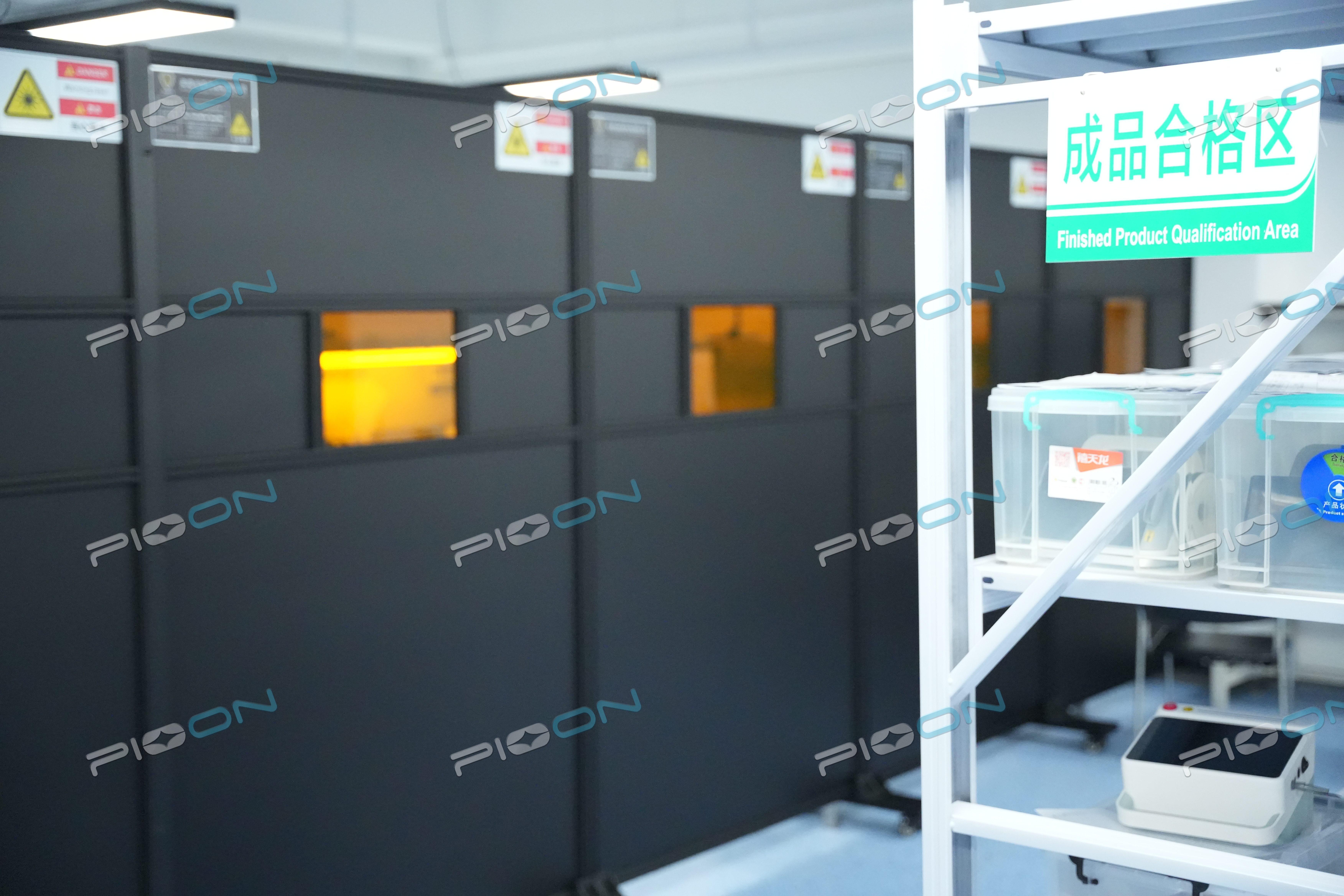
Cooling architecture: dual-fan plus electronic cooling with multi-channel copper tubing
Cooling is a buyer criterion because it affects placement, maintenance and the questions a supplier must answer. The documented configuration uses dual fans, electronic cooling control and multi-channel copper tubing. Active air cooling requires airflow. A unit placed against a wall, inside a closed cabinet or under a shelf may not receive the clearance the design assumes. The buyer should ask for minimum intake and exhaust clearance, filter requirements, fan replacement guidance, noise data and the ambient temperature and humidity range for operation.
The copper tubing is a heat-transfer element, but the buyer should not guess whether it is a sealed liquid loop, a heat pipe or another conduction path. The supplier should describe the cooling path in the technical file, state whether the tubing is internal and sealed, and provide inspection or service requirements. If any liquid is involved, the buyer should ask for leak-testing, coolant type, replacement interval and field-service procedure. If the system is air-cooled only, the buyer still needs filter and dust-management instructions.
Cooling also affects distributor planning. A demo unit may be moved frequently, so the distributor should know whether transit requires locking, draining or special handling. A clinic should know what maintenance is user-serviceable and what requires trained service. Neither a dual-fan design nor copper tubing is evidence of clinical superiority. They are engineering facts that help a buyer compare fit, service burden and installation risk.
Buyer comparison table: evidence to request from each ENT laser supplier
A documented specification is only useful if the supplier can support it with model-specific evidence. The following table converts the listed facts into requests that clinics and distributors can send to every shortlisted supplier.
| Evidence area | Request to the supplier | Why it matters for the ENT diode laser decision |
|---|---|---|
| Physical envelope | Dimensions with stand, cart, handpiece holder, fiber and cable clearance; net, as-shipped and in-use weight. | Confirms room fit, transport method and demo logistics. |
| Power | Input range, frequency, maximum power draw, plug and cord type, battery runtime and charge time. | Supports electrical planning and prevents battery capacity from being mistaken for procedure time. |
| Thermal design | Cooling path, airflow clearance, filter schedule, noise, duty cycle, ambient limits and service procedure. | Reduces siting and maintenance risk after purchase. |
| Delivery | Contact or non-contact delivery, compatible ENT surgical laser fiber and ENT laser handpiece list, and approved indications. | Connects the console specification to the actual procedure workflow. |
| Regulatory file | Model-specific registration or clearance, IFU, labeling and applicable standards evidence. | Prevents a product-page claim from being treated as market authorization. |
| Service | Warranty terms, spare parts, remote support, training and local service route. | Shows whether the distributor or clinic can support the unit over its lifecycle. |
How clinics should use the facts in a decision
A clinic should use a two-stage screen. The first stage is mandatory fit: room dimensions, electrical supply, ventilation, battery expectations and service access. The second stage is clinical and regulatory fit: wavelength, delivery method, approved indication, training and local registration. A compact housing may make a system easier to place, but it cannot compensate for a missing indication or an unverified regulatory status.
For a clinic comparing a blue diode laser for ENT, a 980 nm ENT diode laser or a 1470 nm laser for ENT surgery, the physical and cooling questions are largely the same. The wavelength choice belongs to the clinical evaluation. The footprint, weight, input voltage, battery and cooling architecture belong to the operational evaluation. Keeping those two layers separate makes the decision clearer and reduces the risk of choosing a device because of a single attractive specification.
How distributors should use the facts in a portfolio decision
Distributors have a different decision problem. They need to know whether a unit can be demonstrated, stored, shipped, serviced and registered in each target market. The 100–240 V AC input can simplify demo planning, but the distributor should still confirm the exact market version, plug type, labeling and registration. The ≤2 kg net weight can simplify transport, but the distributor should ask for the as-shipped weight and case requirements before committing to a demo schedule.
Cooling and battery design also affect distributor support. A fan-cooled unit needs filter and airflow guidance. A copper-tubing cooling path needs a service description. A 2850 mAh battery needs a replacement and runtime policy. These are not marketing points. They are the questions that determine whether a distributor can support the product after the sale without relying on assumptions.
Fit boundaries: what this specification comparison does not establish
This comparison does not establish clinical outcomes, complication rates, procedure time, total cost of ownership or reliability. It also does not establish that one cooling design is better than another. The documented facts only support statements about physical envelope, weight, input power, battery capacity and cooling architecture. Any claim that a smaller housing is clinically superior, that a 2850 mAh battery is sufficient for a full list or that copper tubing is maintenance-free would go beyond the evidence.
The correct buyer response is to keep the comparison factual and conditional. A compact ENT laser system may fit a small treatment room, but the buyer must still verify ventilation and service access. A dual-voltage input may simplify planning, but the buyer must still verify local electrical and regulatory requirements. A dual-fan design may support thermal management, but the buyer must still ask for duty cycle, noise and maintenance data.
Market context: category growth does not validate a single configuration
Commercial research cited in the verified data package projects the global ENT surgery lasers market to reach USD 4.93 billion by 2034 (The Insight Partners). Technavio reports that North America holds a 41% share of the global ENT laser devices market and forecasts USD 130 million of incremental growth over 2023–2028, with a 6.78% CAGR for ENT laser devices. These figures describe the category, not diode-specific demand, and they do not validate any single housing, battery or cooling design. They are useful only as background for procurement planning.
FAQ: neutral answers for ENT diode laser buyers
How should a clinic compare an ENT diode laser footprint and weight?
Compare the exact housing dimensions, net weight, as-shipped weight and in-use weight with the intended cart, handpieces, fibers and cables. Add ventilation and service clearance to the footprint. A 26 cm × 12.5 cm × 20 cm housing and ≤2 kg net weight are useful starting facts, but the clinic should confirm them for the exact model and configuration being quoted.
Does a 2850 mAh battery indicate procedure runtime?
No. Milliampere-hours describe battery charge capacity, not runtime. Buyers should request runtime under a representative ENT duty cycle, charge time, battery chemistry, replacement policy and behavior as the battery ages. A battery may support transport or short interruptions, but it should not be assumed to replace mains power for a full procedure list without supplier evidence.
What should buyers ask about dual-fan and multi-channel copper-tubing cooling?
Ask for the cooling path description, minimum airflow clearance, filter or dust-management requirements, noise data, duty cycle, ambient temperature and humidity limits, and service instructions. If the copper tubing forms part of a sealed liquid system, ask for coolant type, leak-testing and service intervals. These questions help the buyer judge siting and maintenance fit, not clinical performance.
Which documents support power and siting claims for an ENT laser system?
Request the model-specific datasheet, installation guide, instructions for use, electrical safety and EMC evidence, and local registration or clearance documents. In the United States, FDA recognizes IEC 60601-2-22 for basic safety and essential performance of laser equipment and IEC 60825-1 for laser product safety and classification. Recognition is not the same as market authorization for a specific device, so the buyer should confirm the exact model and intended use.
Can a distributor use these specifications to compare models across markets?
Only after confirming the exact model, market version, accessories and regulatory status for each market. The same housing or input range does not prove that every version has the same approval, labeling or service configuration. Distributors should build a model-by-market evidence table rather than mixing specifications from different configurations.
The practical conclusion for an ENT diode laser buyer is to treat footprint, weight, input power, battery capacity and cooling as verifiable procurement fields. The documented PIOON ENT diode laser configuration provides a useful reference point, but the buyer should require the same evidence for every shortlisted model and keep clinical, regulatory and operational questions separate.
Tem questões ou precisa de mais detalhes?
Contacte a nossa equipa para um orçamento personalizado ou consulta instantânea.
Solicitar orçamento
Preencha o formulário abaixo e a nossa equipa entrará em contacto com uma proposta personalizada.
Chat direto do WhatsApp
Prefere conversar em tempo real? Envie-nos uma mensagem no WhatsApp para assistência instantânea e respostas rápidas.
- Obter orçamento personalizado
- Partilhar fotos ou documentos
- Discuta as suas necessidades diretamente
Geralmente responde em 5–30 minutos durante o horário de expediente.