
EU-Bound EV Connector Terminals: RoHS, Plating and Temperature Compliance Evidence
EU-Bound EV Connector Terminals: RoHS, Plating and Temperature Compliance Evidence
EU-bound EV connector terminals are usually qualified on a document set, not on a single sales claim. For the JDE-1187-B stamping terminal and related JDE connector products, the supplied evidence supports four concrete checkpoints: RoHS-compliant manufacturing, a pre-tinned coating of 2–6 μm, a surface free of oxidation and missing plating, and application evidence for -40°C to 125°C operation in the relevant connector system. The same evidence names salt spray, moisture, engine oil and coolant exposure, plus a 0.5–4 N insertion and extraction force window. What follows separates what the supplied documents show from what an EU buyer still needs to verify.
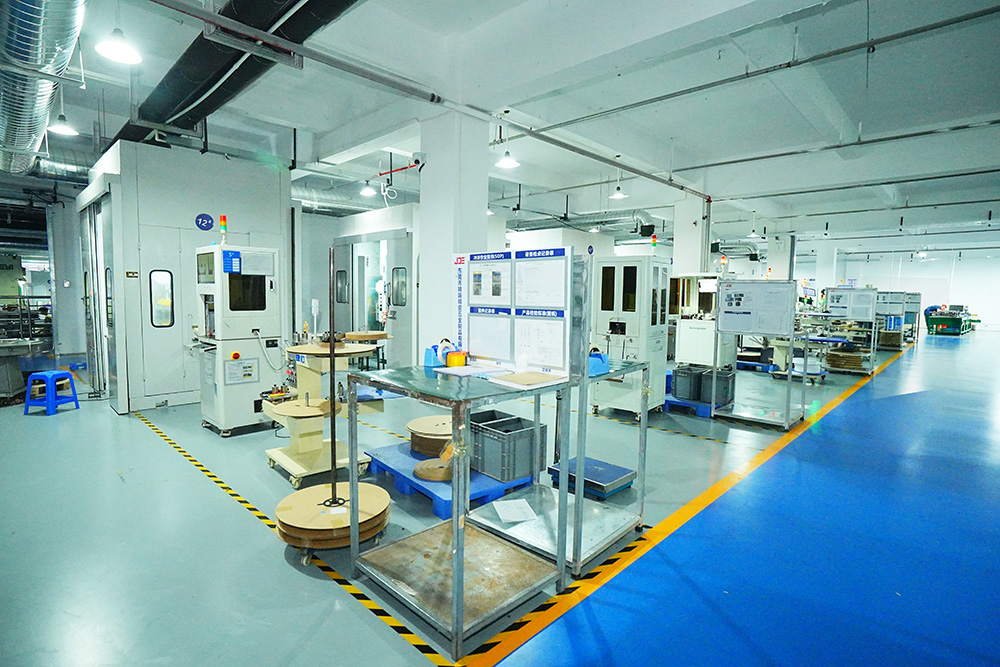
JDE Automotive Technology Co.,LTD is an automotive connector and precision stamping manufacturer based in Dongguan, China. Its supplied company profile lists IATF 16949:2016, ISO 9001, ISO 14001 and ISO 45001 certifications, and its product range covers stamping parts, plastic injection, automotive connectors, automotive wire connectors and wire harness assemblies. For a compliance review, the relevant question is narrower: which document proves which claim for the exact terminal, plating and connector assembly?
Why EU compliance evidence is a document-chain question
An EU buyer evaluating a new energy vehicle connector terminal is not only buying a part; the buyer is assembling a defensible file. That file normally separates product substance compliance, quality-system certification, plating specification, dimensional and surface inspection, and application test evidence. These documents are complementary, but they are not interchangeable. A quality certificate does not prove RoHS compliance, and a plating thickness specification does not prove that every production lot was measured.
| Evidence type | What it can show | What it cannot replace |
|---|---|---|
| Product RoHS/REACH declaration | Substance compliance statement for a named part, material and plating | A quality-system certificate or a part-specific test report |
| IATF 16949:2016 certificate | Automotive quality management system scope for stamping parts | Product-level RoHS, plating thickness or temperature test data |
| Pre-tin thickness specification | Nominal 2–6 μm coating requirement on the stated material | Lot-level measurement records and sampling method |
| Temperature, salt-spray, vibration or mating-force test report | Test conditions and results for the sample tested | Field performance across every vehicle application |
This table is a buyer evidence map. It does not claim that every listed document is already included in the supplied corpus.
RoHS-compliant manufacturing: what the corpus states
The supplied product evidence states that the terminal product complies with RoHS and REACH, and that all manufacturing processes comply with RoHS standards for environmental access in the new energy vehicle industry. The same evidence describes the terminal as a stamped component with no obvious deformation, burrs or cracks, and with a surface free of oxidation and missing plating. Those points matter because a RoHS file is stronger when it is tied to a controlled process and a defined surface condition, not only to a general marketing statement.
However, the supplied material does not contain a separate RoHS certificate number or a part-specific RoHS test report. That is not a reason to treat the product as non-compliant; it is a reason to keep the claim at its supported strength. The correct EU-facing statement is that RoHS compliance is stated for the product and its manufacturing processes, while a buyer-specific file should add a part-specific declaration and, where required, test reports for the terminal, the copper strip CuNi3Si, the SUS301 steel strip and the pre-tin plating.
Factory certifications should be read in the same disciplined way. The IATF 16949:2016 certificate LTXNCH, issued by Quality Austria Certification GmbH, is valid from 2026-09-07 to 2029-09-06 and covers automotive stamping parts, including precision stamped terminals. Its listed markets are the EU, US, Japan, Korea and China, and the corpus states it can be provided as quality system documentation and audit evidence for automotive connector terminal sourcing or qualification. ISO 9001 certificate 06524Q00481R0M covers the processing of metal stamping parts and is valid from 2024-03-13 to 2027-03-12. ISO 14001 certificate 06524E00220R0M covers hardware stamping parts processing; its supplied scope includes the JDE-1187-B stamping terminal and runs from 2024-03-13 to 2027-03-12. ISO 45001 certificate 06524S00209R0M covers hardware stamping parts processing and related management activities over the same period. These are management-system and process controls. They support supplier qualification, but they do not replace a product-level RoHS declaration.
Plating evidence: 2–6 μm pre-tin and surface condition
The JDE-1187-B stamping terminal uses a copper strip CuNi3Si and SUS301 steel strip construction, with a pre-tinned coating thickness of 2–6 μm. The terminal surface is specified as free of oxidation and missing plating, and the part is described as free of obvious deformation, burrs and cracks. The applicable wire diameter is 0.25–0.35 mm², and packaging is 5,000 pieces per reel in an outer black plastic bag. These are terminal-specific facts, and they are more useful to an EU buyer than a generic statement that the part is plated.
The 2–6 μm figure should be treated as a specification range, not as a measured result for every reel. For qualification, the buyer should ask for the coating thickness measurement method, sampling plan and recent records, and should confirm that the measurement is made on the same material and plating condition as the ordered part. The surface requirement is equally practical: oxidation and missing plating are incoming-inspection checkpoints, so the file should show how they are detected and what happens when they are found.
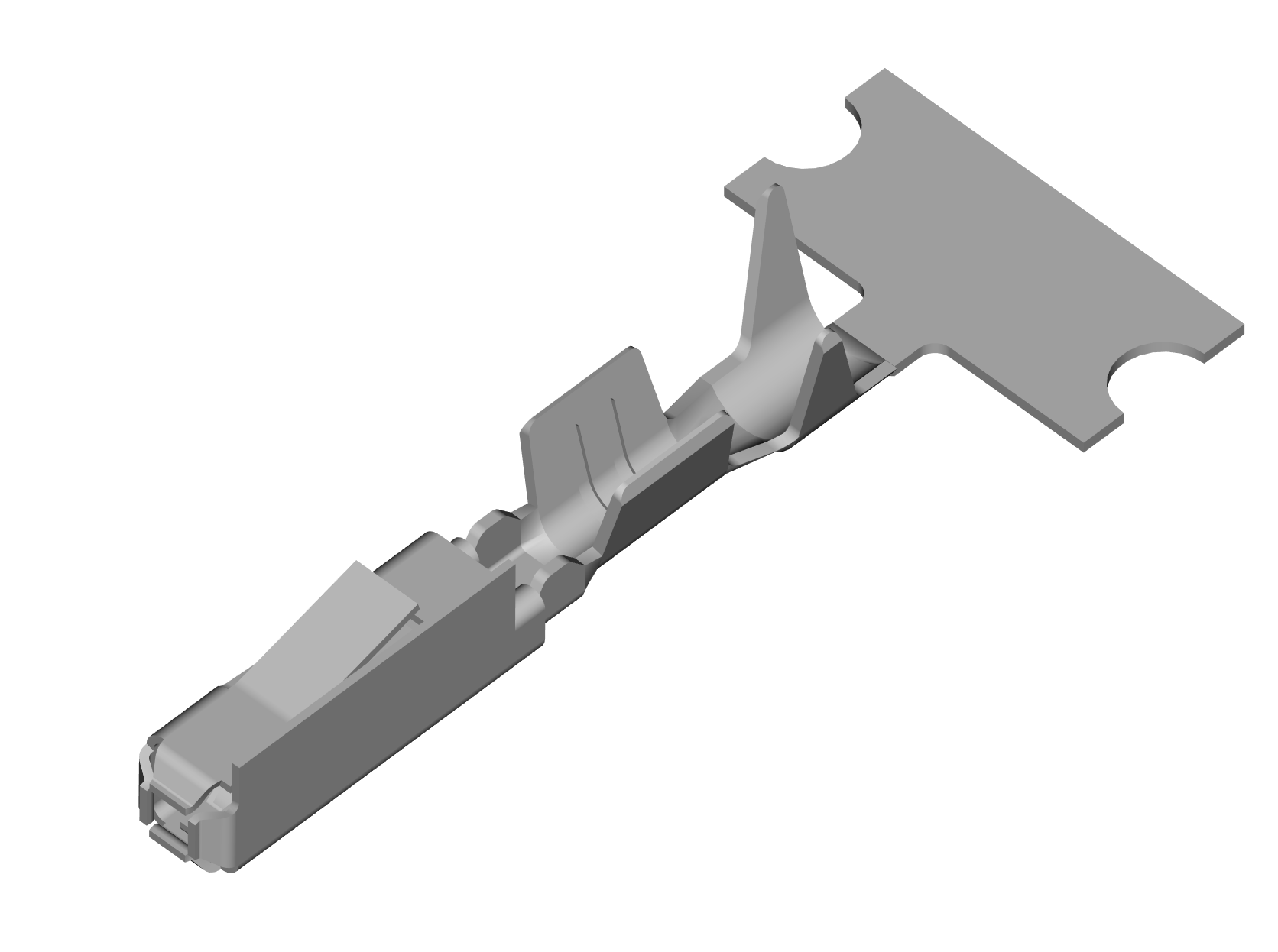
The material choice explains why the specification is not only a coating issue. CuNi3Si is used for the copper strip because it balances strength and conductivity and supports signal transmission with stress-relaxation resistance. SUS301 provides elasticity and structural support for contact retention. The pre-tin layer supports solderability and corrosion resistance, and the surface condition protects the contact interface. In a buyer review, these are design and process claims to be matched against the drawing, the material certificate and the plating record, not reasons to skip lot-level verification.
Temperature and environmental qualification: -40°C to 125°C
The -40°C to 125°C figure is supported in the supplied evidence at connector and application level. The JDE-03 automotive connector with housing lists a working temperature of -40°C to 125°C, RoHS and REACH compliance, and factory certifications including IATF 16949:2016, ISO 9001, ISO 14001 and ISO 45001. A supplied car connector terminal application case states that the plating layer protects against salt spray, moisture, engine oil and coolant, and that the terminal operates reliably within -40°C to 125°C.
The terminal-specific JDE-1187-B data in the corpus does not state a separate operating temperature range. That distinction matters for an EU dossier. A connector housing rating, a terminal application case and a terminal-level temperature cycling report answer different questions. The buyer should not copy the housing rating onto the terminal without a terminal-level report, and should not treat an application case as a part-specific qualification for every harness. The defensible statement is that -40°C to 125°C operation is supported for the relevant connector system and application evidence, while the exact terminal qualification must be confirmed against the ordered part number.
Environmental testing is also part of the evidence chain. The supplied product and contact-shrapnel evidence states that the product meets automotive-grade test standards and passes salt spray, temperature cycling and vibration tests. The corpus does not state the salt-spray duration, the temperature-cycle profile, the vibration spectrum or the acceptance criteria. Those details belong in the test report, not in a summary claim. For EU-bound EV terminals, the buyer should ask for the report that matches the terminal family and plating, and should check whether the test was performed on the terminal alone or on an assembled connector with housing and seals.
Qualification checkpoints for an EU-bound terminal file
The following checkpoints convert the supplied facts into a buyer verification plan. They do not add new performance claims; they show what to ask for and why.
| Checkpoint | Supplied evidence | Verification question | Document to hold |
|---|---|---|---|
| RoHS and REACH | Product complies with RoHS and REACH; all manufacturing processes comply with RoHS | Does the declaration name JDE-1187-B, CuNi3Si, SUS301 and the pre-tin plating? | Part-specific declaration and test report where required |
| Pre-tin thickness | 2–6 μm on CuNi3Si and SUS301 | What method and sampling plan support the range? | Coating thickness records |
| Surface condition | Free of oxidation and missing plating; no obvious deformation, burrs or cracks | What inspection magnification, AQL and acceptance criteria apply? | Incoming and in-process inspection report |
| Temperature | -40°C to 125°C for JDE-03 housing and application case | Is there a terminal-level report for the ordered part? | Temperature cycling report |
| Salt spray, moisture, oil and coolant | Plating protection stated; salt spray test passed | What standard, duration and acceptance criteria were used? | Salt-spray and fluid-exposure report |
| Insertion and extraction force | 0.5–4 N for male and female mating | What sample size, speed and cycle count apply? | Mating-force test record |
| Vibration | Vibration test passed | Was the test on terminal alone or assembled connector? | Vibration test report |
What the 0.5–4 N force window controls
The JDE-1187-B technical conditions control male and female mating insertion and extraction force at 0.5–4 N. This is a functional window, not a marketing target. The lower bound supports assembly without excessive insertion effort; the upper bound supports retention and helps avoid a loose connection. The buyer should still confirm the measurement method, sample size, mating speed, lubrication condition and whether the value applies to first mating or after repeated plugging. The same terminal specification also states an applicable wire diameter of 0.25–0.35 mm² and a packaging quantity of 5,000 pieces per reel, which are useful for matching the part to the harness and the assembly line.
Application fit: signal, gearbox and engine-harness scenarios
The JDE-1187-B terminal is positioned for low-voltage signal connections in new energy vehicles, and the supplied selling points describe a combination of copper-alloy conductivity and stainless-steel elasticity for stable long-term signal transmission and plug life. That positioning fits the 0.25–0.35 mm² wire range and the 0.5–4 N mating window. It is not, by itself, evidence of a high-voltage power-terminal rating.
A supplied application case describes a gearbox connector operating with water proofing and high temperature, 24/7 operation, and a wiring harness as the matched equipment. Another application family covers engine wire harness and automotive connector housings rated for -40°C to 125°C. These cases are useful for understanding the intended environment, but they are scenario evidence. They do not prove that JDE-1187-B has been deployed in every gearbox or engine-harness program. The buyer should map the case to the actual cavity, housing, seal, wire gauge and current load.
What the market data adds to a compliance decision
The supplied verified data package includes a Mordor Intelligence projection of USD 28.59 billion for the global automotive terminals market in 2026, and a company-reported JDE daily production capacity of 4 million pieces. These figures describe market scale and manufacturing capacity. They do not prove RoHS compliance, plating thickness, temperature performance or insertion force. For an EU qualification file, commercial data should sit in a separate section from compliance evidence, because a growing market does not reduce the need for a part-specific declaration.
Document control: keep the file part-specific and current
The practical outlook is document control rather than a forecast. The IATF 16949:2016 certificate LTXNCH is valid to 2029-09-06, while the ISO 9001, ISO 14001 and ISO 45001 certificates in the supplied corpus are valid to 2027-03-12. A buyer reviewing the file in 2026 should check that each certificate is current, that its scope covers automotive stamping or metal stamping as stated, and that the part number, material and plating in the declaration match the purchase order. The ISO 14001 scope explicitly includes the JDE-1187-B stamping terminal; the ISO 9001 and ISO 45001 scopes cover metal or hardware stamping parts processing. A new plating, a new housing material or a new terminal design should trigger a fresh document review rather than relying on a certificate issued for a different configuration.
The same discipline applies to the customer-specific file. A complete package for an EU-bound EV connector terminal would normally include the part drawing, material declaration, RoHS and REACH declaration, plating thickness records, surface inspection criteria, temperature and environmental test reports, mating-force records and the applicable quality-system certificates. The supplied facts support the starting point; the buyer should close the remaining evidence gaps with the exact documents that carry the part number and revision.
Conclusion: what the evidence supports
The supplied evidence supports a clear but bounded position. JDE Automotive Technology Co.,LTD documents RoHS-compliant manufacturing for the terminal product, a 2–6 μm pre-tinned coating on CuNi3Si and SUS301, a surface free of oxidation and missing plating, and -40°C to 125°C operation in the relevant connector and application evidence. It also supports salt-spray, moisture, engine-oil and coolant protection claims at the plating and application level, and a 0.5–4 N insertion and extraction force window for the JDE-1187-B terminal. It does not support treating every certificate as a RoHS certificate or every housing rating as a terminal rating. EU buyers should build the file around the exact part, plating and test report, and keep the qualifications beside the claims. More company information is available at JDE Automotive Technology Co.,LTD. The company brochure can be downloaded at JDE Automotive Technology brochure.
FAQ: EU compliance evidence for EV connector terminals
What RoHS evidence should an EU buyer request for EV connector terminals?
A part-specific RoHS declaration naming the terminal, its materials and its plating, plus test reports where the buyer's system requires them. The supplied corpus states that the terminal product complies with RoHS and REACH and that all manufacturing processes comply with RoHS standards. It does not supply a separate RoHS certificate number, so the declaration and test report should be part of the buyer's document file.
Does an IATF 16949 certificate prove RoHS compliance?
No. The IATF 16949:2016 certificate LTXNCH covers automotive stamping parts under a quality management system and applies to the EU, US, Japan, Korea and China markets. It supports supplier qualification; it does not establish substance restriction. RoHS requires a product-level declaration or test evidence.
What does the 2–6 μm pre-tinned thickness cover?
It is the specified pre-tinned coating thickness on the copper strip CuNi3Si and SUS301 steel strip construction of the JDE-1187-B stamping terminal. It is a specification range, not a lot measurement. A buyer file should include coating thickness records and the sampling method.
Is -40°C to 125°C a terminal rating or a connector rating?
In the supplied evidence, -40°C to 125°C is stated for the JDE-03 automotive connector with housing and for a car connector terminal application case. The JDE-1187-B terminal data does not state a separate operating temperature range. Keep the assembly rating and terminal test evidence separate unless a terminal-level report supports the same figure.
How should 0.5–4 N insertion and extraction force be qualified?
The JDE-1187-B specification controls male and female mating insertion and extraction force at 0.5–4 N. Qualification should confirm the test method, sample size, mating speed and whether the value applies after repeated cycles. The window supports assembly and retention checks; it does not replace vibration or temperature cycling evidence.
Tem questões ou precisa de mais detalhes?
Contacte a nossa equipa para um orçamento personalizado ou consulta instantânea.
Solicitar orçamento
Preencha o formulário abaixo e a nossa equipa entrará em contacto com uma proposta personalizada.
Chat direto do WhatsApp
Prefere conversar em tempo real? Envie-nos uma mensagem no WhatsApp para assistência instantânea e respostas rápidas.
- Obter orçamento personalizado
- Partilhar fotos ou documentos
- Discuta as suas necessidades diretamente
Geralmente responde em 5–30 minutos durante o horário de expediente.