
EUMASEIKI CNC Machining Centers: A Technical Guide for Manufacturing Buyers
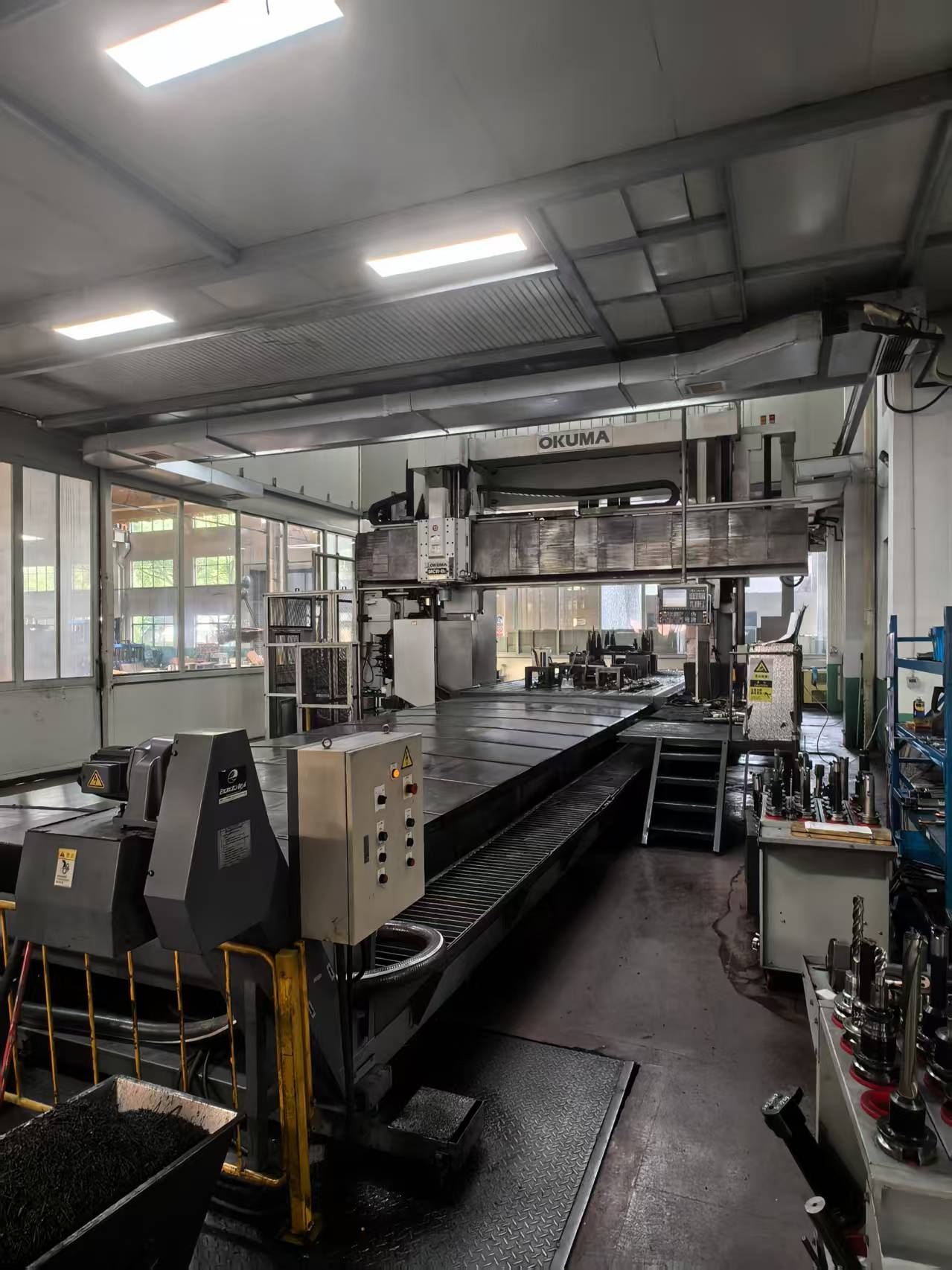
Wenzhou EUMA Machinery Co., Ltd., operating under the brand EUMASEIKI, is a high-tech enterprise established in 2023 that specializes in customizing CNC machining centers. The company’s product portfolio spans vertical, horizontal, 5-axis, and trunnion table configurations, targeting precision mold making, aerospace, automotive, and general manufacturing. With a production base in Ningbo covering 8,000 m² and an annual capacity of 50–100 units, EUMASEIKI positions itself as a supplier of mid-to-high-end machining solutions using European design concepts, Taiwanese assembly standards, and Japanese component sourcing.
The global CNC machining and turning centers market was estimated at USD 27.64 billion in 2024 (Grand View Research), while the 5-axis segment alone reached approximately USD 7.35 billion with a projected CAGR of 4.6% to 2035 (WiseGuyReports). Against this backdrop, procurement professionals increasingly demand machines that combine accuracy, thermal stability, and configurability. This article examines how EUMASEIKI’s product line and engineering choices address those requirements.
Problem and Opportunity in Modern Machining
Manufacturers face growing pressure to reduce cycle times and scrap rates while handling complex geometries in materials ranging from aluminum alloys to hardened steels and composites. Traditional 3-axis machining often requires multiple setups and special fixtures, increasing lead time and error potential. Five-axis machining centers address this by enabling single-setup processing of complex curved parts, but they also demand higher stiffness, precision, and control sophistication. According to Dataintelo, the aerospace application segment accounted for 28.7% of 5-axis machining center revenue in 2025, reflecting the need for tightly toleranced components such as turbine blades and structural brackets. The same source notes that vertical machining centers held 52.3% of the 4-axis CNC market in 2025, indicating that buyers still rely heavily on versatile VMCs for general production.
Brand Overview: EUMASEIKI’s Product Line
EUMASEIKI’s main products include CNC Machining Centers across multiple categories. The EV series offers CNC Vertical Machining Centers in sizes from the compact EV-855A (810 mm X-travel, 5200 kg weight) to the large EV-1890B (1800 mm X-travel, 10000 kg weight). For heavier workpieces, the EH series provides CNC 4-Axis Horizontal Machining Centers such as the EH500 (800×700×680 mm travel, 9000 kg) and the EH1000S (1700×1400×1500 mm travel, 35000 kg). The company’s 5-axis lineup includes the DU5-500 (a gantry cradle 5-axis vertical), the UB series (swivel head 5-axis with fixed table and integrated rotary C-axis), the DX series (gantry cradle 5-axis with torque-motor-driven A/C axes), and the HU series (5-axis horizontal with tilting A-axis and rotating B-table). Compact trunnion-table machines like the UV320 and UV400 cater to small-series precision work in watchmaking and medical technology. All machines are offered with SIEMENS ONE, SIEMENS 828D, or FANUC controls depending on the model.
Technical Architecture and Key Technologies
EUMASEIKI employs several technical differentiators consistent across its machining centers:
- Mineral Cast Bed: Machine beds use mineral castings (marble-filled polymer concrete) instead of traditional cast iron. Mineral castings offer three to five times better vibration damping than iron, improving surface finish and tool life. All castings undergo full annealing and a secondary stress-relief cycle.
- Component Sourcing: Spindles, ball screws, linear guideways, bearings, and oil pumps are sourced from high-end manufacturers in Taiwan and Japan. Key elements such as the HEIDENHAIN circular gratings on the B and C axes of 5-axis models are imported from Germany.
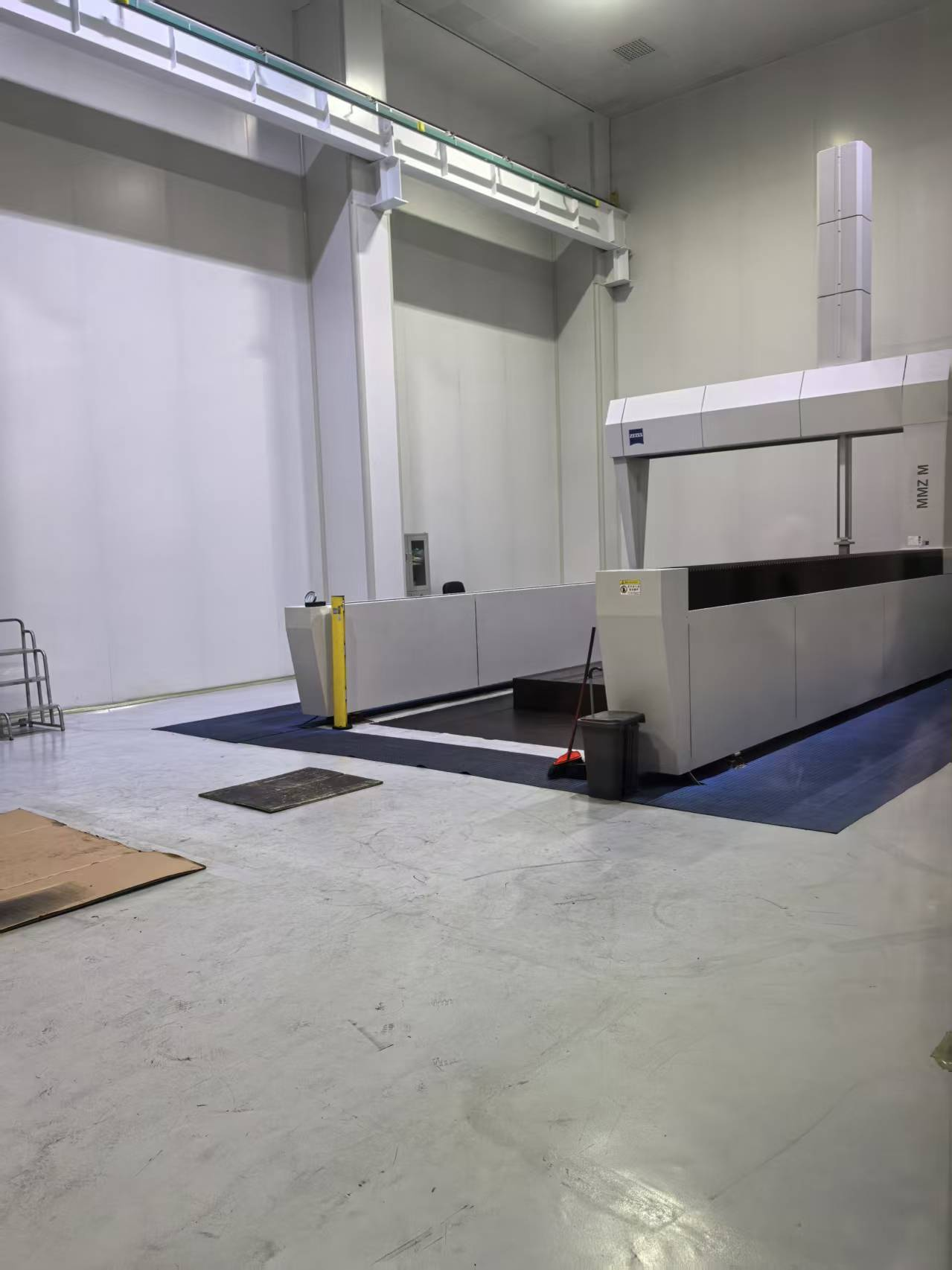
- Precision Assembly: Each machine is assembled by technicians with experience from Taiwanese enterprises. The workshop is equipped with Japanese OKUMA gantry machining centers, KURUKI boring and milling machines, NIIGATA horizontal machining centers, and a German ZEISS coordinate measuring machine for in-house quality control.
- Accuracy Standards: Positioning and repeatability are verified per German VDI 3441. For example, the DX5-630 achieves X/Y/Z positioning accuracy of 0.008 mm and repeat accuracy of 0.004 mm; the UB series attains B-axis repeat accuracy of 4 arc-seconds.
- High-Dynamics Drives: The C-axis rotary table on UB models uses a direct-drive torque motor, enabling 80–100 rpm rotation and high torque for multi-axis simultaneous machining. Linear axes on high-speed models (e.g., EV-1055A) reach rapid traverse rates of 48 m/min.
Use-Case Scenarios
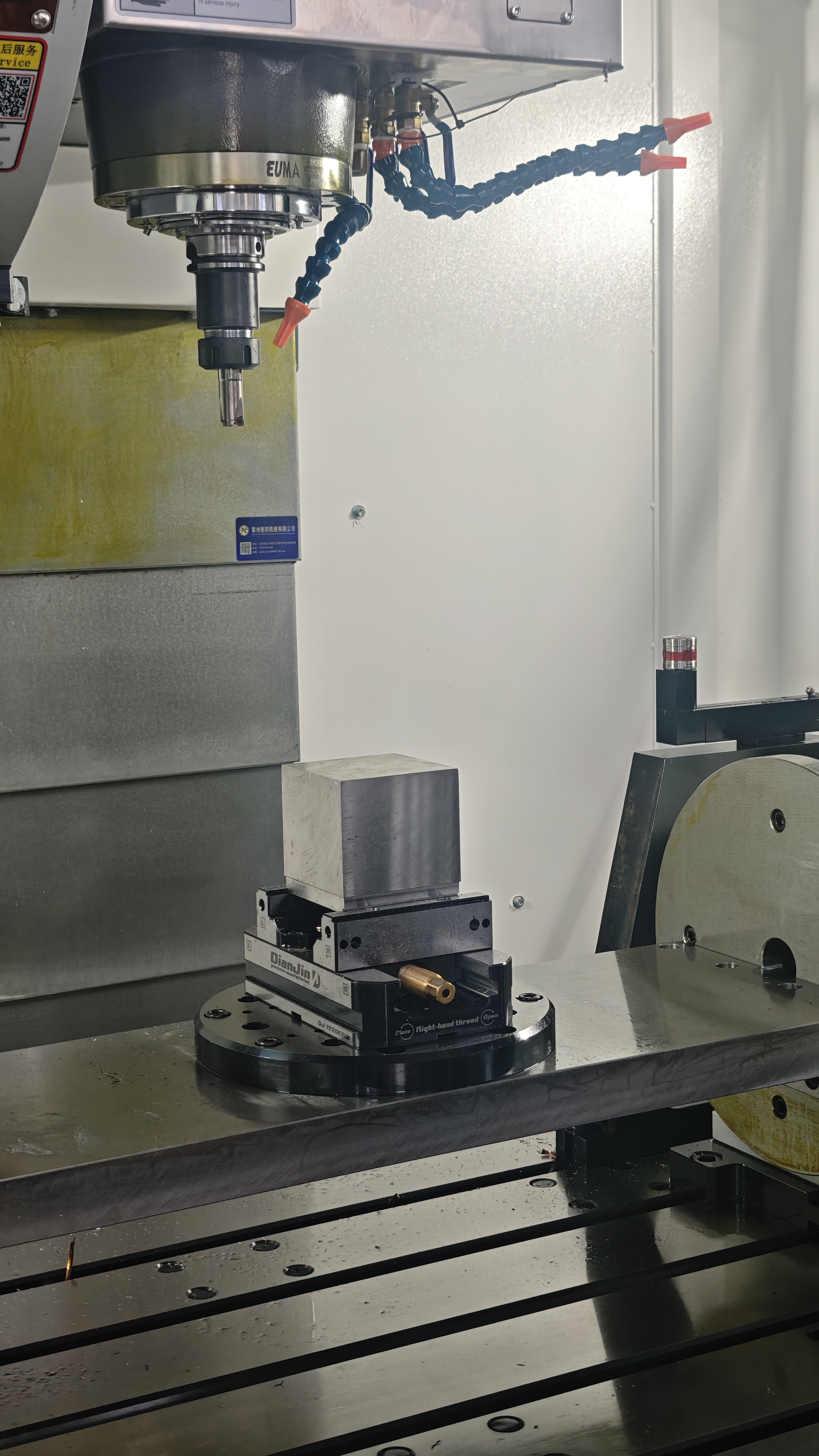
EUMASEIKI’s machines are deployed across several manufacturing sectors:
- Aerospace and Automotive: The DX5-800 and DX5-630 gantry cradle 5-axis machining centers are intended for production of metallic parts in automotive and aviation industries. The HU1400 5-axis horizontal machining center, with a B-table load of 4000 kg and A-axis tilting to ±110°, is suitable for large structural components and powertrain housings. Its five-axis linked RTCP precision is ±0.025 mm.
- Precision Tools and Molds: The EV-1165A vertical machining center, with 1100×650×650 mm travel and 900 kg table load, handles medium-sized die and mold work. The EH1000S 4-axis horizontal machining center is designed for machining molds, dies, boxes, and valve body components in foundry, plastics, and automotive sectors.
- Medical and Micro-Mechanics: The UV320 trunnion table machining center is designed for drilling, tapping, and milling of small and medium series components in precision mechanics, watchmaking, medical technology, electronics, and general mechanics. Its compact footprint (2500×3150 mm) and 60 kg table load suit small-batch precision parts.
- High-Volume Production: The EH500 4-axis horizontal machining center, with dual 500×500 mm pallets and 600 kg load per pallet, supports high-throughput machining of medium-sized components. The 60-tool magazine and 6-second tool change minimize non-cutting time.
Market Trend Analysis
The shift toward 5-axis machining is supported by verified industry data. The 5-axis market’s 4.6% CAGR (to 2035) indicates sustained investment in multi-axis capability. Aerospace remains the largest application vertical, but automotive electrification is driving demand for high-precision machining of battery enclosures and motor housings. China’s machine tool exports grew 1.8% year-on-year in the first five months of 2024 (ICE Pechino/China Customs), reflecting the country’s expanding role in supplying mid-range machining centers globally. EUMASEIKI, with 80% of its sales exported to markets including Russia, Saudi Arabia, India, and Iran, aligns with this trend of Chinese export growth in precision machinery.
Comparison with Traditional Solutions
Compared to conventional 3-axis machining centers, EUMASEIKI’s 5-axis models eliminate multiple setups and reduce handling errors, leading to tighter tolerances and better surface finish on complex geometries. The swivel-head UB series, for instance, allows the spindle to reach −120° to +120°, enabling undercut machining without repositioning the workpiece. A key advantage is the ability to integrate 5-axis simultaneous machining with a fixed table, retaining the stiffness of a large rectangular table for heavy parts (up to 3500 kg on the UB2000C).
Honest limitation: The initial capital expenditure for a 5-axis machining center is significantly higher than for an equivalent 3-axis machine. Additionally, programming 5-axis toolpaths requires more skilled CAM operators and increased post-processing effort. For small shops with simple part geometries, a well-equipped 3-axis vertical machining center may still be the more cost-effective choice.
Future Outlook
As manufacturing moves toward lights-out production and digital twins, machining centers with high thermal stability and reliable repeatability become critical. EUMASEIKI’s use of mineral castings, HEIDENHAIN scales, and torque-motor direct drives positions its machines for long-term accuracy in 24/7 environments. The company’s 8-engineer R&D team and patented technologies suggest ongoing development in control integration and mechanical design. With a product range that spans from entry-level 3-axis to large 5-axis horizontals, EUMASEIKI aims to serve buyers seeking configurable, export-ready CNC machining centers with European design DNA at competitive total cost of ownership.
Frequently Asked Questions
What is a CNC Machining Center?
A CNC machining center is a computer-controlled machine tool capable of performing multiple operations such as milling, drilling, boring, and tapping on a workpiece in a single setup. It typically includes an automatic tool changer and a coolant system. EUMASEIKI manufactures CNC machining centers in vertical, horizontal, and multi-axis configurations.
What types of CNC machining centers does EUMASEIKI offer?
EUMASEIKI’s portfolio includes CNC Vertical Machining Centers (EV series), CNC 4-Axis Horizontal Machining Centers (EH series), CNC 5-Axis Vertical Machining Centers (DU series), CNC Swivel Head 5-Axis Machining Centers (UB series), CNC Gantry Cradle 5-Axis Machining Centers (DX series), CNC 5-Axis Horizontal Machining Centers (HU series), and CNC Trunnion Table Machining Centers (UV series).
What is the positioning accuracy of EUMASEIKI machines?
Accuracy varies by model and is certified per German VDI 3441. For example, the DX5-630 achieves X/Y/Z positioning accuracy of 0.008 mm and repeatability of 0.004 mm. The EV-855A has XYZ positioning accuracy of 0.008 mm and repeatability of 0.005 mm. Five-axis models also specify angular accuracy for the rotary axes (e.g., B-axis repeat accuracy of 4 arc-seconds).
What materials are used for machine beds?
EUMASEIKI uses mineral castings (marble-filled polymer concrete) for machine beds. All castings undergo full annealing to eliminate internal stress, and the spindle guideways receive high-frequency heat treatment. Key components such as spindles and guideways are sourced from Taiwan and Japan.
Which control systems are available?
EUMASEIKI offers SIEMENS ONE, SIEMENS 828D, FANUC 0i-MF, FANUC OIMF PLUS, and SYNTEC 220MA-5 depending on the model and customer requirement.
What industries do EUMASEIKI machines serve?
Main industries include precision mold making, aerospace, automotive parts manufacturing, high-end equipment production, shipbuilding, engineering machinery, medical technology, watchmaking, electronics, and general mechanics. Specific models are designed for high-volume foundry and plastic component production.
Does EUMASEIKI offer customized machining centers?
Yes, EUMASEIKI specializes in customizing CNC machining centers. Customization can include extended travels, higher torque spindles, specific control systems, and additional rotary axes. The company’s R&D team of 8 engineers supports tailored solutions.
了解更多
To explore the full product range and technical specifications, download the official EUMASEIKI catalog: EUMASEIKI Brochure (PDF).
Tem questões ou precisa de mais detalhes?
Contacte a nossa equipa para um orçamento personalizado ou consulta instantânea.
Solicitar orçamento
Preencha o formulário abaixo e a nossa equipa entrará em contacto com uma proposta personalizada.
Chat direto do WhatsApp
Prefere conversar em tempo real? Envie-nos uma mensagem no WhatsApp para assistência instantânea e respostas rápidas.
- Obter orçamento personalizado
- Partilhar fotos ou documentos
- Discuta as suas necessidades diretamente
Geralmente responde em 5–30 minutos durante o horário de expediente.