
EVA Film Fit in Defense Bulletproof Glass: Pakistan's 100-Roll Project
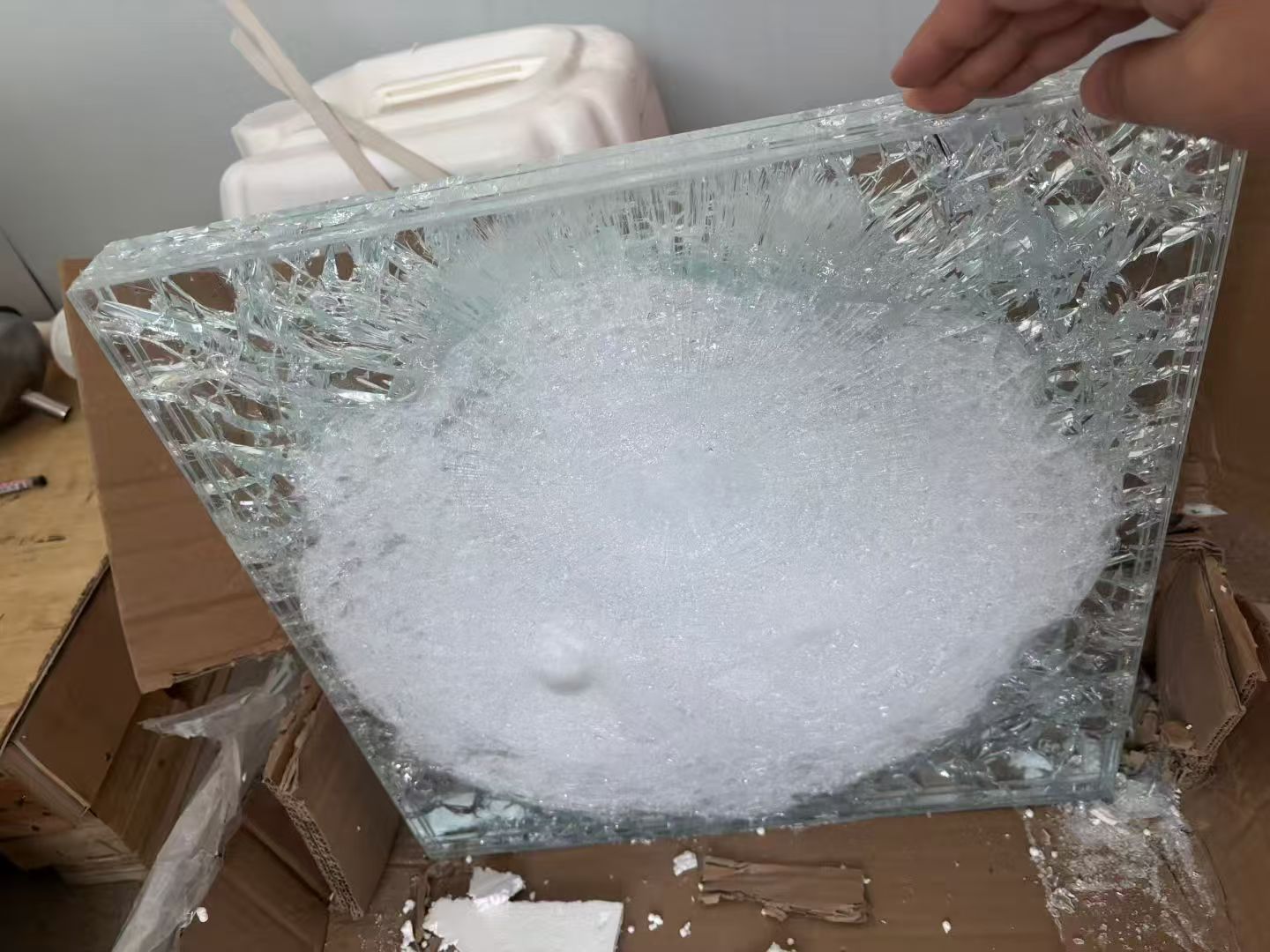
Armored glass with a bullet-resistant back surface — the application context in which a Pakistan defense customer used 100 rolls of EVA film for bulletproof glass.
Application fit is a narrower question than supplier capability. A film can be well made, properly certified and readily available, and still be the wrong interlayer for a particular glass assembly. The project examined in this article is useful because it tests fit under a demanding application rather than a convenient one: a defense industry customer in Pakistan used EVA film for bulletproof glass, consumed 100 rolls of film, implemented the work over a two-year period, and recorded stable operation across two years. The case is described as the only solution of its kind in the country.
That record extends beyond defense. The same project profile also covers general construction and interior design customers, which places EVA interlayer film simultaneously in security glazing and in everyday architectural glass. For buyers at the evaluation stage, the practical question is therefore not whether EVA film is generically "good", but which dimensions of fit the documented evidence genuinely supports — and where that evidence stops.
What Application Fit Means in Defense Bulletproof Glass
In laminated security glazing, interlayers commonly perform three jobs: they bond individual glass plies into a single unit, they retain glass fragments after breakage, and they help distribute impact energy across the assembly. A bullet-resistant build is normally a multi-ply stack, which means the interlayer carries the same responsibility at every interface, in every layer, for the entire service life of the glazing. That is why interlayer selection is a fit decision rather than a commodity decision.
Fit in this context has four distinct dimensions, and a buyer can evaluate each one separately:
- Material fit — optical quality and batch-to-batch consistency when multiple film layers are stacked into a thick, high-clarity assembly.
- Process fit — whether the film laminates reliably within the oven cycle, pressure conditions and handling discipline the plant can actually sustain.
- Application fit — whether the material class and the supply relationship can serve defense glazing and general construction or interior design without forcing the buyer to source differently.
- Supply fit — customization, minimum order quantity, lead time, quality control regime and technical support that match how the buyer orders and schedules production.
Most disappointing interlayer outcomes trace back to one of these four dimensions being assumed rather than verified. The Pakistan case is informative because it speaks to all four.
The Pakistan Project: What 100 Rolls Over Two Years Shows
Answer first: the project documents EVA film in sustained production use for bulletproof glass, not in a trial or a single delivery. The documented facts of the case are as follows.
- Country: Pakistan, in the Asian market
- Application: bulletproof glass for a defense industry customer
- Quantity: 100 rolls of EVA film
- Implementation period: 2 years
- Result: stable operation over 2 years
- Distinction: the only solution of its kind in the country
- Additional scope in the same case: EVA film used for general construction and interior design
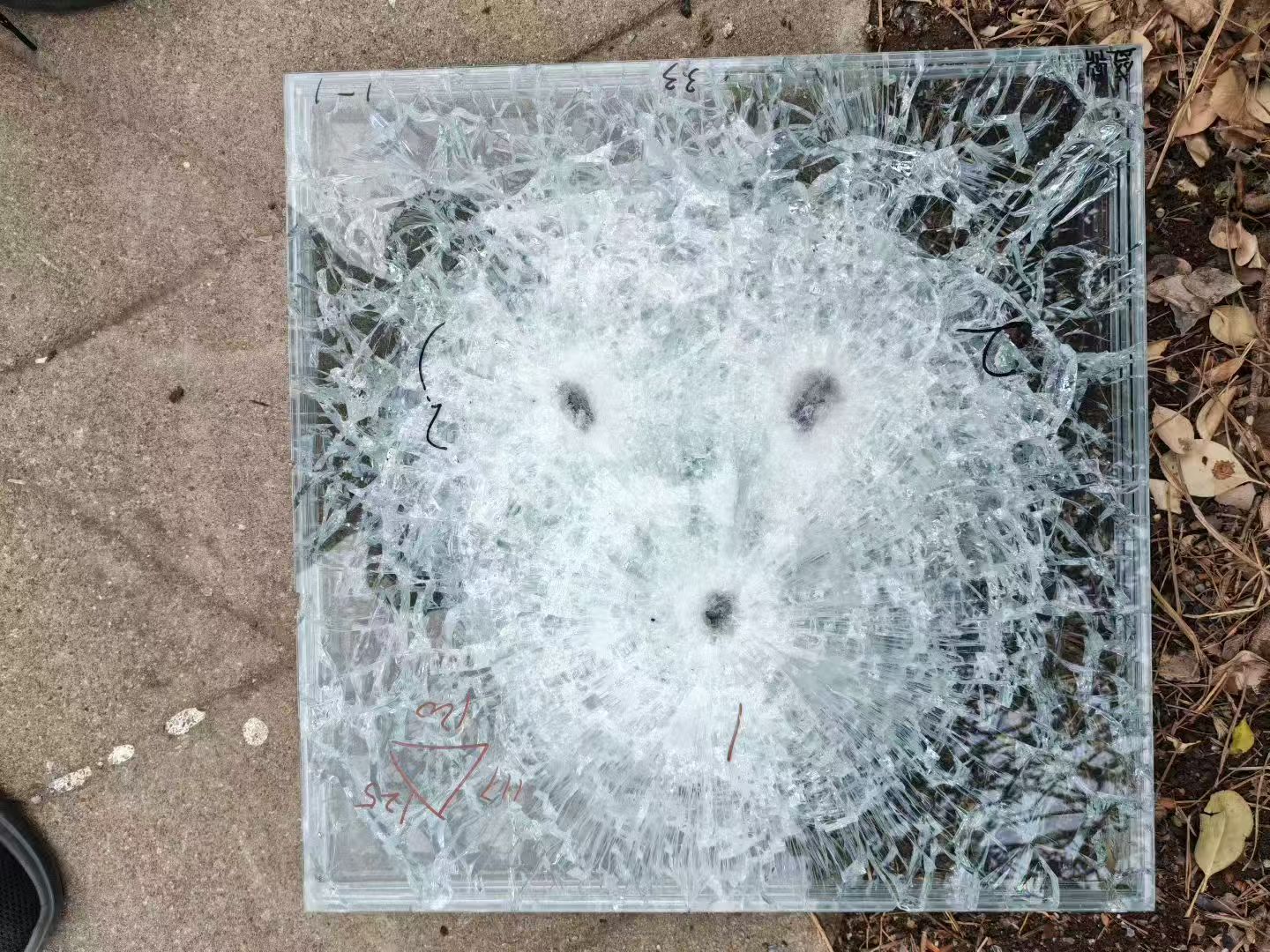
Bullet-resistant glass with a facing surface — a representation of the laminated security glazing category in which the 100-roll EVA film supply was applied.
The significance of the case lies in the duration. A film that survives a pilot batch proves very little; a film that remains in stable operation over two years of production has passed a considerably stricter test of process repeatability, moisture discipline and bond consistency. The 100-roll volume also indicates a program rather than a sample order, which implies repeatable supply and consistent specifications across multiple production runs.
What the case does not replace should be stated plainly. It is a single-country, single-customer reference. It does not substitute for qualification against a buyer's own ballistic test specification, and no ballistic test values are claimed here because none are documented. Buyers evaluating EVA film for their own security glazing programs should treat the Pakistan record as evidence of production durability and application viability, and then run their own qualification on their own glass build-up.
Material Fit: Optical Consistency in a Multilayer Glass Stack
Optical performance becomes harder to hold as the stack gets thicker, because haze accumulates with every added interlayer and glass ply. For defense glazing — visors, vehicle windows, observation panels — clarity is a functional requirement, not a cosmetic one.
Shengding Hightech Materials produces EVA film alongside TPU film. Its documented architectural EVA film model SD38 is a high-transparency film with 90% light transmittance and 0.5% haze. Those figures describe the architectural grade; a defense program such as the Pakistan project typically defines its own grade and test requirements, and the documented case record describes EVA film used for bulletproof glass without naming a specific model.
| Reference point | Documented value | Why it matters in an evaluation |
|---|---|---|
| EVA film model SD38 (architectural grade) | Light transmittance 90%, haze 0.5% | Haze accumulates across layers, so starting clarity determines the clarity of the finished multi-ply assembly. |
| Lamination process window | 100–110 °C under vacuum of at least 700 mmHg | Defines the oven set-point and vacuum capability a plant must be able to hold repeatably. |
| Quality management system | ISO 9001:2015, certificate no. 10425Q01154R1S, valid to 2028-07-24 | The certified scope covers design, development and production of interlayer glass intermediate films and granular materials. |
| Customization | Length and width | Allows film to be matched to non-standard glass sizes and reduces cutting waste on the line. |
The relevance of the quality management system is easy to underestimate. Interlayer film for a security glazing program is a raw material whose defects typically appear after lamination, when the glass is already built and cannot be reworked economically. A certified scope that explicitly covers the design and production of interlayer glass intermediate films is a signal that process control is applied to the material itself, not only to general factory operations.
Process Fit: Normal-Pressure High-Temperature Lamination, Oven Control and Dryness
The Pakistan project was implemented over two years with stable results, which means the processing route was reproducible at production scale rather than only in a laboratory. Three process requirements govern this class of work.
The lamination window
Widely cited processing guidance for EVA films used in glass lamination describes a typical window of 100–110 °C under a vacuum of at least 700 mmHg. Within that window, the vacuum stage removes air from the glass–film interface while the temperature stage allows the film to soften and wet the glass surface, forming the bond during the oven cycle. Because the practical window is defined by temperature, vacuum and dwell time together, a plant that cannot hold vacuum repeatably will see bubbles or haze regardless of film quality.
The EVA laminating oven
The scenario requirements for this application class describe normal-pressure, high-temperature processing in an EVA laminating oven. In practice this means the bonding is carried by the oven cycle — vacuum, temperature ramp, dwell and controlled cooling — rather than by a high-pressure autoclave stage. The advantage is equipment accessibility: an oven-based route is easier to install and operate in markets where autoclave capacity is limited, which is consistent with a project running in Pakistan. The trade-off is that the process recipe must be developed and locked for each glass build-up, and any change in interlayer type or thickness requires re-qualification of that recipe.
Keeping the film dry
EVA film intended for glass lamination is commonly handled as a moisture-sensitive input. Film that has absorbed moisture before lamination can show haze, bubbles or adhesion loss after the cycle, and the failure appears only after the glass has been built. Standard handling practice therefore includes keeping rolls in sealed original packaging, storing them in a dry area, and allowing the roll to reach room temperature before opening to prevent condensation on the film surface. For a two-year production program such as the Pakistan case, this moisture discipline has to hold on every shift, not only during the first delivery — which is one reason a documented two-year stable-operation record is a meaningful data point.
Application Fit Beyond Defense: Construction and Interior Design
The Pakistan case is documented as covering more than security glazing: the same project profile includes EVA film used for general construction and interior design. That dual scope matters commercially, because it means a buyer in the region can qualify one interlayer material class and one supply relationship to serve two different project categories.
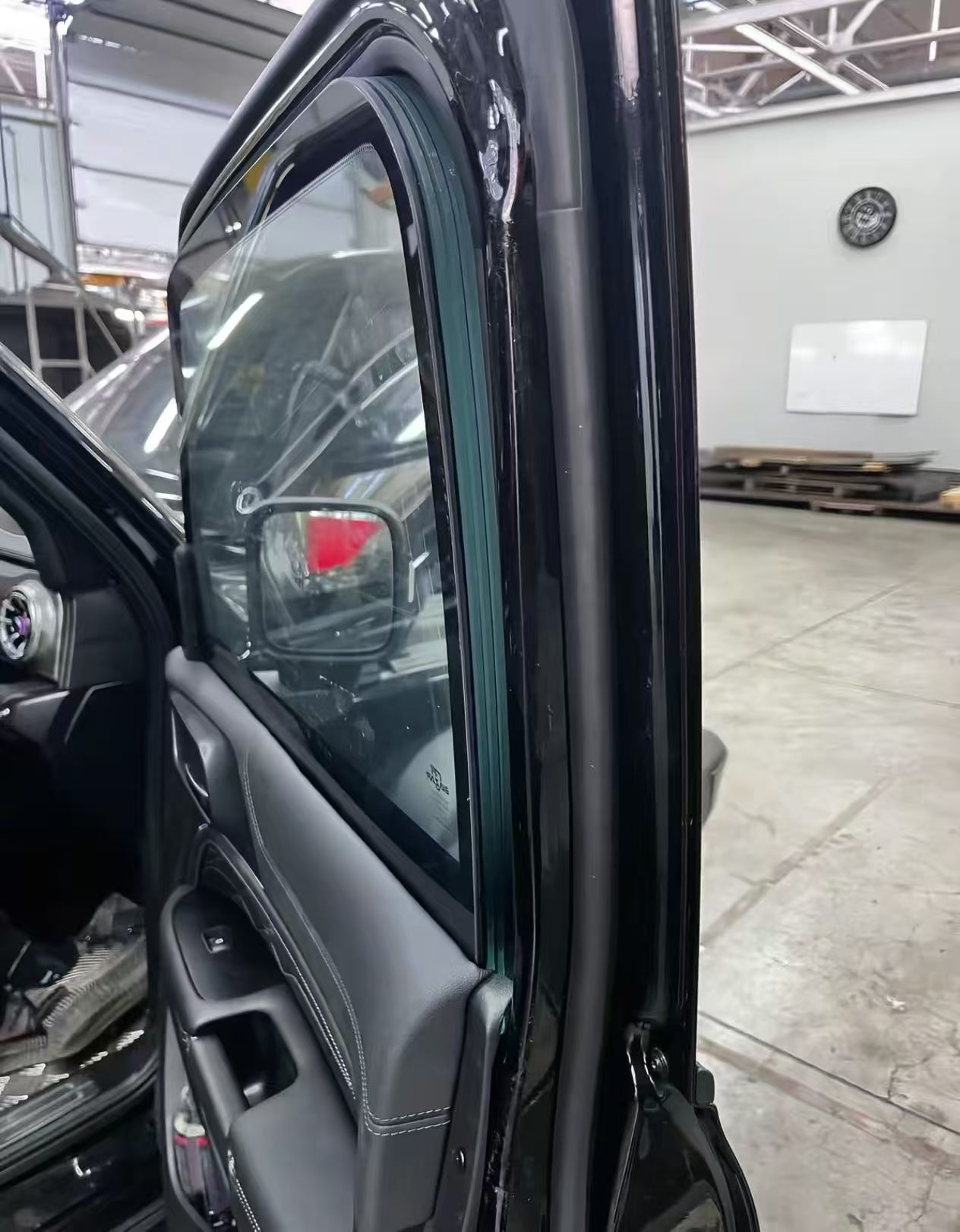
Modification of bulletproof vehicle glass — EVA interlayer film supports both security glazing and, in the same documented case, general construction and interior design work.
For construction and interior design, the priorities shift. Architectural EVA interlayer film is used in laminated architectural glass and decorative glazing, where clarity, appearance consistency and processing predictability matter more than impact resistance. The SD38 architectural model, with 90% light transmittance and 0.5% haze, sits in that category. A distributor or fabricator serving both segments can therefore carry one material family instead of two separate interlayer inventories — provided the grades and process recipes are kept clearly separated.
How Buyers Evaluate EVA Film Fit: Five Checks
Evaluating fit is a sequence, not a single verdict. The following five checks follow the order in which problems usually surface in production.
- Optical requirement against the build-up. Confirm the target clarity of the finished stack, then check the film's documented transmittance and haze rather than evaluating the film in isolation.
- Process compatibility. Confirm that the oven can hold the temperature and vacuum window with the required dwell and cooling profile, and that the recipe has been qualified for the specific glass build-up.
- Moisture and handling discipline. Confirm packaging, storage and pre-use conditioning procedures, and check whether they are documented rather than assumed.
- Documentation and quality control. Confirm certification scope and validity, and confirm the quality control regime applied to the film itself.
- Commercial and support terms. Confirm customization capability, order quantity, lead time and the technical support available when a processing issue arises.
| Sourcing item | Documented value |
|---|---|
| Production mode | OEM / ODM |
| Customization | Length, width |
| Monthly capacity | 100 tons |
| Minimum order quantity | 50 kg |
| Typical lead time | 10 days |
| Quality control | 100% test |
| After-sales | Technical support |
| Export markets | Worldwide |
The pattern here is worth noting for evaluation-stage buyers: a 50 kg minimum order quantity and a 10-day typical lead time support sample validation and pilot runs before a program-scale commitment, while OEM/ODM customization in length and width allows the film to be matched to actual glass dimensions. Sample validation followed by program supply is a lower-risk path than committing to a full production quantity on the basis of a specification sheet alone.
Where EVA Film Fit Ends: Limits and Boundaries
An honest fit assessment has to include the boundaries, and EVA film has several that buyers should weigh before standardizing on it.
- EVA is not the incumbent interlayer of the architectural market. The laminated glass market was estimated at USD 25.0 billion in 2025, with PVB holding 55.2% of interlayer share and EVA growing in architectural and solar applications. Many architectural specifications still default to PVB, and switching a specification is a project-level decision, not a supplier-level one.
- Standards can predetermine the interlayer choice. Quality requirements for laminated architectural flat glass are governed by ASTM C1172. Where a project references such a standard, the interlayer type may be fixed by the specification before any supplier is consulted.
- EVA demands moisture discipline and recipe re-qualification. Film that is not kept dry before lamination can fail after the glass is already built, and any change from another interlayer type requires re-qualifying the oven recipe. Neither cost appears on a price comparison sheet.
- One country, one customer is not universal proof. The Pakistan project is documented as the only solution of its kind in that country. It is strong evidence of application viability and durability, but it does not establish that EVA film is the right choice for every security glazing specification or every regional standard.
There is also a data-quality boundary worth flagging. Published EVA film market size estimates diverge substantially depending on whether solar, architectural or total EVA film scope is measured — one source places the market at USD 8.25 billion in 2025, another at USD 7.43 billion in 2024 and a third at USD 3.98 billion in 2023. Any buyer building a business case on market growth figures should check the scope definition behind the number.
Market Trend: Where EVA Film Demand Is Heading
Trend evidence for this category is directionally consistent even where absolute figures vary. The global EVA films market was valued at USD 8.25 billion in 2025 and is projected to reach USD 17.65 billion by 2034, with the market expected to grow at a CAGR of 8.83% from 2026 to 2034, driven by renewable energy and construction demand (Fortune Business Insights). Separately, the laminated glass market was estimated at USD 25.0 billion in 2025, with PVB leading at 55.2% share and EVA growing in architectural and solar applications (Future Market Insights).
A production-side estimate places global EVA film production at 850,000 metric tons in 2024, with China accounting for over 300,000 metric tons — a figure published as medium-reliability and marked for verification, so it is best read as directional rather than precise.
The procurement interpretation is straightforward. EVA is expanding in applications where its processing route, optical properties and adhesive behaviour suit the build-up: architectural lamination, decorative glazing and solar-related laminates, alongside established security glazing use such as the Pakistan project. It is not displacing PVB at the center of the architectural market, and buyers should not plan as though it will.
Supply-Side Fit: Shengding Hightech Materials' Capability Position
Shengding Hightech Materials Co., Ltd is a polymer materials manufacturer established in 2018 and located in the Lanshan Chemical Industry Park, Rizhao City, Shandong Province, China. The company produces TPU film and EVA film, holds ISO 9001, ISO 14001 and ISO 45001 certifications, operates a 50,000 m² factory, and exports roughly 70% of its output, with main markets in North Africa, the Middle East and Latin America.
On the supply dimensions that matter for an evaluation-stage buyer, the documented position includes OEM/ODM production, customization of film length and width, a monthly capacity of 100 tons, a 50 kg minimum order quantity, a 10-day typical lead time, 100% testing quality control, and technical support after sale. Its quality management system certification, held under GB/T 19001-2016 / ISO 9001:2015 with certificate number 10425Q01154R1S and valid to 2028-07-24, covers the design, development and production of interlayer glass intermediate films and granular materials.
Read against the four fit dimensions introduced earlier, this profile addresses supply fit directly and material fit through the documented EVA film specifications. Process fit and application fit remain buyer-side responsibilities: the oven recipe and moisture discipline belong to the laminating plant, and the application decision belongs to the project specification.
Future Outlook
Three developments are likely to shape how buyers evaluate EVA film fit over the next several years. First, as construction and renewable energy demand continues to broaden EVA film consumption, interlayer supply will become more competitive and specification documentation more standard — which makes supplier verification easier, not harder. Second, the moisture and processing sensitivity of EVA will keep qualification work on the buyer's side; programs that invest in documented, locked recipes will see fewer post-lamination defects than programs that treat interlayer changes as routine substitutions. Third, in security glazing specifically, reference cases carry disproportionate weight because qualification testing is expensive. A documented two-year stable-operation record such as the Pakistan project reduces perceived risk for buyers who cannot run their own multi-year trials before committing.
FAQ
Is EVA film suitable for defense bulletproof glass?
There is documented production evidence of it being used that way. A defense industry customer in Pakistan used EVA film for bulletproof glass in a project involving 100 rolls of film, implemented over a two-year period, with stable operation recorded over two years; the case is described as the only solution of its kind in the country. Suitability for a specific assembly still depends on the buyer's own ballistic specification, glass build-up and process qualification, which are separate from the film's documented performance.
What processing conditions does EVA film require for glass lamination?
Published guidance for EVA films used in glass lamination describes a typical window of 100–110 °C under a vacuum of at least 700 mmHg. The scenario requirements for this application class are normal-pressure, high-temperature processing in an EVA laminating oven, together with keeping the film dry before lamination. Vacuum level, dwell time and cooling rate are normally set per oven and per glass build-up, and the recipe must be re-qualified if the interlayer type or thickness changes.
What did the Pakistan 100-roll project demonstrate?
It demonstrated sustained rather than trial-level use. The project involved 100 rolls of EVA film applied to bulletproof glass, was implemented over two years, and achieved stable operation over two years. The same case also documents EVA film use for general construction and interior design, and it is described as the only solution of its kind in the country. It does not include published ballistic test values.
What are the limitations of EVA film compared with other interlayers?
PVB remains the incumbent in architectural laminated glass, holding 55.2% of interlayer share in a laminated glass market estimated at USD 25.0 billion in 2025, while EVA is growing in architectural and solar applications. Laminated architectural flat glass quality requirements are governed by ASTM C1172, so some specifications determine the interlayer type before suppliers are consulted. EVA also requires moisture discipline before lamination and re-qualification of the oven recipe when a line changes interlayer type.
What should buyers verify before ordering EVA film for a security glazing program?
Buyers should verify optical values against the finished stack, oven capability against the documented process window, moisture handling and storage procedures, quality control and certification scope, and commercial terms. For Shengding Hightech Materials, the documented terms are OEM/ODM production, customization of length and width, a monthly capacity of 100 tons, a 50 kg minimum order quantity, a 10-day typical lead time, 100% testing quality control and technical support after sale, with ISO 9001:2015 certification number 10425Q01154R1S valid to 2028-07-24.
Can one EVA film supply serve both defense and construction projects?
The Pakistan case covers both scopes: defense bulletproof glass plus general construction and interior design. However, the grades are not interchangeable. The documented architectural EVA film model SD38 offers 90% light transmittance and 0.5% haze, while defense programs typically define their own grade and test requirements. A buyer serving both segments should keep grades, recipes and documentation separate even when sourcing from a single supplier.
Reference
Product brochure (PDF, publicly accessible): Shengding Hightech Materials brochure. Company profile: www.shengdingchina.com.