
EVA Glass Interlayer Film: Applications, Processing, and Supplier Considerations
EVA interlayer film is one of the most commonly specified materials in architectural laminated glass and decorative glass processing. For glass fabricators, glazing contractors, and procurement teams, the first step in evaluating any EVA product is understanding what the film is, how it performs, and what conditions are required for successful lamination. This article provides an industry-level introduction to EVA film for laminated glass, with a focus on product specifications, processing, market context, and supplier evaluation.
What Is EVA Film for Laminated Glass?
EVA film is a laminated glass interlayer material made from ethylene-vinyl acetate (EVA) copolymer. In a standard laminated safety glass structure, one or more layers of EVA film are placed between two glass panels, and the assembly is bonded in a laminating oven. The film works through laminating oven processing to laminate safety glass in this application.
Once laminated, the interlayer holds the glass layers together even when the panel is broken. This is the fundamental principle behind laminated safety glass, and it is why interlayer film selection matters for architects and glass processors.
EVA is one of several interlayer families used in glass. PVB remains the most common interlayer material globally, while EVA has established a role in architectural and decorative glass applications that favor oven-based production and flexible design options.
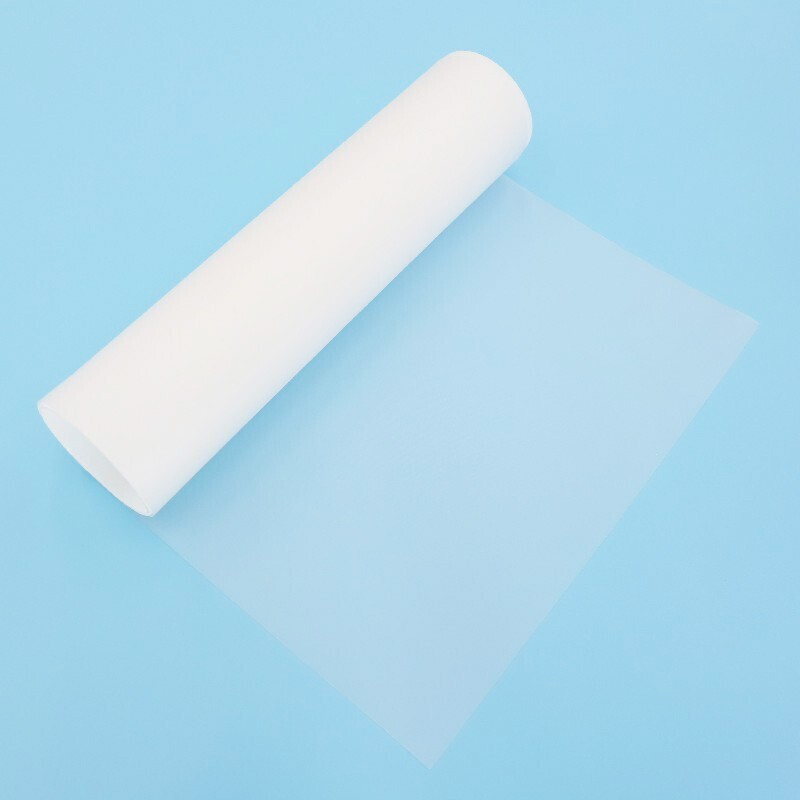
EVA film, a laminated glass interlayer material, before lamination.
The Market Opportunity: Where EVA Interlayer Film Is Growing
The global EVA films market was valued at USD 8.25 billion in 2025 and is projected to reach USD 17.65 billion by 2034, according to Fortune Business Insights, corresponding to a compound annual growth rate of 8.83% from 2026 to 2034.
In the laminated glass segment, the broader market is estimated at USD 25.0 billion in 2025, according to the Laminated Glass Market Report 2035 by Future Market Insights. PVB accounts for approximately 55.2% of the interlayer market, while EVA continues to grow in architectural and solar applications.
For glass processors, the practical implication is that EVA interlayer film is no longer a niche product. It is a mainstream option for manufacturers that operate laminating ovens, and the growth of architectural laminated glass in developing markets is expanding the supplier base.
Key Specifications: Clear EVA Film and Ultra-Clear EVA Film
When buyers search for EVA film or EVA glass interlayer film, the two specifications that matter most are light transmittance and haze. These values determine the optical quality of the finished laminated glass and the design freedom available to the architect or glass processor.
A representative product in this category is the EVA FILM produced by SHENGDING HIGHTECH MATERIALS CO., LTD. The film carries the model designation SD38 and is classified as a high-transparency EVA film. Its published specifications are:
- Light transmittance: 90%
- Haze: 0.5%
A light transmittance of 90% places SD38 in the clear-to-ultra-clear range, which is relevant for architectural glass where outdoor views should remain natural. A haze value of 0.5% indicates low haze, meaning the film does not add significant diffusion or cloudiness. This combination makes the film suitable for decorative glass and architectural glass applications.
EVA interlayer films are commonly supplied in standard thicknesses such as 0.38 mm, 0.50 mm, and 0.76 mm. For heavier or higher-performance laminates, multiple layers can be stacked. This flexibility is one reason EVA is used in both architectural laminated glass and decorative glass processing projects.
Processing EVA Film in a Laminating Oven
EVA film for glass lamination typically processes at 100-110°C under a vacuum of at least 700 mmHg, according to industry processing standards.
The production sequence in a typical glass processing facility is as follows:
- The EVA film is cut to the glass panel size and positioned between two glass sheets. Multiple film layers can be stacked to achieve the required interlayer thickness.
- The glass assembly is placed into a laminating oven bag or frame.
- Vacuum is applied to remove air from the space between the glass and the film.
- The assembly is heated to the working temperature, allowing the EVA film to bond to the glass surfaces.
- After the heating cycle, the assembly is cooled down to stabilize the bond before unloading.
Temperature and vacuum control are the two variables that most directly affect final quality. If the vacuum is insufficient, residual air can create bubbles between the glass and the film. If the temperature is too low, the film may not fully bond; if it is too high, the film can yellow or flow unevenly. This is why processors usually qualify a specific film grade before volume production.
One special requirement for this application is to keep the film dry. EVA film can absorb moisture from ambient air, and excess moisture increases the risk of bubbles and adhesion defects during lamination. Dry storage and careful handling are practical conditions for consistent processing results.
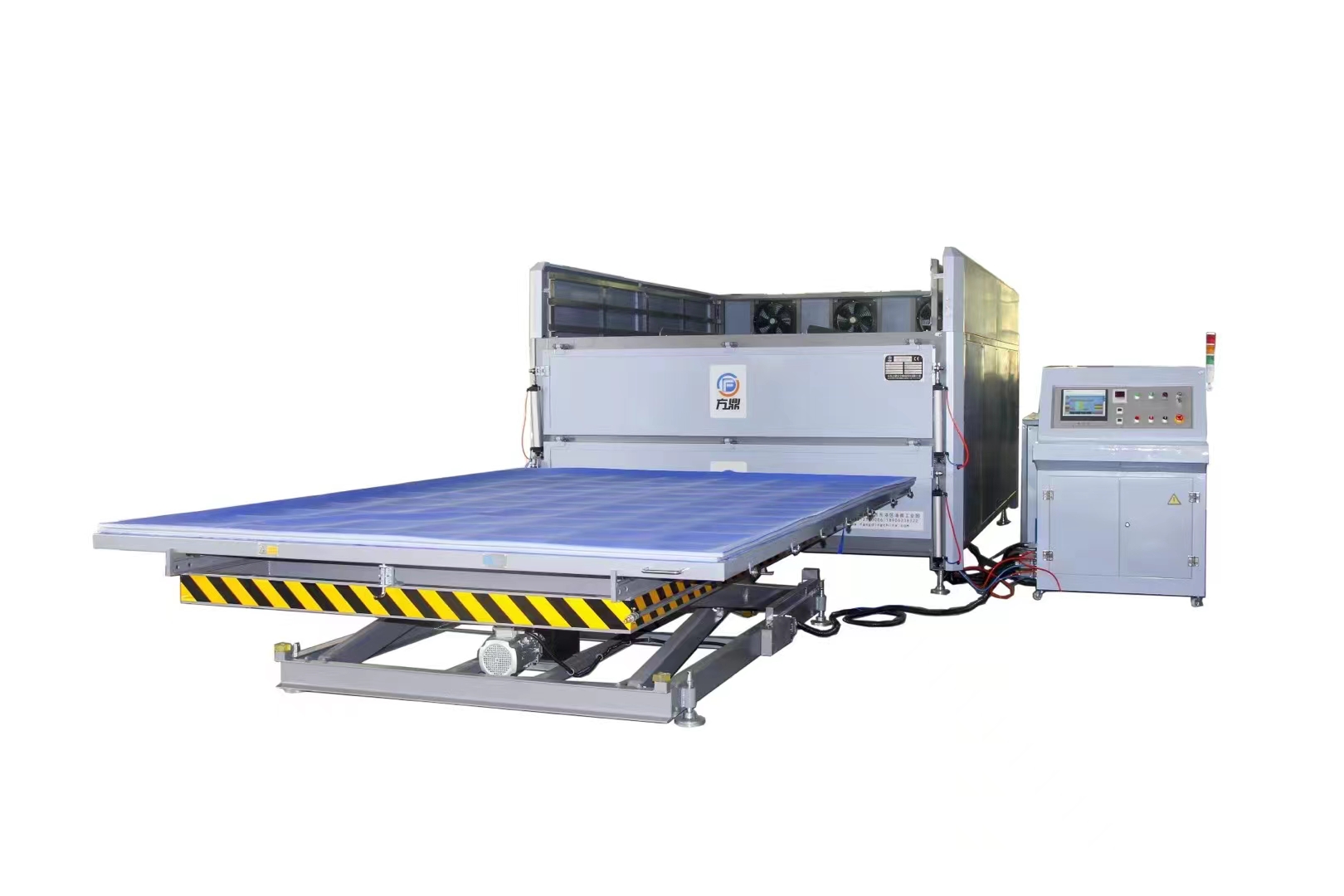
Laminating oven processing for EVA laminated glass.
Applications of EVA Laminated Glass Film
The documented application environment for this EVA film is the architectural and decorative glass industry, specifically architectural laminated glass projects and decorative glass processing projects. This application scenario is common in China and increasingly relevant for export-oriented buyers.
Common product roles include:
- Lamination of safety glass: EVA interlayer film bonds glass panes into a single safety glass unit, supporting impact resistance and post-breakage retention.
- Architectural laminated glass: used in glazing for facades, partitions, railings, and other safety-critical positions where clarity and weather resistance are required.
- Decorative glass: EVA film can be combined with colored, printed, or textured design layers. Depending on the formulation, EVA interlayers are available in clear, ultra-clear, and colored grades.
For decorative projects, colored film allows designers to create tinted laminated glass without coating the glass itself. For architectural projects, the key expectation is durability: the interlayer must remain clear and stable over the service life of the glazing. EVA formulations are often selected for architectural use because they offer good UV-blocking behavior, which helps protect interior furnishings and finishes from solar degradation. The combination of optical clarity and design flexibility is a central reason why glass processors evaluate EVA film from multiple suppliers before committing to a production line.
Supplier Context: SHENGDING HIGHTECH MATERIALS CO., LTD.
SHENGDING HIGHTECH MATERIALS CO., LTD. is a high-tech enterprise specializing in polymer materials, established in 2018. The company is located in Rizhao City, Shandong Province, China, and operates a 50,000-square-meter manufacturing facility in the Lanshan Chemical Industry Park. The company employs approximately 50 staff and has an annual production capacity of 1,000 tons. Its main products include TPU film and EVA film, and it produces over 30 types of TPU products with hardness ranging from 60A to 70D.
For EVA buyers, several facts are relevant to supplier evaluation:
- Production capacity: The annual output of 1,000 tons provides a baseline for assessing supply continuity for ongoing projects.
- Research capability: The R&D team consists of 10 engineers at the factory plus 5 professors at the Beijing R&D Center. The company has established over 50 proprietary intellectual property rights.
- Quality management: The company has obtained ISO 9001, ISO 14001, and ISO 45001 certifications. Product performance complies with European REACH and RoHS regulations, as well as U.S. FDA quality requirements.
- International experience: Export business accounts for 70% of total sales, with major markets in North Africa, the Middle East, and Latin America.
The company's EVA FILM model SD38 is a high-transparency EVA film used as a laminated glass interlayer material, with 90% light transmittance and 0.5% haze. Company information is available at www.shengdingchina.com.
From a buyer's perspective, these facts support a preliminary qualification. They do not replace sample testing, but they provide a documented basis for comparing suppliers before trials.
EVA vs. Traditional Interlayer Solutions: A Balanced Comparison
PVB is the most widely used interlayer in laminated glass globally. The impact of PVB's long track record can be seen in the market data: the laminated glass market is estimated at USD 25.0 billion in 2025, with PVB holding about 55.2% interlayer market share, while EVA grows in architectural and solar applications.
The two interlayer families serve different production environments:
| Comparison point | EVA interlayer film | PVB interlayer |
|---|---|---|
| Typical processing route | Laminating oven with vacuum | Autoclave processing is common |
| Processing temperature | 100-110°C (typical range) | Higher pressure and temperature cycle |
| Material compatibility | Bonds to glass and many non-glass materials, supporting decorative layers | Primarily used for glass-to-glass lamination |
| Moisture handling | Must be kept dry before and during lamination | Also moisture-sensitive; controlled storage is standard |
| Market position | Growing in architectural and solar segments | Largest interlayer segment, about 55.2% share |
A limitation that buyers should weigh carefully is moisture management. EVA film must be kept dry before lamination; in high-humidity production environments, additional storage precautions may be needed. In addition, for very large structural glazing panels with long design-life requirements, PVB has a longer service history in certain markets. EVA suitability for such panels should be validated with process testing on the actual glass assembly.
The balanced view is that EVA is not a universal replacement for PVB. It is a complementary interlayer family suited to specific products, production setups, and design goals.
How to Evaluate an EVA Film Supplier
For a buyer researching EVA film supplier or EVA interlayer film for laminated glass projects, the practical question is how to move from search results to a qualified supplier list. The following criteria are commonly used in glass industry procurement:
- Optical performance: Confirm light transmittance and haze values for the specific grade being proposed, not only brochure ranges.
- Process compatibility: Check that the film is compatible with your laminating oven, including required vacuum level and temperature settings.
- Quality system: Verify ISO 9001 certification and relevant environmental and occupational safety certifications.
- Regulatory compliance: For export buyers, confirm REACH, RoHS, and FDA compliance where applicable.
- Production capacity: Match annual capacity and MOQ with your project pipeline.
- R&D support: If you need custom colors, stacked thicknesses, or special formulations, evaluate the supplier's R&D team and intellectual property position.
- Export experience: A supplier with significant export share is likely to be familiar with international packaging, documentation, and communication routines.
These criteria are not a complete audit framework, but they cover the areas that most often affect the quality and consistency of EVA laminated glass output.
Future Outlook for EVA Interlayer Film
The EVA films market is projected to grow from USD 8.25 billion in 2025 to USD 17.65 billion by 2034, driven by construction and renewable energy demand, according to Fortune Business Insights.
Within laminated glass, three forces are likely to support EVA interlayer demand:
- Safety requirements: Architectural safety glass standards continue to strengthen in emerging markets, increasing the volume of laminated glass production.
- Decorative glass growth: Colored and printed interlayers require a material that can bond with non-glass layers; EVA is well suited to this role.
- Regional processing capacity: Oven-based EVA lamination lowers the equipment barrier for glass processors, making EVA an accessible entry point into safety glass production.
As the market matures, buyers are likely to place more weight on technical consistency, documented quality management, and supplier responsiveness. For first-time buyers, starting with a clearly specified product grade like SD38 can simplify evaluation and testing.
Frequently Asked Questions
What is EVA film for laminated glass?
EVA film is a laminated glass interlayer material made from ethylene-vinyl acetate (EVA). It is placed between glass panels and bonded under heat and vacuum to produce laminated safety glass. It is commonly used in architectural laminated glass and decorative glass processing projects.
How is EVA interlayer film processed?
EVA film for glass lamination typically processes at 100-110°C under a vacuum of at least 700 mmHg in a laminating oven. The film must be kept dry before and during lamination to avoid bubbles and adhesion defects.
What are the key optical specifications of high-transparency EVA film?
High-transparency EVA film grades such as Shengding SD38 offer 90% light transmittance and 0.5% haze. Low haze indicates the film does not add significant visible cloudiness.
What is the difference between EVA and PVB interlayer films?
PVB is the largest interlayer segment, with about 55.2% market share, and is commonly processed with autoclave equipment. EVA interlayer film is processed in a laminating oven at lower temperatures and can bond to glass as well as many non-glass materials, making it popular for architectural and decorative glass.
What should buyers check when evaluating an EVA film supplier?
Buyers should verify the film's optical specifications, processing compatibility, quality certifications such as ISO 9001, ISO 14001, and ISO 45001, compliance with REACH, RoHS, and FDA requirements, production capacity, R&D capability, and export experience.
What are the limitations of EVA interlayer film?
EVA film is moisture-sensitive and must be kept dry before and during lamination. For very large structural glazing panels, PVB has a longer service record in some markets, so EVA suitability should be confirmed through process testing on the actual assembly.
For additional company and product information: SHENGDING HIGHTECH MATERIALS company brochure (PDF).
Tem questões ou precisa de mais detalhes?
Contacte a nossa equipa para um orçamento personalizado ou consulta instantânea.
Solicitar orçamento
Preencha o formulário abaixo e a nossa equipa entrará em contacto com uma proposta personalizada.
Chat direto do WhatsApp
Prefere conversar em tempo real? Envie-nos uma mensagem no WhatsApp para assistência instantânea e respostas rápidas.
- Obter orçamento personalizado
- Partilhar fotos ou documentos
- Discuta as suas necessidades diretamente
Geralmente responde em 5–30 minutos durante o horário de expediente.