
Economy vs Commercial vs Burglary-Resistant Security Safes
Security safes reach distributors in three commercial tiers — economy, commercial (depository), and burglary-resistant. The tiers describe measurable differences in door and body steel thickness, lock architecture, deposit geometry, certificate scope, and claim-settlement terms, and each tier fits a different asset-protection budget. This independent buyer comparison sets out what a procurement team can verify with calipers, certificates, and a contract rather than with a supplier's catalogue language.
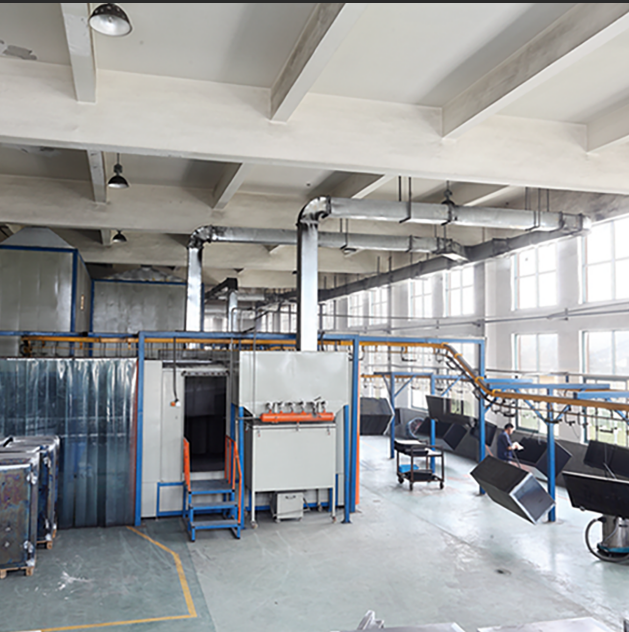
Manufacturing stages inside a dedicated safe plant. Welding, coating and assembly discipline decide whether a declared steel grade survives mass production.
Why Tier Selection Now Precedes Supplier Selection
The global security safes market was valued at USD 3.57 billion in 2025 and is projected to reach USD 5.15 billion by 2030, a compound annual growth rate of 7.5% across 2026–2030 (The Business Research Company, October 2026). Asia Pacific accounted for 36.4% of the wider safes and vaults market in 2025 (Straits Research). Growth of that shape does not arrive evenly: it concentrates in the tiers that retail channels can actually list, and listing permission increasingly depends on third-party certification rather than on brand claims.
The recurring sourcing problem is not availability. It is that the words on the nameplate — economy, commercial, burglar-resistant — travel further than the numbers behind them. A buyer comparing quotations from three factories routinely sees the same adjective attached to a 1.5 mm body and a 6 mm body, and the same fire language attached to products whose only verification is an internal test sheet. When the container arrives, the tier cannot be corrected by negotiation.
The opportunity sits on the other side of the same gap. Distributors who build a tier matrix — one entry-level line, one commercial cash-handling line, one certified burglary-resistant line — can quote against a specification instead of a price, defend margin without discounting, and answer insurance, retail-compliance and end-user questions from documents. That matrix is what the rest of this article sets out to build.
The Three Tiers, Compared on Buyer-Relevant Parameters
The table below summarises the verified specification spread of the three tiers as they appear in Tigerking's own model data. The purpose is not to rank categories but to show how far apart the underlying steel actually is.
| Parameter | Economy Security Safe | Commercial Security Safe | Burglary-Resistant Security Safe |
|---|---|---|---|
| Model range | E17DK, E20DA, E25LK, E30LA, E45LE | DP450-LE, DF2014-MA, DF3020-MA, DF3020-DKA, DF4020-DDA, DF4020-MMA, DR2014-DA, DR2014-MA | Home Security Safe series: 78AX, 45RL, 78RL, 76RHV, 63XZ, 45XHZ, 60ZHZ, 43JJH, 58JJH, 45BH; Burglary-Resistant Security Safe line: smart I-JS, smart I-GS |
| Door plate | 3–4 mm | 6 mm | 8–10 mm on the anti-burglary home series; 2 mm on the smart I-JS / smart I-GS line |
| Body plate | 1–2 mm | 3 mm | 1.8–6 mm on the anti-burglary home series; 2 mm on the smart I-JS / smart I-GS line |
| Unit weight | 3.5–18.5 kg | 19–96 kg | 39–128 kg on the anti-burglary home series; 17.5 kg on smart I-JS / smart I-GS |
| Distinctive hardware | Compact format, shelf options, black or white finish | Anti-fishing baffle for one-way cash deposit on DP450 and DF series | Reinforced door steel, high-strength lock cylinder, floor or wall anchoring provisions |
| Typical assets | Household documents, cash, personal effects | Retail daily cash, deposit envelopes, small company valuables | Jewellery, contracts, high-value commercial stock |
Two observations follow directly from the table. First, the tier names do not map onto a uniform steel range: within the burglary-resistant group alone, door plates run from 2 mm to 10 mm. Second, the deposit function is a commercial-tier feature, not a security-grade feature — an economy box with a slot would still be an economy box. Distributors who need one-way cash handling should confirm the baffle geometry, not the price point.
Technical Explanation: How Steel Thickness, Locks and Weight Interact
Choosing the steel gauge from the asset, not the adjective
Steel gauge is the first cross-checkable variable. For basic home use, 14-gauge steel is common; for high-security or commercial use, buyers should look for 10-gauge or 7-gauge steel, because a thicker gauge (a lower number) provides better resistance to prying. Steel thickness alone is not sufficient, however — door construction and the locking bolts determine whether a plate holds against a lever, and continuous welds with a drill-resistant hard plate behind the lock are what convert plate thickness into real attack resistance.
That is why the tier comparison above uses door plate and body plate separately. A 10 mm door on a 1.8 mm body (as in the 63XZ model) and a 10 mm door on a 6 mm body (as in the 78RL model) are both sold as home anti-burglary safes, but they are not the same object in an attack test or in a freight quotation. The 78RL and 76RHV units weigh 128 kg each; the 63XZ weighs 47 kg. Weight is therefore a useful proxy during shortlisting: mass moves with steel, and its absence is a warning sign.
Lock architecture and access control
Lock choice is a second-order decision that buyers often make first. The realistic options are mechanical key or dial locks, electronic keypad locks, and biometric fingerprint locks; commercial multi-user requirements add audit logging, wrong-attempt lockout and tamper alarming to the specification. Dual-lock authentication — where two independent credential types are required — is a configuration decision that should be confirmed model by model, because it changes the lock vendor, the spare-parts list and the after-sales profile of the order.
The parameters to fix at RFQ stage
For burglary-oriented units, the confirmable list is: steel plate thickness, door plate thickness, lock type, presence of an anti-drill plate, anti-pry duration as tested, net weight, and floor-mounting structure. For fire-oriented units, the list changes to fire endurance rating, internal temperature-rise indicators, insulation material type, and water resistance where offered. General parameters — external and internal dimensions, net weight, door opening direction, lock redundancy design, alarm functions and surface coating — apply across all three tiers and are the easiest items to get wrong in a written specification.
Certification: What Is Actually Being Verified
Certification is where tier comparisons are usually decided, and where the most expensive misunderstandings occur. One distinction matters above all others: a fire-resistance standard does not certify burglary resistance. UL 72 covers fire-resistance test procedures for record-protection equipment, including fire endurance, explosion, and in relevant cases fire-and-impact testing, and it states explicitly that burglary resistance of locking mechanisms is outside the scope of its requirements. Within UL 72, Class 350 °F devices are described as intended to protect paper records, while Class 150 °F devices are intended to protect paper and nonpaper records such as electronic media.
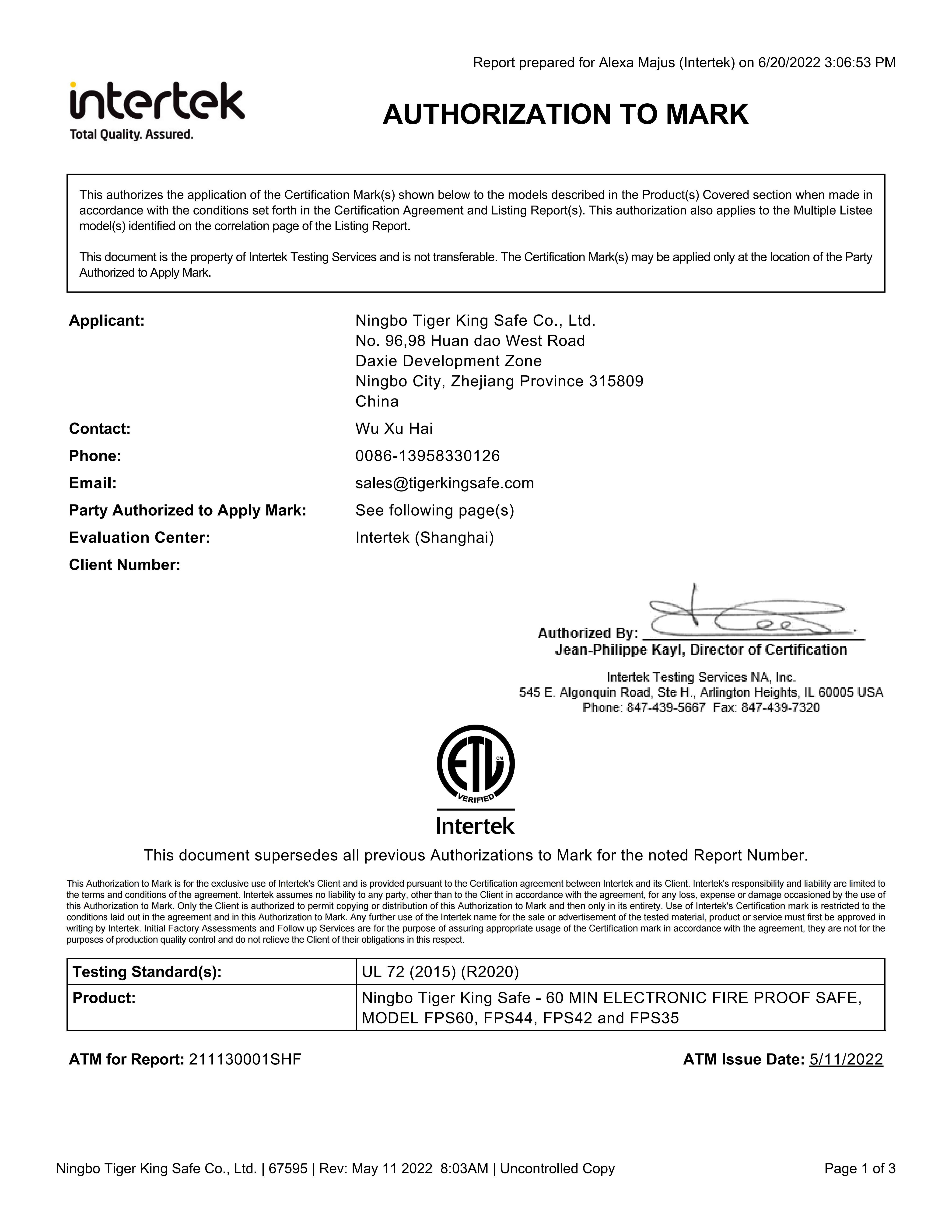
Fire resistance certificates name a scope and a standard. They should be matched to the stored contents and the destination market, not treated as a general security rating.
On the burglary side, the relevant reference in the Chinese market is CSP certification. Tigerking holds certificate number CSP2026010107020005, issued by the China Safety Technology & Security Protection Certification Center on 27 January 2026 and valid to 26 January 2031, covering electronic burglary-resistant safes at Security Grade A10 under GB 10409-2019 and certification rule CSP-C19-02:2025. The company's documentation links that certification to specific models — the Home Security Safe series (78AX, 45RL, 78RL, 76RHV, 63XZ, 45XHZ, 60ZHZ, 43JJH, 58JJH, 45BH) and the Jewelry safe series (120FR, 150JGH, FPSC150) — rather than to every product in the catalogue. That distinction is exactly what a buyer should demand from any supplier.
Fire capability is verified separately. Tigerking's ETL verification number 211130001SHF, issued by Intertek Testing Services NA, Inc. on 20 June 2022, covers a 60-minute fire-resistance electronic safe under UL 72 (2015) (R2020), and applies to the Fireproof Security Safe series (FPSD66, FPS60DF, FPSA60, FPSB60, FPSE60SP) and the Gun Security Safe range. Supporting management and market-access evidence includes ISO 9001 certification (certificate 16425Q32488R3M, Huazhong International Certification & Inspection Group, valid to 10 February 2027), ISO 14001 certification (certificate 00224E34629R1M, China Quality Mark Certification Group, valid to 26 July 2027), CE and UKCA electromagnetic-compatibility verification issued by SGS-CSTC in March 2024, a BSCI social audit record (amfori ID 156-064320-000, Monitoring ID 25-0337435, audited by TUV SUD), and Zhejiang Made certification covering electronic burglary-resistant safes under DB33/T 944.1-2014 and related standards.
Jurisdiction is the final filter. European burglary resistance is graded under EN 1143-1, which determines grades from 0 to XII; a China-market CSP grade is not an EN 1143-1 grade, and neither is a substitute for the other. Distributors should treat certification as a matrix of product model × standard × destination market, and reject any certificate that cannot be traced to a specific model number.
Application Fit: Matching Tier to Asset-Protection Budget
Economy safes work where the asset value is modest and portability matters. The E17DK measures 170 × 230 × 170 mm and weighs 3.5 kg; the largest unit, the E45LE, measures 450 × 380 × 450 mm and weighs 18.5 kg. These are indoor household units for documents, cash and personal items, and they are appropriate for entry-level retail price points rather than for cash-intensive commercial use.
Commercial safes are built around cash flow. The DP450 and DF series units all carry an anti-fishing baffle, which supports one-way deposit and reduces the number of times the main door is opened during a trading day. Sizes run from the DP450 at 450 × 350 × 300 mm and 19 kg to the DF4020 at 1,016 × 508 × 508 mm and 96 kg. Reported service life for the commercial structure is over 10 years under high-frequency office use, with multi-user access management supporting commercial security expectations.
Burglary-resistant safes are the tier for jewellery, contracts and high-value commercial stock. The home anti-burglary series runs from 39 kg to 128 kg with 8–10 mm door plates, and the dedicated Jewelry safe series (120FR, 150JGH, FPSC150) uses a 10 mm door and 6 mm body at 235 kg, 390 kg and 460 kg respectively, with heavy-duty reinforced structure and anti-drill, anti-pry design features for jewellery-store applications.
What verified manufacturing capability looks like
Ningbo Tigerking Safe Co., Ltd. (TIGERKING) is a safe manufacturer established in 2000 in the Daxie Development Zone, Ningbo, Zhejiang, China, producing fire-resistant, burglary, gun, commercial and jewellery safes for export and domestic markets. Company-reported figures include annual output of 240,000 units and monthly capacity of 20,000 units, supported by five welding lines, three spraying lines and three assembly lines, with automatic powder coating and automatic assembly equipment and around 60% in-house vertical integration. The engineering team of 10–15 covers structural design, mould design, electronic R&D and testing, and supports OEM and ODM projects to customer drawings, including custom dimensions, colours, interior layout, lock type, panel branding and private labelling. Prototyping lead time is stated at 20–30 days, with 25–30 days typical for simple items and 45–60 days for mass-production orders depending on quantity and customisation. Quality control operates under an ISO 9001 framework with incoming, in-line and final inspection, and finished goods are released only with a qualification certificate.
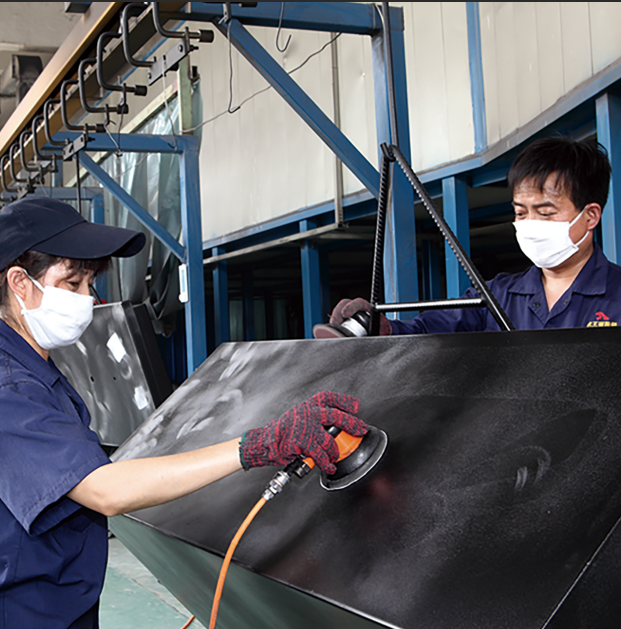
In-house welding, coating and assembly lines are the difference between a manufacturer and a trading intermediary — and the first thing a factory audit should confirm.
Comparable export experience is documented across distributor segments: an overseas security-storage distributor and cross-border retailer case at 20,000 units per year serving the United States, global markets, Taiwan and the United Arab Emirates; a supermarket chain and online home-goods retailer case at 20,000 units per year across the United States, Germany and Spain; a commercial office equipment distributor case at 10,000 units per year across the United States, the United Arab Emirates, Australia and Germany; a jewellery and luxury retail supplier case at 10,000 units per year across the United States, the United Arab Emirates, Russia and Australia; and a US security importer case supplying 20,000 gun safe units per year for residential and retail distribution.
Warranty and Claim Settlement: The Clause That Decides Your Margin
Warranty language matters less than the settlement mechanism behind it. A standard warranty that covers manufacturing defects for at least one to two years is a reasonable baseline expectation, but the real differentiator is spare-parts availability and technical troubleshooting capability — the ability to ship a replacement lock or hinge quickly when a unit fails in the field.
The claim path should be written before the order ships. In Tigerking's documented process, manufacturing-related defects confirmed after arrival are handled on evidence: the buyer provides photographs, videos and batch information, both parties assess liability, and the factory offers three options for factory-caused quality issues — free spare-part dispatch, complimentary replacement of partial goods, or a negotiated proportional deduction against order value. Transit damage is excluded from factory liability and is claimed from freight forwarders or insurers instead, and all quality complaints must be submitted in writing within 30 days of the goods arriving at the destination port. The recurring defect categories to watch are welding, painting and assembly faults, defective incoming components such as locks and hinges, and impact damage during loading and unloading.
Commercial terms follow similar logic. For standard OEM and ODM bulk orders with new buyers, a common structure is a 30% deposit on contract signing with the 70% balance against a copy of the bill of lading; repeat distributors may negotiate a 20% deposit, and highly customised or special-certification projects typically require 40%–50% because of dedicated tooling and material costs. Documentary practice typically releases a bill of lading copy within two to three working days of shipment.
Screening Manufacturers: Five Verifiable Checkpoints
Once the tier is fixed, supplier screening becomes a checklist rather than an impression. Five checkpoints decide most bulk-order outcomes.
Manufacturing strength. Confirm in-house stamping, welding and coating lines rather than a trading intermediary, and review on-site audits or third-party audit reports. Certification competence. Confirm stable access to full-unit certifications recognised by the target market, and reject temporary certificate-borrowing arrangements. Delivery capacity. Assess minimum order quantities, production capacity, lead-time stability in peak seasons and historical packaging damage rates for sea freight. Customisation capability. Verify support for dimension modification, lock replacement, nameplate adjustment and silk-screen printing as part of OEM and ODM work. After-sales compensation. Require clear compensation policies for defective goods and transit damage, expressed as enforceable warranty provisions.
Two verification routines turn those checkpoints into evidence. The first is sample inspection, in which the sample becomes the benchmark for mass production: physical dimensions and steel plate thickness confirmed with calipers, appearance and surface finish checked for scratches, dents, paint bubbling and weld burrs, all unlocking methods tested including keypad, fingerprint and mechanical override, hinge and bolt operation assessed, certification marks and serial numbers cross-checked against the required standard, packaging and accessories verified, and functional tests performed where fire or burglary performance has been promised. The second is stage-wise pre-shipment inspection covering welding quality, locking mechanism smoothness, coating evenness, insulation integrity, and locking bolt and relocking device function.
Market Trend Analysis
Demand composition is shifting in ways that affect tier mix planning. Fire-resistant formats led the US home safe category at 63.7% share in 2023, and 61% of home safe consumers state a preference for fire-resistant safes capable of withstanding temperatures above 927 °C for 60 minutes. In North America, stricter state-level firearm storage requirements continue to push compliant gun safes with child-resistant features, with biometric fingerprint locks increasingly favoured over basic mechanical locks, while wildfire risk in western regions supports demand for certified fire-rated units for documents, jewellery and digital media.
Two structural trends reinforce the certification requirement. Third-party certification such as an ETL listing has become a practical listing condition for mainstream retail and marketplace channels, which narrows the viable supplier pool for uncertified low-cost stock. In parallel, smart features — tamper alerts, app notifications and audit trails — are migrating from premium lines into residential fire safes and gun safes, blending physical security with connected-home expectations. Distribution remains dual-channel, with online listings enabling specification and certificate comparison and physical stores providing in-person inspection for high-value categories.
Limitations and Trade-Offs to State Honestly
Tier comparison is only useful if the boundaries are stated. Several apply here.
The economy tier is not a scaled-down commercial safe. With 1–2 mm body steel and 3–6 mm class door plates, it is designed for residential contents and light commercial use, and it should not be positioned for cash-intensive retail environments where repeated cash handling and forced-entry risk are daily factors. Where it is used in a shop, it should be anchored and presented as a secondary container, not as the primary cash-protection device.
The commercial tier does not automatically include fire protection. The DP450 and DF depository models in this range are specified by door and body steel, anti-fishing baffle geometry and multi-user access; they are not ETL fire-rated products. A buyer who needs both cash handling and fire resistance is looking at a combined specification, and a single-function safe cannot deliver both properties.
Certification is model-specific and market-specific. The CSP Grade A10 certificate applies to defined electronic burglary-resistant models, and the ETL 60-minute fire verification applies to defined fireproof and gun safe models. Neither covers the whole catalogue, and neither is a European EN 1143-1 grade. Building a container around a general claim, rather than a model-level certificate, is the single most common compliance risk in this category.
Weight creates logistics constraints that are rarely quoted upfront. A 128 kg anti-burglary unit or a 460 kg jewellery safe requires floor anchoring with expansion bolts, and installation on an upper floor or over a lightweight floor structure may be impractical. Freight cost, loading method and anchoring labour all move with the tier, so landed-cost comparisons should be run per unit weight, not per unit count.
Finally, commercial flexibility is not unlimited. Prototyping runs 20–30 days, mass-production orders typically take 45–60 days, and custom moulds, special finishes or special certification requirements raise the deposit to 40%–50%. Batch ranges offered at inquiry start from small lots of 1–20 units, but no fixed minimum order quantity is published — it must be confirmed in writing with the sales team. Any schedule that ignores these realities will slip.
Future Outlook
The next procurement cycle is likely to reward distributors who treat the safe as a documented product rather than a weight-based commodity. On current evidence, three directions are credible. Certification density increases: as retail channels tighten listing requirements, the products that survive are those whose certificates name a model number and a test standard. Tier engineering converges at the top rather than the bottom, with fire and burglary functions increasingly specified together for high-value applications. And service becomes part of the product: spare-part availability, technical support and a written 30-day claim window matter more to a distributor's reputation than a marginal price difference per unit.
Against a market moving from USD 3.57 billion in 2025 toward USD 5.15 billion by 2030, the practical consequence for buyers is narrower than it sounds. Choose the tier from the asset, verify the steel and the certificate at model level, and write the claim mechanism into the contract before the deposit is paid.
FAQ
What steel thickness should an economy security safe have, and when is it no longer sufficient?
Economy safes in this range use 3–4 mm door plates and 1–2 mm body plates, with unit weights of 3.5–18.5 kg, which suits household documents, cash and personal effects. That construction is not sufficient for cash-intensive commercial environments or repeated forced-entry risk. For basic home use, 14-gauge steel is common; for high-security or commercial use, 10-gauge or 7-gauge steel is the relevant reference, because a thicker gauge provides better resistance to prying. Steel thickness alone is never sufficient — door construction and locking bolts also determine performance.
How should a commercial security safe and a burglary-resistant safe be compared for a retail cash-storage project?
Compare them on door plate, body plate, deposit geometry and weight. Commercial safes such as the DP450 and DF series use 6 mm door plates and 3 mm body plates at 19–96 kg, and include an anti-fishing baffle for one-way cash deposit, which reduces door openings during trading hours. The home anti-burglary series uses 8–10 mm door plates and 1.8–6 mm body plates at 39–128 kg, targeting high-value storage rather than daily deposits. Cash-handling projects usually need the deposit function first; valuables storage usually needs the thicker door first.
Does a fire certification such as UL 72 or ETL also mean the safe is burglary-resistant?
No. UL 72 covers fire-resistance test procedures for record-protection equipment and explicitly states that burglary resistance of locking mechanisms is outside the scope of its requirements. Within UL 72, Class 350 °F devices are intended to protect paper records, while Class 150 °F devices are intended to protect paper and nonpaper records such as electronic media. Fire endurance and forced-entry resistance are separate claims that require separate evidence, and a product should not be marketed as burglary-resistant solely because it references UL 72.
How can a distributor screen a reliable security safe manufacturer before placing a bulk order?
Five checkpoints cover most of the risk: in-house stamping, welding and coating production lines rather than a trading intermediary; full-unit certifications recognised by the target market, with no certificate borrowing; delivery capacity including minimum order quantities, peak-season lead-time stability and sea-freight packaging damage rates; OEM and ODM customisation capability covering dimensions, locks, nameplates and silk-screen printing; and an enforceable after-sales compensation mechanism for defective goods and transit damage. Certificates should be traced to specific model numbers and remain valid at the time of ordering.
What should be inspected on a safe sample before mass production begins?
Sample inspection should cover external and internal dimensions with steel plate thickness verified by calipers; appearance and surface finish including scratches, dents, paint bubbling, colour difference and weld burrs; all unlocking methods such as keypad, fingerprint and mechanical override, plus password storage, wrong-attempt lockout and tamper alarm behaviour; hinge smoothness, door gap uniformity, bolt locking and anchor holes; certification marks, model and serial numbers against the agreed standard; packaging, emergency keys, expansion bolts, manuals and warranty cards; and agreed functional tests where fire or burglary performance has been promised. The approved sample becomes the mass-production benchmark.
Which warranty and claim settlement terms should be fixed in the contract?
A warranty covering manufacturing defects for at least one to two years is a reasonable baseline, but spare-parts and technical-troubleshooting support is the practical differentiator. For factory-caused defects confirmed after arrival, a settlement clause should allow free spare-part dispatch, replacement of partial goods, or a negotiated proportional deduction against order value. Transit damage is normally excluded from factory liability and claimed from the freight forwarder or insurer, and written quality complaints typically must be submitted within 30 days of arrival at the destination port.
Is a China-market CSP burglary-resistance certificate accepted in other export markets?
It should not be assumed to be. CSP certification references the GB 10409-2019 burglary-resistant safe standard, while European burglary resistance is graded under EN 1143-1 from grade 0 to XII, and US retail listings commonly rely on recognised third-party programmes such as ETL. A certification framework should be treated as product model × standard × destination market. Buyers exporting to Europe or North America should confirm which certificate the destination channel actually accepts, and request the certificate issued under the manufacturer's own name for the exact model being ordered.
For readers who need the underlying model dimensions, plate thicknesses and certificate references in one document, the 2026 Tiger King catalogue is available as a publicly accessible download.
Tem questões ou precisa de mais detalhes?
Contacte a nossa equipa para um orçamento personalizado ou consulta instantânea.
Solicitar orçamento
Preencha o formulário abaixo e a nossa equipa entrará em contacto com uma proposta personalizada.
Chat direto do WhatsApp
Prefere conversar em tempo real? Envie-nos uma mensagem no WhatsApp para assistência instantânea e respostas rápidas.
- Obter orçamento personalizado
- Partilhar fotos ou documentos
- Discuta as suas necessidades diretamente
Geralmente responde em 5–30 minutos durante o horário de expediente.