
Economy vs Commercial vs Burglary-Resistant Security Safes
The security safe market does not lack models. It lacks comparable specifications. Economy, commercial and burglary-resistant safes are sold as three tiers, but nothing in those three labels is standardised. What actually separates them is measurable: door plate and body plate thickness in millimetres, locking architecture, net weight, anchoring design, and above all the exact scope of the certificate attached to the model.
TIGERKING — Ningbo TigerKing Safe Co., Ltd., a safe manufacturer established in 2000 in the Daxie Development Zone, Ningbo, Zhejiang, China — produces fire-resistant, burglary-resistant, gun, commercial and jewellery safes, and exports roughly 70% of its output to North America, Europe, Southeast Asia, the Middle East and South America. This analysis compares the three tiers using published product specifications, certification records and the claim-settlement terms that govern bulk orders, so that distributors can match a model to an asset-protection budget without relying on supplier marketing.
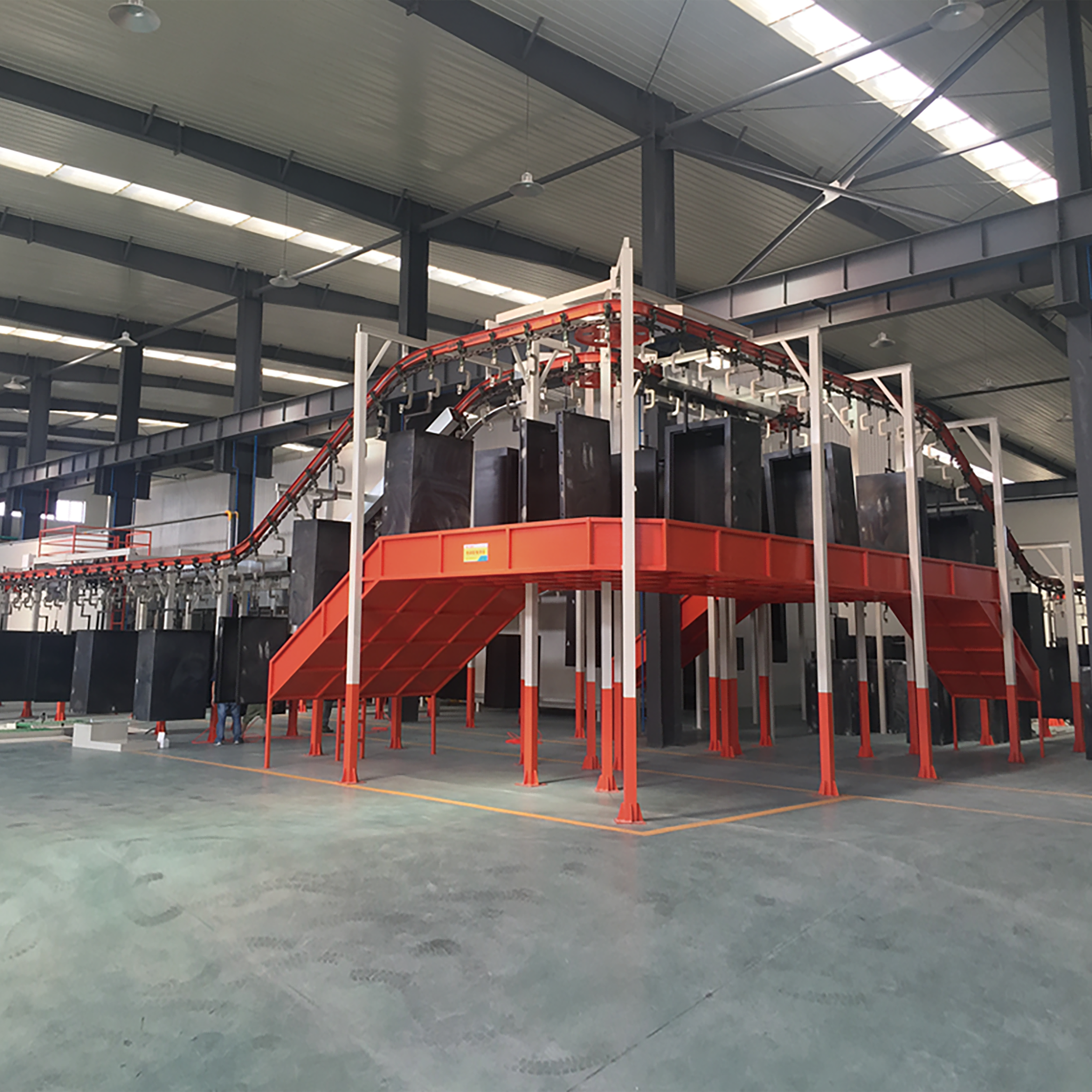
Steel fabrication area at a safe manufacturing site in Ningbo, China. Plate thickness, not the tier label, is what determines the security class of a safe body.
Why a Tier Label Is Not a Specification
Start with the answer rather than the marketing: “economy”, “commercial” and “burglary-resistant” describe market positioning, not performance. Two safes carrying the same tier label can differ by a factor of roughly five in plate thickness and by a factor of more than thirty in net weight.
- Fire resistance and burglary resistance are separate properties governed by separate standards. UL 72, which covers fire-resistance test procedures for record-protection equipment, states explicitly that burglary resistance of locking mechanisms is not within the scope of its requirements. A safe that references UL 72 is therefore not, by that reference alone, a burglary-resistant safe.
- Steel is quoted in two conventions that move in opposite directions. In gauge terms, a lower number means thicker steel. A distributor comparing “14-gauge” against “1.5 mm” without conversion is comparing nothing at all.
- Certificates are model-specific and market-specific. A burglary-resistance certificate issued for one national market does not automatically satisfy a retail channel in another, and an electromagnetic-compatibility certificate for an electronic lock does not certify the steel body it is mounted on.
For a distributor or importer, this is a commercial risk rather than an academic one. The reseller, not the factory, absorbs the reputational and consumer-law consequences of a product that is described more strongly than it was tested.
The Three Tiers Side by Side
The table below uses published plate specifications from a single manufacturer portfolio, so that the three tiers can be compared on identical measurement conventions rather than on three different suppliers’ marketing language.
| Comparison parameter | Economy Security Safe | Commercial Security Safe | Burglary-resistant class (heavy-duty bodies) |
|---|---|---|---|
| Representative models | E17DK, E20DA, E25LK, E30LA, E45LE | DP450-LE, DF2014-MA, DF3020-MA, DF3020-DKA, DF4020-DDA, DF4020-MMA, DR2014-DA, DR2014-MA | 78AX, 78RL, 76RHV (home / office class); 120FR, 150JGH, FPSC150 (jewellery class) |
| Door plate thickness | 3 mm to 4 mm | 6 mm | 10 mm |
| Body plate thickness | 1 mm to 2 mm | 3 mm | 6 mm |
| Net weight range | 3.5 kg to 18.5 kg | 19 kg to 96 kg | 96.8 kg to 128 kg (home / office class); 235 kg to 460 kg (jewellery class) |
| Cash-handling feature | Not applicable | One-way deposit slot with anti-fishing baffle | Not applicable |
| Typical asset profile | Documents, small valuables, low-value cash, home and small office use | Daily retail cash, office registers, company seals, financial vouchers | High-value stock, jewellery, precious metals, long-term commercial or private storage |
The gap between the first and third columns is the commercial point. Moving from an E-series economy model at 3.5 kg to a 128 kg heavy-duty body is not a cosmetic upgrade; it changes the transport class, the floor-anchoring requirement, the installation labour and the insurance conversation the end user will have.
How TIGERKING Structures the Three Lines
TIGERKING’s portfolio is organised so that the three tiers can be quoted separately to the same distributor, rather than forcing a single “security level” across a retail programme.
Economy Security Safe (E-series). Five models from E17DK at H170 × W230 × D170 mm and 3.5 kg up to E45LE at H450 × W380 × D450 mm and 18.5 kg. Door plates run 3 mm to 4 mm and body plates 1 mm to 2 mm. These are solid-steel units intended for documents, personal valuables and low-value cash in home and light office settings, and they are the natural entry point for e-commerce price bands.
Commercial Security Safe (DP and DF depository series). Door plates of 6 mm and body plates of 3 mm across the family, from DP450 at H450 × W350 × D300 mm and 19 kg to DF4020 at H1016 × W508 × D508 mm and 96 kg. Each model in the series is built with an anti-fishing baffle around a one-way deposit slot, so cash can be inserted without unlocking the main door — the configuration that retail chains use to reduce the number of daily door openings.
Burglary-resistant class. This is where the specification gap is widest. Home and office models such as 78AX, 78RL and 76RHV carry 10 mm doors and 6 mm bodies at 96.8 kg to 128 kg; jewellery-class models 120FR, 150JGH and FPSC150 use the same 10 mm door and 6 mm body construction at 235 kg to 460 kg. The CSP burglary-resistance certificate CSP2026010107020005 covers electronic burglary-resistant safes at Security Grade A10 under GB 10409-2019, with a validity period to 26 January 2031 in the Chinese market.
Fire protection is a separate line, not a tier upgrade. The Fireproof Security Safe models FPSD66, FPS60DF, FPSA60, FPSB60 and FPSE60SP sit alongside the burglary line, and the ETL verification certificate 211130001SHF — issued by Intertek Testing Services NA, Inc. against UL 72 (2015) (R2020) — covers 60 minutes of fire resistance for electronic fireproof safes. Gun safes (G1300K3, G1300K5, G1450K3, G1450K5, PB20, PB4-F, GFP5924, GFP5928, GFP5930, GFP7240) are also included in that fire-resistance listing. Office and wall units KS48, KEY27 and LSDW-25MD sit at the lighter end, with 4 mm doors and 1.5 mm bodies for KS48 and KEY27, and a 6 mm door with a 2 mm body for LSDW-25MD.
The manufacturing base behind these lines is reported by the company as a workshop of more than 38,000 m² with laser cutting machines, CNC shearing machines, CNC bending machines, robotic MIG welding and automatic electrostatic powder coating lines, with all core production processes completed in-house. Reported capacity is 240,000 units per year and 20,000 units per month, supported by five welding lines, three spraying lines and three assembly lines and roughly 60% in-house vertical integration with in-house tooling and die development. An engineering team of 10 to 15 people covers structural design, mould design, electronic R&D and testing. These are company-reported figures and are best treated as a starting point for a factory audit rather than as a verified third-party benchmark.
Technical Selection: Steel Thickness, Door Construction and Lock Type
Choosing the steel thickness
Steel gauge correlates directly with the security level and the weight of a safe. For basic home use, 14-gauge steel is common; for high-security or commercial applications, the relevant band is 10-gauge or 7-gauge steel, where the lower number denotes a thicker plate and better resistance to prying attacks. Thickness alone, however, is not sufficient. Door construction and locking bolts matter as much as the plate, and buyers screening a supplier should look for continuous welds and drill-resistant hard plates rather than for a single thickness figure in a catalogue.
Because suppliers quote gauge and millimetres interchangeably, the reliable method is physical: sample inspection protocols for imported safes call for verifying steel thickness with calipers against the agreed specification, alongside external and internal dimensions, door frame and wall material. A specification that cannot survive a caliper check at sample stage will not survive it in mass production.

Welding and sheet-metal stages determine whether the declared plate thickness becomes a structural body or only a marketing number. Continuous welds and drill-resistant hard plates are the specifications buyers should check on site.
Matching the lock type to the use case
Lock architecture is the second decision axis, and it is largely independent of the tier. TIGERKING’s customisation scope covers lock type — biometric, electronic or mechanical — alongside dimensions, colour, interior layout and panel branding. In practice the choice follows the daily user, not the price band:
- Mechanical and keyed locks suit low-frequency access where no audit trail is required and where battery failure is unacceptable, such as backup storage.
- Electronic keypad locks suit multi-user office and hotel environments and are the usual pairing for commercial depositories, where the main door is opened by password or key while cash enters through the one-way slot.
- Biometric locks suit rapid single-user access. The manufacturer’s published product page describes the PB3F as a biometric pistol safe with a fingerprint sensor, alloy-steel construction, portable/tabletop mounting and an anti-theft alarm — a feature set aimed at quick-access firearm storage rather than at cash handling.
- Dual-lock authentication configurations, where two independent credential types are required to open the door, are available where a project specification demands them.
Application Fit: Matching the Tier to the Asset and the Budget
For a distributor assembling a catalogue, the three tiers map onto three different end-user conversations rather than three price points of the same product.
- Home and e-commerce entry level: economy models in the E17DK to E45LE range, where the buying criteria are size, weight for parcel shipping, appearance and price band, and where the asset protected is documents and personal valuables.
- Offices, hotels and property management: office and wall units such as KS48, KEY27 and LSDW-25MD for seals, contracts and confidential files, with multi-user access management where the project requires it.
- Retail cash handling: commercial depository models with the one-way deposit slot and anti-fishing baffle, so that staff can deposit cash without repeatedly opening the main door.
- Jewellery, luxury retail and high-value stock: the 10 mm door / 6 mm body class, where a heavy-duty integrated body, a high-strength lock cylinder and anti-drill and anti-pry design features are the stated design intent.
- Fire risk in the same premises: ETL-verified 60-minute fireproof models, since a burglary-resistant body and a fire-resistant body are not the same purchase.
Supply-case records show how these tiers are combined in practice. A programme serving overseas security storage distributors and cross-border retailers covers the United States, global markets, Taiwan and the United Arab Emirates at 20,000 units per year. A supermarket chain and online home-goods retailer programme covering the United States, Germany and Spain runs at 20,000 units per year. A commercial office equipment distributor and corporate procurement programme spanning the United States, the United Arab Emirates, Australia and Germany operates at 10,000 units per year. A high-end security supplier programme for jewellery stores and luxury retailers in the United States, the United Arab Emirates, Russia and Australia runs at 10,000 units per year. A North American importer and distributor programme for compliant firearm storage covers 20,000 gun safe units per year, supplied as UL-certified fire-resistant gun safes for residential and retail distribution.
Warranty and Claim Settlement Clauses Distributors Should Read First
Price and plate thickness are negotiated in days; claim settlement is negotiated once and paid for over years. On bulk orders, the defined mechanism for manufacturing-related defects is a three-option settlement: free spare-part dispatch, complimentary replacement of partial goods, or a negotiated proportional deduction against the order value. The route chosen depends on the confirmed cause.
Liability is demarcated by cause. Defects arising from welding, painting or assembly — flawed welds, blistering or peeling paint, uneven door gaps, faulty lock assembly — and defects in incoming components such as locks, hinges and spare parts fall on the manufacturing side, as do faults traced to the factory. Damage incurred during transit is not the manufacturer’s liability and must be claimed from the freight forwarder or the insurance provider; this is also why packaging strength is part of the pre-shipment inspection agenda. Reported causes of damage on arrival typically split into four groups: production-line defects, defective incoming components, handling damage such as dents and paint chipping during loading and unloading, and insufficient packaging protection on long ocean transits.
The procedural steps are stated as: on-site investigation and evidence collection by the buyer, joint liability assessment by both parties, and confirmation and implementation of the solution. Buyers are asked to supply photographs, videos and batch information. All quality complaints must be submitted in writing within 30 days after the goods arrive at the port of destination — a deadline that has an operational consequence for distributors, because it requires a receiving inspection process at destination rather than a stock-and-ship process.
On warranty itself, the industry benchmark is coverage of manufacturing defects for at least one to two years, with the more meaningful differentiator being spare-parts availability and technical troubleshooting support rather than the headline duration. TIGERKING provides after-sales technical support, spare parts and project coordination, and applies defined claim-settlement clauses to business-to-business contracts. Warranty periods and service terms are not published as a fixed schedule and should be confirmed in the contract or quotation for the specific order.
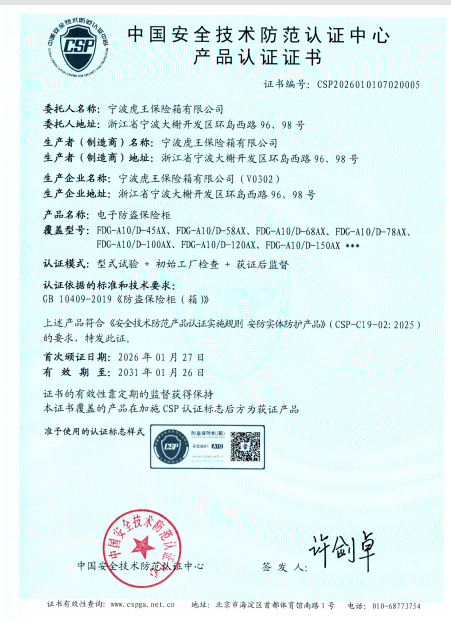
Certificates, not catalogue wording, define a tier. The scope, the market and the covered models on the document are the three fields buyers should verify before printing a security claim on retail packaging.
Screening a Reliable Safe Manufacturer
Five screening dimensions separate genuine manufacturers from intermediaries, and each can be tested with documents rather than assurances.
- Manufacturing strength. Confirm in-house stamping, welding and coating lines rather than outsourced assembly, and review on-site factory audits or third-party audit reports.
- Certification competence. Confirm stable access to full-unit certifications recognised in the target market, and reject temporary certificate-borrowing arrangements. Certification documents should be issued under the manufacturer’s own name and remain valid.
- Delivery capacity. Assess minimum order quantities, production capacity, lead-time stability during peak season and data on packaging damage rates for sea freight. TIGERKING quotes a prototyping lead time of 20 to 30 days, normally 25 to 30 days for simple items and 45 to 60 days for mass-production products, with batch ranges from 1–20 units upward and specific terms to be confirmed at inquiry.
- Project customisation capability. Confirm support for OEM and ODM work including dimension modification, lock replacement, nameplate adjustment and silk-screen printing, plus custom interior layout and panel branding.
- After-sales compensation mechanism. Confirm written policies for defective goods and transit damage, and that warranty provisions are enforceable in the contract rather than stated verbally.
Payment structure belongs in the same assessment. Common terms for bulk safe orders are a 30% deposit with the 70% balance against a copy of the bill of lading for standard OEM/ODM orders from new buyers, a reduced deposit for long-standing distributors, and a higher deposit band of roughly 40% to 50% for highly customised or specially certified projects that require dedicated tooling. Letters of credit and escrow structures are used for larger or first-time transactions, and bill-of-lading copies are normally available within two to three working days after shipment.
Third-party inspection is the final layer. Certification testing and pre-shipment inspection are carried out with institutions such as SGS and Intertek, and incoming steel, fire-resistant materials and locks are inspected by batch sampling or full inspection, with in-line IPQC patrol nodes at welding, spraying and assembly, and full final inspection of appearance, dimensions, fire and burglary resistance, lock function and sealing before a certificate of qualification is issued for shipment.
Market Trend: Where Demand Is Moving Through 2030
Global demand data supports a tiered catalogue rather than a single hero product. Independent market research places the global security safes market at USD 3.57 billion in 2025, with a forecast of USD 5.15 billion by 2030 — a compound annual growth rate of 7.5% between 2026 and 2030. Asia Pacific accounted for 36.4% of the broader safes and vaults market in 2025.
Definition matters here, and buyers should be aware of it: figures reported for “safes and vaults” include heavy bank vaults and are therefore materially larger than figures for “security safes” alone. Mixing the two scopes produces a distorted market picture and, in some cases, an inflated assumption about the residential segment a distributor is actually selling into.
Within the home segment, fire resistance is the demand driver rather than burglary resistance. Fire-resistant safes account for a reported 63.7% of demand in the United States home safe category, and 61% of home safe consumers are reported to prefer fire-resistant safes capable of withstanding temperatures above 927°C for 60 minutes. For a distributor building a price ladder, that means the fire-rated models carry the volume, while the heavy burglary-resistant tier carries the margin and the commercial credibility.
Two further shifts affect sourcing decisions. First, third-party certification is becoming a listing requirement rather than a selling point: major retail and marketplace channels increasingly require verifiable certification, which raises the compliance value of factories holding certification under their own name. Second, smart locking features — tamper alerts, mobile notifications and audit trails — are migrating from premium models into mainstream residential and commercial lines, which places more weight on electromagnetic-compatibility documentation for electronic locks, such as the CE EMC verification issued under EN IEC 61000-6-1:2019 and EN IEC 61000-6-3:2021 against Directive 2014/30/EU, and the equivalent UKCA EMC verification for the UK market.
Comparison with Traditional Solutions and Honest Limitations
Compared with buying the three tiers from three separate factories, sourcing them from one portfolio reduces sample rounds, documentary risk and mixed-container complexity. It is also worth stating where the tiered model does not solve the buyer’s problem.
- Weight and freight follow thickness. A 128 kg heavy-duty body and a 3.5 kg economy unit are not interchangeable in landed-cost terms, and the heavier tiers generally require expansion-bolt floor or wall anchoring, with reinforced mounting recommended for high-security projects to prevent whole-cabinet removal.
- Certificate scope is narrowed by market. The CSP burglary-resistance certification is issued for the Chinese market; UL 72 explicitly excludes burglary resistance from its scope; and the European EN 1143-1 grading system runs from Grade 0 to Grade XII as a separate framework. No single document covers every market, and none of them should be reprinted as a global claim.
- Thicker steel is not self-sufficient. Plate thickness improves resistance to prying, but door construction, locking bolts and weld continuity determine whether that thickness is structurally useful.
- Warranty terms are not standardised. The 30-day written complaint window after arrival at the destination port, and the exclusion of transit damage from factory liability, both require the distributor to run a receiving and inspection process.
- Some corporate figures remain company-reported. Plant counts, workshop area, output and integration percentages published by manufacturers are self-declared and should be verified through audit or third-party inspection before they are used in a distributor’s own marketing.
Future Outlook
Three directions look likely to shape the next procurement cycle. Composite fire-and-burglary specifications are becoming more common in written tenders, because end users increasingly discover that a single-function safe cannot deliver both protections. Certification visibility is moving onto packaging and product pages, as retail channels audit claims rather than accept them. And the lock layer will continue to carry more of the differentiation than the steel layer, which shifts part of the compliance burden toward electronic standards and toward the reliability data that buyers can only obtain through sample validation and after-sales history.
For distributors, the practical conclusion is that the tier decision is a budget decision, and the certification decision is a risk decision. They should be made separately, with the plate specification and the certificate scope documented before either is written into a catalogue.
FAQ
How do I choose the right steel thickness (gauge) for a safe, and what are the industry standards for high-security safes?
Steel gauge correlates directly with the security level and the weight of the safe. For basic home use, 14-gauge steel is common; for high-security or commercial applications, the relevant band is 10-gauge or 7-gauge steel, where a thicker gauge — indicated by a lower number — provides better resistance against prying attacks. Steel thickness alone is not sufficient: door construction and locking bolts matter as much, and buyers screening a supplier should look for continuous welds and drill-resistant hard plates. Because catalogues mix gauge and millimetre conventions, the reliable check is physical measurement of plate thickness with calipers during sample inspection, against the agreed specification.
What key technical parameters should be confirmed when purchasing safes?
For burglary-resistant safes and gun safes: safe steel plate thickness, door plate thickness, lock type (mechanical, electronic or electromagnetic), anti-drill steel plate, anti-pry duration, net weight and the floor-mounting structure. For fire-resistant safes: fire endurance rating, internal temperature-rise indicators, thermal insulation material type and water resistance performance on selected models. General parameters include external and internal dimensions, net weight, door opening direction, lock redundancy design, alarm functions and surface coating workmanship. Parameters must be matched against test report specifications, since steel plate thickness and fire resistance grades are frequently overstated in catalogue copy.
How can a distributor verify safe quality before shipment, and what should be checked in a factory audit?
Pre-shipment inspection should focus on welding quality (no gaps or sharp edges), locking mechanism smoothness, paint finish (powder coating should be even) and internal lining (fire insulation should be intact), plus testing of locking bolts and relocking devices. A factory audit works best in the sequence of pre-audit document review, on-site audit and stage-wise inspection. Pre-audit review covers business licences, product certifications, test reports, quality control manuals and production flow charts, confirming that certifications are issued under the manufacturer’s own name and remain valid. The on-site audit checks production lines, workshop layout, raw material storage and the welding, painting and assembly stations, plus in-house lab equipment, the mould workshop, training records and order traceability, to confirm the factory owns independent production capability rather than outsourcing manufacturing. Stage-wise inspection then covers raw materials before production, in-line random sampling during production, and full random sampling of finished safes before loading. Acceptance criteria should be written into the purchase contract in advance, and independent third-party inspection is advisable for large container orders.
How to screen reliable safe and gun safe manufacturers and suppliers?
Five dimensions apply. Manufacturing strength: confirm in-house stamping, welding and coating production lines rather than pure trading intermediaries, and review on-site factory audits or third-party audit reports. Certification competence: confirm stable access to full-unit certifications recognised by the target market and reject temporary certificate-borrowing practices. Delivery capacity: assess minimum order quantities, production capacity, lead-time stability during peak seasons and packaging damage rates for sea freight. Project customisation capability: confirm support for OEM/ODM work including dimension modification, lock replacement, nameplate adjustment and silk-screen printing. After-sales compensation mechanism: confirm clear compensation policies for defective goods and transit damage, and warranty provisions that are enforceable rather than verbal.
What is the process for repair, replacement and claim settlement if defective safes are found in mass-production orders?
Manufacturing-related defects confirmed after goods arrive are settled through three optional routes: free spare-part dispatch, complimentary replacement of partial goods, or a negotiated proportional deduction against the order value. Buyers are asked to provide photographs, videos and batch information. The process runs in three steps: on-site investigation and evidence collection by the buyer, joint liability assessment by both parties, and confirmation and implementation of the solution. Damage incurred during transit is not the manufacturer’s liability and should be claimed from the freight forwarder or the insurance provider. All quality complaints must be submitted in writing within 30 days after the goods arrive at the port of destination. Reported causes of defective units fall into four categories: production-line defects from welding, painting and assembly; defective incoming components such as locks and hinges; handling damage such as dents and paint chipping during loading and unloading; and insufficient packaging protection on long ocean transits.
How are warranty and claim settlement clauses generally defined after delivery for business-to-business orders?
A standard warranty should cover manufacturing defects for at least one to two years, but the operational differentiator is support for spare parts and technical troubleshooting, particularly response speed when a lock fails in the field. Suppliers with a maintained spare-parts stock, technical training and troubleshooting guides reduce the distributor’s after-sales cost. Where warranty periods and service terms are not published as a fixed schedule, they should be confirmed in the contract or quotation for the specific order, together with the claim-settlement options for factory-caused defects and the exclusion of transit damage.
The 2026 TIGERKING product catalogue, including model specifications, certification references and customisation scope, is available for download: https://cdn.socialarks.com/sbsp/25341/common/2026/0917/2026%20Tiger%20King%20catalogue.pdf
Tem questões ou precisa de mais detalhes?
Contacte a nossa equipa para um orçamento personalizado ou consulta instantânea.
Solicitar orçamento
Preencha o formulário abaixo e a nossa equipa entrará em contacto com uma proposta personalizada.
Chat direto do WhatsApp
Prefere conversar em tempo real? Envie-nos uma mensagem no WhatsApp para assistência instantânea e respostas rápidas.
- Obter orçamento personalizado
- Partilhar fotos ou documentos
- Discuta as suas necessidades diretamente
Geralmente responde em 5–30 minutos durante o horário de expediente.