
Edible Mushroom Automation Equipment: A Market and Technology Overview for Industrial Cultivation
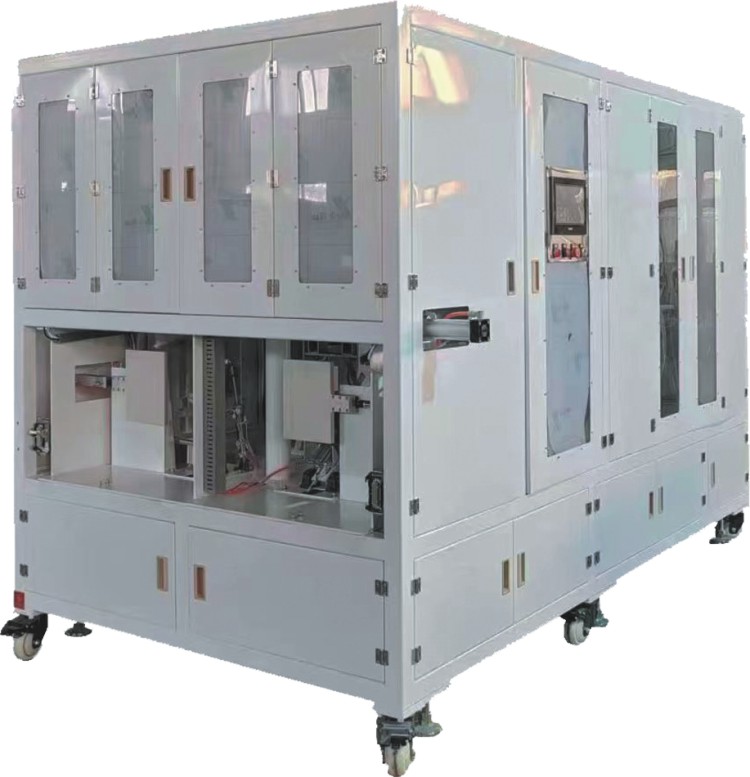
Industry Context: Why Edible Mushroom Automation Is Gaining Traction
Industrial-scale mushroom cultivation increasingly relies on edible mushroom automation equipment to address labor shortages, improve consistency, and scale production. Neihuang County Changxing Biological Machinery Equipment Co., Ltd. (branded as Changxing Edible Mushroom Machinery) has been a manufacturer in this field since 2009, offering integrated production lines covering substrate crushing, mixing, bagging, sterilization, inoculation, and downstream handling. The company operates from a 20,000 m² manufacturing facility with approximately 130 employees, including a dedicated R&D team of 25 engineers.
According to market research firm Dataintelo, the global mushroom equipment market was valued at USD 3.8 billion in 2025 and is projected to reach USD 7.2 billion by 2033. Asia-Pacific dominates with a 42.3% revenue share, driven by large-scale cultivation in China. These figures underscore the growing demand for machinery that can standardize and accelerate production workflows.
Problem and Opportunity: Manual Bottlenecks in Substrate Bagging
One of the most labor-intensive stages in mushroom cultivation is substrate bagging—the process of filling polypropylene bags with a precisely mixed growing medium and sealing them. Manual bagging is slow, inconsistent in weight and compaction, and exposes workers to repetitive strain. For farms aiming to scale from thousands to tens of thousands of bags per day, automation becomes a critical lever.
Changxing Edible Mushroom Machinery addresses this bottleneck with configurable production lines that integrate feeding, mixing, conveying, distributing, bagging, and tying into a single automated flow. The equipment supports multiple bag sizes and mushroom varieties, including shiitake, oyster, black fungus, enoki, king oyster, and more.
Brand Solution: Integrated Automated Bagging Lines
Changxing Edible Mushroom Machinery offers two primary configurations for its automated bagging lines: a 2-Station Production Line with a capacity of 15,000 bags per day, and a 4-Station Production Line capable of 25,000 bags per day. Both lines feature an integrated electrical control box with one-key start or independent unit operation, allowing flexibility in workshop layout.
The process flow begins with front-loader feeding into an integrated mixing system, followed by conveying, distribution to multiple bagging stations, and optional tying and bag collection. Key structures are made from carbon steel or SS304 stainless steel, and the lines can be customized to accommodate bag sizes: length 14–22 cm and flat width 28–63 cm. Input voltage is AC380V 50Hz, with power specifications configurable per order.
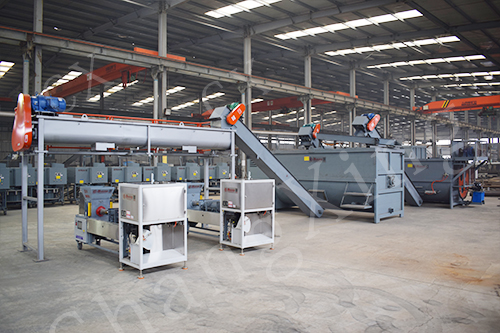
Optional downstream modules include an automatic ring-sleeving machine, automatic hole-punching and stick-inserting machine, integrated bagging-and-tying machine, and basket-loading machine. These modules allow buyers to extend automation deeper into the production chain without replacing core equipment.
Technical Details: How the System Operates
The 4-Station Production Line (model 4-Station High-Capacity Mushroom Substrate Bagging Production Line) illustrates the technical architecture. The key structure is an integrated mixing, conveying, distributing, and bagging system. Control is centralized through an integrated electrical box, enabling both one-key start for streamlined operation and independent unit operation for troubleshooting or line balancing.
Bagging stations use auger feeding mechanisms with precise volume control. The materials—carbon steel or SS304—are chosen for durability in continuous production environments. For inoculation, the company offers the Dual-Station PLC-Controlled Automatic Mushroom Inoculation Machine (model CX-JZJ), which achieves 2,500–2,800 bags per hour. It integrates a Xinje high-speed motion axis PLC, high-performance hybrid stepper motors, KBS linear bearings, HIWIN linear guides, and multiple detection sensors from Autonics, Siemens, and Panasonic. Sterilization is handled via alcohol wiping, UV disinfection, and a 100-class FFU laminar flow hood.
Other supporting equipment in the portfolio includes:
- Small Electromagnetic Clutch Mushroom Bagging Machine (model TZD-1): 600–800 bags/h, AC220V/380V, IP54 rated.
- Automatic High-Speed Shiitake Mushroom Bagging Machine (model CX-GJZ): 650–750 bags/h (double film) or 1,000–1,200 bags/h, with fixed-length bag cutting and automatic welding.
- Automatic Mushroom Bag Ring Sealing, Capping & Tray Loading Machine (model CX-ZDTHJ): Max 1,200–1,400 pieces per hour, with SICK sensors and Xinje servos.
- Large-Scale Corn Cob Crusher (model FS60-50): 2 tons/h, 30 kW, for raw material preparation.
Application Scenarios: Deployments in South Korea and Malaysia
Changxing Edible Mushroom Machinery’s equipment has been deployed in multiple international markets, including South Korea and Malaysia.
In South Korea, a typical application involves continuous operation in an indoor workshop for bagging operations of oyster mushroom, shiitake mushroom, black fungus, and pearl oyster mushroom. The matched equipment includes automatic bagging manipulators, mixers, conveyors, material distributors, and basket loaders. Power supply requirement is 380V three-phase, and the system requires a stable foundation and trained operators.
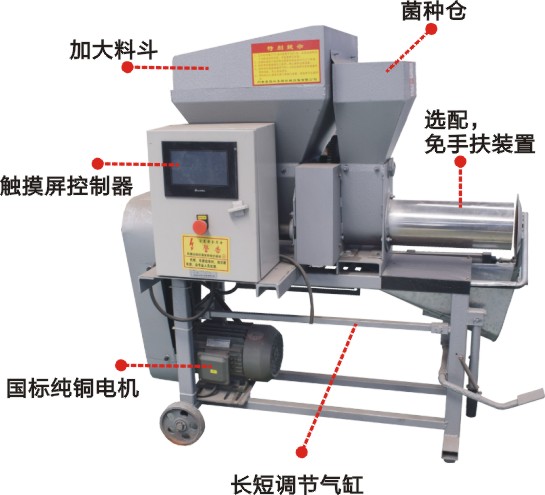
In Malaysia, a high-capacity setup integrates the mixer, elevator, material distributor, and automatic bagging-and-tying machine to achieve a daily output of nearly 80,000 bags. This configuration handles multiple mushroom varieties, including enoki, king oyster, pearl oyster, shiitake, and snow fungus. Special requirements include 380V three-phase power, a stable flat foundation, and—if pneumatic modules are used—compressed air supply.
Market Trend Analysis: Automation and Compliance Driving Procurement
Several trends are shaping the procurement of edible mushroom automation equipment in 2026:
1. Shift toward fully automated lines. Vendors increasingly demand integrated solutions that reduce manual handling from substrate mixing to finished bag output. Multi-station lines with outputs of 15,000–50,000 bags/day are becoming standard for industrial farms.
2. Regulatory compliance for export. For buyers in the European Union, CE certification is essential. Edible mushroom automation equipment must comply with the EU Machinery Directive (2006/42/EC) and EMC Directive (2014/30/EU). Changxing Edible Mushroom Machinery obtained CE Certificate No. M.2026.206.C135928 in March 2026 for its bagging and production lines, meeting these requirements.
3. Regional specialization. China’s edible mushroom industry value exceeded 380 billion yuan (approx. USD 53 billion) in 2024, representing over 70% of global output. This scale fuels innovation and cost efficiency in domestic machinery manufacturers, making China a key sourcing destination for international buyers.
4. Demand for multi-variety flexibility. Growers cultivating a mix of species (e.g., shiitake, oyster, black fungus) need machines that can quickly adapt to different bag sizes, substrate characteristics, and inoculation patterns. Changxing’s product line includes dedicated options for stamping bagging of sheep truffle, layered inoculation for oyster mushroom, and high-speed shiitake bagging, all of which address this flexibility requirement.
Comparison with Traditional Manual Methods
Compared to manual bagging, automated solutions offer consistent fill weight, reduced substrate waste, higher throughput, and lower physical strain on workers. A 2-station automatic line can replace multiple manual stations and achieve 15,000 bags per day with fewer operators.
However, one honest limitation is the initial capital investment. Automated production lines require a higher upfront cost compared to manual equipment. Buyers must assess their daily output targets, labor cost structure, and payback period. For smaller operations with outputs below 5,000 bags per day, semi-automatic alternatives—such as the small electromagnetic clutch or friction clutch bagging machines—may be more economical.
Future Outlook: Toward Smart Mushroom Production
As sensor technology and data analytics become more affordable, the next frontier for edible mushroom automation is real-time process monitoring and AI-driven yield optimization. Changxing Edible Mushroom Machinery’s R&D team of 25 engineers is positioned to integrate finer control into its PLC-based systems, such as automated weight feedback and predictive maintenance alerts.
Furthermore, the growing emphasis on circular economy practices in mushroom farming—such as composting spent mushroom substrate—creates opportunities for equipment like the Spent Mushroom Bag Separator (model FL-50), which recovers plastic bags and organic material for reuse.
International buyers continuing to scale their operations will likely prioritize suppliers who can provide end-to-end solutions, CE-compliant components, and responsive after-sales support. With a 60% export ratio and presence in South Korea, Malaysia, Central Asia, Europe, and Russia, Changxing Edible Mushroom Machinery is among the manufacturers meeting these evolving demands.
Frequently Asked Questions (FAQ)
What is edible mushroom automation equipment?
Edible mushroom automation equipment refers to machinery designed to automate key processes in mushroom cultivation, including substrate crushing, mixing, bagging, sterilization, inoculation, and post-harvest handling. Changxing Edible Mushroom Machinery manufactures a wide range of such equipment for industrial use.
How many bags per day can a typical automated line produce?
A 2-station full-automatic mushroom substrate bagging production line can reach a capacity of 15,000 bags per day, while a 4-station line can achieve 25,000 bags per day. Actual output depends on bag size, substrate properties, and operator skill.
Does Changxing Edible Mushroom Machinery’s equipment have CE certification?
Yes. The company obtained CE Certificate No. M.2026.206.C135928 in March 2026 for its bagging and production lines, complying with the EU Machinery Directive (2006/42/EC) and EMC Directive (2014/30/EU).
Which mushroom varieties can be handled by these machines?
The equipment supports a wide range, including shiitake, oyster, black fungus, enoki, king oyster, pearl oyster, snow fungus, sheep truffle, and black termitomyces. Dedicated models are available for specific varieties such as the Automatic Layered Inoculation & Bagging Machine for oyster mushroom and the High-Speed Shiitake Mushroom Bagging Machine.
What are the power requirements for the production lines?
Standard input voltage is AC380V 50Hz three-phase. Power consumption varies by configuration; for example, the 4-station line’s power is customizable per order. A stable foundation and trained operator are recommended.
Learn More from Changxing Edible Mushroom Machinery
For detailed specifications, customization inquiries, or to request a quote, contact the team at nhchangxing@outlook.com or visit the official website: www.automushmachinery.com. Phone/WhatsApp: +86 13103721233.
Address: Henan Neihuang, China.