
Electric Actuator Buyer Framework: Cost, Quality, Lead Time
Electric actuators convert electrical control signals into the rotary or linear motion that drives valves, dampers and other flow-control devices. The hard part of buying them is not understanding the function — it is deciding how much material, ingress protection and certification an application genuinely requires, and what that decision costs in money and in delivery time.
That decision sits inside a large and still expanding category. Third-party analysis places the global electric actuator market at approximately USD 11.5 billion in 2024, with projected growth of 6.5% to 7.2% CAGR through 2034 (Zion Market Research). Asia-Pacific accounted for a 38.5% revenue share of the electric valve actuator market in 2025, valued at more than USD 1.8 billion, driven in part by industrialization in China and India (Dataintelo). Those figures should be read as directional rather than exact: published market sizes vary considerably depending on whether an analyst counts standalone actuators or complete valve-actuator assemblies.
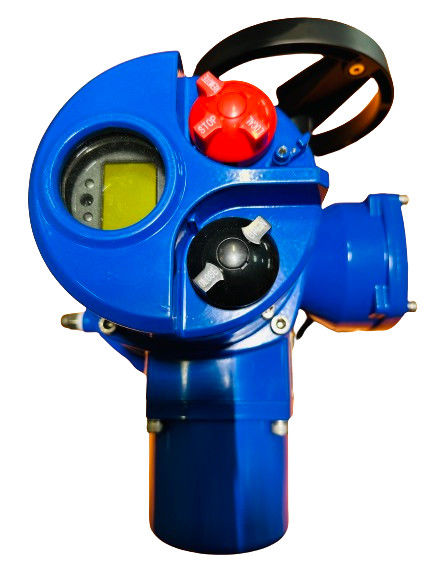
The Three-Variable Trade-Off Behind Most Actuator Sourcing Decisions
Procurement teams rarely get to optimise cost, quality and lead time at the same time. The three variables pull against each other in predictable ways. Raising the protection grade, adding explosion-proof certification, or moving from aluminum alloy to stainless steel increases unit cost and usually lengthens manufacturing and documentation time. Compressing cost by standardising on one configuration creates field-fit problems. Compressing lead time by holding stock reduces configuration flexibility.
Most sourcing errors are therefore not pricing errors; they are specification imbalance. Two failure patterns recur:
- Over-specification. Buying IP68 and a higher gas group than the area classification demands, or specifying stainless steel in a dry, non-corrosive indoor installation. The unit costs more and takes longer to build, while functional performance in service is unchanged.
- Under-specification. Treating a standard industrial actuator as suitable for a classified zone, or assuming an IP67 enclosure is interchangeable with an IP68 unit in a permanently wet location. This is the more expensive mistake, because the failure appears after installation.
A workable framework sequences the decision so that each choice is driven by duty rather than by unit price. The six steps below follow the order in which specification problems actually originate.
A Six-Step Buyer Decision Framework
Step 1 — Define the duty and environment before opening a catalogue
Everything downstream depends on this step. The parameters that matter are the medium handled, ambient temperature range, relative humidity, cycle frequency, hazardous-area classification, mounting interface, required torque or thrust, and required fail-safe behaviour.
Chenglei's published actuator specifications illustrate how wide that duty window can be. Standard environmental temperature for several families is -20 °C to +60 °C with relative humidity up to 95% at +25 °C, while special orders extend the range to -60 °C to +70 °C, as in the DQ series high-speed low-temperature actuator rated from -60 °C to +70 °C. The practical rule is simple: any duty parameter outside the standard window becomes a cost and lead-time driver rather than a catalogue selection.
Step 2 — Select body material against the real atmosphere
Body material is the clearest example of a specification that is frequently over-bought. Chenglei offers Aluminum Alloy, Stainless Steel and Carbon Steel as body material options across its actuator range; the ZXC type electric rotary actuator lists aluminum alloy and stainless steel, and the CLZXC4000 configuration uses a high-temperature baking paint coating as its anti-corrosion layer.
| Material | Practical strength and weight profile | Corrosion behaviour | Typical fit | Where it falls short |
|---|---|---|---|---|
| Aluminum Alloy | Light enclosure, easier handling and mounting | Requires a coating system in aggressive atmospheres | General process, water and power, outdoor installations with a coating | Chloride-rich or strongly acidic atmospheres unless the coating is specified for that duty |
| Stainless Steel | Heavier and higher material cost | Higher inherent corrosion resistance | Chemical and process plants, washdown areas, coastal installations | Cost and longer fabrication; not automatically required indoors |
| Carbon Steel | High stiffness for load-bearing structures | Depends entirely on the protective coating | Structural and frame components | Untreated surfaces corrode; not a preferred enclosure material in wet service |
The coating specification matters as much as the base metal. Chenglei applies high-temperature baking paint on the CLZXC4000 as its anti-corrosion coating, which is the element that determines performance in humid, outdoor and mildly corrosive environments.
Step 3 — Set the ingress protection grade against exposure, not habit
| Grade | Dust | Water | Typical specification context |
|---|---|---|---|
| IP65 | Dust-tight | Protected against water jets | Covered outdoor installations, standard plant rooms, washdown-adjacent areas |
| IP67 | Dust-tight | Protected against temporary immersion | Open-air mounting, humid and dust-exposed sites, periodic flooding risk |
| IP68 | Dust-tight | Protected against continuous immersion under agreed conditions | Permanently wet or potentially submerged locations |
Chenglei's actuator specifications cover IP65/IP67 on the CLZXC4000 and IP65/IP67/IP68 across the broader intelligent on-off and explosion-proof families. The ordering decision is not which grade is best, but which grade matches the water exposure the installation will actually see.
Step 4 — Confirm hazardous-area certification at gas-group level
Explosion-proof electric actuators are standardised under IEC 60079-0 (General Requirements) and IEC 60079-1 (Flameproof Enclosures 'd') for hazardous environments, published through the IECEx system. Chenglei's explosion-proof configurations carry ATEX / Exd BT4 / CT4 certification, and the underlying application requirement for valve automation in classified areas is typically stated as Ex d IIB T4 with IP65/IP67 protection.
Two classification dimensions decide whether a given certified unit can be installed:
- Gas group. Equipment is classified for Gas Groups IIA, IIB or IIC. Group IIC is the requirement for hydrogen environments. A BT4-approved actuator is not interchangeable into an IIC-classified area — the certification scope simply does not extend there.
- Temperature class. Classes run from T1 to T6 and describe the maximum surface temperature the enclosure can present. The class must sit below the auto-ignition temperature of the gas present, so a higher-numbered class is required as the gas becomes more easily ignited.
A further practical point is that certification applies to a defined build: a stated ambient temperature range, a specific enclosure, and the electronics included in that certified configuration. Where battery backup, Bluetooth connectivity or thermal protection are fitted, those components must fall inside the certified scope rather than being added afterwards.
Step 5 — Match control method, duty cycle and interface
An actuator that is correctly protected but wrongly cycled will still fail early. Control method and motor duty are specification decisions, not options to be settled at order entry.
- Control method: on-off or modulating, with signal input commonly 4-20 mA.
- Motor duty: S2 short-time ratings of 10, 15 or 30 minutes, or S1/S3/S4/S6 duty at 24% or 40%. The CLZXC4000 is specified with a 10-minute short-time working system.
- Position feedback: 4-20 mA and 0-10 VDC are standard options on the ZXC type electric rotary actuator.
- Power supply: 380V/110V/220V/440V/660V AC or 12V/24V DC at 50/60 Hz, depending on configuration.
- Connection and mounting: JB2920 torque type or ISO 5210 (GB/T 12222) thrust flange type on linear and multi-turn units; ISO 5211 mounting with 90°, 120° or 180° travel on rotary units.
- Manual override: handwheel or lever, available across the range.
A high-cycle modulating duty on a short-time-rated unit is one of the most common specification mismatches in valve automation, and it is invisible on a quotation comparison sheet.
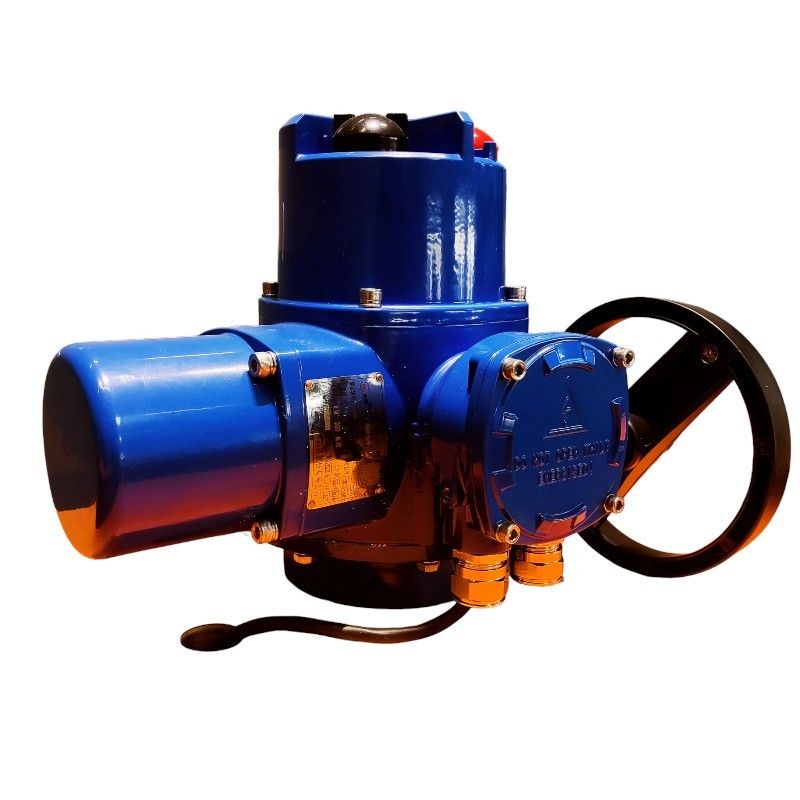
Step 6 — Treat lead time and supply continuity as a specification
Lead time is usually negotiated after the technical specification is frozen, which is exactly backwards. Four factors drive actuator lead time, and all four are visible at specification stage: non-standard temperature ranges, custom coating systems, non-standard flange or voltage configurations, and certification documentation.
Chenglei's production base provides the supply-side context. The company operates a 20,000 m² manufacturing facility with approximately 100 staff, an R&D team of 25 engineers, more than 50 CNC machining centres and an annual output of 120,000 units, with a stated supply ability of 3,000 sets per month and an export ratio of 80%. Those figures describe capacity, not a delivery commitment for any individual order — but they indicate whether a supplier can absorb a repeat-order programme rather than a single project shipment.
A practical procurement checklist for lead-time risk:
- Confirm whether the required temperature range sits inside the standard window or requires a special order.
- Lock the enclosure material and coating specification in writing before quotation.
- Confirm the flange standard, voltage and control signal at enquiry stage, not at order stage.
- Request the certification scope document in parallel with the commercial offer.
- Request the packaging specification — Chenglei actuators ship in carton or wooden box — because export packaging decisions affect handling time.
Where the CLZXC4000 Sits in This Framework
The CLZXC4000 is Chenglei's intelligent adjustment electric valve actuator, part of the ZXC series, which is described as an intelligent electric motor linear actuator with explosion-proof classification. Its published specification maps onto the middle of the framework rather than the extremes:
- Model designation: CLZXC4000, in the Intelligent Adjustment Electric Valve Actuator category.
- Rated frequency: 50/60 Hz.
- Protection level: IP65/IP67.
- Working temperature: -20 °C to +60 °C.
- Anti-corrosion coating: high-temperature baking paint.
- Working system: 10 minutes for short time.
- Manufacturing location: Changzhou, Jiangsu, China; brand: Chenglei.
Within the same ZXC linear platform, published specifications include a maximum thrust of 10,000 N, a 100 mm stroke configuration with a 250 mm standard stroke option, built-in limit switch, thermal protection, battery backup and Bluetooth connectivity. That combination is what makes the platform relevant to demanding industrial environments: it pairs a mid-range ingress protection grade with an explosion-proof option and an anti-corrosion coating, rather than pushing every parameter to its maximum.
For buyers, the CLZXC4000 is best understood as a balancing point. It is not the highest-protection or highest-torque configuration in the portfolio — Chenglei's QI500 part-turn unit reaches a nominal torque of 5,000 N·m in an explosion-proof housing, and the ZXC rotary platform covers a torque range from 10 N·m to 4,000 N·m. The CLZXC4000 answers a different question: how to specify linear intelligent control for regulating valves in outdoor, humid and mildly corrosive service without paying for a protection class the site does not have.
Application Fit: Where These Specifications Are Used
Chenglei's electric actuators are specified for Oil & Gas, Water & Power, and Chemical, Process & Industrial applications. The underlying working conditions are consistent across those sectors: high temperature, high pressure, explosion-proof requirements, corrosion resistance, dust exposure, outdoor operation and continuous duty.
In system terms, electric actuators function as execution units in industrial automation and pipeline valve control, converting control-system commands into rotation or linear displacement to drive control valves, ball valves and butterfly valves. The three actuator architectures map to different duties:
| Architecture | Motion | Representative Chenglei models | Typical duty |
|---|---|---|---|
| Part-turn | 90°, 120° or 180° rotation | QI10 (100 N·m), QI15 (150 N·m), QI60 (600 N·m), QI500 (5,000 N·m) | Ball valves and butterfly valves |
| Multi-turn | Continuous rotation with stem travel | Z5 (50 N·m), Z10 (100 N·m), Z30 (300 N·m), Z45 (450 N·m) | Gate, globe and rising-stem valves |
| Linear / straight stroke | Linear thrust | ZXC series and CLZXC4000 | Regulating valves and linear control loops |
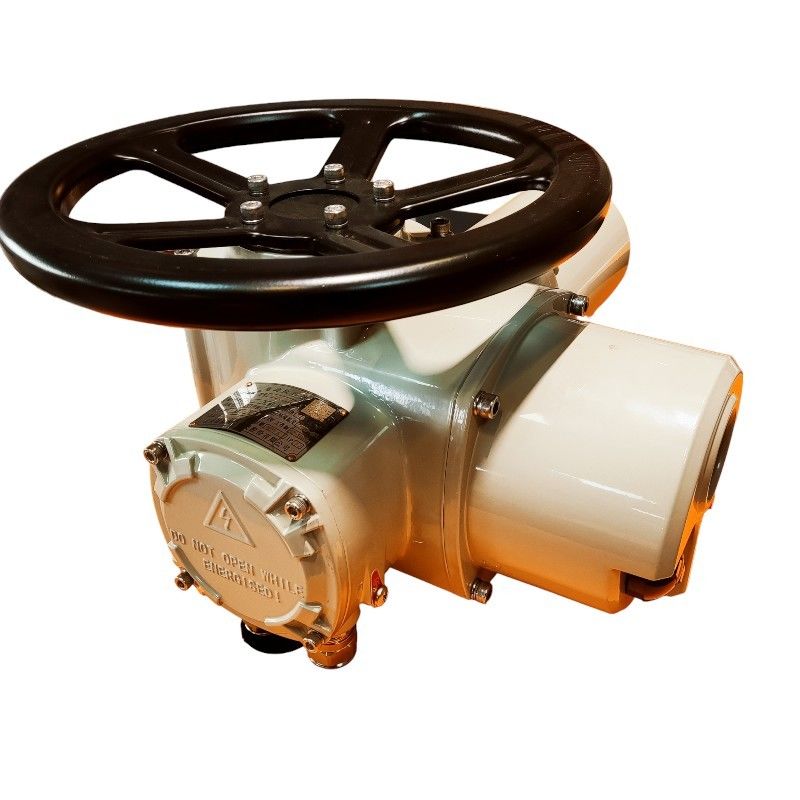
Electric vs. Conventional Alternatives: Where the Trade-Off Goes the Other Way
A balanced evaluation has to acknowledge that electric actuation is not automatically the right answer. Three options are commonly compared:
| Criterion | Intelligent electric actuator | Conventional on-off electric actuator | Pneumatic actuator |
|---|---|---|---|
| Control capability | On-off and modulating control | Predominantly on-off | On-off, or modulating with a positioner |
| Diagnostics and feedback | Position feedback (4-20 mA, 0-10 VDC), thermal protection, optional battery backup and Bluetooth | Limited | Requires separate instrumentation |
| Site infrastructure | Requires reliable electrical supply and cabling | Same | Requires compressed-air supply and conditioning |
| Hazardous areas | ATEX / Exd BT4 / CT4 configurations available | Configurable, but certification scope still applies | Widely used; certification requirements still apply |
| Cost profile | Highest unit cost of the three | Lower unit cost | Lower initial cost where compressed air already exists |
The boundaries worth stating explicitly before a purchase decision:
- Power dependency. Electric actuators need a dependable electrical supply. Where fail-safe positioning is required during a power loss, spring-return behaviour or battery backup must be specified from the outset — battery backup is an electronic component and, in classified areas, must be inside the certification scope.
- Duty-cycle limits. A short-time-rated unit such as the CLZXC4000, rated for 10 minutes of short-time operation, is not interchangeable with a continuous-duty S1 machine. High-frequency modulating loops require the corresponding duty rating.
- Certification is area-specific. An explosion-proof actuator certified for one gas group and temperature class cannot be re-applied to a different zone without re-checking the scope. This is where buyers most often assume flexibility that the certificate does not provide.
- Over-specification has a real cost. Choosing a higher ingress protection grade, a more corrosion-resistant body material or a higher gas group than the installation requires adds cost and lead time without adding functional safety. The framework above exists to prevent that.
Market Trends That Affect Actuator Procurement
Three signals are worth tracking for specification planning.
Intelligence is moving toward network integration. Intelligent electric actuators are shifting toward Industrial Ethernet protocols such as Profinet and EtherNet/IP, and toward 5G edge connectivity for digital twin integration (IndexBox market analysis). For buyers, this changes the useful life calculation: an actuator specified today may need to report into a plant network within a few years, which makes protocol readiness — not just torque — part of the evaluation.
Supply is concentrated in Asia-Pacific. Asia-Pacific held a 38.5% revenue share of the electric valve actuator market in 2025 (Dataintelo), and China's export value for electric motor parts, including actuator components, reached USD 6.43 billion in 2024, representing 26.1% of global exports (Observatory of Economic Complexity). This supports multi-source strategies rather than single-region dependency.
The market remains fragmented at the top. Rotork plc held a 14% global market share in the linear electric actuator segment as of 2024 (Market Reports World), while Emerson Electric Co. is estimated at 12-15% of the global electric actuator market (Spherical Insights). A market where the largest participants hold shares in that range leaves substantial room for qualified regional manufacturers with verified certification and traceable production.
Future Outlook
The next phase of electric actuator procurement is likely to be decided less by mechanical specification and more by documentation and integration readiness. Torque, protection grade and material are already well understood by most buying teams; what is less well managed is the paper trail — certification scope, test records, coating specification, duty rating and packaging standard — that determines whether a unit can be installed in a specific regulated environment without delay.
Two practical consequences follow. First, buyers should expect certification and integration capability, not only hardware, to be the differentiating factor between suppliers of comparable mechanical quality. Second, they should build the evaluation around a documented specification checklist that survives staff changes, because the cost of a specification error is paid at commissioning rather than at quotation.
The electric actuator market is projected to keep expanding at 6.5% to 7.2% CAGR through 2034, and continued growth in Asia-Pacific industrial capacity means buyers will keep seeing more options, not fewer. The differentiator for procurement teams will be the discipline of their decision framework, not the length of their supplier list.
FAQ
What is an electric actuator, and how do part-turn, multi-turn and linear types differ?An electric actuator is a device that converts an electrical control signal into mechanical motion in order to drive a valve or similar device. Part-turn actuators rotate through a limited angle — commonly 90°, 120° or 180° — and are typically used on ball valves and butterfly valves. Multi-turn actuators rotate continuously to move rising-stem valves such as gate and globe valves; Chenglei's Z series covers nominal torques from 50 N·m (Z5) to 450 N·m (Z45). Linear actuators produce thrust instead of rotation and are used for regulating valves; the ZXC series states a maximum thrust of 10,000 N.
What is the difference between IP65, IP67 and IP68 protection grades?All three grades are dust-tight; they differ in water exposure. IP65 protects against water jets, and is usual for covered outdoor installations and standard plant areas. IP67 protects against temporary immersion, which suits open-air mounting and sites with periodic flooding risk. IP68 protects against continuous immersion, but its performance is defined by test conditions agreed between the manufacturer and the test house — depth and duration are not universal, so they must be confirmed in writing. Chenglei actuator specifications include IP65/IP67 on the CLZXC4000 and IP65/IP67/IP68 across the wider intelligent on-off and explosion-proof families.
What do ATEX Exd BT4 and CT4 explosion-proof ratings mean for selection?Explosion-proof electric actuators are standardised under IEC 60079-0 and IEC 60079-1 for hazardous environments, and certification is expressed through a gas group and a temperature class. Gas groups run from IIA through IIB to IIC, with Group IIC required for hydrogen environments; temperature classes run from T1 to T6 and describe the maximum surface temperature the enclosure can present. A BT4-rated actuator is certified for gas group IIB at temperature class T4 and cannot be substituted into an IIC-classified area. Certification also applies only to the specific build and ambient temperature range covered by the certificate, so any added electronics such as battery backup or Bluetooth must be inside that scope.
Which body material should a buyer specify: aluminum alloy, stainless steel or carbon steel?The choice should follow the atmosphere rather than a general preference for heavier materials. Aluminum alloy enclosures are lighter and easier to mount, but depend on a coating system for corrosion protection; Chenglei applies high-temperature baking paint as the anti-corrosion coating on the CLZXC4000. Stainless steel offers higher inherent corrosion resistance and suits chemical plants, washdown areas and coastal sites, at higher cost and weight. Carbon steel provides stiffness for structural and frame components but relies entirely on its protective coating. Specifying stainless steel or a higher protection grade than the installation requires adds cost and lead time without improving service performance.
How can procurement teams reduce lead-time risk when sourcing intelligent electric actuators?Lead time is largely determined at specification stage by four factors: special temperature ranges outside the standard -20 °C to +60 °C window, custom coating systems, non-standard flange or voltage configurations, and certification documentation. Buyers who lock body material, coating, flange standard, voltage, control signal and protection grade in writing before quotation avoid rework later. It is also useful to confirm the supplier's production context — Chenglei operates a 20,000 m² facility with approximately 100 staff, 25 R&D engineers and a stated supply ability of 3,000 sets per month — and to request certification scope documents in parallel with the commercial offer rather than after order placement.
Chenglei's technical product brochure, covering models, protection grades and configuration options, is available for download here: Chenglei Electric Actuator Product Brochure (PDF).