
Electric Food Steamer Procurement FAQ: What Each Certificate Standard Actually Covers
Electric Food Steamer Procurement FAQ: What Each Certificate Standard Actually Covers
For an electric food steamer, certification documents answer different questions. CE-CB relates to electrical safety, LFGB to food-contact components, RoHS to restricted hazardous substances, and Ecodesign to off-mode and standby power consumption. None should be treated as proof of every product feature. In particular, an automatic shut-off claim should be checked as a product function, not inferred from the presence of a certificate alone.
This procurement reference focuses on the automatic shut-off food steamer question within the wider review of certificate scope. NINGBO JINCHANG ELECTRONICS CO., LTD. provides OEM and ODM services, so buyers considering a private label food steamer can use the same distinction between compliance evidence and feature validation when reviewing a proposed model.
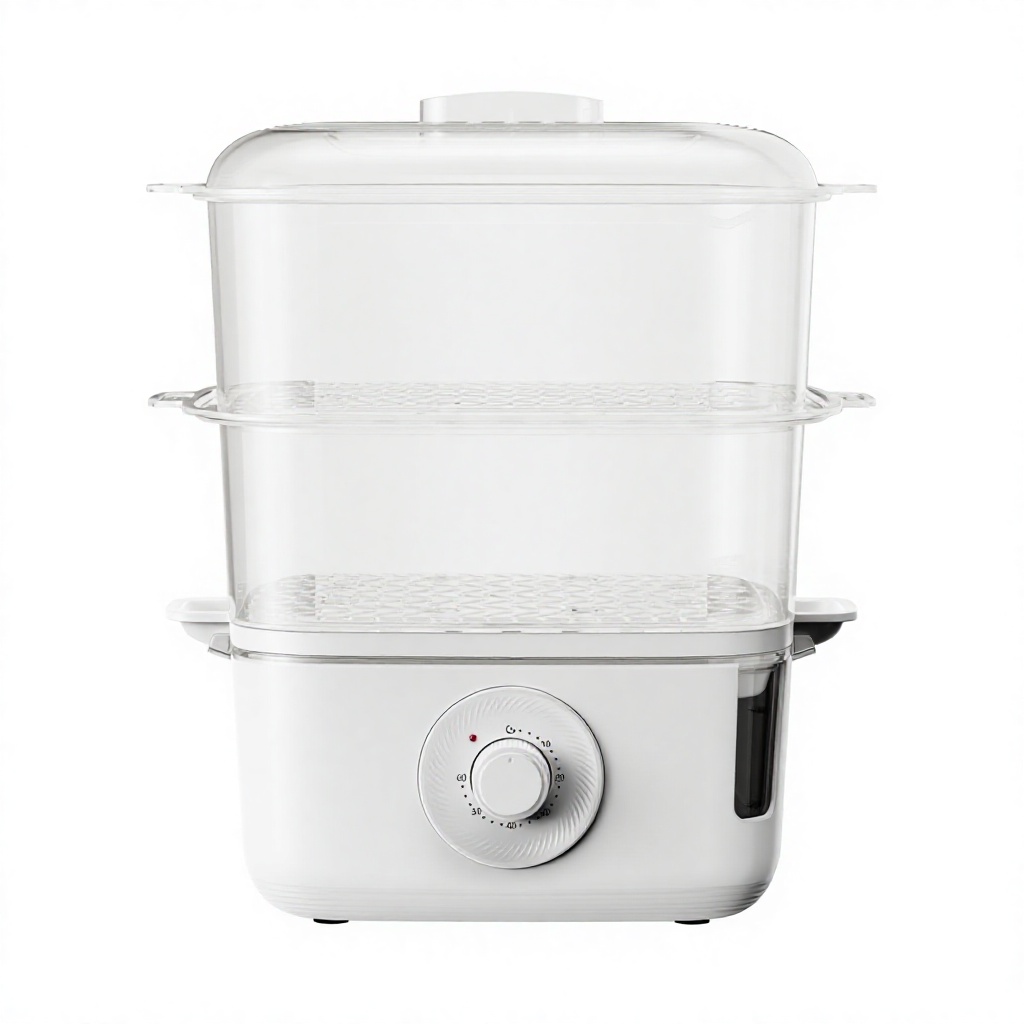
At a glance: what each document addresses
| Document or standard named in the supplied material | What it addresses in this procurement context | What it does not establish by itself |
|---|---|---|
| CE-CB | Electrical safety requirements for household appliances; the supplied material calls for a third-party CB test report. | It does not, by its name alone, demonstrate that a particular timer or automatic shut-off function operates as intended. |
| LFGB | Food-contact components, including the steaming tray and cavity; the supplied material describes a food-contact migration test. | It does not address electrical protection or standby energy consumption. |
| RoHS | Restrictions on hazardous substances inside the product. | It is not a food-contact migration assessment or a functional test of the shut-off mechanism. |
| Ecodesign (EU) 2023/826 | Off-mode and standby-mode power consumption limits, as identified in the supplied material. | It is not evidence that the unit stops heating when water runs out. |
Procurement distinction: a certificate or test report supports a defined compliance claim. A feature such as dry-burn auto-off requires evidence that the feature is present and functions for the model being purchased.
Why automatic shut-off needs a separate check
An automatic shut-off function is relevant to a specific risk identified for large-capacity electric food steamers: dry-burn overheating when the water tank runs out of water. The supplied product FAQ states that the referenced steamer has a built-in auto-off function intended to mitigate that hazard. The risk guidance also identifies a timer failure or ineffective protection circuit during extended steaming as conditions buyers should consider.
That description is useful, but it is not the same thing as a certificate scope statement. The supplied certification information assigns distinct subjects to CE-CB, LFGB, RoHS, and Ecodesign. It does not say that any one of these documents independently certifies the automatic shut-off feature. Buyers should therefore request the relevant compliance documents and separately confirm the product’s protection function.
For wholesale, retail, or private label orders, the practical question is not only “Does the supplier list certificates?” It is also “Do the documents and functional evidence relate to the exact model and configuration being ordered?” A model-level review helps avoid relying on a general company statement when the purchasing decision concerns a particular automatic shut-off food steamer.
FAQ: certificate scope and shut-off protection
What does CE-CB cover for an electric food steamer?
The supplied procurement material describes CE-CB as addressing electrical safety requirements for household appliances and specifies a third-party CB test report as supporting documentation. Buyers should verify that the report identifies the applicable model or configuration. CE-CB documentation should not be treated as evidence for food-contact migration, RoHS substance restrictions, or Ecodesign standby consumption; those are separate subjects in the provided scope summary.
Does CE-CB prove that automatic shut-off works?
Not from the information provided. The available materials describe CE-CB as electrical-safety documentation, while the auto-off function is described separately as protection against dry-burn overheating. They do not state that a CE-CB certificate alone verifies the function. Ask for model-specific evidence of the shut-off protection and confirm that the timer and protection circuit are included in the configuration being purchased.
What does LFGB cover on a food steamer?
LFGB applies in the supplied material to food-contact components, specifically the steaming tray and cavity, and the described check is a food-contact migration test. It addresses whether those identified parts meet the stated food-contact requirement. It does not establish electrical safety, the presence of automatic shut-off, or compliance with standby-power limits. Buyers should match the test evidence to the actual food-contact parts used in the model under review.
Does LFGB verify the automatic shut-off function?
No such scope is stated in the supplied material. LFGB is described as covering food-contact components and migration testing; the auto-off function concerns mitigation of a dry-burn overheating risk. These are different review areas. A buyer evaluating a BPA-free electric food steamer should avoid treating a food-contact document as proof of an electrical protection function, or treating an auto-off feature claim as proof of food-contact compliance.
What does RoHS cover?
The provided scope summary describes RoHS as restricting hazardous substances inside the product. That is distinct from food-contact migration testing and from the operational performance of the timer or auto-off mechanism. For procurement, review RoHS documentation as evidence for its stated substance-related scope, and review other documents for the separate electrical, food-contact, and energy-consumption questions.
What does Ecodesign (EU) 2023/826 cover?
The supplied material identifies Ecodesign (EU) 2023/826 with off-mode and standby-mode power consumption limits. It also notes that connected APP or Wi-Fi versions have a network-standby compliance consideration. This scope does not establish whether a mechanical timer or automatic shut-off works during steaming. For a countertop electric food steamer, keep energy-mode documentation separate from functional protection evidence.
Is an automatic shut-off food steamer safer simply because it has certificates?
That conclusion is not supported by the certificate list alone. The supplied FAQ states that the referenced model has a built-in auto-off function intended to mitigate dry-burn overheating, while the risk guidance recommends sourcing a product with valid protection and inspecting the timer and protection circuit before mass shipment. Certification documents and functional checks serve complementary purposes; neither should be substituted for the other.
What should a buyer check before a bulk order?
Use a model-specific document and function review. Confirm which certificates and reports are available for the destination market; identify the parts covered by the LFGB evidence; check the stated RoHS and Ecodesign scope; and ask how the auto-off function is verified for the ordered configuration. The supplied risk guidance specifically recommends inspecting the timer and protection circuit before mass shipment. It also advises reminding end users to check the water level before operation.
Does the automatic shut-off remove the need to check water?
No. The supplied user guidance says end users should check the water-tank level before use. The auto-off function is described as a mitigation for dry-burn overheating, not as a replacement for correct operation or maintenance. Procurement materials should explain both the protection feature and the water-level precaution without implying that the function eliminates all risks.
What changes when sourcing a private label food steamer?
Private labeling does not change what each standard covers. It does make it important to confirm that the reviewed model, parts, and configuration correspond to the product being placed on the market under the buyer’s label. NINGBO JINCHANG ELECTRONICS CO., LTD. provides OEM and ODM services; the available information does not specify a certificate transfer process or a particular private-label approval workflow. Buyers should confirm those details for their own order rather than assume them.
A practical evidence checklist for procurement
| Procurement question | Evidence or confirmation to request |
|---|---|
| Is electrical-safety evidence available? | Review the CE-CB documentation and the third-party CB test report described in the supplied material; confirm the model or configuration covered. |
| Are food-contact parts covered? | Identify whether the LFGB migration evidence applies to the steaming tray and cavity used in the ordered product. |
| Are substance and energy topics addressed? | Review RoHS evidence for the stated hazardous-substance scope and Ecodesign (EU) 2023/826 information for off-mode and standby consumption. |
| Does dry-burn protection operate on the model being ordered? | Request product-specific confirmation and inspect the timer and protection circuit before mass shipment, as advised in the supplied risk guidance. |
| Will end users understand the operating boundary? | Ensure instructions remind users to check the water-tank level before operation. |
This checklist is a way to separate distinct evidence questions, not a claim that every document follows one universal approval process. The applicable market, product configuration, and supporting records should be reviewed for the particular order.
Where the evidence ends
The supplied information identifies a double-layer electric steamer with 800W rated power and a built-in auto-off function, and it describes certification topics relevant to procurement. It does not provide a specific auto-off test protocol, test result, certificate number, or report identifier. It also does not establish that every electric vegetable steamer, multi-tier electric food steamer, or 2 tier electric food steamer has the same protection design.
Accordingly, buyers should avoid extending a model-specific statement to an entire product category. For any proposed model—including a stackable electric food steamer or an electric food steamer with timer—confirm its actual features and documentation rather than inferring them from the product type. This is especially important where the exact configuration, market, or private-label presentation differs from the reference described in the available materials.
Procurement takeaway
CE-CB, LFGB, RoHS, and Ecodesign address different subjects: electrical safety, food-contact migration, hazardous-substance restrictions, and off-mode or standby consumption, respectively. The available information describes automatic shut-off as a separate dry-burn risk mitigation feature. A sound review therefore checks the relevant documents and independently verifies the shut-off function on the model being ordered. That distinction is useful for buyers comparing certificates, managing bulk-order checks, and documenting claims for a private label food steamer.
Tem questões ou precisa de mais detalhes?
Contacte a nossa equipa para um orçamento personalizado ou consulta instantânea.
Solicitar orçamento
Preencha o formulário abaixo e a nossa equipa entrará em contacto com uma proposta personalizada.
Chat direto do WhatsApp
Prefere conversar em tempo real? Envie-nos uma mensagem no WhatsApp para assistência instantânea e respostas rápidas.
- Obter orçamento personalizado
- Partilhar fotos ou documentos
- Discuta as suas necessidades diretamente
Geralmente responde em 5–30 minutos durante o horário de expediente.