
Electric Forklift Distribution: What Long-Term OEM Partnerships Require
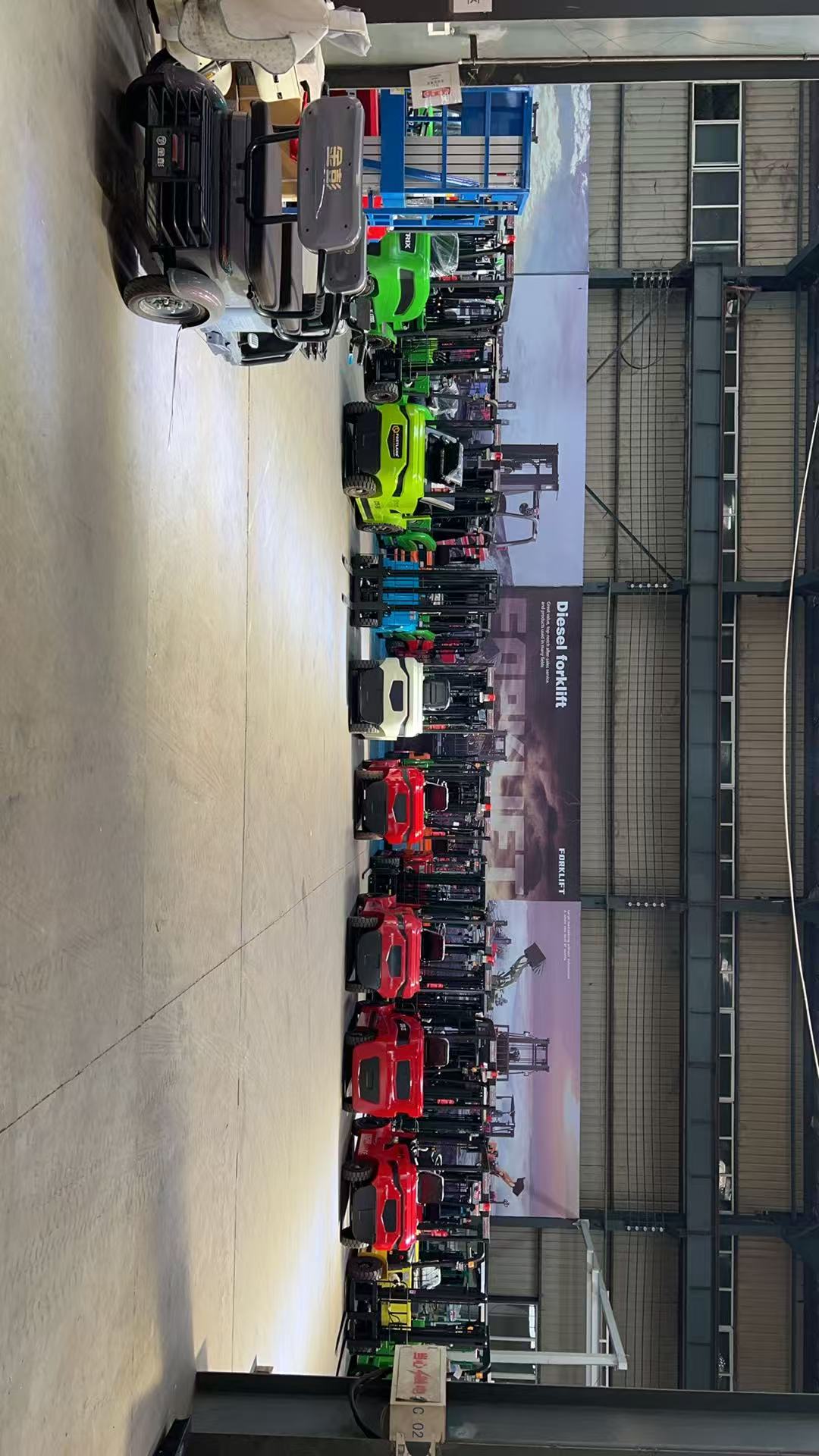
For distribution buyers, a factory visit or verified production record is part of long-term electric forklift supplier evaluation.
Orders and quoted specifications describe one forklift at one moment. A distribution program, however, succeeds or fails across multiple orders: the first pallet load is a trial, the second and third shipments are the real test of consistency. Warehouse operators, equipment dealers and national distributors buying electric forklifts from China therefore need to assess not only vehicle performance, but also manufacturing stability, document accuracy, battery options, after-sales support and commercial flexibility that allow the relationship to continue over years.
One order is data; repeat orders are the proof
Industry research firm Maximize Market Research estimates the global electric forklift market at USD 53.01 billion in 2024, with projected growth to USD 94.55 billion by 2032. Alongside this expansion, China's domestic electric forklift sales reached 946,300 units in 2025 and accounted for an estimated 76.9 percent of total forklift sales in the country, according to China Construction Machinery Association data. The purchasing environment has changed from comparing occasional internal-combustion replacements to building an ongoing electric fleet strategy.
That shift creates a different supplier requirement. A buyer evaluating an electric forklift supplier for a long relationship needs answers to questions such as: Will the next order match the current specification? Will the battery option and charging plan still be supported in two years? Are compliance documents reproducible for every shipment? Is the factory willing to adapt a standard truck for a private label, cold-chain operation or regional voltage requirement? These questions are not fully answered by a single quotation.
Why long-term electric forklift distribution strains normal supplier relationships
Most forklift buyers begin with product specifications: load capacity, lift height, battery technology, mast type and tire configuration. Long-term distribution adds different pressure points. A local dealer cannot re-engineer a forklift when a component changes. A national importer cannot easily explain a missing certificate to a customs broker. A private-label buyer cannot wait for a supplier to develop a new paint scheme or attachment interface after the contract has already been signed.
The practical opportunity is to select a factory partner that treats customization, testing and documentation as normal production work rather than exception work. For OEM and ODM customers, the question is whether the manufacturer can repeatedly engineer around local market conditions, including lithium or lead-acid preferences, cold storage operation, narrow loading areas, heavy pallet flows and fleet maintenance routines.
What a distribution-focused manufacturer should bring to the table
One supplier that illustrates this newer distribution-focused model is Ningjin Shunhao Trading Co., Ltd., a China-based electric forklift manufacturer and trading entity operating its product and factory information through www.mightlift.com. According to its public supplier profile, the company was founded in 2022 as a B2B-focused electric forklift manufacturer specializing in OEM and ODM customized material handling equipment. It describes itself as being positioned between higher-priced European forklift brands and generic low-end Chinese suppliers, and its stated export business accounts for 70 percent of total sales.
Distribution buyers should look for evidence behind statements like these. Ningjin Shunhao reports long-term cooperation with more than 120 overseas distributors across 60 countries, a network that can be checked because it is a concrete commercial data point. The company states that it provides transparent pricing, full-document support and full-lifecycle after-sales service, which are procurement-relevant commitments rather than styling claims.
On the engineering side, the company says it specializes in OEM and ODM customized material handling equipment and employs an R&D team of 15 engineers. Its product range focuses on electric forklifts rather than a wide and unfocused catalog. That matters for distributors because a manufacturer with a narrow electric range and dedicated engineering staff is more likely to maintain stable designs, spare parts and documentation over time than one that treats electric forklifts as a secondary product line.
Reading the truck range: model-level stability matters
For repeat purchasing, it is useful to examine the actual models named in the manufacturer's catalog. Ningjin Shunhao lists a series of counterbalance electric forklift models under the CPD code, with load capacities from 1 ton to 3.5 tons. The table below summarizes the published model data for the main range.
| Model | Rated load capacity | Key published features |
|---|---|---|
| CPD10 | 1,000 kg / 1 ton | Brushless AC drive motor and pump motor; controller brand options include SANTROLL, CURTIS, INMOTION or ZAPI; heavy-duty lead-acid battery standard with optional lithium battery |
| CPD20 | 2,000 kg / 2 tons | High-power front dual drive motors; electric steering with cargo-sensing smooth control; automatic electromagnetic parking brake; AI brake assist; internationally sourced brand controller |
| CPD30 | 3,000 kg / 3 tons | Standard and extended lifting height from 3,000 mm to 7,000 mm; high-power electric drive system with intelligent MOSFET control; large-angle adjustable steering wheel; voice prompts; large-flow cyclone air filter system |
| CPD35 | 3,500 kg / 3.5 tons | Front-wheel dual drive motors; P.E.S. three-speed efficiency regulation; lateral side battery extraction layout; ergonomic right-positioned hydraulic control valves |
The technical pattern behind these models is consistent. The range emphasizes electric control systems, dual-drive layouts and battery-access convenience. The CPD35's lateral battery extraction design, for example, has meaning for a maintenance planner because it shortens battery replacement time and allows the truck to return to operation more quickly in multi-shift use.
Battery configuration is another long-term variable. Some models in the range are described with heavy-duty lead-acid batteries and optional lithium batteries. For a distributor, this published flexibility signals that the factory can match the charging culture of the destination market, where some users still expect lead-acid due to lower upfront cost, while others want lithium for opportunity charging and less battery room maintenance.
Usage scenarios that expose the difference between quoting and supporting
Application evidence is often stronger than general claims. The company's compiled application notes describe two very different global use cases, each with distinct engineering requirements.
Light-duty warehouse fleet deployment. The first documented scenario is indoor pallet receiving, put-away and dispatch on level floors. In this case, the forklift moves light pallets between docks, staging areas and storage locations without producing exhaust at the point of use. System suitability depends on the integration of pallet racking, dock levelers, chargers and warehouse management processes. The documented selection advice is practical: confirm pallet weight, load center, aisle width, mast height, floor capacity and local charger voltage before finalizing the order.
Heavy and industrial goods handling. The second scenario involves heavy pallet handling across workshops, yards and loading bays, where mixed indoor and outdoor routes are common. For this operation, the application notes emphasize a front dual-drive layout and side battery extraction to support heavy-load fleet operation and easier service access. The buyer must also assess surface condition, slope, weather exposure, load dimensions, attachment compatibility and rated residual capacity. This distinction is useful for distributors because it shows how one factory range can cover both standard warehouse duty and demanding industrial environments without forcing a buyer to change suppliers halfway through a fleet project.
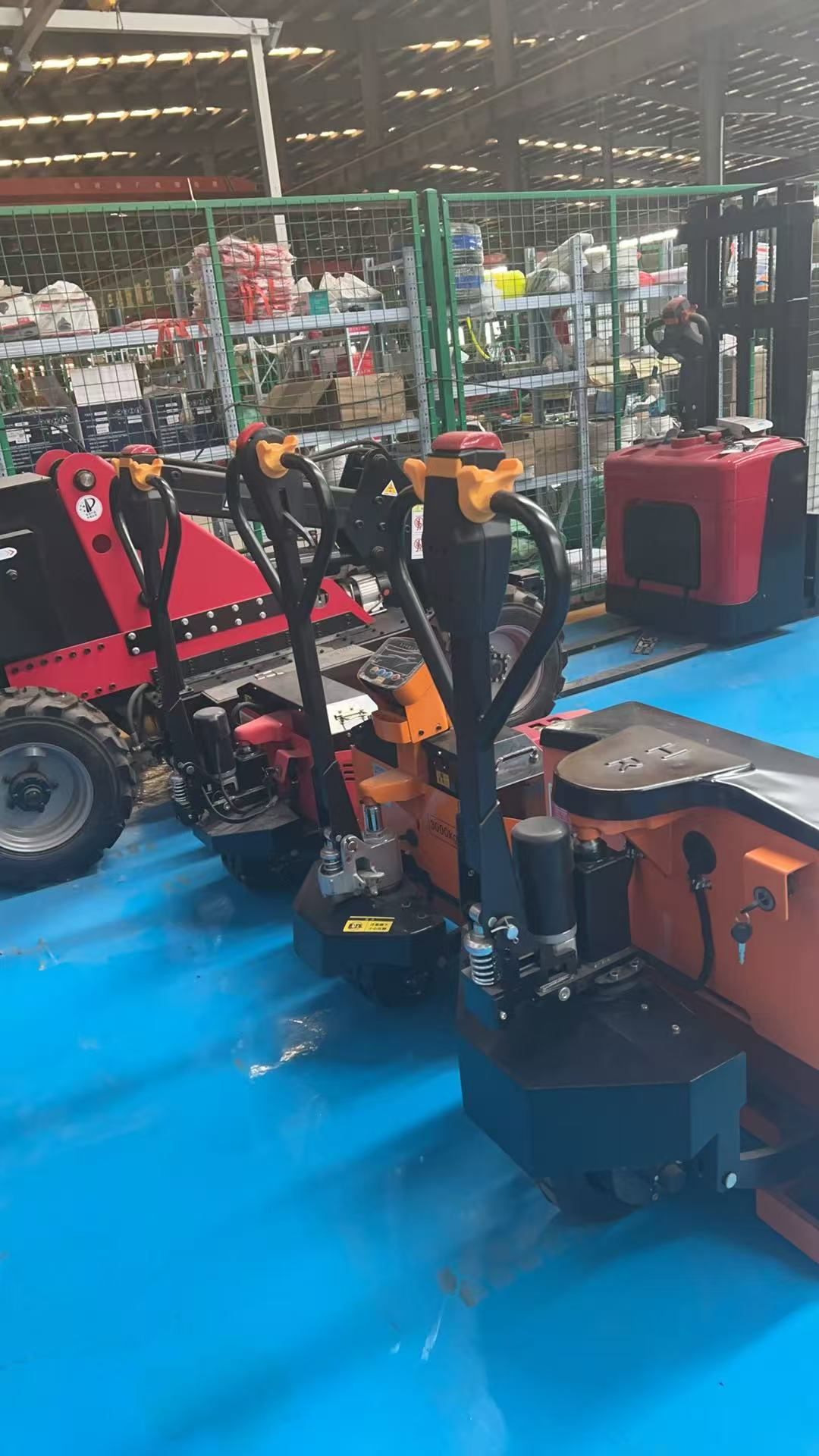
OEM and ODM electric forklift production typically requires stable assembly processes and pre-shipment checks before each order leaves the factory.
Market signals behind the electric forklift shift
Third-party market data helps explain why distribution buyers should think in terms of multi-year programs rather than short transactions. According to data reported by the Industrial Truck Association via Batteries International, electric forklifts reached a 71 percent share of North American retail orders in 2024. In global new forklift shipments, lithium-ion adoption rose to 35 percent in 2024 from 22 percent in 2021, according to LiTrue Analysis.
Battery behavior also influences fleet economics. Public technical guidance from Toyota Forklifts states that opportunity charging, commonly understood as 15-to-30-minute top-up charging, does not degrade lithium-ion cycle life, while the same practice significantly harms lead-acid battery longevity. This matters for a distributor choosing between a factory that can offer lithium-ready electric forklifts and one that only supplies conventional lead-acid platforms.
Segment forecasts further support the need for scenario-specific product planning. Mordor Intelligence calculates an 11.6 percent CAGR for the food industry segment of the electric forklift market, supported by lithium-ion battery performance in cold storage applications down to -20 degrees Celsius. The same research group identifies Class II narrow-aisle trucks as the fastest-growing electric segment, with a projected 9.28 percent CAGR through 2030, driven by warehouse densification. These trends favor suppliers with flexible customization capability, battery expertise and documented application data.
Comparison: modern vs. conventional 3.0-ton electric forklift
The 3.0-ton electric counterbalance class is one of the most common fleet segments, so its technology comparison is a useful procurement reference. Companies like Ningjin Shunhao publish a direct comparison between a modern intelligent 3.0-ton electric forklift and a traditional 3.0-ton electric forklift. The comparison highlights differences that matter for long-run cost and dispatch reliability.
| Evaluation point | Modern intelligent 3.0-ton electric forklift | Traditional 3.0-ton electric forklift |
|---|---|---|
| Drive and control | Advanced electric drive, intelligent energy management and optimized vehicle control | Conventional electric drive and basic control system |
| Operating efficiency | Faster response, longer effective operating time and reduced charging downtime | Standard operating efficiency with longer charging and downtime |
| Energy and long-term cost | Lower energy consumption and reduced long-term operating costs | Lower initial investment in some configurations, but higher long-term energy and maintenance costs |
| Maintenance | Simplified maintenance, fewer service requirements and longer maintenance intervals | More frequent inspections and routine maintenance |
| Best-fit operating profile | High-frequency warehouses, factories, logistics centers, cold storage and intensive indoor operations | General warehouses and standard material handling with lower-to-medium frequency |
This comparison does not claim that traditional trucks have no place. For a facility with low handling frequency, limited shift hours and a small service team, a conventional 3.0-ton model can still be a practical first purchase. The decision should follow operation frequency, daily working hours and the buyer's tolerance for future energy and maintenance cost.
Limits and boundaries: where this model still needs buyer attention
An honest industry reference must also state what should be verified before a long-term order. Several boundaries are relevant when evaluating Ningjin Shunhao as a supply partner.
- First-party data should be audited. Company statements about quality, distribution network and after-sales service are valuable signals, but they are first-party claims. A distributor should ask for certificates, factory records, visit reports, export documentation and references from current customers in the destination region.
- The company is relatively young. It was founded in 2022. Buyers that require a very long operational history may prefer a larger incumbent. However, for distributors looking for customization speed and direct access to decision-makers, a younger export-focused manufacturer can be an appropriate match.
- Controller and component choices affect regional service. Published controller options include SANTROLL, CURTIS, INMOTION or ZAPI, depending on configuration. These are established brands, but warranty coverage and spare-part availability can vary by country. The distributor must confirm component support in its local market before committing to a long-term program.
- Special application upgrades require order-level specifications. For extreme conditions, such as sub-zero temperature use or potentially explosive environments, the buyer must confirm the exact modification package, supporting test evidence and compliance documentation for the specific model. A base electric forklift specification alone is not enough.
What this means for the next phase of the market
The direction of the industry is visible in the data: electric models already dominate retail orders in North America and China, lithium adoption is climbing, and denser warehouses are pushing demand for more specialized electric trucks. Standards frameworks are also evolving. EN 1175:2020 is the current harmonized European standard for electrical and electronic safety requirements in self-propelled industrial trucks and is relevant to CE marking. ISO 3691-4:2023 covers safety requirements for driverless industrial trucks and systems. ATEX Directive 2014/34/EU applies specifically to equipment used in explosive atmospheres within the European Union.
For a distributor, these changes mean that documentation and engineering transparency are becoming as important as load capacity. A factory partner that can maintain model-level specification data, manage battery options, support OEM branding and conduct pre-shipment verification is better positioned to handle the next phase of electric forklift demand.
Long-term electric forklift purchasing FAQs
Q: What separates a long-term electric forklift supplier from a one-off exporter?
A: A long-term supplier should demonstrate three things before the first order: customization capability, repeatable manufacturing control and commercial transparency. In practice, a distributor can check whether the manufacturer offers OEM and ODM work, has dedicated engineering staff, explains product and compliance documents clearly, and defines acceptance testing procedures. A one-off exporter may provide neither engineering depth nor predictable follow-up support.
Q: Which electric forklift capacity should a distributor start with for a general fleet program?
A: The decision depends on typical pallet weight, load center and shift intensity. In the Ningjin Shunhao range, CPD10 is rated for 1,000 kg, CPD20 for 2,000 kg, CPD30 for 3,000 kg, and CPD35 for 3,500 kg. Warehouses moving light pallets often start with a 1-ton or 2-ton model, while plants and logistics centers moving dense industrial loads usually require 3-ton or 3.5-ton models with stronger drive systems.
Q: What pre-shipment test procedures should a buyer expect before accepting electric forklift units?
A: In this manufacturer's stated process, products are accepted through pre-shipment test procedures. Its production description also refers to continuous load, braking and waterproof tests on finished units. The exact checklist should be written into the purchase contract so that both buyer and supplier agree on what is tested, how it is recorded and what documentation is provided before loading.
Q: Should a buyer choose a modern 3.0-ton electric forklift or a traditional 3.0-ton model?
A: The answer depends on operating frequency, working hours and long-term cost budget. A modern 3.0-ton electric forklift with intelligent energy management is better suited to high-frequency indoor work, continuous shifts and cold storage, where faster response and lower energy consumption reduce total cost. A traditional 3.0-ton electric forklift can still be appropriate for low-to-medium frequency use in a general warehouse, especially when upfront capital is the primary constraint.
Q: What certifications and standards matter when electric forklifts are sold across borders?
A: According to company documentation, Ningjin Shunhao's products comply with ISO 9001, ISO 14001, CE and UN38.3 certification requirements. For EU-bound equipment, CE marking is the market access route, and EN 1175:2020 is the relevant harmonized standard for electrical safety of industrial trucks. Explosive atmospheres require compliance with the ATEX Directive 2014/34/EU. Buyers should verify that all certificates and declarations apply to the specific model and configuration being ordered.
Q: What commercial terms are common when ordering electric forklifts from this type of supplier?
A: Ningjin Shunhao lists a MOQ of 2 units, 30/70 payment terms, delivery under FOB or CIF, and acceptance through pre-shipment testing. These are mid-sized transaction terms that allow a distributor to test a model or build a mixed container before expanding volume. Payment and delivery terms may vary by market and order size, so they should be confirmed directly in the sales agreement.
Q: Can OEM and ODM customization be repeated across multiple orders, not just the first one?
A: OEM and ODM customization is the supplier's stated operating model. Published capabilities include load capacity adjustment, low-temperature and explosion-proof refitting, branded appearance optimization and intelligent system reservation. For a repeat order to be consistent, the buyer should store the final technical specification, approval drawings and test records as the baseline for every subsequent production batch.
Q: How should a distributor evaluate after-sales support when the supplier is in another country?
A: The manufacturer states that it provides full-lifecycle after-sales service and reports cooperation with more than 120 overseas distributors across 60 countries. A serious buyer should still define service response time, spare parts delivery, warranty handling and technical documentation support in the distributor agreement. Export percentage and network size are useful context, but contractual service scope is the binding commitment.
Tem questões ou precisa de mais detalhes?
Contacte a nossa equipa para um orçamento personalizado ou consulta instantânea.
Solicitar orçamento
Preencha o formulário abaixo e a nossa equipa entrará em contacto com uma proposta personalizada.
Chat direto do WhatsApp
Prefere conversar em tempo real? Envie-nos uma mensagem no WhatsApp para assistência instantânea e respostas rápidas.
- Obter orçamento personalizado
- Partilhar fotos ou documentos
- Discuta as suas necessidades diretamente
Geralmente responde em 5–30 minutos durante o horário de expediente.