
Electric Forklift Shortlist for Smart Manufacturing: CPD10, CPD20, CPD30, CPD35
Electric Forklift Shortlist for Smart Manufacturing: CPD10, CPD20, CPD30, CPD35
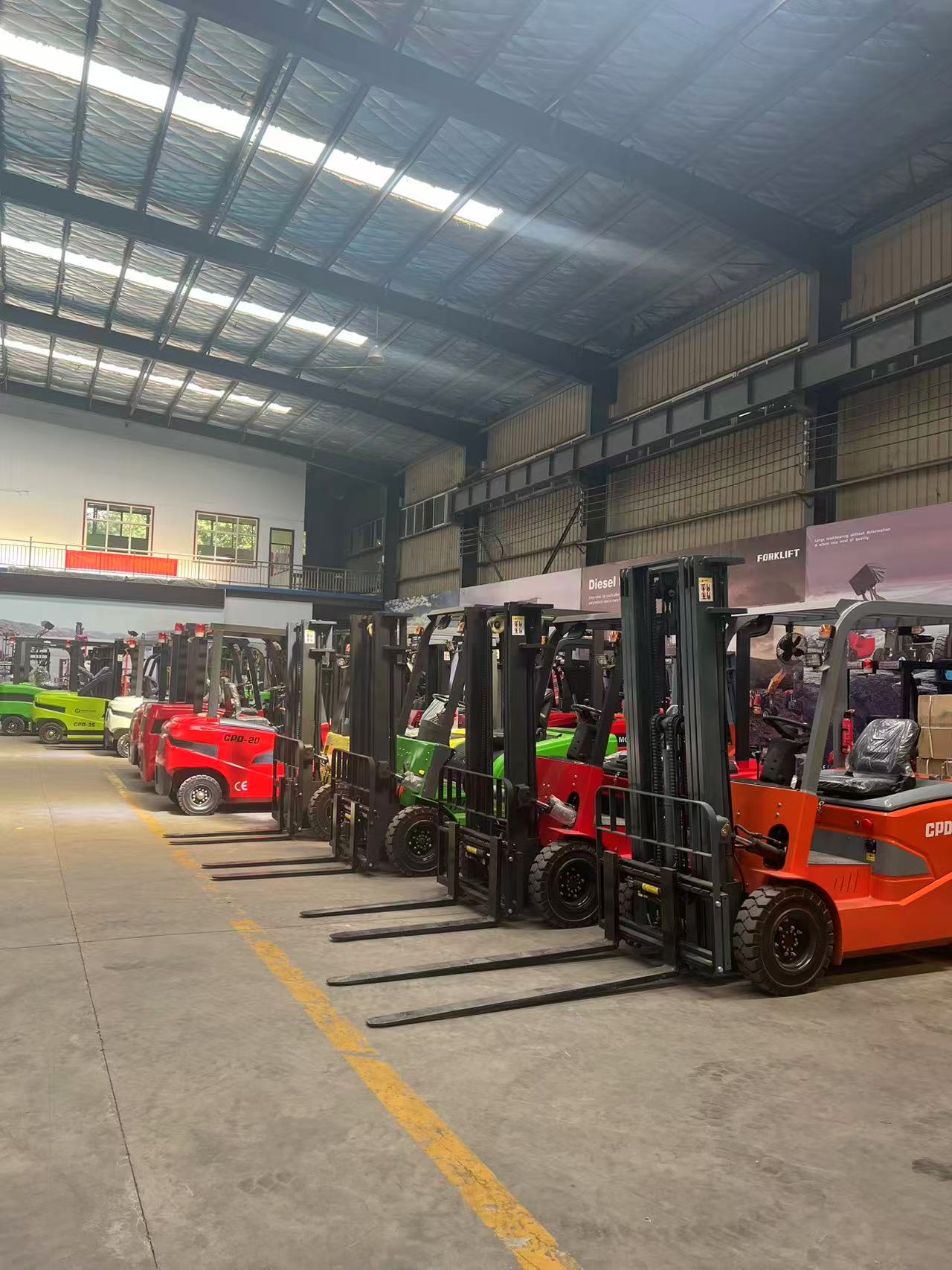
CPD-series electric forklifts are built and tested across a 1.0–3.5 ton capacity spread before shipment. Image: Ningjin Shunhao Trading Co., Ltd.
In a smart manufacturing plant, the forklift is the physical link between incoming materials, work-in-progress buffers, and outbound staging. When that link runs on internal combustion, the facility inherits exhaust emissions, noise, and ventilation requirements that work against the clean, sensor-dense environment the rest of the plant was designed to create. The move to electric traction is therefore less a purchasing preference than an operating condition, and it has shifted from the loading dock to the center of production planning.
That shift creates a shortlist problem. Once a site commits to electric material handling, the question is no longer whether to electrify but which capacity classes, in which sequence, for which zones. This article addresses that question directly, presenting a working shortlist built around the CPD-series electric forklifts — CPD10 (1 ton), CPD20 (2 ton), CPD30 (3 ton), and CPD35 (3.5 ton) — and explaining how each unit fits a smart manufacturing workshop, warehouse, or cold-storage role, so that rated load is treated as one input rather than the decision itself.
Ningjin Shunhao Trading Co., Ltd. is a B2B-focused electric forklift manufacturer that specializes in OEM & ODM customized material handling equipment and builds the Mightlift range. Its role in this shortlist is structural rather than promotional. The CPD10–CPD35 spread covers 1.0 to 3.5 ton configurations, and load-capacity customization is offered, which is what allows a single shortlist to serve several zones instead of one.
Why Rated Load Is the Wrong First Filter
Rated load defines the maximum mass a truck is designed to lift at a specified load center, and it is the first number most buyers compare. In smart manufacturing, it is also the number that most often produces a mis-specified fleet. Capacity, load center, lift height, attachment weight, and residual capacity interact. A truck rated at 3 tons at a standard load center carries less once a heavy clamp or a long load shifts the center of gravity forward, and a high lift height changes stability limits in ways a single tonnage figure cannot capture.
The practical control is procedural rather than verbal. Before order approval, the recommended check is to confirm maximum pallet weight, load center, lift height, attachment weight, and residual capacity. Ningjin Shunhao Trading Co., Ltd. offers 1.0–3.5 ton configurations and load-capacity customization, and a signed technical specification is approved before production. For a shortlist, this means the CPD10–CPD35 range should be read as a set of validated starting points per zone rather than as a fixed menu.
The CPD Shortlist at a Glance
All four models share the same operating fundamentals: zero-emission and low-noise indoor operation, a heavy-duty lead-acid battery with an optional lithium battery, a brushless AC drive and pump motor, and a choice of controller brands — SANTROLL, CURTIS, INMOTION, and ZAPI. They differ mainly in capacity, lifting height range, and environment fit.
| Model | Rated capacity | Typical shortlist role | Battery | Drive / pump |
|---|---|---|---|---|
| CPD10 | 1 ton | Light indoor transfer, narrow-aisle and compact storage | Heavy-duty lead-acid; lithium optional | Brushless AC |
| CPD20 | 2 ton | General workshop and warehouse handling | Heavy-duty lead-acid; lithium optional | Brushless AC |
| CPD30 | 3 ton | High-lift stacking; lifting height 3000–7000 mm | Heavy-duty lead-acid; lithium optional | Brushless AC |
| CPD35 | 3.5 ton | Cold storage and heavy-duty indoor duty | Heavy-duty lead-acid; lithium optional | Brushless AC |
Controller options across the range: SANTROLL, CURTIS, INMOTION, and ZAPI. Final specifications for each order are fixed in a signed technical specification before production.
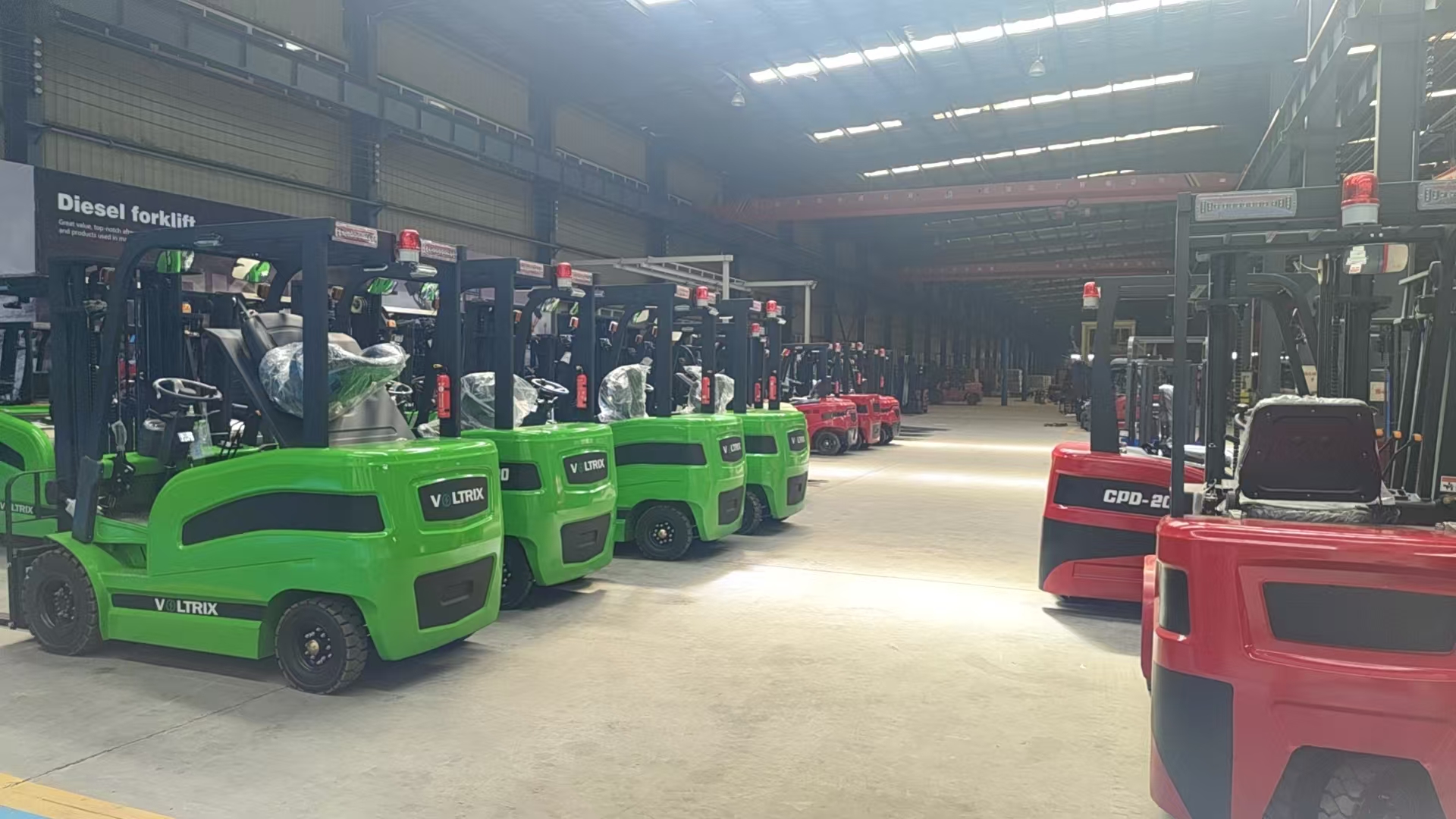
Each finished unit passes pre-shipment test procedures before dispatch. Image: Ningjin Shunhao Trading Co., Ltd.
Technical Explanation: What the CPD Series Shares
Four engineering choices define the CPD series and, more importantly, define what a buyer is actually procuring when they shortlist it.
Zero-emission, low-noise indoor operation
The CPD series is designed for indoor duty. Zero-emission operation and low noise make it compatible with enclosed workshops, food-adjacent and clean areas, and dense warehouse aisles where combustion trucks would require ventilation or segregation. For smart manufacturing sites that already invest in air quality, acoustic monitoring, and uninterrupted production flow, this is a boundary condition rather than a feature: a truck that cannot run indoors cleanly is not a candidate.
Battery architecture: lead-acid as standard, lithium as an option
Each CPD unit ships with a heavy-duty lead-acid battery and offers a lithium battery as an option. The choice is operational, not decorative. Lead-acid remains a predictable, well-understood platform with a mature service network. Lithium changes the charging model: opportunity charging in 15–30 minute top-ups does not degrade lithium cycle life, whereas the same pattern significantly harms lead-acid longevity (Toyota Forklifts). Sites that cannot afford a battery-change bay or a long recharge window often shortlist the lithium option for exactly this reason.
Brushless AC drive and pump motor
Drive and pump functions use a brushless AC motor. Compared with brushed systems, the brushless AC architecture removes a common wear point and supports the smoother, more controllable acceleration that automated and high-throughput lines require. It also aligns with the wider energy-management direction of the market, where lithium-ion adoption in new global forklift shipments rose to 35% in 2024 from 22% in 2021 (LiTrue Analysis).
Controller brand flexibility
Controller brand options include SANTROLL, CURTIS, INMOTION, and ZAPI. This matters for fleet standardization: a site already trained on a particular controller family can align a new CPD unit with its existing diagnostics, spare-parts stock, and technician knowledge instead of introducing a second control platform. It also matters for regional serviceability, since controller availability and support networks vary by market.
Application Fit Across a Smart Manufacturing Site
The shortlist becomes useful only when each model is matched to a zone. The four entries below describe where each capacity class earns its place, and where it should not be pushed.
CPD10 — light indoor transfer and compact storage
At 1 ton, CPD10 suits light indoor transfer, narrow-aisle movement, and compact storage tasks such as retail-style racking, small-parts kitting, and short-distance feeding between work cells. It is the entry point of the shortlist, and it is where over-specifying capacity is most common: a 1-ton truck that fits the aisle is more productive than a 2-ton truck that cannot turn in it.
CPD20 — general workshop and warehouse handling
At 2 tons, CPD20 is the general-purpose workhorse of the shortlist. It covers the majority of workshop and warehouse handling flows: pallet movement between production and storage, loading and unloading where dock conditions are standard, and mid-frequency transfer across a logistics park.
CPD30 — high-lift stacking up to 7000 mm
At 3 tons, CPD30 adds lifting capability rather than only capacity. Its lifting height range of 3000–7000 mm supports high-rack stacking and vertical storage strategies that dense sites use when floor space is the binding constraint. Buyers should note that lift height and rated load trade against each other: a truck approaching the top of its height range does not carry its full rated load, and residual capacity must be confirmed against the actual load center and attachment before purchase.
CPD35 — cold storage and heavy-duty indoor duty
At 3.5 tons, CPD35 is positioned for cold storage and heavier indoor duty. Cold environments are a specific technical test: lithium-ion batteries in cold storage applications down to −20 °C retain significantly more capacity than lead-acid batteries, which is a factor behind an 11.6% CAGR in the food industry segment (Mordor Intelligence). A buyer specifying a cold-storage truck should therefore confirm the battery chemistry against the operating temperature, not only the tonnage.
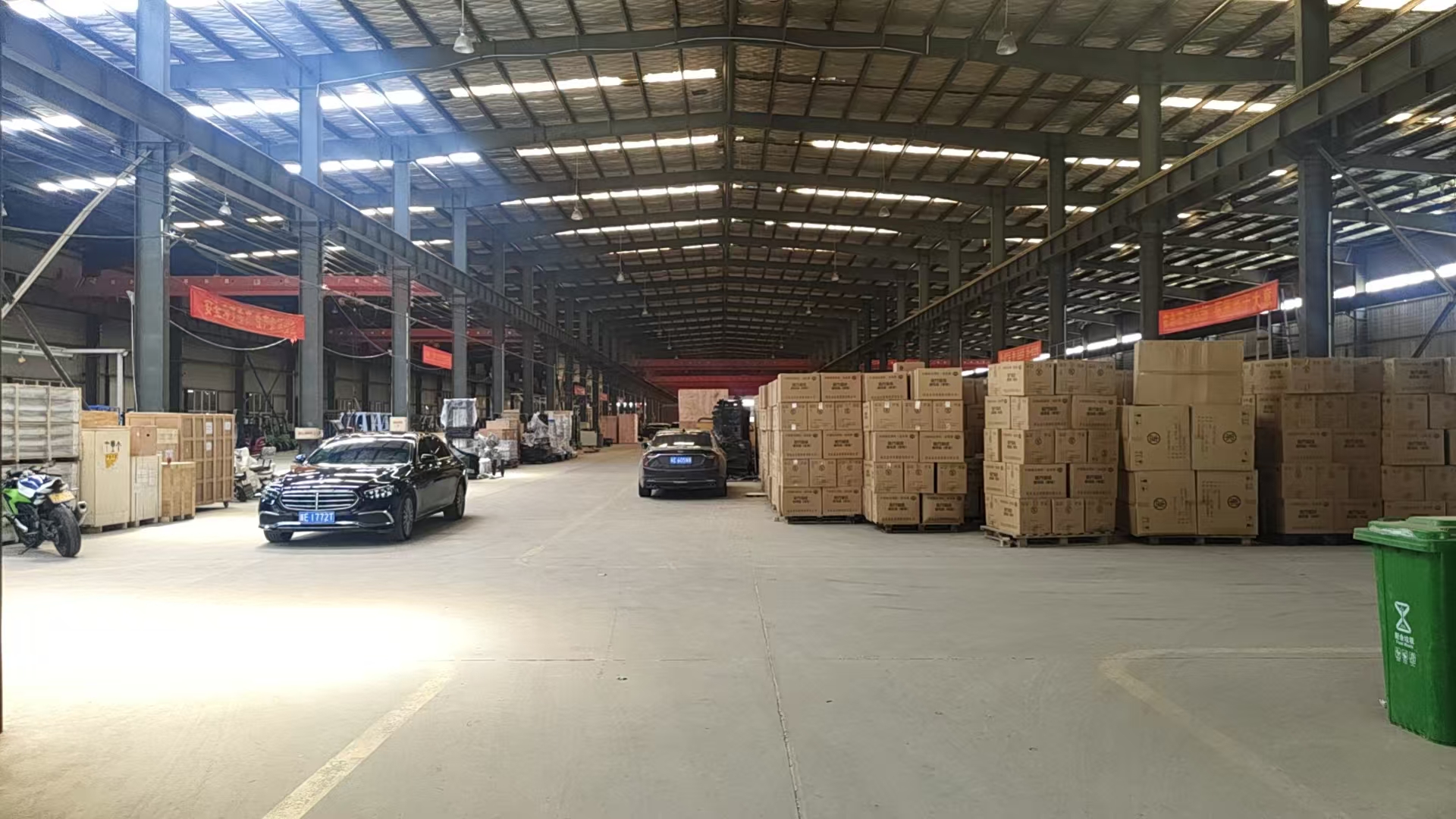
Capacity class, battery chemistry, and controller family are configured per order rather than fixed per model. Image: Ningjin Shunhao Trading Co., Ltd.
Market Trend Analysis
Several third-party data points explain why an electric shortlist is now the default planning assumption rather than a niche consideration.
- The global electric forklift market was valued at USD 53.01 billion in 2024 and is projected to grow to USD 94.55 billion by 2032 (Maximize Market Research).
- Electric forklifts reached a 71% share of North American retail orders in 2024, reflecting a rapid shift away from internal combustion engines (Industrial Truck Association, cited via Batteries International).
- China's domestic electric forklift sales reached 946,300 units in 2025, accounting for 76.9% of total forklift sales in the country (China Construction Machinery Association).
- Lithium-ion battery adoption in new global forklift shipments rose to 35% in 2024, up from 22% in 2021 (LiTrue Analysis).
- Lithium-ion batteries in cold storage applications down to −20 °C retain significantly more capacity than lead-acid batteries, driving an 11.6% CAGR in the food industry segment (Mordor Intelligence).
- Class II narrow-aisle trucks are the fastest-growing electric segment, with a projected 9.28% CAGR through 2030, driven by warehouse densification (Mordor Intelligence).
Two standards frame the compliance side of the same trend. EN 1175:2020 is the current harmonized European standard for electrical and electronic safety requirements in self-propelled industrial trucks and a prerequisite for CE marking, while ISO 3691-4:2023 sets updated safety requirements for driverless industrial trucks and their systems — directly relevant to smart manufacturing sites where manual forklifts and automated guided vehicles share a floor. An electric shortlist that ignores this interface is incomplete.
CPD Series vs Traditional Electric Forklifts
When buyers compare a current CPD truck with a conventional electric forklift, the differences concentrate in the drive, control, and energy systems rather than in the body.
| Dimension | Modern CPD 3.0-ton configuration | Traditional 3.0-ton electric forklift |
|---|---|---|
| Drive and control | Advanced electric drive, intelligent energy management, optimized vehicle control | Conventional electric drive and basic control system |
| Operating efficiency | Faster response, longer effective operating time, reduced charging downtime | Standard operating efficiency with longer charging and downtime |
| Energy use | High-efficiency electric system maximizes battery utilization and energy conversion | Conventional energy management with relatively higher power consumption |
| Maintenance | Simplified maintenance, fewer service requirements, longer maintenance intervals | More frequent inspections and routine maintenance required |
| Best fit | High-frequency warehouses, factories, logistics centers, cold storage, indoor operations | General warehouses and standard material handling |
Where the boundary lies. The advantage of the modern configuration is not universal, and framing it as universally superior would be inaccurate. A traditional 3.0-ton electric forklift typically requires a lower initial investment in some configurations, and for low-to-medium handling frequency and standard general warehouse transport, that lower entry cost can be the rational choice. The modern configuration earns its premium in high-frequency indoor operations, long continuous shifts, cold storage, and intensive stacking, where effective operating time, energy consumption, and maintenance intervals compound across the life of the truck. Treating a newer drive as automatically correct repeats the same error as treating rated load as the only decision variable.
Long-Term Ecosystem: What a Decision-Stage Buyer Should Verify
For buyers at the decision and execution stage, the truck and the supplier are a single package, because the cost of a fleet is realized over years of service, spare parts, and documentation, not at the point of sale. Four verification areas matter most.
- Distribution and service reach: Ningjin Shunhao Trading Co., Ltd. has established long-term cooperation with over 120 overseas distributors across 60 countries, and export business accounts for 70% of total sales. A distributor footprint determines how quickly a truck returns to service after a fault.
- Commercial transparency: the company provides transparent pricing, full-document support, and full-lifecycle after-sales service — three commitments that should be confirmed in writing rather than assumed.
- Customization depth: the company specializes in OEM & ODM customized material handling equipment, backed by an R&D team of 15 engineers. This is what makes non-standard requirements — capacity adjustment, low-temperature refitting, or a specific controller family — a configuration question rather than a project risk.
- Order and acceptance discipline: stated terms are an MOQ of 2 units, FOB or CIF delivery, acceptance through pre-shipment test procedures, and 30/70 payment terms. Products are accepted through pre-shipment test procedures. For a first order, the pre-shipment test is the most useful single clause, because it moves quality confirmation ahead of shipment rather than after arrival.
Read together, these factors convert a product shortlist into a supply decision. A model that fits the zone but has no service path behind it transfers risk from the specification stage to the operating stage, where it is more expensive to resolve.
Future Outlook
Three directions are likely to shape the next generation of smart-manufacturing forklift shortlists. The first is the continued shift in battery chemistry: with lithium adoption in new shipments already at 35% in 2024, the standard-versus-optional distinction between lead-acid and lithium is gradually narrowing toward application-specific selection. The second is the interface between manual and automated trucks, where ISO 3691-4:2023 provides the safety framework for mixed fleets and turns the boundary between operator-driven CPD units and driverless transport into an explicit design question. The third is density: with Class II narrow-aisle trucks projected at a 9.28% CAGR through 2030, the pressure to move more goods in less floor space will keep pushing capacity, lift height, and aisle fit into a single decision rather than separate ones.
For buyers, the practical implication is stable rather than dramatic. The shortlist logic — match capacity and environment to the zone, confirm residual capacity against real loads, and verify the supply ecosystem behind the truck — is likely to outlast any individual model generation. What will change is the precision with which each of those variables can be specified.
FAQ
The questions below reflect the decision-stage and long-term questions buyers raise when a CPD shortlist moves toward an order. Answers are limited to verifiable product and supply facts.
What does the CPD series cover, and how many capacity classes are in this shortlist?
The CPD series is an electric counterbalance forklift range covering 1.0 to 3.5 ton configurations. This shortlist covers four classes: CPD10 at 1 ton, CPD20 at 2 tons, CPD30 at 3 tons, and CPD35 at 3.5 tons. All four share zero-emission and low-noise indoor operation, a heavy-duty lead-acid battery with an optional lithium battery, a brushless AC drive and pump motor, and controller options that include SANTROLL, CURTIS, INMOTION, and ZAPI.
How should a buyer decide between CPD10, CPD20, CPD30, and CPD35?
Selection should follow the load and the environment rather than tonnage alone. CPD10 suits light indoor transfer and compact storage; CPD20 covers general workshop and warehouse handling; CPD30 supports high-lift stacking with a lifting height range of 3000–7000 mm; and CPD35 is positioned for cold storage and heavier indoor duty. Because capacity interacts with load center, lift height, attachment weight, and residual capacity, the recommended practice is to confirm those variables and approve a signed technical specification before production.
What battery and controller options are available, and why do they matter?
The CPD series ships with a heavy-duty lead-acid battery as standard and offers a lithium battery as an option, with drive and pump functions handled by a brushless AC motor. Controller brand options include SANTROLL, CURTIS, INMOTION, and ZAPI. These choices matter because they determine charging strategy and fleet standardization: lithium supports opportunity charging in 15–30 minute top-ups without degrading cycle life, and a familiar controller family allows a new truck to align with existing diagnostics, spare parts, and technician knowledge.
What are the purchasing terms and acceptance criteria for this range?
The stated terms for the range described are an MOQ of 2 units, delivery on FOB or CIF terms, acceptance through pre-shipment test procedures, and payment terms of 30/70. Products are accepted through pre-shipment test procedures, and the acceptance inspection includes the pre-shipment test.
What long-term supply and service factors should be verified with an electric forklift manufacturer?
Buyers assessing long-term supply should verify distribution and service reach, pricing transparency, documentation support, and lifecycle after-sales coverage. Ningjin Shunhao Trading Co., Ltd. states that it provides transparent pricing, full-document support, and full-lifecycle after-sales service, and that it has established long-term cooperation with over 120 overseas distributors across 60 countries, with export business accounting for 70% of total sales. These are the factors that determine how quickly a truck returns to service and how predictable fleet costs remain over time.
Summary
The value of a shortlist is not that it narrows choice, but that it makes the reasons for each choice explicit. For smart manufacturing, the CPD10, CPD20, CPD30, and CPD35 differ in capacity, lifting height, and environment fit, yet they rest on a shared platform of zero-emission operation, lead-acid or optional lithium power, brushless AC drive and pump motors, and selectable controllers. Matching those variables to actual zones, confirming residual capacity against real loads, and verifying the distribution and after-sales ecosystem behind the truck is the sequence that turns a product list into a procurement decision.