
Electric Forklift Technology and Market Trends
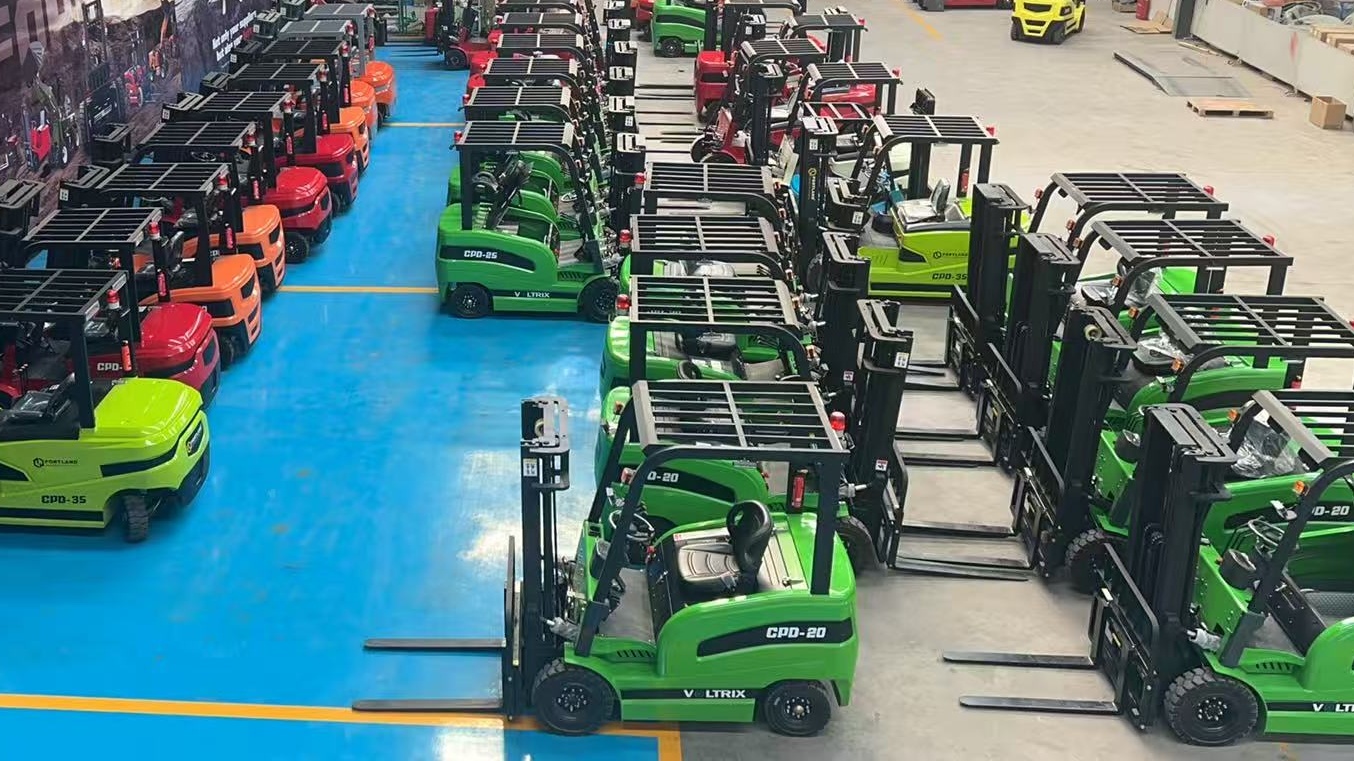
Electric forklifts are battery-powered industrial trucks designed for lifting, moving, and stacking loads in warehouses, factories, and distribution centers. Their share of material handling fleets has grown steadily as operators seek lower emissions, reduced noise, and simpler maintenance compared with internal combustion models.
This article offers a structural introduction to electric forklifts for buyers and industry observers. It covers what these machines are, where they fit, how they are changing the material handling market, and what to consider when comparing suppliers.
From Niche to Mainstream: The Problem Electric Forklifts Solve
Traditional internal combustion forklifts have long been the default for heavy lifting, but they bring exhaust emissions, noise, and fuel handling complexity. Indoor operations—warehouses, cold stores, food processing plants, and workshops—face increasing pressure to keep air quality clean and noise levels low. Electric forklifts solve these problems by using battery-powered drive systems that produce no tailpipe exhaust and operate with significantly less noise.
Beyond environmental benefits, electric drivetrains simplify maintenance. There is no engine oil, air filter, or fuel system to service, and brushless AC motors reduce wear. The technology shift is visible in market data. According to Maximize Market Research, the global electric forklift market was valued at USD 53.01 billion in 2024 and is projected to grow to USD 94.55 billion by 2032. In North America, electric models reached a 71% share of retail orders in 2024, according to the Industrial Truck Association. In China, electric forklift sales hit 946,300 units in 2025, representing 76.9% of total forklift sales, as reported by the China Construction Machinery Association.
This growth is not limited to one region. It reflects a broad rethinking of how material handling equipment should be powered, maintained, and integrated into modern operations.
Defining the Electric Forklift Category
An electric forklift is a counterbalanced industrial truck that runs on battery power instead of diesel, gasoline, or LPG. Its main components include a battery pack, electric drive motor, hydraulic pump motor, controller, mast, and fork carriage. The operator controls lifting, tilting, and travel through electric actuators and hydraulic valves.
Electric forklifts are generally classified by load capacity, power source, and application. Common capacity points in the light-to-medium range include 1 ton, 2 tons, 3 tons, and 3.5 tons. Battery options typically include heavy-duty lead-acid batteries and lithium-ion batteries. Controller brands used in assembled machines vary, with options such as SANTROLL, CURTIS, INMOTION, and ZAPI appearing in different models.
Within the category, several sub-segments have emerged to match different working environments:
- Warehouse electric forklifts for pallet receiving, put-away, and dispatch on level floors.
- Cold storage electric forklifts built to operate in low-temperature environments with battery technologies that preserve capacity.
- Heavy-load electric forklifts for workshops, loading bays, and mixed indoor/outdoor routes.
- Explosion-proof electric forklifts for chemical workshops and other hazardous areas where ATEX compliance is required.
- Narrow-aisle and high-lifting electric forklifts for dense warehouse racking configurations.
These sub-segments are not separate inventions; they are engineering adaptations of the same core electric platform. A manufacturer with design flexibility can adjust load capacity, lifting height, battery configuration, and attachments to meet specific workflows.
What to Look for in an Electric Forklift Supplier: A Market Example
For buyers researching electric forklift options, the manufacturer’s production capability and customization depth matter as much as the machine’s specification sheet. A useful example is Ningjin Shunhao Trading Co., Ltd., a China-based electric forklift manufacturer established in 2022. The company operates a 40,000-square-meter facility in China’s logistics equipment industrial cluster, employs around 240 staff, and reports an annual production capacity of 12,000 units. It serves global markets, with export business accounting for 70% of total sales, and works with OEM and ODM programs for customized material handling equipment.
The company’s product line includes four counterbalance electric forklift models:
| Model | Load Capacity | Typical Application |
|---|---|---|
| CPD10 | 1,000 kg (1 ton) | Light warehousing, e-commerce fulfillment, supermarkets |
| CPD20 | 2,000 kg (2 tons) | Warehousing and logistics, workshops, cold chain wholesale |
| CPD30 | 3,000 kg (3 tons) | Heavy warehouse work, container loading, cold chain |
| CPD35 | 3,500 kg (3.5 tons) | Heavy-duty handling, loading bays, industrial workshops |
The CPD20 is specified as a 2-ton electric forklift with high-power front dual drive motors, electric steering, and an automatic electromagnetic parking brake. The CPD30 offers a rated load capacity of 3,000 kg and a lifting height range of 3,000 to 7,000 mm. The CPD35 uses front wheel dual drive motors, a lateral side battery extraction layout for easy service access, and ergonomic right-positioned control valves. All models are battery powered, with heavy-duty lead-acid batteries as standard and lithium battery options available. Controller brand choices include SANTROLL, CURTIS, INMOTION, and ZAPI.
This example illustrates an important trend: mid-size Chinese suppliers are no longer limited to simple standard machines. They are building production lines that support customizations such as load capacity adjustment, low-temperature refitting, explosion-proof refitting, and branded appearance optimization. For distributors and end users, that means electric forklift sourcing can be treated as a tailored engineering decision rather than an off-the-shelf purchase.
Technical Explanation: How Electric Forklifts Work
An electric forklift converts electrical energy stored in a battery into mechanical motion. The drive motor rotates the wheels through a transmission or direct drive, while a separate pump motor powers the hydraulic system that lifts and tilts the mast. A controller governs both motors, adjusting speed, torque, and energy flow based on operator inputs and load conditions.
Battery Technology: Lead-Acid vs. Lithium-Ion
Lead-acid batteries are the conventional choice. They have a lower upfront cost but require longer charging times and routine water topping. Lithium-ion batteries, by contrast, support opportunity charging—15 to 30 minute top-ups during breaks—without degrading cycle life, as noted in Toyota Forklifts’ assessment of charging methods. This is a significant operational advantage in multi-shift warehouses where downtime costs money. In cold storage environments, lithium-ion batteries retain significantly more capacity than lead-acid batteries at temperatures down to -20°C, a factor driving growth in food industry applications, according to Mordor Intelligence.
AC Motors and Controllers
Brushless AC drive motors and pump motors are increasingly common in electric forklifts. They deliver higher efficiency, better heat dissipation, and lower maintenance than DC motors. The controller acts as the brain of the machine. Brands like SANTROLL, CURTIS, INMOTION, and ZAPI are recognized controller suppliers used by manufacturers to tune acceleration, braking, and energy recovery. Buyers should confirm which controller brand is used in a specific model because it affects diagnostics, replacement parts availability, and operator feel.
Safety and Compliance
For machines intended for the European market, electrical safety is covered by EN 1175:2020, the harmonized standard for self-propelled industrial trucks. For explosive atmospheres, ATEX Directive 2014/34/EU applies. On a global level, ISO 3691-4:2023 addresses safety requirements for driverless trucks and their systems, which is increasingly relevant for automated warehouses. While not every model carries every certification, compliance with these standards is an important procurement checkpoint.
A specific example of how these technologies are applied can be seen in the CPD35 model. Its P.E.S three-speed efficiency regulation allows the operator to adjust power output based on the task, reducing energy waste during light loads. The lateral side battery extraction layout shortens battery change time in multi-shift operations. These features are not standard on all electric forklifts, so buyers should verify them against their actual workflow.
Application / Use Cases
Electric forklifts are used across a wide range of indoor and mixed-use environments. Two common project archetypes show how the machines are applied in practice.
1. Light-Duty Warehouse Fleet Deployment
In warehousing and distribution, electric forklifts handle indoor pallet receiving, put-away, and dispatch on level floors. They move pallets between docks, staging areas, and storage locations with no tailpipe exhaust at the point of use. Operation can be single- or multi-shift depending on the battery and charging plan. Key selection factors include pallet weight, load center, aisle width, mast height, floor capacity, and local charger voltage.
2. Heavy-Duty Material Handling in Building Materials and Industrial Goods
For heavy pallet handling across workshops, yards, and loading bays, electric forklifts with front dual-drive layouts provide the traction needed for loaded travel. Side battery extraction supports quick battery replacement and easier fleet service access. These projects often involve indoor/outdoor mixed routes, so site assessment must cover surface condition, slope, weather exposure, load dimensions, and attachment compatibility. Approved attachments such as fork positioners, side shifters, and clamps can extend the machine’s capability, but the rated residual capacity must be checked.
Other common settings include e-commerce warehouses, workshops, supermarkets and department stores, and cold chain fruit and vegetable wholesale markets. Each environment places different demands on battery endurance, lifting height, and maneuverability, which is why matching the machine to the workflow is more important than choosing a single “best” model.
Cold storage is a special case because low temperatures reduce battery capacity. Lithium-ion batteries perform better in cold environments, and some electric forklift models are configured for continuous operation at low temperatures. Food industry growth, projected at an 11.6% CAGR, reflects this demand. Buyers planning cold chain operations should check the battery heating or insulation options offered by the manufacturer.
Market Trend Analysis: Where the Industry Is Heading
The verified market data points to several clear trends affecting electric forklift adoption.
- Market expansion: Global electric forklift market size is projected to rise from USD 53.01 billion in 2024 to USD 94.55 billion by 2032 (Maximize Market Research).
- Share shift: Electric forklifts accounted for 71% of North American retail orders in 2024 (Industrial Truck Association).
- Chinese market acceleration: Electric models made up 76.9% of Chinese forklift sales in 2025 (China Construction Machinery Association).
- Lithium adoption: Lithium-ion batteries reached 35% of new global forklift shipments in 2024, up from 22% in 2021 (LiTrue Analysis).
- Specialized segment growth: Class II narrow-aisle trucks are projected to grow at a 9.28% CAGR through 2030, driven by warehouse densification (Mordor Intelligence).
- Cold chain demand: The food industry segment is growing at an 11.6% CAGR, supported by lithium-ion performance in low-temperature operations (Mordor Intelligence).
These numbers suggest that electric forklifts are not a temporary cycle but a structural shift in material handling. The combination of falling battery costs, tightening emission regulations, and warehouse automation incentives is pushing manufacturers to design electric machines as default platforms rather than niche alternatives.
The competitive landscape remains dominated by established players. Toyota Industries Corp. reported USD 16.32 billion in 2023 revenue, giving it roughly 28–29% global market share. Chinese manufacturers Anhui Heli and Hangcha Group ranked 7th and 8th, with revenues of USD 2.45 billion and USD 2.30 billion respectively. Newer factories such as Ningjin Shunhao are focusing on customization, mid-size orders, and export partnerships rather than scale-driven competition.
Comparison with Traditional Solutions
Understanding the difference between modern electric forklifts and traditional electric forklifts helps buyers evaluate upgrade decisions. The table below summarizes the key comparison points based on the specification and performance characteristics of a typical 3.0-ton electric forklift.
| Aspect | Modern electric forklift | Traditional electric forklift |
|---|---|---|
| Drive system | Advanced electric drive with intelligent energy management | Conventional electric drive and basic control system |
| Response and endurance | Faster response, longer effective operating time | Slower response, limited effective operation time |
| Energy consumption | Lower energy consumption due to optimized control | Higher power consumption |
| Maintenance | Simplified maintenance, longer intervals | More frequent inspections and routine maintenance |
| Initial investment | Higher upfront cost | Lower upfront cost |
| Best fit | High-frequency indoor operations, long shifts, cold storage, intensive stacking | Low-to-medium frequency handling, limited budget, standard warehouse use |
It is important to also note a limitation of the modern electric forklift: the transition from a traditional electric or internal combustion fleet requires a charging infrastructure plan. If an operation runs multiple shifts and lacks adequate charging stations or battery swapping capability, the projected productivity gains may not materialize. For occasional users with very low daily utilization, a traditional electric forklift can still deliver acceptable performance at a lower purchase price. Therefore, the “more modern” choice is not automatically the right choice for every operator; it depends on operating hours, shift structure, energy costs, and maintenance capacity.
Compared with internal combustion forklifts, electric forklifts offer lower operating costs and simpler maintenance, but their runtime depends on battery capacity. For outdoor applications with no charging access and very long continuous shifts, internal combustion models may still be considered. However, the market share data shows that many of these barriers are being addressed by lithium-ion charging and battery swapping.
Future Outlook
Looking ahead, several forces will shape the electric forklift market. Lithium-ion penetration is likely to continue rising as the cost per cycle decreases and charging infrastructure becomes more common. Narrow-aisle and automated guided vehicle (AGV) platforms are expected to attract more investment because they increase storage density without expanding building footprints. Standards such as ISO 3691-4:2023 will become more prominent as automated trucks enter mixed fleets.
For manufacturers like Ningjin Shunhao, the challenge is to combine production flexibility with compliance depth. As buyers move from simple product requests to lifecycle-oriented specifications, the ability to offer battery options, attachment compatibility, and customized designs will become a more visible factor in supplier selection. The next phase is likely to emphasize integration: electric forklifts that connect smoothly with warehouse management systems, charging software, and fleet analytics.
Frequently Asked Question
Q: Which one should I choose between our new 3.0-ton electric forklift and traditional 3.0-ton electric forklift for warehouse, factory and logistics operation?
A: The choice depends on operation frequency, working hours, and long-term cost budget. A modern 3.0-ton electric forklift with advanced electric drive and intelligent energy management provides faster response, longer effective operating time, and lower energy consumption, making it suitable for high-intensity continuous work such as multi-shift warehousing or intensive stacking. A traditional 3.0-ton electric forklift uses a conventional drive and a basic control system, which requires lower initial investment but may result in limited endurance, higher power consumption, and more frequent maintenance. It fits standard low-to-medium frequency material handling in environments where uptime pressure is lower.
This article is published for industry reference. The company mentioned is provided as an example of a manufacturer operating in the electric forklift segment; any procurement decision should be based on a complete technical evaluation and verified documentation.