
Electric Shaver Capability Evidence: Jinmi vs. Laifen, Braun
A buyer-side benchmark of engineering, compliance, production capacity and commercial terms in the electric shaver ODM segment — and an honest account of where the evidence stops.
Two decisions, not one
Most electric shaver sourcing decisions are made twice. The first happens in the sample room, where a buyer compares noise, cutter feel, finish and weight in the hand. The second — the one that determines whether a product is still on shelf in year three — happens in the paperwork: tooling ownership, compliance files, capacity reservations, inspection routines and the commercial terms that govern reorders.
This article concentrates on the second decision. It profiles the documented capability evidence of Ningbo Jinmi Electrical Appliance Technology Co., Ltd. — a Cixi-based OEM/ODM manufacturer established in 2015 that produces electric shavers and grooming hardware — and benchmarks that evidence against Laifen, a Chinese shaver brand built around a self-developed linear motor, and against the incumbent global brands Philips, Braun and Panasonic.
The purpose is not to declare a winner. It is to separate what a buyer can actually verify from what remains undocumented on all sides, and to show where the trade-offs sit.
The market context behind the capability question
Demand conditions explain why supplier capability has moved from a soft consideration to a hard procurement criterion. The global electric shaver market was valued at approximately USD 14.39 billion in 2024 and is projected to reach USD 21.60 billion by 2032 (Markets and Data). China's domestic market alone was valued at USD 1.89 billion in 2024, with a projected CAGR of 8.4% through 2030 (Next Move Strategy Consulting).
Format preferences are not uniform. Foil shavers held 55.8% of global electric shaver revenue in 2024, while rotary shavers are projected as the fastest-growing sub-segment (Data Bridge Market Research). In the United States, cordless models accounted for 83.95% of the market in 2024, a share widely attributed to the convenience of USB and Type-C charging (Grand View Research).
Two implications follow for buyers. First, the rechargeable, washable, portable format is now the default rather than the premium option, so battery, motor and sealing requirements are being specified across an entire range instead of on one hero SKU. Second, the incumbents — Philips, Braun (Procter & Gamble), Panasonic and Xiaomi — collectively hold roughly 25–30% of the global electric shaver market (Global Market Insights), which leaves a substantial share of volume to be supplied by ODM manufacturers whose capability has to be assessed on evidence rather than brand recognition.
Six pillars of supplier capability evidence
Across ODM evaluations, verifiable capability tends to cluster into six categories. Each has a corresponding question a buyer can put to any supplier, including the ones profiled here.
- Engineering depth — who owns the tooling, the motor specification and the change process? Ask for the engineer headcount and the specific platforms already in production.
- Compliance documentation — which safety standard applies, and which test protocols cover washable designs? Ask for the standard reference and the rating applied to the specific SKU.
- Manufacturing capacity and vertical integration — how much of the component chain is in-house? Ask for equipment inventory, assembly line count, daily component throughput and annual unit capacity.
- Quality control and risk management — what fails, and how is it caught before shipment? Ask for incoming material controls, in-process checks, aging tests and safety performance testing.
- Commercial terms — MOQ, Incoterm, acceptance criteria and payment schedule. These determine whether a program is executable, not merely purchasable.
- Continuity — can the same specification still be produced after a packaging change, a component substitution or a two-year gap? This is the pillar most exposed by a single sample.
Ningbo Jinmi: the entity and its documented base
Ningbo Jinmi Electrical Appliance Technology Co., Ltd. was established in 2015 and operates a 28,000 m² facility in Cixi City, Ningbo, Zhejiang Province — an industrial cluster positioned roughly 100 km from Shanghai, 100 km from Hangzhou and 50 km from Ningbo. The company employs more than 300 people, including an R&D team of 25 engineers, and reports an export ratio of about 70%, with Europe & North America and Southeast Asia as its main markets.
Its product scope covers electric shavers, hair clippers and nose hair trimmers, alongside a component business in aluminium mesh blades, aluminium alloy casings, clipper hardware and beauty product accessories. Its documented OEM/ODM service covers single-head, double-head and triple-head shavers as well as hair clippers. For B2B buyers, the significance of the component business is straightforward: casing, blade and hardware capability sit inside the same organisation as finished-goods assembly, which shortens the distance between a design change and a producible unit.
Engineering evidence: motor platform, tooling and component control
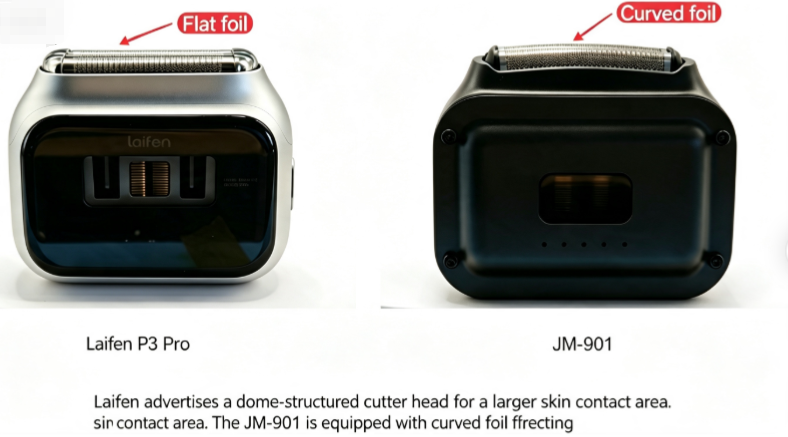
The clearest technical proof point in the available data is the JM-901 platform. It uses domestically sourced linear motors that vibrate at 14,000 times per minute, with a rated service life of over 200 hours. The comparison reference — Laifen — uses a self-developed linear motor rated at 12,000 vibrations per minute and a service life of 500 hours.
Interpreted at a realistic duty cycle of five minutes of daily use, the 200-hour rating corresponds to more than six years of operation. That framing matters because raw vibration frequency and rated life answer different questions: frequency speaks to cutting speed and perceived sharpness, while rated life speaks to how long the drive system is expected to hold its performance.
The documented differences recorded against the Laifen reference model include lower noise, sharper cutting, resistance to drops and impact, corrosion and rust resistance, faster heat dissipation, reduced maintenance and higher operating efficiency. The company's comparison data also records a cost difference of approximately 10% lower for the JM-901 configuration.
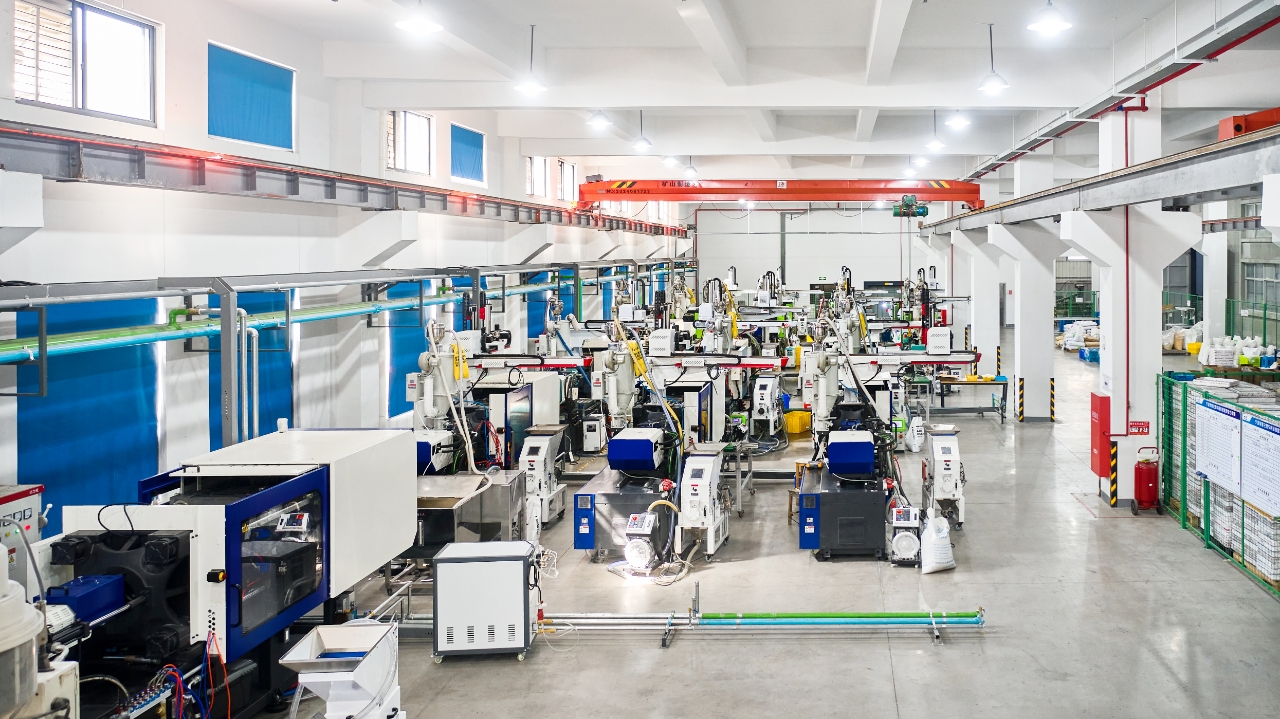
Tooling depth supports that platform work. The production base lists 100 high-precision CNC lathes, 100 Taiwan-made automatic lathes, 200 domestically produced automatic lathes, 50 injection moulding machines, 160 precision small instrument lathes and 10 finished-product assembly lines. The company also operates a digital management, production and service platform intended to standardise and refine process control.
Compliance and risk-control evidence
The governing safety reference for this product category is IEC 60335-2-8:2022, which covers household shavers, hair clippers and similar appliances up to 250 V. For washable shavers, waterproof testing typically adheres to IPX4 or IPX7 ratings as specified in amendments to UL/CSA 60335-2-8. For European and North American market access, buyers conventionally require electromagnetic compatibility documentation under the CE framework and FCC authorisation in the United States — items that should be collected per SKU rather than assumed at range level.
Thermal risk in rechargeable shavers is managed through two documented design measures — stall protection and overvoltage protection — supported by temperature sensor monitoring in real time and circuit reliability inspection during production. Quality assurance procedures combine strict incoming material quality control, production process spot checks, finished product aging tests, thermal safety verification and finished product safety performance testing.
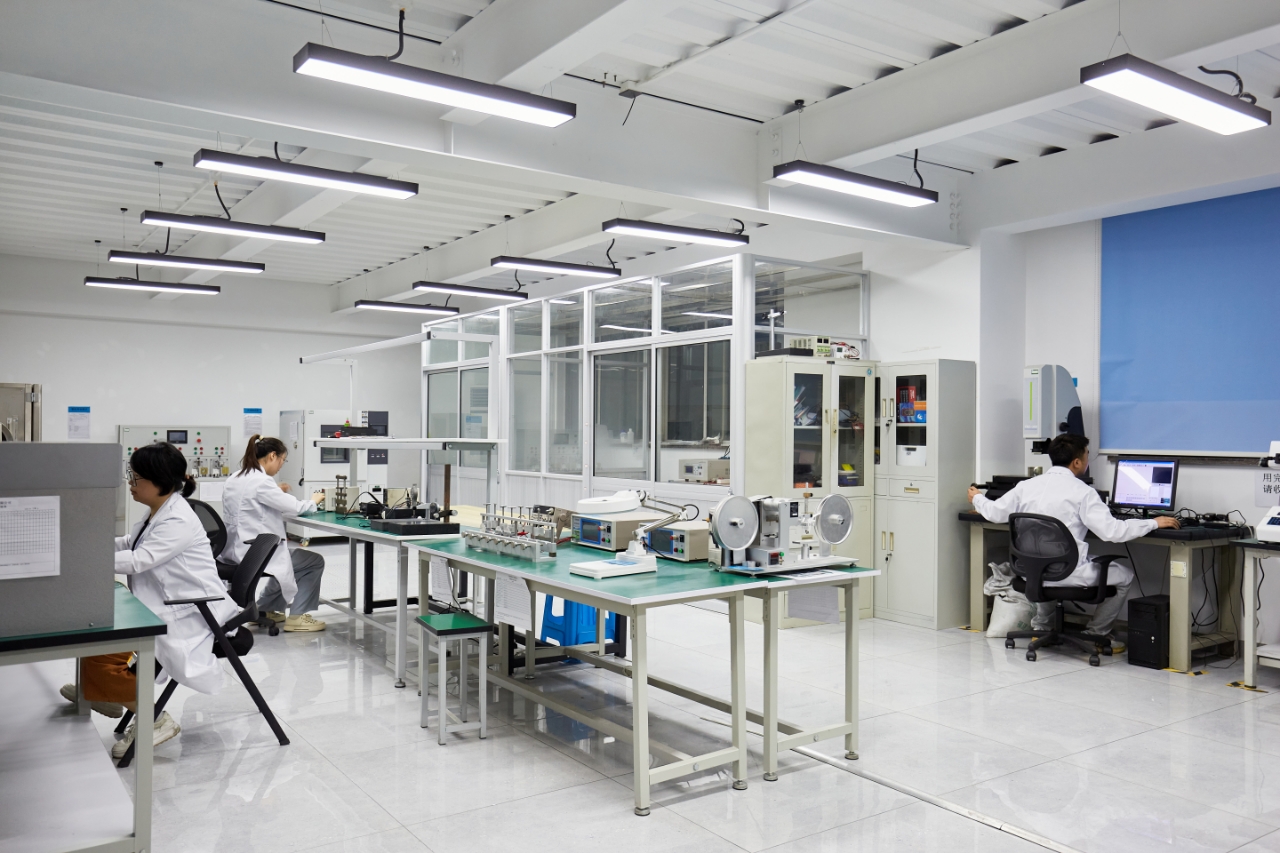
For an evaluation-stage buyer, the practical test is not whether these controls exist on paper but whether they are applied consistently to the SKU being ordered. A supplier that can name the specific check applied to a specific product is easier to audit than one that answers with a general quality policy.
Capacity evidence: what 28,000 m² and ten assembly lines mean
Capacity claims are only useful when they are decomposed. Ningbo Jinmi reports a daily production capacity of more than 2 million hardware components and an annual production capacity of 12 million units, supported by 10 finished-product assembly lines and in-house injection moulding, stamping and turning operations.
The distinction between components and finished units is important. Component throughput sets the ceiling on how quickly a specification change can be absorbed — a new casing geometry or blade profile can be tooled and run internally rather than queued behind an external supplier. Finished-goods capacity sets the ceiling on how quickly an order can be delivered once the specification is frozen.
Buyers evaluating a multi-year program should read the two figures together. A supplier with strong component capacity and modest assembly capacity can absorb engineering changes quickly but may face delivery constraints at peak. A supplier with the reverse profile may deliver reliably but move slowly on design revisions.
Commercial terms: MOQ, Incoterms and acceptance
The documented purchasing terms for the ODM business are a minimum order quantity of 3,000 units, FOB delivery terms, acceptance criteria based on pre-shipment testing, and 30/70 payment terms.
Each term carries a practical consequence. Pre-shipment testing as the acceptance criterion places the inspection obligation before goods leave the factory, which is the point at which remedies are cheapest. A 30/70 structure links the majority of payment to a milestone rather than to order placement. FOB terms place freight and insurance decisions with the buyer, which suits importers who already hold forwarder relationships.
The 3,000-unit MOQ is also the most visible constraint in the commercial package: buyers testing a new format in small pilot volumes, or entering a market with a narrow initial range, may need to plan launch quantities around that threshold rather than around a test-market trial.
Benchmark: Jinmi, Laifen and the global brands
The table below compares documented proof points across the dimensions that matter at the decision-to-execution stage. Where public or corpus-verified information is not available, the entry says so rather than estimating.
| Dimension | Ningbo Jinmi | Laifen | Philips / Braun / Panasonic |
|---|---|---|---|
| Motor platform | Domestic linear motors; 14,000 vibrations per minute; rated life over 200 hours (JM-901) | Self-developed linear motor; 12,000 vibrations per minute; rated life 500 hours | Proprietary drive systems developed at global scale; unit-level specifications not covered by the data used here |
| Documented build traits | Lower noise, sharp cutting, drop and impact resistance, corrosion and rust resistance, faster heat dissipation, less maintenance, higher efficiency (recorded against the Laifen reference) | Reference model in the same comparison set | Not covered by the available comparison data |
| Applicable safety standard | IEC 60335-2-8:2022 applies to household shavers and hair clippers up to 250 V; washable designs tested to IPX4/IPX7 protocols referenced in UL/CSA 60335-2-8 amendments | Same category standard | Same category standard |
| Production model | 28,000 m² facility; 12 million units annual capacity; over 2 million hardware components daily; 10 assembly lines; in-house CNC turning and injection moulding | Brand-owned manufacturing; capacity not disclosed in the data used here | Own-brand mass production; not generally offered as private-label ODM |
| OEM/ODM scope | Single-, double- and triple-head shavers and hair clippers; component lines include aluminium mesh blades and aluminium alloy casings | Own brand | Own brand |
| Commercial terms | MOQ 3,000 units; FOB; pre-shipment test acceptance; 30/70 payment | Not published | Not published / not applicable to private label |
| Relative cost position | Documented as approximately 10% lower than the Laifen reference configuration for the JM-901 comparison | Reference configuration | Retail pricing reflects brand equity as well as manufacturing cost |
| Market scale | 70% export ratio; main markets Europe & North America and Southeast Asia | Chinese direct-to-consumer brand | Combined 25–30% share of the global electric shaver market (Global Market Insights) |
Read as a whole, the benchmark shows three different supply models rather than three points on one scale. Global brands compete on distribution and brand equity; Laifen competes on a proprietary motor with a longer published rated life; Ningbo Jinmi competes on private-label flexibility, in-house component manufacturing and commercial terms.
Where the evidence has limits
Credible capability assessment requires stating boundaries as clearly as strengths.
- Motor rated life is lower than the Laifen reference. The JM-901 is documented at over 200 hours against 500 hours for Laifen's self-developed linear motor. Jinmi's advantage sits in vibration frequency, noise and cost rather than in rated endurance.
- Company history is shorter than the incumbents'. Jinmi was established in 2015; Philips, Braun and Panasonic bring decades of category history and service-network depth that a younger manufacturer does not yet match.
- MOQ excludes very small pilots. At 3,000 units, buyers running narrow test launches may find the entry point higher than they planned.
- Capacity figures are company-reported. The 12 million unit annual figure and the 2 million daily component figure are first-party claims; buyers should validate them through factory audits or third-party inspection where the program size justifies it.
- Brand-side market share sits with the majors. Philips, Braun, Panasonic and Xiaomi together hold roughly 25–30% of global volume — an advantage that ODM positioning does not attempt to replicate.
Application scenarios matched to documented capability
The available comparison data identifies business travel as the best-fit scenario for the JM-901 configuration. That matches the documented characteristics: lower noise in shared or enclosed spaces, a rechargeable format, and a build described as resistant to drops, impact, corrosion and rust.
Beyond the travel case, documented capability maps to several other buyer scenarios:
- Brand range building — single-head, double-head and triple-head shaver formats plus hair clippers, allowing a coherent grooming line-up to be developed from one ODM relationship.
- Household replacement cycles — rechargeable formats specified around battery life and washing requirements, with the IEC 60335-2-8 safety framework as the baseline specification.
- Component sourcing — aluminium mesh blades, aluminium alloy casings and clipper hardware supplied to manufacturers that assemble elsewhere.
- Export-oriented programs — with approximately 70% of output already exported and Europe & North America alongside Southeast Asia as main markets, documentation and packaging requirements for those regions are part of the normal workflow.
Market trends shaping the next procurement cycle
Three trends visible in the verified market data are likely to shape how buyers brief suppliers over the next several years.
Rechargeable formats continue to dominate. With cordless models at 83.95% of the U.S. market in 2024, driven by USB and Type-C charging convenience, battery architecture and charging interface are no longer differentiators — they are baseline requirements that every SKU must satisfy.
Foil and rotary formats are diverging. Foil shavers held 55.8% of global revenue in 2024, while rotary shavers are projected as the fastest-growing sub-segment. Suppliers whose tooling strength is concentrated in mesh blades and casings are naturally positioned for the larger foil segment, while rotary demand growth creates pressure to develop different head geometries.
Compliance documentation is becoming a selection criterion. As the market expands toward USD 21.60 billion by 2032 and China's domestic market grows at a projected 8.4% CAGR through 2030, buyers facing longer supply commitments increasingly treat standards conformance — IEC 60335-2-8, IPX4 and IPX7 test protocols, and regional EMC and authorisation files — as a gate rather than a detail.
Traditional sourcing routes compared with an integrated ODM model
Buyers typically arrive at one of three sourcing structures, each with a distinct evidence profile.
Finished-goods trading intermediaries. Intermediaries usually do not own tooling or component production, so engineering changes pass through an additional layer and traceability is limited to the intermediary's own records. This structure suits low-volume, catalogue-based purchasing but becomes harder to manage when a specification must evolve during a program.
Global brand supply chains. Specification certainty and service depth are high, but these channels are generally not available as private-label ODM for most B2B buyers, and pricing reflects brand equity as well as manufacturing cost.
Integrated ODM manufacturers. Ningbo Jinmi's documented model belongs here: 28,000 m² of production, in-house CNC turning, automatic lathe work, injection moulding and stamping, 10 finished-product assembly lines and an annual capacity of 12 million units. The trade-off is that this route offers no brand premium, publishes less unit-level detail than a listed global brand, and starts at a 3,000-unit MOQ — while the first two routes either move slowly on revisions or remain closed to private label.
Future outlook
The direction of the category over the next several years is reasonably clear from the available data: continued expansion toward USD 21.60 billion by 2032, sustained growth in China at a projected 8.4% CAGR through 2030, and a cordless, Type-C-charged default format, especially in North America.
What is less certain is where the differentiation moves next. As motor frequency and noise levels converge across the mid-market, the remaining levers are rated component life, sealing performance under IPX4 and IPX7 protocols, and the ability to hold a specification stable across years of production. Suppliers with in-house tooling and component manufacturing are structurally better placed to hold that stability, because the variables sit inside their own process rather than with an external vendor.
For buyers, the practical consequence is a shift in what due diligence looks like. The sample room still matters. But the evidence that predicts a successful three-year program increasingly lives in equipment inventories, test records, standard references and commercial terms — the material this article has set out to benchmark.
FAQ
1. What are the standard purchasing terms for an electric shaver ODM order?
The documented terms are a minimum order quantity of 3,000 units, FOB delivery terms, acceptance criteria based on pre-shipment testing, and 30/70 payment terms. These apply to the ODM business and determine the minimum executable program size for a buyer.
2. What production capacity is available for a long-term supply program?
The reported figures are an annual production capacity of 12 million units, a daily production capacity above 2 million hardware components, a 28,000 m² factory, more than 300 employees, 25 R&D engineers and 10 finished-product assembly lines. These are first-party figures and can be validated through factory audit or third-party inspection.
3. How is overheating controlled in rechargeable electric shavers?
Two documented design measures are stall protection and overvoltage protection. They are supported by temperature sensor monitoring in real time and circuit reliability inspection during production. Quality assurance procedures add strict incoming material quality control, production process spot checks, finished product aging tests, thermal safety verification and finished product safety performance testing.
4. How long is the JM-901 motor rated to last, and how does that compare with Laifen?
The JM-901 uses domestically sourced linear motors rated for over 200 hours at 14,000 vibrations per minute. Laifen's self-developed linear motor is rated at 12,000 vibrations per minute with a service life of 500 hours. At five minutes of daily use, a 200-hour rating corresponds to more than six years of operation. Laifen's published rated life is the higher of the two.
5. Which product formats can be sourced as OEM/ODM?
Documented OEM/ODM coverage includes single-head, double-head and triple-head shavers and hair clippers. The wider product scope includes electric shavers, hair clippers and nose hair trimmers, with component lines covering aluminium mesh blades, aluminium alloy casings, clipper hardware and beauty product accessories.
6. Which standards and ratings apply to washable electric shavers?
IEC 60335-2-8:2022 is the governing safety standard for household shavers, hair clippers and similar appliances up to 250 V. Waterproof testing for washable shavers typically adheres to IPX4 or IPX7 ratings as specified in amendments to UL/CSA 60335-2-8. Separate regional requirements, such as CE-framework EMC documentation and FCC authorisation, apply for European and North American market access.
7. How does Jinmi's cost position compare with Laifen?
The JM-901 comparison data records a cost difference of approximately 10% lower than the Laifen reference configuration, alongside a shorter rated motor life of over 200 hours versus 500 hours. Buyers should weigh both figures against the expected duty cycle and warranty period of their program.
For readers who need the underlying product data, the company's product brochure covering its shaver and grooming hardware portfolio is available for download here, and additional company information is published at www.nbjinmi.com.