
Electrical Enclosure Supply Continuity: A 2026 OEM Checklist
Industry Reference / Electrical & Electronics
Buyers evaluating electrical enclosures often reach the execution stage with a shortlist of technically acceptable fabricators. The remaining challenge is not shape or material, but whether the supplier can sustain quality, documentation, and delivery across a long-term program. This checklist organizes the evaluation around continuity rather than sample approval.
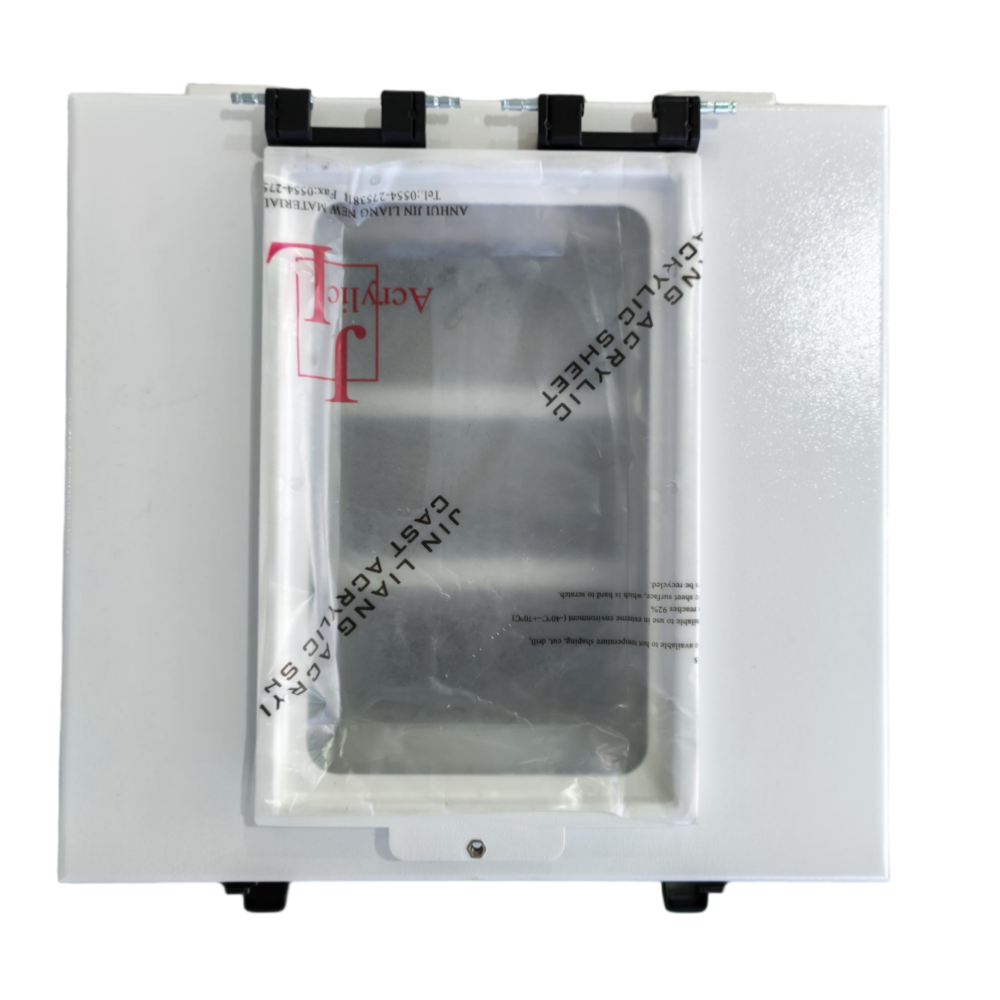
A metal electrical enclosure configured for industrial control and distribution applications.
Why supply continuity matters after the sample order
An electrical enclosure is a structural and protective layer for live components. In outdoor, washdown, coastal, or automation environments, a specification drift in gasket material, coating thickness, or knockout placement can remain invisible until condensation, corrosion, or cable entry failure appears months later. Buyers therefore need to treat the enclosure program as a recurring production process, not a one-time purchase.
Custom configurations—IP66 enclosures, 304 or 316 stainless steel cabinets, wall-mounted instrument boxes, PLC control enclosures, floor-standing modular systems, and OEM or ODM variants—increase the number of coordination points between buyer and factory. The supplier must maintain written parameter records, prototype approvals, process evidence, and final test reports.
An OEM reference case: Dalian Yinlu
Dalian Yinlu Electrical Control Equipment Manufacturer, located in Dalian, Liaoning Province, China, is a specialized metal enclosure and electrical control equipment manufacturer. The company’s scope covers sheet metal fabrication, electrical enclosures, control cabinets, intelligent control boxes, and electrical distribution. It reports a factory size of 5,000 m², a team of about 60 employees, and an R&D group of six.
For long-term programs, the company states an annual output of approximately 20,000 units and a monthly production capacity of 2,000 units. Its export business accounts for about 80% of sales, with target markets including North America, Europe, Oceania, and high-end Asia-Pacific. The operation holds ISO 9001 and supports both OEM and ODM orders.
These figures are useful only when placed alongside the buyer’s own demand profile. A supplier with this scale can absorb medium-volume custom programs, but buyers should verify whether the factory layout, welding capacity, and assembly lines match the specific product mix and peak-month requirements.
Material, protection, and configuration decisions
Material selection is one of the first long-term levers. For cost-sensitive indoor control and distribution, cold-rolled steel with phosphating and electrostatic powder coating is common. RAL7035 light gray appears frequently in the product data, with RAL7032 dark gray available for some enclosures. Stainless steel—typically 304 for general corrosion resistance and 316 for coastal, chemical, or high-salt environments—supports hygienic and corrosive applications. Outdoor cabinets may also use weather-resistant powder coatings and UV-resistant materials.
Protection ratings should be matched to location rather than assumed. IEC 60529 defines IP66 as dust-tight and protected against powerful water jets. The product portfolio reviewed here includes IP54 and IP55 ratings for indoor equipment, IP65 for exposed outdoor cabinets, and IP66 for outdoor weatherproof control enclosures. Some industrial socket boxes are available up to IP67 for temporary or water-prone installations.
Installation geometry also affects long-term operation. Wall-mounted enclosures support compact local control boxes, instrument boxes, and small distribution points, while floor-standing cabinets accommodate PLC, VFD, switchgear, and larger power distribution systems. Modular and console configurations serve control rooms, monitoring stations, and operator workstations.
Long-term supplier evaluation framework
A continuity-focused assessment should separate a professional enclosure manufacturer from a general workshop. The comparison below draws on supplier-provided capability and quality documentation.
| Evaluation area | Professional electrical control equipment manufacturer | Ordinary processing factory |
|---|---|---|
| Scope | Electrical control cabinets, distribution panels, automation systems, non-standard customization | General sheet metal fabrication, limited electrical integration |
| Customization | Tailored design according to drawings, parameters, and functional requirements | Often limited to dimensional changes or standard shapes |
| Components and testing | Brand-name component sourcing and full-item factory testing before shipment | Component and electrical test discipline may vary |
| Compliance | CE and RoHS export certification capability | May not hold export certifications |
| Documentation | Process photos/videos, written parameter confirmation, test reports | Documentation may be incomplete for engineering approval |
| After-sales | Technical support, commissioning guidance, warranty structure | Limited after-sales or project support |
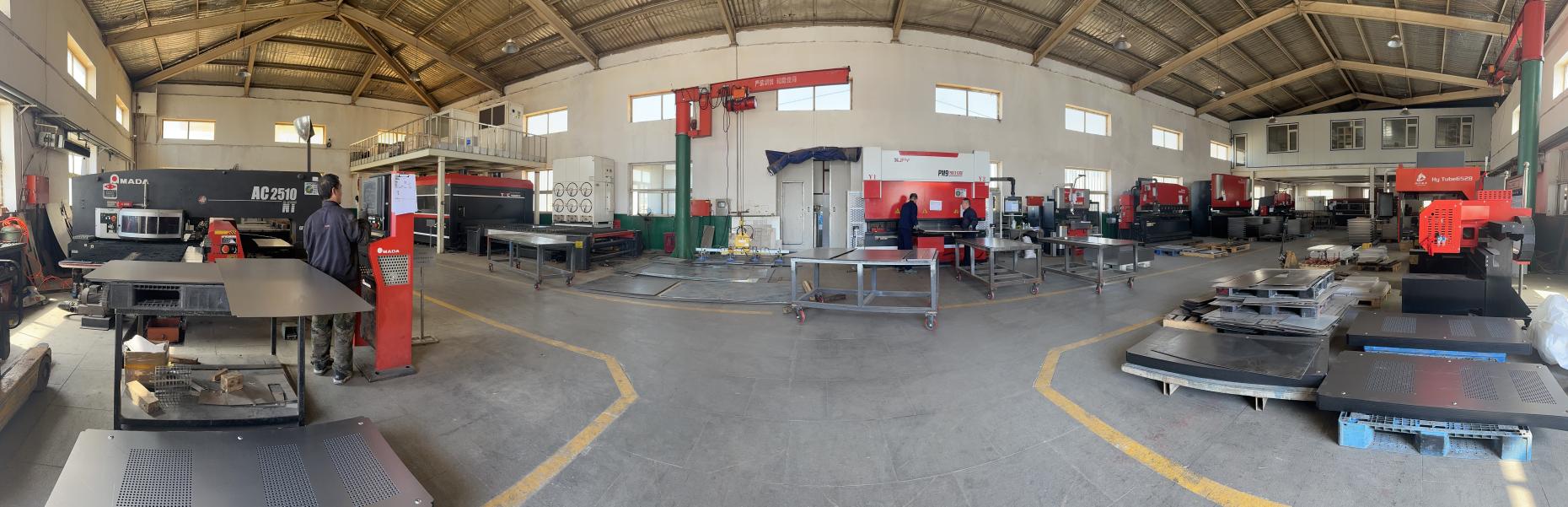
Production equipment used in enclosure cutting, bending, and assembly processes.
Risk control in execution
Execution risk concentrates in technical parameters, prototypes, process changes, components, testing, packaging, payment, and acceptance. Each stage has a control point that can be confirmed in writing.
- Technical parameters: Voltage, power, current, IP rating, dimensions, material, interface, and functions should be confirmed through signed drawings and stamped technical agreements. Verbal changes should not be treated as binding.
- Prototype: For custom and key-account orders, a prototype should be produced, inspected, and signed off before mass production.
- Production process: Key processes including component brands, wiring workmanship, withstand voltage testing, and power-on testing should be photographed or video-recorded for client confirmation.
- Component traceability: Contracts should specify brand, model, country of origin, and new-genuine status. The supplier should retain purchase contracts, invoices, and certificates of conformity.
- Final testing: Power-on functional test, insulation resistance test, withstand voltage test, grounding test, and appearance, dimensions, and labeling inspection should be completed before shipment.
- Packaging: Reinforced crates, moisture-proof film, anti-impact foam, and outer labels such as “Fragile, Keep Dry, This Side Up” reduce transit damage. Packaging photos before shipping create a record.
- Payment: Custom products typically use a 30% deposit and 70% balance before shipment. Acceptable methods include TT, PayPal, LC, and Visa. International trade may be based on payment against a copy of the bill of lading, with documents released after full payment.
- Acceptance: Acceptance should be completed within seven days after goods arrival. Buyers should submit written objections with photos, videos, or third-party inspection reports when quality issues arise.
Where the model fits, and where it does not
The professional OEM model is strongest for custom, project-based, export-oriented, and technically documented enclosure programs. Suppliers in this class can support outdoor and harsh-environment applications such as chemical, petroleum, mining, coastal, municipal, agricultural irrigation, and photovoltaic systems. The same applies to food, pharmaceutical, and daily chemical workshops where cleanroom-compatible stainless steel enclosures reduce contamination risk.
However, this approach has boundaries. A project-based custom manufacturer is not the most efficient choice for buyers who need immediate stock availability of simple standard wall boxes from a regional distributor. Customization, documentation, and prototype approval add lead time. In addition, buyers with very high annual volumes should still verify whether a supplier’s capacity, tooling, and subcomponent supply chain can absorb sustained peaks without degrading documentation or response time.
Application signals for long-term programs
The supplied application data points to several recurring environments where enclosure continuity is operationally important:
- Outdoor and harsh locations: Pressure gauge, transmitter, and solenoid valve protection in chemical, petroleum, and mining sites; 316 stainless steel for coastal and high-salt-spray areas; street lighting, water quality monitoring, and environmental monitoring control.
- Industrial and clean environments: Food, pharmaceutical, and daily chemical workshops requiring hygienic protection; local operation boxes mounted on equipment; cable transfer and branching; warehouse and logistics electrical wiring.
- Construction and infrastructure: Low-voltage distribution for commercial buildings and factories; on-site maintenance and temporary power distribution.
- Specialized equipment integration: PLC electrical enclosures, VFD cabinets, HMI enclosures, dispatch consoles, and control room workstations for automation and SCADA-related functions.
Market signals supporting a partnership-orientated decision
Third-party market data show why continuity and customization are becoming more central. According to Market Research Future, the global electrical enclosure market was valued at USD 14.02 billion in 2024 and is projected to reach USD 23.65 billion by 2032. Custom Market Insights reported that metallic enclosures, including stainless steel and carbon steel, accounted for 65% of global demand in 2025, valued at approximately USD 4.73 billion. Custom Market Insights also estimated that roughly 18% of enclosure buyers in 2024 demanded highly customized solutions, supporting the case for OEM and ODM capability.
Geographically, IMARC Group put Asia Pacific at a 36% market share in 2025, driven by industrial automation and renewable energy investment in China and India. Precedence Research expects the wall-mounted enclosure segment to maintain dominance through 2035, reflecting compact control points across distributed infrastructure. Fortune Business Insights identifies Rittal GmbH & Co. KG, Schneider Electric, ABB Ltd., Eaton Corporation, and nVent HOFFMAN as major global competitors in this industry.
Future outlook
The next purchasing cycle is likely to place more weight on modularity, distributed energy integration, and documented repeatability. Enclosures are no longer passive metal boxes; they increasingly sit between power electronics, remote monitoring, and environmental protection systems. Buyers who consolidate around a stable OEM partner can reduce specification rework, preserve test records, and build a repeatable import process. The reverse is also true: treating each custom enclosure order as a standalone commodity creates more negotiation points and weaker traceability.
FAQ: Supplier and execution questions
What should be confirmed in writing before a custom electrical enclosure order starts?
Voltage, power, current, IP rating, dimensions, material, interface, and functions should be confirmed through signed drawings and stamped technical agreements. For custom orders, a prototype should be approved before mass production.
What is the minimum order quantity?
The supplied procurement data lists a minimum order quantity of one unit for this supplier, although custom production still requires the same technical and commercial documentation.
Which payment terms and methods are used?
For custom products, a 30% deposit and 70% balance before shipment is standard. Accepted methods include TT, PayPal, LC, and Visa. International trade may use payment against a copy of the bill of lading, with documents released upon full payment.
Which tests are required before shipment?
Standard electrical control equipment tests include power-on functional test, insulation resistance test, withstand voltage test, grounding test, and appearance, dimensions, and labeling inspection. Shipment occurs only after all tests pass.
What acceptance and warranty terms apply?
Acceptance should be completed within seven days after goods arrival. Written objections may require photos, videos, or third-party inspection reports. Warranty may be stated as one or two years and typically does not cover human error, voltage instability damage, or unauthorized modification or disassembly.
How are packaging and shipping risks controlled?
Wooden crates or reinforced packaging, moisture-proof film, and anti-impact foam are used. Outer boxes are marked “Fragile, Keep Dry, This Side Up.” Complete packaging photos are taken before shipping.
How can component brand and material traceability be maintained?
Contracts should specify brand, model number, country of origin, and new-genuine status. The supplier is expected to retain purchase contracts, invoices, and certificates of conformity for traceability.
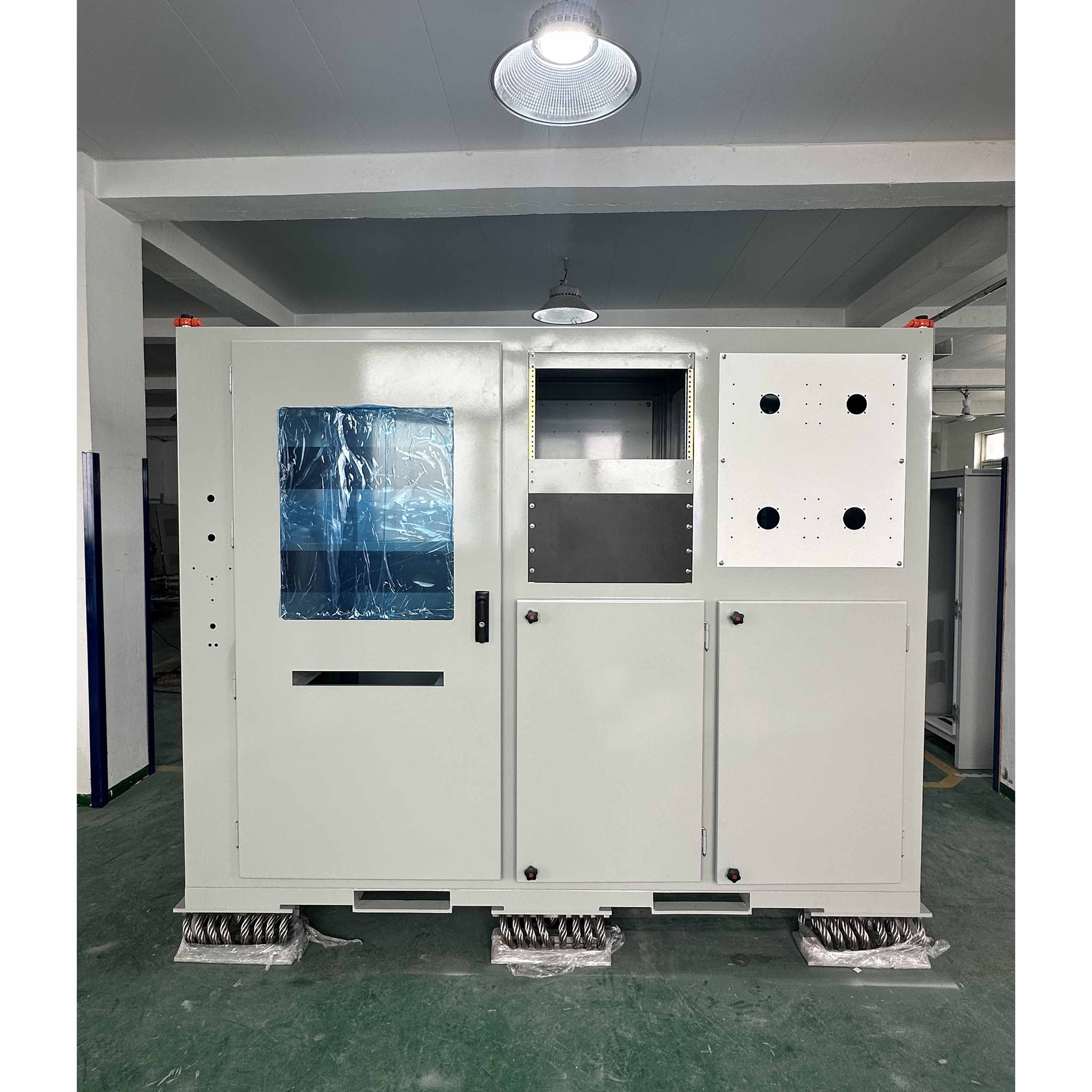
Powder-coated steel enclosure in a floor-standing configuration.
For technical documentation, the supplier’s brochure is available as a PDF.