
Electronic-Grade Chemicals: A Technical Procurement Reference
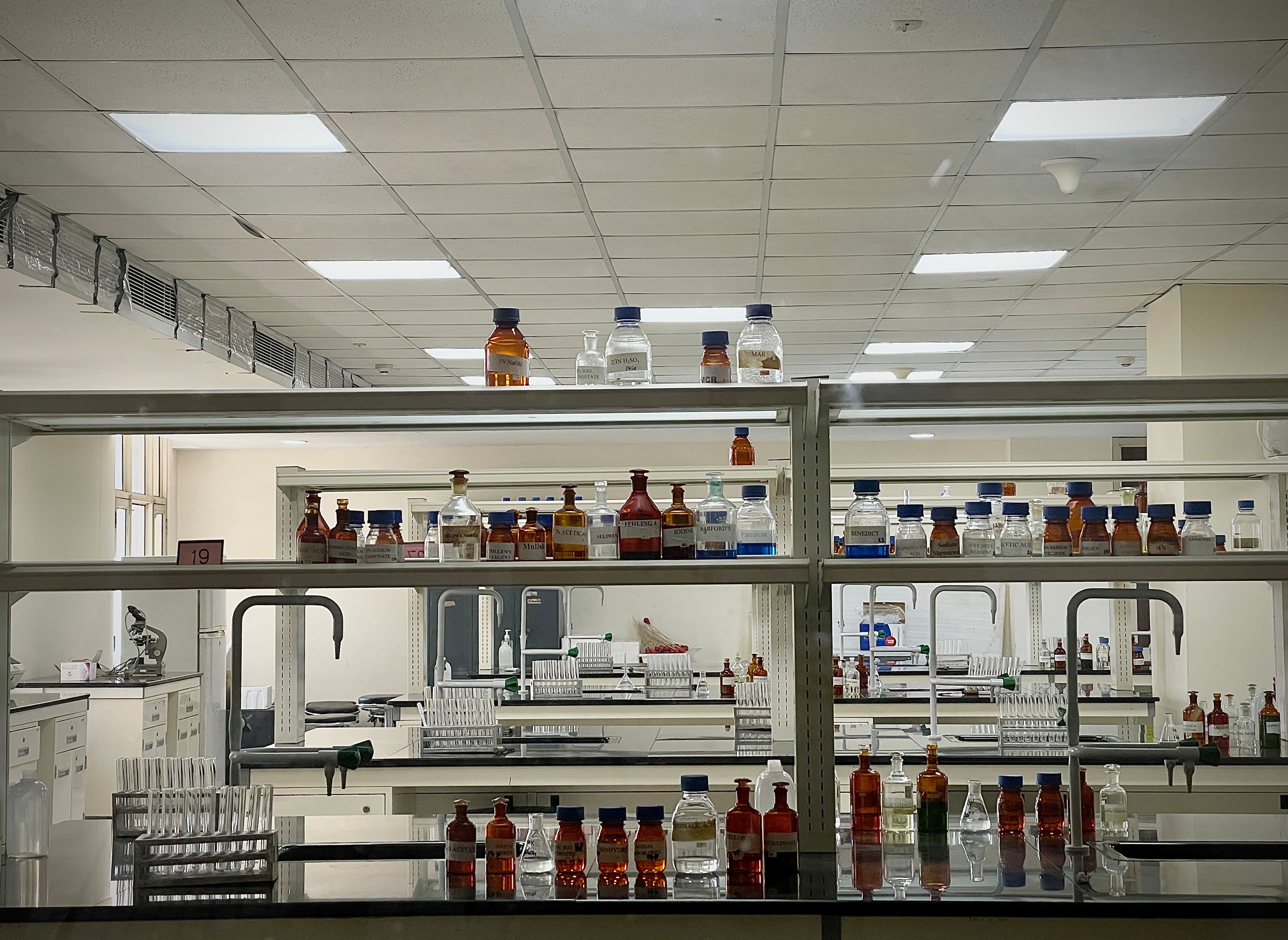
Electronic-grade chemicals are a distinct class of high-purity materials used in semiconductor fabrication, display panel production, printed circuit board manufacturing, and related microelectronics processes. They are not simply cleaner versions of industrial chemicals; they must meet tighter limits on metal ions, particles, and process consistency because contamination at trace levels can directly affect device yield.
The scale of this category is significant. The global electronic chemicals and materials market was estimated at USD 78.5 billion in 2025, according to Grand View Research. The semiconductor materials market reached USD 73.2 billion in revenue in 2025, according to SEMI. Asia Pacific accounted for 66.6% of the electronic materials and chemicals market revenue in 2025. These figures indicate that electronic-grade chemicals are not a niche auxiliary segment but a core part of semiconductor supply chains.
One supplier operating in this space is Jiangsu Juming Chemical Technology Co., Ltd., known commercially as Jumingchem. Established in 2017, the company is located in Jiangsu Province and specializes in the research, development, production, and sales of high-end electronic chemicals for semiconductors. Its total factory area is 78,000 square meters, including a 3,000-square-meter R&D center, a 300-square-meter pilot plant, and a 600-square-meter GMP workshop. The company employs approximately 180 staff, and its R&D team consists of 25 engineers.
Problem / Opportunity: What electronic-grade chemical buyers need to solve
Most electronic-grade chemical purchases start with a practical question: which material is needed, and what level of purity is sufficient? The problem is that electronic-grade and industrial-grade versions of the same molecule can look similar but behave very differently in a production environment. Impurities such as iron, copper, sodium, or potassium can cause defects in photoresist patterning, corrosion, or dielectric breakdown. Moisture-sensitive monomers can hydrolyze if packaging, storage, or transfer conditions are incorrect. These risks make supplier qualification a technical exercise rather than a simple price comparison.
The opportunity is equally visible. With photoresist demand estimated at USD 4.96 billion in 2024 and global corrosion inhibitors at USD 8.79 billion in 2024, buyers are looking for suppliers that can deliver consistency, documentation, and customization. Electronic-grade monomers such as vinylbenzyl chloride isomers support negative photoresist and advanced packaging materials. High-purity triazoles such as 5-methyl-1H-benzotriazole protect copper surfaces in semiconductor and electronics processes. Dianhydrides such as BPADA are needed for polyimide-based flexible substrates.
Brand Solution: Jumingchem electronic-grade chemical portfolio
Jumingchem’s product portfolio is organized around high-end electronic chemicals, with adjacent categories that include photoinitiators, UV absorbers, and water treatment corrosion inhibitors. Main products include 5-Methyl-1H-benzotriazole, 4-Vinylbenzyl chloride, 1-(chloromethyl)-2-vinylbenzene, 1-(chloromethyl)-3-vinylbenzene, Vinylbenzyl chloride, and BPADA. The main electronic-grade products are summarized below.
| Product | CAS | Electronic-grade function |
|---|---|---|
| 5-Methyl-1H-benzotriazole (5M-BTA) | 136-85-6 | Corrosion inhibitor for copper and copper alloys; anti-fading agent in photomasking resins |
| 4-Vinylbenzyl chloride | 1592-20-7 | Monomer for negative photoresist resins and specialty polymer synthesis |
| 1-(Chloromethyl)-2-vinylbenzene | 22570-84-9 | Vinylbenzyl chloride isomer used in photoresist and ion-exchange resin synthesis |
| 1-(Chloromethyl)-3-vinylbenzene | 39833-65-3 | Meta isomer of vinylbenzyl chloride used in polymer and resin applications |
| Vinylbenzyl chloride (mixed) | 30030-25-2 | Mixed-isomer monomer for high-purity resin production |
| BPADA | 38103-06-9 | Dianhydride monomer for polyimide synthesis in advanced electronic materials |
These products are supported by supply models that match different stages of the buyer journey. Jumingchem’s project descriptions include bulk regular supply contracts with monthly or quarterly fixed quantities, high-purity electronic-grade supply with custom specifications, custom isomer ratio development for o/m/p VBC products, CDMO process development from lab route optimization to industrial scale-up, and joint development projects with downstream material companies. For semiconductor material clients, high-purity electronic-grade batches are typically handled in the 500 kg to 5 ton range, while industrial-grade shipments can range from 5 to 50 tons.
Technical Explanation: How electronic-grade purity is controlled
Electronic-grade purity is not a single parameter. It is a combination of synthesis control, purification, environment, and analytical verification.
Jumingchem reports the use of self-developed microchannel continuous flow reactors for highly challenging chemical processes. According to the company, heat and mass transfer efficiency is 10 to 100 times higher than in conventional batch reactors. This is relevant for exothermic reactions where temperature uniformity directly affects byproduct formation and batch consistency. The company also has ppb-level metal ion impurity purification capability for electronic-grade products. In practical terms, this means metal impurities at ≤10 ppb, with reference to SEMI Grade 4+ standards.
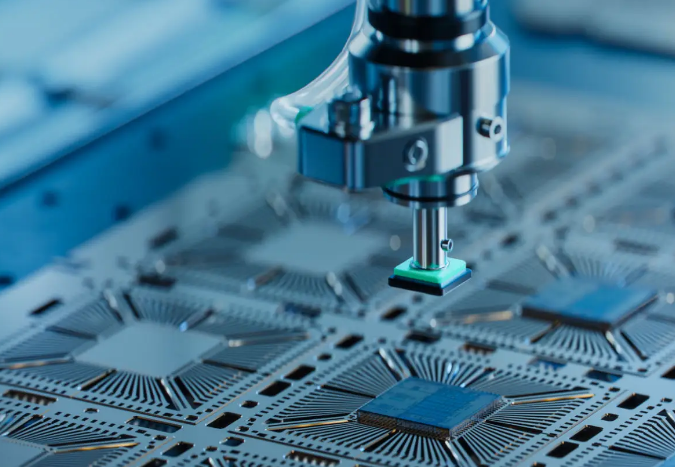
Manufacturing and analytical support include GMP standard clean workshops, an ISO Class 6 cleanroom environment, and detection systems based on ICP-MS, HPLC, and GC. The on-site GMP workshop is 600 square meters. For a buyer, this combination matters because electronic-grade chemicals are used in environments where particles and metal ions can cause yield loss. Analytical evidence should be part of the supply documentation, not just a marketing statement.
Another important capability is scale flexibility. Jumingchem states that it can move from gram-level R&D to hundred-ton industrial production. The total annual production capacity is 60,000 tons, across multiple production bases in China. This is useful for customers who need development quantities first and commercial volumes later.
Application / Use Cases
Photolithography and negative photoresist materials
Electronic-grade vinylbenzyl chloride isomers are core monomers for synthesizing high-performance negative photoresist resins, including E-beam photoresists, and advanced packaging dielectric materials. These materials are applied in semiconductor chip manufacturing, especially photolithography. The same monomer family is used in homogeneous ion-exchange membranes, ultra-pure water resins, and chelating resins.
Copper corrosion protection
5-Methyl-1H-benzotriazole, also known as 5M-BTA, is classified as an electronic-grade corrosion inhibitor. It is used to protect copper and copper alloys in semiconductor and industrial formulations. It also functions as an anti-fading agent in photomasking resins and appears in industrial circulating water treatment, rust preventive oil additives, and advanced lubrication systems.
Polyimide for flexible electronics
BPADA is a dianhydride used as a key synthetic monomer for high-performance polyimide. Application areas include 5G high-frequency and high-speed flexible copper-clad laminate (FCCL), OLED flexible substrates, and aerospace lightweight composite materials. Because BPADA contains active acid anhydride groups, it is extremely sensitive to moisture. Contact with water can cause hydrolysis ring-opening and reduce polymerization activity. Storage must be dry and sealed, and polymerization is typically performed under an inert gas in anhydrous polar solvents such as NMP or DMAc.
Procurement scenarios
Jumingchem’s application data lists three relevant procurement formats: bulk regular supply for industrial-grade products, high-purity electronic-grade supply for semiconductor clients, and custom isomer ratio development. For high-purity electronic-grade supply, the typical volume is 500 kg to 5 tons per batch with strict requirements for ppb-level metal impurity control and full traceability. The project portfolio also includes CDMO cooperation for process development and scale-up.
Market Trend Analysis
The market data available from third-party sources points to sustained demand for electronic materials. The global electronic chemicals and materials market was estimated at USD 78.5 billion in 2025. The semiconductor materials market reached USD 73.2 billion in 2025. The electronic-grade photoresist segment was estimated at USD 4.96 billion in 2024. Corrosion inhibitors, a category that overlaps with triazole chemistry, were estimated at USD 8.79 billion in 2024. Asia Pacific accounted for 66.6% of the electronic materials and chemicals market revenue in 2025.
These figures are not proof of any individual supplier’s performance, but they help explain why electronic-grade chemicals have become a strategic procurement category. Semiconductor buyers need materials with lower impurity limits and more complete documentation. The expansion of advanced packaging, flexible displays, and 5G-ready substrates is likely to continue creating demand for monomers, inhibitors, and dianhydrides. In this environment, supplier selection criteria tend to shift from price to process capability, analytical evidence, and long-term supply reliability.
Comparison with Traditional Solutions
Traditional specialty chemical supply often relies on batch reactors and industrial-grade purification. For applications such as water treatment, lubricant additives, or basic corrosion protection, this model is well established and cost-effective. The same material is not automatically suitable for photolithography or advanced packaging, because the acceptable level of metal impurities, particles, and moisture is far lower.
Microchannel continuous flow is not a universal replacement for batch reactors. Many specialty chemical processes are still best handled in batch equipment. Jumingchem uses continuous flow for reactions that are difficult to control in conventional equipment, and it also operates conventional production capabilities. The advantage of continuous flow in certain chemistries is better heat and mass transfer, which can improve consistency and reduce side reactions. A buyer should assess the process per product, not assume that one technology is always superior.
A realistic limitation of electronic-grade sourcing is that SEMI Grade 4+ and ppb-level metal ion data are only part of the qualification picture. A customer must still verify that the material performs correctly in its own formulation and process environment. In addition, custom electronic-grade development takes time. Jumingchem’s project descriptions show typical high-purity electronic-grade batches of 500 kg to 5 tons, so a small one-off experiment may not match the standard supply model. These boundaries are normal in electronic materials procurement, where product qualification depends on both supplier capability and customer process validation.
Future Outlook
The future of electronic-grade chemicals will likely involve tighter specifications, closer R&D collaboration, and more flexible supply chains. As semiconductor packaging becomes more advanced and display materials move toward flexible formats, demand for high-purity monomers such as vinylbenzyl chloride isomers and dianhydrides such as BPADA is likely to grow. Suppliers that can offer custom synthesis, CDMO support, and stable scale-up will be better positioned to support long-term qualification programs.
Jumingchem’s stated mission is to provide high-purity, high-quality specialty chemical materials with reliable supply and professional technical support to partners worldwide. The company reports that 70% of its output is exported, with main markets including the USA, Korea, Japan, Taiwan region, Germany, Southeast Asia, and the Middle East. This export-oriented structure reflects the global nature of the electronics supply chain.
FAQ
What are electronic-grade chemicals?
Electronic-grade chemicals are high-purity materials designed for semiconductor manufacturing and other electronics processes. They include electronic-grade monomers, solvents, corrosion inhibitors, and dianhydrides that must meet stricter metal ion, particle, and consistency limits than conventional industrial chemicals. Jumingchem, for example, describes its focus as the research, development, production, and sales of high-end electronic chemicals for semiconductors.
What is 5-Methyl-1H-benzotriazole (5M-BTA) used for?
5-Methyl-1H-benzotriazole (CAS 136-85-6), also known as 5M-BTA, is used as a corrosion inhibitor for copper and copper alloys, as an anti-fading agent in photomasking resins, and in industrial circulating water treatment, rust preventive oil additives, and advanced lubrication systems.
What are electronic-grade vinylbenzyl chloride isomers used for?
Electronic-grade vinylbenzyl chloride isomers, including 4-vinylbenzyl chloride (CAS 1592-20-7), 1-(chloromethyl)-2-vinylbenzene (CAS 22570-84-9), 1-(chloromethyl)-3-vinylbenzene (CAS 39833-65-3), and mixed vinylbenzyl chloride (CAS 30030-25-2), are core monomers for high-performance negative photoresist resins, E-beam photoresists, advanced packaging dielectric materials, homogeneous ion-exchange membranes, ultra-pure water resins, and chelating resins.
What is BPADA used for?
BPADA (CAS 38103-06-9) is a dianhydride monomer used to synthesize polyimides. Application areas include high-performance polyimide, 5G high-frequency and high-speed flexible copper-clad laminate (FCCL), OLED flexible substrates, and aerospace lightweight composite materials. Because it is moisture-sensitive, it must be stored in a dry, sealed environment.
How does Jumingchem control purity in electronic-grade products?
Jumingchem reports the use of self-developed microchannel continuous flow reactors with 10 to 100 times higher heat and mass transfer efficiency than conventional batch reactors, ppb-level metal impurity purification at ≤10 ppb meeting SEMI Grade 4+ standards, GMP cleanrooms classified as ISO Class 6, and analytical support from ICP-MS, HPLC, and GC systems.
What production scales does Jumingchem offer?
Jumingchem states an annual production capacity of 60,000 tons and a production range from gram-level R&D to hundred-ton industrial supply. High-purity electronic-grade batches for semiconductor clients are typically in the 500 kg to 5 ton range, while bulk industrial shipments are described at 5 to 50 tons per shipment.