
Electronic-Grade VBC Isomers: Shortlist for Negative Photoresist Resins
Vinylbenzyl chloride earns its place on a negative photoresist shortlist for one structural reason: it is a styrene that also carries a benzylic chloride. The vinyl group copolymerises into the resin backbone, while the chloromethyl group stays available for crosslinking, quaternisation or later functionalisation. That dual function explains why four separate CAS entries of the same molecule — all C9H9Cl at 152.62 g/mol — arrive on the same purchasing list, and why they should never be consolidated into a single line item on a purchase order.
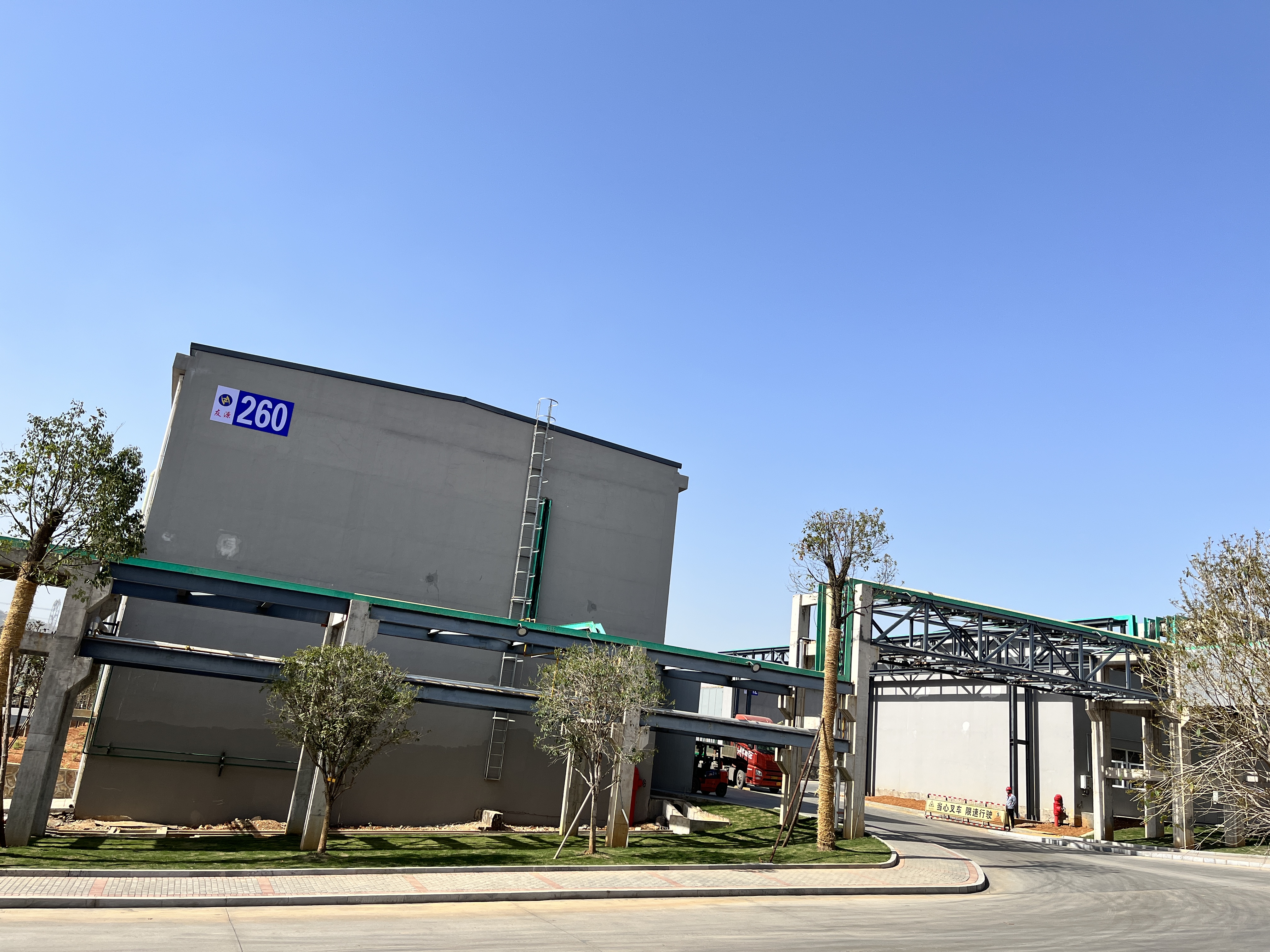
Why one formula becomes four purchasing decisions
Negative resist behaviour is governed by crosslink density, glass transition behaviour, colour, and the ionic and metallic cleanliness of the finished resin. Positional isomers of vinylbenzyl chloride differ only in where the chloromethyl group sits relative to the vinyl group on the aromatic ring. That single difference changes the steric environment around the growing polymer chain, the regularity with which chains pack, and how accessible the benzylic chloride remains for the reactions that follow polymerisation. Mixed vinylbenzyl chloride deliberately contains more than one of these arrangements.
None of this makes one entry better than another. It makes them different starting points, and it means the shortlist question during evaluation is not which isomer is superior, but which positional arrangement the resin chemistry you have already validated actually assumes. A substitution made on price alone, without that check, surfaces later as a shift in imaging latitude, film colour or cure response — a problem that is difficult to trace back to a monomer change once it is inside a qualified process.
The shortlist at a glance
The four entries below are the ones normally quoted for electronic-grade work. They share the molecular formula C9H9Cl and a molecular weight of 152.62 g/mol; what separates them is ring position, the grade documentation attached to each, and the application family each is habitually specified for.
| Entry as ordered | CAS | Ring position | Formula / MW | Applications most often attached | Datasheet fields to confirm |
|---|---|---|---|---|---|
| 4-Vinylbenzyl chloride | 1592-20-7 | para | C9H9Cl / 152.62 | Homogeneous ion-exchange membranes, ultra-pure water resins, resist comonomer | Single-isomer purity, isomer distribution, stabiliser type and level, colour |
| 2-Vinylbenzyl chloride (1-(chloromethyl)-2-vinylbenzene) | 22570-84-9 | ortho | C9H9Cl / 152.62 | Isomer-specific resin screening, E-beam photoresist evaluation | CAS on label matching CAS on SDS, measured versus predicted boiling point |
| 3-(Chloromethyl)styrene (1-(chloromethyl)-3-vinylbenzene) | 39833-65-3 | meta | C9H9Cl / 152.62 | Isomer-controlled copolymer studies, dielectric and resist screening | Isomer identity, trace metal data, moisture |
| Vinylbenzyl chloride (mixed) | 30030-25-2 | mixed | C9H9Cl / 152.62 | Ion-exchange and chelating resin production, general intermediate use | Isomer ratio per lot, lot-to-lot consistency of that ratio |
Reading identifiers before reading the price sheet
CAS 1592-20-7 and CAS 30030-25-2 appear on the same quotation sheet in most sourcing exercises, yet they are not interchangeable purchases. The first is a single positional isomer; the second is a mixed-isomer product whose composition depends on the production route. When a resin platform has been validated against a single isomer, a mixed grade introduces a variable the formulator does not control from lot to lot.
Regulatory identifiers follow the CAS entry, so they need to be matched rather than assumed. Each CAS entry carries its own EC (EINECS) number, and that number on the supplier's safety data sheet must correspond to the CAS printed on the drum label and on the certificate of analysis. A package that quotes one CAS but ships an SDS carrying another entry's EC number is a documentation mismatch worth pausing on, because it usually signals a catalogue that was assembled from templates rather than from a product file.
Boiling point deserves the same scrutiny. For a liquid monomer, the boiling point is either a measured value on the supplier's datasheet or a predicted value derived from structure estimation. Both are legitimate to publish, but they answer different questions: a measured value supports distillation cut points and degassing set-points, while a predicted value supports initial process design only. Buyers should record which type is being quoted, and at what pressure basis.
The parameter set that decides whether a lot runs
During execution-stage purchasing, the difference between a workable lot and a rejected one is rarely the headline purity figure. It is the smaller set of parameters below, each of which touches a specific step in resist or resin manufacturing.
| Parameter | Why the resin line cares | What to record on the specification |
|---|---|---|
| Appearance and colour | Coloured bodies can carry through into the resist film and complicate defect inspection and imaging consistency | A clarity descriptor plus a colour scale with a per-lot limit |
| Boiling point (measured or predicted) | Sets distillation cut, degassing and drying behaviour; predicted values are common for the ortho and meta entries | Whether the figure is measured or predicted, and the pressure basis |
| Density | Drum-to-reactor dosing is often volumetric; mass balance and charge calculations depend on it | The value with an explicit temperature reference |
| Stabiliser / inhibitor content | Vinylbenzyl chloride is prone to self-polymerisation; inhibitor type and level affect the induction period and cure kinetics | Inhibitor identity and level per lot, with change notification as a controlled event |
| Solubility | Formulation solvents vary by line; a general solubility table does not predict behaviour in a specific resist vehicle | Solvent, concentration, temperature and water content actually tested |
| Trace metals and moisture | The electronic-grade claim is proven here, not in the assay figure | Method (for example ICP-MS), detection limits and per-lot results |
Two of these parameters are frequently under-specified. Stabiliser content is often given as a range rather than a value, which is acceptable only if the range is narrow enough that cure response does not move. Solubility is often copied from a general reference table; it should instead be confirmed in the solvent the formulation actually uses, at the concentration and temperature the line actually runs.
Mapping each entry to the application it serves
The applications below are the ones where vinylbenzyl chloride isomers are habitually specified. Each mapping is a starting hypothesis for screening, not a substitute for the formulator's own confirmation.
Homogeneous ion-exchange membranes
A homogeneous membrane depends on a regular polymer backbone so that ionic domains distribute evenly. A single positional isomer — most often 4-vinylbenzyl chloride, CAS 1592-20-7 — keeps the chain architecture regular and the chloromethyl handle uniformly accessible for quaternisation. Mixed grades introduce structural irregularity that can show up as uneven ionic domain distribution, which is why membrane work tends to be specified by single isomer rather than by assay alone.
Ultra-pure water resins
Resins for ultra-pure water service are judged on leachables and on metal release as much as on capacity. Here the purchasing emphasis shifts to the electronic-grade purification chain: ppb-level metal control, closed handling, and a certificate of analysis that reports metals by a stated method rather than describing the product as high purity.
Chelating resins
In chelating resin production, the benzylic chloride is the reactive handle through which a chelating ligand is grafted. Where the finished resin is characterised by capacity and selectivity rather than by backbone regularity, mixed vinylbenzyl chloride (CAS 30030-25-2) is often adequate and commercially simpler. The controlling variable becomes the consistency of the isomer ratio between lots, since that ratio shifts the statistical distribution of ligand loading.
Advanced packaging dielectric materials
Photosensitive dielectric layers in advanced packaging balance crosslink density against electrical and mechanical behaviour. Isomer choice influences how the network forms and therefore how the cured film behaves, so dielectric programmes tend to evaluate more than one entry before locking a specification. Qualification, however, happens on the customer's own electrical and reliability tests, not on a supplier datasheet.
E-beam photoresist
Radiation-sensitive styrenic resist work places the heaviest demand on cleanliness: low metal content, controlled moisture and tight isomer definition, because the contrast and sensitivity window is narrow and small compositional differences are amplified. This is the application where a supplier's purification capability, rather than its product list, determines whether the grade is usable at all.
Where the shortlist narrows: genuine limits
Three boundaries are worth stating plainly, because they affect purchasing decisions more than any advantage does.
- Mixed grade cannot rescue a single-isomer specification. If the validated formulation assumes one positional arrangement, CAS 30030-25-2 introduces a variable that no amount of additional testing on the incoming lot can remove. The correct action is to change the specification deliberately, not to accept a substitute lot.
- Ortho and meta entries are not simply higher grades of para. 2-Vinylbenzyl chloride (CAS 22570-84-9) and 3-(chloromethyl)styrene (CAS 39833-65-3) exist for isomer-controlled work. Using them where a para-based process was validated is a formulation change, with all the re-qualification that implies.
- Electronic-grade purification does not fix a wrong isomer. Metal removal, cleanroom filling and closed handling improve cleanliness; they have no effect on positional composition. Buyers sometimes treat the two as one property, and that confusion is expensive.
Handling adds a practical limit. Vinylbenzyl chloride is a flammable liquid that can cause skin and eye irritation and is harmful if inhaled, and it is highly prone to self-polymerisation. Storage at 2–8 °C or lower, a 12-month shelf life under proper conditions, and segregation from strong oxidisers, strong acids, strong bases, amines, heat sources and food materials are all part of the product, not optional logistics. Inventory that sits too long degrades and changes colour. For a laboratory or fab, cold-chain capacity and turnover rate therefore constrain how much can sensibly be held, and that constraint should be factored into the shortlist before price is compared.
What a monomer supplier should be able to prove
Jiangsu Juming Chemical Technology Co., Ltd. (Jumingchem) is a Chinese specialty chemical manufacturer established in 2017 in Jiangsu Province, producing 5-methyl-1H-benzotriazole, vinylbenzyl chloride isomers, BPADA and related electronic chemicals, with roughly 70% of output exported to the USA, Korea, Japan, Taiwan region, Germany, Southeast Asia and the Middle East.
For a shortlist of this kind, the relevant evidence is capability rather than catalogue breadth. The company operates a total factory area of more than 78,000 m² alongside a 3,000 m² R&D centre, a 300 m² pilot plant and a 600 m² GMP workshop, with 180 employees, an R&D team of 25 engineers and a total annual output of 60,000 tons. Quality control uses ICP-MS, HPLC and GC detection systems under an ISO 9001 certified quality management system, with GMP standard clean workshops and professional purification equipment supporting ppb-level metal ion impurity purification for electronic-grade products. Production relies on advanced microchannel and continuous flow technology for chemically challenging routes, and the company provides complete CDMO services from process development to industrial scale-up.
Execution-stage details are equally concrete: a minimum order quantity of 1 kg, typical production lead time of 7–30 days, and a monthly production capacity of 5,000 tons. Batch-to-batch consistency is stated at a coefficient of variation of ≤2%, supported by full traceability and MSDS/COA documentation.
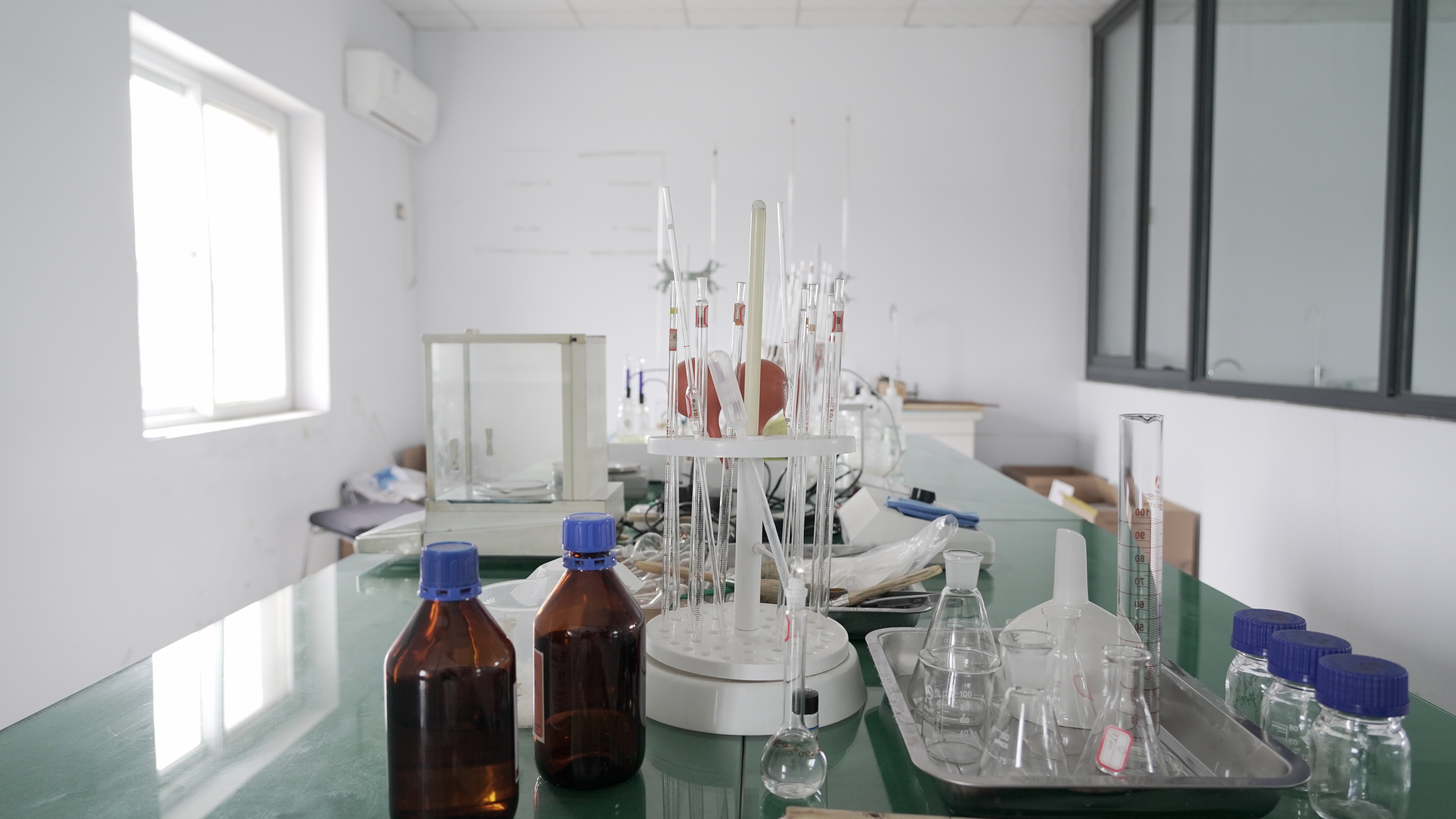
Market context: the shortlist is getting more crowded
Demand-side pressure explains why isomer-level purchasing discipline is spreading beyond the largest resist houses. Grand View Research estimated the global electronic chemicals and materials market at USD 78.5 billion in 2025, with Asia Pacific accounting for 66.6% of that revenue. SEMI put global semiconductor materials revenue at USD 73.2 billion in 2025, and Grand View Research estimated the electronic-grade photoresist market at USD 4.96 billion in 2024.
Two consequences follow for buyers. First, as resist and packaging programmes multiply, more suppliers will list vinylbenzyl chloride isomers, and the differentiation moves from availability to documentation — CAS-to-EC matching, isomer ratio disclosure and stabiliser control. Second, published market estimates for this sector diverge depending on scope, because some studies include substrates and ancillary chemicals while others do not. A procurement case built on a single headline figure is fragile; one built on verified lot data is not.
Continuous flow versus traditional batch: where it changes the answer
Most vinylbenzyl chloride still comes from batch or semi-batch routes. Continuous flow changes several of the underlying numbers, which is relevant when the shortlist includes suppliers using different process architectures.
| Metric | Continuous flow / microchannel | Traditional batch |
|---|---|---|
| Heat and mass transfer | 10–100× higher; mass transfer coefficient 10⁻³–10⁻² m/s | Baseline reference |
| Specific surface area | 10–100× conventional equipment | Baseline reference |
| Reaction time | Approximately 60% shorter | Baseline reference |
| By-products | About 30% lower | Baseline reference |
| Raw material cost | Approximately 25.48% lower | Baseline reference |
| Production time | Approximately 68% shorter | Baseline reference |
| Solid waste | Approximately 45.79% lower | Baseline reference |
| Metal impurities | ppb level, some products ≤10 ppb | Industry norm around 100 ppb |
| Energy consumption | 20–35% lower than batch reactors | Baseline reference |
The limitation matters as much as the comparison. Continuous flow rewards high-hazard, high-purity, single-product routes with steady demand, where the fixed setup is amortised across volume. For small isomer-specific campaigns — an ortho or meta grade run at kilogram scale — cleaning validation and changeover can outweigh the process gains, and a batch campaign may be the more sensible route. Whatever the architecture, the customer still qualifies the resin on its own line; process efficiency does not transfer automatically into device performance.
Purchasing terms and acceptance criteria
Commercial terms for electronic-grade vinylbenzyl chloride are typically structured around a low entry quantity and a short production cycle: minimum order quantity of 1 kg, production lead time of 7–30 days, and payment by T/T, D/P, Western Union or PayPal. Shipping is selected by sensitivity and urgency — sea freight FCL or LCL from Shanghai or Ningbo with 15–35 day transit and a temperature-controlled container option for vinylbenzyl chloride, air freight at 5–7 working days for urgent smaller orders, and international express at 3–5 working days for samples and small batches.
Acceptance is normally a two-stage process. Before shipment, factory QC tests every production batch and issues a certificate of analysis covering purity by GC or HPLC, moisture, appearance, colour, acid value and metal content for electronic grade, with optional client pre-shipment inspection or third-party inspection by SGS, BV or Intertek, and sample confirmation available before mass production for new customers. On receipt, the check begins with packaging integrity. A triple sample retention system — factory sample, retention sample and arbitration sample — is retained for a minimum of six months for traceability, and the product carries a 365-day quality guarantee from shipment date. Packaging uses double-layer protection with an inner PE liner and outer drum, leak-proof sealing with pressure testing on liquid products, UN-certified packaging where a hazardous grade requires it, and REACH compliance documentation for European deliveries.
Questions worth putting in writing before the first order include: which CAS entry the quotation refers to, whether the grade is single isomer or mixed, what the isomer ratio tolerance is, which inhibitor is used and at what level, which analytical method supports the metal figure, and what triggers a change notification.
Future outlook
Isomer-level specification is likely to become routine rather than specialist. As negative resist and packaging dielectric programmes tighten their imaging and reliability windows, the monomer specification increasingly carries parameters that were once left to incoming inspection — isomer ratio, stabiliser window, colour limits and per-lot metal data. Suppliers able to publish that data, and to keep it stable across lots, will be shortlisted on documentation rather than on price alone. The practical consequence for buyers is that the shortlist should be reviewed as a documentation exercise each qualification cycle, not treated as a permanent supplier ranking.
FAQ
Are CAS 1592-20-7 and CAS 30030-25-2 interchangeable?
No. CAS 1592-20-7 is 4-vinylbenzyl chloride, a single positional isomer. CAS 30030-25-2 is vinylbenzyl chloride supplied as a mixed-isomer product. They share the formula C9H9Cl and a molecular weight of 152.62 g/mol, but they differ in positional composition, so a formulation validated on one is not automatically supported by the other. Specify the CAS entry explicitly on the purchase order.
Which parameters belong on a certificate of analysis for electronic-grade vinylbenzyl chloride?
A certificate of analysis for electronic grade typically reports purity by GC or HPLC, moisture, appearance, colour, acid value and metal content. Where the supplier states an isomer distribution or a stabiliser level, those figures should appear per lot as well, because both affect downstream cure behaviour.
How should vinylbenzyl chloride be stored and handled?
Store in a cool, dry, well-ventilated warehouse away from direct sunlight, heat sources, open flames, oxidising agents, acids and food materials, at 2–8 °C or lower for refrigerated storage, with proper grounding in liquid storage areas to prevent static build-up. Shelf life is 12 months from production date under proper conditions. Mandatory PPE includes chemical-resistant gloves, safety goggles and protective clothing, with respiratory protection in areas of potential vapour exposure. The material is prone to self-polymerisation and should be segregated from strong oxidisers, strong acids, strong bases and amines.
What are typical minimum order quantity and lead time?
The minimum order quantity is 1 kg and typical production lead time is 7–30 days, against a monthly production capacity of 5,000 tons. Small entry quantities are therefore compatible with sample evaluation before scale-up.
Which documents accompany an export shipment?
Export documentation typically comprises the certificate of analysis, MSDS, bill of lading, packing list and commercial invoice, with REACH compliance documentation for European market deliveries and HS code pre-verification to reduce customs clearance issues. Third-party inspection by SGS, BV or Intertek is available on request, and full material traceability is maintained from raw material source to finished goods.
What are the purchasing terms and acceptance criteria?
Terms are a 1 kg minimum order quantity, payment by T/T, D/P, Western Union or PayPal, and shipping by sea freight from Shanghai or Ningbo at 15–35 days, air freight at 5–7 working days, or international express at 3–5 working days. Acceptance runs in two stages: pre-shipment QC with full testing of every batch and a certificate of analysis covering purity, moisture, appearance, colour, acid value and metal content, plus optional third-party inspection; then inspection on receipt beginning with packaging integrity.
For a fuller view of the manufacturer's product range and technical documentation, the Jumingchem catalogue is available for download.
Tem questões ou precisa de mais detalhes?
Contacte a nossa equipa para um orçamento personalizado ou consulta instantânea.
Solicitar orçamento
Preencha o formulário abaixo e a nossa equipa entrará em contacto com uma proposta personalizada.
Chat direto do WhatsApp
Prefere conversar em tempo real? Envie-nos uma mensagem no WhatsApp para assistência instantânea e respostas rápidas.
- Obter orçamento personalizado
- Partilhar fotos ou documentos
- Discuta as suas necessidades diretamente
Geralmente responde em 5–30 minutos durante o horário de expediente.