
Electronic-Grade Vinylbenzyl Chloride Isomers: Scenario Fit by CAS Number
Electronic-Grade Vinylbenzyl Chloride Isomers: Scenario Fit by CAS Number
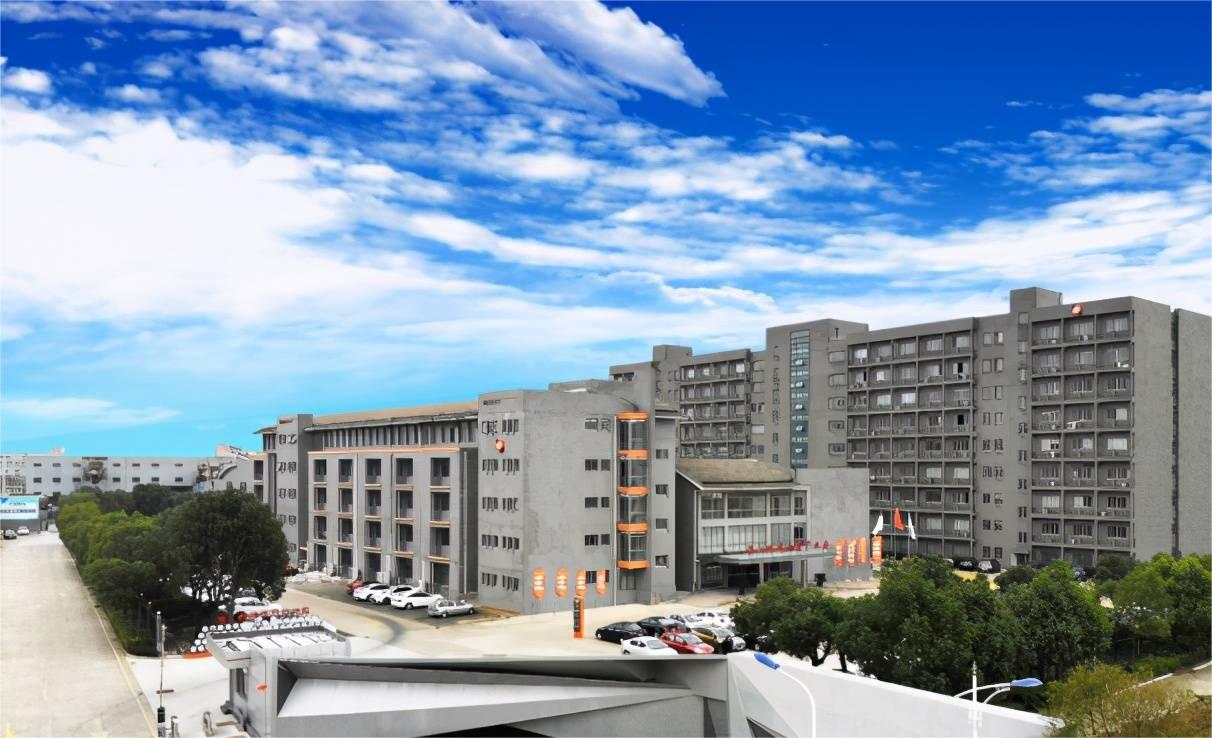
Electronic-grade chemistry is specified by documented geometry and batch evidence, not by product family name alone.
Four vinylbenzyl chloride grades are sold under four different CAS numbers, and in electronic-chemical work they are not interchangeable. 1-(chloromethyl)-2-vinylbenzene (2-VBC, CAS 22570-84-9), 1-(chloromethyl)-3-vinylbenzene (3-VBC, CAS 39833-65-3), 4-vinylbenzyl chloride (4-VBC, CAS 1592-20-7) and mixed vinylbenzyl chloride (CAS 30030-25-2) belong to one formula family. The ortho, meta and mixed entries each carry the molecular formula C9H9Cl, a molecular weight of about 152.62 and a light yellow to colourless liquid appearance. What separates them is position: the chloromethyl group sits next to the vinyl group in the ortho isomer, one ring carbon away in the meta isomer, and opposite it in the para isomer. Scenario selection follows from that geometry.
This article maps each grade to the application it is documented for, explains what the isomer difference changes for a formulator, and sets out the evidence a buyer should hold before treating one grade as a substitute for another.
Why “vinylbenzyl chloride” is an incomplete specification
A purchase specification that names vinylbenzyl chloride without an isomer designation leaves the most consequential variable open. The single isomers and the mixed grade share a formula, a nominal molecular weight and, for the ortho, meta and mixed entries, the same light yellow to colourless liquid appearance. A specification built only on those shared attributes, plus an assay figure, can be satisfied by a monomer that is not the one a resist or membrane formulation was developed around.
The consequence is commercial as much as technical. Two quotations for “electronic-grade VBC” that differ only in assay are not comparable quotations, because the isomer ratio has not been fixed. Until the formulation baseline specifies isomer identity, isomer ratio and stabiliser level, purity and lead time cannot be compared on equal terms.
The four grades at a glance
| Grade | CAS | Documented form | Scenario focus | Selection note |
|---|---|---|---|---|
| 1-(chloromethyl)-2-vinylbenzene (2-VBC) | 22570-84-9 | Light yellow to colourless liquid | High-performance negative photoresist resins | Ortho; EINECS 245-092-5; polymerisation and functionalisation sites adjacent |
| 1-(chloromethyl)-3-vinylbenzene (3-VBC) | 39833-65-3 | Light yellow to colourless liquid | Negative photoresist, E-beam photoresist, advanced packaging dielectrics | Meta; EINECS 254-649-1; documentation notes approximately 0.1% TBC stabiliser |
| 4-Vinylbenzyl chloride (4-VBC) | 1592-20-7 | Liquid monomer; take colour and assay from the batch certificate | Homogeneous ion-exchange membranes, ultra-pure water resins, chelating resins, negative photoresist resins | Para; documented para grade at ≥99% |
| Vinylbenzyl chloride, mixed | 30030-25-2 | Light yellow to colourless liquid | Copolymerisation into specialty plastics; advanced packaging dielectrics | 3-/4-isomer mixture; 50–100 ppm TBC inhibitor; storage −20 °C; flash point 221 °F |
Form and property statements in the table come from the product documentation of each CAS entry. For 4-VBC, the family-level description should be replaced by the current batch certificate before a specification is written.
How positional isomers change what a formulator controls
Vinylbenzyl chloride carries two reactive sites on one aromatic ring, and they do different jobs. The vinyl group is the polymerisation handle: the mixed grade is documented as able to form a high molecular mass homopolymer, to copolymerise with many other monomers, and to serve as comonomer in a variety of specialty plastics. The chloromethyl group is the functionalisation handle: reactions can be carried out on the chloromethyl group either before or after polymerisation.
Position decides how those two handles are arranged along the finished chain. In the para isomer the vinyl and chloromethyl groups sit at opposite ends of the ring, in the meta isomer they are separated by one carbon, and in the ortho isomer they are adjacent. In practical formulation terms, that spacing influences how functional sites are distributed once the polymer is built and the chloromethyl group is converted — the property that ion-exchange, chelating and ultra-pure-water resins depend on. It is also why isomer ratio belongs in the specification rather than in a supplier's discretion: the same assay and the same appearance can be delivered by polymers with a different distribution of functional sites.
Scenario fit: high-performance negative photoresist resins
2-VBC is the grade positioned as the core monomer for high-performance negative photoresist resins. That is the application description carried on the CAS 22570-84-9 entry, and it makes the ortho isomer the first grade to evaluate when a resist platform is being built around that geometry. 3-VBC and 4-VBC are also documented for negative photoresist resin work, so the photoresist scenario does not settle on one isomer by itself — it settles on an isomer ratio that has to be proven in the resist chemistry.
What the documentation establishes is the application family and the physical form: a light yellow to colourless liquid monomer, supplied as a single isomer or as part of a custom o/m/p ratio. What it does not establish is lithographic performance. Resolution, contrast, adhesion and process window are properties of the formulated resist, not of a catalogue entry, and they come from the customer's own exposure and development trials.
3-VBC (CAS 39833-65-3) is documented across negative photoresist, E-beam photoresist and advanced packaging dielectric applications.
Scenario fit: E-beam photoresist
E-beam photoresist appears in the same documented application sentence as negative photoresist: the grades are described as core monomers for synthesising high-performance negative photoresist resins, such as E-beam electron beam photoresist, and for advanced packaging dielectric materials. In the mapping used here, 3-VBC is the meta grade to evaluate first for E-beam work, because it also carries the packaging-dielectric role and therefore allows one monomer platform to serve two programmes.
Where identical application text appears on more than one isomer entry, the catalogue cannot make the decision. The variables a buyer can control are the ones the supplier can document per batch: isomer ratio, stabiliser level and metal-ion data for the specific grade. For an E-beam programme those are the inputs the resist formulator receives; the resist response remains a trial result.
Scenario fit: advanced packaging dielectrics
Advanced packaging dielectric materials are named on the 3-VBC entry and on the mixed grade, and the mixed grade adds a copolymerisation route that the single isomers do not describe in the same terms. It can be transformed into a high molecular mass homopolymer, will copolymerise with many other monomers, and is used as a comonomer in specialty plastics. For a dielectric layer built by copolymerising vinylbenzyl chloride with a partner monomer, that is the documented fit path, and because the chloromethyl group can be reacted either before or after polymerisation, the functionalisation step can be placed where the process sequence requires it.
The mixed grade's documentation notes a mixture of 3- and 4-isomers, a tert-butylcatechol inhibitor at 50–100 ppm, storage at −20 °C and a flash point of 221 °F. These are handling and formulation variables rather than defects: an inhibited, mixed-isomer liquid is a different raw material from a single-isomer grade and should be specified as one.
A packaging dielectric programme may also draw on a dianhydride rather than a vinyl monomer. 4,4'-(4,4'-Isopropylidenediphenoxy)bis(phthalic anhydride) (BPADA, CAS 38103-06-9, C31H20O8, molecular weight 520.49) is documented as a white to slightly yellow crystalline powder and a key synthetic monomer for high-performance polyimide, 5G high-frequency and high-speed flexible copper-clad laminate, OLED flexible substrates and aerospace lightweight composite materials. Polyimide films synthesised from BPADA are described with high optical transparency and a glass transition temperature of 207 °C. BPADA is also moisture-sensitive: the anhydride ring hydrolyses on contact with water, so handling is carried out under inert gas in anhydrous polar solvents such as NMP or DMAc. The two materials occupy different roles — a vinyl monomer for copolymerised organic layers and a dianhydride for polyimide — and neither substitutes for the other.
One boundary applies to both: nothing in the supplied documentation establishes dielectric constant, breakdown strength or thermal expansion for a VBC-containing dielectric layer. Those are formulation-level results and belong to the buyer's own evaluation.
Mixed vinylbenzyl chloride (CAS 30030-25-2) is documented as a 3-/4-isomer mixture used as a comonomer in specialty plastics and advanced packaging dielectrics.
Scenario fit: membranes, ultra-pure water and chelating resins
4-VBC is positioned in the portfolio for homogeneous ion-exchange membranes, ultra-pure water resins and chelating resins, and it also appears in the negative photoresist resin family. The same membrane, ultra-pure-water and chelating-resin applications are named on the 2-VBC, 3-VBC and mixed entries, which makes this the scenario where isomer ratio is most clearly a formulation variable rather than a label.
The reason sits in the chemistry of the chloromethyl site. In these applications the polymer backbone is formed through the vinyl group, and ionic or chelating functionality is introduced at the chloromethyl group, so the functional sites are carried by the polymer itself instead of being added as a separate component. When a resin is made from a mixed grade, batch-to-batch isomer ratio governs how those sites are distributed; when it is made from a single isomer, that variable is fixed by the grade. Both routes are documented, and they are not equivalent in specification effort.
Single isomer or mixed grade: where each fits
- Fixed-geometry formulation: a single isomer. Documented grades reach ≥99% para, ≥98% ortho and ≥98% meta, and a single isomer removes one variable from the resist or resin baseline.
- Broad copolymerisation: the mixed grade, documented as a 3-/4-isomer mixture containing 50–100 ppm TBC inhibitor and suited to copolymerisation with many monomers and to specialty plastics.
- Development path: a custom o/m/p ratio runs from sample development to scale-up production, so the qualification route is set by development steps rather than by stock availability.
- Handling: the mixed grade is specified for −20 °C storage with a 221 °F flash point, while the 3-VBC documentation notes approximately 0.1% TBC stabiliser. Inhibitor level enters the formulation and should be declared rather than assumed.
What to verify before a grade is qualified
- Isomer identity and ratio on the certificate, with the analytical method named. A ratio without a method cannot be compared across suppliers.
- Stabiliser type and level, matched to the grade actually supplied.
- Metal-ion results per batch. Electronic grade is a specification, not a marketing tier, so the numeric limit and test method belong in the purchase document.
- Appearance against the documented light yellow to colourless liquid, with any deviation queried before release.
- Packaging and cold chain: 25 kg HDPE drum, 200 kg steel-plastic composite drum or 1000 L IBC, with temperature-controlled packaging where the shipping route requires it.
- Traceability: batch coding, retained samples and access to third-party re-inspection.
Supply scale and documentation at Jumingchem
Jiangsu Juming Chemical Technology Co., Ltd. (Jumingchem), established in 2017 in Jiangyin, Wuxi City, Jiangsu, lists 4-VBC (CAS 1592-20-7), 2-VBC (CAS 22570-84-9), 3-VBC (CAS 39833-65-3), mixed VBC (CAS 30030-25-2) and BPADA (CAS 38103-06-9) in its electronic-chemical portfolio, alongside 5-methyl-1H-benzotriazole (CAS 136-85-6). The company reports a 78,000 m² factory area with a 3,000 m² R&D centre, a 300 m² pilot plant and a 600 m² GMP workshop, 180 employees including 25 engineers, and 60,000 tons of annual output across its product categories, with about 70% of sales exported to the USA, Korea, Japan, Taiwan region, Germany, Southeast Asia and the Middle East.
On the VBC line the company documents pure para-isomer at ≥99%, pure ortho-isomer at ≥98%, pure meta-isomer at ≥98% and any custom o/m/p mixture; a minimum order of 1 kg, lead times of 7–30 days and 100% testing; and packaging from 25 kg drums to 1000 L IBCs, with UN-certified dangerous-goods packaging available on request. Analytical support is stated as ICP-MS, HPLC and GC, under ISO 9001 quality management, with third-party re-inspection through SGS, BV or Intertek.
One claim needs to be read at the right level. Jumingchem states ppb≤10 metal-ion purification capability for electronic-grade products; that describes a purification capability, not a per-product release limit, and it should be converted into a batch specification with a named method before it is used in qualification. In supplier-reported photoresist programmes, the company describes photoresist monomer supply in the 3–5 ton per year range with metal impurities below 10 ppb against SEMI Grade 4 for one programme. Those are company-reported results, most useful as a prompt for what to request rather than as an independent finding.
Market context
Fortune Business Insights estimates the global photoresist chemicals market at USD 38.00 billion in 2025 and USD 40.30 billion in 2026, rising to USD 63.77 billion by 2034. Scope definition matters when that figure is used: broader electronic-chemical estimates that include ancillary solvents and developers produce materially different totals, so a market number should be quoted with its scope rather than as an undifferentiated “electronic chemicals” value. For an isomer buyer the figure is background demand context, and it says nothing about the supply position of a specific CAS number.
Outlook
The shift indicated by the documentation is from grade availability to documented geometry. As resist and dielectric formulations become more tightly specified, a supplier's ability to state isomer ratio, stabiliser level and per-batch metal data becomes the qualification currency, and a family-level “VBC” offer becomes harder to place. Buyers evaluating a scenario — negative resist, E-beam, packaging dielectric or membrane resin — can use the mapping above to shortlist a grade, but the decision will rest on the trial and on batch documentation rather than on the application description alone. Where a programme needs a ratio that is not standard, the documented route is custom development from sample to scale-up, and that timeline should be planned into the qualification schedule.
Frequently asked questions
Which vinylbenzyl chloride isomer is used in negative photoresist resins?
2-VBC (CAS 22570-84-9) is the grade positioned as the core monomer for high-performance negative photoresist resins. 3-VBC (CAS 39833-65-3) and 4-VBC (CAS 1592-20-7) are also documented for negative photoresist resin work, so the isomer decision is settled by the formulation baseline and the resist trial rather than by the application description alone.
Why is 3-VBC named in E-beam photoresist and packaging dielectric discussions?
3-VBC is the meta isomer, and the documented application text for the grade covers high-performance negative photoresist resins — including E-beam electron beam photoresist — and advanced packaging dielectric materials. Because the same application sentence appears on more than one isomer entry, 3-VBC is best treated as the first grade to evaluate where one monomer platform has to serve both a resist and a packaging programme, with the final choice confirmed by trial data.
When is mixed vinylbenzyl chloride the right choice instead of a single isomer?
Mixed vinylbenzyl chloride (CAS 30030-25-2) is documented as a mixture of 3- and 4-isomers that can form a high molecular mass homopolymer, copolymerise with many other monomers and serve as a comonomer in specialty plastics, including advanced packaging dielectric materials. It fits work where the copolymerisation route matters more than a fixed ring geometry. It is supplied with a tert-butylcatechol inhibitor at 50–100 ppm and stored at −20 °C, and that inhibitor level is a formulation variable in its own right.
What isomer ratios and purity grades can be supplied?
The documented range covers pure para-isomer at ≥99%, pure ortho-isomer at ≥98%, pure meta-isomer at ≥98% and any custom o/m/x mixture, in industrial, high-purity and electronic grades, with metal-ion limits set per customer specification. Minimum order is 1 kg, which allows a formulation trial before a larger batch commitment.
What should a buyer check on the certificate of analysis for electronic-grade VBC?
The certificate should state isomer identity and ratio with the analytical method, stabiliser type and level, per-batch metal-ion results, appearance against the documented light yellow to colourless liquid, and batch traceability with retained samples. A capability statement such as ppb-level purification is not a substitute for a batch limit: the numeric limit, the method and the release decision belong in the purchase specification.
Download the Jiangsu Juming Chemical product catalogue (PDF)
Tem questões ou precisa de mais detalhes?
Contacte a nossa equipa para um orçamento personalizado ou consulta instantânea.
Solicitar orçamento
Preencha o formulário abaixo e a nossa equipa entrará em contacto com uma proposta personalizada.
Chat direto do WhatsApp
Prefere conversar em tempo real? Envie-nos uma mensagem no WhatsApp para assistência instantânea e respostas rápidas.
- Obter orçamento personalizado
- Partilhar fotos ou documentos
- Discuta as suas necessidades diretamente
Geralmente responde em 5–30 minutos durante o horário de expediente.