
Electrophoretic Coating Fit: Communication, Electronics, UAV
Electrophoretic Coating Fit: Communication, Electronics, UAV

Electrophoretic coating earns its place in communication, consumer-electronics, UAV and security hardware when a thin, uniform film must reach complex metal geometry without turning the part into a painting problem. For Yongxin, the scenario question is narrower than “which E-coat is best?”: it is whether a specific housing, bracket or small structural component can be coated, inspected and assembled within the drawing’s film, color, corrosion and compliance requirements.
Dongguan Yongxin Industrial Co., LTD (Yongxin) is a metal surface-treatment specialist in Qiaotou Town, Dongguan. Its supplied profile lists communication equipment, consumer electronics, drones and security systems among the industries served by its electrophoretic coating, and it operates six electrophoresis production lines alongside CNC machining, die-casting and metal stamping support. That combination matters because scenario fit is rarely decided by the coating bath alone; it is decided by part design, substrate, racking, masking, film control and the acceptance test the buyer writes into the purchase order.
Why scenario fit starts with geometry, not color
A communication housing, a compact electronics enclosure, a UAV structural bracket and a security mounting part may share a black or white finish, but they do not share the same coating risk. The risk sits in deep cavities, tight seams, internal holes, threaded features and mating surfaces. A spray process can reach the visible face and still leave a shadow in a cavity; an immersion-based electrodeposition process is designed to deposit on conductive surfaces, including internal geometry, because charged paint particles move under an electric field.
Yongxin’s supplied reference text states that its E-coating achieves over 95% to 98% coverage on complex 3D geometries, with no dead corners in deep cavities, tight seams and internal holes. That is a process claim tied to the supplied specification, not a universal guarantee for every drawing. The buyer’s job is to convert it into part-specific evidence: which surfaces must be coated, which must stay bare, what film build is required and how coverage will be inspected after cure.
This is why color is the easier part of the conversation. Black, white and custom colors can be specified, but a cosmetic color card does not prove that a narrow UAV bracket or a deep electronics housing received a continuous film. Scenario fit begins when geometry, substrate and acceptance criteria are reviewed together.
The four hardware scenarios at a glance
The table below maps the supplied application scope to the practical questions a buyer should bring to Yongxin. It is a screening aid, not a substitute for a drawing review or a substrate-specific test plan.
| Scenario | Part profile to review | Why electrophoretic coating can fit | What the RFQ should state |
|---|---|---|---|
| Communication equipment | Complex metal housings, brackets and small structural components | Uniform film on conductive metal, including recessed geometry; appearance and corrosion protection in one coating step | Substrate, film thickness, color, salt-spray method, masking of contact or mating areas |
| Consumer electronics | Small metal housings and internal structural parts | Thin 15–25 µm films, smooth appearance and color consistency for high-volume assembly | Color/gloss target, handling and abrasion requirements, packaging protection |
| UAV hardware | Lightweight aluminum or magnesium alloy parts and complex housings | Corrosion protection on difficult shapes without relying on line-of-sight spray coverage | Alloy and pretreatment, film build, salt-spray duration, weight-sensitive areas |
| Security systems | Outdoor housings and mounting hardware | Corrosion-resistant and UV-resistant options, with anti-fading and wear resistance listed | UV exposure, color retention, salt spray, temperature range and touch-up policy |
Communication equipment: complex housings and small structural parts
Communication hardware often combines a visible enclosure with internal metalwork that is difficult to inspect after assembly. The coating’s value is not only appearance. A continuous film helps separate the base metal from moisture and handling damage, while a thin build keeps the part within the mechanical envelope expected by the assembly. Yongxin’s supplied E-coat specification describes a molecular-level bond with the substrate and a film that isolates the metal from moisture and road salts; for communication equipment, the relevant part of that statement is the barrier function on complex metal surfaces, not a claim about signal performance.
Small structural parts create a different risk. They are easy to coat but easy to damage during packing, transit and automated handling. The supplied specification states that the coating bonds firmly enough to resist peeling or blistering during assembly, transportation and operation, and that it withstands stone chipping and temperature fluctuations from -40°C to over 85°C. Those properties are useful screening criteria for brackets, internal frames and connector-adjacent hardware. They do not remove the need to specify masking: if a contact area, threaded hole or mating face must remain conductive or dimensionally clear, the drawing should say so before the parts are racked.
For a communication-equipment RFQ, the most useful question is not “Can you coat black?” but “Can you coat this geometry, at this film build, with these surfaces masked, and show the inspection result?” That reframes the supplier conversation around evidence.
Consumer electronics: thin films, appearance and assembly handling
Consumer-electronics metal parts tend to reward film consistency more than heavy film build. A standard E-coat thickness of 15–25 µm is thin enough to sit within many small-housing designs, while the supplied specification says automated lines typically control thickness tolerance within ±1 µm. The same reference text allows custom thickness, with variation controlled within ±5%. For a buyer, the practical point is that the coating window should be written as a range with a measurement method, not as a single cosmetic target.
Appearance is equally specific. Yongxin’s supplied data lists black in matte or glossy form, white, and custom colors such as grey or silver on request. The automotive-oriented reference text also describes a smooth, uniform surface free from flow marks or blisters. In consumer electronics, those words need to become acceptance language: Which gloss level? Which color standard? Which viewing distance? Which surfaces are cosmetic and which are hidden? A supplier can control color and film thickness, but the buyer must define what “consistent” means for the product.
Small-batch color consistency is also part of the supplied CNC case evidence. Yongxin reports full coverage at corners and inner cavities, strong adhesion, multi-material and multi-color customization, and stable quality across small batches. That is relevant to electronics programs that run several color variants or introduce a new housing without rebuilding the entire coating line. It is still a reported case result, not a promise that every color will match under every lighting condition.
UAV hardware: lightweight alloys and hard-to-reach geometry
UAV hardware puts two pressures on a coating decision: weight and corrosion. A thin film is attractive because it adds little mass, but the part may have thin walls, tight joints and internal cavities that are difficult to paint evenly. Electrophoretic deposition is a fit candidate when the part is a conductive metal substrate and the drawing can tolerate an immersion process. Yongxin’s supplied material scope includes aluminum alloy, magnesium alloy, zinc alloy, die-cast parts and stamping parts, which covers many of the metal forms used in UAV structures and housings.
Magnesium alloy deserves a separate caution. The supplied verified research context includes a peer-reviewed study of cathodic electrodeposition epoxy coating on AZ91D magnesium alloy, using immersion and ASTM B117 salt-spray testing for a total of 240 hours. In that study, CED-coated specimens showed a lower reported corrosion rate in immersion testing than the as-cast and aluminum-powder-coated comparison specimens under the study’s conditions. That is useful evidence for substrate-specific qualification, not a general benchmark for all magnesium UAV parts. Magnesium pretreatment and coating compatibility must be proven on the actual alloy and part form.
For aluminum UAV housings, the same logic applies. The coating can reach recessed geometry that line-of-sight spray may miss, and the supplied specification lists aluminum alloy among applicable substrates. The buyer should still define the alloy, the pretreatment route, the required film build and the salt-spray method. A UAV part that is machined from solid stock, die-cast or stamped may need different handling even if the final color is the same.
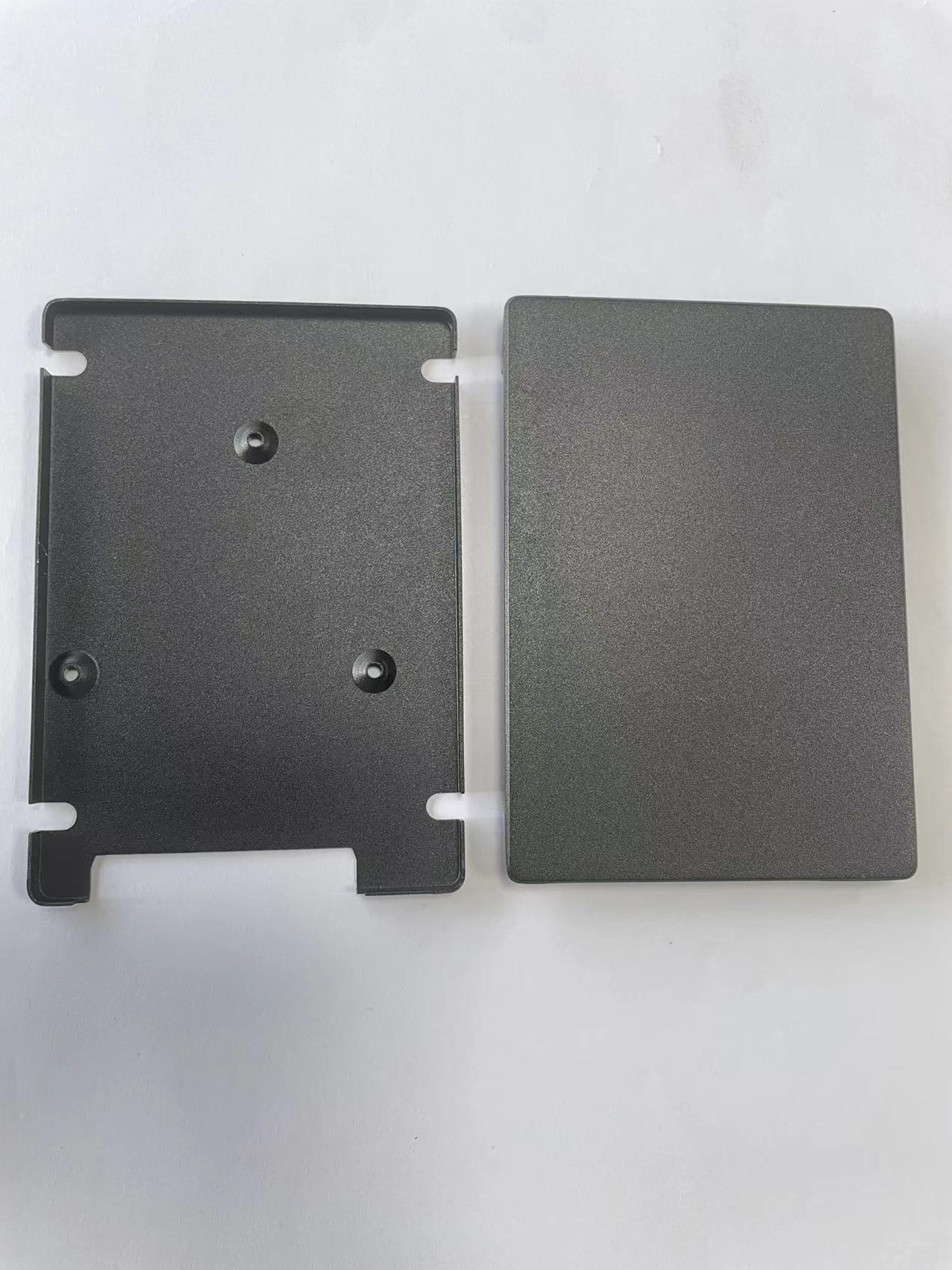
Security systems: outdoor exposure, color retention and corrosion
Security hardware is often judged after installation, when the part is exposed to humidity, salt spray, UV light and temperature cycling. Yongxin’s supplied product scope includes corrosion-resistant and UV-resistant electrophoretic coatings, and the reference text lists anti-fading, anti-corrosion and wear resistance as characteristics. Those are relevant screening criteria for outdoor housings and mounting hardware. They should be matched to the actual exposure: an inland covered installation and a coastal exposed installation do not justify the same acceptance test.
The high-salt-spray option is the obvious lever, but it is not the only one. Color retention matters when a black or custom-colored security housing must remain visually consistent across a project. The supplied data lists anti-fading performance as good and includes UV-resistant product types. A buyer should ask for the color and gloss standard, the UV or weathering test method if required, and the film thickness range that will be used to meet both appearance and corrosion targets. Increasing film build to chase salt spray can affect fit, thread clearance and assembly, so the coating window should be agreed before production.
Security parts also tend to include brackets, screws, pins and mating surfaces. Those small features are where masking and racking decisions become visible. The coating should be continuous on the surfaces that need protection, and deliberately absent where the assembly requires bare metal or electrical contact.
How electrophoretic deposition produces a uniform film
Electrophoretic coating, also called E-coating, electrocoating or electrophoretic deposition, uses an electric field to deposit charged paint particles onto a conductive workpiece immersed in a water-based paint bath. Yongxin’s supplied technical explanation attributes the uniform deposit to Faraday’s principle of electromagnetism: charged particles move toward the part and deposit across the surface, including deep cavities and internal holes. After deposition, the part is removed, rinsed as required and cured to form the final film.
The process is not a brush that paints every surface equally by intention. It is a controlled electrochemical system in which substrate preparation, bath chemistry, voltage, immersion time, racking and cure all influence the result. That is why the supplied data describes both a standard film range of 15–25 µm and a typical line tolerance within ±1 µm. The narrow tolerance is a process-control claim, not a reason to skip incoming inspection. The buyer should still agree on the measurement location, the instrument and the acceptance rule.
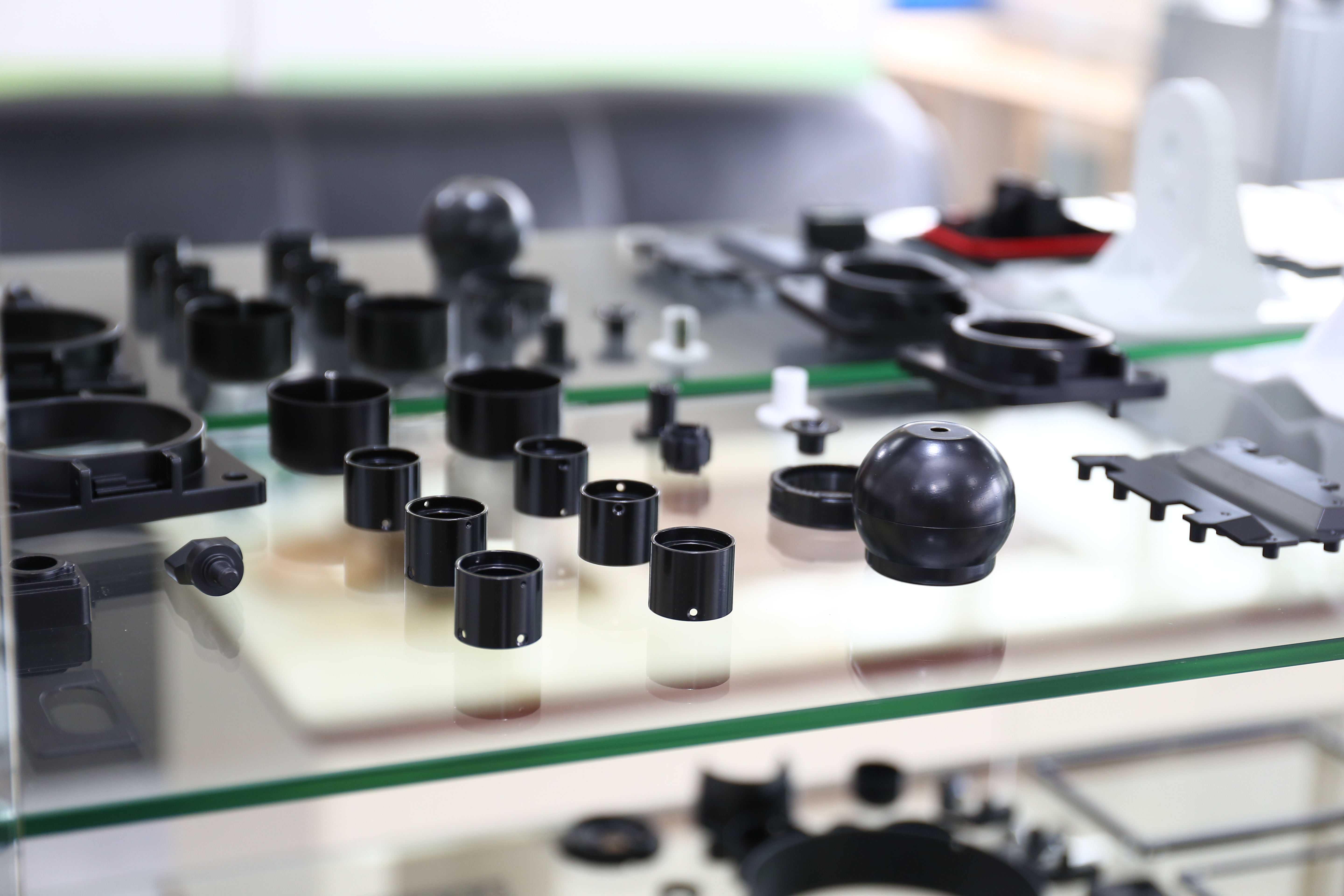
For communication, electronics, UAV and security hardware, this mechanism explains both the advantage and the boundary. The advantage is coverage on complex conductive geometry. The boundary is that non-metal parts, heavily masked assemblies and designs that cannot tolerate immersion need a different review. The supplied data is written around metal surface treatment, so the scenario discussion should stay within that metal-part scope.
The performance envelope a buyer should specify
Yongxin’s supplied data contains several performance figures that are often quoted without their scope. The table below separates the figure from the qualification a buyer should attach to it. The numbers are useful starting points; they are not a single universal specification for every communication, electronics, UAV or security part.
| Parameter | Supplied reference | What it means for scenario fit |
|---|---|---|
| Film thickness | Standard 15–25 µm; custom thickness available; typical line tolerance within ±1 µm; custom variation controlled within ±5% | Thin enough for small housings and assemblies, but the drawing must set the measurement method and critical surfaces. |
| Coverage on complex geometry | Over 95% to 98% coverage; deep cavities, tight seams and internal holes cited | Supports the case for complex housings and small structural parts; inspect representative parts after cure. |
| Salt-spray performance | High-salt-spray product listing: 300–1,000 hours NSS; E-coat reference text: 500–1,500 hours without red rust, with typical automotive parts above 1,000 hours; CASS above 96 hours cited | Choose the figure that matches the product configuration and test method. Do not transfer an automotive reference number to a communication or UAV part without part-specific verification. |
| Temperature exposure | -40°C to over 85°C cited for the coating’s resistance to temperature fluctuation | Relevant to outdoor security hardware and UAV operating profiles; confirm the actual thermal cycle for the assembly. |
| Chemistry and emissions | Water-based paint, heavy-metal-free lead-free and chrome-free systems, very low VOC, RoHS compliance cited | Supports environmental screening; the buyer should still request the current compliance file for the selected product. |
| Management systems | ISO 9001, ISO 14001 and IATF 16949 certification stated by the company | Useful supplier-qualification evidence; certificates should be checked for scope and validity. |
Two cautions are essential. First, the high-salt-spray product listing and the automotive E-coat reference text describe different configurations and scopes; they should not be averaged into one promise. Second, an external research excerpt in the supplied data cites premium automotive E-coat specifications at 720–1,000 hours NSS. That is a useful market reference, but it is not evidence that a specific UAV bracket or electronics housing will reach the same result. The applicable number belongs in the drawing and the test report, not in a generic marketing sentence.
Low-VOC chemistry and management-system certification
Environmental fit is part of scenario fit when the buyer’s customer is an OEM with restricted-substance requirements. Yongxin’s supplied reference text describes a water-based paint system free of heavy metals such as lead and chrome, with very low VOC emissions and RoHS compliance. Those statements are relevant to communication, electronics and consumer-product programs because they affect documentation, workplace controls and the questions an OEM may ask about the coating chemistry.
The same profile states that the company has passed ISO 9001 quality management system certification, ISO 14001 environmental management system certification and IATF 16949 automotive quality management system certification. For a buyer, the practical use of those certificates is to narrow the supplier pool and to frame the audit. They do not replace product-level test reports, and they do not prove that a particular color, substrate or film build will meet a particular salt-spray target. They show that a management system exists; the part approval still depends on the part.
Where E-coating fits and where the drawing must be more specific
Compared with conventional spray painting, Yongxin’s supplied specification presents E-coating as better able to reach deep cavities and internal holes without the dead corners associated with spray. That is a legitimate process comparison for complex conductive metal parts, but it is not a universal ranking. Spray systems may remain appropriate for other geometries or processes outside the supplied scope. The buyer should compare the actual part, not the category name.
The fit boundary is clearest in three areas. First, the substrate must be within the metal scope: the supplied data names carbon steel, alloy steel, aluminum alloy, magnesium alloy and zinc alloy, along with die-cast and stamped parts. Second, the part must tolerate an immersion line and the required racking. Third, the drawing must define masking, because electrical contacts, threads, mating faces and other functional areas may need to remain coating-free. None of these points is a defect in the process; they are design inputs that determine whether the process is the right one.
A second boundary is color. Black and white are the main listed options, with custom colors such as grey or silver available on request. That is enough for many hardware programs, but a buyer with a tightly controlled brand color should confirm the color standard, gloss level and appearance limits before tooling or production. The supplied CNC case reports stable small-batch color consistency; the buyer should still ask how that consistency will be measured.
A practical verification plan for a new hardware design
For a Research-to-Evaluation buyer, the most useful next step is a part-specific verification plan. It turns the scenario discussion into evidence that can be reviewed before a production order.
- Define the substrate and part form. State whether the part is aluminum, magnesium, zinc alloy, steel, die-cast or stamped, and identify the pretreatment route. Magnesium and aluminum should not be treated as interchangeable.
- Draw the coating envelope. Specify the film thickness range, cosmetic surfaces, masking areas and any threaded or electrical-contact zones. Use the 15–25 µm standard range as a starting point only if it fits the assembly.
- Name the test methods. For salt spray, state the standard and duration rather than saying “high salt spray.” The supplied technical source identifies ISO 9227 for salt-spray testing, ISO 2409 for cross-cut adhesion, ISO 2808 for dry-film thickness, ASTM D1654 or ISO 4628 for rust evaluation and ASTM B767 for electrocoating thickness; the buyer should confirm current editions with the issuing organizations.
- Review the standards vocabulary. ISO 22553-1:2019 defines terms for electro-deposition coatings and states applicability to automotive and other general industrial applications. It is a vocabulary and scope reference, not a performance guarantee.
- Ask for part-level evidence. A certificate, a color card or a bath datasheet is not a substitute for a coated sample or a test report on the actual substrate and geometry.
- Confirm production planning data. Yongxin lists MOQ 100, lead time of 3–45 days depending on quantity and monthly capacity of 2,500,000. These are planning inputs; the buyer should confirm them against the specific part and color.
The company also lists more than 20 high-precision testing instruments, including a German FISCHER film thickness gauge, a Swiss Zehntner gloss meter, a Japanese Konica Minolta spectrophotometer, a Japanese Mitutoyo roughness meter, salt-spray and constant-temperature/humidity testers, a reflectometer and electron microscope, and coating bath analysis equipment. For a buyer, the value of that list is not the brand names by themselves; it is the ability to match a claimed inspection to an actual measurement method.
Outlook: the next RFQ will be won on evidence, not color cards
As communication, electronics, UAV and security hardware become more compact and more demanding, the coating decision will move away from a generic “black or white” conversation. Complex housings and small structural parts reward a supplier that can show uniform coverage, controlled film thickness and a substrate-specific corrosion result. Yongxin’s supplied position fits that shift: six electrophoresis lines, in-house CNC, die-casting and stamping support, a 15–25 µm standard film, a 95–98% coverage claim on complex geometry and high-salt-spray, UV-resistant and low-VOC options.
The buyer’s discipline should remain unchanged. Use the supplier’s data to shortlist, then verify the selected substrate, geometry, color and test method on the actual part. That is how a scenario-fit article becomes a procurement decision rather than a color sample.
FAQ
Which metal parts in communication equipment and electronics are suitable for electrophoretic coating?
The supplied scope covers metal housings, metal fittings, small structural components, die-cast parts, CNC machined parts and metal stamping parts. For communication and electronics, the strongest fit is a conductive metal part with complex geometry that needs a thin, uniform protective or decorative film. The part drawing should confirm the substrate and any surfaces that must remain uncoated.
Why does uniform coverage matter on complex UAV and security housings?
Corrosion and appearance both depend on film continuity. A cavity or seam that receives little or no coating can become a starting point for corrosion and can make the finished part look inconsistent. Yongxin’s supplied specification states over 95% to 98% coverage on complex 3D geometry, including deep cavities, tight seams and internal holes. That claim should be checked on a representative part because coverage depends on geometry, racking and masking.
What film thickness and salt-spray performance should a buyer specify?
The supplied standard film range is 15–25 µm, with custom thickness available. Salt-spray figures vary by configuration: the high-salt-spray product listing states 300–1,000 hours NSS, while the E-coat reference text describes 500–1,500 hours without red rust and typical automotive parts above 1,000 hours. A buyer should choose the figure that matches the part, substrate and test standard, then require a report on the actual sample rather than accepting a generic maximum.
How do low-VOC chemistry and ISO certification affect supplier fit?
They affect documentation and environmental screening. Yongxin’s supplied data describes a water-based, heavy-metal-free system with very low VOC and RoHS compliance, and the company states ISO 9001, ISO 14001 and IATF 16949 certification. These are useful qualification inputs, but they do not replace part-level performance tests or confirm that a specific color and substrate meet the drawing.
What should a buyer verify before approving E-coating for a new hardware design?
Verify the substrate and pretreatment, the film thickness range, the masking plan, the color and gloss standard, the salt-spray method and duration, and the inspection method. Ask for a coated sample or test report on the same geometry and material. If the part is magnesium or aluminum, require substrate-specific corrosion evidence rather than transferring a result from steel or from a different alloy.
For a broader view of Yongxin’s metal-finishing scope, the company’s public brochure is available here: Enameled Flat Wire and Electrophoretic Coating Solutions.
Tem questões ou precisa de mais detalhes?
Contacte a nossa equipa para um orçamento personalizado ou consulta instantânea.
Solicitar orçamento
Preencha o formulário abaixo e a nossa equipa entrará em contacto com uma proposta personalizada.
Chat direto do WhatsApp
Prefere conversar em tempo real? Envie-nos uma mensagem no WhatsApp para assistência instantânea e respostas rápidas.
- Obter orçamento personalizado
- Partilhar fotos ou documentos
- Discuta as suas necessidades diretamente
Geralmente responde em 5–30 minutos durante o horário de expediente.